
Curated recipes from 193 countries  •  New seasonal Mediterranean issue out now

Overview

German Sauerkraut

Sauerkraut, fermented cabbage

This german sauerkraut recipe turns one humble cabbage into a jar of crisp, tangy kraut with nothing but salt, time and a little caraway. Shredded cabbage is massaged with salt until it gives up its own brine, then left to ferment until it turns pleasantly sour. One serving is about 150 g.

Cabbage has been fermented in Central Europe for centuries, and the German word sauerkraut simply means sour cabbage. It became the standard side for pork and sausages because its sharp acidity balances rich, fatty meat, and a jar of it kept a household supplied with vegetables through winter.

Pairs well with: Bratwurst, roast pork, mashed potatoes and mustard

Provenance

Germany flag Germany

German Fermented Classic

Nordic & European

Time Dedication

30m

30m prep • 0m cook

Batch Yield

6 Servings

48 kcal per serving

1 serving ≈ 150 g

Technical Skill

Intermediate

Medium (Fermenting)

Meal Timing & Digestive Fit

Breakfast

Not Advised

Lunch

Prime Metabolic Fit

Dinner

Ideal Hearty Main

Snack & Tea

Inappropriate

Fermented / Gut Health Occasions: Weekday lunch, roast dinner, sausage night, Oktoberfest table Cost: Low — about $1 per serving at home
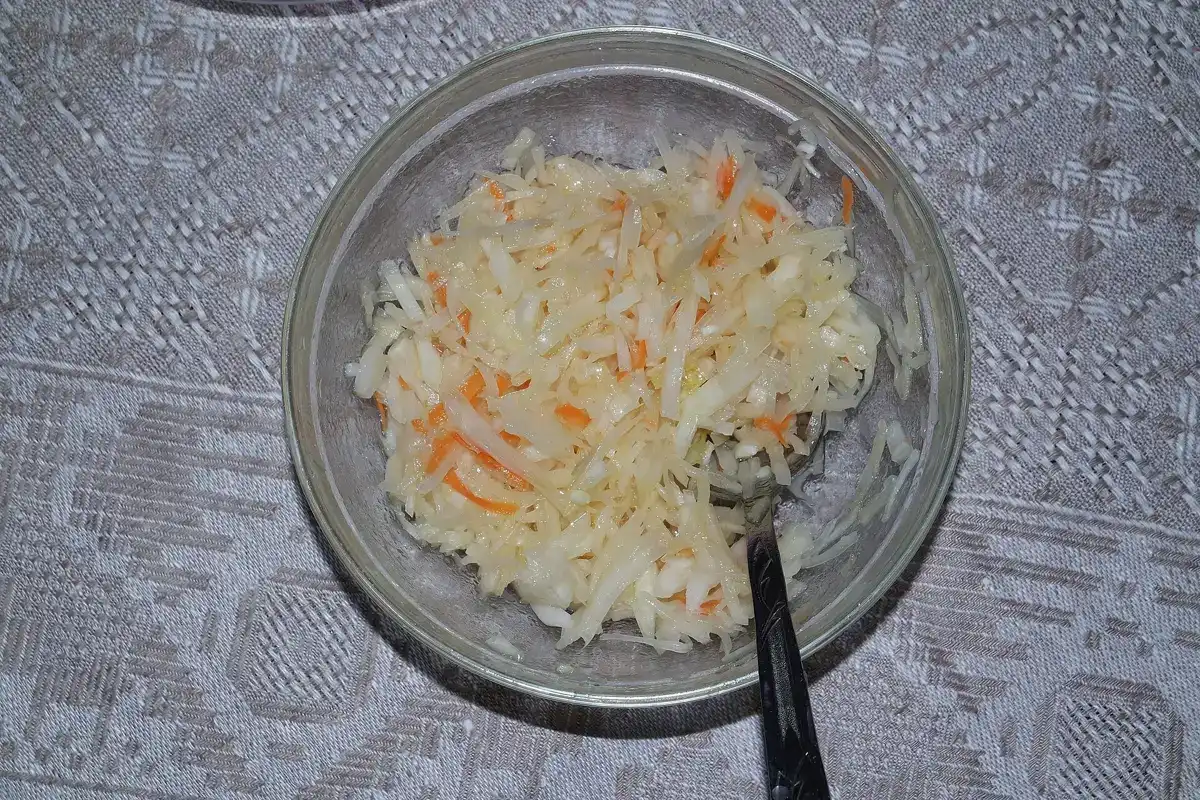
A glass bowl of pale fermented sauerkraut with fine carrot shreds and a serving spoon

German Fermented Classic

Photo: Eugene Zelenko, CC BY-SA 4.0, via Wikimedia Commons

The Heritage Formulary

Measured Ingredients

Estimated cost: Low — about $1 per serving at home (USD)

Made with cabbage, salt and time only — no vinegar and no added sugar.

Execution Methodology & Culinary Technique

Step-by-Step Cooking Guide

Active 30m
P

Prep Stage: Shred, Salt and Massage the Cabbage

30 Mins

Quarter the cabbage, cut out the core and shred it finely. Weigh the shredded cabbage, then weigh out salt at 2% of that weight. Toss the cabbage with the salt, caraway and grated carrot in a large bowl.

Maestro Tip: Weigh the salt — 2% of the cabbage weight is the amount that ferments safely and tastes right. Guessing by spoonfuls is how kraut turns out too salty or goes soft.

  1. 1

    Shred the Cabbage

    10 Mins No heat — room temperature, 20°C (68°F)

    Remove the outer leaves and set one or two aside. Quarter the cabbage, cut out the hard core and shred the leaves finely, about 3 mm wide. Put the shreds in a large bowl.

    Fine, even shreds ferment evenly and give the kraut its classic texture.

    Done when: A bowl of fine, even cabbage ribbons.

  2. 2

    Salt and Massage

    10 Mins No heat — room temperature, 20°C (68°F)

    Sprinkle the weighed salt, caraway and grated carrot over the cabbage. Massage and squeeze the shreds firmly with your hands for about 10 minutes until the cabbage wilts and a pool of salty brine collects in the bowl.

    Do not rush this step — the brine the cabbage releases is what it ferments in.

    Done when: The cabbage is limp and glossy, with enough brine to cover it when pressed down.

  3. 3

    Pack the Jar

    10 Mins No heat — room temperature, 20°C (68°F)

    Pack the cabbage tightly into a clean 1.5-litre glass jar, pressing down hard so the brine rises above the shreds. Lay a reserved outer leaf on top, weigh it down with a small clean jar or fermentation weight, and cover the jar loosely with a lid or cloth.

    Every shred must stay under the brine — any cabbage poking above the liquid can mould.

    Done when: Brine covers the cabbage by at least 2 cm; no shreds float free.

  4. 4

    Ferment for Two Weeks

    14 Days Cool room temperature, 18–22°C (64–72°F)

    Leave the jar on a tray at cool room temperature for 10–14 days. Bubbles will appear within a few days and the brine will turn cloudy — both are normal. Taste from day 7 onward; press the cabbage back under the brine after each taste.

    Warmer rooms ferment faster and make softer kraut; a cooler spot gives a crisper, slower ferment.

    Done when: The kraut smells pleasantly sour and tastes tangy but still crisp.

  5. 5

    Taste, Chill and Serve

    5 Mins Fridge, 4°C (39°F)

    When the sourness suits you, seal the jar and move it to the fridge, where fermentation slows almost to a stop. Serve the kraut cold, straight from the jar, or warm it gently in a pan if you prefer it warm.

    The kraut keeps improving in the fridge for the first week as the flavours settle.

    Done when: Crisp, tangy kraut that smells clean and sour, never rotten.

Finishing Touches & Plating

Spoon the kraut straight from the jar, cold or gently warmed, alongside sausages, roast pork or potatoes. A spoonful of its brine in the pan adds a bright, tangy note to cooked sauerkraut dishes.

Nutritional Physiology & Benefits

Nutrition

Energy

48

kcal / serving

Protein

2g

Complete AA

Carbs

11g

Complex

Fats

0g

Healthy

Per serving (6 servings · 1 serving ≈ 150 g)
Energy48 kcal
Protein2 g
Carbohydrates11 g
Fat0 g
Fibre4.7 g
Sugar5.7 g
Sodium1346 mg
Per 100g
Energy32 kcal
Protein1.6 g
Carbohydrates7.3 g
Fat0.2 g
Fibre3.1 g
Sugar3.8 g
Sodium897 mg

Nutrition values are estimated — calculated from USDA FoodData Central values for the listed ingredients.

Vitamins & minerals: Vitamin C and vitamin K (cabbage), folate (cabbage, carrot), iron in small amounts.

Naturally Fermented

The sour tang comes from lactic-acid fermentation, not vinegar — the same slow process German households have used for generations.

Fibre in Every Spoonful

One serving gives about 4.7 g of fibre from the cabbage and carrot, which helps a heavy pork-and-potato plate feel lighter.

Big Flavour, Few Calories

At about 48 calories a serving, sauerkraut adds a sharp, savoury punch to a plate without adding much energy at all.

Food Pairings

What to Eat With

To optimize nutrient absorption and elevate the sensory depth, pair with these authentic accompaniments:

Sides

Bratwurst

Grilled bratwurst is sauerkraut's classic partner — the kraut's acidity cuts through the rich, fatty sausage and resets the palate between bites.

Roast Pork

Roast pork with crackling is rich and salty, and a mound of cold, tangy kraut beside it keeps the plate from feeling heavy.

Mashed Potatoes

Soft, buttery mashed potatoes soak up the kraut brine and balance its sharpness with something mild and creamy.

Sauces

German Mustard

A spoonful of sharp mustard echoes the kraut's tang and adds heat, which is why the two are served together all over Germany.

Drinks

German Lager

A cold, crisp lager is the traditional drink with a sausage-and-kraut plate — its clean bitterness suits the sour cabbage.

Complete menu

Bratwurst with sauerkraut, mashed potatoes and mustard, followed by a slice of rye bread — a classic German lunch plate.

Digestive Guardrails

What NOT to Combine

To prevent digestive distress, sluggishness, or palate clash, avoid pairing the dish with these elements:

Mould on the Surface

A thin white film (kahm yeast) can be skimmed off, but pink, black or fuzzy mould means the batch has spoiled — throw the whole jar away rather than eating around it. This is general guidance, not medical advice.

A Large Portion Every Day

Sauerkraut is salty — one serving carries about 1,346 mg of sodium. Enjoy it as a side in modest portions, especially if you watch your salt intake, and ask your clinician if you are unsure.

General information only, not medical advice — consult a doctor for personal dietary decisions.

Who Should Eat It

Who Should Eat

  • General adultsA bright, low-calorie side that lifts a rich lunch — a spoonful or two is plenty.
  • ChildrenSuitable in small portions; the sour taste is strong, so start with a spoonful beside foods they already like.
  • ElderlySuitable — soft, easy to chew and light; keep the portion modest because of the salt.
  • Pregnant womenGenerally suitable in modest portions; the cabbage adds folate and vitamin C. Skip it if heartburn flares up.
  • Breastfeeding womenGenerally suitable; a small portion adds flavour and fibre to a meal without many calories.
  • AthletesA useful low-calorie side with a rich protein main — it adds flavour without adding much energy.
  • Weight gainNot a weight-gain food on its own — pair it with sausages, pork and potatoes, which carry the calories.
  • Weight lossA good choice — about 48 calories a serving with good fibre, though the salt means keeping the portion small.

Health Conditions — Adjust or Avoid

Conditions

  • DiabetesLow in sugar and calories, so the kraut itself is diabetes-friendly — watch the potatoes and bread served with it, and ask your clinician about portion sizes.
  • High blood pressureHigh in sodium from the fermenting salt, so keep the portion small and rinse the kraut briefly if you need less salt — ask your clinician about a suitable portion.
  • Kidney diseaseLimit the portion — the salt and the potassium from cabbage both matter here; ask your clinician about portion size.
  • GoutLow in purines, so gout is not a particular concern with sauerkraut itself; ask your clinician if unsure.
  • Stomach issuesThe acidity can irritate reflux or a sensitive stomach — eat a small portion and skip it on bad days.
  • Cardiovascular diseaseLow in fat and calories, but the sodium is high — a small portion is the sensible approach.
  • Fatty liverLow in calories and fat, which suits a fatty-liver diet — keep the portion modest because of the salt.
  • Food allergiesContains no gluten, dairy, egg, nuts or seafood as written. Caraway seed allergy is rare — check before serving to anyone with a seed allergy.
  • Special therapeutic dietsIf you follow a prescribed low-sodium diet, use a small portion and rinse the kraut, and check with your clinician.

If you have a medical condition, consult your doctor before changing your diet.

Storage & Use

Storage & Use

How to store
Keep the kraut submerged in its brine in a clean glass jar with a loose lid.
In the fridge
4–6 weeks in the jar, brine-covered, at 4°C (39°F).
In the freezer
Not recommended — freezing softens the crunch.
How to reheat
Serve cold, or warm gently to about 60°C (140°F). Do not boil it — hard heat dulls the fresh tang.
Freezing recommended
No — the texture suffers and the live cultures do not survive freezing well.
Signs it has spoiled
Pink or black mould, a slimy texture, or a rotten smell — discard the whole jar.

More recipes to explore

Sliced sauerbraten in dark sweet-sour gravy with potato dumplings and braised red cabbage on a white plate Germany flag Germany 3h 30m
Dinner •Rhineland Heritage

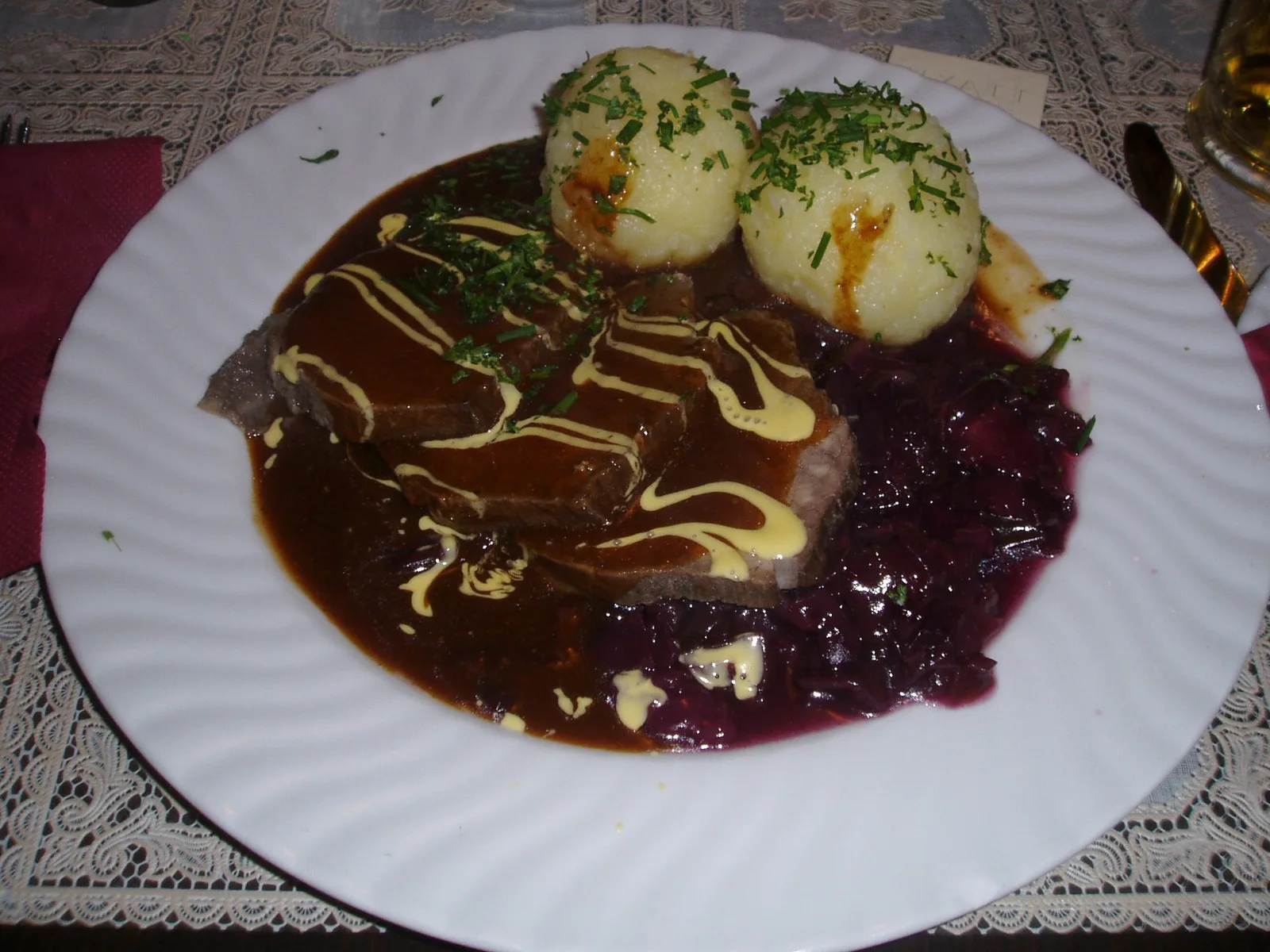
Sauerbraten

This sauerbraten recipe starts with a beef chuck roast steeped for three days in red wine vinegar, red wine and warm spices, then braised slowly until it slices like butter. The marinade becomes a dark, sweet-sour gravy thickened with crushed gingersnaps and studded with raisins, the Rhineland way. One serving is about 300 g, with gravy.

Comfort & Warmth

A slow-braised German pot roast in a sweet-sour vinegar gravy, sliced thick and served hot with potato dumplings and red cabbage.

Pairs Well With
Potato dumplings, braised red cabbage & a glass of Spätburgunder
High Protein
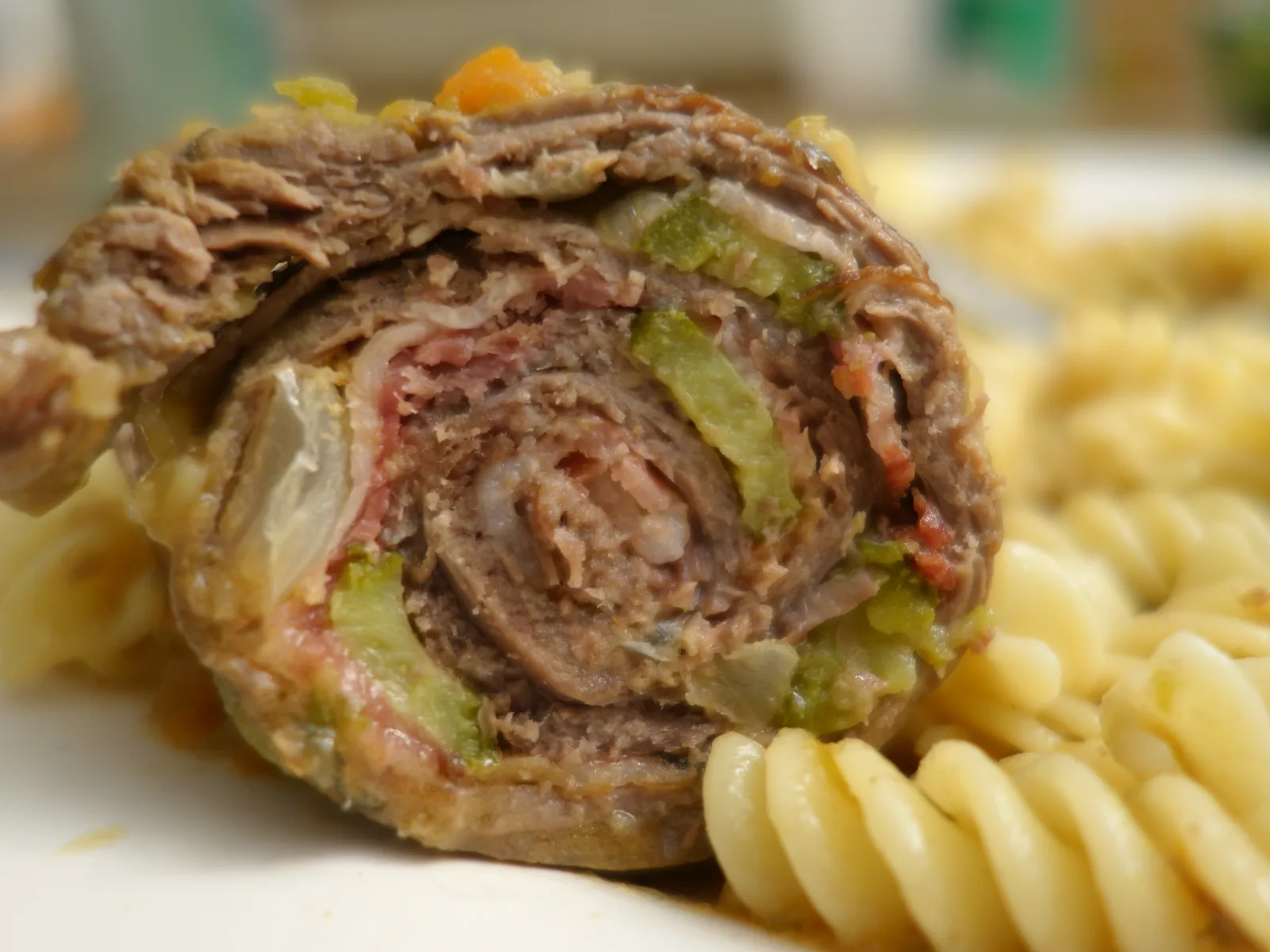
A sliced German beef roulade showing the spiral of beef, bacon and dill pickle, served with pasta Germany flag Germany 2h 10m
Dinner •German Sunday Heritage

Rouladen

This rouladen recipe spreads thin slices of top round with mustard, then rolls them around smoky bacon, dill pickles and onion into neat parcels. The rolls are browned, then braised slowly in red wine and beef stock until tender, and the braising liquid becomes a rich gravy. One serving is about 375 g — two rolls with gravy.

Comfort & Warmth

Thin beef rolls stuffed with bacon, dill pickle and onion, braised in red wine gravy and served hot with dumplings.

Pairs Well With
Potato dumplings, braised red cabbage & a German lager
High Protein
A glass bowl of warm Swabian potato salad topped with chopped chives Germany flag Germany 45m
Lunch •Swabian Heritage

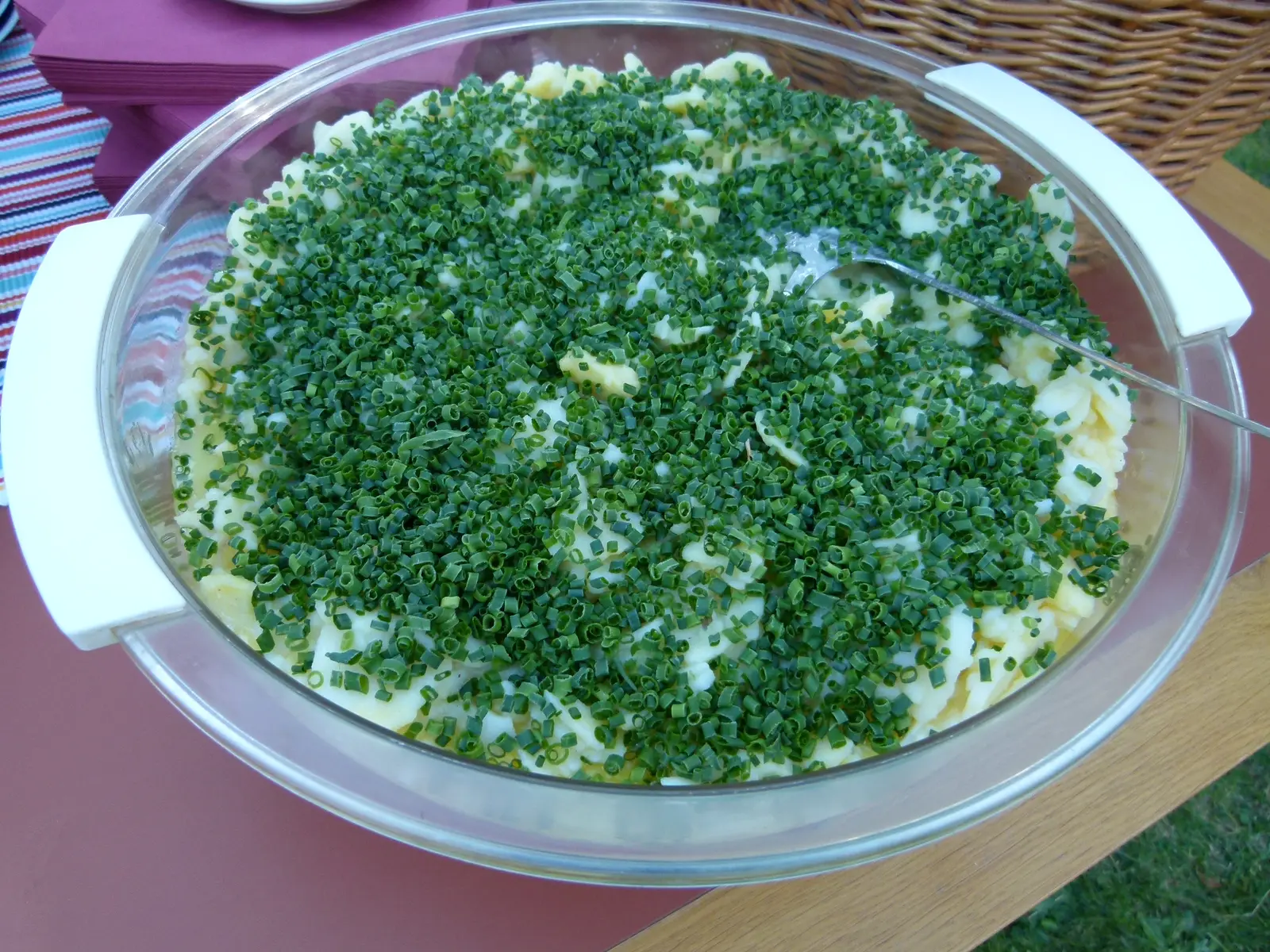
German Potato Salad

This german potato salad recipe is the warm Swabian kind: waxy potatoes sliced while still hot, tossed with crisp bacon, soft onion and sliced egg, then dressed with hot beef stock, vinegar and mustard so every slice drinks up the tangy dressing. No mayonnaise anywhere — the potatoes stay light, glossy and warm. One serving is about 292 g.

Comfort & Warmth

Warm waxy potatoes in a bacon, mustard and vinegar dressing, served straight from the bowl while still steaming.

Pairs Well With
Grilled sausages, schnitzel & a cold German lager
Quick Prep (<30m)
Golden breaded pork schnitzel with a lemon wedge and potato salad on a white plate Germany flag Germany 40m
Dinner •German Heritage

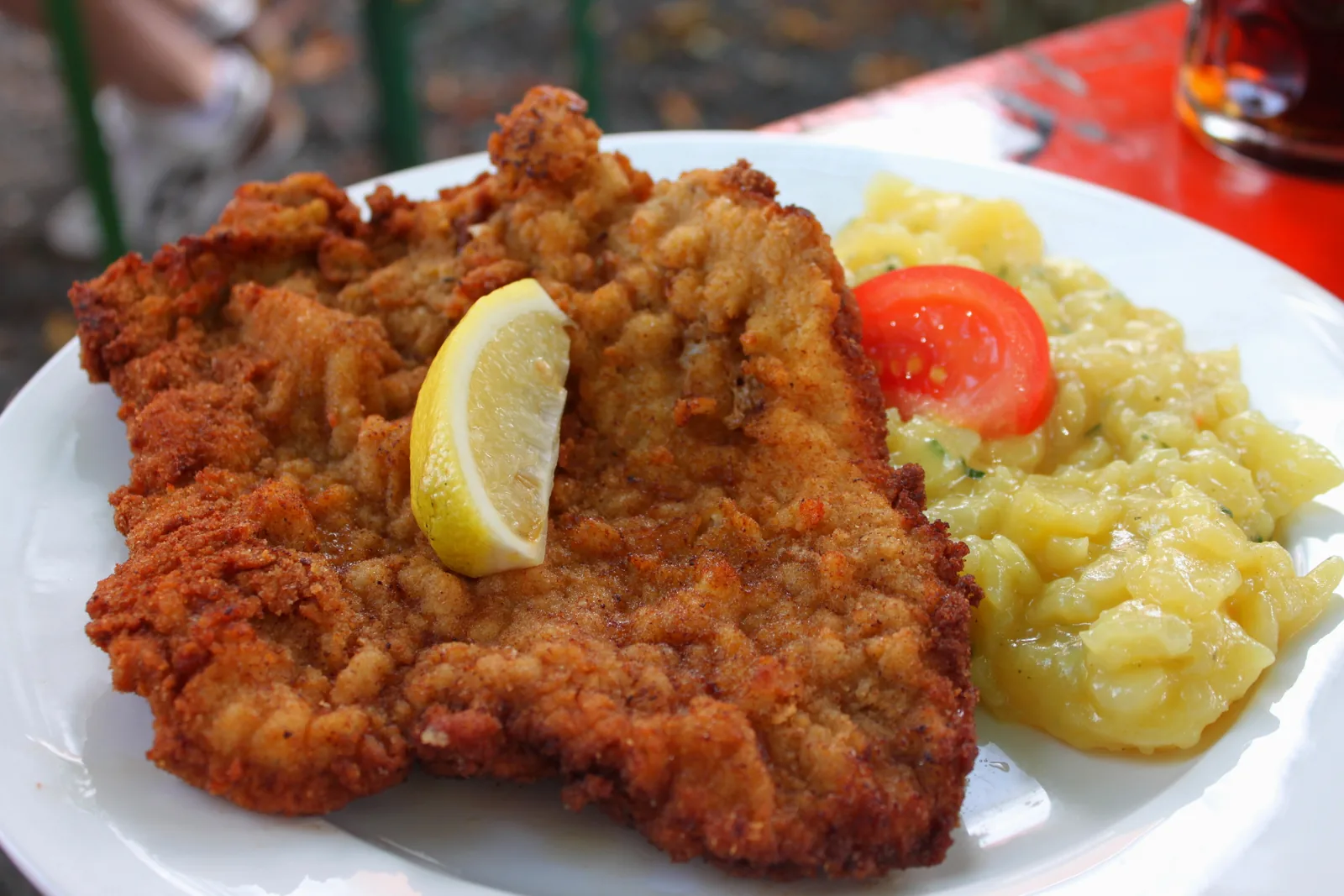
German Pork Schnitzel

German pork schnitzel is the everyday hero of German cooking: a pork cutlet pounded thin, coated in flour, egg and breadcrumbs, and fried in butter until it turns deep golden and crisp. This german schnitzel recipe follows the German way — real pork, a loose crumb, and a wedge of lemon on the side, with potato salad to mop up. One serving is about 200 g.

Classic Comfort

A golden, crisp pork cutlet with lemon and potato salad — a satisfying, protein-rich German dinner.

Pairs Well With
Warm potato salad, cucumber salad and a cold lager.
High Protein

The Dinner Gazette

Never wonder what’s for dinner again

One email a week with easy dinner ideas from around the world — ingredients, steps and nutrition, tested in our kitchen first.

Delivered every Thursday morning. Unsubscribe anytime.