Curated recipes from 193 countries  •  New seasonal Mediterranean issue out now

Overview

Golfeados

Golfeado, Venezuelan sticky buns, Venezuelan cheese rolls

This golfeados recipe rolls soft anise-scented dough around grated panela, cinnamon and salty hard cheese, then bakes it into sticky spirals brushed with panela syrup. One serving is about 112 g — one roll — and carries about 390 calories. The cheese is the point: salty against the sweet syrup, served warm with coffee.

Golfeados are a fixture of Venezuelan bakeries, the spiral roll every panadería sells alongside the morning bread — a soft, anise-scented dough wound around papelón, the unrefined cane sugar Venezuelans call panela, and salty white cheese. The combination is the whole idea: sweet and salty in the same bite, with the panela syrup brushed on while the rolls are still hot so they turn sticky and glossy. They are a classic merienda, the afternoon break, eaten warm with black coffee and often with an extra slice of soft queso de mano on the side. Every bakery makes them a little differently — some add raisins, some more anise — but the panela and the cheese never change.

Pairs well with: Black coffee, hot chocolate, or soft queso de mano

Provenance

Venezuela flag Venezuela

Venezuelan Bakery Icon

Latin America & Caribbean

Time Dedication

2h 50m

140m prep • 30m cook

Batch Yield

12 Servings

390 kcal per serving

1 serving ≈ 112 g

Technical Skill

Intermediate

Medium (Yeasted Rolls)

Meal Timing & Digestive Fit

Breakfast

Not Advised

Lunch

Inappropriate

Dinner

Inappropriate

Snack & Tea

Ideal Light Bite

Occasions: Afternoon snacks, bakery treats, family gatherings, coffee breaks Cost: Low — about $1–2 per serving at home
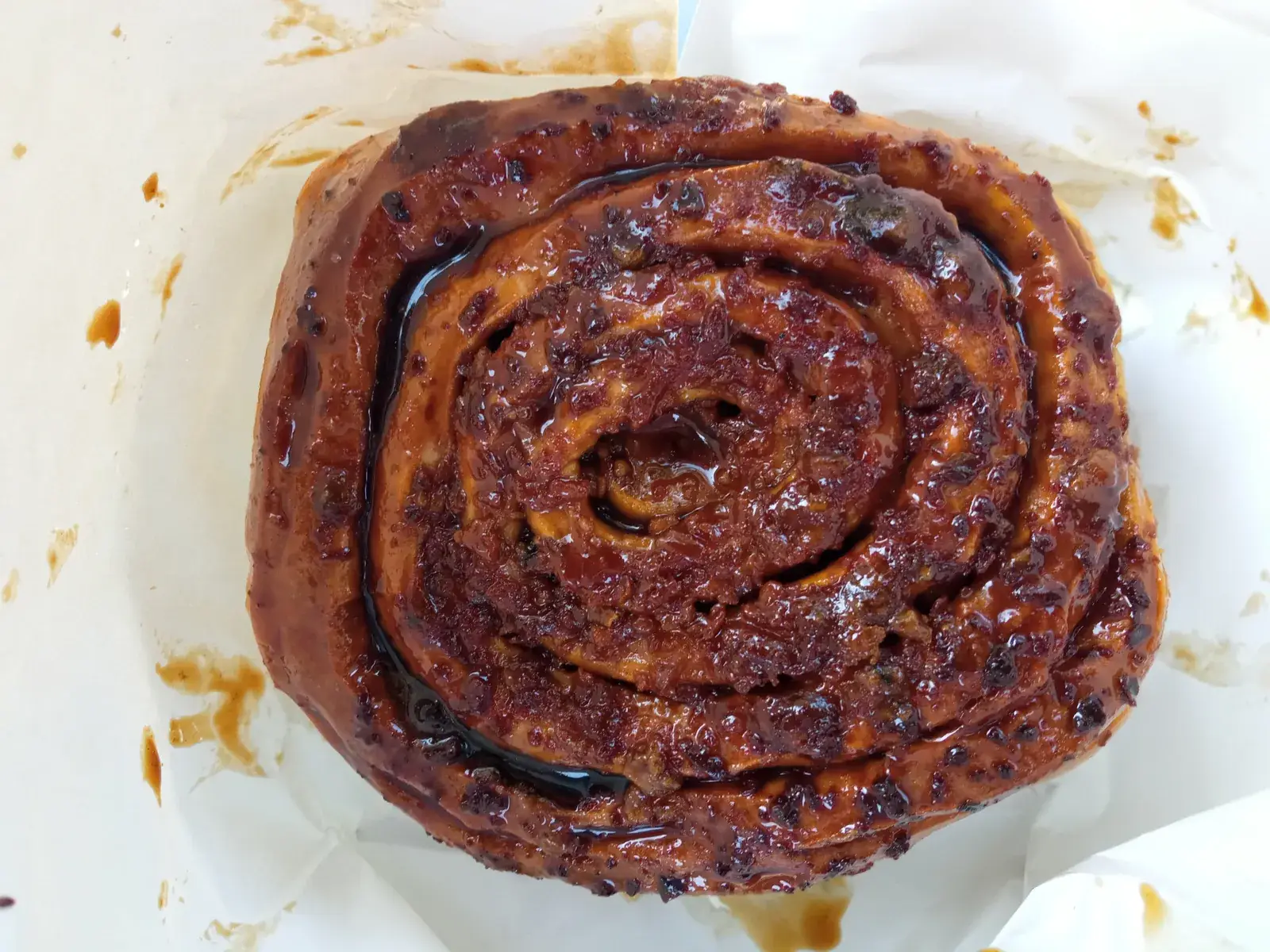
A single glossy golfeado, a spiral cinnamon roll glistening with dark panela syrup, seen from above on white paper

Venezuelan Bakery Icon

Photo: Muago, CC0, via Wikimedia Commons

The Heritage Formulary

Measured Ingredients

Estimated cost: Low — about $1–2 per serving at home (USD)

A good golfeado is soft and pillowy inside, sticky and glossy outside, with the salty cheese clearly tasting through the sweet panela.

Execution Methodology & Culinary Technique

Step-by-Step Cooking Guide

Active 2h 50m
P

Prep Stage: Dough and First Rise

140 Mins • Mixing, Kneading & Rising

Warm the milk to wrist temperature, stir in the yeast with a pinch of the panela, and wait 10 minutes until it foams — that foam is the proof the yeast is alive. Mix the flour, salt, anise and remaining panela, then add the milk, egg and softened butter and knead until the dough is smooth and springs back. Butter a baking dish and have it ready before the first rise finishes.

Maestro Tip: If the dough feels sticky, knead longer rather than adding flour — extra flour makes heavy rolls, while kneading builds the structure that keeps them soft.

  1. 1

    Mix the dough

    20 Mins Milk about 40°C (104°F)

    Warm the milk gently until it feels like a comfortable bath on your wrist, about 40°C (104°F), then stir in the yeast and a pinch of the grated panela. Leave it for 10 minutes until it foams — if it does not foam, the yeast is dead and you need a fresh packet. Meanwhile, mix the flour, salt, anise seeds and the rest of the dough panela in a large bowl. Pour in the foamy milk, the beaten egg and the softened butter, and stir until a shaggy dough forms.

    Milk hotter than 45°C (113°F) kills the yeast — test it on your wrist, not with a finger, and let it cool if it feels hot.

    Done when: Yeast foams in the milk; dough comes together in one shaggy mass.

  2. 2

    Knead and first rise

    100 Mins Warm place, about 25–28°C (77–82°F)

    Turn the dough onto a lightly floured counter and knead for 10 minutes, pushing it away with the heel of your hand, folding it back and turning it, until it is smooth, elastic and springs back when pressed. Put it in a lightly oiled bowl, cover with a clean cloth, and leave it in a warm place for 90 minutes, until it has doubled in size.

    A turned-off oven with just the light on is the perfect warm, draught-free spot for rising.

    Done when: Dough smooth and springy; doubled in size after 90 minutes.

  3. 3

    Roll out, fill and cut

    15 Mins No heat

    Knock the dough back gently and roll it out on a floured counter into a rectangle about 30 by 40 cm. Brush it all over with the melted butter, then sprinkle the filling panela evenly over the top, followed by the grated cheese and the cinnamon. Roll it up from the long side into a firm log, pinch the seam shut, and cut it into 12 even slices. Set the slices cut-side up in a buttered baking dish, leaving a little space between them.

    Use a sharp knife or unflavoured dental floss to cut the log — a dull knife squashes the spirals flat.

    Done when: Even log, 12 neat spirals, cheese and panela visible in every cut face.

  4. 4

    Rest and bake

    40 Mins Oven 180°C (350°F)

    Cover the dish and leave the rolls to rest for 15 minutes while the oven heats to 180°C (350°F). Bake for 25 minutes, until the tops are deep golden brown and the syrup is bubbling at the edges. While they bake, make the syrup: simmer the panela and water in a small pan for 5 minutes until slightly thickened.

    If the tops brown too fast, lay a sheet of foil loosely over the dish for the last 10 minutes.

    Done when: Tops deep golden brown, rolls puffed up and touching, syrup bubbling at the edges.

  5. 5

    Glaze with syrup and cheese

    5 Mins Syrup warm, about 60°C (140°F)

    Take the rolls out of the oven and brush them generously with the warm panela syrup while they are still hot, so it soaks in and turns glossy. Sprinkle the remaining grated cheese over the top, then leave the rolls in the dish for 10 minutes before serving warm, with soft white cheese and coffee on the side.

    Brush the syrup on in two coats — the first soaks in, the second gives the shine.

    Done when: Rolls glossy with syrup, cheese just starting to melt on top, sticky to the touch.

Finishing Touches & Plating

Brush the hot rolls generously with the panela syrup, sprinkle over the last of the grated cheese, and serve warm from the dish with soft queso de mano or queso fresco on the side and black coffee to drink.

Nutritional Physiology & Benefits

Nutrition

Energy

390

kcal / serving

Protein

11g

Complete AA

Carbs

59g

Complex

Fats

12g

Healthy

Per serving (12 servings · 1 serving ≈ 112 g)
Energy390 kcal
Protein11 g
Carbohydrates59 g
Fat12 g
Fibre1.6 g
Sugar25.2 g
Sodium419 mg
Per 100g
Energy347 kcal
Protein10.2 g
Carbohydrates52.2 g
Fat11 g
Fibre1.4 g
Sugar22.4 g
Sodium372 mg

Nutrition values are estimated — calculated from USDA FoodData Central values for the listed ingredients.

Vitamins & minerals: Cheese and milk provide calcium and phosphorus; egg adds vitamin D and choline; flour adds B vitamins and iron. All nutrition values are estimated.

Steady Energy from Flour, Panela and Cheese

With about 58.7 g of carbohydrate and 11.4 g of protein per roll, a golfeado is a proper energy-rich snack that keeps you going until dinner.

Cheese Brings Calcium

The pecorino gives each roll calcium and phosphorus, and the egg adds vitamin D and choline.

Baked, Not Fried

Baked, not fried, and sweetened with unrefined panela rather than refined sugar — a bakery treat with a simpler ingredient list than most.

Food Pairings

What to Eat With

To optimize nutrient absorption and elevate the sensory depth, pair with these authentic accompaniments:

Drinks

Black Coffee

Strong black coffee is the classic partner — its bitterness balances the sticky panela syrup and the salty cheese.

Hot Chocolate

Venezuelan hot chocolate doubles down on the sweetness, and the two together are the traditional merienda.

Sides

Soft White Cheese

A slice of soft queso de mano or queso fresco on the side adds a fresh, milky note against the baked cheese inside the roll.

Full Menus

Full Menu: Soup, Then Golfeados

Start with a light soup, then golfeados warm from the oven with black coffee — soup first, then the sweet sticky rolls.

Complete menu

Serve golfeados warm from the oven with black coffee and soft queso de mano on the side — the classic Venezuelan merienda, best as an afternoon break.

Digestive Guardrails

What NOT to Combine

To prevent digestive distress, sluggishness, or palate clash, avoid pairing the dish with these elements:

Using Milk That Is Too Hot for the Yeast

Milk hotter than about 45°C kills the yeast and the dough will never rise. Warm it only until it feels like a comfortable bath on your wrist, then let it cool if it is too hot. This is general food information, not medical advice.

Rolling the Dough Too Tight

Rolling the dough too tightly squeezes the filling out and makes dense, tough rolls. Roll it up snugly but gently, and leave a little space between the rolls in the dish so they can expand. This is general food information, not medical advice.

General information only, not medical advice — consult a doctor for personal dietary decisions.

Who Should Eat It

Who Should Eat

  • General adultsA rich bakery roll for most adults; one warm golfeado with coffee is a proper afternoon break.
  • ChildrenChildren love the sweet, sticky spiral — serve one, warm, and let it cool a little first as the syrup stays hot.
  • ElderlySoft and easy to chew when served warm; the anise and cinnamon are gentle, and one roll is plenty.
  • Pregnant womenThe dough is fully baked through, so it is fine in moderation; keep to one roll because of the sugar, and ask your clinician if you are watching sugar.
  • Breastfeeding womenAn energy-rich snack that suits a hungry afternoon; the milk, egg and cheese give lasting energy between feeds.
  • AthletesGood quick energy before or after training, with carbohydrate from the flour and panela and protein from the cheese and egg.
  • Weight gainEnergy-dense at about 390 kcal a roll, so it fits a higher-energy day.
  • Weight lossA sweet, rich roll; enjoy one with black coffee rather than two.

Health Conditions — Adjust or Avoid

Conditions

  • DiabetesAbout 58.7 g of carbohydrate and 25.2 g of sugar per roll, mostly from the panela; one roll is already a large portion, and ask your clinician about portion size.
  • High blood pressureAbout 419 mg of sodium per roll, mostly from the cheese and salt; ask your clinician if you are on a low-sodium plan.
  • Kidney diseaseModerate in protein with phosphorus from the cheese; ask your clinician whether this portion suits your plan.
  • GoutLow in purines; the main concern is the sugar — one roll is the lighter choice, and ask your clinician if you are unsure.
  • Stomach issuesA rich, sweet, yeasted roll that can feel heavy; eat slowly and keep to one if your stomach is sensitive, and ask your clinician if it keeps bothering you.
  • Cardiovascular diseaseHigh in sugar and saturated fat from the butter and cheese; enjoy occasionally in a small portion, and ask your clinician about the right portion for you.
  • Fatty liverEnergy-dense with a large sugar portion from the panela; one roll with black coffee is the lighter way to enjoy it — ask your clinician about the right portion for you.
  • Food allergiesContains wheat (flour), milk (milk, butter, cheese) and egg — the main allergens in this recipe; if you have a food allergy, ask your clinician whether it is safe for you.
  • Special therapeutic dietsFollow your clinician's guidance on sugar and portion sizes; this is general information, not medical advice.

If you have a medical condition, consult your doctor before changing your diet.

Storage & Use

Storage & Use

How to store
Cool completely, then wrap tightly in cling film or keep in a sealed container.
In the fridge
Up to 3 days at 4°C (40°F) or below in a sealed container.
In the freezer
Up to 1 month, wrapped individually in cling film inside a freezer bag.
How to reheat
Warm in the oven at 160°C (320°F) for 8–10 minutes until hot through, above 74°C (165°F) inside; brush with a little extra syrup if they look dry.
Freezing recommended
Yes — golfeados freeze well; thaw overnight in the fridge.
Signs it has spoiled
Sour smell, slimy surface, or any mould — throw it away.

More recipes to explore

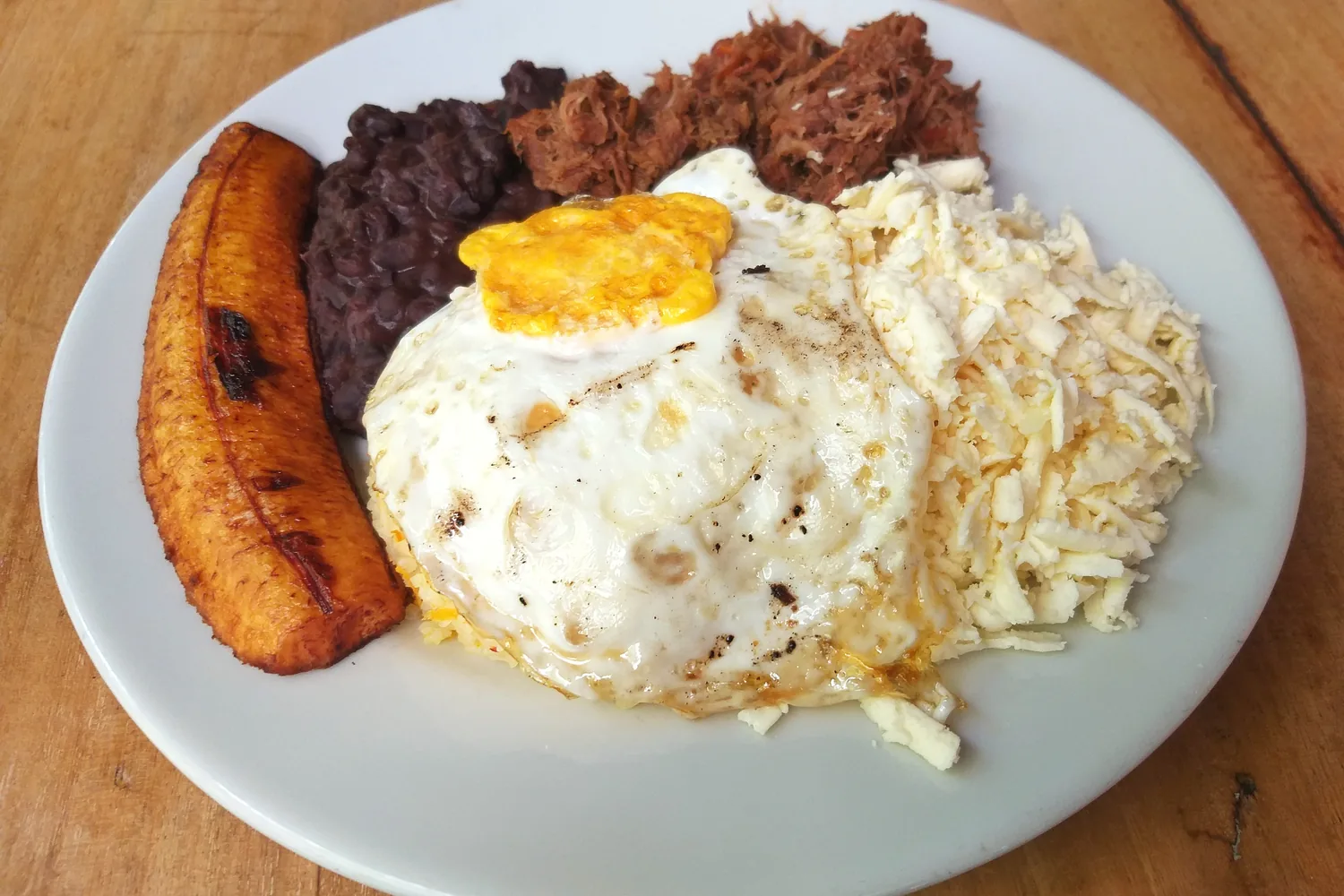
Pabellón Criollo plate with shredded beef, black beans, fried plantain, a fried egg and grated white cheese over white rice Venezuela flag Venezuela 3h
Lunch •Venezuelan National Dish

Pabellón Criollo

This pabellon criollo recipe is Venezuela's national plate: slow-braised shredded beef in a pepper and tomato sofrito, creamy black beans, fluffy white rice, sweet fried plantains and a fried egg, finished with grated white cheese. One serving is about 680 g.

Hearty & Satisfying

A complete plate of beef, beans, rice, plantain and egg that keeps you full for hours.

Pairs Well With
Serve with a cold papelón con limón or a light beer, and a simple avocado salad on the side.
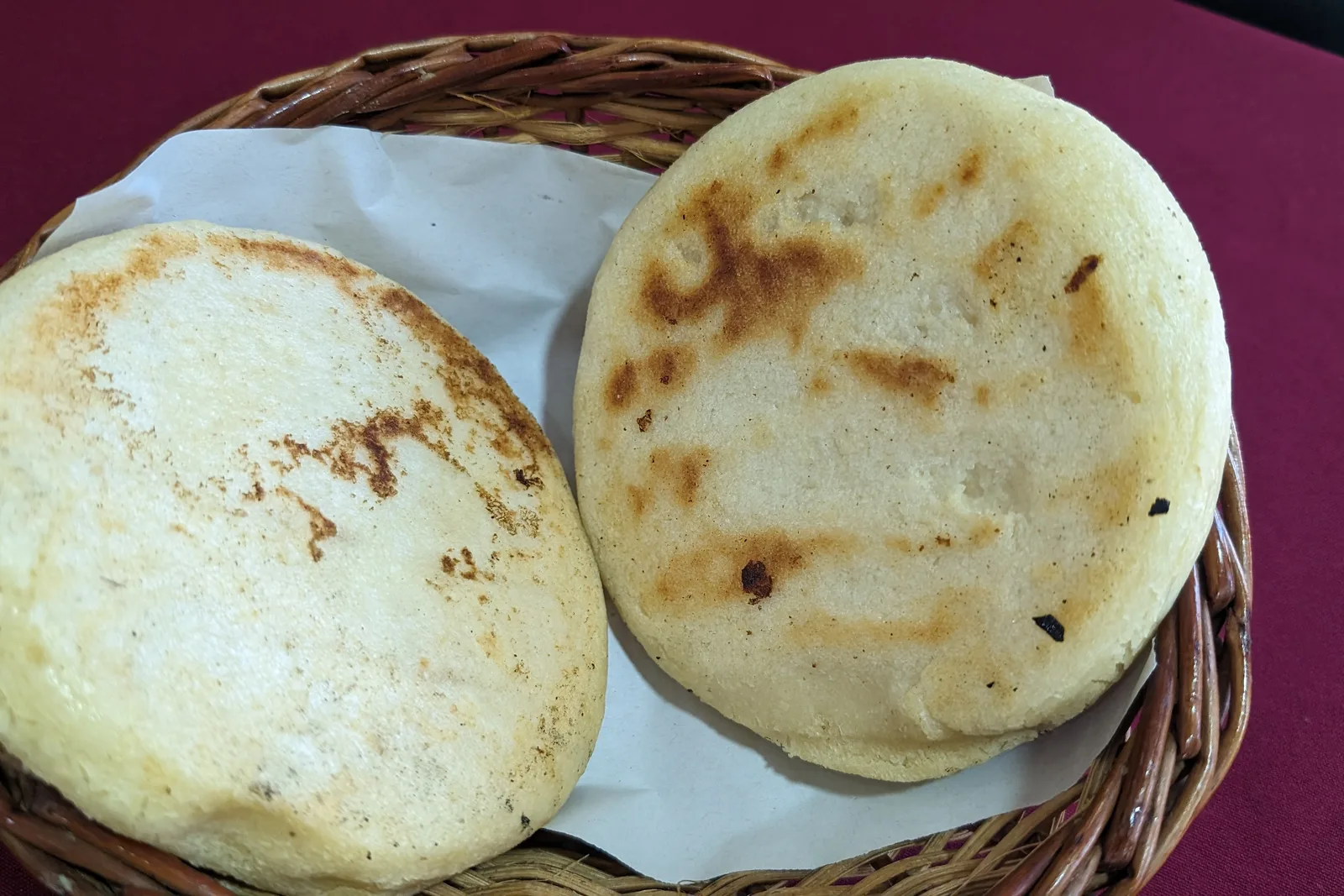
Two golden grilled Venezuelan arepas in a wicker basket lined with white paper Venezuela flag Venezuela 40m
Breakfast •Caracas Heritage

Venezuelan Arepas

This Venezuelan arepas recipe starts with just pre-cooked white cornmeal, warm water and salt, kneaded into a soft dough and shaped into thick cakes. They grill until crisp and golden outside and soft inside, finish in a hot oven so they puff, then get split open and stuffed with melted mozzarella, crumbled queso fresco, creamy avocado and tomato. Venezuelan arepas are the thick, stuffed kind: a whole breakfast you can hold in one hand. One serving is about 275 g, one stuffed arepa.

Comfort & Warmth

Thick grilled corn cakes made from white masarepa, split open like a pocket and stuffed with melting cheese, avocado and tomato.

Pairs Well With
Fresh orange juice or coffee, with a bowl of black beans or scrambled eggs on the side.
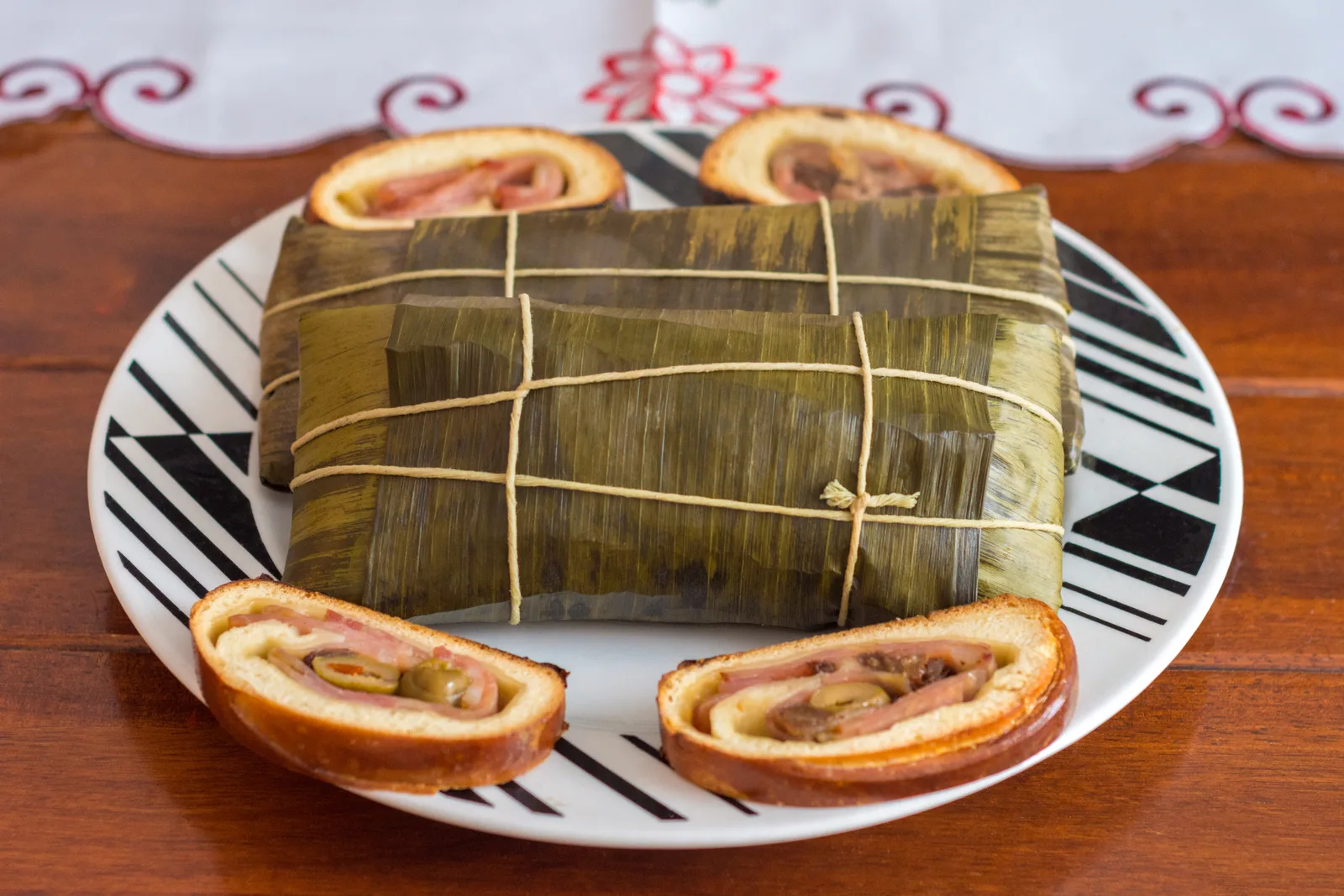
Two hallacas wrapped in banana leaves and tied with string, served on a plate with slices of pan de jamón Venezuela flag Venezuela 5h
Dinner •Venezuela's Christmas Dish

Hallacas

This hallacas recipe makes 12 golden parcels of annatto-coloured corn dough filled with a rich three-meat guiso, garnished with pepper, onion, olives, capers and raisins, then folded in banana leaves and boiled. One hallaca is about 300 g, a full festive dinner on its own. Hallacas are Venezuela's Christmas dish, made in big family batches and served with pan de jamón.

Festive & Filling

Golden annatto corn dough wrapped around a slow-cooked stew of beef, pork and chicken, folded in banana leaves — the parcel Venezuelan families gather to make every December.

Pairs Well With
Pan de jamón and ensalada de gallina, with a glass of ponche crema
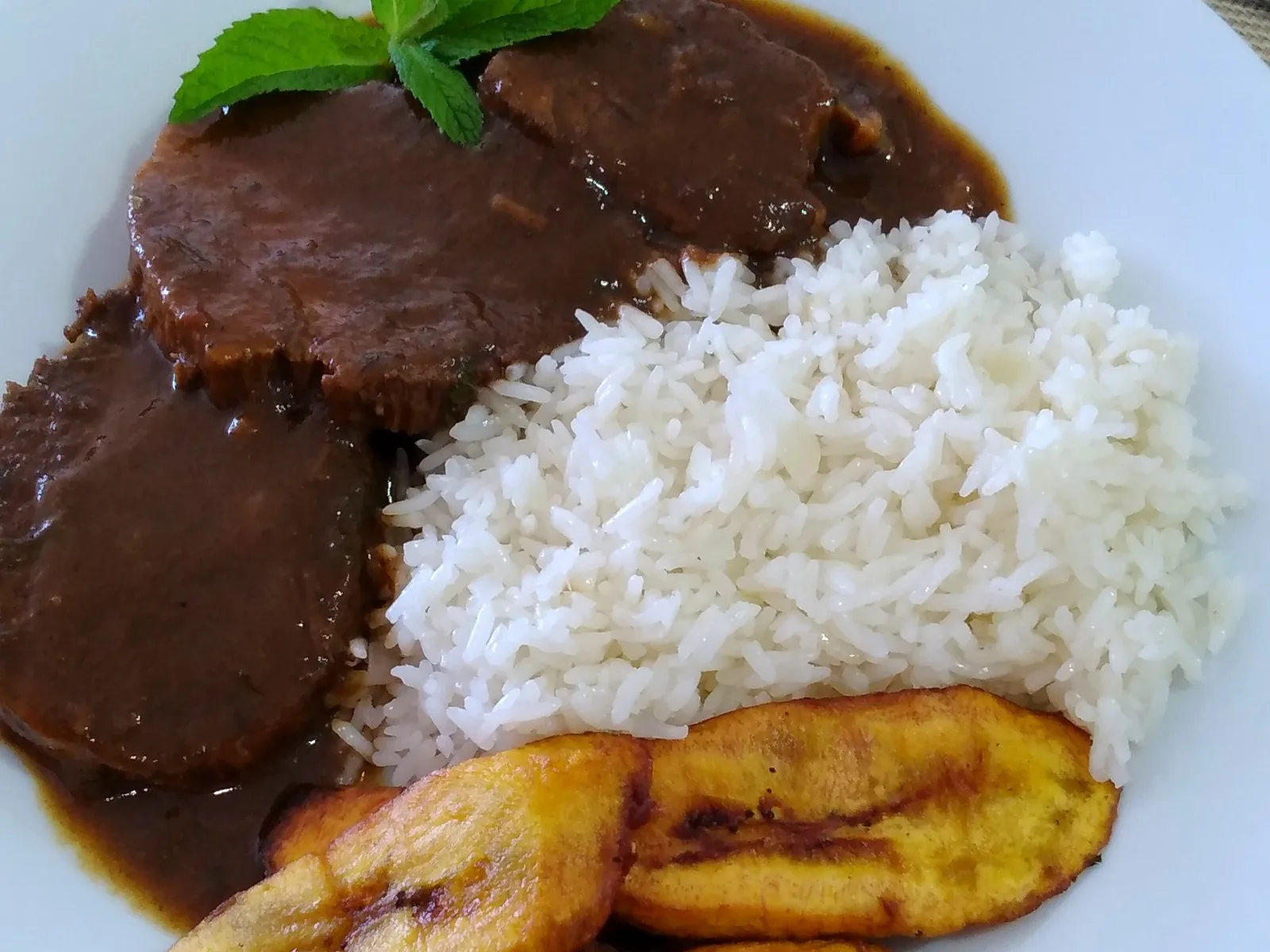
Slices of asado negro in a dark glossy sauce with white rice and golden fried plantains, garnished with mint Venezuela flag Venezuela 3h 30m
Dinner •Caracas Heritage

Asado Negro

Asado negro is Venezuela's dark, glossy beef roast: eye of round seared in caramelized panela, then braised low and slow in red wine, beef stock and soft vegetables until it slices like butter. The sauce is sweet, savoury and almost black, and it belongs over white rice with fried plantains. One serving is about 591 g.

Comfort & Warmth

Beef eye of round seared in caramelized panela, then braised in red wine and stock until tender.

Pairs Well With
White rice, fried plantains and a glass of red wine
High Protein

The Dinner Gazette

Never wonder what’s for dinner again

One email a week with easy dinner ideas from around the world — ingredients, steps and nutrition, tested in our kitchen first.

Delivered every Thursday morning. Unsubscribe anytime.