

Curated recipes from 193 countries  •  New seasonal Mediterranean issue out now

Overview

Gougeres

Gougères, French Cheese Puffs

This gougeres recipe bakes Gruyère into choux pastry until the puffs turn golden, crisp outside and soft and cheesy inside. One serving is about 115 g, roughly four puffs. Serve them warm from the oven with a glass of white wine.

Gougères come from Burgundy, in eastern France, where they are the traditional bite served with wine in the cellars around Tonnerre. The puffs are made from choux pastry — the same dough as éclairs — with grated hard cheese beaten in before baking. In Burgundy they are often served cold at tastings, but warm from the oven, crisp outside and molten inside, they are at their best.

Pairs well with: A glass of dry white wine and a small bowl of cornichons.

Provenance

France flag France

Burgundian Aperitif Classic

Nordic & European

Time Dedication

45m

20m prep • 25m cook

Batch Yield

6 Servings

343 kcal per serving

1 serving ≈ 115 g

Technical Skill

Intermediate

Medium (Choux Pastry)

Meal Timing & Digestive Fit

Breakfast

Not Advised

Lunch

Inappropriate

Dinner

Inappropriate

Snack & Tea

Ideal Light Bite

Occasions: Aperitif with friends, wine tasting, party snack, holiday starter Cost: Low — about $2–3 per serving at home
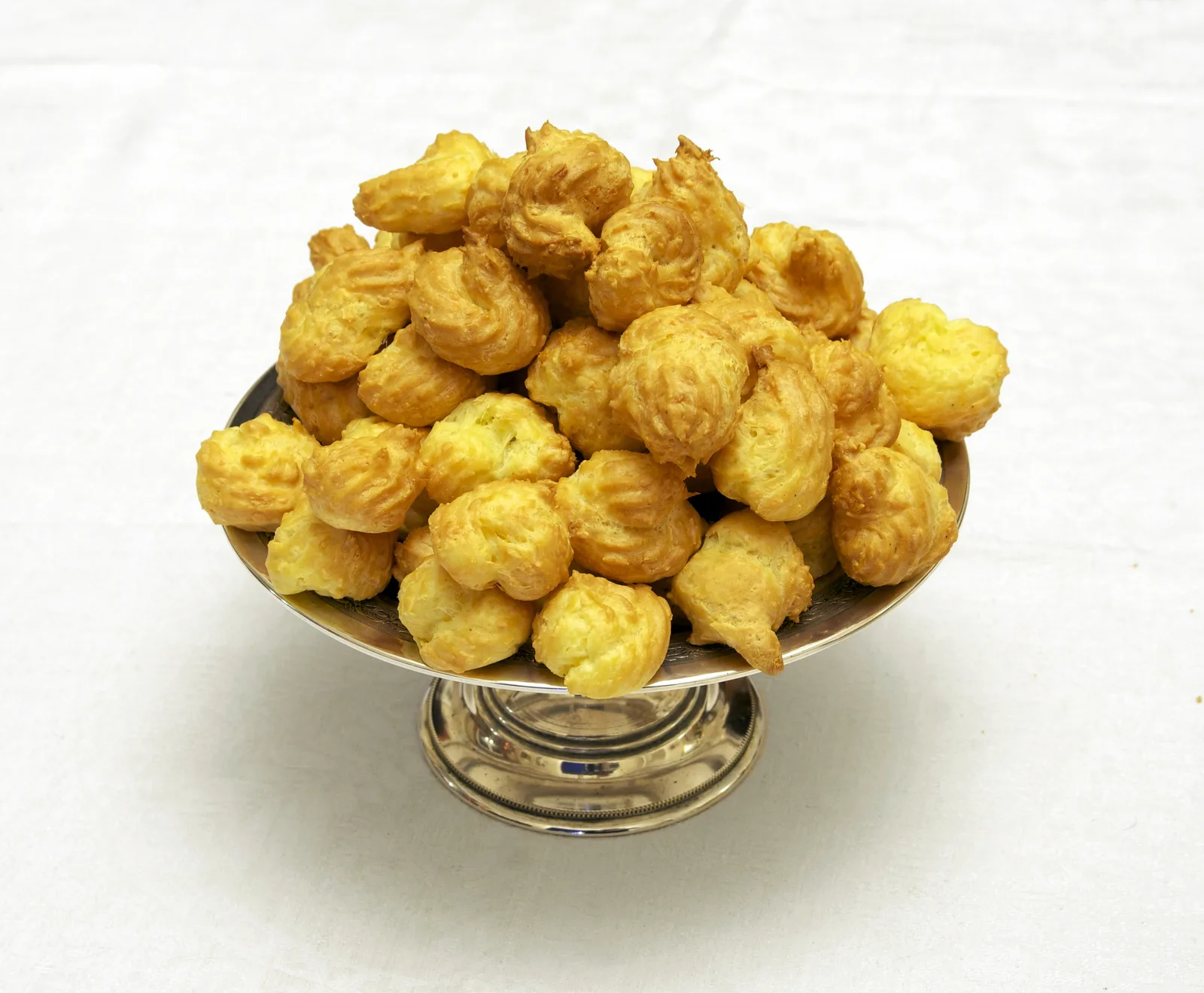
A pile of golden baked gougeres, French cheese puffs, on a silver serving stand

Burgundian Aperitif Classic

Photo: Jebulon, CC0, via Wikimedia Commons

The Heritage Formulary

Measured Ingredients

Estimated cost: Low — about $2–3 per serving at home (USD)

Made with real Gruyère beaten into fresh choux pastry and baked until deeply golden.

Execution Methodology & Culinary Technique

Step-by-Step Cooking Guide

Active 45m
P

Prep Stage: Weigh, Grate & Line

20 Mins • Weighing & Grating

Weigh the flour, cube the butter, grate both cheeses and line a baking tray with parchment. Choux pastry moves fast once the pan is hot, so everything must be ready before you start.

Maestro Tip: Grate the cheese yourself — pre-grated cheese is coated to stop clumping and melts less smoothly.

  1. 1

    Make the Choux Base

    6 Mins Medium heat, about 175°C (350°F)

    Put the water, butter and salt in a saucepan and bring to a rolling boil. Take it off the heat, tip in all the flour at once and beat hard with a wooden spoon until the mixture forms a smooth ball that pulls away from the sides.

    Adding the flour all at once, off the heat, is what stops lumps forming.

    Done when: A smooth ball of dough that leaves the pan sides clean.

  2. 2

    Dry the Dough

    2 Mins Low heat, about 120°C (250°F)

    Return the pan to low heat and stir the dough for about 2 minutes until a thin film forms on the bottom of the pan and the dough smells faintly toasted.

    Drying the dough now is what lets it absorb the eggs and puff up in the oven.

    Done when: A dry film on the pan, dough glossy and firm.

  3. 3

    Beat in Eggs & Cheese

    5 Mins No heat — room temperature, about 22°C (72°F)

    Tip the dough into a bowl and leave for 2 minutes to cool slightly. Beat in the eggs a little at a time until the paste is smooth, shiny and falls from the spoon in a slow pointed ribbon. Fold in the Gruyère and pepper.

    If the paste looks too stiff, add a spoonful more beaten egg; too loose, and the puffs will spread flat.

    Done when: Smooth, glossy paste that drops in a slow ribbon.

  4. 4

    Pipe the Puffs

    5 Mins No heat — room temperature, about 22°C (72°F)

    Spoon or pipe 24 walnut-sized mounds onto the lined tray, spacing them well apart. Sprinkle with the Parmesan and smooth any pointed tips with a wet fingertip.

    Wet fingertips stop the dough sticking and keep the tops from scorching into sharp peaks.

    Done when: Even mounds, well spaced, with Parmesan on top.

  5. 5

    Bake Until Golden

    25 Mins 200°C (400°F)

    Bake for 20–25 minutes until the puffs are deeply golden, crisp and firm to the touch, with the centres set to about 74°C (165°F). Do not open the oven for the first 15 minutes or they may sink.

    Resist peeking early — the rush of cool air is what collapses choux pastry.

    Done when: Deeply golden, crisp shells that sound hollow when tapped.

Finishing Touches & Plating

Serve warm, piled on a plate or stand, while the centres are still soft and the tops are crisp.

Nutritional Physiology & Benefits

Nutrition

Energy

343

kcal / serving

Protein

14g

Complete AA

Carbs

17g

Complex

Fats

24g

Healthy

Per serving (6 servings · 1 serving ≈ 115 g)
Energy343 kcal
Protein14 g
Carbohydrates17 g
Fat24 g
Fibre0.6 g
Sugar0.2 g
Sodium369 mg
Per 100g
Energy298 kcal
Protein12 g
Carbohydrates14.9 g
Fat21.2 g
Fibre0.5 g
Sugar0.2 g
Sodium321 mg

Nutrition values are estimated — calculated from USDA FoodData Central values for the listed ingredients.

Vitamins & minerals: Provides calcium and phosphorus from the cheese, vitamin A from the butter and eggs, and B vitamins from the eggs. Nutrition is estimated.

Protein and Calcium

About 14 g of protein and a good share of calcium per serving from the Gruyère and eggs.

Light and Airy

Choux pastry puffs up mostly with steam, so each bite is mostly air — rich in flavour without feeling heavy.

Real Cheese, Nothing Artificial

Just butter, flour, eggs and cheese — no flavourings or preservatives.

Food Pairings

What to Eat With

To optimize nutrient absorption and elevate the sensory depth, pair with these authentic accompaniments:

Drinks

Dry White Wine

A glass of Aligoté or Chablis is the Burgundian pairing — its acidity cuts through the buttery cheese.

Vegetables

Cornichons

Sharp little pickles add crunch and acidity that balance the rich puffs.

Full Menus

As an Aperitif

Handed round warm before dinner, gougères open a meal the way Burgundian hosts have done for generations.

Sides

A Simple Green Salad

A few dressed leaves turn the puffs into a light lunch instead of a snack.

Complete menu

Start with warm gougeres and a glass of white wine, follow with a simple roast chicken and salad, and finish with fresh fruit.

Digestive Guardrails

What NOT to Combine

To prevent digestive distress, sluggishness, or palate clash, avoid pairing the dish with these elements:

Sweet Dips or Jams

Sweet accompaniments clash with the salty, nutty cheese and flatten the flavour. This is general information, not medical advice.

Opening the Oven Early

Opening the door in the first 15 minutes lets the steam escape and the puffs can collapse and never rise again.

General information only, not medical advice — consult a doctor for personal dietary decisions.

Who Should Eat It

Who Should Eat

  • General adultsA rich, salty snack — enjoy a modest handful because they are high in fat and sodium.
  • ChildrenKids love the cheesy puffs; serve them warm but let them cool a minute first.
  • ElderlySoft and easy to eat, but the salt and fat mean a small portion is wiser for those watching either.
  • Pregnant womenMade with fully baked eggs and pasteurised cheese, served hot; check with your clinician if unsure.
  • Breastfeeding womenFine in normal portions; the protein and calcium are useful, but keep the overall salt in mind.
  • AthletesGood energy and protein after training, though the fat slows digestion, so they suit a post-workout snack rather than a pre-workout one.
  • Weight gainEnergy-dense and protein-rich, so they can help add calories — pair with a salad for a fuller meal.
  • Weight lossVery calorie-dense, so take a few puffs and load the plate with salad instead of a second handful.

Health Conditions — Adjust or Avoid

Conditions

  • DiabetesAbout 17 g of carbohydrate per serving; count the puffs and ask your clinician about portion size.
  • High blood pressureContains about 369 mg of sodium per serving; take a small portion and skip extra salty sides. Ask your clinician for personal advice.
  • Kidney diseaseHigh in sodium, potassium and phosphorus from cheese; usually not suitable in larger portions — ask your clinician.
  • GoutLow in purines, so usually fine in a normal portion; ask your clinician if you are unsure.
  • Stomach issuesRich and buttery, which can trigger reflux or discomfort; a small portion is gentler. Ask your clinician if symptoms persist.
  • Cardiovascular diseaseHigh in saturated fat and sodium; treat them as an occasional snack rather than a regular one. Ask your clinician.
  • Fatty liverThe saturated fat and energy density make large portions unhelpful; keep them occasional and small. Ask your clinician.
  • Food allergiesContains milk (cheese, butter), egg and wheat (flour). Ask your clinician about any allergy concern.
  • Special therapeutic dietsNot suitable for low-sodium or low-fat therapeutic diets; ask your clinician or dietitian before including them.

If you have a medical condition, consult your doctor before changing your diet.

Storage & Use

Storage & Use

How to store
Cool completely on a wire rack, then store in a paper bag or loosely covered container; do not seal while warm or they go soft.
In the fridge
Keeps 2 days in the fridge at 4°C (40°F) or below.
In the freezer
Keeps 1 month in the freezer in a sealed bag; thaw at room temperature.
How to reheat
Reheat in the oven at 180°C (350°F) for 5 minutes until crisp and hot through, to 74°C (165°F).
Freezing recommended
Yes — freeze the baked puffs and re-crisp them in the oven.
Signs it has spoiled
Sour smell, soft and damp texture, or mould.

More recipes to explore

Golden butter croissants on a wooden board France flag France 20m
Breakfast •Parisian Boulangerie

Croissant au Beurre & Café

Laminated cultured butter pastry paired with washed Arabica, for a slow, pleasurable Parisian morning — best with a little protein alongside. One serving is about 390 g.

Sustained Focus

Flaky all-butter croissant with café au lait, Comté and green apple.

Pairs Well With
Comté cheese wedge & Green apple slices
Quick Prep (<30m)

Bœuf bourguignon — French beef braised in red wine France flag France 4h
Dinner •Burgundy Terroir

Bœuf Bourguignon

Beef braised gently in red wine until the connective tissue melts into a velvet, gelatin-rich sauce — the classic Burgundy Sunday dinner.

Cellular Repair

Beef braised in red wine until spoon-tender, with mushrooms and pearl onions.

Pairs Well With
Parsnip Purée & Steamed French Haricots Verts
High Protein
A mound of classic ratatouille with eggplant, zucchini, tomato and onion on a white plate France flag France 1h 15m
Dinner •Nice Provençal

Ratatouille

This ratatouille recipe cooks eggplant, zucchini, peppers and tomatoes separately first, so each vegetable keeps its own texture, then brings them together for a slow, fragrant simmer. One serving is about 400 g.

Light & Vegetable-Rich

Slow-simmered summer vegetables in olive oil — light, fragrant and full of fibre.

Pairs Well With
Crusty sourdough bread, grilled fish or a fried egg
A bowl of coq au vin with a braised chicken leg in dark red wine sauce with mushrooms and onions, greens on the side France flag France 1h 40m
Dinner •Burgundy Classic

Coq au Vin

This coq au vin recipe is the Burgundy classic: chicken thighs browned with bacon, then braised in red wine with mushrooms, pearl onions and carrots until the meat is tender and the sauce is dark and glossy. One serving is about 375 g. It takes 1 hour 40 minutes, most of it hands-off while the pot simmers.

Comfort & Warmth

Chicken braised slowly in red wine with mushrooms, pearl onions and bacon until it falls off the bone.

Pairs Well With
Mashed potatoes, crusty bread & Burgundy wine

The Dinner Gazette

Never wonder what’s for dinner again

One email a week with easy dinner ideas from around the world — ingredients, steps and nutrition, tested in our kitchen first.

Delivered every Thursday morning. Unsubscribe anytime.