Curated recipes from 193 countries  •  New seasonal Mediterranean issue out now

Overview

Guaguas de Pan

Bread Babies — Ecuadorian Day of the Dead Sweet Bread

This guaguas de pan recipe makes twelve sweet Ecuadorian bread babies from a soft, cinnamon-scented dough enriched with milk, butter and one egg, each one filled with guava paste, shaped like a swaddled infant and dipped in chocolate with icing swirls. They are the bread of Día de los Difuntos, the Day of the Dead on November 2, and they are always served with warm colada morada. One serving is about 90 g.

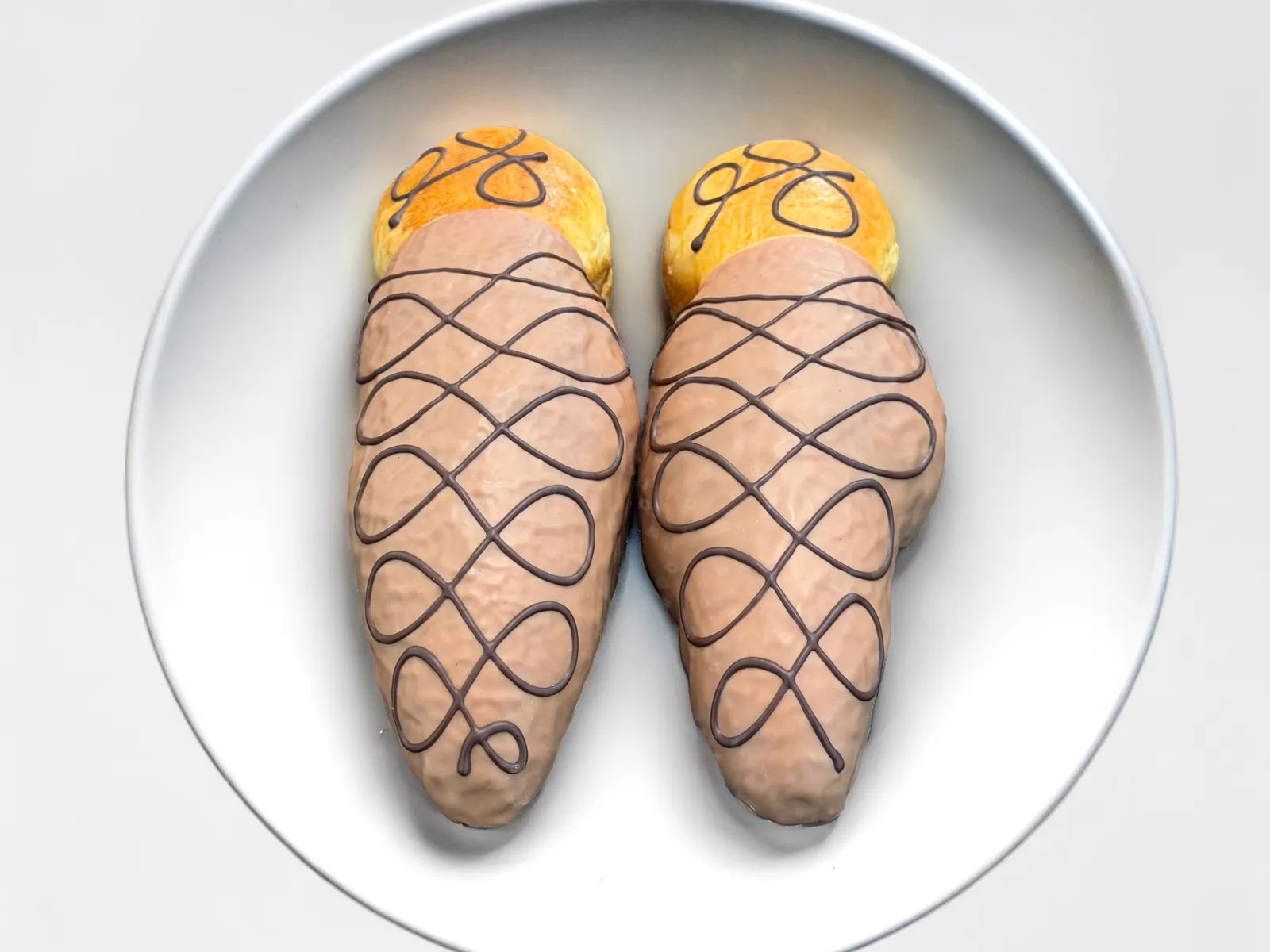
Guagua is the Quechua word for baby, and guaguas de pan are exactly that: sweet breads shaped like swaddled infants, baked in Ecuador for Día de los Difuntos, the Day of the Dead on November 2, when families visit cemeteries and share food with the memory of their dead. The tradition blends Indigenous Andean funeral customs with the Catholic observance that arrived in the colonial period — wheat itself only reached the Andes with the Spanish, so the bread babies are a newer part of a much older day. Bakers fill them with guava paste, chocolate or dulce de leche and decorate them with coloured icing, and they are always eaten with colada morada, the thick purple drink of purple corn and Andean berries. In Quito, bakeries like the one in the photograph sell them by the dozen in the weeks before November 2, and shaping and decorating them is a favourite activity for children.

Pairs well with: A warm guagua with a glass of colada morada, the purple corn and fruit drink of the Day of the Dead

Provenance

Ecuador flag Ecuador

Ecuadorian Heritage

Latin America & Caribbean

Time Dedication

4h 50m

270m prep • 20m cook

Batch Yield

12 Servings

321 kcal per serving

1 serving ≈ 90 g

Technical Skill

Intermediate

Medium (Shaped Yeast Bread)

Meal Timing & Digestive Fit

Breakfast

Not Advised

Lunch

Inappropriate

Dinner

Inappropriate

Snack & Tea

Ideal Light Bite

Occasions: Day of the Dead (Día de los Difuntos, November 2), family baking, festive snacks Cost: Low — about $0.60 per serving at home
Two chocolate-dipped guaguas de pan on a white plate, baby-shaped sweet breads with dark chocolate icing swirls

Ecuadorian Heritage

Photo: Taty2007, CC BY 4.0, via Wikimedia Commons

The Heritage Formulary

Measured Ingredients

Estimated cost: Low — about $0.60 per serving at home (USD)

A good guagua de pan is soft and golden, clearly shaped like a swaddled baby, with a sweet filling inside and a neat chocolate dip and icing swirls outside.

Execution Methodology & Culinary Technique

Step-by-Step Cooking Guide

Active 4h 50m
P

Sponge, dough, two rises

270 Mins • Sponge, Kneading, Rising & Decorating

Guaguas are a slow, happy bake: a sponge starter first, then a soft enriched dough, then two rises and a careful shaping session. The dough should be soft and slightly tacky — too much flour makes heavy babies that lose their shape. Keep the guava paste thick and the pieces small, so the filling stays sealed inside while the breads bake.

Maestro Tip: Weigh the flour rather than scooping it from the bag: too much flour is the most common reason a guagua turns out heavy and loses its baby shape.

  1. 1

    Make the Sponge

    60 Mins Warm place, ~26°C (79°F)

    Stir the yeast into the warm milk with 1 tablespoon of the sugar and 100g of the flour. Cover and leave in a warm place for 45–60 minutes, until puffy and bubbling.

    If the sponge does not bubble, the yeast is dead — start again with fresh yeast rather than wasting the rest of the ingredients.

    Done when: The sponge is puffy, bubbly and smells faintly of yeast.

  2. 2

    Mix and Knead the Dough

    15 Mins Room temperature

    Add the rest of the flour, the remaining sugar, the salt and the cinnamon to the sponge, then the beaten egg. Mix to a shaggy dough, then knead in the softened butter a little at a time. Knead for 8–10 minutes until the dough is smooth, soft and slightly tacky — it should spring back slowly when poked.

    Resist adding extra flour while kneading; a soft, tacky dough bakes into a soft, tender crumb.

    Done when: Smooth dough that springs back slowly when poked.

  3. 3

    First Rise

    90 Mins Warm place, ~26°C (79°F)

    Shape the dough into a ball, put it in a lightly oiled bowl, cover, and leave in a warm place for about 90 minutes, until it has roughly doubled in size.

    A turned-off oven with the light on is a good warm spot for rising dough.

    Done when: The dough has doubled and holds a dent when poked gently.

  4. 4

    Fill and Shape the Babies

    30 Mins Room temperature

    Turn the dough out and divide it into 12 equal pieces. Flatten each piece, place a piece of guava paste in the centre, fold the dough over and pinch the seam shut. Roll each filled piece into a plump oval about 12 cm long, then pinch one end into a small round head and smooth the join so the baby shape reads clearly. Set the babies seam-side down on lined baking trays, well apart.

    Seal the seam firmly and keep the filling small — a leaky guagua loses its shape and burns on the tray.

    Done when: Twelve neat baby shapes, seams hidden underneath, heads clearly formed.

  5. 5

    Second Rise and Bake

    20 Mins 180°C (350°F)

    Cover the shaped babies loosely and leave them to rise again for about 45 minutes, until puffy. Meanwhile, heat the oven to 180°C (350°F). Bake for 18–20 minutes, until golden brown and the bases sound hollow when tapped. Cool completely on a rack.

    Do not let the second rise go too far — over-proofed babies collapse in the oven instead of holding their shape.

    Done when: Deep golden tops, hollow tap underneath, and an internal temperature of about 93°C (200°F).

  6. 6

    Dip in Chocolate and Decorate

    30 Mins Room temperature

    Melt the chocolate gently in a bowl over hot water. Dip the body of each cooled guagua into the chocolate, letting the head stay golden, and set on a rack. Mix the powdered sugar with the milk a little at a time until thick but pipeable, then pipe swirls, crosses and faces onto the chocolate and the heads. Leave 20 minutes for the chocolate to set.

    The breads must be completely cool before dipping — warm bread melts the chocolate into a puddle and the icing slides off.

    Done when: Chocolate set firm, icing swirls crisp and dry to the touch.

Finishing Touches & Plating

Let the chocolate set for 20 minutes before serving, so the dip firms up and the icing swirls stay crisp. Serve the guaguas on a wide plate with a jug of warm colada morada, and let everyone pick their own baby — no two are ever decorated alike.

Nutritional Physiology & Benefits

Nutrition

Energy

321

kcal / serving

Protein

6g

Complete AA

Carbs

57g

Complex

Fats

8g

Healthy

Per serving (12 servings · 1 serving ≈ 90 g)
Energy321 kcal
Protein6 g
Carbohydrates57 g
Fat8 g
Fibre2.3 g
Sugar22.2 g
Sodium180 mg
Per 100g
Energy356 kcal
Protein6.7 g
Carbohydrates63.4 g
Fat8.7 g
Fibre2.5 g
Sugar24.7 g
Sodium200 mg

Nutrition values are estimated — calculated from USDA FoodData Central values for the listed ingredients.

Vitamins & minerals: B vitamins and iron (enriched flour and yeast), calcium (milk and butter), with small amounts of vitamin A and potassium.

Steady Energy From Sweet Bread

A guagua is mostly slow-digesting carbohydrate from flour, so it fills you up and keeps you going between meals.

A Little Protein and Calcium in Every Bread

Milk, butter and one egg enrich the dough, so each bread carries a few grams of protein and calcium along with its sweetness.

Simple Ingredients, Nothing Hidden

Everything in the dough is an everyday ingredient — flour, milk, butter, sugar, yeast, egg and cinnamon — nothing you cannot pronounce.

Food Pairings

What to Eat With

To optimize nutrient absorption and elevate the sensory depth, pair with these authentic accompaniments:

Drinks

Colada Morada

Colada morada is the reason guaguas exist: the warm, spiced purple drink is dunked with the bread, and the sweet-tart fruit cuts through the rich dough.

Hot Chocolate

A cup of thick Ecuadorian hot chocolate turns a guagua into a full afternoon snack — the bread softens in the chocolate and the guava filling tastes even sweeter.

Vegetables

Fresh Tropical Fruit

Fresh fruit — papaya, pineapple or berries — lightens a plate of sweet bread and echoes the fruit in the colada morada.

Full Menus

Pan Dulce, Plain

Guaguas and a second sweet bread on the same table make a Day of the Dead spread; a plain pan dulce lets the decorated babies stay the stars.

Complete menu

Serve the guaguas de pan with a jug of warm colada morada and a bowl of fresh fruit, and follow with hot chocolate for anyone who wants a second round.

Digestive Guardrails

What NOT to Combine

To prevent digestive distress, sluggishness, or palate clash, avoid pairing the dish with these elements:

Decorating While Still Warm

A hot guagua straight from the oven will melt its chocolate dip into a puddle and slide the icing off. Let the breads cool completely before decorating. This is general guidance, not medical advice.

Overfilling With Runny Filling

Thin, watery filling leaks out in the oven and burns on the tray, and the baby shape collapses. Use thick guava paste and only about a teaspoon per guagua, sealed well. This is general guidance, not medical advice.

General information only, not medical advice — consult a doctor for personal dietary decisions.

Who Should Eat It

Who Should Eat

  • General adultsA festive sweet bread — one or two guaguas with colada morada or hot chocolate make a lovely snack.
  • ChildrenChildren love shaping and decorating them, and the sweet, soft bread is a favourite — keep portions to one guagua.
  • ElderlyVery suitable — soft, warm and easy to chew; serve a modest guagua with hot chocolate.
  • Pregnant womenGenerally suitable; the bread is fully baked and the egg is cooked through.
  • Breastfeeding womenGenerally suitable; a guagua with hot chocolate is a comforting, energy-rich snack.
  • AthletesA handy sweet refuelling snack after training — the bread and guava give quick energy.
  • Weight gainA good choice — take two guaguas with hot chocolate.
  • Weight lossKeep it to one guagua and skip a second helping; the bread is sweet and energy-dense.

Health Conditions — Adjust or Avoid

Conditions

  • DiabetesThe bread is sweet and high in carbohydrate — keep it to half a guagua or one small one, and ask your clinician about a suitable serving.
  • High blood pressureMost of the sodium comes from the added salt; keep the portion to one guagua and ask your clinician about portion size.
  • Kidney diseaseLimit the portion — the bread is high in carbohydrate and the filling is sweet; ask your clinician about portion size.
  • GoutEat occasionally and in smaller portions — sweet bread is low in purines, but large portions add up; ask your clinician if you are unsure.
  • Stomach issuesUsually gentle on the stomach, but a sweet, rich bread can feel heavy — eat a modest guagua and avoid eating it very hot.
  • Cardiovascular diseaseKeep the portion to one guagua — the dough is made with butter and the dip is chocolate; balance it with fruit or a light drink.
  • Fatty liverKeep the portion to one guagua and favour the chocolate-free version; the bread is sweet and energy-dense.
  • Food allergiesContains wheat (gluten), milk, butter and egg. The filling is guava; the dip is chocolate — check for nut traces on the chocolate label.
  • Special therapeutic dietsIf you follow a prescribed low-sugar diet, use a smaller filling and skip the chocolate dip, and check with your clinician.

If you have a medical condition, consult your doctor before changing your diet.

Storage & Use

Storage & Use

How to store
Cool completely, then keep in a covered container at room temperature.
In the fridge
Not recommended — the fridge makes sweet bread stale faster; keep at room temperature for 2 days.
In the freezer
3 months, undecorated, wrapped in portions; thaw at room temperature and decorate fresh.
How to reheat
Warm in the oven at 160°C (325°F) for 5 minutes until the centre reaches 74°C (165°F); do not microwave a decorated guagua.
Freezing recommended
Yes, before decorating — decorated guaguas do not freeze well.
Signs it has spoiled
Mould on the crumb or filling, a sour smell, or a hard, dry texture.

More recipes to explore

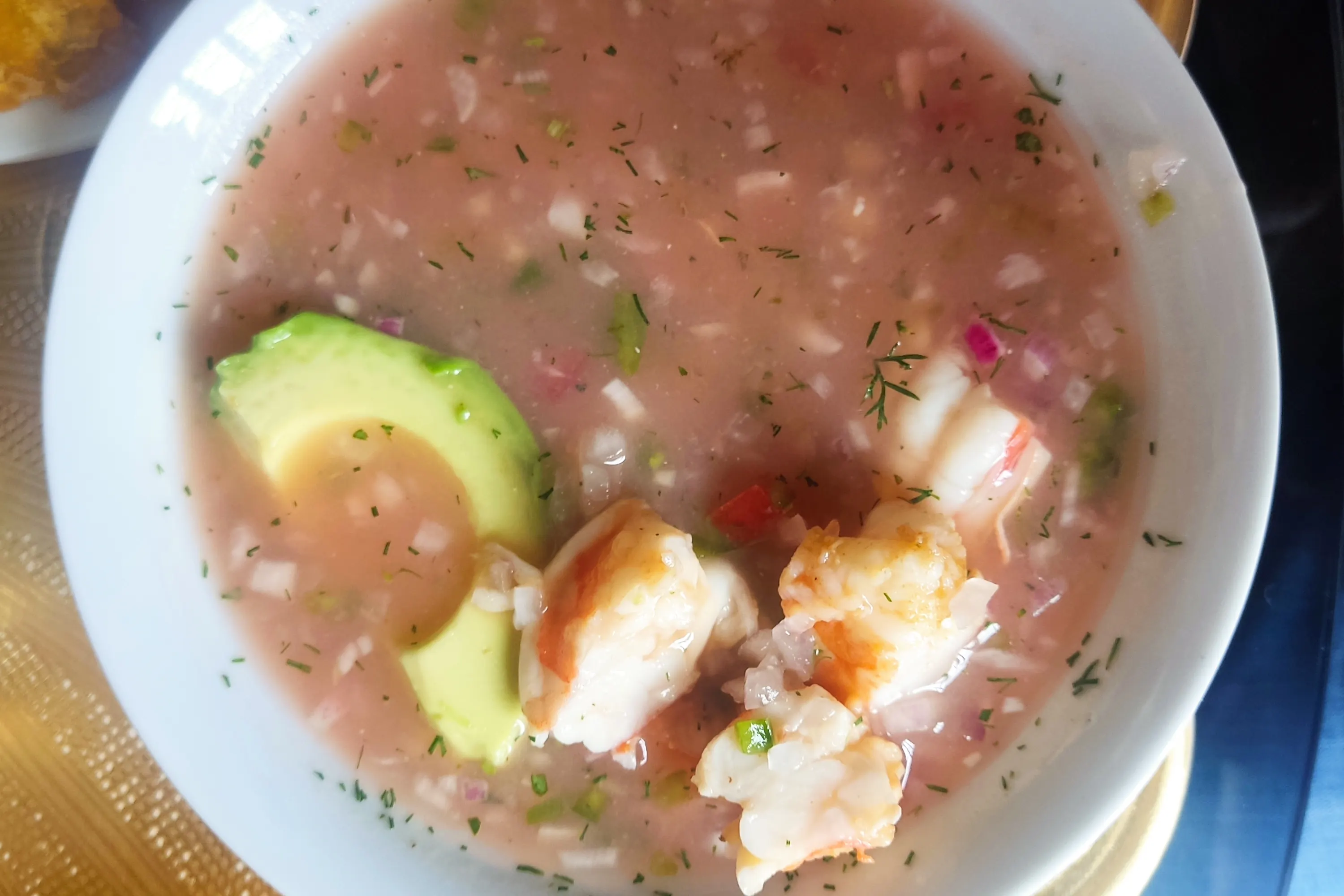
A white bowl of Ecuadorian shrimp ceviche in pink tomato-citrus sauce with cooked shrimp, red onion, cilantro and an avocado slice Ecuador flag Ecuador 30m
Lunch •Coastal Ecuador

Ecuadorian Ceviche

Ecuadorian ceviche is a bowl of poached shrimp in a pink-orange sauce of tomato, lime and orange juice, with red onion and cilantro. Unlike the Peruvian version, where raw fish is cured in lime juice, the shrimp here is cooked first, so the dish is saucy, cold and gentle rather than sharp. One serving is about 341 g.

Light & Fresh

Poached shrimp in a bright lime, orange and tomato sauce, served chilled with crunchy sides.

Pairs Well With
Chifles, popcorn and avocado slices
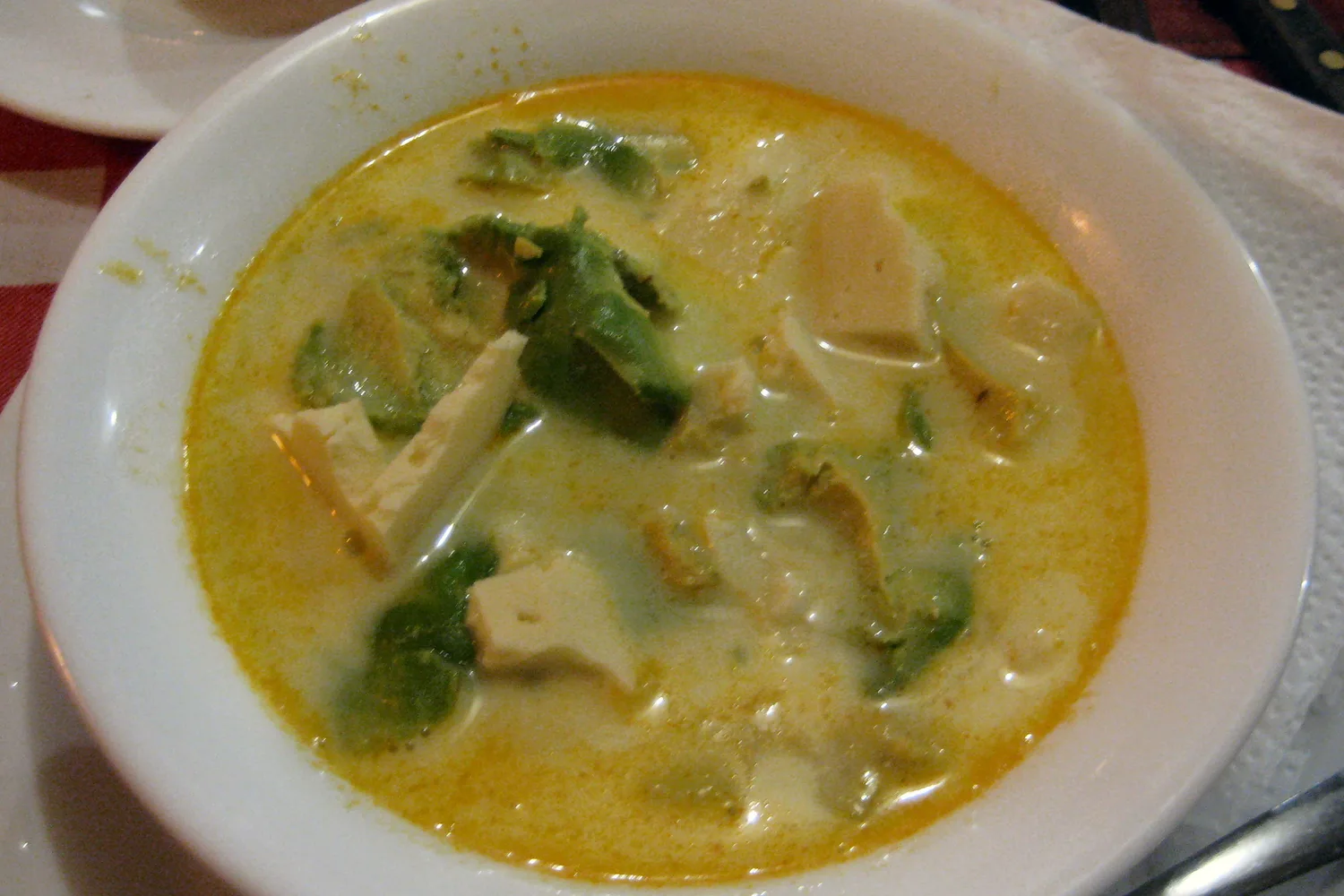
A bowl of golden locro de papa, Ecuadorian potato and cheese soup, topped with avocado chunks and cubes of white cheese Ecuador flag Ecuador 55m
Dinner •Andean Heritage

Locro de Papa

Locro de papa is Ecuador's golden potato and cheese soup, thickened by the potatoes themselves and finished with creamy avocado and crumbled queso fresco. One serving is about 675 g. It is a one-pot, meat-free dinner that tastes like the cool Andean evenings it comes from.

Comfort & Warmth

A thick, golden potato and cheese soup from the Ecuadorian highlands, finished with fresh avocado.

Pairs Well With
Crusty bread and a simple lettuce and tomato salad, with hot panela water or herbal tea to drink.
Soups & Broths
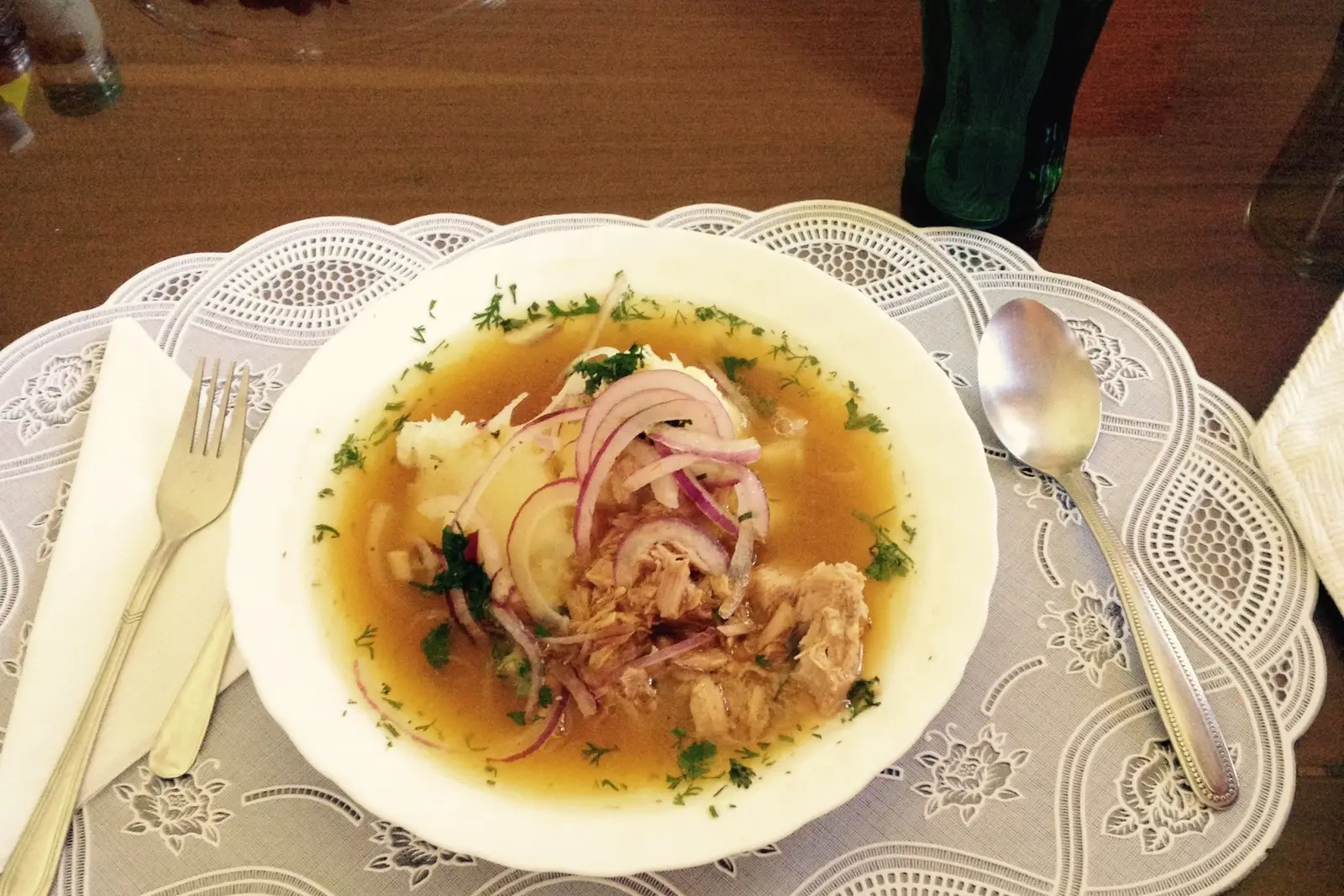
A bowl of encebollado with flaked tuna, pickled red onion rings, yuca and golden broth, sprinkled with cilantro Ecuador flag Ecuador 1h 20m
Lunch •Guayaquil Heritage

Encebollado

This encebollado recipe is Ecuador's beloved coastal soup: fresh albacore tuna simmered in a tomato, onion and cumin broth with tender chunks of yuca, then ladled into bowls under a bright mound of lime-pickled red onion and tomato. The broth is light and savoury, the onion topping is sharp and fresh, and the chifles and tostado on the side add the crunch every Ecuadorian expects. One serving is about 600 g, soup and toppings together.

Comfort & Warmth

Fresh tuna and yuca simmered in a tomato-cumin broth, finished with lime-pickled red onion and crunchy plantain chips.

Pairs Well With
Chifles (plantain chips) and tostado (toasted corn) for crunch, avocado slices, and lime wedges to squeeze over the bowl.
Soups & Broths
Golden llapingacho potato patties on rice with peanut sauce and shredded lettuce Ecuador flag Ecuador 1h
Lunch •Andean Heritage

Llapingacho

Llapingacho is Ecuador's most loved potato dish: mashed potato mixed with onion and annatto oil, wrapped around fresh cheese, flattened into cakes and fried until the outside is crisp and golden and the centre turns gooey. It is served with a fried egg, peanut sauce and a little salad. One serving is about 464 g.

Golden & Comforting

Mashed potato mixed with onion and annatto oil, stuffed with fresh cheese and fried golden.

Pairs Well With
Fried egg, peanut sauce and a fresh salad

The Dinner Gazette

Never wonder what’s for dinner again

One email a week with easy dinner ideas from around the world — ingredients, steps and nutrition, tested in our kitchen first.

Delivered every Thursday morning. Unsubscribe anytime.