
Curated recipes from 193 countries  •  New seasonal Mediterranean issue out now

Overview

Honduran Banana Bread

Pan de Banano, Honduran Banana Loaf

This Honduran banana bread recipe turns three very ripe bananas into a moist, golden loaf, enriched with Neufchatel cheese and flecked with sweet coconut. It is a one-bowl quick bread with no yeast: cream, mash, fold and bake. One serving is about 85 g.

Bananas shaped the northern coast of Honduras: the port city of La Ceiba grew up around the banana trade, and in Honduran homes the ripest fruit — skins gone black and sweet — goes into a loaf rather than the bin. The local version of the Honduran banana bread recipe is set apart by Neufchatel cheese beaten into the batter and a handful of flaked coconut, a combination Honduran cooks pass on from one kitchen to the next. It is the loaf that appears with afternoon coffee, sliced thick and still warm.

Pairs well with: Salted butter and hot Honduran coffee

Provenance

Honduras flag Honduras

Honduran Heritage

Latin America & Caribbean

Time Dedication

1h 15m

15m prep • 60m cook

Batch Yield

10 Servings

240 kcal per serving

1 serving ≈ 85 g

Technical Skill

Easy

Easy (One Bowl)

Meal Timing & Digestive Fit

Breakfast

Not Advised

Lunch

Inappropriate

Dinner

Inappropriate

Snack & Tea

Ideal Light Bite

Occasions: Afternoon coffee, weekend baking, using up ripe bananas, school snacks Cost: Low — about $0.50–0.70 per serving at home
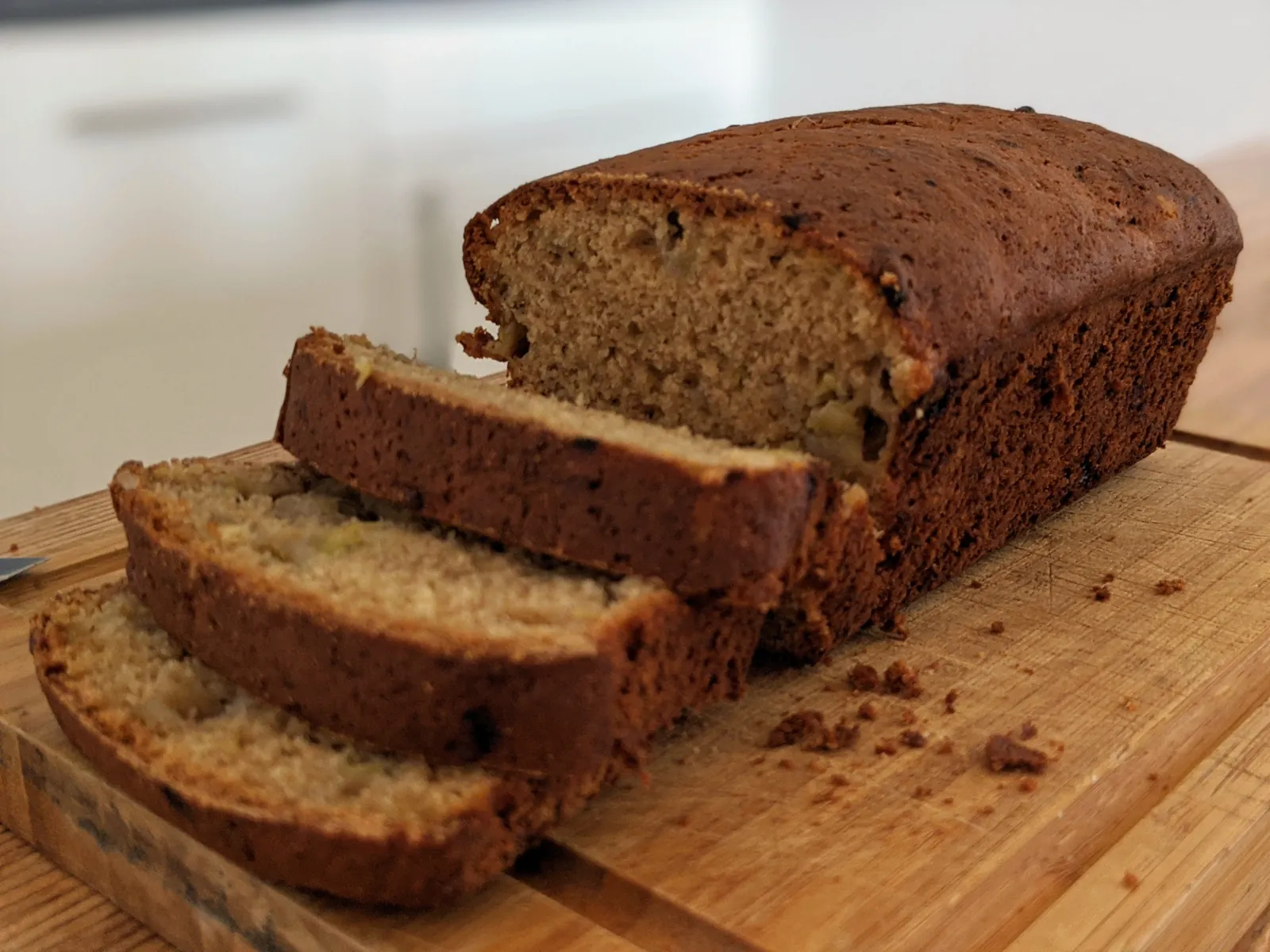
Three slices of golden Honduran banana bread with a moist crumb, cut from a loaf on a wooden board

Honduran Heritage

Photo: Shisma, CC BY 4.0, via Wikimedia Commons

The Heritage Formulary

Measured Ingredients

Estimated cost: Low — about $0.50–0.70 per serving at home (USD)

A true Honduran banana bread is moist and dense, enriched with Neufchatel cheese and flaked coconut, and baked until a skewer comes out clean.

Execution Methodology & Culinary Technique

Step-by-Step Cooking Guide

Active 1h 15m
P

Cream, Mash and Fold

15 Mins • One Bowl

Beat the 28 g softened butter with the 30 g Neufchatel and 200 g sugar, beat in the egg, then fold in the flour mixture and the banana mixture in turns, with the 23 g flaked coconut last. Scrape into a greased 23 x 13 cm (9 x 5 inch) loaf pan and smooth the top.

Maestro Tip: Do not overmix once the flour goes in — stir just until the last streak of flour disappears, or the loaf turns tough.

  1. 1

    Heat the Oven and Prepare the Pan

    5 Mins 175°C (350°F)

    Heat the oven to 175°C (350°F) with a rack in the centre. Grease a 23 x 13 cm (9 x 5 inch) loaf pan with butter and line the base and long sides with a strip of parchment paper, leaving an overhang to lift the loaf out.

    The parchment sling is the difference between a loaf that lifts out cleanly and one that tears in the pan.

    Done when: The pan is greased and lined, and the oven is at temperature.

  2. 2

    Cream the Butter, Cheese and Sugar

    5 Mins Room temperature, about 22°C (72°F)

    Beat the 28 g softened butter with the 30 g Neufchatel cheese at medium speed until smooth, then beat in the 200 g sugar a little at a time until the mixture is light and fluffy. Beat in the egg until it disappears.

    Softened butter and cheese cream properly; cold butter stays lumpy and the sugar never dissolves.

    Done when: A pale, fluffy mixture with no lumps of butter or cheese.

  3. 3

    Mix the Bananas, Flour and Coconut

    5 Mins Room temperature, about 22°C (72°F)

    Whisk the 250 g flour, 9 g baking powder, 2.3 g baking soda, 0.75 g salt and 2.6 g cinnamon in a bowl. In another bowl, mash the 225 g bananas with a fork, then stir in the 120 ml skim milk and 5 ml vanilla. Add the flour mixture and the banana mixture to the creamed butter in turns, folding gently after each addition, then fold in the 23 g flaked coconut. Scrape the batter into the prepared pan and smooth the top.

    Stop folding the moment the flour disappears — overmixing is the main cause of a dense, rubbery loaf.

    Done when: A thick batter that drops slowly off the spatula, with coconut spread through it.

  4. 4

    Bake Until the Centre Is Set

    60 Mins 175°C (350°F)

    Bake for 60 to 65 minutes, until the top is deep golden brown and cracked, and a skewer pushed into the centre comes out clean or with a few moist crumbs. If the top browns too fast after 40 minutes, lay a loose sheet of foil over it.

    The skewer test never lies: wet batter on the skewer means another 5 to 10 minutes, even if the top looks done.

    Done when: Deep golden crust, a clean skewer, and the loaf pulling slightly away from the sides of the pan.

  5. 5

    Cool Before Slicing

    20 Mins Room temperature, about 22°C (72°F)

    Leave the loaf in the pan for 10 minutes, then lift it out on the parchment and cool on a wire rack for at least 20 minutes before slicing with a serrated knife into 10 slices.

    Slicing a hot loaf crushes the crumb. Waiting gives clean slices — and the loaf tastes sweeter once it has cooled a little.

    Done when: The loaf is firm enough to slice cleanly without squashing.

Finishing Touches & Plating

Serve slices warm or at room temperature, plain or with a knob of salted butter. Some Honduran bakers scatter chopped pecans over the top before baking and drizzle the cooled loaf with a little lime icing — a pretty finish if you want it.

Nutritional Physiology & Benefits

Nutrition

Energy

240

kcal / serving

Protein

4g

Complete AA

Carbs

47g

Complex

Fats

4g

Healthy

Per serving (10 servings · 1 serving ≈ 85 g)
Energy240 kcal
Protein4 g
Carbohydrates47 g
Fat4 g
Fibre1.6 g
Sugar24.4 g
Sodium217 mg
Per 100g
Energy283 kcal
Protein5 g
Carbohydrates54.9 g
Fat5.2 g
Fibre1.9 g
Sugar28.7 g
Sodium256 mg

Nutrition values are estimated — calculated from USDA FoodData Central values for the listed ingredients.

Vitamins & minerals: Potassium and vitamin B6 from the bananas, with calcium from the skim milk and Neufchatel cheese. Nutrition is estimated.

Rescues Ripe Bananas

Three overripe bananas that would have been thrown away become a whole loaf — this Honduran banana bread recipe is one of the best ways to cut food waste at home.

Steady Morning Energy

One slice gives about 240 kcal with 46.7 g of carbohydrate, so it works as a quick breakfast or afternoon snack that actually keeps you going.

Potassium and B6

The bananas bring potassium and vitamin B6, and the skim milk and Neufchatel add calcium — real nutrients, not just sweetness.

Food Pairings

What to Eat With

To optimize nutrient absorption and elevate the sensory depth, pair with these authentic accompaniments:

Sides

Salted Butter

A thin spread of cold salted butter melts into the warm crumb and the salt sharpens the banana flavour — the simplest and best partner.

Sliced Mango or Pineapple

Fresh tropical fruit adds juice and brightness next to the rich loaf, and its acidity cuts the sweetness so a second slice feels lighter.

Drinks

Hot Honduran Coffee

Black coffee's bitterness balances the loaf's sweetness, and in Honduras the two are a classic afternoon pair — the bread is made to be dunked.

Full Menus

Greek Yoghurt and Berries

A slice next to a bowl of plain Greek yoghurt and berries turns the loaf into a complete breakfast, with protein and freshness alongside the sweet bread.

Complete menu

Serve a warm slice with salted butter and a mug of black coffee, or make it a full breakfast with Greek yoghurt and fresh berries on the side.

Digestive Guardrails

What NOT to Combine

To prevent digestive distress, sluggishness, or palate clash, avoid pairing the dish with these elements:

Storing It Warm in a Sealed Bag

A warm loaf wrapped in plastic traps steam, so the crust turns soggy and mould arrives faster. Let it cool completely on a rack before wrapping. This is general food-safety information, not medical advice.

Swapping Baking Soda for Baking Powder

Baking soda lifts the loaf by reacting with the bananas' acidity; baking powder works another way, so swapping one for the other leaves a dense loaf with a soapy taste. This is general cooking information, not medical advice.

General information only, not medical advice — consult a doctor for personal dietary decisions.

Who Should Eat It

Who Should Eat

  • General adultsA satisfying slice — best as breakfast or an afternoon snack, not as an all-day grazing food.
  • ChildrenA lunchbox favourite; the sweetness is real, so one slice is a sensible portion for children.
  • ElderlySoft, easy to chew and easy to digest — a good choice with tea or coffee.
  • Pregnant womenGenerally suitable; the egg is fully baked through, but the sugar is high, so keep the portion to one slice — ask your clinician.
  • Breastfeeding womenGenerally suitable; the energy and potassium are useful, but watch the sugar if you eat it often.
  • AthletesAbout 46.7 g of carbohydrate a slice makes it a handy pre-training snack — eat it 1 to 2 hours before exercise.
  • Weight gainA good choice — the loaf is energy-dense and easy to eat, and a slice with butter adds calories without much volume.
  • Weight lossAt 240 kcal a slice with 24.4 g of sugar, this is a treat: take one thin slice and pair it with yoghurt or fruit rather than a second slice.

Health Conditions — Adjust or Avoid

Conditions

  • DiabetesAbout 46.7 g of carbohydrate and 24.4 g of sugar a slice — take a thin slice and pair it with protein such as yoghurt; ask your clinician.
  • High blood pressureAbout 217 mg of sodium a slice is moderate, but the sugar is the bigger issue — keep the portion small; ask your clinician.
  • Kidney diseaseBananas are high in potassium, which some kidney diets limit — check your potassium allowance first; ask your clinician.
  • GoutNo purine-rich ingredients, so it is generally fine in small portions; the sugar is the main thing to watch; ask your clinician.
  • Stomach issuesSoft and easy to digest when fresh, but the coconut fibre can bother a sensitive stomach — try a small slice first; ask your clinician.
  • Cardiovascular diseaseLow in fat at 4.4 g a slice, but the sugar is the concern — one small slice occasionally fits better than a daily habit; ask your clinician.
  • Fatty liverThe 24.4 g of sugar a slice is high for a fatty-liver diet — keep it occasional and small; ask your clinician.
  • Food allergiesContains gluten (wheat), egg, milk (butter, Neufchatel, skim milk) and coconut. Check every label.
  • Special therapeutic dietsNot suitable for gluten-free, dairy-free or low-sugar therapeutic diets without a full recipe change — ask your clinician or dietitian.

If you have a medical condition, consult your doctor before changing your diet.

Storage & Use

Storage & Use

How to store
Cool completely, then wrap tightly in cling film or store in an airtight container. Keeps 4 to 5 days at room temperature.
In the fridge
Up to 1 week wrapped in the fridge; bring to room temperature or toast lightly before eating.
In the freezer
Up to 3 months, sliced and wrapped individually — thaw at room temperature.
How to reheat
Toast slices lightly, or warm in an oven at 160°C (325°F) for 5 minutes until heated through.
Freezing recommended
Yes — it freezes very well, sliced, for up to 3 months.
Signs it has spoiled
Mould spots, a sour or fermented smell, or a slimy surface.

More recipes to explore

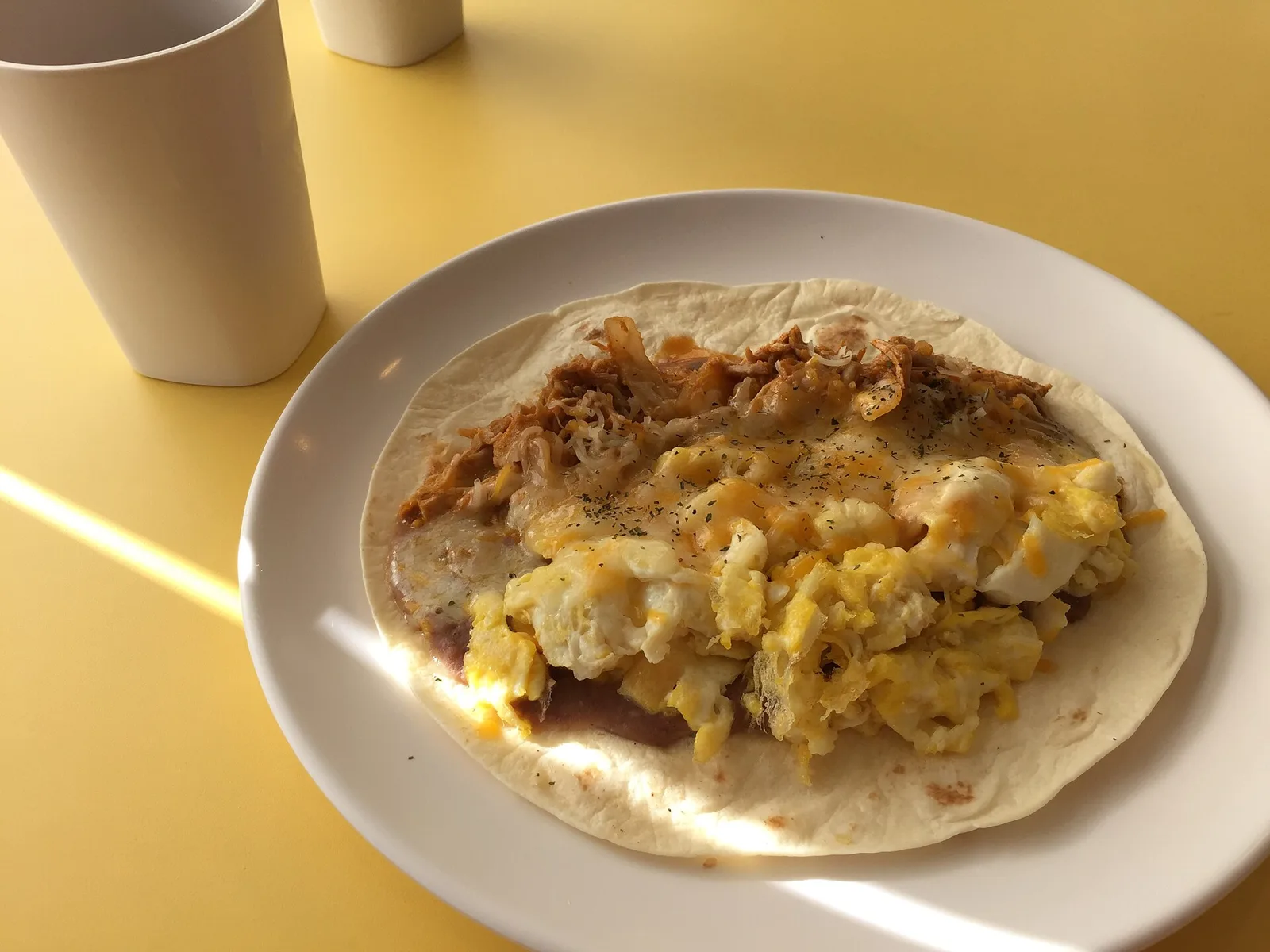
An open baleada on a white plate: a flour tortilla topped with refried beans, scrambled egg and melted cheese Honduras flag Honduras 45m
Breakfast •La Ceiba Heritage

Baleadas

This baleadas recipe makes Honduras's favourite breakfast the way it is sold from street stalls and home kitchens along the north coast: thick, soft flour tortillas, cooked on a dry griddle until golden and speckled, then spread with warm mashed red beans, piled with soft scrambled egg and crumbled salty cheese, and finished with a spoonful of crema. Each baleada is folded in half and eaten hot, by hand, while the cheese is still melting into the beans. One serving is one baleada, about 335 g.

Hearty & Filling

Honduras's best-known breakfast: a thick, soft flour tortilla folded around mashed red beans, scrambled egg and crumbled salty cheese.

Pairs Well With
Sliced avocado and a hot sauce on the side, with a cup of sweet Honduran coffee or a glass of fresh orange juice.
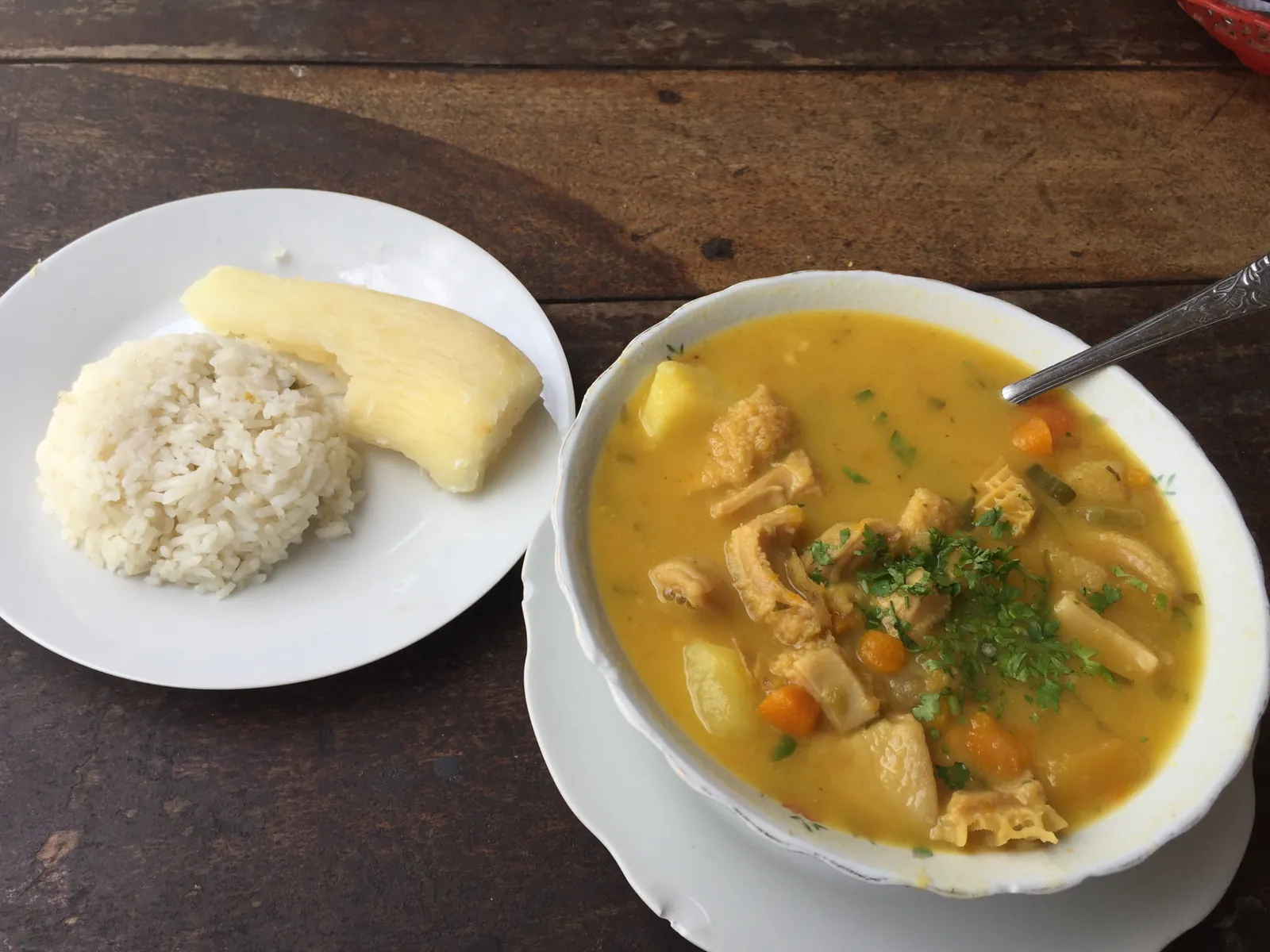
A bowl of sopa de mondongo with strips of tripe, carrots and potatoes, garnished with cilantro, served with white rice and boiled yuca on the side Honduras flag Honduras 3h 45m
Lunch •Honduran Heritage

Honduran Sopa de Mondongo

This honduran sopa de mondongo recipe is Honduras's slow-cooked tripe soup: beef tripe simmered for hours until tender, then loaded with yuca, green plantain, corn, carrots and potatoes in a tomato, cumin and cilantro broth. It is a weekend lunch in Honduran homes, served steaming hot with lime wedges, white rice and warm tortillas for squeezing and scooping. One serving is about 600 g, soup and vegetables together.

Comfort & Warmth

Slow-simmered beef tripe with yuca, plantain and corn in a tomato, cumin and cilantro broth.

Pairs Well With
White rice and warm corn tortillas, with lime wedges and chopped cilantro on the side.
Soups & Broths
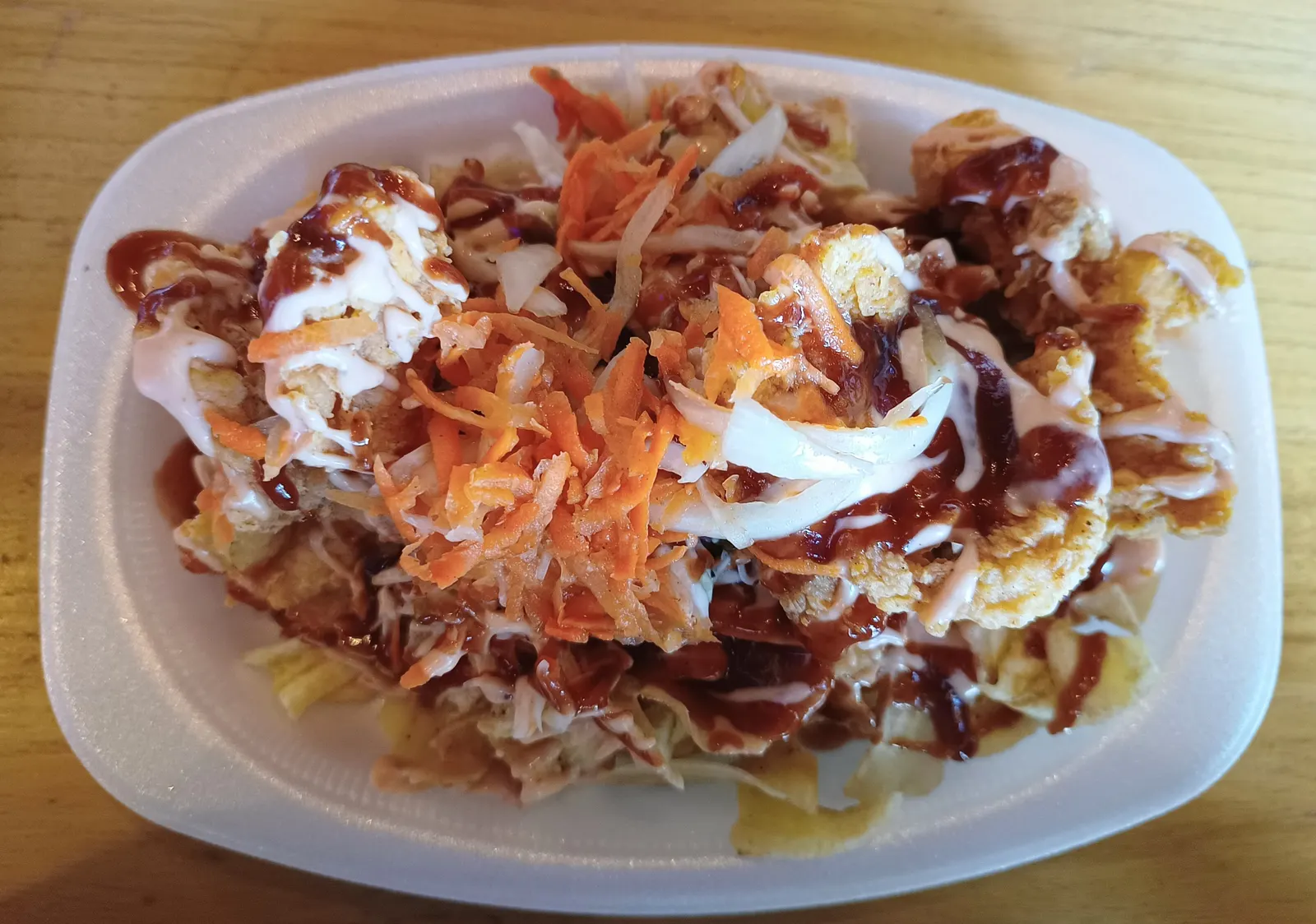
Pollo chuco on a plate: crispy fried chicken over fried plantain tajadas with shredded cabbage, carrot, pickled onion and sauces Honduras flag Honduras 1h 5m
Dinner •San Pedro Sula Heritage

Pollo Chuco

Pollo chuco is the beloved street-food plate of San Pedro Sula, Honduras: flour-dredged chicken fried until crisp and golden, piled over crunchy fried green-plantain slices called tajadas, then finished with lime-dressed cabbage, pickled red onion, fresh chimol salsa and a drizzle of tomato and pink sauces. Every bite mixes crunch, tang, heat and creaminess. One serving is about 480 g.

Hearty Street-Food Comfort

A filling plate of fried chicken, crisp plantains and fresh toppings that works as a satisfying dinner.

Pairs Well With
Serve with an ice-cold agua fresca or a light lager, and lime wedges on the side.
A plate of golden breaded shrimp with refried beans, red rice and avocado salad Honduras flag Honduras 40m
Dinner •Honduran Coastal Favourite

Camarones Empanizados Hondureños

This camarones empanizados recipe starts with large shrimp tossed in lime, garlic and paprika, then runs each one through flour, beaten egg and panko breadcrumbs before a quick fry in hot oil. The crumb turns deep golden and shatteringly crisp while the shrimp inside stays sweet and juicy. It is the coastal favourite of Honduras, served with rice, beans and avocado. One serving is about 185 g.

Coastal Comfort

Large shrimp dredged in flour, dipped in beaten egg and rolled in panko, fried golden and crisp — the Honduran coast's favourite way to eat shrimp.

Pairs Well With
Red rice, refried beans & avocado

The Dinner Gazette

Never wonder what’s for dinner again

One email a week with easy dinner ideas from around the world — ingredients, steps and nutrition, tested in our kitchen first.

Delivered every Thursday morning. Unsubscribe anytime.