Curated recipes from 193 countries  •  New seasonal Mediterranean issue out now

Overview

Kubba

Kubba Mosul, Fried Bulgur Kubba

This kubba recipe makes the Iraqi fried form: fine bulgur kneaded with a little minced beef into a smooth shell, wrapped around a filling of spiced minced beef, onion, walnuts and raisins, shaped into pointed ovals and fried until deep golden and crisp. Unlike the baked tray kibbeh of Lebanon, Iraqi kubba are individual shells, eaten hot with salad and yoghurt. One serving is about 260 g — three shells.

Kubba — kibbeh in the wider Levant — is the stuffed bulgur dish of the old Fertile Crescent, and in Iraq it took the fried form: individual oval shells, shaped by hand and deep-fried until crisp, with Mosul in the north famous for its own large, flat version. The shell is the skill — fine bulgur kneaded with a little minced meat until it holds a thin, even cup — and the filling is the comfort: spiced beef, onion, walnuts and raisins. Unlike the baked tray kibbeh of Lebanon, Iraqi kubba are made one by one and eaten hot, fresh from the oil, with salad and yoghurt.

Pairs well with: Cucumber & tomato salad, plain yoghurt, lemon wedges

Provenance

Iraq flag Iraq

Iraqi Home-Cooking Heritage

Middle Eastern

Time Dedication

1h 5m

40m prep • 25m cook

Batch Yield

6 Servings

615 kcal per serving

1 serving ≈ 260 g

Technical Skill

Advanced

Advanced (Shaping)

Meal Timing & Digestive Fit

Breakfast

Not Advised

Lunch

Hearty Midday Main

Dinner

Ideal Hearty Main

Snack & Tea

Inappropriate

Occasions: Family dinner, festive gatherings, Ramadan table Cost: Moderate — about $3–4 per serving at home
Six golden fried kubba, pointed oval bulgur shells, arranged in a circle on a white plate

Iraqi Home-Cooking Heritage

Photo: さえぼー, CC0, via Wikimedia Commons

The Heritage Formulary

Measured Ingredients

Estimated cost: Moderate — about $3–4 per serving at home (USD)

Good kubba has a thin, even shell that cracks when bitten, a moist spiced filling, and a deep golden colour with no greasy aftertaste.

Execution Methodology & Culinary Technique

Step-by-Step Cooking Guide

Active 1h 5m
P

Prep Stage: Soak the Bulgur & Cook the Filling

40 Mins • Hands-On

Rinse the fine bulgur, cover it with cold water and leave it to soak for 20 minutes, then squeeze it dry in handfuls until no more water comes out. Meanwhile, cook the filling: soften the onion in a little oil, add the ground beef and cook until browned, then stir in the tomato paste, spices, salt, walnuts, raisins and parsley and cook for 2 minutes more. Spread the filling on a plate to cool completely — a warm filling melts the shell.

Maestro Tip: The filling must be completely cold before shaping. Warm filling softens the bulgur shell and the kubba fall apart in the oil.

  1. 1

    Soak the Bulgur

    20 Mins Cold water

    Rinse the fine bulgur in cold water, cover it with fresh cold water and leave it to soak for 20 minutes. Drain it, then squeeze it dry in small handfuls until no more water runs out. The bulgur should be soft and damp, not wet.

    Squeeze the bulgur really dry — wet bulgur makes a sticky dough that will not hold a shell.

    Done when: Bulgur is soft, swollen and damp, with no free water left when squeezed.

  2. 2

    Cook the Filling

    15 Mins Medium heat, about 175°C (350°F)

    Heat 1 tablespoon of oil in a pan over medium heat, about 175°C (350°F) on the hob, and soften the chopped onion for 5 minutes. Add the ground beef and cook, breaking it up, until browned all over. Stir in the tomato paste, baharat, cumin, pepper and half the salt, then the walnuts, raisins and parsley. Cook for 2 minutes more, then spread the filling on a plate and leave it to cool completely.

    Cool the filling completely. Even slightly warm filling melts the shell from the inside.

    Done when: Beef is browned and crumbly, the filling smells warmly spiced, and it is cold to the touch before shaping.

  3. 3

    Make the Shell Dough

    10 Mins Room temperature

    Put the soaked bulgur in a large bowl with the ground beef for the shell and the remaining salt. Knead with wet hands for 5–8 minutes, adding a splash of cold water if it feels dry, until the mixture is smooth, sticky and holds together like a soft dough. It should pass the pinch test: a ball squeezed in your fist keeps its shape and does not crack.

    Keep a bowl of cold water nearby and wet your hands often — the dough sticks to dry hands and cracks.

    Done when: Dough is smooth, sticky and pliable, and a squeezed ball holds its shape without cracking.

  4. 4

    Shape the Kubba

    20 Mins Room temperature

    Wet your hands and take a golf-ball-sized piece of dough, about 45 g. Roll it into a ball, then push your thumb into the centre and work the dough around it into a thin, even cup, about 3 mm thick. Put a heaped tablespoon of filling inside, then close the cup, pinch the top shut and roll it gently between your palms into a pointed oval, like a lemon. Repeat until you have 18 shells, keeping them covered with a damp cloth.

    Keep the shell thin and even — a thick patch stays doughy inside, and a thin patch bursts in the oil.

    Done when: 18 smooth, pointed ovals with no cracks and no filling showing through the shell.

  5. 5

    Fry the Kubba

    15 Mins 175°C (350°F)

    Heat the oil in a deep pan to 175°C (350°F) and fry the kubba in batches of 5–6 for 4–5 minutes, turning once, until deep golden and crisp all over. Do not crowd the pan — the oil temperature drops and the shells soak up oil. The filling inside must reach at least 71°C (160°F); cut one shell open to check. Lift out with a slotted spoon and drain on a wire rack, not on paper, so the shells stay crisp.

    Fry in small batches and let the oil come back to 175°C (350°F) between batches — that is what keeps the shells crisp instead of greasy.

    Done when: Shells are deep golden and crisp, and the filling inside reaches 71°C (160°F).

  6. 6

    Rest and Serve

    5 Mins Off the heat

    Rest the fried kubba on the wire rack for 5 minutes so the shells set crisp and the filling settles. Serve hot on a platter with the salad, lemon wedges and yoghurt, and warm flatbread on the side.

    Do not cover the fried kubba — trapped steam softens the crisp shell in minutes.

    Done when: Shells are crisp to the touch, the filling is steaming when a shell is broken open, and the platter is warm.

Finishing Touches & Plating

Serve the kubba hot from the fryer, the shells deep golden and crisp, with a crisp salad, lemon wedges and cold plain yoghurt. Break one open at the table — the shell should crack and the spiced filling should be steaming inside.

Nutritional Physiology & Benefits

Nutrition

Energy

615

kcal / serving

Protein

27g

Complete AA

Carbs

47g

Complex

Fats

37g

Healthy

Per serving (6 servings · 1 serving ≈ 260 g)
Energy615 kcal
Protein27 g
Carbohydrates47 g
Fat37 g
Fibre11.0 g
Sugar5.1 g
Sodium478 mg
Per 100g
Energy238 kcal
Protein10.3 g
Carbohydrates18.3 g
Fat14.3 g
Fibre4.3 g
Sugar2 g
Sodium185 mg

Nutrition values are estimated — calculated from USDA FoodData Central values for the listed ingredients.

Vitamins & minerals: Iron and vitamin B12 (beef), vitamin E and magnesium (walnuts), folate (parsley), thiamine (bulgur). Nutrition values are estimated.

Fibre from the Bulgur

Fine bulgur brings about 11.0 g of fibre per serving, which supports normal digestion and helps a modest plate feel filling.

Iron, B12 and Walnuts

The beef filling supplies iron and vitamin B12, and the walnuts add plant-based fats and magnesium.

Solid Protein Portion

At about 26.6 g of protein per serving, three shells make a solid, satisfying main dish without needing a second course.

Food Pairings

What to Eat With

To optimize nutrient absorption and elevate the sensory depth, pair with these authentic accompaniments:

Vegetables

Cucumber and Tomato Salad

A crisp cucumber and tomato salad is the classic counterpoint: its cool crunch and acidity cut through the rich, fried shells and freshen the plate.

Sides

Plain Yoghurt

Cold plain yoghurt cools the palate and its tang matches the warm spices in the filling, while its creaminess softens the crisp shell.

Warm Flatbread

Warm flatbread turns the kubba into a full dinner and is useful for scooping up the salad and yoghurt left on the plate.

More Pairings

Lemon Wedges

A squeeze of lemon over the hot shells brightens the rich beef filling and keeps each bite from feeling heavy.

Complete menu

Serve the kubba as the main dish, hot from the fryer, with a crisp cucumber and tomato salad, lemon wedges, cold plain yoghurt and warm flatbread for the table.

Digestive Guardrails

What NOT to Combine

To prevent digestive distress, sluggishness, or palate clash, avoid pairing the dish with these elements:

Frying at the Wrong Temperature

Frying oil that is too cool soaks into the shell instead of crisping it, and oil that is too hot burns the outside while the filling stays cold. Keep the oil at about 175°C (350°F) and fry in small batches. This is general information, not medical advice.

Undercooked Minced Beef

The minced-beef filling must reach at least 71°C (160°F) in the centre of a shell. Cut one shell open and check the filling is cooked through before serving. This is general information, not medical advice.

General information only, not medical advice — consult a doctor for personal dietary decisions.

Who Should Eat It

Who Should Eat

  • General adultsA rich, crisp starter or main — three shells make a full plate with salad.
  • ChildrenSuitable from age 6+; cut a shell in half so they can see the filling, and let it cool a little — the filling stays hot inside.
  • ElderlyGood in small portions — the shell is crisp and the filling is soft, but the dish is fried and rich, so one or two shells is enough.
  • Pregnant womenGenerally suitable when the filling is cooked right through to 71°C (160°F) and the shells are served hot.
  • Breastfeeding womenGenerally suitable; the beef and walnuts supply protein, iron and healthy fats.
  • AthletesA handy protein portion for training days; add a salad and flatbread for carbohydrate.
  • Weight gainA good choice — a full plate of shells with salad and flatbread.
  • Weight lossKeep to one or two shells, load up on the salad, and skip the bread — the shells are fried and energy-dense.

Health Conditions — Adjust or Avoid

Conditions

  • DiabetesBulgur is the main carbohydrate; keep the portion to 1–2 shells and fill the plate with salad. Ask your clinician about portions.
  • High blood pressureThe filling is salted, so do not add extra salt and skip salty pickles on the side. Ask your clinician about your daily sodium limit.
  • Kidney diseaseBulgur and walnuts are high in potassium and phosphorus; keep the portion modest if your clinician has advised limits, and ask about portion size.
  • GoutBeef is moderate in purines; eat in moderate portions. Ask your clinician if gout flares are frequent.
  • Stomach issuesFried food can be heavy on a sensitive stomach; eat the shells with a plain salad and skip the spicy pickles if needed.
  • Cardiovascular diseaseThe shells are fried and the filling is beef, so keep the portion to 1–2 shells and balance the plate with salad. Ask your clinician about how often fried food fits your diet.
  • Fatty liverKeep the portion to 1–2 shells and fill the plate with salad. Ask your clinician about fried-food portions.
  • Food allergiesContains wheat (bulgur) and tree nuts (walnuts) — do not serve to anyone with a wheat or walnut allergy. The flatbread served alongside also contains wheat.
  • Special therapeutic dietsIf you follow a prescribed low-sodium diet, use half the salt in the filling and the shell, and check with your clinician.

If you have a medical condition, consult your doctor before changing your diet.

Storage & Use

Storage & Use

How to store
Cool quickly and store in an airtight container, unstacked so the shells stay crisp.
In the fridge
Cooked kubba 2–3 days.
In the freezer
Uncooked shaped kubba freeze well, up to 3 months; fry from frozen, adding 2 minutes.
How to reheat
Reheat in a hot oven at 190°C (375°F) for 8–10 minutes until crisp and steaming hot throughout, to 74°C (165°F).
Freezing recommended
Yes — freeze uncooked, up to 3 months.
Signs it has spoiled
Sour or off smell, soft or slimy shell, or mould.

More recipes to explore

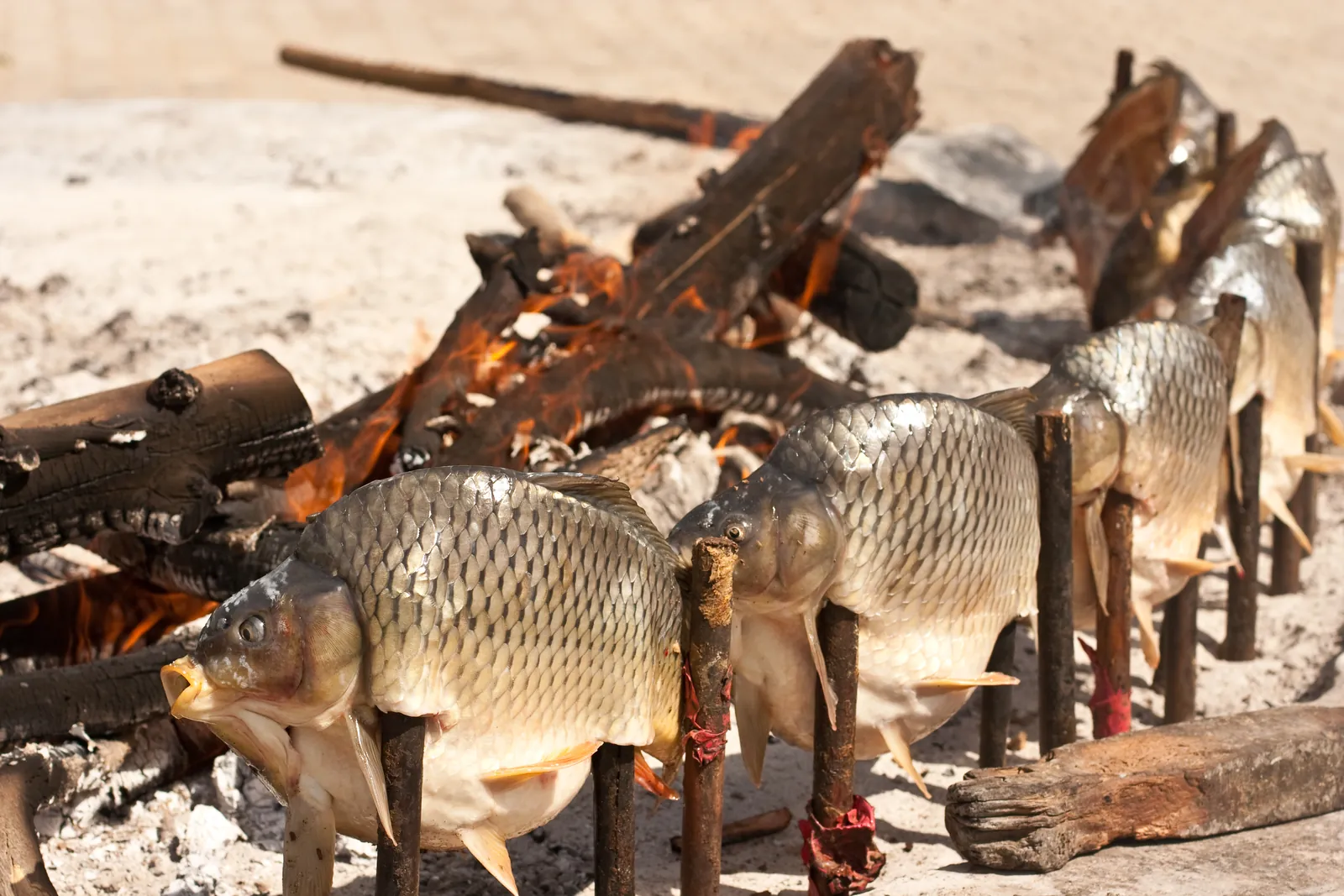
Whole carp staked upright around an open wood fire, grilling in the traditional masgouf style Iraq flag Iraq 1h 30m
Dinner •Iraq's National Dish

Masgouf

This masgouf recipe is Iraq's national dish: a whole carp, butterflied open, rubbed with a tamarind and tomato marinade, then grilled upright beside an open fire until the skin turns crisp and golden and the flesh stays moist and smoky. At home it works just as well on a barbecue or under a hot grill, served with charred tomatoes, onion and warm flatbread. One serving is about 410 g.

Whole Grilled Carp Over Open Fire

A whole butterflied carp, rubbed with tamarind, tomato and spices, slow-grilled beside an open fire until the skin is crisp and the flesh is smoky and tender.

Pairs Well With
Grilled tomatoes & onion, warm flatbread, Iraqi pickles
High Protein
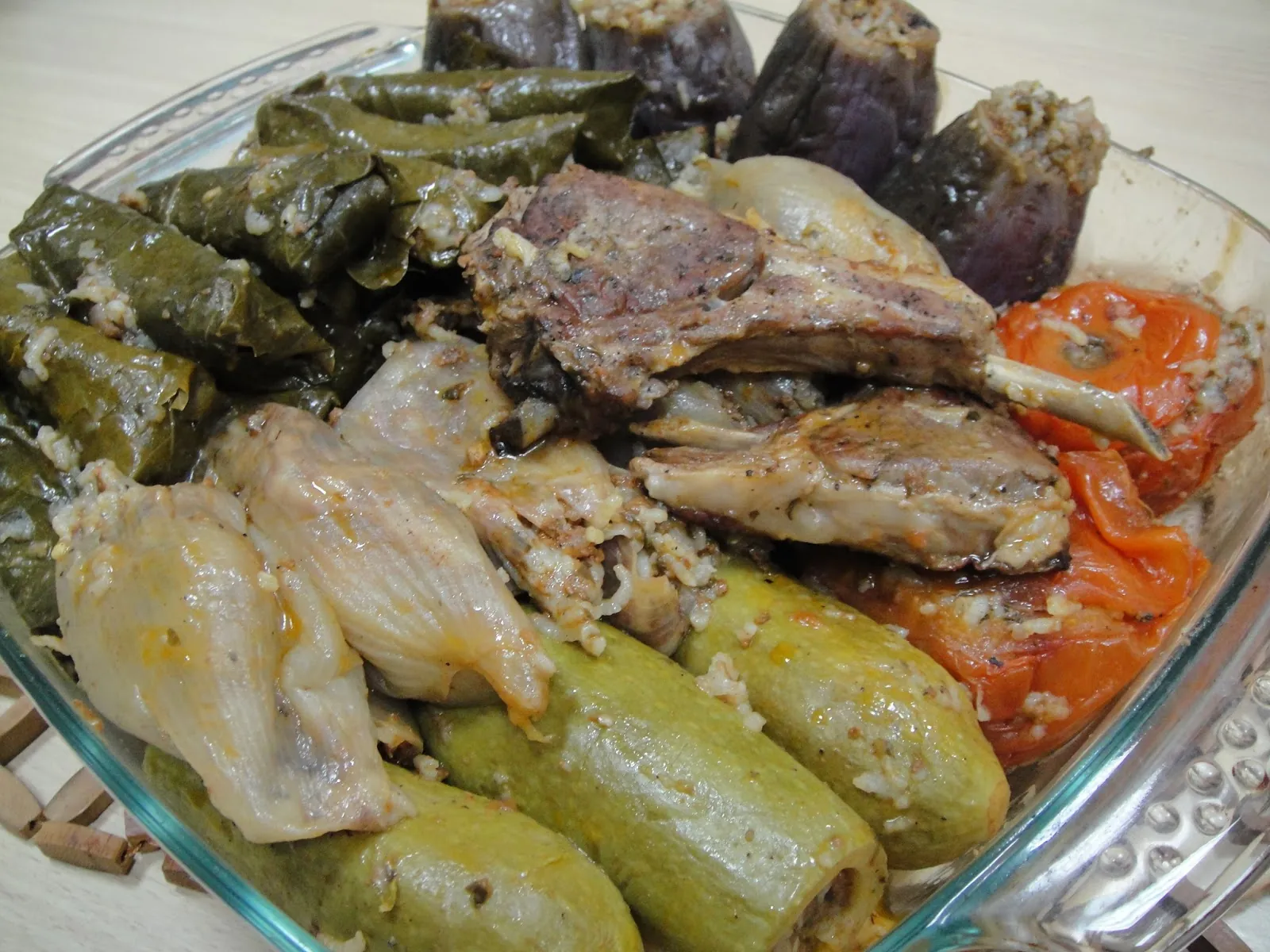
A platter of Iraqi dolma with stuffed vine leaves, aubergine, tomatoes and onions, topped with lamb chops Iraq flag Iraq 2h 30m
Dinner •Baghdad Home-Cooking Heritage

Iraqi Dolma

This Iraqi dolma recipe is the Baghdad form: vine leaves and Swiss chard leaves rolled around a filling of ground beef, rice and herbs, cooked in the same pot as stuffed aubergine, tomato, pepper and onion, all simmered over lamb chops in a sour broth of pomegranate molasses and dried limes. The leaves turn tender, the vegetables soften, and the pot is turned out onto a platter with the caramelised lamb chops on top. One serving is about 390 g.

Mixed Leaves & Vegetables Stuffed with Beef & Rice

Vine leaves, Swiss chard and stuffed aubergine, tomato and pepper filled with beef and rice, simmered in a sour pomegranate and dried-lime broth over lamb chops.

Pairs Well With
Plain yoghurt, warm flatbread, cucumber & tomato salad
Bœuf bourguignon — French beef braised in red wine France flag France 4h
Dinner •Burgundy Terroir

Bœuf Bourguignon

Beef braised gently in red wine until the connective tissue melts into a velvet, gelatin-rich sauce — the classic Burgundy Sunday dinner.

Cellular Repair

Beef braised in red wine until spoon-tender, with mushrooms and pearl onions.

Pairs Well With
Parsnip Purée & Steamed French Haricots Verts
High Protein
Vietnamese braised pork belly with golden eggs in caramel sauce Vietnam flag Vietnam 1h 45m
Dinner •One Pot

Vietnamese Braised Pork and Eggs

Pork belly slowly braised in coconut water and caramel until meltingly tender, with golden eggs that soak up the sweet-savoury sauce — the Vietnamese family dish that tastes better the next day.

Comfort & Sustained Energy

Slow-braised pork belly and eggs in coconut water and caramel.

Pairs Well With
Steamed rice & pickled mustard greens
High Protein

The Dinner Gazette

Never wonder what’s for dinner again

One email a week with easy dinner ideas from around the world — ingredients, steps and nutrition, tested in our kitchen first.

Delivered every Thursday morning. Unsubscribe anytime.