-
1
Melt the Cheese Base
8 Mins
Low heat — about 60°C (140°F)
Put the cream cheese, milk and butter in a heatproof bowl over a pan of barely simmering water and stir until completely smooth, about 5 minutes. Take the bowl off the heat and let it cool for 5 minutes, until it is warm but not hot to the touch.
Do not let the bowl get too hot — overheated cheese turns grainy and will never smooth out again.
Done when: The mixture is glossy, smooth and pourable, with no lumps.
-
2
Whisk in the Yolks and Flour
5 Mins
No heat — room temperature, about 22°C (72°F)
Whisk the egg yolks into the warm cheese mixture one at a time, then add the vanilla and lemon juice. Sift in the flour, cornstarch and salt and whisk gently until the batter is smooth and lump-free.
Whisk, do not beat hard — you want the yolks blended in, not a bowl full of bubbles that will collapse later.
Done when: The batter is smooth, thick and ribbon-like when it falls from the whisk.
-
3
Whip the Meringue
7 Mins
No heat — room temperature, about 22°C (72°F)
Beat the egg whites on medium speed until foamy, then add the remaining 30 g of sugar a spoonful at a time and keep beating until the meringue forms soft, glossy peaks that flop over at the tip — about 4 minutes. It should look like shaving foam, not stiff spikes.
Soft peaks are the whole secret: stiff meringue makes the cake crack and fall, soft meringue lets it rise and stay tender.
Done when: The meringue is glossy and holds a soft peak that bends over.
-
4
Fold and Fill the Tin
5 Mins
No heat — room temperature, about 22°C (72°F)
Stir a third of the meringue into the cheese batter to loosen it, then fold in the rest in two gentle additions with a spatula, cutting down the middle and lifting up the sides until no white streaks remain. Pour into the lined tin and tap it once on the counter to pop large bubbles.
Fold, never stir — every hard stir knocks out the air you just whipped in, and the cake will bake flat.
Done when: The batter is pale, airy and even, with no streaks of meringue.
-
5
Bake in a Water Bath
50 Mins
Oven 160°C (320°F)
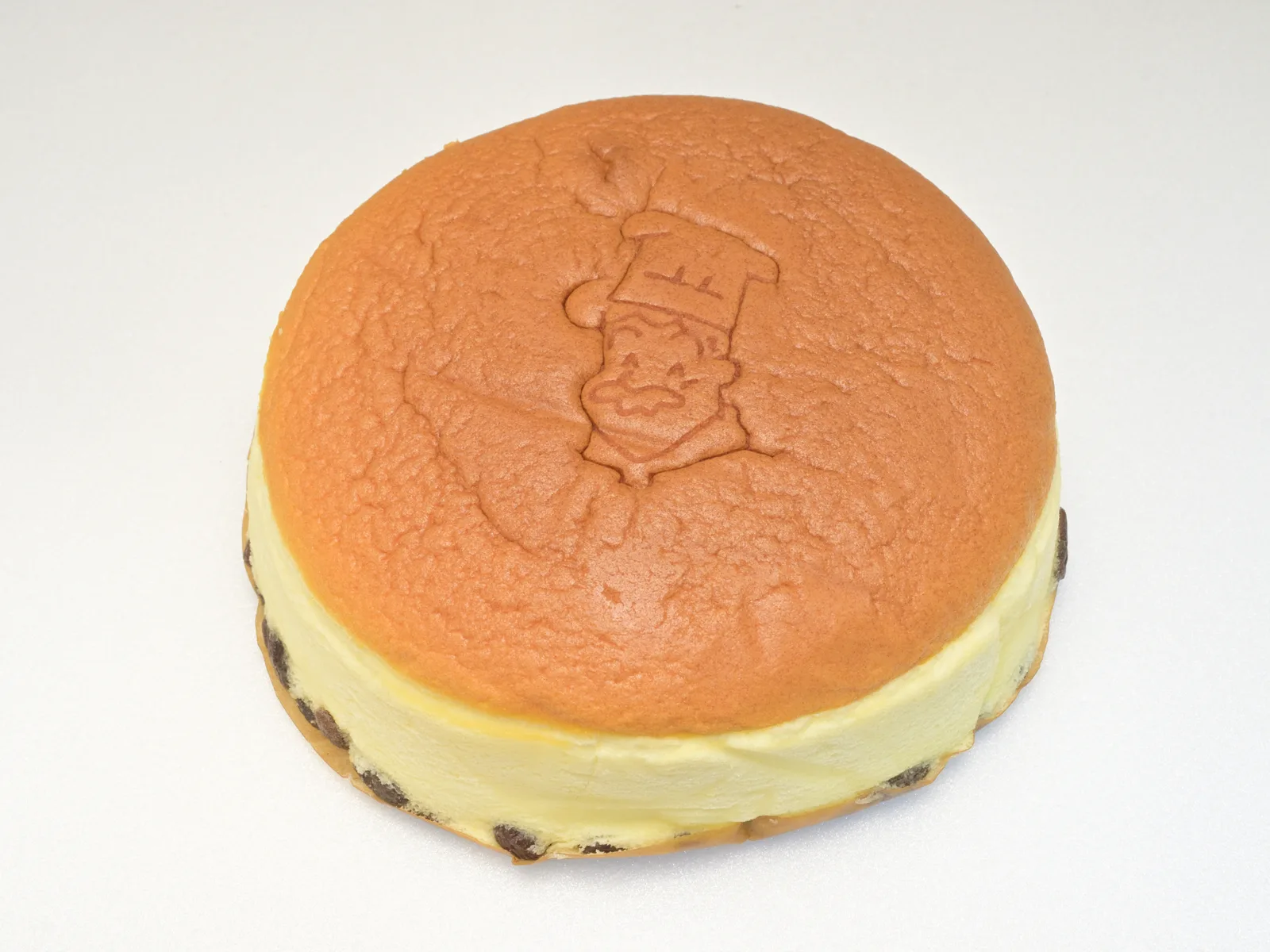
Set the tin in a deep roasting pan, pour in boiling water to come halfway up the tin, and bake at 160°C (320°F) for about 50 minutes, until the top is golden brown and the cake has risen well above the tin. The centre should still wobble gently when you shake the tin. The eggs set well above 71°C (160°F) during the bake.
Do not open the oven door for the first 40 minutes — the rush of cold air can make the cake sink and crack.
Done when: The top is evenly golden, the cake is tall, and the centre jiggles like jelly.
-
6
Cool Slowly, Then Chill
5 Mins active, plus 1 hour cooling
Oven off, door ajar, then room temperature, about 22°C (72°F)
Turn the oven off, leave the door ajar, and let the cake cool in the oven for 30 minutes so it sinks gently instead of collapsing. Then take it out, remove the foil, and cool fully before chilling in the fridge for at least 1 hour. Dust with icing sugar and slice with a hot, dry knife.
Some sinking is normal — a souffle cheesecake always settles as it cools. A sudden drop means the meringue was overbeaten.
Done when: The cake is cold, set, and slices cleanly with a soft, trembling crumb.
auto_awesome Finishing Touches & Plating
Serve the chilled cheesecake in thick slices with a dusting of icing sugar and a few berries — the jiggle at the table is half the pleasure, so slice it where everyone can see.

 Japan
25m