
Curated recipes from 193 countries  •  New seasonal Mediterranean issue out now

Overview

Jordanian Kunafa

Kunafa; Knafeh; Kanafeh

Kunafa is the Levant's most beloved sweet: fine shredded kataifi pastry, tossed in melted butter and pressed into a pan around a layer of soft, stretchy cheese, baked until the top is deep gold and crisp, then drowned in warm lemon-orange syrup and scattered with ground pistachios. One serving is about 180 g. Eaten warm, the cheese pulls in long strings with every spoonful, and the syrup soaks into the crisp pastry without ever making it soggy.

Kunafa — knafeh in Arabic — is one of the oldest sweets of the Levant, with roots in the medieval kitchens of the region, where fine shredded pastry, soft white cheese and syrup were combined into a dessert fit for Ramadan evenings and Eid. Nablus, in Palestine, became famous for its version made with soft nabulsi cheese, and the sweet spread across Jordan, Lebanon, Syria and Egypt, each place keeping the same golden, syrup-soaked heart. In Jordan today it is the sweet that ends a feast and starts a long evening of coffee and talk.

Pairs well with: Arabic coffee and a glass of cold water

Provenance

Jordan flag Jordan

Levantine Sweet Classic

Middle Eastern

Time Dedication

1h 10m

30m prep • 40m cook

Batch Yield

8 Servings

557 kcal per serving

1 serving ≈ 180 g

Technical Skill

Intermediate

Intermediate (Cheese & Syrup)

Meal Timing & Digestive Fit

Breakfast

Not Advised

Lunch

Inappropriate

Dinner

Inappropriate

Snack & Tea

Ideal Light Bite

Occasions: Ramadan evenings, Eid, family gatherings, after-dinner sweet, afternoon coffee Cost: Medium — about $3–4 per serving at home
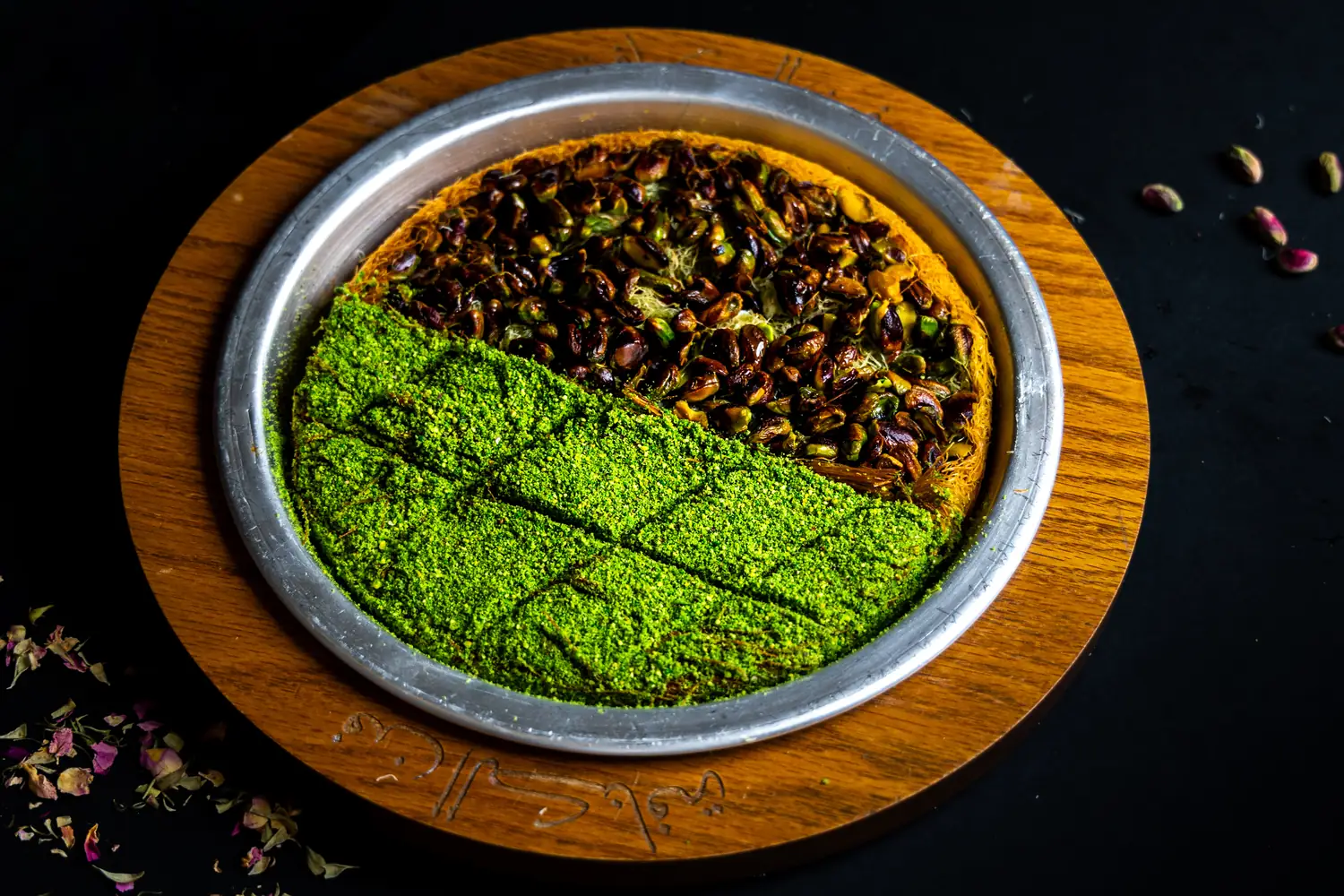
Kunafa — a golden round of crisp shredded pastry topped with ground pistachios and whole pistachios

Levantine Sweet Classic

Photo: Di7ane, CC BY-SA 4.0, via Wikimedia Commons

The Heritage Formulary

Measured Ingredients

Estimated cost: Medium — about $3–4 per serving at home (USD)

A true kunafa is judged by the pull: hot, crisp and golden on top, with the cheese stretching in strings when the wedge is lifted.

Execution Methodology & Culinary Technique

Step-by-Step Cooking Guide

Active 1h 10m
P

Prep Stage: Cheese Soaking, Pastry Fluffed, Syrup Made

30 Mins • Soaking & Mixing (plus overnight cheese soak)

The day before, put the akkawi in a bowl of cold water in the fridge and change the water 2–3 times — this is not optional, because unsalted akkawi is far too salty to eat. On the day, make the syrup first so it can cool: dissolve the sugar in the water with the lemon juice, simmer 5 minutes, then stir in the orange blossom water off the heat. Fluff the kataifi shreds apart with your fingers and toss them thoroughly with the melted butter until every strand is coated — dry strands burn, buttered strands turn gold.

Maestro Tip: Taste a crumb of the soaked akkawi before you use it: it should be milky and only lightly salty. If it is still very salty, soak it for another hour.

  1. 1

    Make the Syrup

    10 Mins • Stovetop Boil at 100°C (212°F), then cool to room temperature

    Put the sugar, 200 ml (about 3/4 cup) of water and the lemon juice in a small pan. Stir over medium heat until the sugar dissolves, then boil for 5 minutes without stirring until the syrup is slightly thickened. Take off the heat, stir in the orange blossom water, and leave to cool completely — hot syrup on hot kunafa makes it soggy; the syrup must be cool and the kunafa hot.

    Do not stir once it boils, or the syrup can crystallise into grit.

    Done when: Syrup coats a spoon in a thin thread and tastes sweet with a clear lemon-floral note.

  2. 2

    Butter and Layer the Pastry

    10 Mins • Layering Room temperature, about 20°C (68°F)

    Heat the oven to 180°C (350°F). Butter a round 28 cm (11 inch) pan generously. Press half the buttered kataifi into the pan in an even layer, pushing it slightly up the sides to form a shallow nest. Spread the mixed cheeses evenly over it, leaving a 1 cm (1/2 inch) border clear so the cheese does not leak and burn. Cover with the remaining kataifi and press down firmly and evenly with the base of a glass.

    Press firmly: loose pastry bakes into a fluffy pile instead of a sliceable round.

    Done when: An even, firmly pressed round with the cheese fully hidden inside.

  3. 3

    Bake Until Deep Gold

    30 Mins • Oven 180°C (350°F)

    Bake for 30–35 minutes until the top is deep gold and crisp, and the edges pull slightly away from the pan. The cheese inside should be fully melted — you will hear it bubble faintly at the edges. If the top browns too fast, cover loosely with foil for the last 10 minutes.

    Check at 25 minutes: ovens vary, and the line between gold and burnt is thin.

    Done when: Top is deep gold and crisp all over; the edges are pulling away from the pan.

  4. 4

    Syrup, Rest and Serve

    10 Mins • Serving Serve warm, about 60°C (140°F)

    The moment the kunafa comes out of the oven, pour the cool syrup slowly and evenly over the whole surface — it will hiss and soak straight in. Leave it for 5 minutes so the syrup settles, then scatter the chopped pistachios over the top. Cut into wedges and serve warm, while the cheese still pulls in strings.

    Pour the syrup slowly in a spiral from the centre out, so every part gets the same amount.

    Done when: Wedges hold their shape, the cheese stretches when lifted, and the top stays crisp under the syrup.

Finishing Touches & Plating

Scatter the pistachios right before serving so their green stays bright against the gold, and put the coffee on — kunafa is at its best in the first twenty minutes, warm, crisp and stretching.

Nutritional Physiology & Benefits

Nutrition

Energy

557

kcal / serving

Protein

15g

Complete AA

Carbs

61g

Complex

Fats

30g

Healthy

Per serving (8 servings · 1 serving ≈ 180 g)
Energy557 kcal
Protein15 g
Carbohydrates61 g
Fat30 g
Fibre1.4 g
Sugar34.0 g
Sodium668 mg
Per 100g
Energy309 kcal
Protein8 g
Carbohydrates33.7 g
Fat16.4 g
Fibre0.8 g
Sugar18.9 g
Sodium371 mg

Nutrition values are estimated — calculated from USDA FoodData Central values for the listed ingredients.

Vitamins & minerals: Calcium and B12 (cheese), vitamin B6 and E (pistachios), vitamin C (lemon juice).

Calcium From Real Cheese

A serving carries the calcium of two cheeses — akkawi and mozzarella — which is why kunafa feels far more substantial than a plain syrup cake.

Pistachios on Top

The pistachio crown adds vitamin B6, vitamin E and fibre, and a little crunch against the soft, syrupy pastry.

Real Energy for Celebrations

At about 560 kcal a serving, kunafa is a proper celebration sweet — rich, filling and meant to be shared, not snacked on alone.

Food Pairings

What to Eat With

To optimize nutrient absorption and elevate the sensory depth, pair with these authentic accompaniments:

Drinks

Arabic Coffee

Small cups of strong, cardamom-scented Arabic coffee are the classic partner: the bitterness cuts the syrup's sweetness and the two flavours were made for each other.

Mint Tea

Hot mint tea works just as well as coffee for those who prefer it — the fresh mint lifts the heavy, buttery pastry.

More Pairings

Fresh Strawberries

A few fresh strawberries on the side give a tart, juicy contrast to the rich cheese and syrup, and their acidity cleans the palate.

Full Menus

Clotted Cream (Ashta)

A spoonful of cool clotted cream beside a warm wedge adds a second, softer creaminess and lets each person balance the sweetness to taste.

Complete menu

Serve warm wedges of kunafa with small cups of strong Arabic coffee and cold water; a few fresh strawberries or a spoonful of clotted cream on the side makes it a full dessert spread.

Digestive Guardrails

What NOT to Combine

To prevent digestive distress, sluggishness, or palate clash, avoid pairing the dish with these elements:

Hot Syrup on Hot Kunafa

Pouring hot syrup over hot pastry floods it and the crisp top collapses into mush. The syrup must be cool and the kunafa hot — that contrast is what keeps the top crisp. This is a cooking note, not medical advice.

Storing Kunafa in the Fridge Uncovered

Uncovered kunafa in the fridge dries out and the cheese turns rubbery; cover it tightly and reheat gently instead. This is general food-storage information, not medical advice.

General information only, not medical advice — consult a doctor for personal dietary decisions.

Who Should Eat It

Who Should Eat

  • General adultsA rich celebration sweet for healthy adults — one wedge is a full dessert.
  • ChildrenChildren love the cheese pull and the syrup; serve a small wedge, and remember it is very sweet.
  • ElderlyGood as an occasional treat in a small wedge — the cheese is soft and easy to eat, but it is sweet and rich.
  • Pregnant womenGenerally suitable when made with pasteurised cheese; keep to a small wedge because of the sugar. Ask your clinician about portion size.
  • Breastfeeding womenGenerally suitable in a small wedge; the calcium is welcome, but the sugar is high.
  • AthletesA good quick energy source after training, but very high in sugar — one wedge, not two.
  • Weight gainA good choice — energy-dense and easy to eat; a full wedge with cream is a proper dessert.
  • Weight lossNot the easiest choice: about 34 g of sugar per serving. Take half a wedge with strawberries and unsweetened tea.

Health Conditions — Adjust or Avoid

Conditions

  • DiabetesOne serving carries about 61 g of carbohydrate and 34 g of sugar; take half a wedge and pair it with unsweetened tea. Ask your clinician about portion size.
  • High blood pressureThe cheese is salty even after soaking — about 670 mg sodium per serving. Keep to one small wedge. Ask your clinician about portion size.
  • Kidney diseaseHigh in sugar and saturated fat; an occasional small wedge only, and ask your clinician about portion size.
  • GoutCheese and butter are moderate in purines; an occasional small wedge is usually fine. Ask your clinician if you have frequent flares.
  • Stomach issuesThe dish is very rich and sweet, which can feel heavy on a sensitive stomach; eat slowly and take a small wedge.
  • Cardiovascular diseaseButter and cheese are high in saturated fat; keep to a small wedge and balance the rest of the day's meals. Ask your clinician about portion size.
  • Fatty liverHigh in sugar and saturated fat; take half a wedge at most, with fresh fruit. Ask your clinician about portion size.
  • Food allergiesContains milk (cheese, butter), wheat (kataifi pastry) and tree nuts (pistachios). Do not serve to anyone with a milk, wheat or pistachio allergy.
  • Special therapeutic dietsThis is a high-sugar dessert; anyone on a prescribed low-sugar or therapeutic diet should ask their clinician before eating it.

If you have a medical condition, consult your doctor before changing your diet.

Storage & Use

Storage & Use

How to store
Cool completely, then cover tightly with cling film or foil.
In the fridge
3 days, covered tightly.
In the freezer
1 month, wrapped in foil then a freezer bag; thaw in the fridge.
How to reheat
Reheat in a 180°C (350°F) oven for 8–10 minutes until hot all the way through to 74°C (165°F) and crisp again; the microwave makes it soggy.
Freezing recommended
Yes, before adding syrup is best; syrup after reheating.
Signs it has spoiled
Sour smell, slimy cheese, or mould on the pastry.

More recipes to explore

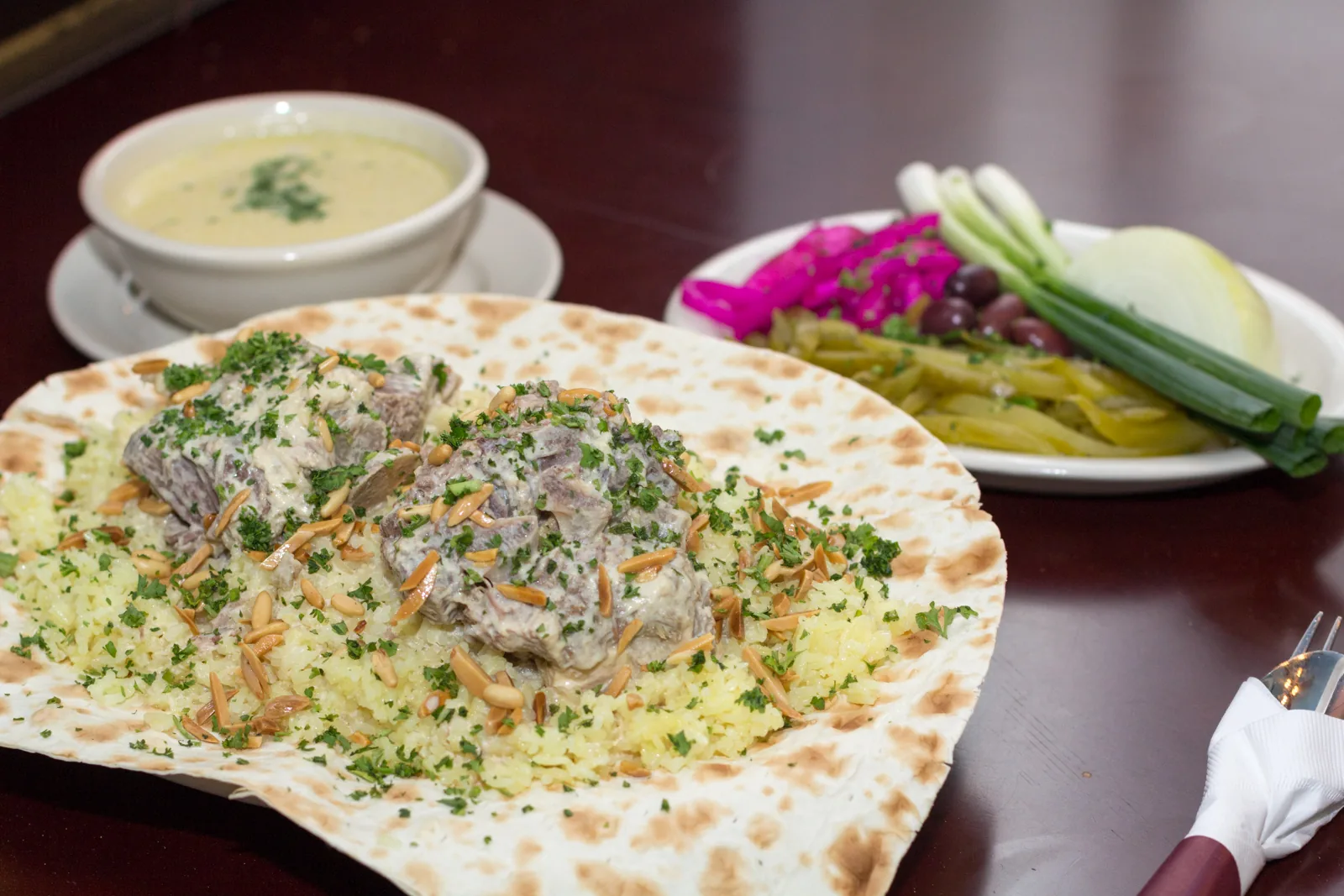
Mansaf — tender lamb in creamy jameed sauce over yellow rice on flatbread, with a bowl of jameed and pickles Jordan flag Jordan 3h 10m
Dinner •Jordan National Dish

Mansaf

Mansaf is Jordan's national dish and its grandest gesture of hospitality: bone-in lamb simmered until it falls off the bone, bathed in jameed — a sharp, salty sauce made from dried fermented yogurt — and piled over turmeric-gold rice on sheets of markouk flatbread, then scattered with toasted almonds, pine nuts and parsley. One serving is about 420 g. Traditionally the whole platter goes in the middle of the table and everyone eats together, with extra jameed sauce poured over each helping.

Celebration & Togetherness

Jordan's national dish: slow-cooked lamb in tangy fermented-yogurt sauce, served over saffron rice on flatbread for sharing.

Pairs Well With
Extra jameed sauce, pickled vegetables and fresh spring onions
High Protein
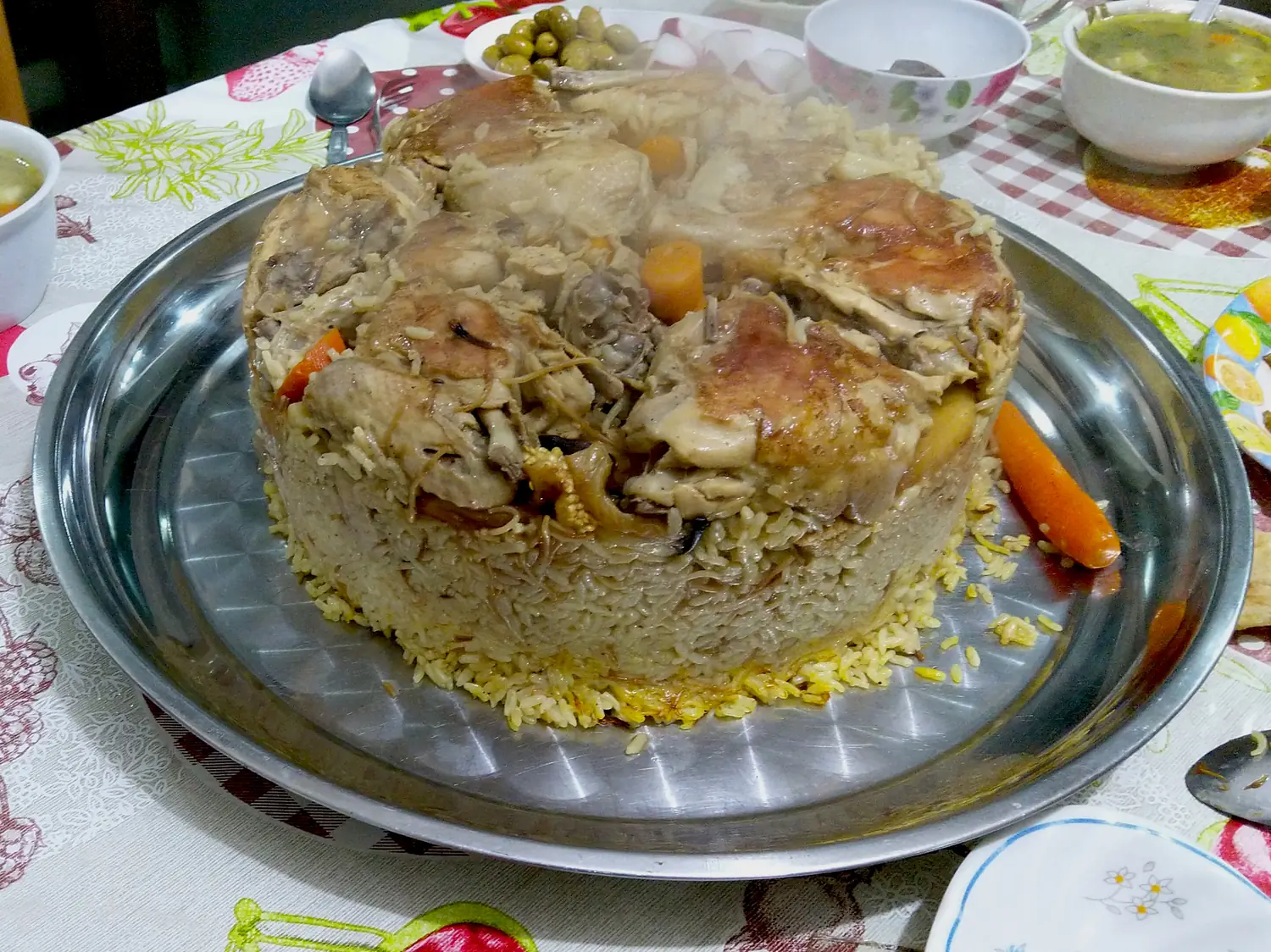
Jordanian maqluba — a golden dome of rice topped with chicken pieces and carrots, just flipped from the pot Jordan flag Jordan 2h 15m
Dinner •Jordanian Family Classic

Jordanian Maqluba

Maqluba means 'upside-down', and that flip is the whole drama of the dish: chicken, fried eggplant, cauliflower, carrots and potato are layered in a pot with spiced basmati rice, cooked slowly until the rice is tender and fragrant, then the whole pot is turned out onto a platter in one golden, steaming dome. One serving is about 550 g. In Jordan it is a Friday family dish, made in a big pot and eaten straight from the platter it was flipped onto.

Comfort & Togetherness

Chicken, eggplant, cauliflower and carrots layered with spiced rice, cooked in one pot and flipped into a golden dome.

Pairs Well With
Plain yogurt and a chopped cucumber-tomato salad
Pan con tomate with jamón ibérico on toasted bread Spain flag Spain 15m
Snack & Tea •Catalan Aperitivo

Pan con Tomate & Jamón Ibérico

Country bread rubbed with ripe Ramallet tomato, drizzled with cold-pressed Arbequina olive oil and topped with jamón ibérico.

Vascular Health

Toasted tomato bread with jamón ibérico, olive oil and olives.

Pairs Well With
Castelvetrano Olives & Sparkling Mineral Water
Quick Prep (<30m)
Gỏi cuốn — Vietnamese fresh spring rolls with prawn and pork Vietnam flag Vietnam 1h 5m
Snack & Tea •Saigon Refresh

Gỏi Cuốn Tôm Thịt

Fresh rice paper rolls filled with poached prawns, tender pork, rice vermicelli, lettuce, herbs and carrot, served with a peanut dipping sauce.

Light Digestion

Nothing is fried, so the rolls stay light and fresh — a cool, herb-filled snack for hot days.

Pairs Well With
Artisanal Peanut Dip & Fresh Lotus Root Water
High Protein

The Dinner Gazette

Never wonder what’s for dinner again

One email a week with easy dinner ideas from around the world — ingredients, steps and nutrition, tested in our kitchen first.

Delivered every Thursday morning. Unsubscribe anytime.