-
1
Make the Olive-Oil Dough
10 Mins
No heat — about 20°C (68°F)
Mix the flour, sugar and salt in a large bowl. Pour in the olive oil and rub it through the flour with your fingertips until it looks like damp crumbs, then add the warm water a little at a time, kneading gently until a soft, smooth dough forms. It should feel supple and slightly oily, not sticky — add water by the teaspoon if it is dry, or a dusting of flour if it sticks.
Rub the oil in well before adding water: that is what makes the crust short and tender instead of tough.
Done when: The dough is smooth, soft and supple, and does not stick to your hands.
-
2
Rest the Dough
20 Mins
Resting — about 20°C (68°F)
Cover the dough with a clean tea towel or cling film and leave it at room temperature for 20 minutes. Resting lets the flour absorb the water and the dough relax, so it rolls out thin without tearing.
Do not skip the rest to save time — unrested dough shrinks back and the parcels end up thick and heavy.
Done when: The dough feels relaxed and rolls out easily without springing back.
-
3
Mix the Sweet Cheese Filling
5 Mins
No heat — about 20°C (68°F)
Crumble the mizithra into a bowl and stir in the sugar, beaten egg, cinnamon and lemon zest until thick and spoonable. Taste it: it should be sweet and milky with a warm cinnamon note, not sharp. If the mizithra is very wet, let it drain in a sieve for 10 minutes first, or the filling will leak.
The filling should hold its shape on a spoon. If it slides off, add a spoonful more crumbled cheese.
Done when: The filling is thick, creamy and spoonable, and tastes sweet and milky with cinnamon.
-
4
Shape the Parcels
15 Mins
No heat — about 20°C (68°F)
Divide the dough into 12 equal pieces and roll each into a thin round about 10 cm across on a lightly floured surface. Spoon about 2 tablespoons of filling into the centre of each round, then lift the edges up and pinch them together in folds around the filling, leaving the centre open like a little flower — the cheese should show in the middle. Place on the lined tray and brush the dough edges lightly with milk.
Keep the rounds thin at the edges and a little thicker in the middle, so the base holds the filling without tearing.
Done when: Twelve open parcels sit on the tray, the filling visible in the centre of each, edges pinched and brushed with milk.
-
5
Bake Until Golden
25 Mins
Oven 180°C (350°F)
Bake at 180°C (350°F) for 20–25 minutes until the dough is deep golden at the edges and the cheese filling is set and lightly browned on top — it should not wobble when you shake the tray. The egg in the filling must reach at least 74°C (165°F).
Check at 20 minutes: the edges colour fast, and a minute too long turns golden into burnt.
Done when: The edges are deep golden, the filling is set with a lightly browned top, and the parcels smell of cinnamon and baked cheese.
-
6
Dust with Sugar and Drizzle with Honey
5 Mins
No heat — about 60°C (140°F)
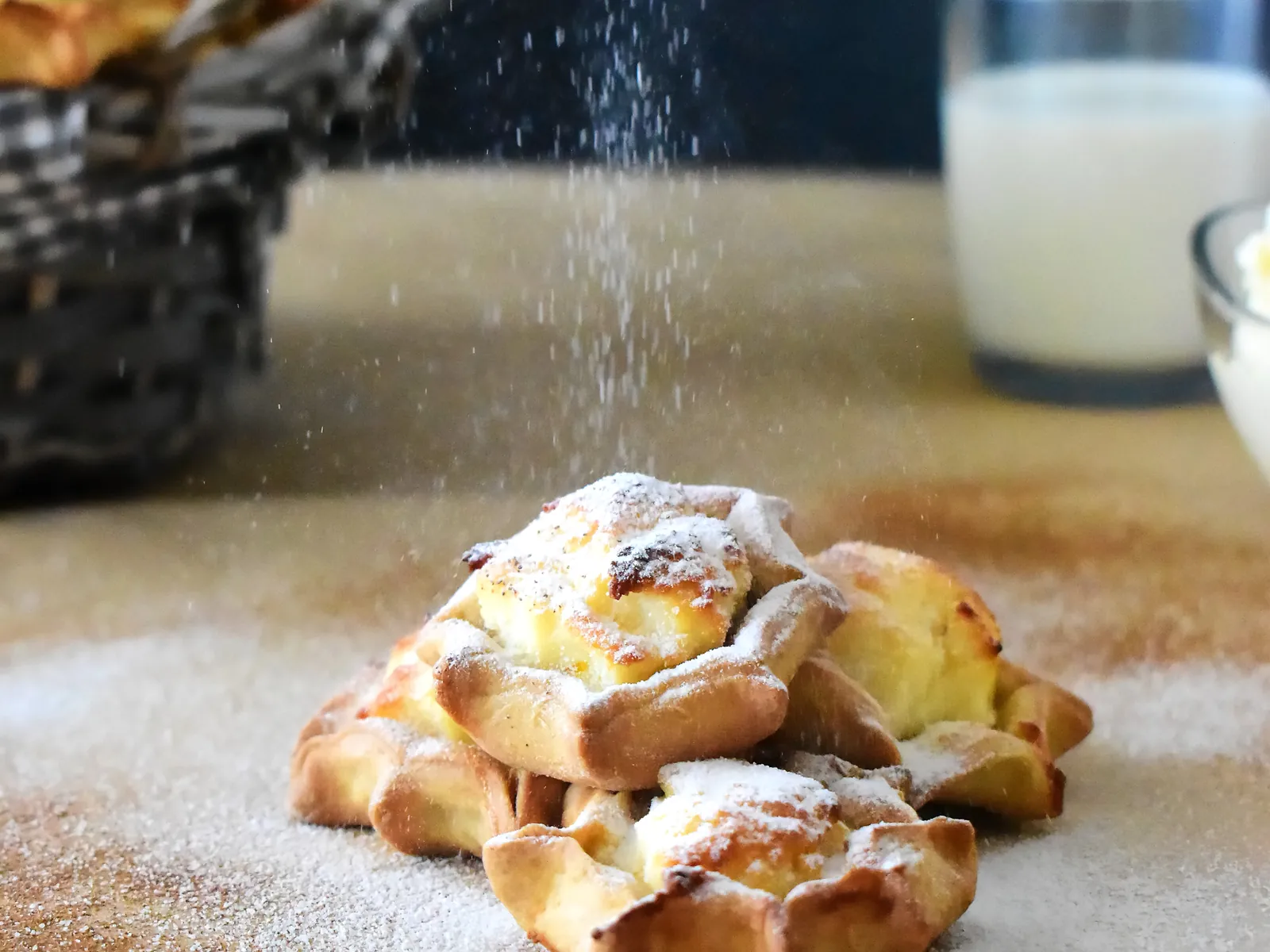
Leave the pastries on the tray for 5 minutes, then dust generously with icing sugar through a small sieve and drizzle each one with a little honey. Serve warm, while the crust is still crisp and the filling soft.
Dust while the pastries are still warm so the sugar clings, and drizzle the honey just before serving so the crust stays crisp.
Done when: Each pastry is white with icing sugar, glossed with honey, and warm to the touch.
auto_awesome Finishing Touches & Plating
Serve the kalitsounia warm, dusted with icing sugar and drizzled with honey, with Greek coffee or cold milk. They are at their best within a couple of hours of baking, while the crust is still crisp.

 Greece
2h