-
1
Simmer the Oxtail and Tripe Until Tender
150 Mins
Gentle simmer, about 95°C (203°F)
Put the oxtail, tripe, half the onion and the cracked pepper in a large heavy pot with the 1.5 litres of water. Bring to a boil, skim off the grey foam, then lower the heat to the gentlest simmer, cover, and cook for about 2.5 hours, topping up with hot water if the level drops below the meat. The meat is ready when a fork slides into the oxtail with no resistance and the tripe is soft. Lift the meat out and keep about 1 litre of the cooking broth — this is the base of the sauce.
Never let the pot boil hard once it is simmering: a rolling boil toughens the meat and clouds the broth. If you own a pressure cooker, 45 minutes at high pressure does the same job.
Done when: Oxtail meat pulls easily from the bone; tripe is soft, not rubbery; broth is lightly gelatinous when cooled.
-
2
Bloom the Annatto Oil
10 Mins
Medium heat, about 160°C (320°F)
Heat the vegetable oil in a wide, heavy pot over medium heat. Add the annatto seeds and stir for 2 to 3 minutes until the oil turns a deep orange-red, then strain the seeds out and discard them. The oil should be vividly coloured — this is what gives kare-kare its golden hue, since the sauce itself has no tomato or chilli.
Do not walk away: annatto seeds scorch in under a minute once the oil is hot, and burnt annatto tastes bitter. Pull the pot off the heat the moment the colour is strong.
Done when: Oil is deep orange-red and fragrant; seeds are strained out before they darken.
-
3
Build the Thick Peanut Sauce
20 Mins
Gentle simmer, about 95°C (203°F)
In the annatto oil, soften the garlic and the remaining onion for 2 minutes. Return the oxtail and tripe to the pot and pour in about 1 litre of the reserved broth. Stir in the peanut butter a spoonful at a time until it melts into the broth, then sprinkle in the toasted ground rice and stir constantly for 10 to 15 minutes as the sauce thickens to a rich, spoon-coating consistency. Season with the fish sauce and salt a little at a time, tasting as you go — the bagoong served alongside will add more salt later.
Stir in the ground rice slowly and keep stirring: it clumps if dumped in at once, and the thick sauce catches on the bottom of the pot if left alone. If the sauce gets too thick, loosen it with a splash of the reserved broth.
Done when: Sauce coats the back of a spoon and falls in slow ribbons; meat is heated through and glossy with sauce.
-
4
Cook the Vegetables in the Sauce
15 Mins
Gentle simmer, about 95°C (203°F)
Add the eggplant and banana blossoms first and simmer for 5 minutes, then the string beans for 5 minutes more. Lay the bok choy leaves on top, cover, and cook for 2 to 3 minutes until just wilted. The vegetables should be tender but still holding their shape and colour — they finish cooking in the hot sauce off the heat.
Do not stir hard once the vegetables are in: eggplant breaks apart easily and turns the sauce muddy. Fold gently with a wooden spoon instead.
Done when: Eggplant is soft but intact, string beans are bright green and crisp-tender, bok choy is just wilted.
-
5
Rest, Season and Serve with Bagoong
5 Mins
Serve hot — keep above 63°C (145°F)
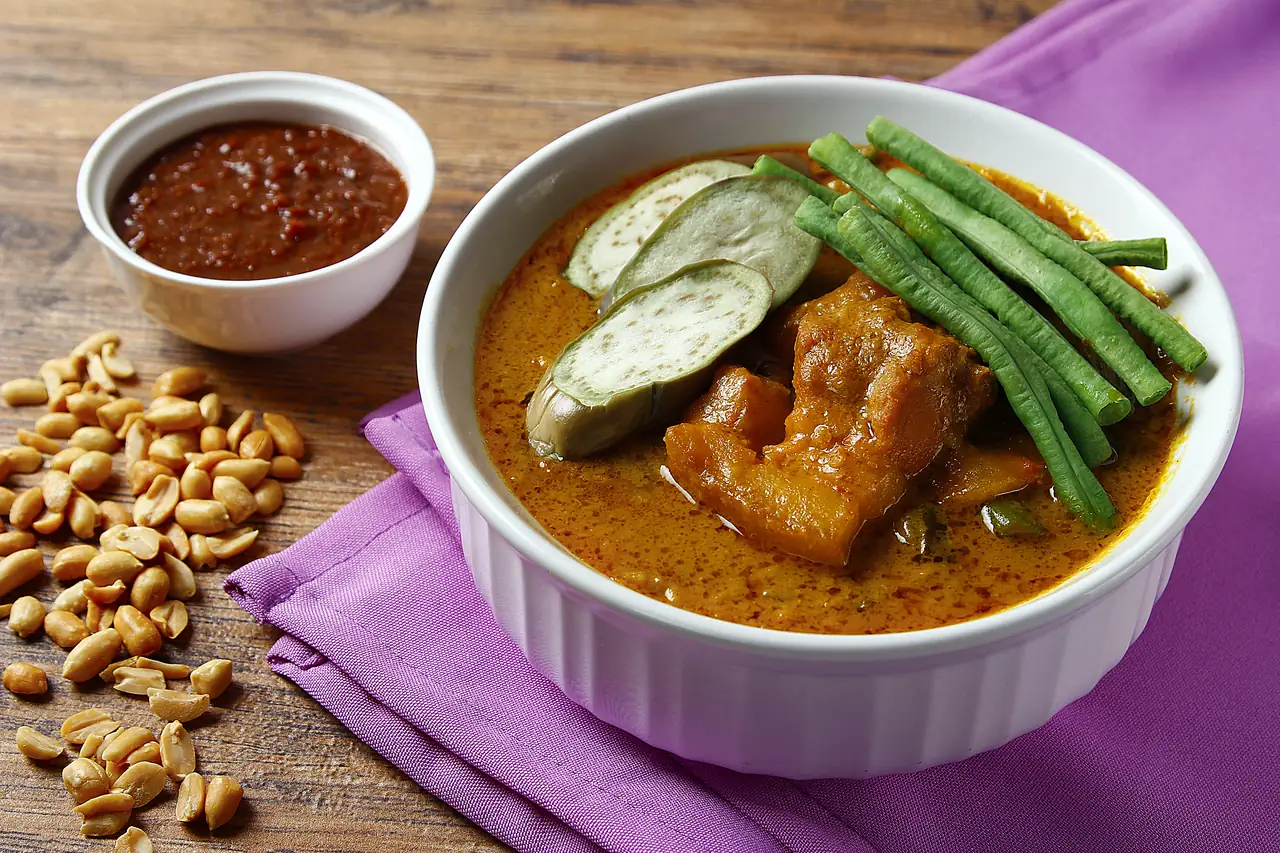
Take the pot off the heat and rest it for 5 minutes so the sauce settles and thickens slightly. Taste once more and adjust with a splash of fish sauce if it needs salt. Ladle the kare-kare into a wide serving bowl with the vegetables arranged on top, and put the sauteed bagoong in a small bowl on the side — never mixed in. Serve at once with steamed white rice.
The bagoong is the seasoning, not a garnish: a small spoonful stirred into each serving is what balances the mild, nutty sauce. Warn guests who have never had it to start with a little.
Done when: Sauce is thick and glossy, vegetables are bright, and the stew is steaming hot throughout.
auto_awesome Finishing Touches & Plating
Serve the kare-kare hot in a wide bowl with the vegetables on top and the bagoong in its own small bowl beside it, with a mound of steamed rice for everyone. Eat it at once — the sauce thickens as it cools and the vegetables lose their colour.

 Philippines
1h 5m