Curated recipes from 193 countries  •  New seasonal Mediterranean issue out now

Overview

Kataifi

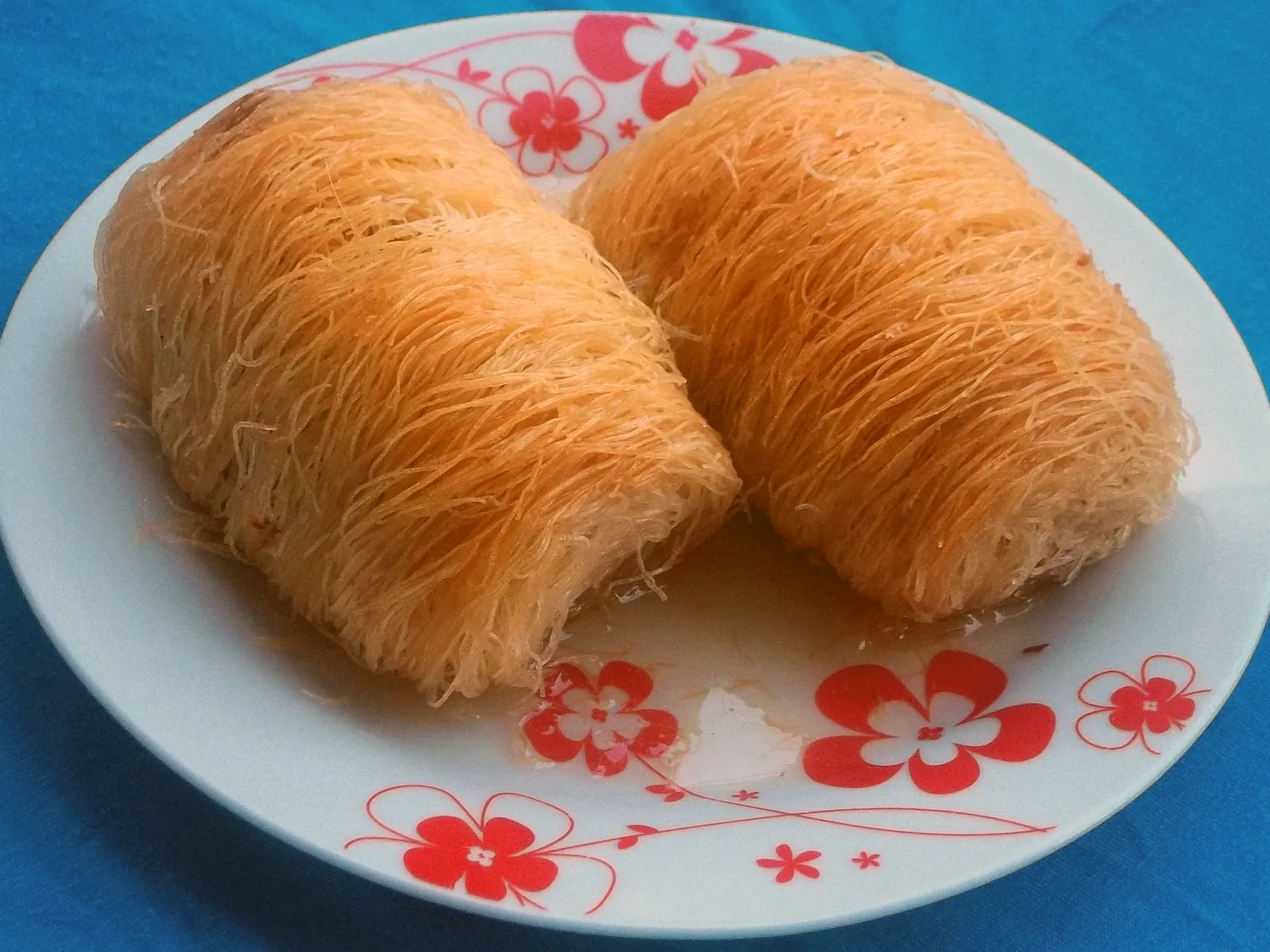
Kadaifi, Greek shredded-phyllo rolls

This kataifi recipe rolls finely chopped walnuts scented with cinnamon and clove inside buttered strands of shredded phyllo, bakes the rolls until deep golden and shattering, then pours over a cool lemon and cinnamon syrup. It is crisp outside, nutty inside and sticky-sweet all the way through. Kataifi is not baklava: baklava stacks flat sheets of filo in a tray, while kataifi wraps the same kind of pastry as loose strands around a filling to make individual rolls. It is not kunafa either: kunafa is a pan of shredded pastry filled with soft cheese, while kataifi is filled with spiced walnuts and served as separate rolls. One serving is about 142 g (two rolls).

Kataifi belongs to the Greek family of syrup desserts called syropiasta, sweets bathed in syrup that are served at celebrations across Greece and the wider eastern Mediterranean. The pastry itself is made by pouring a thin batter through a fine spout onto a hot griddle, so it comes out as fine strands rather than flat sheets — the strands are then wrapped around a spiced nut filling, baked crisp and soaked in syrup. In the Ioannina region of north-western Greece the walnut-filled rolls are a local speciality, sometimes made with an extra wrap of flat filo around the strands.

Pairs well with: Serve with strong Greek coffee or mountain tea and a spoonful of plain yoghurt.

Provenance

Greece flag Greece

Greek Syropiasta Heritage

Mediterranean & Italy

Time Dedication

1h 20m

40m prep • 40m cook

Batch Yield

12 Servings

553 kcal per serving

1 serving ≈ 142 g

Technical Skill

Intermediate

Medium (Rolled Pastry)

Meal Timing & Digestive Fit

Breakfast

Not Advised

Lunch

Inappropriate

Dinner

Inappropriate

Snack & Tea

Ideal Light Bite

Occasions: Festive gatherings, name days, family celebrations, gifts Cost: Low — about $1–1.50 per serving at home
Two golden kataifi rolls of crisp shredded phyllo on a white plate with red flowers

Greek Syropiasta Heritage

Photo: Mar.masouridi, CC BY-SA 4.0, via Wikimedia Commons

The Heritage Formulary

Measured Ingredients

Estimated cost: Low — about $1–1.50 per serving at home (USD)

Good kataifi shatters when you bite it, with crisp golden strands and a nut filling you can taste — never soft, pale or swimming in syrup.

Execution Methodology & Culinary Technique

Step-by-Step Cooking Guide

Active 1h 20m
P

Prep Stage: Thaw, Chop, Melt

25 Mins active • Bowl, Brush & Baking Tray

Thaw the kataifi overnight in the fridge, chop the walnuts fine, and melt and skim the butter before you start rolling. Lay out a damp tea towel to cover the pastry while you work — exposed kataifi strands dry out and snap in minutes.

Maestro Tip: Chop the walnuts fine but not to a paste — you want crunchy pieces in every bite, and walnut dust turns the filling soggy in the syrup.

  1. 1

    Make the syrup first

    10 minutes + cooling Boiling 100°C (212°F), then cool to room temperature 20°C (68°F)

    Put the sugar (450 g), water (330 ml), lemon peel strip (10 g) and cinnamon stick (3 g) in a pan. Bring to the boil over medium heat, stirring until the sugar dissolves, then simmer for 5 minutes. Lift out the peel and cinnamon stick and set the syrup aside to cool completely — the syrup must be cool when it meets the hot pastry.

    Cool syrup on hot pastry is the rule for every Greek syrup dessert: hot syrup on hot pastry steams the strands soft instead of soaking in.

    Done when: Syrup slightly thickened, clear, and fully cool.

  2. 2

    Mix the walnut filling

    5 minutes Room temperature 20°C (68°F)

    Mix the finely chopped walnuts (250 g) with the sugar (25 g), ground cinnamon (3 g) and ground cloves (0.5 g) in a bowl until evenly combined.

    Taste a pinch — you should smell cinnamon first and clove second; if the clove shouts, you used too much.

    Done when: An even, fragrant nut mixture with visible pieces of walnut.

  3. 3

    Loosen and divide the kataifi

    10 minutes Room temperature 20°C (68°F)

    Heat the oven to 180°C (350°F). Pull the thawed kataifi (450 g) apart gently with your fingers into loose strands, then divide it into 24 equal portions. Keep the portions you are not working with under the damp cloth.

    Do not tug hard — the strands are delicate and snap. Tease them apart slowly and they stay long enough to wrap.

    Done when: 24 loose, even portions of strands, none dried out.

  4. 4

    Roll the kataifi

    15 minutes Room temperature 20°C (68°F)

    Take one portion of strands and spread it into a flat rectangle about 15 cm long. Brush it generously with melted butter (250 g in total across all rolls). Spoon about 1 tablespoon of the walnut filling across one short end, then roll it up firmly, tucking in the sides as you go to make a neat roll about 8 cm long. Set seam-side down in a buttered baking tray and brush the top with more butter. Repeat with the remaining 23 portions, packing the rolls snugly side by side.

    Roll firmly but do not squeeze — a tight roll holds its shape in the syrup, a loose one falls apart when you serve it.

    Done when: 24 firm, even rolls, seam-side down, brushed all over with butter.

  5. 5

    Bake until deep golden

    35 minutes Oven 180°C (350°F)

    Bake for 30–35 minutes until the rolls are deep golden all over and crisp to the touch. The strands should look dry and toasty, not pale or damp, and the tray should smell of toasted nuts and butter.

    Pale kataifi is underdone and chewy inside — wait for a proper deep gold on top and underneath before taking the tray out.

    Done when: Deep golden rolls, crisp strands, no pale or damp patches.

  6. 6

    Pour the syrup and rest

    5 minutes + 4 hours resting Syrup at room temperature 20°C (68°F)

    As soon as the tray comes out of the oven, ladle the cool syrup slowly and evenly over the hot rolls — it will hiss and bubble. Leave the tray uncovered for at least 4 hours, ideally overnight, so the syrup soaks through without softening the crisp outside.

    Do not cover the tray while it rests — trapped steam is what kills the crunch you just baked for 35 minutes.

    Done when: Syrup absorbed, rolls still crisp on the outside, holding their shape.

Finishing Touches & Plating

Serve the kataifi at room temperature, two rolls per person, with strong Greek coffee or mountain tea. A spoonful of plain yoghurt on the side cuts the sweetness nicely.

Nutritional Physiology & Benefits

Nutrition

Energy

553

kcal / serving

Protein

6g

Complete AA

Carbs

63g

Complex

Fats

33g

Healthy

Per serving (12 servings · 1 serving ≈ 142 g)
Energy553 kcal
Protein6 g
Carbohydrates63 g
Fat33 g
Fibre2.5 g
Sugar40.2 g
Sodium184 mg
Per 100g
Energy390 kcal
Protein4.3 g
Carbohydrates44.3 g
Fat23.1 g
Fibre1.7 g
Sugar28.4 g
Sodium130 mg

Nutrition values are estimated — calculated from USDA FoodData Central values for the listed ingredients.

Vitamins & minerals: Vitamin B6, magnesium and copper from the walnuts, and small amounts of thiamine and iron from the wheat pastry. Nutrition values are estimated.

Walnuts bring healthy fats

Walnuts supply unsaturated fats, fibre and magnesium — the most nutritious part of a very sweet dessert.

No artificial additives

Shredded pastry, walnuts, butter, sugar, lemon and cinnamon — nothing in this kataifi needs a preservative or a colouring.

Long-lasting energy

Each serving carries about 553 kcal, which is why two small rolls have satisfied sweet teeth at Greek celebrations for generations.

Food Pairings

What to Eat With

To optimize nutrient absorption and elevate the sensory depth, pair with these authentic accompaniments:

Drinks

Greek coffee

Bitter, strong coffee is the classic counterpoint — it cuts the syrup sweetness and resets the palate between rolls.

Mountain tea

Hot, herbal mountain tea does the same job more gently and is what many Greek households actually serve with syrup desserts.

More Pairings

Plain yoghurt or ice cream

A spoonful of cold plain yoghurt or vanilla ice cream against the warm, crisp rolls is a contrast of hot and cold that works beautifully.

Full Menus

After a grilled-meat meal

Kataifi is the traditional sweet finish to a festive grilled-meat meal — small, rich and shared from the tray.

Complete menu

Serve kataifi after a grilled-meat meal with Greek coffee, and keep the portions small — two rolls per person is plenty.

Digestive Guardrails

What NOT to Combine

To prevent digestive distress, sluggishness, or palate clash, avoid pairing the dish with these elements:

Pouring hot syrup on hot pastry

Hot syrup on hot kataifi steams the strands soft instead of soaking in — the syrup must be cool and the pastry hot. This is general information, not medical advice.

Covering the tray while it rests

Covering traps steam and softens the crisp strands you just baked for 35 minutes. Leave the tray uncovered until serving. This is general information, not medical advice.

General information only, not medical advice — consult a doctor for personal dietary decisions.

Who Should Eat It

Who Should Eat

  • General adultsA rich festive dessert — two rolls is a proper serving; it is very sweet, so one serving is enough.
  • ChildrenUsually loved, but it is very sweet and sticky; one roll is plenty for younger children, and watch for nut allergy.
  • ElderlyFine in small portions; the pastry is crisp rather than hard, but the sugar load is high.
  • Pregnant womenSafe as a dessert in small portions; the only concern is the sugar content, not the ingredients themselves.
  • Breastfeeding womenFine as an occasional treat; keep portions small because of the sugar and fat.
  • AthletesEnergy-dense and quick to eat, so it works as a treat after a long session — not as a recovery meal on its own.
  • Weight gainAn easy way to add energy: two rolls with coffee is a substantial snack.
  • Weight lossBest kept as a rare treat — one small roll, eaten slowly with unsweetened tea, rather than a full serving.

Health Conditions — Adjust or Avoid

Conditions

  • DiabetesOne serving carries about 62.7 g of carbohydrate and 40.2 g of sugar, so it will raise blood glucose sharply. Best avoided or limited to half a roll, and ask your clinician.
  • High blood pressureSodium is moderate (about 184 mg per serving), so blood pressure is not the main concern — the sugar is. Ask your clinician about portion size.
  • Kidney diseaseWalnuts are high in potassium and the dessert is high in sugar. Ask your clinician before eating it regularly.
  • GoutNuts are moderate in purines and the sugar adds to the load; keep to a small roll on rare occasions and ask your clinician.
  • Stomach issuesRich, buttery pastry can be heavy on a sensitive stomach; eat a small roll slowly and avoid eating it on an empty stomach. Ask your clinician if unsure.
  • Cardiovascular diseaseHigh in saturated fat from butter and in sugar. An occasional small roll is very different from a daily habit — ask your clinician about frequency.
  • Fatty liverHigh in added sugar and saturated fat, both of which worsen fatty liver. Keep it rare and small, and ask your clinician.
  • Food allergiesContains gluten (wheat pastry), tree nuts (walnuts) and milk (butter). Do not serve to anyone with a walnut allergy — the nuts cannot be removed.
  • Special therapeutic dietsNot suitable for gluten-free, nut-free, vegan or low-sugar diets as written. Ask your clinician or dietitian for an alternative dessert that fits your plan.

If you have a medical condition, consult your doctor before changing your diet.

Storage & Use

Storage & Use

How to store
Keep uncovered at room temperature in the tray; do not refrigerate, which softens the pastry.
In the fridge
Not recommended — the fridge makes the strands soggy. If you must, 3 days in a sealed box at 4°C (40°F), brought back to room temperature before serving.
In the freezer
Baked, unsyruped rolls freeze well for up to 2 months; syruped kataifi does not freeze well.
How to reheat
Warm uncovered in a 160°C (320°F) oven for 5 minutes to re-crisp; do not microwave.
Freezing recommended
Only before syruping, up to 2 months.
Signs it has spoiled
Soft, damp strands, sour smell, or visible mould — discard if any appear.

More recipes to explore

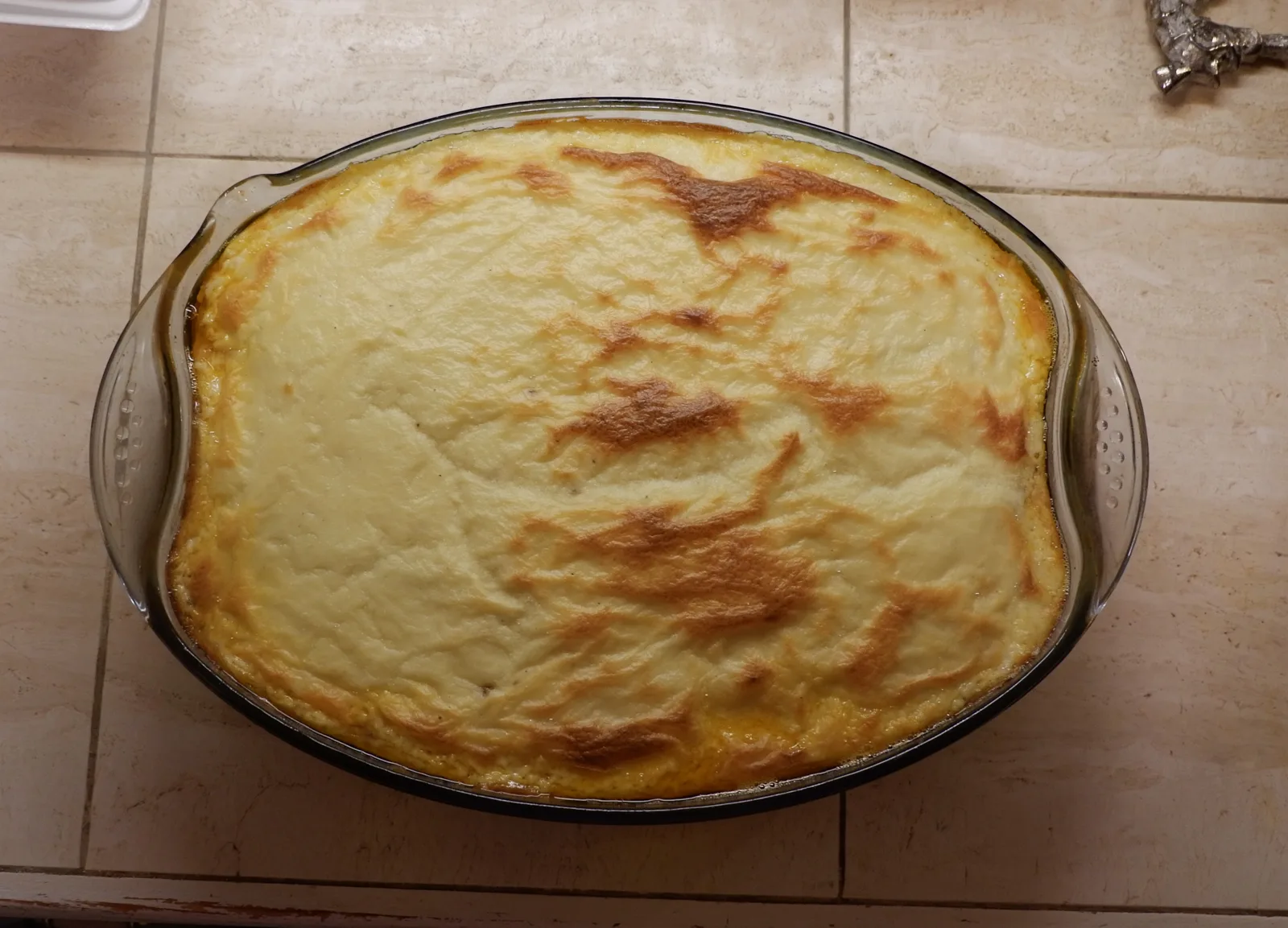
A whole Greek moussaka in a glass baking dish, its bechamel top baked golden brown with darker patches Greece flag Greece 2h
Dinner •Greek Classic

Greek Moussaka

Greek moussaka is a layered bake of fried aubergine and potato, a cinnamon-spiced beef sauce, and a thick bechamel that turns deep gold in the oven. It is the dish most Greek tavernas are judged by, and it is made for sharing at a slow family dinner. One serving is about 412 g.

Comfort & Warmth

A hearty layered bake built around aubergine, potatoes and a spiced meat sauce under a creamy bechamel topping.

Pairs Well With
Serve with a crisp Greek salad, warm bread and a glass of red wine.
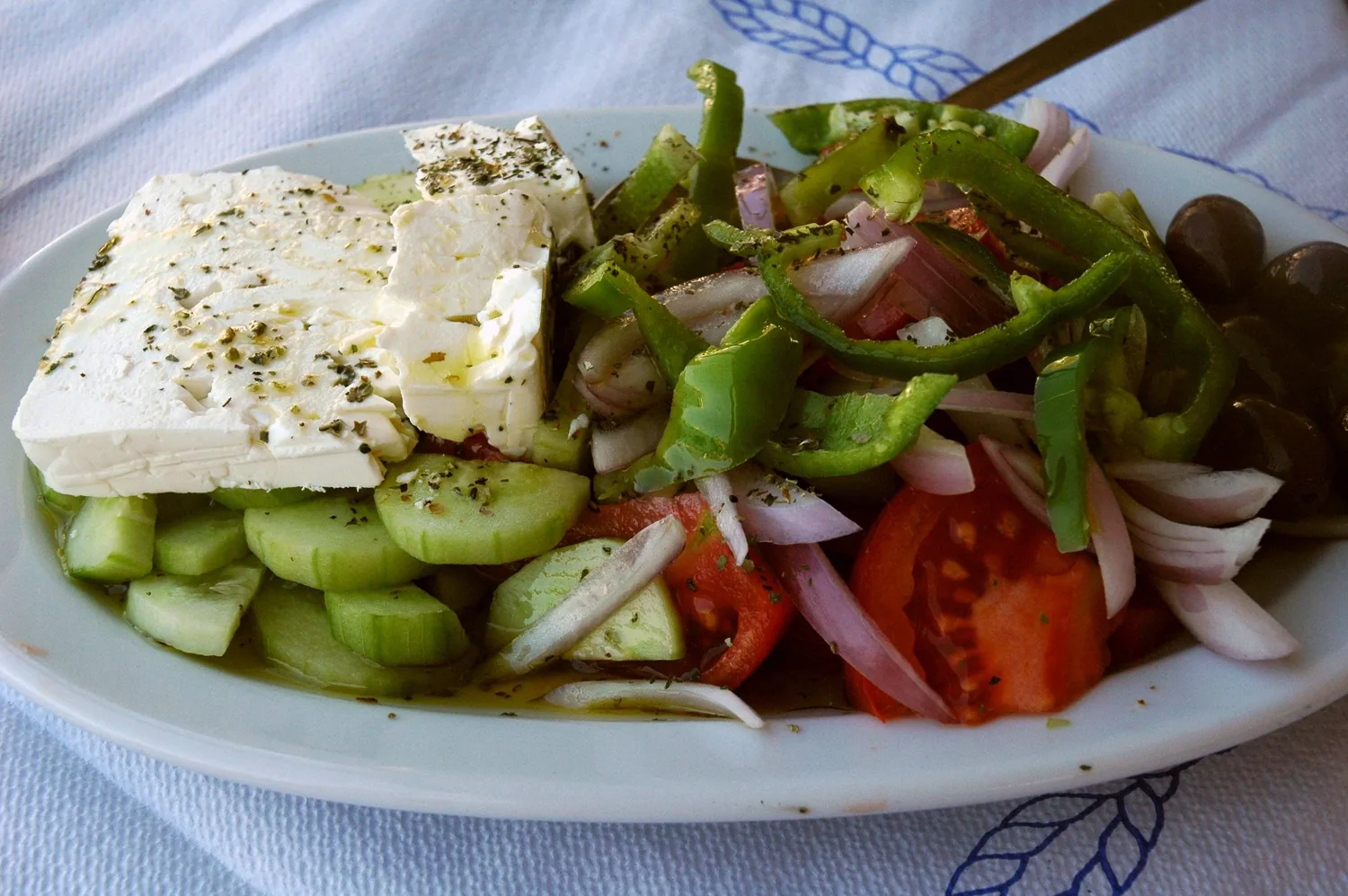
Greek salad (horiatiki) with a slab of feta sprinkled with oregano, Kalamata olives, tomato wedges, cucumber and red onion on a white plate Greece flag Greece 20m
Lunch •Aegean Table Classic

Greek Salad

This Greek salad recipe is the real horiatiki: chunky ripe tomatoes, peeled cucumber, red onion and green pepper, with Kalamata olives and a whole slab of feta on top, dressed with extra-virgin olive oil and dried Greek oregano. There is no lettuce and no heavy dressing — just summer vegetables at their best, ready in twenty minutes. One serving is about 411 g.

Fresh Summer Lunch

Crisp garden vegetables, salty feta and Kalamata olives under good olive oil — a bright, satisfying lunch with no cooking at all.

Pairs Well With
Crusty bread & grilled fish
Quick Prep (<30m)
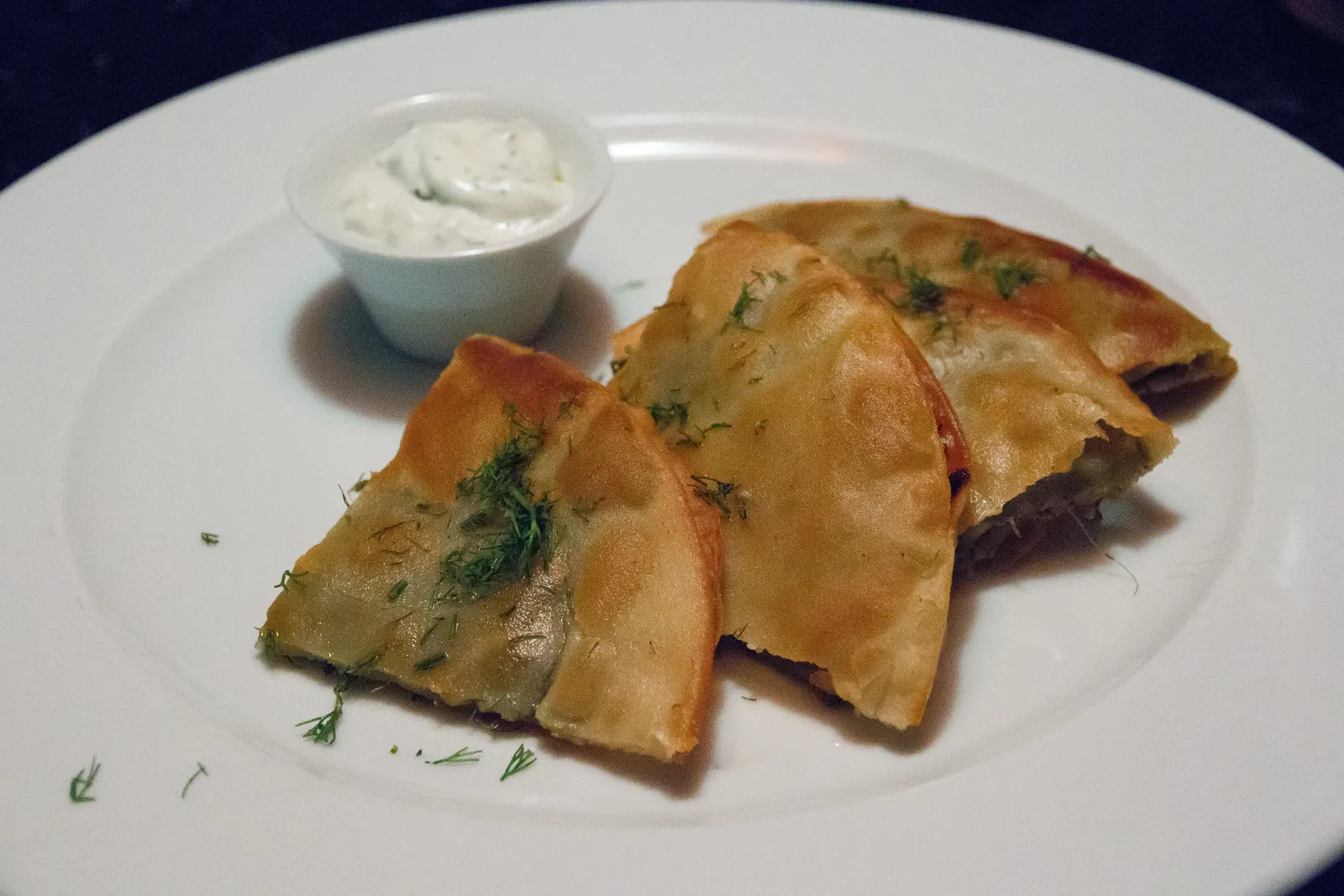
Golden spanakopita triangles sprinkled with fresh dill, served on a white plate with a small bowl of tzatziki Greece flag Greece 1h 20m
Lunch •Greek Bakery Classic

Spanakopita

This spanakopita recipe is the Greek spinach pie found in every bakery in Greece: paper-thin filo brushed with olive oil, layered over a filling of wilted spinach, salty feta, ricotta, leeks and a generous handful of fresh dill, then baked until the top shatters and the inside stays soft and savoury. It is the pie Greeks eat for lunch, take on picnics and set out on a mezze table. One serving is about 220 g.

Crisp Filo, Spinach & Feta

Layers of olive-oil-brushed filo wrapped around a spinach, feta, dill and leek filling, baked until golden and crisp.

Pairs Well With
Greek salad, tzatziki & lemon wedges
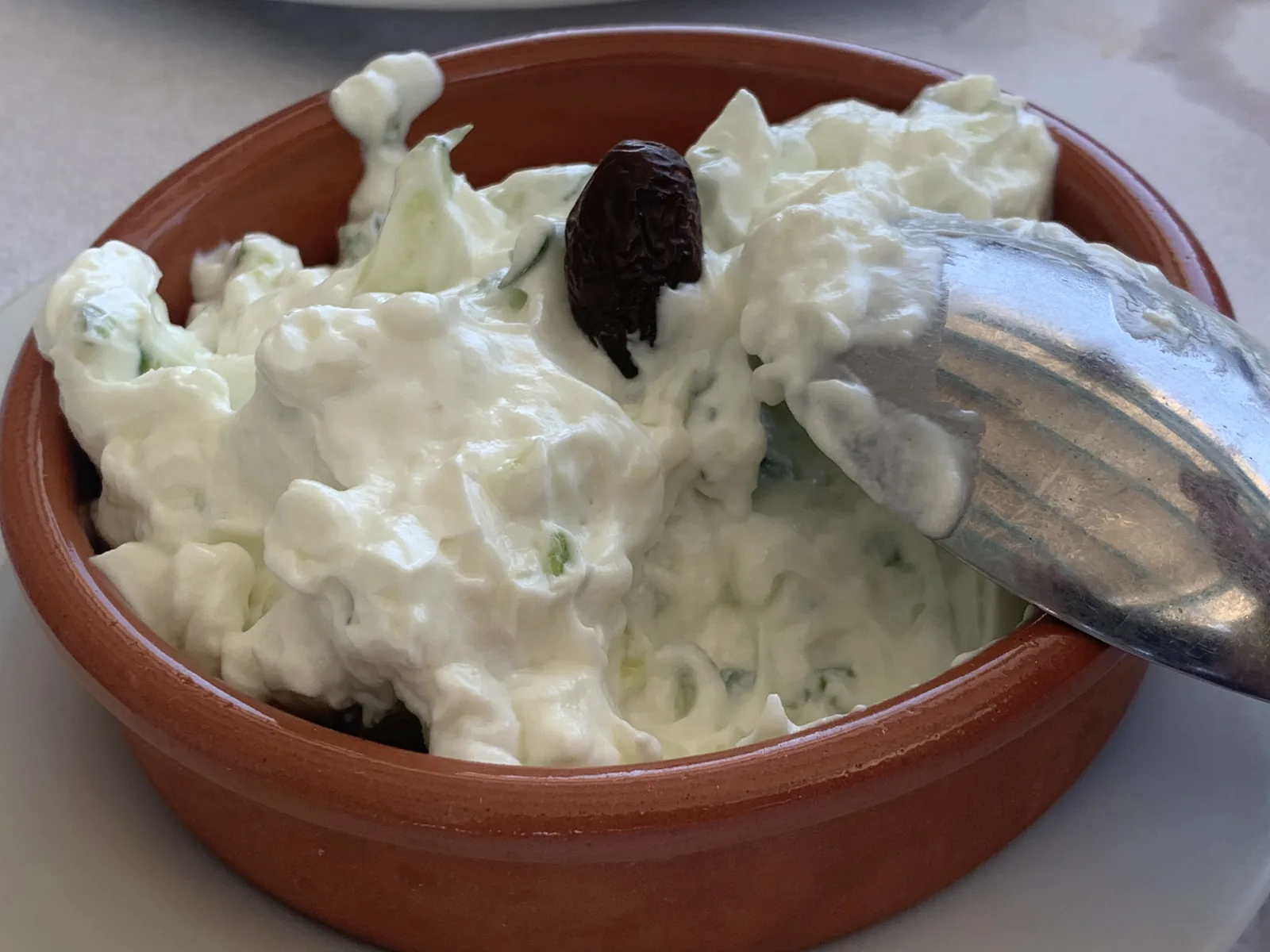
A terracotta bowl of thick white tzatziki with cucumber and a black olive, with a spoon Greece flag Greece 25m
Snack & Tea •Greek Meze Classic

Tzatziki

This tzatziki recipe is the real Greek version: thick strained yogurt, cucumber grated and squeezed bone dry, raw garlic, a thread of olive oil and a handful of dill. No cooking at all — just grating, squeezing and stirring — and the result is cool, creamy and sharp enough to cut through grilled meat. One serving is about 120 g.

Cool & Creamy

Thick Greek yogurt folded with grated cucumber, garlic and dill — the cool white dip at the heart of every Greek meze.

Pairs Well With
Spoon over grilled meat, or serve as a dip with warm pitta and raw vegetables.

The Dinner Gazette

Never wonder what’s for dinner again

One email a week with easy dinner ideas from around the world — ingredients, steps and nutrition, tested in our kitchen first.

Delivered every Thursday morning. Unsubscribe anytime.