Curated recipes from 193 countries  •  New seasonal Mediterranean issue out now

Overview

Klepon

Ondeh Ondeh, Onde-onde, Klepon Pandan

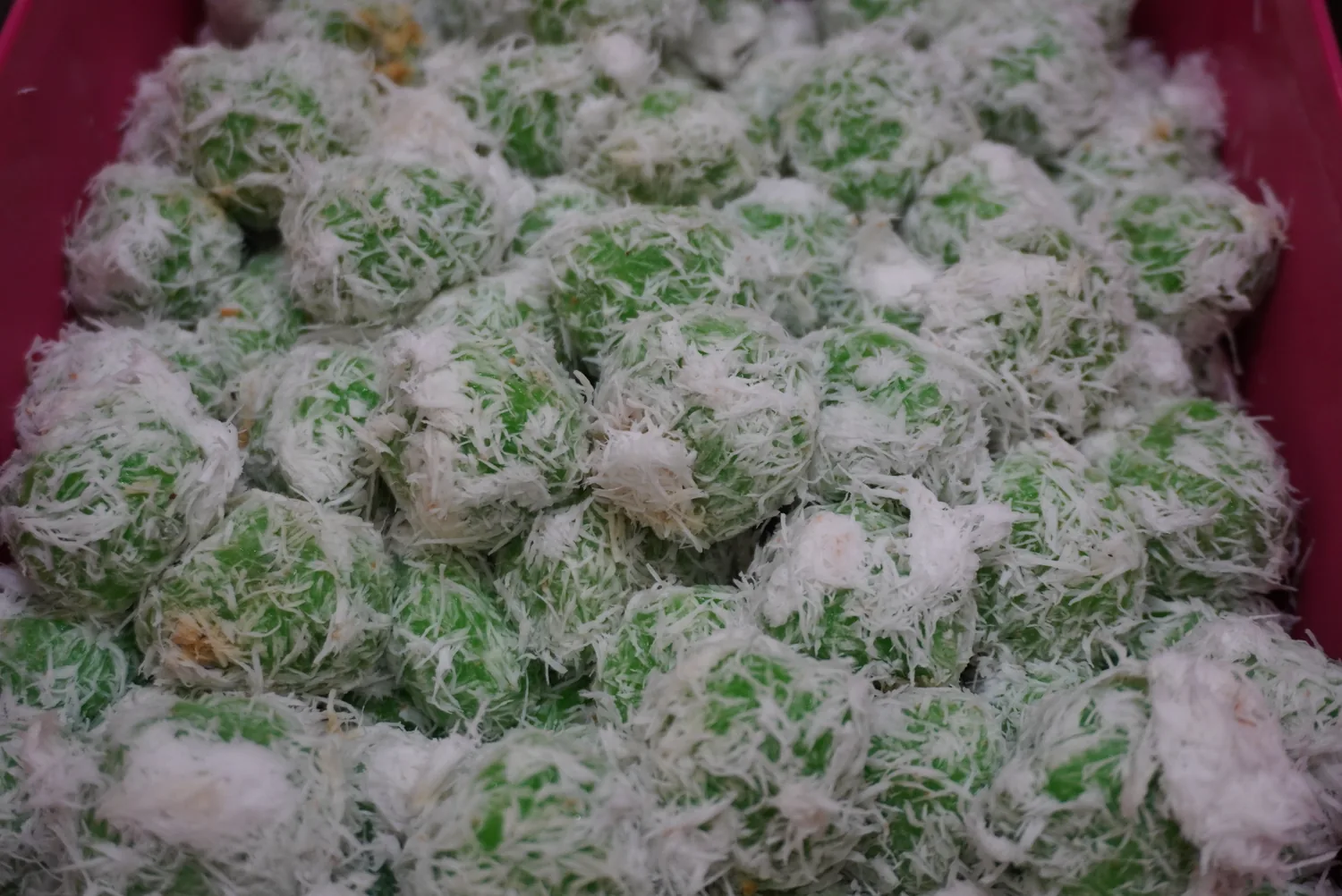
Klepon are chewy green balls of glutinous rice dough coloured and scented with pandan, each one hiding a nugget of palm sugar that melts into syrup as the balls boil. Rolled in salted grated coconut while still warm, they are sweet, fragrant and soft. This klepon recipe makes 24 balls. One serving (four balls) is about 132 g.

Klepon is a Javanese market snack, one of the jajan pasar — the small cakes sold at morning markets across Java. The same green balls are called ondeh ondeh in Malaysia and Singapore. Their green colour and scent come from pandan leaf, and the molten palm sugar centre is the whole point: bite carefully, and the syrup runs out.

Pairs well with: Hot jasmine tea or black coffee.

Provenance

Indonesia flag Indonesia

Javanese Market Snack

East & South Asia

Time Dedication

45m

30m prep • 15m cook

Batch Yield

6 Servings

369 kcal per serving

1 serving ≈ 132 g

Technical Skill

Intermediate

Medium (Boiled)

Meal Timing & Digestive Fit

Breakfast

Not Advised

Lunch

Inappropriate

Dinner

Inappropriate

Snack & Tea

Ideal Light Bite

Occasions: Afternoon tea, market snacks, festive gatherings, family snacks Cost: Low — about $1–2 per serving at home
A pile of bright green klepon rice balls coated in white grated coconut

Javanese Market Snack

Photo: Ezagren, CC BY-SA 4.0, via Wikimedia Commons

The Heritage Formulary

Measured Ingredients

Estimated cost: Low — about $1–2 per serving at home (USD)

Made with glutinous rice flour, fresh pandan, palm sugar and grated coconut, shaped and boiled the traditional way.

Execution Methodology & Culinary Technique

Step-by-Step Cooking Guide

Active 45m
P

Prep Stage: Blend, Mix & Shape

30 Mins • Blend & Shape

Blend the pandan leaves with 200ml water and strain to make about 180ml green juice. Mix the glutinous rice flour, rice flour and 1g salt, then knead in the pandan juice a little at a time until a soft, smooth, non-sticky dough forms. Chop the palm sugar into 24 small pieces, then shape the dough into 24 balls, tucking one piece of palm sugar into the centre of each and sealing it tightly.

Maestro Tip: If the dough cracks when you roll it, wet your hands lightly — a dry dough splits open in the boiling water and the sugar leaks out.

  1. 1

    Steam the Coconut Coating

    10 Mins • Steam Steam, about 100°C (212°F)

    Toss the grated coconut with 1g salt in a heatproof bowl and steam for 10 minutes until soft, fluffy and fragrant. Spread it out on a wide plate and leave it nearby — the balls must be rolled in it while they are still hot.

    Steaming the coconut keeps it fresh-tasting and helps it cling to the hot balls; skip it only if the coconut is very fresh.

    Done when: The coconut is soft, warm and smells sweet and nutty.

  2. 2

    Make the Pandan Dough

    10 Mins • Mix & Knead Room temperature, about 20°C (68°F)

    Put the glutinous rice flour, rice flour and 1g salt in a large bowl and stir. Pour in the pandan juice a little at a time, mixing and then kneading for about 3 minutes until the dough is soft, smooth and pliable, like soft modelling clay. If it feels sticky, dust in a spoonful more glutinous rice flour; if it cracks, add a splash of water.

    Add the juice gradually — pandan leaves vary in juiciness, and too much liquid makes a dough that will not hold its shape.

    Done when: The dough is smooth, bright green and holds together when rolled into a ball.

  3. 3

    Fill and Roll the Balls

    10 Mins • Shape Room temperature, about 20°C (68°F)

    Divide the dough into 24 equal pieces. Flatten one piece in your palm into a disc about 5 cm across, place a piece of palm sugar in the centre, fold the dough over it and pinch the edges firmly shut. Roll gently between your palms into a smooth ball. Repeat with the rest, keeping the finished balls covered with a damp cloth so they do not dry out.

    Seal each ball twice — pinch, then roll — because any gap lets the melted sugar escape into the boiling water.

    Done when: Each ball is smooth and round with no visible seam or crack.

  4. 4

    Boil the Klepon

    8 Mins • Boil Boiling water, about 100°C (212°F)

    Bring 1.5 L of water to a rolling boil in a large pot. Drop the balls in a few at a time and stir very gently once so they do not stick to the bottom. Cook for about 5 minutes: the balls sink first, then float to the surface when the dough is cooked and the sugar inside has melted. Lift them out with a slotted spoon, letting the water drain off for a few seconds.

    Do not crowd the pot — balls that bump into each other while boiling can split open.

    Done when: The balls float to the surface and look glossy and slightly puffed.

  5. 5

    Roll in Coconut and Serve

    5 Mins • Coat Serve warm, about 60°C (140°F)

    While the balls are still hot, roll each one in the steamed coconut until it is fully coated, then set it on a serving plate. Serve warm, four balls per person, so the first bite releases the hot palm sugar syrup.

    Roll the balls the moment they leave the water — once they cool, the coconut will not stick.

    Done when: Every ball is evenly white with coconut and still warm to the touch.

  6. 6

    Eat Them Fresh

    2 Mins • Serve Room temperature, about 20°C (68°F)

    Eat the klepon the same day, ideally within a few hours of making them. Warn everyone to bite carefully: the palm sugar inside is hot liquid sugar.

    Klepon harden as they cool, so make them close to serving time rather than a day ahead.

    Done when: The balls are soft and chewy, with a burst of warm syrup inside.

Finishing Touches & Plating

Serve the klepon warm on a banana leaf or a plain plate, four per person, with hot jasmine tea — the balls should be soft and chewy, the coconut fragrant, and the palm sugar inside liquid and warm.

Nutritional Physiology & Benefits

Nutrition

Energy

369

kcal / serving

Protein

5g

Complete AA

Carbs

69g

Complex

Fats

9g

Healthy

Per serving (6 servings · 1 serving ≈ 132 g)
Energy369 kcal
Protein5 g
Carbohydrates69 g
Fat9 g
Fibre3.0 g
Sugar21.1 g
Sodium143 mg
Per 100g
Energy279 kcal
Protein3.5 g
Carbohydrates52.3 g
Fat6.9 g
Fibre2.2 g
Sugar16 g
Sodium109 mg

Nutrition values are estimated — calculated from USDA FoodData Central values for the listed ingredients.

Vitamins & minerals: B vitamins and magnesium (glutinous rice flour), potassium and manganese (coconut), small amounts of iron (palm sugar).

Naturally Dairy-Free and Vegan

No milk, egg or butter anywhere in the recipe, so the balls suit people who avoid dairy while still tasting rich from the coconut.

Quick Energy

Glutinous rice and palm sugar give fast, easily available energy, which is why klepon is a classic afternoon market snack.

Simple, Recognisable Ingredients

Rice flour, pandan, palm sugar and coconut — four whole ingredients with nothing artificial, and no deep frying.

Food Pairings

What to Eat With

To optimize nutrient absorption and elevate the sensory depth, pair with these authentic accompaniments:

Drinks

Hot Jasmine Tea

Unsweetened jasmine tea cuts through the sweetness of the palm sugar and refreshes the palate between balls.

Black Coffee

Strong black coffee balances the sweet syrup centre and matches the smoky depth of palm sugar.

Full Menus

Jajan Pasar Platter

Serve klepon alongside other small market cakes such as dadar gulung and lapis, so guests can taste several textures at one tea.

Sides

Fresh Tropical Fruit

Slices of mango or papaya add a cool, juicy contrast to the warm, chewy balls.

Complete menu

Serve four klepon per person as part of a jajan pasar platter with dadar gulung and lapis, with hot jasmine tea and fresh mango on the side.

Digestive Guardrails

What NOT to Combine

To prevent digestive distress, sluggishness, or palate clash, avoid pairing the dish with these elements:

Biting Straight Into a Hot Ball

The palm sugar inside is molten and can burn the mouth, so let each ball cool for a minute and bite carefully. This is general information, not medical advice.

Very Sweet Drinks

The balls are already sweet from palm sugar, so sugary sodas or sweetened condensed-milk drinks on the side can make the whole snack overwhelmingly sweet. Choose plain tea or water instead. This is general information, not medical advice.

General information only, not medical advice — consult a doctor for personal dietary decisions.

Who Should Eat It

Who Should Eat

  • General adultsA sweet snack at 369 kcal per serving of four balls — enjoy one serving with unsweetened tea rather than several at once.
  • ChildrenChildren love the bright green balls and the surprise of syrup inside; one or two balls are plenty, and warn them the centre is hot.
  • ElderlySoft, moist and easy to chew, but sweet — two balls with tea make a good afternoon treat.
  • Pregnant womenThe balls are vegan and dairy-free, but they are high in sugar, so keep to a small portion and check with your clinician about sugar intake.
  • Breastfeeding womenA satisfying snack that provides quick energy; keep to one serving because of the sugar and the saturated fat from the coconut.
  • AthletesFast carbohydrate from glutinous rice and palm sugar makes this a handy quick-energy snack, best eaten after rather than before training.
  • Weight gainEnergy-dense for its size, so it can help add calories between meals — one serving as a snack.
  • Weight lossSweet and energy-dense, so it is a treat rather than an everyday snack — two balls, and skip the sweet drink with it.

Health Conditions — Adjust or Avoid

Conditions

  • DiabetesHigh in sugar and fast carbohydrate, so it raises blood sugar quickly — people with diabetes should eat a small piece only occasionally and check with their clinician.
  • High blood pressureThe salt is low, but the coconut is rich, so keep the portion to two balls if you watch your blood pressure; check with your clinician.
  • Kidney diseaseCoconut is high in potassium, so people with kidney disease should eat this rarely and in a small portion; ask your clinician.
  • GoutLow in purines, so gout is not a particular concern with these balls; the sugar is the bigger issue.
  • Stomach issuesSoft and easy to chew, so it is usually gentle on the stomach; eat slowly and stop if the sweetness bothers you.
  • Cardiovascular diseaseGrated coconut is high in saturated fat, so this is an occasional treat rather than a regular snack for heart health; check with your clinician.
  • Fatty liverA sweet, coconut-rich snack is heavy on the liver in large amounts — keep it to two balls occasionally; ask your clinician for guidance.
  • Food allergiesContains coconut and rice (glutinous rice flour is naturally gluten-free). There is no milk, egg, peanut or tree nut in this recipe. If you are allergic to coconut, do not eat these balls.
  • Special therapeutic dietsNot suitable for low-sugar or low-fat therapeutic diets; a version with less palm sugar is lighter but will not taste the same. Ask your clinician or dietitian before changing your diet.

If you have a medical condition, consult your doctor before changing your diet.

Storage & Use

Storage & Use

How to store
Cool completely, then store in an airtight container lined with a banana leaf or baking paper.
In the fridge
1 day in an airtight container; the balls harden when chilled.
In the freezer
Not recommended — the dough turns hard and crumbly after thawing.
How to reheat
Steam for 3–4 minutes until soft again; do not microwave, which makes the balls rubbery. Reheat to steaming hot, about 74°C (165°F).
Freezing recommended
No — make klepon fresh and eat them the same day.
Signs it has spoiled
Sour smell, slimy surface, or mould spots on the coconut coating.

More recipes to explore

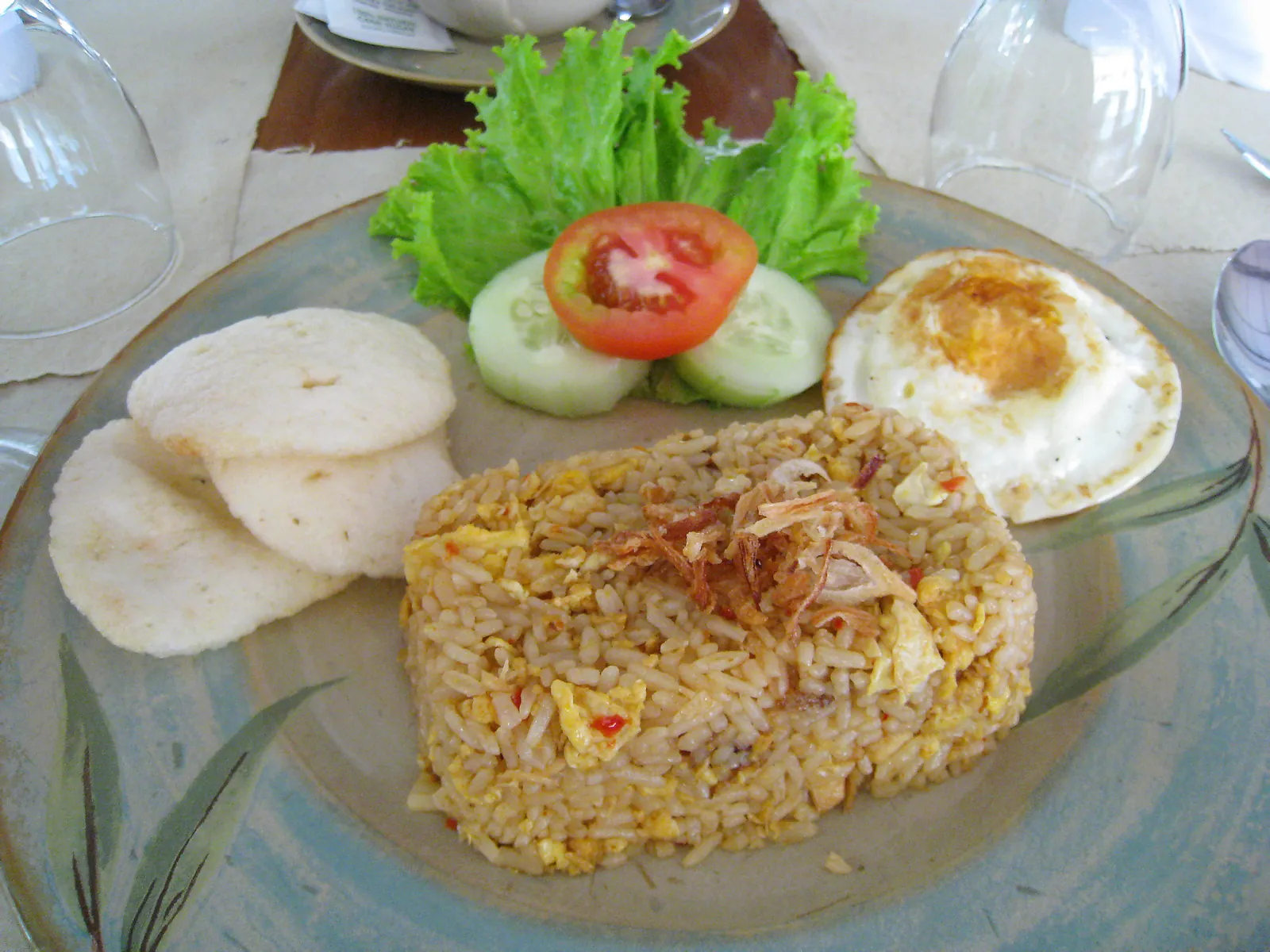
Indonesian nasi goreng — a mound of fried rice with egg and fried shallots, a fried egg, prawn crackers, cucumber, tomato and lettuce Indonesia flag Indonesia 35m
Dinner •Jakarta Street Classic

Indonesian Nasi Goreng

This Indonesian nasi goreng recipe turns a bowl of day-old rice into something far better than the sum of its parts: smoky, sweet-savoury grains coated in kecap manis, tossed with chicken, carrot and peas, and crowned with a fried egg and crunchy prawn crackers. It is the kind of dinner that comes together in one wok in about half an hour, and it tastes like a Jakarta street stall at its best. One serving is about 470 g.

Comfort & Satisfying

A one-wok dinner of sweet-savoury fried rice, chicken and a fried egg, served the Indonesian way with cucumber, tomato and prawn crackers.

Pairs Well With
A fried egg on top, cool cucumber and tomato, and a handful of prawn crackers, with iced tea to drink.
Quick Prep (<30m)
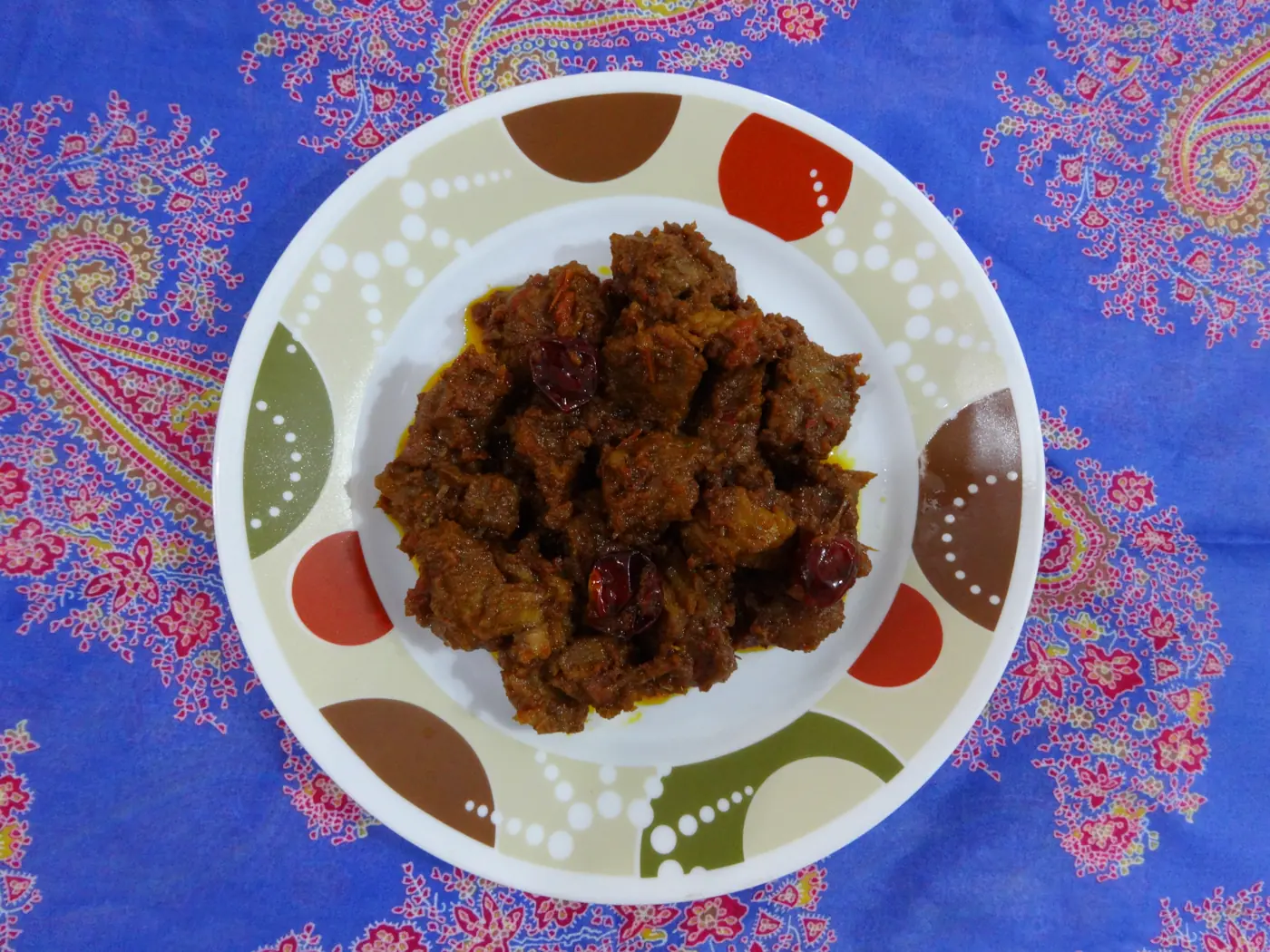
A plate of beef rendang — dark brown beef chunks coated in a dry, caramelised spice paste Indonesia flag Indonesia 4h
Dinner •West Sumatra Heritage

Beef Rendang

This beef rendang recipe slow-braises beef chuck in coconut milk with lemongrass, galangal, chillies and warm spices for about four hours, until the sauce has almost disappeared and the meat is coated in a dark, dry, caramelised spice paste. It is the Minangkabau dish from West Sumatra that sits at the heart of Padang cooking: deeply savoury, gently hot, and rich without being saucy. One serving is about 380 g.

Rich & Satisfying

Slow-braised beef in spiced coconut milk, reduced until the meat is coated in a dark, caramelised spice paste.

Pairs Well With
Steamed jasmine rice & pickled cucumber (acar timun)
High Protein
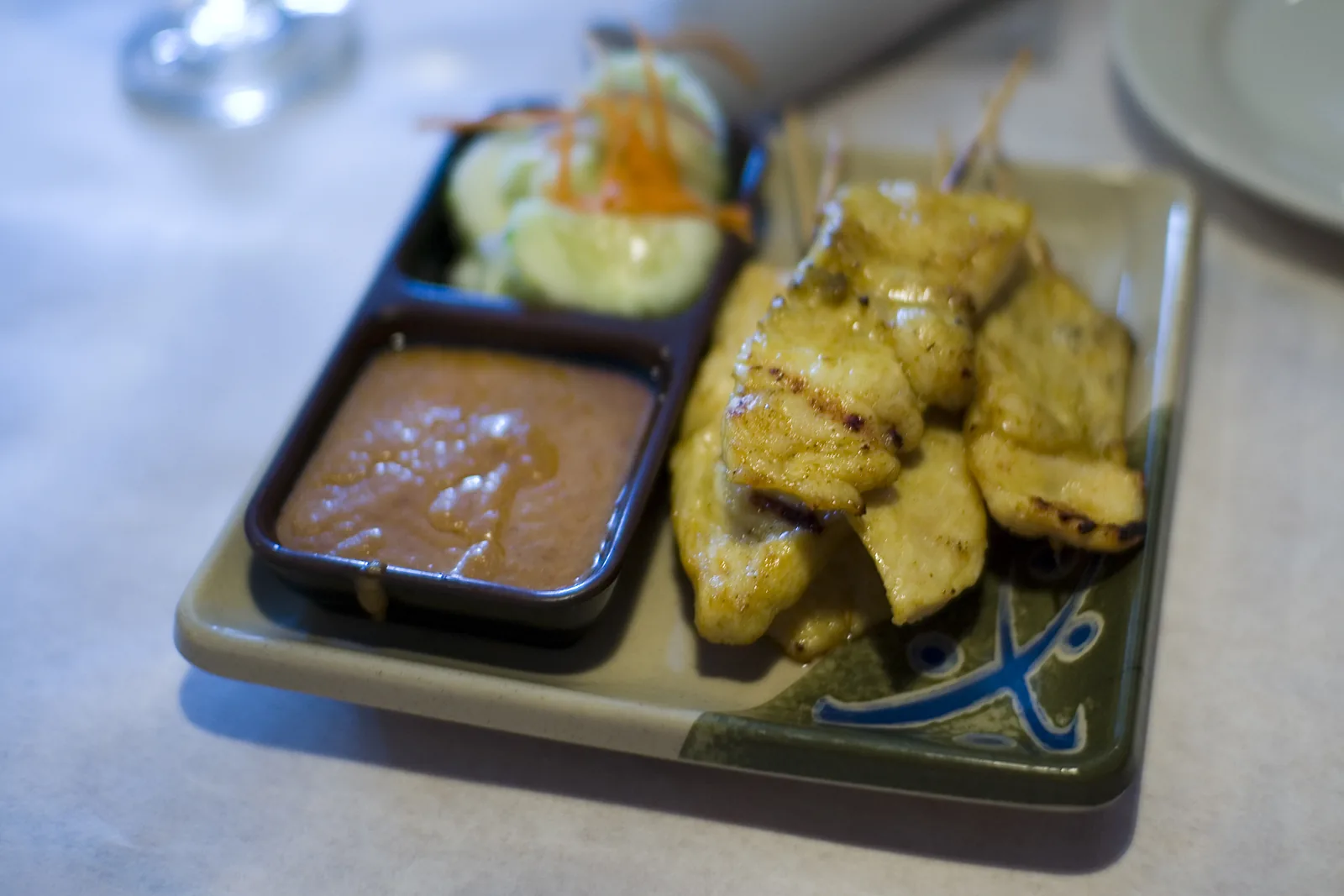
Grilled chicken satay skewers with peanut sauce and cucumber salad on a plate Indonesia flag Indonesia 45m
Dinner •Java Street Food

Chicken Satay

This chicken satay recipe turns chicken breast into golden, char-edged skewers marinated in turmeric, coconut milk, garlic and sweet soy sauce, then grilled and served with a warm, creamy peanut sauce. One serving is about 290 g: three skewers, a generous spoonful of peanut sauce and a cool cucumber-shallot salad. It is the Indonesian street-food classic — sate ayam — made for a weeknight grill.

High-Protein Grilling

Grilled chicken skewers in a turmeric-coconut marinade, served with a homemade peanut sauce — high in protein and cooked fast over high heat.

Pairs Well With
Lontong rice cakes and a cool cucumber-shallot salad balance the rich peanut sauce.
High Protein • Quick Prep (<30m)
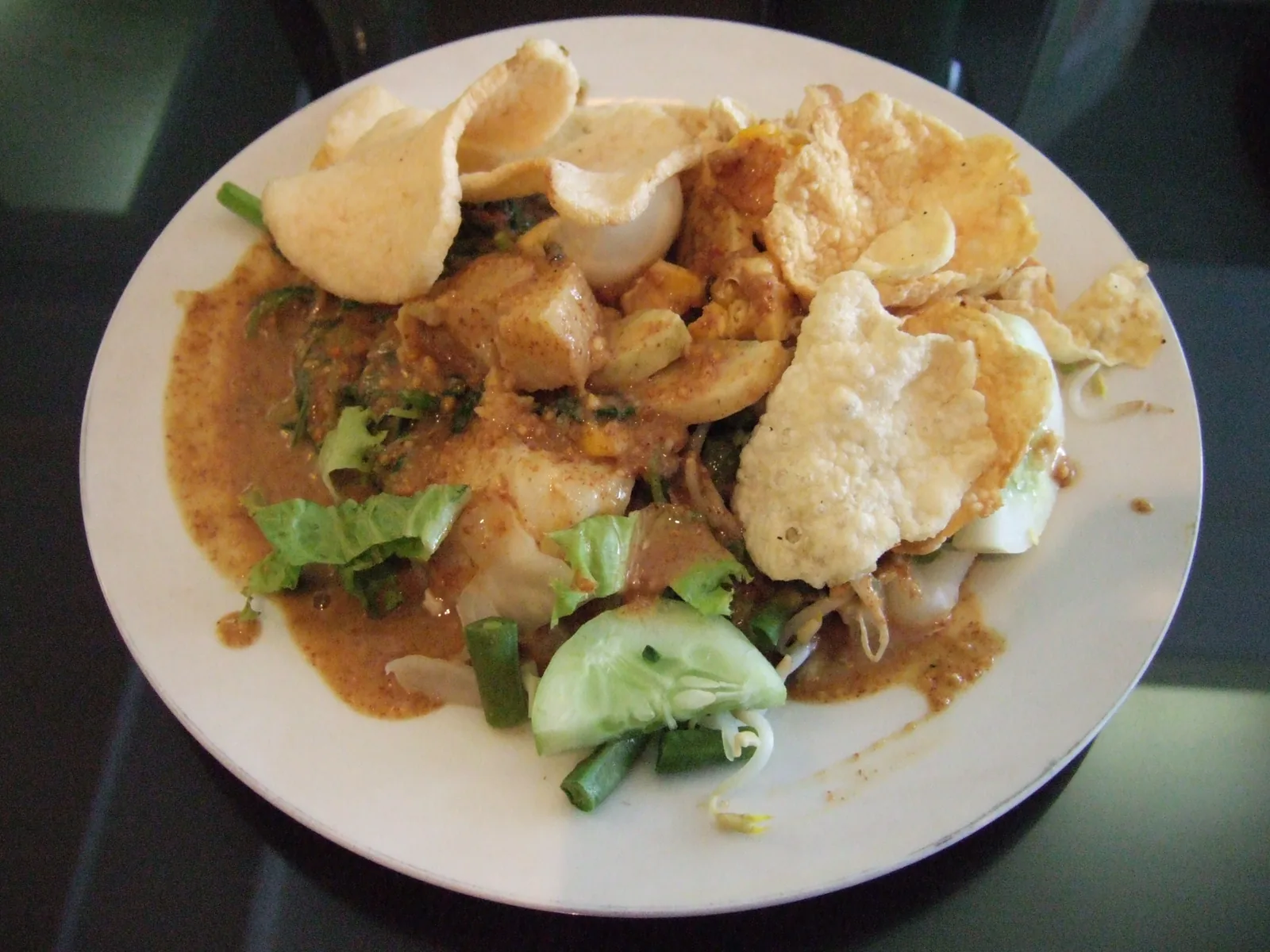
A plate of gado-gado: mixed vegetables, tofu and boiled egg coated in peanut sauce, topped with prawn crackers and cucumber slices. Indonesia flag Indonesia 45m
Lunch •Jakarta Street Food Classic

Gado-Gado

Gado-gado is Indonesia's best-loved salad: warm potatoes, green beans, cabbage, bean sprouts, cucumber and carrot, with fried tofu, boiled egg and crunchy prawn crackers, all coated in a thick, sweet-savoury peanut sauce. One serving is about 584 g.

Fresh & Filling

Warm vegetables, tofu and egg under a rich peanut sauce — a complete meat-free lunch.

Pairs Well With
Serve warm with prawn crackers on the side and a glass of iced tea.

The Dinner Gazette

Never wonder what’s for dinner again

One email a week with easy dinner ideas from around the world — ingredients, steps and nutrition, tested in our kitchen first.

Delivered every Thursday morning. Unsubscribe anytime.