-
1
Cream the Butter and Sugar
10 Mins
Room temperature, about 24°C (75°F)
Put the soft butter pieces and the orange-rubbed sugar in a large bowl or stand mixer. Beat on medium-high speed for about 10 minutes until the mixture is pale, thick and fluffy, scraping the bowl down once or twice.
Do not rush this step — the long creaming is what makes the cookies light. If the butter is cool, the mixture stays yellow and grainy; let it warm up and beat again.
Done when: The mixture is almost white, doubled in volume and feels like whipped cream.
-
2
Add the Eggs and Flavours
5 Mins
Room temperature, about 24°C (75°F)
Beat in the eggs one at a time, waiting a minute for each to disappear into the mixture before adding the next. Stir the baking soda into the orange juice (it will fizz), then add it with the milk, vanilla and ground mahlepi. Beat until just combined — the mixture may look slightly curdled, which is normal.
Room-temperature eggs mix in cleanly; cold eggs can make the butter seize into lumps. If it does curdle, a spoonful of the measured flour brings it back together.
Done when: A smooth, pale batter with the eggs fully mixed in and a clear orange-vanilla scent.
-
3
Mix in the Flour and Rest the Dough
30 Mins
Room temperature, about 24°C (75°F)
Add the sifted flour, baking powder and salt in batches, mixing with a wooden spoon and then your hands until a soft dough comes together. Knead gently for 2 to 3 minutes — just until smooth, no longer. Cover the bowl and rest the dough for 20 minutes so it relaxes and the baking powder wakes up.
Stop adding flour the moment the dough stops sticking — too much flour is the main reason koulourakia turn hard. If the dough still sticks after all the flour is in, rest it first; it firms up as it rests.
Done when: A soft, smooth dough that holds its shape and does not stick to your hands; it should feel like soft play dough, not firm bread dough.
-
4
Shape the Braids and Spirals
15 Mins
Room temperature, about 24°C (75°F)
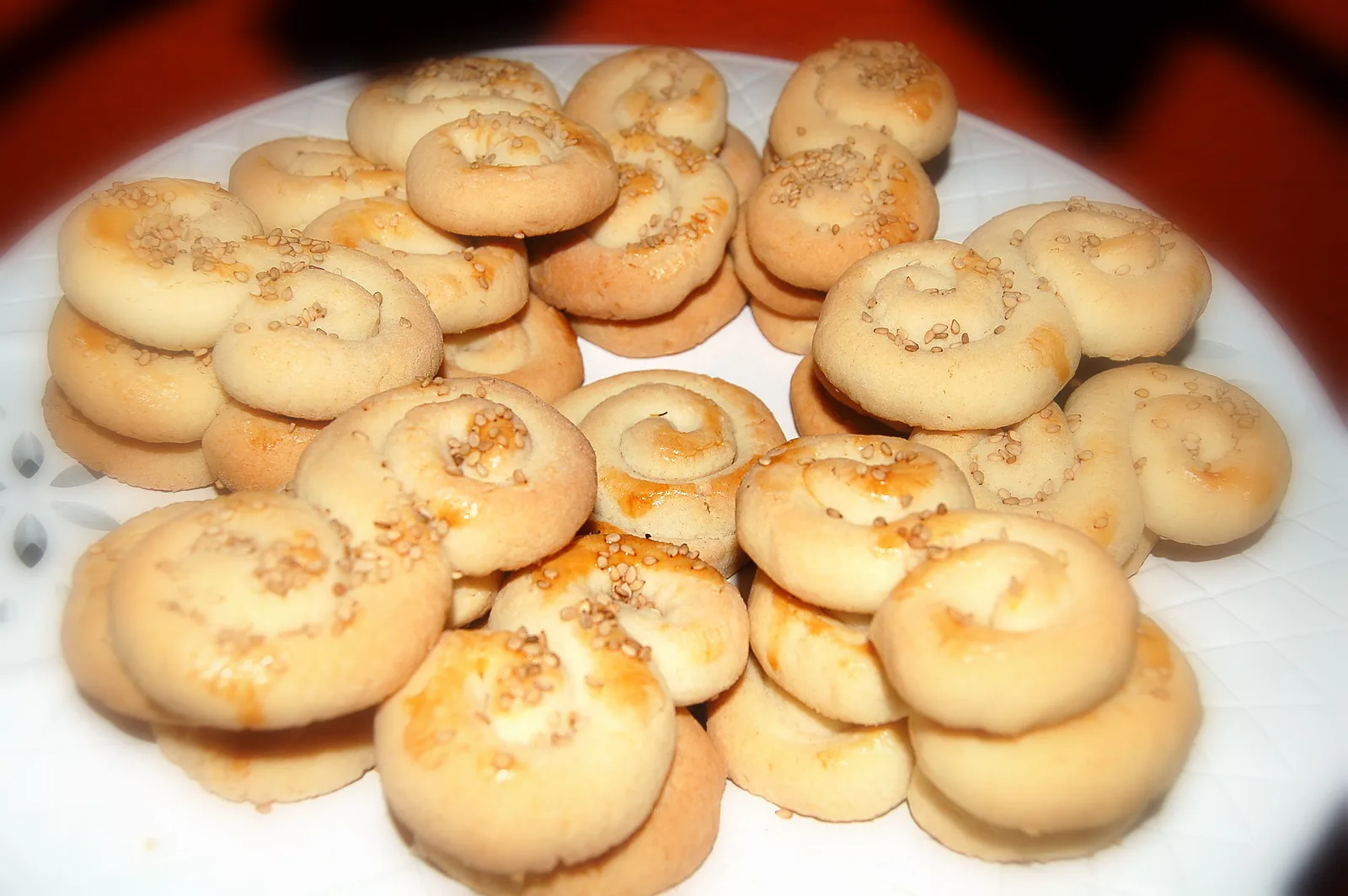
Heat the oven to 180°C (350°F) and line two baking trays with parchment. Take a piece of dough about 35 g (a heaped tablespoon) and roll it into a rope about 25 cm (10 in) long. Shape it into a braid, twist or spiral — fold the rope in half and twist the two halves together, or coil it into a snail shape, as in the photo — and press the ends down lightly. Place on the tray with 2 to 3 cm (about 1 in) between cookies.
Keep the ropes even in thickness or the thin parts over-brown. If a rope keeps springing back, let it rest for a few minutes and roll again. Children love shaping these — braids, twists, rings and bows are all traditional.
Done when: Even ropes, neatly twisted or coiled, lying flat on the tray with space to spread slightly.
-
5
Egg Wash and Sesame
5 Mins
180°C (350°F)
Brush each cookie gently all over with the beaten egg wash and scatter over the sesame seeds. Work lightly so you do not squash the shapes.
Brush, do not puddle — egg wash pooling in the tray burns and sticks the cookies down. A pastry brush with soft bristles works best.
Done when: Every cookie has a thin, even egg glaze and a scattering of sesame seeds.
-
6
Bake Until Deep Golden
25 Mins
180°C (350°F)
Bake in the middle of the oven for 20 to 25 minutes until deep golden brown on top and golden underneath — lift one cookie and check its base. Cool on the tray for 5 minutes, then move to a wire rack to cool completely.
Bake one tray at a time if your oven browns unevenly. The cookies keep baking a little as they cool, so take them out when golden, not dark — dark means dry and bitter.
Done when: Deep golden tops with a glossy glaze, golden-brown bases, and a crisp snap when a cooled cookie is broken.
auto_awesome Finishing Touches & Plating
Cool the cookies completely on a wire rack before putting them away — warm cookies go soft in the tin. Once cool, pack them in an airtight tin or jar, where they keep their snap for weeks. Serve at room temperature with coffee.

 Greece
2h