Curated recipes from 193 countries  •  New seasonal Mediterranean issue out now

Overview

Kourabiedes

Kourabiethes, Greek Almond Shortbread Cookies, Greek Butter Cookies

This kourabiedes recipe creams butter with icing sugar, folds in roasted almonds and flour, and bakes the dough into crescents that turn pale gold at the edges. While they are still warm they are rolled in icing sugar, so each cookie wears a thick, snowy coat that cracks as you bite into the crumbly, buttery centre. They are the almond shortbread Greece bakes for Christmas, weddings and baptisms. One serving is about 83 g, two cookies.

Kourabiedes are Greece's Christmas shortbread, made by kneading flour, butter and crushed roasted almonds, then rolling the warm cookies in icing sugar until they look dusted with snow. The name comes from the Turkish kurabiye, itself from the Arabic qurabiya, a family of shortbread biscuits found across the Balkans and the Middle East — but the Greek version, often flavoured with brandy, vanilla or rose water and sometimes topped with a single clove, is the one baked for Christmas, weddings and baptisms. Unlike their honey-soaked cousins melomakarona, kourabiedes are dry, crumbly and pale, and the two cookies together are the classic pair on every Greek festive table.

Pairs well with: Greek coffee, cinnamon tea & fresh oranges

Provenance

Greece flag Greece

Greek Christmas Classic

Mediterranean & Italy

Time Dedication

1h 3m

45m prep • 18m cook

Batch Yield

12 Servings

392 kcal per serving

1 serving ≈ 83 g

Technical Skill

Intermediate

Medium (Baked)

Meal Timing & Digestive Fit

Breakfast

Not Advised

Lunch

Inappropriate

Dinner

Inappropriate

Snack & Tea

Ideal Light Bite

Occasions: Christmas, weddings, baptisms, festive tables, coffee breaks Cost: Low — about $1 per serving at home

A platter of crescent-shaped kourabiedes cookies thickly coated in white icing sugar

Greek Christmas Classic

Photo: Jastrow, CC BY 2.5, via Wikimedia Commons

The Heritage Formulary

Measured Ingredients

Estimated cost: Low — about $1 per serving at home (USD)
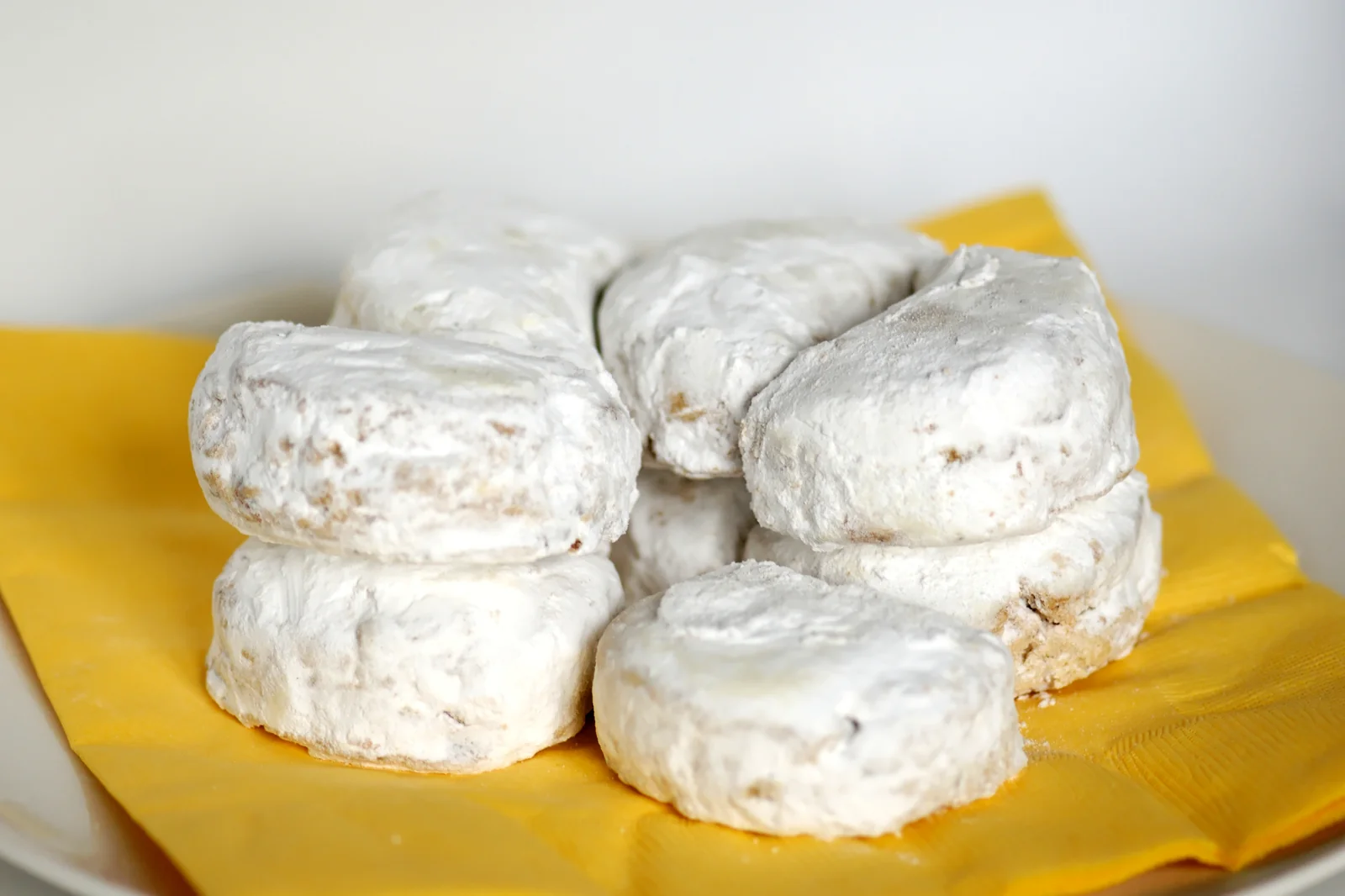
A buttery Greek almond shortbread, baked pale gold and buried in icing sugar.

Execution Methodology & Culinary Technique

Step-by-Step Cooking Guide

Active 1h 3m
P

Prep Stage: Butter Soft, Almonds Roasted, Sugar Sifted

45 Mins active

Take the butter out an hour ahead so it is soft enough to dent with a finger. Roast the almonds at 180°C (350°F) for 8 minutes, cool them, and chop coarsely. Sift the flour with the baking powder, sift both lots of icing sugar, and line two baking trays with parchment paper.

Maestro Tip: Butter that is too cold will not cream properly and the cookies turn hard — it must be truly soft, not fridge-cold.

  1. 1

    Roast and Chop the Almonds

    10 minutes Oven temperature, 180°C (350°F)

    Spread the almonds on a tray and roast for about 8 minutes, until fragrant and lightly golden. Cool completely, then chop coarsely — you want visible pieces, not dust.

    Shake the tray halfway through so the nuts colour evenly.

    Done when: The almonds smell nutty and are golden at the edges, not dark.

  2. 2

    Cream the Butter and Sugar

    10 minutes Room temperature, about 22°C (72°F)

    Beat the soft butter with the 100 g of icing sugar for about 8 minutes, until very pale, fluffy and almost white. Beat in the egg yolk, the brandy and the vanilla.

    Do not rush this step — the long beating is what makes kourabiedes melt in the mouth.

    Done when: The mixture is pale, fluffy and doubled in volume.

  3. 3

    Mix the Dough and Shape the Crescents

    15 minutes Room temperature, about 22°C (72°F)

    Fold in the flour and baking powder in two batches, then the chopped almonds and salt, mixing just until a soft dough forms. Shape into 24 crescents or balls, about 40 g each, and set them on the lined trays with a little space between them.

    Handle the dough gently — overworking it makes tough cookies.

    Done when: A soft dough that holds its shape; the crescents are even in size.

  4. 4

    Bake Until Pale Gold

    18 minutes Oven temperature, 175°C (350°F)

    Bake one tray at a time for 16–18 minutes, until the cookies are set and just turning pale gold at the edges. They should stay pale, not brown.

    Kourabiedes are done while they still look pale — browning them dries them out.

    Done when: The cookies are firm enough to lift and pale gold underneath.

  5. 5

    Roll in Icing Sugar and Cool

    10 minutes Room temperature, about 22°C (72°F)

    While the cookies are still warm, roll each one gently in the sifted coating sugar, then set on a rack. Once cool, roll them a second time for the thick, snowy coat. Leave to cool completely before storing.

    Roll them warm, not hot — hot cookies soak the sugar up and turn sticky.

    Done when: Each cookie wears a thick, even white coat that stays put when cool.

Finishing Touches & Plating

Pile the snowy cookies on a plate and serve with Greek coffee — they are at their best the day they are baked, but they keep beautifully in a tin for two weeks.

Nutritional Physiology & Benefits

Nutrition

Energy

392

kcal / serving

Protein

6g

Complete AA

Carbs

44g

Complex

Fats

22g

Healthy

Per serving (12 servings · 1 serving ≈ 83 g)
Energy392 kcal
Protein6 g
Carbohydrates44 g
Fat22 g
Fibre1.9 g
Sugar17.2 g
Sodium245 mg
Per 100g
Energy473 kcal
Protein6.8 g
Carbohydrates53.2 g
Fat26.3 g
Fibre2.3 g
Sugar20.7 g
Sodium295 mg

Nutrition values are estimated — calculated from USDA FoodData Central values for the listed ingredients.

Vitamins & minerals: Butter and almonds supply vitamin E, calcium and magnesium, the egg yolk adds vitamin A and B12, and the almonds bring fibre and plant protein. All nutrition values are estimated.

Real energy for a small bite

Two cookies bring about 392 calories with almonds and butter, so they work as a proper afternoon snack rather than an empty sweet.

Almonds in every bite

The roasted almonds add about 1.9 g of fibre and vitamin E per serving, plus the crunch that makes these cookies different from plain shortbread.

Simple, honest ingredients

Butter, flour, almonds, sugar and egg — no preservatives, no colouring, nothing you cannot pronounce.

Food Pairings

What to Eat With

To optimize nutrient absorption and elevate the sensory depth, pair with these authentic accompaniments:

Drinks

Greek coffee

Strong, unsweetened Greek coffee is the classic partner — its bitterness balances the buttery sweetness of the cookies.

Cinnamon tea

A warm cup of cinnamon tea echoes the warm, festive spices of the season and cleanses the palate between cookies.

Sides

Fresh oranges

Orange segments add bright acidity and juice that cut through the rich butter and refresh the mouth.

Melomakarona

Served side by side with their honey-soaked cousins, kourabiedes complete the Greek Christmas sweet table — one snowy and crumbly, the other dark and syrupy.

Complete menu

Serve kourabiedes on a festive plate with melomakarona and fresh oranges, with Greek coffee to drink.

Digestive Guardrails

What NOT to Combine

To prevent digestive distress, sluggishness, or palate clash, avoid pairing the dish with these elements:

Very sweet drinks

Kourabiedes already carry about 17.2 g of sugar per serving. Sweetened coffee, hot chocolate or soft drinks on the side make the whole snack cloying and push the sugar far higher. This is general information, not medical advice — ask a clinician about your own sugar limits.

Storing while still warm

Warm cookies steam inside a closed tin and the icing sugar melts into a sticky glaze. Cool them completely first, or the snowy coat is lost.

General information only, not medical advice — consult a doctor for personal dietary decisions.

Who Should Eat It

Who Should Eat

  • General adultsTwo cookies with coffee make a classic afternoon break. Enjoy a normal portion and balance the rest of the day with lighter foods.
  • ChildrenChildren love the snowy, crumbly cookies. Serve one cookie and keep the brandy version for adults — or make a batch with vanilla instead.
  • ElderlySoft and crumbly, so they are easy to eat, though the almonds need chewing. Serve with tea for dunking if chewing is difficult.
  • Pregnant womenFine in a normal portion. The small amount of brandy mostly bakes off, but use the vanilla version if you prefer; ask your clinician if unsure.
  • Breastfeeding womenA filling, energy-rich snack that fits well between feeds. Drink water alongside it.
  • AthletesWith about 44 g of carbohydrates per serving they work as a quick energy snack, though they are low in protein — pair them with yoghurt or nuts.
  • Weight gainAt about 392 calories a serving, two cookies with a milky coffee are an easy way to add energy.
  • Weight lossKeep to one cookie and skip the second sugar roll; the butter makes even a small portion rich.

Health Conditions — Adjust or Avoid

Conditions

  • DiabetesAbout 44 g of carbohydrates and 17.2 g of sugar per serving, so portion size matters and blood sugar should be monitored. One cookie is wiser; ask your clinician or dietitian for a portion that fits your plan.
  • High blood pressureSodium is about 245 mg per serving, mostly from the butter and baking powder. Keep to one serving and skip salty snacks alongside; ask your clinician about your own sodium limits.
  • Kidney diseaseButter, flour and almonds add phosphorus and potassium, so portions should be modest. Ask your clinician or dietitian whether they fit your plan.
  • GoutKourabiedes are low in purines, so they are not a gout trigger. The sugar and fat are the bigger concern; keep portions small and ask your clinician for personal advice.
  • Stomach issuesRich, buttery cookies can feel heavy on a sensitive stomach. Eat one cookie slowly with tea and stop if it causes discomfort; ask your clinician if symptoms persist.
  • Cardiovascular diseaseButter brings saturated fat, so these are a festive treat rather than an everyday snack. Keep portions small and ask your clinician about your diet.
  • Fatty liverThe sugar and butter add energy, so a small portion once in a while is wiser than several cookies. Ask your clinician or dietitian for guidance.
  • Food allergiesContains wheat (gluten), milk, egg and tree nuts (almonds). The brandy is a further note for anyone avoiding alcohol. Ask a clinician if you are unsure.
  • Special therapeutic dietsNot suitable for a gluten-free, dairy-free or low-sugar diet as written. Ask your clinician or dietitian before adapting them.

If you have a medical condition, consult your doctor before changing your diet.

Storage & Use

Storage & Use

How to store
Cool completely, then store in an airtight tin in a single layer or between sheets of parchment.
In the fridge
Not needed — keep at room temperature in a tin for up to 2 weeks.
In the freezer
Up to 3 months in a freezer bag; thaw at room temperature and re-roll in icing sugar before serving.
How to reheat
No reheating. Serve at room temperature.
Freezing recommended
Yes, up to 3 months; freeze uncoated and roll in sugar after thawing for the best finish.
Signs it has spoiled
Stale, soft texture, rancid butter smell, or mould on the surface.

More recipes to explore

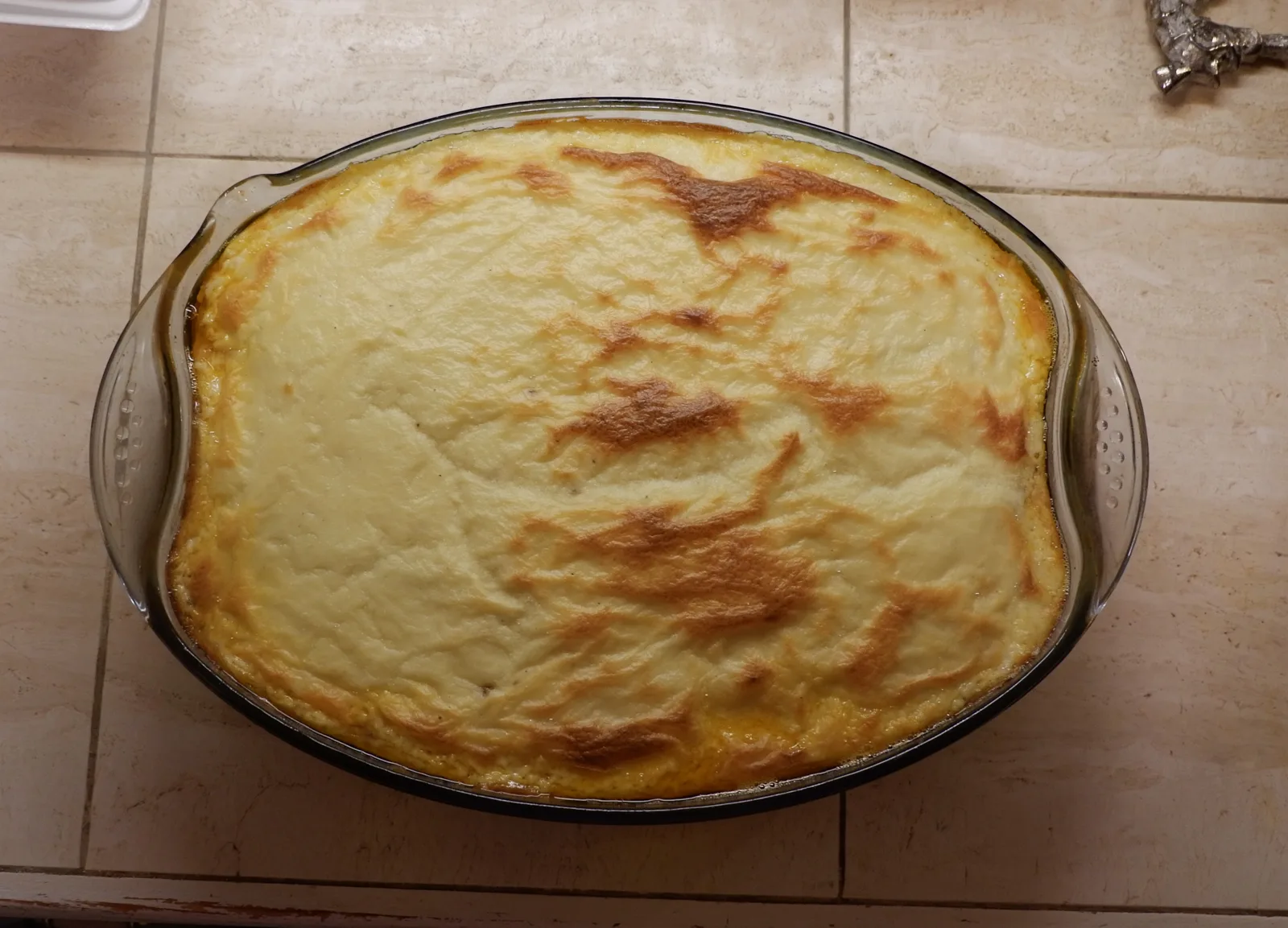
A whole Greek moussaka in a glass baking dish, its bechamel top baked golden brown with darker patches Greece flag Greece 2h
Dinner •Greek Classic

Greek Moussaka

Greek moussaka is a layered bake of fried aubergine and potato, a cinnamon-spiced beef sauce, and a thick bechamel that turns deep gold in the oven. It is the dish most Greek tavernas are judged by, and it is made for sharing at a slow family dinner. One serving is about 412 g.

Comfort & Warmth

A hearty layered bake built around aubergine, potatoes and a spiced meat sauce under a creamy bechamel topping.

Pairs Well With
Serve with a crisp Greek salad, warm bread and a glass of red wine.
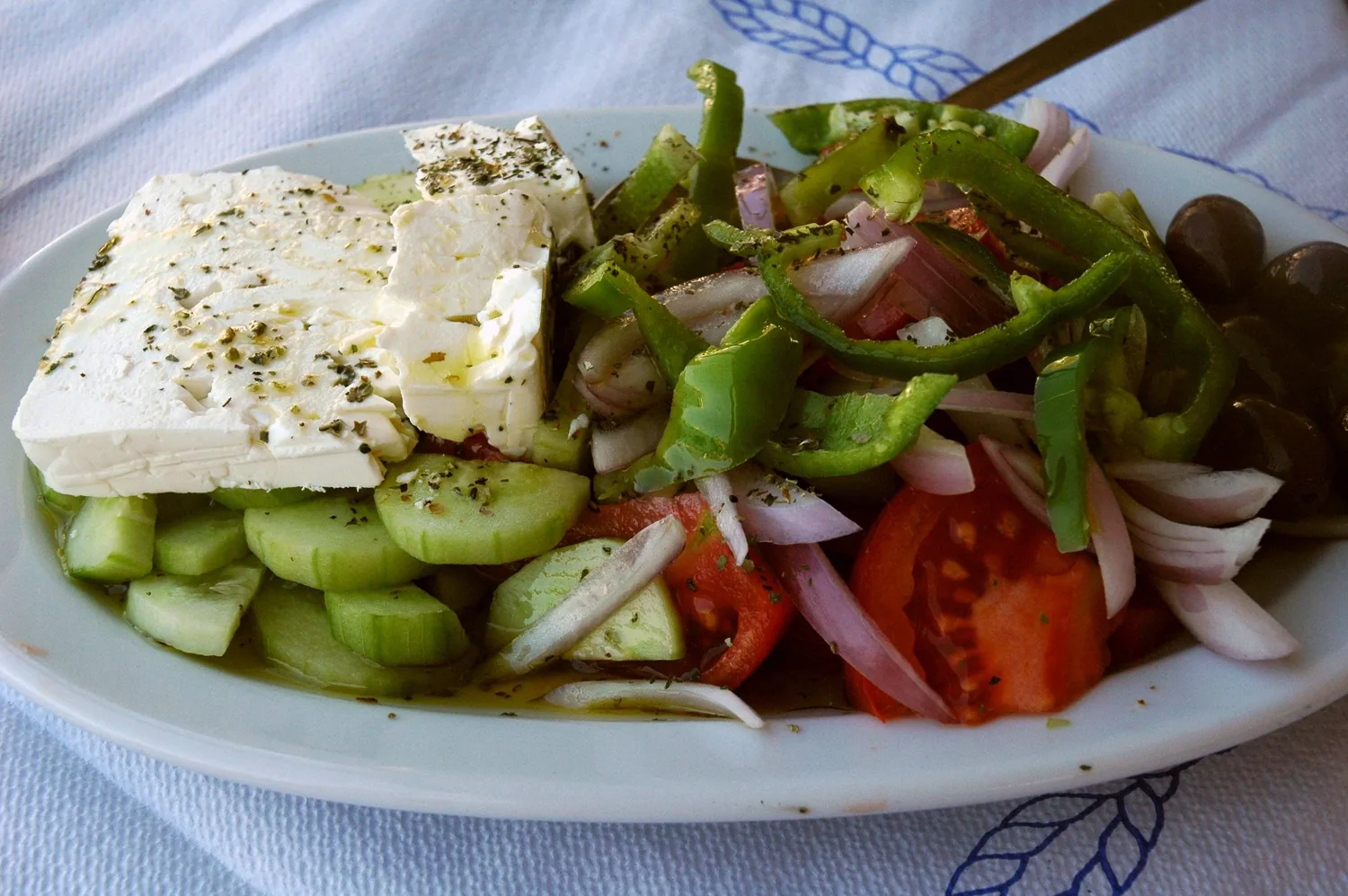
Greek salad (horiatiki) with a slab of feta sprinkled with oregano, Kalamata olives, tomato wedges, cucumber and red onion on a white plate Greece flag Greece 20m
Lunch •Aegean Table Classic

Greek Salad

This Greek salad recipe is the real horiatiki: chunky ripe tomatoes, peeled cucumber, red onion and green pepper, with Kalamata olives and a whole slab of feta on top, dressed with extra-virgin olive oil and dried Greek oregano. There is no lettuce and no heavy dressing — just summer vegetables at their best, ready in twenty minutes. One serving is about 411 g.

Fresh Summer Lunch

Crisp garden vegetables, salty feta and Kalamata olives under good olive oil — a bright, satisfying lunch with no cooking at all.

Pairs Well With
Crusty bread & grilled fish
Quick Prep (<30m)
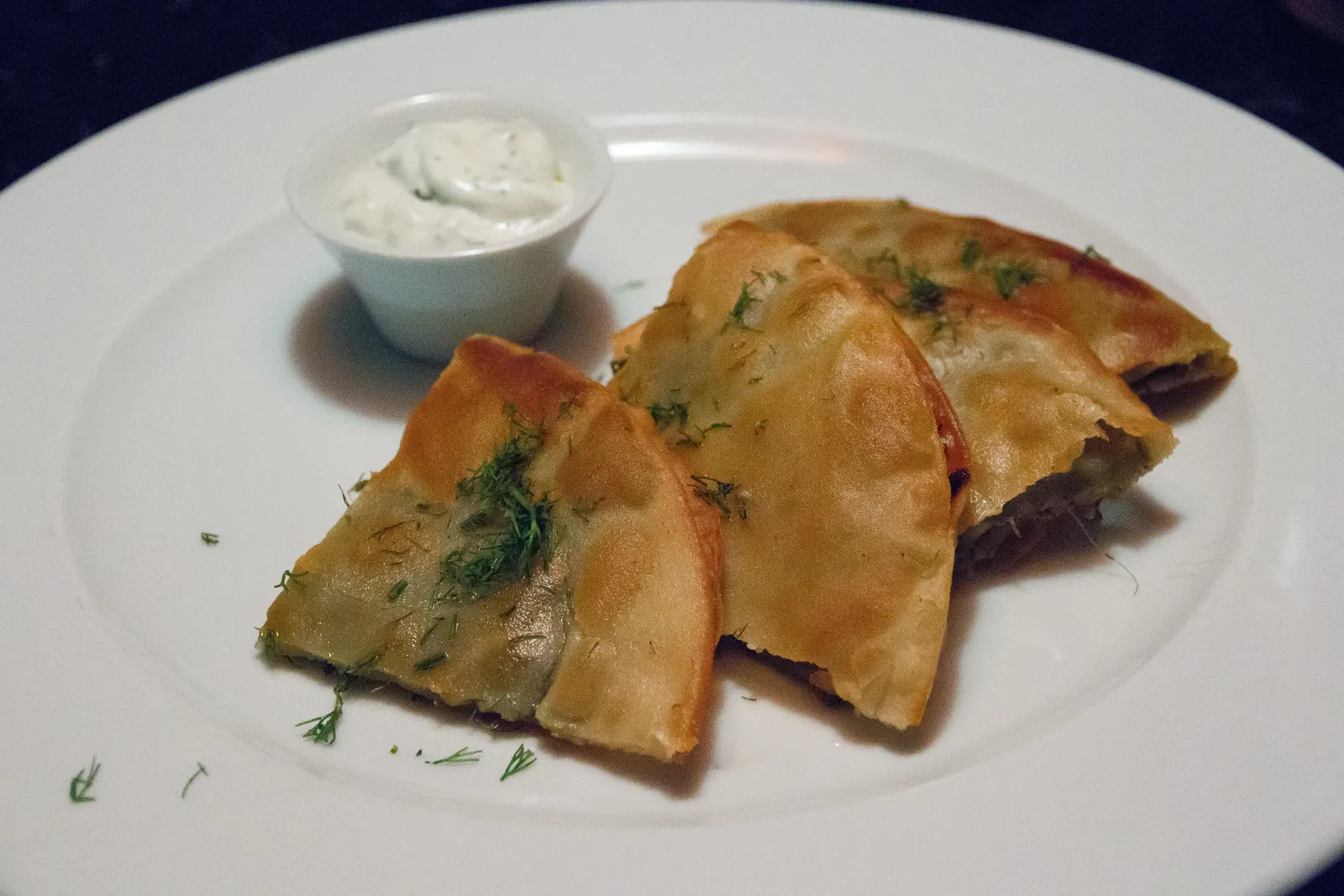
Golden spanakopita triangles sprinkled with fresh dill, served on a white plate with a small bowl of tzatziki Greece flag Greece 1h 20m
Lunch •Greek Bakery Classic

Spanakopita

This spanakopita recipe is the Greek spinach pie found in every bakery in Greece: paper-thin filo brushed with olive oil, layered over a filling of wilted spinach, salty feta, ricotta, leeks and a generous handful of fresh dill, then baked until the top shatters and the inside stays soft and savoury. It is the pie Greeks eat for lunch, take on picnics and set out on a mezze table. One serving is about 220 g.

Crisp Filo, Spinach & Feta

Layers of olive-oil-brushed filo wrapped around a spinach, feta, dill and leek filling, baked until golden and crisp.

Pairs Well With
Greek salad, tzatziki & lemon wedges
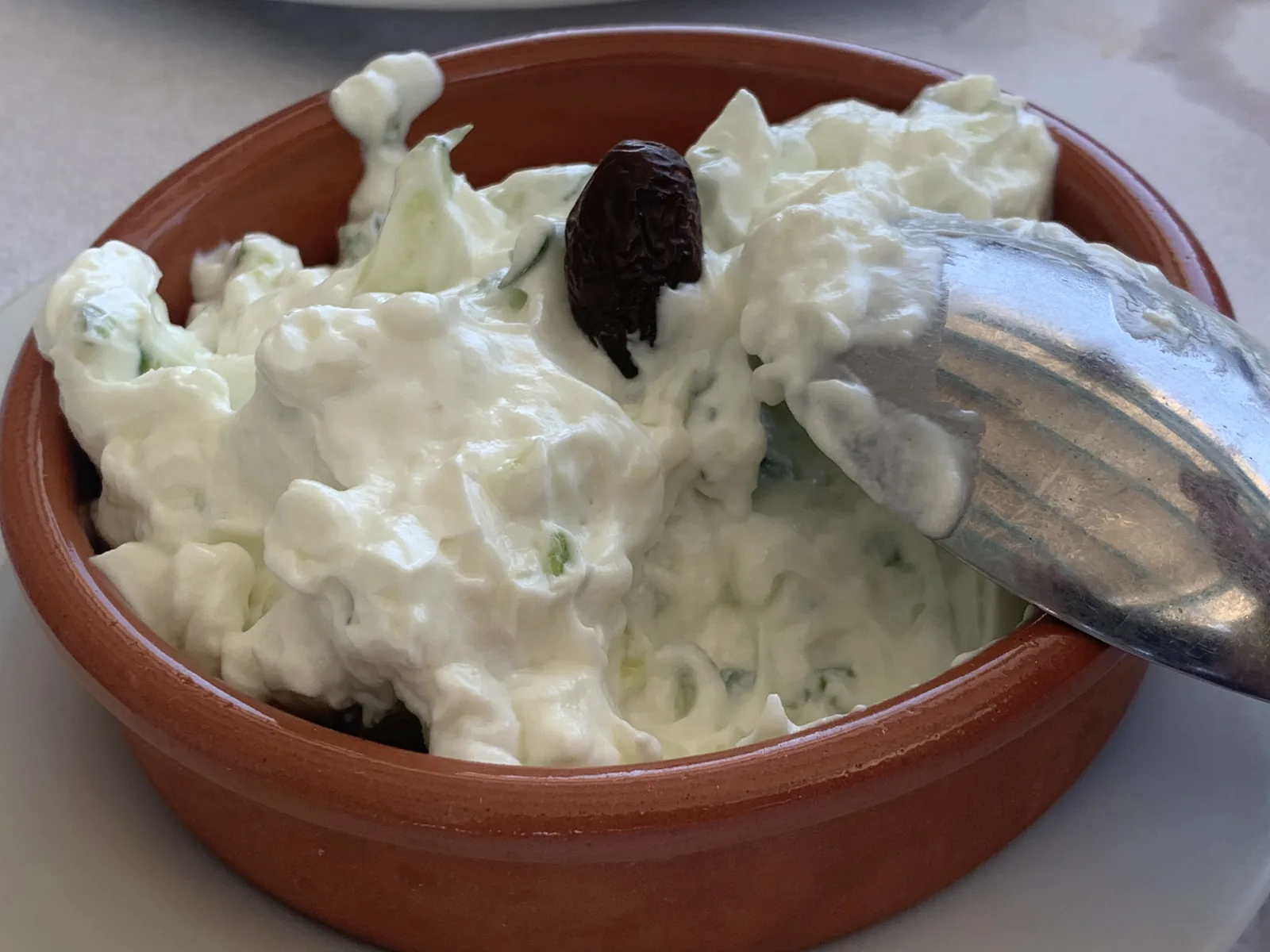
A terracotta bowl of thick white tzatziki with cucumber and a black olive, with a spoon Greece flag Greece 25m
Snack & Tea •Greek Meze Classic

Tzatziki

This tzatziki recipe is the real Greek version: thick strained yogurt, cucumber grated and squeezed bone dry, raw garlic, a thread of olive oil and a handful of dill. No cooking at all — just grating, squeezing and stirring — and the result is cool, creamy and sharp enough to cut through grilled meat. One serving is about 120 g.

Cool & Creamy

Thick Greek yogurt folded with grated cucumber, garlic and dill — the cool white dip at the heart of every Greek meze.

Pairs Well With
Spoon over grilled meat, or serve as a dip with warm pitta and raw vegetables.

The Dinner Gazette

Never wonder what’s for dinner again

One email a week with easy dinner ideas from around the world — ingredients, steps and nutrition, tested in our kitchen first.

Delivered every Thursday morning. Unsubscribe anytime.