Curated recipes from 193 countries  •  New seasonal Mediterranean issue out now

Overview

Lebanese Kibbeh

Kibbeh Bil-Saniyeh

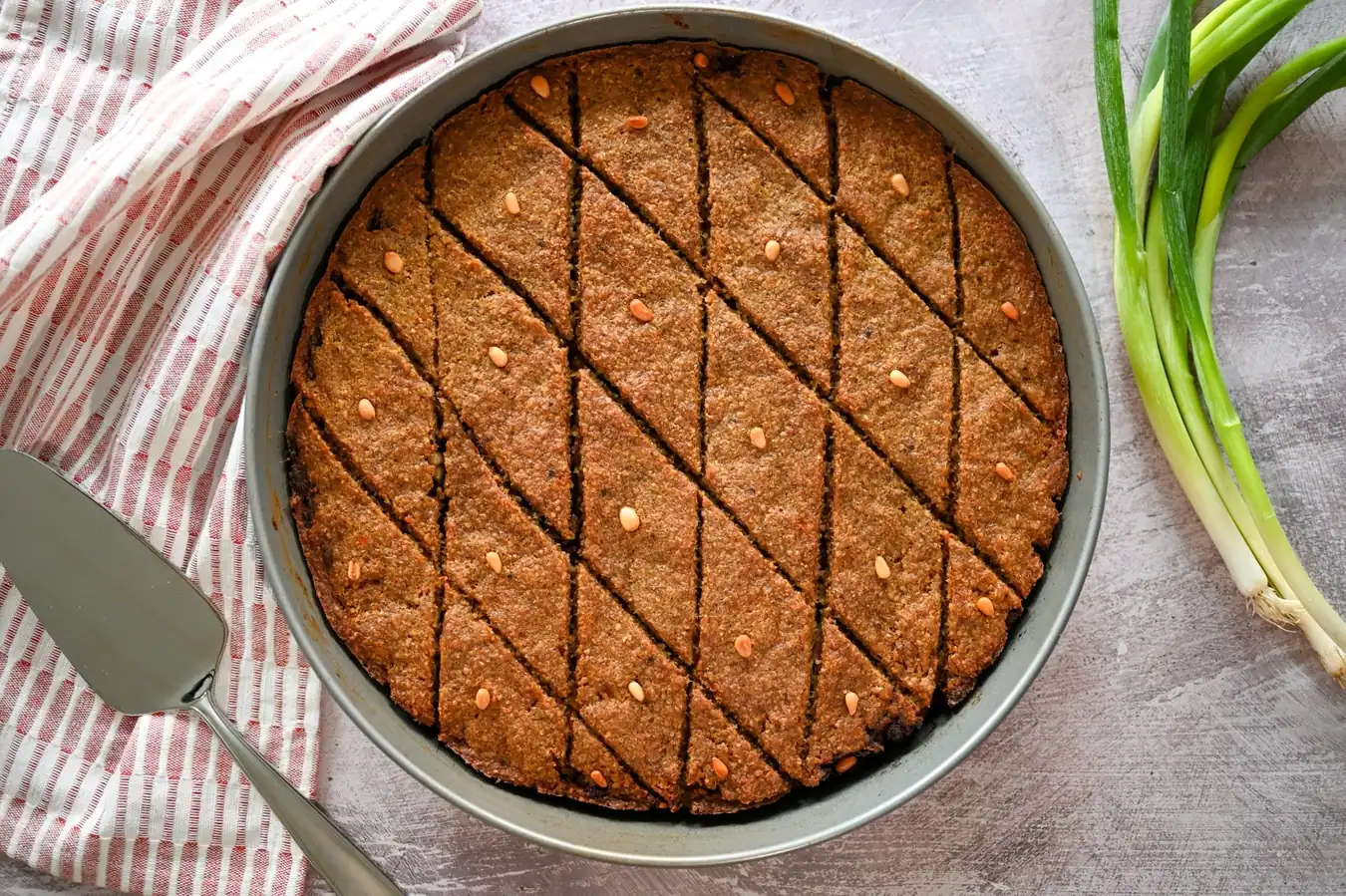
Kibbeh bil-saniyeh is Lebanon's baked tray kibbeh: two layers of bulgur and lean beef sandwiching a spiced beef and pine-nut filling, scored into diamonds and baked until golden and crisp at the edges. It is the tray-baked form of Lebanon's national dish, made for sharing at the family table. One serving is about 202 g.

Kibbeh is Lebanon's national dish, and its name comes from the Arabic word kubbah, meaning ball — a nod to the stuffed, torpedo-shaped kibbeh that shares the same dough. Kibbeh bil-saniyeh, the tray-baked form, was made for feeding a crowd: the same bulgur and beef paste is pressed into a tray around a spiced filling, scored into diamonds and baked. It is the version Lebanese families make for Sunday lunch and feast days, cut into diamonds straight from the tray and shared at the table.

Pairs well with: Yogurt, tabbouleh and warm pita bread

Provenance

Lebanon flag Lebanon

Lebanon's National Dish

Middle Eastern

Time Dedication

1h 25m

45m prep • 40m cook

Batch Yield

8 Servings

399 kcal per serving

1 serving ≈ 202 g

Technical Skill

Advanced

Advanced (Layered Tray)

Meal Timing & Digestive Fit

Breakfast

Not Advised

Lunch

Hearty Midday Main

Dinner

Ideal Hearty Main

Snack & Tea

Inappropriate

Occasions: Sunday lunch, family gatherings, Ramadan iftar, festive dinners Cost: Medium — about $3–4 per serving at home
A baked tray of Lebanese kibbeh bil-saniyeh, scored into diamonds with pine nuts

Lebanon's National Dish

Photo: Amaiursancho5, CC BY-SA 4.0, via Wikimedia Commons

The Heritage Formulary

Measured Ingredients

Estimated cost: Medium — about $3–4 per serving at home (USD)

A true kibbeh bil-saniyeh is scored into diamonds before baking, golden and crisp on top, with a spiced pine-nut filling in the middle layer.

Execution Methodology & Culinary Technique

Step-by-Step Cooking Guide

Active 1h 25m
P

Prep Stage: Bulgur Soaked, Filling Ingredients Ready

45 Mins • Knife Work & Kneading

Rinse and soak the fine bulgur for 20 minutes, then squeeze it bone-dry — wet bulgur makes a shell that cracks. While it soaks, grate the onion for the shell, dice the onion for the filling, chop the mint and toast the pine nuts. Have a 30 cm round or 23 x 33 cm rectangular baking tray oiled and ready, and a small bowl of cold water nearby for wetting your hands when you press the layers.

Maestro Tip: Squeeze the soaked bulgur twice: once in a sieve, then again in a tea towel. Any water left in it will make the shell crumbly.

  1. 1

    Soak the Bulgur

    20 Mins Room temperature, ~21°C (70°F)

    Rinse the fine bulgur in a sieve, cover with cold water and soak for 20 minutes until the grains are plump and tender. Drain well, then tip the bulgur into a clean tea towel and squeeze hard to wring out every drop of water. The bulgur must be damp, never wet — this is the single most important detail in the whole recipe.

    If the bulgur still feels wet after squeezing, spread it on a tray for 5 minutes to air-dry before kneading.

    Done when: Bulgur is plump, tender and dry to the touch, with no water pooling in the bowl.

  2. 2

    Cook the Pine-Nut Filling

    12 Mins Medium heat, ~160°C (320°F)

    Heat half the olive oil in a wide pan over medium heat. Fry the diced onion for 4 minutes until soft and translucent, then add the filling beef and cook, breaking it up with a spoon, for 6–7 minutes until browned all the way through with no pink remaining. Season with the filling salt, cumin and pepper, stir in the toasted pine nuts, and take the pan off the heat to cool slightly.

    Brown the beef properly — pale, steamed beef makes a bland filling. Let it cool before layering, or the heat will soften the raw shell.

    Done when: Beef is browned throughout with no pink, and the filling reaches 71°C (160°F); pine nuts are golden and fragrant.

  3. 3

    Knead the Shell

    10 Mins Room temperature, ~21°C (70°F)

    Put the squeezed bulgur in a large bowl with the raw shell beef, grated onion, chopped mint, allspice, cinnamon and shell salt. Knead firmly with your hands for 8–10 minutes, dipping your hands in cold water now and then, until the mixture turns into a smooth, sticky paste that holds together when pressed. It should feel like soft modelling clay, not like loose mince.

    Kneading is what binds the shell: under-kneaded kibbeh crumbles when you cut it. If the paste feels dry, add cold water a tablespoon at a time.

    Done when: The shell mixture is smooth, sticky and cohesive, holding its shape when pressed into a ball.

  4. 4

    Layer the Tray

    10 Mins Room temperature, ~21°C (70°F)

    Brush the tray generously with olive oil. With wet hands, press half the shell mixture into an even layer about 1 cm thick, smoothing it with damp fingers. Spread the cooled filling evenly over the top, leaving a small border. Press the remaining shell mixture over the filling in pieces, then smooth the whole surface with wet hands until it is level and sealed at the edges.

    Wet hands are essential — dry hands stick to the shell and tear it. Work quickly so the raw beef stays cold.

    Done when: The tray is evenly layered, the top is smooth and level, and the edges are sealed all the way round.

  5. 5

    Score and Bake

    35–40 Mins 200°C (400°F)

    Brush the top with the remaining olive oil. With a sharp knife dipped in cold water, score the surface into diamonds: cut straight lines one way, then diagonal lines the other way, cutting through the top layer only. Press one pine nut into the centre of a few diamonds if you like. Bake in a preheated 200°C (400°F) oven for 35–40 minutes until the top is deep golden brown, the edges are crisp, and the centre reaches 71°C (160°F).

    Score before baking, not after — cutting a baked tray shatters the crust. The oil on top is what crisps it.

    Done when: Top is deep golden and crisp at the edges; the centre is hot and cooked through to 71°C (160°F).

  6. 6

    Rest and Cut

    10 Mins Resting, ~60°C (140°F)

    Take the tray out of the oven and let it rest for 10 minutes — this lets the layers set so the diamonds cut cleanly. Cut along the scored lines all the way through with a sharp knife, lift out the diamonds with a spatula, and serve hot.

    Do not skip the rest: a tray cut straight from the oven falls apart on the plate.

    Done when: Diamonds lift out cleanly in neat pieces, with the filling visible in the middle layer.

Finishing Touches & Plating

Serve the kibbeh hot from the tray, cut into diamonds, with a bowl of cool yogurt, tabbouleh and warm pita on the side. A squeeze of lemon over each piece brightens the rich, spiced beef.
Nutritional Physiology & Benefits

Nutrition

Energy

399

kcal / serving

Protein

26g

Complete AA

Carbs

33g

Complex

Fats

19g

Healthy

Per serving (8 servings · 1 serving ≈ 202 g)
Energy399 kcal
Protein26 g
Carbohydrates33 g
Fat19 g
Fibre7.9 g
Sugar1.8 g
Sodium317 mg
Per 100g
Energy198 kcal
Protein12.9 g
Carbohydrates16.3 g
Fat9.5 g
Fibre3.9 g
Sugar0.9 g
Sodium157 mg

Nutrition values are estimated — calculated from USDA FoodData Central values for the listed ingredients.

Vitamins & minerals: Iron, zinc and vitamin B12 (beef), vitamin B6 (beef, onion), vitamin E (pine nuts), folate (bulgur).

High in Protein

Two layers of lean beef give about 26 g of protein per serving, which makes this a genuinely filling family dinner.

Whole-Grain Bulgur

Bulgur is a whole grain, so each serving carries about 8 g of fibre — unusual for a meat dish, and good for steady digestion.

Iron and B12

Beef is a rich source of iron and vitamin B12, and the lemon and tomato served alongside help the body absorb that iron.

Food Pairings

What to Eat With

To optimize nutrient absorption and elevate the sensory depth, pair with these authentic accompaniments:

Sides

Cool Yogurt

Plain yogurt is the classic companion — its cool tang cuts the richness of the baked beef and refreshes the palate between bites.

Warm Pita Bread

Soft pita mops up the juices and the olive oil from the tray, and turns a slice of kibbeh into a complete, satisfying meal.

Vegetables

Tabbouleh

Fresh, lemony tabbouleh balances the warm, spiced tray with crunch and acidity, and the two dishes are the heart of a Lebanese family lunch.

Drinks

Mint Tea

Hot mint tea after a rich baked dish settles the stomach and echoes the mint kneaded into the shell.

Complete menu

Serve the baked kibbeh hot from the tray with cool yogurt, tabbouleh and warm pita, and finish with fresh fruit and mint tea.

Digestive Guardrails

What NOT to Combine

To prevent digestive distress, sluggishness, or palate clash, avoid pairing the dish with these elements:

Eating Undercooked Kibbeh

Unlike kibbeh nayyeh, which is a separate raw dish eaten fresh, the baked tray must be cooked through to 71°C (160°F) — ground beef that is still pink in the centre is not safe to eat. Always check the centre with a thermometer. This is general food information, not medical advice.

Leaving the Tray Out for Hours

Cooked ground beef spoils quickly at warm temperatures. Refrigerate leftovers within 2 hours of baking and reheat thoroughly to 74°C (165°F) before eating. This is general food information, not medical advice.

General information only, not medical advice — consult a doctor for personal dietary decisions.

Who Should Eat It

Who Should Eat

  • General adultsA hearty, protein-rich dinner — best as the centre of a family meal with yogurt and salad.
  • ChildrenSuitable for children who eat meat; the spices are mild, and the diamonds are easy to hold. Cut small pieces for younger children.
  • ElderlyA good choice — soft, moist and easy to chew, with plenty of protein; keep the portion moderate as it is rich.
  • Pregnant womenGenerally suitable when the beef is cooked through to 71°C (160°F); avoid any raw kibbeh preparations during pregnancy.
  • Breastfeeding womenGenerally suitable; the iron and protein support recovery — eat it hot and freshly cooked.
  • AthletesA strong post-training meal — about 26 g of protein per serving with slow carbohydrates from the bulgur.
  • Weight gainA good choice — add an extra diamond and a second helping of pita and yogurt to add calories.
  • Weight lossA reasonable choice in a measured portion — one diamond with a large salad keeps the meal balanced.

Health Conditions — Adjust or Avoid

Conditions

  • DiabetesBulgur carries slow-digesting carbohydrate and fibre; keep the portion to one diamond with plenty of salad and check with your clinician about your overall meal plan.
  • High blood pressureSodium is moderate at about 317 mg a serving; keep the salt as written and watch salty accompaniments.
  • Kidney diseaseBeef and bulgur are moderately high in potassium and phosphorus, so check your portion with your clinician if you follow a restricted diet.
  • GoutBeef is high in purines — eat kibbeh occasionally and in a modest portion rather than as an everyday dish.
  • Stomach issuesUsually well tolerated when eaten hot and fresh; the onion and spices can bother sensitive stomachs, so keep portions moderate.
  • Cardiovascular diseaseLean beef keeps saturated fat modest, but the dish is rich — balance it with salad and yogurt and keep the portion to one diamond.
  • Fatty liverRich and calorie-dense, so keep the portion measured and load the plate with tabbouleh and salad.
  • Food allergiesContains wheat (bulgur) and tree nuts (pine nuts) — not suitable for coeliac disease, wheat allergy or pine-nut allergy. Use halal-certified beef if required. Contains no dairy, egg or fish.
  • Special therapeutic dietsIf you follow a prescribed low-sodium, low-purine or low-phosphorus diet, check the beef and bulgur portions with your clinician.

If you have a medical condition, consult your doctor before changing your diet.

Storage & Use

Storage & Use

How to store
Cool the tray, then cover tightly with foil or transfer the diamonds to an airtight container and refrigerate.
In the fridge
3 days, covered.
In the freezer
2 months, wrapped in foil then a freezer bag; thaw overnight in the fridge.
How to reheat
Reheat in a 180°C (350°F) oven for 12–15 minutes until hot all the way through, to 74°C (165°F); the oven restores the crisp top.
Freezing recommended
Yes — the baked tray freezes well and re-crisps in the oven.
Signs it has spoiled
Sour or off smell, slimy surface, or mould on the filling.

More recipes to explore

A plate of fresh Lebanese tabbouleh with chopped parsley, tomato and bulgur Lebanon flag Lebanon 25m
Lunch •Levantine Mezze Classic

Lebanese Tabbouleh

Tabbouleh is Lebanon's bright green parsley salad, where the herbs lead and fine bulgur plays a supporting role. Diced tomato, green onion and mint are tossed in lemon juice and olive oil for a fresh, lemony bite that wakes up any mezze table. One serving is about 216 g.

Light & Fresh

Mostly fresh parsley and tomato with a little bulgur, dressed in lemon and olive oil.

Pairs Well With
Warm pita bread, hummus and grilled halloumi
A bowl of cold Lebanese hummus with olive oil, whole chickpeas, paprika and parsley Lebanon flag Lebanon 1h 5m
Snack & Tea •Beirut Mezze Classic

Lebanese Hummus

Lebanese hummus is a cold, silky chickpea and tahini dip, lemon-forward with garlic and a pool of olive oil, topped with pine nuts and parsley. It is served chilled or at room temperature as part of a mezze spread, scooped up with warm pita — never served warm as a main plate. One serving is about 110 g.

Plant Protein Snack

Chickpeas and tahini blended into a smooth dip, with lemon, garlic and olive oil.

Pairs Well With
Warm pita bread, tabbouleh and olives
Quick Prep (<30m)
Bœuf bourguignon — French beef braised in red wine France flag France 4h
Dinner •Burgundy Terroir

Bœuf Bourguignon

Beef braised gently in red wine until the connective tissue melts into a velvet, gelatin-rich sauce — the classic Burgundy Sunday dinner.

Cellular Repair

Beef braised in red wine until spoon-tender, with mushrooms and pearl onions.

Pairs Well With
Parsnip Purée & Steamed French Haricots Verts
High Protein
Vietnamese braised pork belly with golden eggs in caramel sauce Vietnam flag Vietnam 1h 45m
Dinner •One Pot

Vietnamese Braised Pork and Eggs

Pork belly slowly braised in coconut water and caramel until meltingly tender, with golden eggs that soak up the sweet-savoury sauce — the Vietnamese family dish that tastes better the next day.

Comfort & Sustained Energy

Slow-braised pork belly and eggs in coconut water and caramel.

Pairs Well With
Steamed rice & pickled mustard greens
High Protein

The Dinner Gazette

Never wonder what’s for dinner again

One email a week with easy dinner ideas from around the world — ingredients, steps and nutrition, tested in our kitchen first.

Delivered every Thursday morning. Unsubscribe anytime.