Curated recipes from 193 countries  •  New seasonal Mediterranean issue out now

Overview

Leitão da Bairrada

Leitão assado à Bairrada; Bairrada roast suckling pig

This leitao da bairrada recipe brings Portugal's most famous roast home: a small suckling pig rubbed with coarse salt, black pepper, garlic and lard, then roasted until the meat is creamy and the skin shatters like glass. It is carved at the table and served with orange slices and crisp potato chips, the way it arrives in the dining rooms of Mealhada. One serving is about 300 g.

Leitão da Bairrada is the roast of the Bairrada wine region in central Portugal, and its home is the small town of Mealhada, halfway between Lisbon and Porto, where roadside roast houses line the old national road. Álvaro Pedro opened his first shop there in 1943 selling pork sandwiches to truck drivers, and by 1949 his restaurant, Pedro dos Leitões, had made the dish famous across the country. The piglets are slaughtered at four to six weeks old, rubbed with garlic, pig fat, coarse salt and pepper, and roasted in wood-fired ovens first fuelled with eucalyptus wood and then with pruned vine wood, which gives the meat its faint smoky note. Local food writing traces the oldest written recipe to a 1743 convent manuscript, and the dish was named one of the Seven Gastronomic Wonders of Portugal.

Pairs well with: Potato chips, orange slices and Bairrada sparkling wine

Provenance

Portugal flag Portugal

Bairrada Heritage

Mediterranean & Italy

Time Dedication

3h 50m

45m prep • 185m cook

Batch Yield

16 Servings

960 kcal per serving

1 serving ≈ 300 g

Technical Skill

Advanced

Hard (Whole Roast)

Meal Timing & Digestive Fit

Breakfast

Not Advised

Lunch

Hearty Midday Main

Dinner

Ideal Hearty Main

Snack & Tea

Inappropriate

High Protein Occasions: Christmas, Easter, weddings, baptisms, big family Sundays, feast days Cost: High — about $6–8 per serving at home

Carved Leitão da Bairrada with crisp golden skin on a metal tray, served with an orange slice and potato chips

Bairrada Heritage

Photo: Adriao, CC BY 3.0, via Wikimedia Commons

The Heritage Formulary

Measured Ingredients

Estimated cost: High — about $6–8 per serving at home (USD)
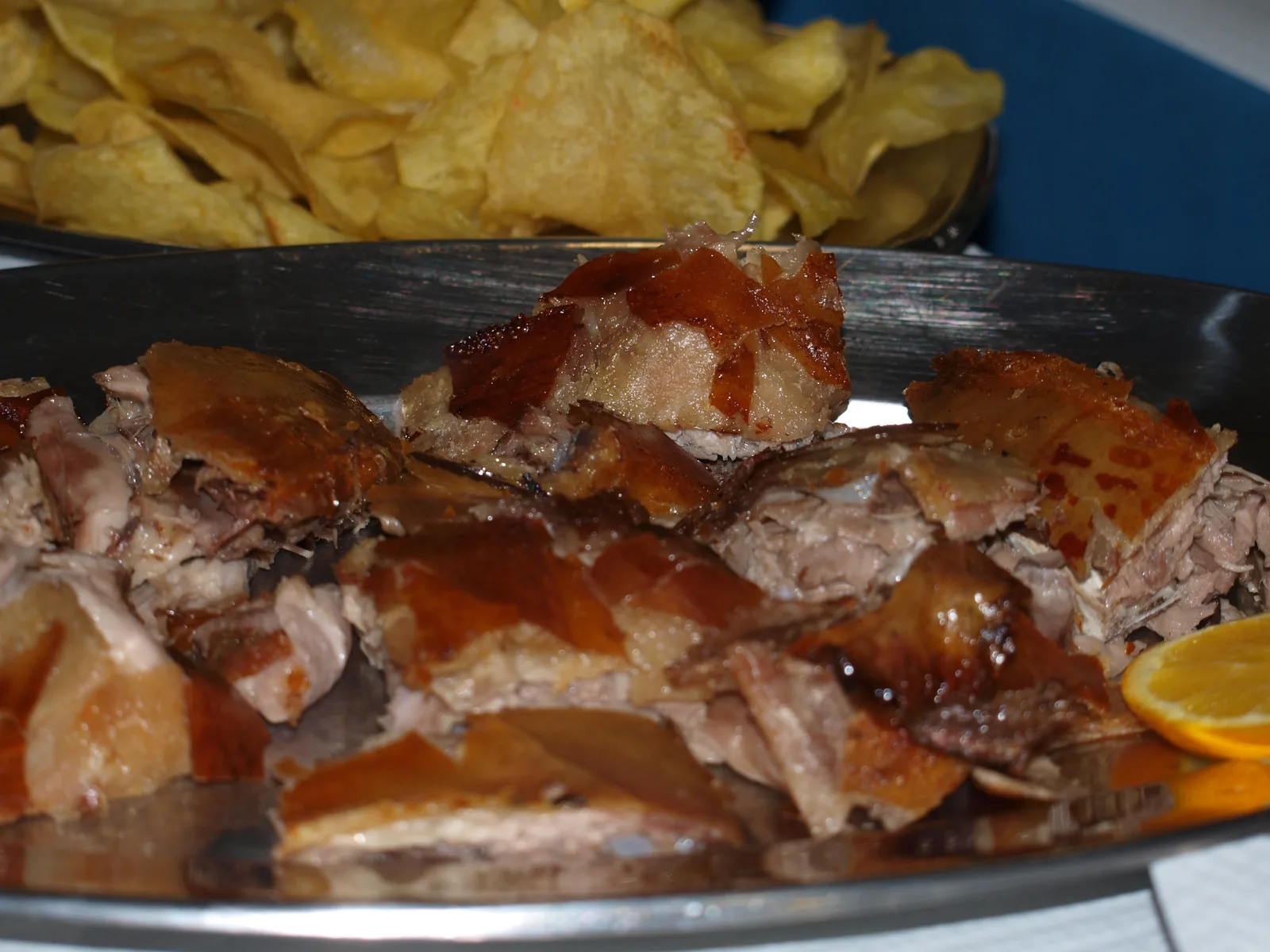
A true leitão is judged by the skin: it should shatter like glass under the knife while the meat underneath stays creamy and juicy.

Execution Methodology & Culinary Technique

Step-by-Step Cooking Guide

Active 3h 50m
P

Prep Stage: Rub, Salt and Chill Overnight

45 Mins + Overnight • Rubbing, Salting & Chilling

Leitão is won or lost before the pig meets the oven. The skin must be bone dry or it will never crackle, the garlic-salt-lard paste must be rubbed into every fold inside and out, and the pig must rest uncovered in the cold overnight so the salt draws moisture from the skin and the seasoning works into the meat. Order the piglet a week or two ahead, clear a shelf in the fridge, and have a roasting pan large enough to hold it flat — once the pig is rubbed and chilling, there is nothing left to do but wait.

Maestro Tip: Dry the skin twice: pat it dry, rub it with salt, and leave it uncovered in the fridge overnight. Wet skin steams; dry skin crackles.

  1. 1

    Rub and Chill Overnight

    45 Mins + Overnight 4°C (40°F)

    Rinse the pig inside and out under cold running water, then pat the skin very dry with clean towels. Mash the 60g garlic, 60g coarse salt and 15g black pepper into a paste, work in the 100g softened lard and just enough of the 120ml white wine to make a spreadable paste. Rub the paste over the whole pig, inside the cavity and all over the skin, tuck the 4 bay leaves inside the cavity, and set the pig on a rack over a tray, uncovered, in the fridge overnight (8–12 hours).

    Rub the paste into the ears, snout and leg joints too — those are the parts that dry out first in the oven.

    Done when: The skin feels dry and slightly tacky to the touch, with no wet patches, and the paste has darkened where it meets the meat.

  2. 2

    Bring to Room Temperature and Heat the Oven

    30 Mins 220°C (425°F)

    Take the pig out of the fridge 30 minutes before roasting so it loses its chill, and brush off any loose salt that has not dissolved. Put a rack in a large roasting pan, set the pig belly-down on the rack, and heat the oven to 220°C (425°F). If you have a wood-fired oven, build the fire first and let it burn down to hot coals, the way the ovens of Bairrada are run.

    A cold pig in a hot oven roasts unevenly — the outside overcooks while the thickest part stays underdone.

    Done when: The pig no longer feels cold to the touch and the oven is fully at 220°C (425°F).

  3. 3

    Roast Low and Slow

    120 Mins 220°C (425°F), then 180°C (350°F)

    Roast at 220°C (425°F) for 20 minutes to set the skin, then lower the heat to 180°C (350°F) and roast for about 100 minutes more, basting every 30 minutes with the pan juices and any melted lard from the pan. If the ears or snout darken too fast, cover just those parts loosely with foil. The meat is ready when a thermometer in the thickest part of the leg reads at least 63°C (145°F) and the juices run clear.

    Baste with the pan juices, not with water — water on the skin is the fastest way to lose the crackle.

    Done when: The thickest part of the leg reads 63°C (145°F) or more, the juices run clear, and the meat pulls easily from the bone.

  4. 4

    Crisp the Skin

    15 Mins 230°C (450°F)

    Turn the oven up to 230°C (450°F) and roast for a final 10–15 minutes, watching closely, until the skin blisters and turns a deep golden brown all over. This is the moment the skin goes from crisp to glass — pull the pig out as soon as it crackles when you tap it with a knife.

    Do not walk away during this step: at 230°C (450°F) the skin can go from perfect to burnt in two minutes.

    Done when: The skin is blistered and deep golden, and taps like thin glass under a knife.

  5. 5

    Rest and Carve

    20 Mins Rest to 63°C (145°F) internal

    Lift the pig onto a board and rest it UNCOVERED for 20 minutes — covering it traps steam and softens the skin you just worked for. Pull out the bay leaves and discard them. Carve at the table with a heavy knife, cutting through the crackling first so each portion gets skin, and serve each plate with a slice of the 160g orange and a handful of the 640g potato chips.

    Cut the crackling with the tip of the knife and a firm press, not a sawing motion — sawing shatters it into crumbs.

    Done when: The meat is juicy and pulls cleanly from the bone, and the crackling still snaps when you bite it.

Finishing Touches & Plating

Carve the pig at the table so everyone hears the skin crack, and serve each portion with a slice of orange and a handful of chips while the crackling is still crisp.

Nutritional Physiology & Benefits

Nutrition

Energy

960

kcal / serving

Protein

62g

Complete AA

Carbs

25g

Complex

Fats

66g

Healthy

Per serving (16 servings · 1 serving ≈ 300 g)
Energy960 kcal
Protein62 g
Carbohydrates25 g
Fat66 g
Fibre1.8 g
Sugar1.2 g
Sodium1860 mg
Per 100g
Energy320 kcal
Protein20.7 g
Carbohydrates8.2 g
Fat22.1 g
Fibre0.6 g
Sugar0.4 g
Sodium620 mg

Nutrition values are estimated — calculated from USDA FoodData Central values for the listed ingredients.

Vitamins & minerals: Thiamine (vitamin B1), niacin, vitamin B6 and vitamin B12 (pork), zinc and selenium (pork), plus vitamin C from the orange slices. Nutrition values are estimated.

About 62 g of Protein per Serving

A 300 g serving of leitao da bairrada brings about 62 g of protein from the roast pork — a hearty, satisfying portion that suits a feast day and keeps you full for hours.

B Vitamins, Zinc and Selenium

Pork is a natural source of thiamine (vitamin B1), niacin, vitamin B6 and vitamin B12, plus the minerals zinc and selenium, which the body uses in everyday metabolism and immune function.

Orange Slices Add Vitamin C

The orange served with the pig is more than decoration: it adds vitamin C and a fresh, sharp note that cuts through the richness of the roast meat.

Food Pairings

What to Eat With

To optimize nutrient absorption and elevate the sensory depth, pair with these authentic accompaniments:

Sides

Potato Chips

Crisp potato chips are the classic partner in Bairrada: their salt and crunch echo the crackling, and they soak up the pork juices on the plate, so the rich meat has something simple and salty to lean on.

More Pairings

Orange Slices

A slice of orange is served with every portion because its acidity and fresh juice cut straight through the fat of the pork, refreshing the palate between bites of rich meat and crisp skin.

Drinks

Bairrada Sparkling Wine

A cold Bairrada espumante is the traditional pour: its bubbles and sharp acidity scrub the palate clean of pork fat, which is exactly what a rich roast needs, and it comes from the same vineyards as the wine region itself.

Vegetables

Simple Green Salad

A plain green salad with a sharp vinaigrette gives the meal the fresh, bitter crunch it otherwise lacks — the vinegar in the dressing does the same job as the orange, balancing a very rich plate.

Complete menu

Carve the pig at the centre of the table with potato chips, orange slices and a simple green salad, and pour Bairrada sparkling wine; finish with fresh fruit and coffee.

Digestive Guardrails

What NOT to Combine

To prevent digestive distress, sluggishness, or palate clash, avoid pairing the dish with these elements:

Do Not Eat the Bay Leaves

The bay leaves are seasoning, not food: they stay whole, stiff and sharp-edged even after hours in the oven, and can be a choking hazard or scratch the throat, so pull them out of the cavity and discard them before carving. This is general information, not medical advice.

Do Not Serve Undercooked Pork

Pork must reach at least 63°C (145°F) in the thickest part, followed by a 3-minute rest, because undercooked pork can carry bacteria and parasites that cause food poisoning. Check with a thermometer rather than guessing by colour, and never carve a pig whose leg still runs pink and bloody at the bone. This is general information, not medical advice.

Do Not Cover the Pig While It Rests

Covering the roast traps steam against the skin and turns the crackling soft and leathery within minutes — rest it uncovered instead. Also, do not leave cooked pork at room temperature for more than 2 hours, because bacteria grow quickly between 4°C (40°F) and 60°C (140°F). This is general information, not medical advice.

General information only, not medical advice — consult a doctor for personal dietary decisions.

Who Should Eat It

Who Should Eat

  • General adultsA feast dish, not an everyday dinner — a 300 g serving is rich and satisfying at about 960 kcal, best eaten slowly with salad and sparkling wine on a celebration day.
  • ChildrenThe meat is tender and mild, so children usually like it — serve a small portion, break the hard crackling into little pieces, and watch the salt, since the dish is salty.
  • ElderlyThe meat is soft and easy to chew, but the crackling is very hard — serve the meat without the hardest pieces of skin, and keep the portion modest because the dish is rich and salty.
  • Pregnant womenSafe when the pork is cooked right through to 63°C (145°F) and rested, with no pink meat at the bone; choose a modest portion and ask your clinician if you have any dietary restrictions.
  • Breastfeeding womenFine in moderation as part of a varied diet; there is nothing in the dish that needs to be avoided while breastfeeding, but the high fat and salt mean a small portion is the sensible choice.
  • AthletesAbout 62 g of protein per serving suits recovery after hard training, but the meal is very high in fat and slow to digest — eat it after training, not before.
  • Weight gainVery energy-dense at about 960 kcal a serving, so it is an easy way to add calories — a full portion with chips does the job.
  • Weight lossVery energy-dense, so keep the portion small (about 150 g of meat), skip the chips, and fill the rest of the plate with green salad.

Health Conditions — Adjust or Avoid

Conditions

  • DiabetesThe pork itself is very low in carbohydrate, so the meat is kind to blood sugar — the 24.5 g of carbohydrate per serving sits mostly in the potato chips, so watch that portion and ask your clinician about portions.
  • High blood pressureSodium is high at about 1,860 mg per serving from the salt rub and the chips, so keep the portion small, skip extra salt at the table, and ask your clinician whether this dish fits your sodium limit.
  • Kidney diseaseHigh in protein (about 62 g per serving) and sodium, both of which matter for kidney diets — eat a small portion only if your clinician agrees, and ask your clinician first.
  • GoutPork is moderately high in purines and this is a very rich meal, so people prone to gout should keep the portion small and avoid eating it often; ask your clinician about portions.
  • Stomach issuesA very fatty roast can trigger reflux or heaviness — eat slowly, take a small portion, and lean on the orange and salad rather than the crackling; ask your clinician if rich meals usually trouble you.
  • Cardiovascular diseaseTotal fat is high at about 66 g per serving, much of it saturated fat from the pork and skin, so treat this as an occasional small portion rather than a regular meal and ask your clinician.
  • Fatty liverHigh in fat and energy, so a small portion of lean meat without the skin and without the chips is the safer way to enjoy it; ask your clinician about portions.
  • Food allergiesContains pork and citrus (orange). The white wine leaves only traces of sulfites after roasting, and the potato chips may be fried in peanut or soy oil — check the chip packet label if you have a nut, soy or gluten allergy, and ask your clinician if unsure.
  • Special therapeutic dietsNot suitable for low-sodium or low-fat therapeutic diets without changes — a small portion of lean meat, no skin and no chips is the closest fit; ask your clinician or dietitian before eating it.

If you have a medical condition, consult your doctor before changing your diet.

Storage & Use

Storage & Use

How to store
Cool quickly; carve the meat off the bone and store the meat and the crackling separately in airtight containers — the crackling goes soft if it sits against moist meat.
In the fridge
Cooked meat 3–4 days; crackling 1–2 days (it softens quickly).
In the freezer
Meat up to 3 months; crackling does not freeze well.
How to reheat
Reheat meat in a covered dish in the oven at 175°C (350°F) until it reaches 74°C (165°F) right through; re-crisp crackling separately under a hot grill for 2–3 minutes.
Freezing recommended
Meat only — do not freeze the crackling; it turns soft and chewy.
Signs it has spoiled
Sour or off smell, slimy meat, or mould on the surface.

More recipes to explore

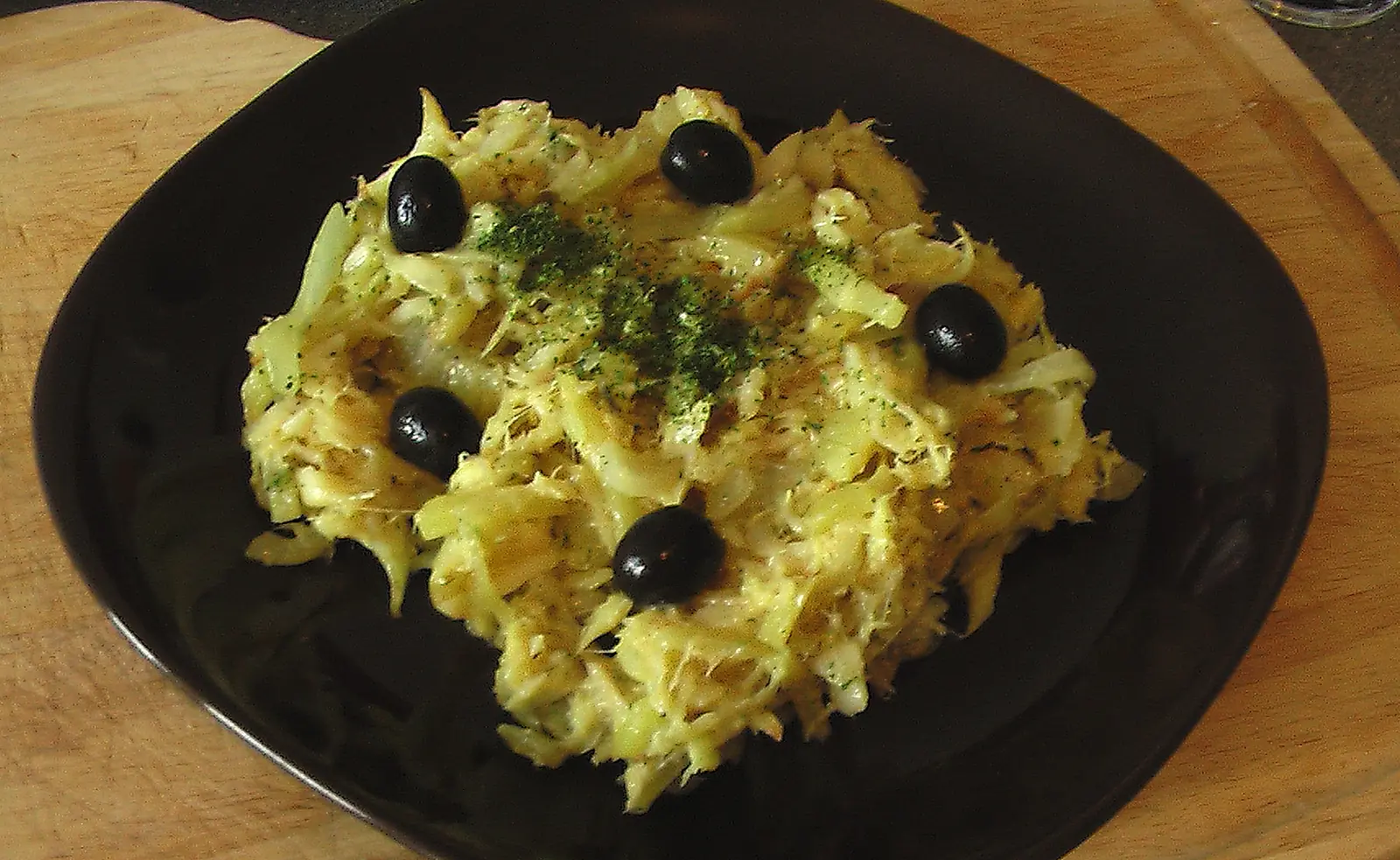
A plate of bacalhau à brás — shredded salt cod with egg and matchstick potatoes, black olives and parsley Portugal flag Portugal 50m
Dinner •Lisbon Tavern Classic

Bacalhau à Brás

Bacalhau à brás recipe: desalted shredded cod, golden matchstick potatoes and softly scrambled egg, finished with black olives and parsley. One serving is about 350 g.

Comfort & Protein

Shredded salt cod folded with egg and crisp matchstick potatoes — a filling, protein-rich Lisbon supper.

Pairs Well With
A simple green salad and a glass of vinho verde
High Protein
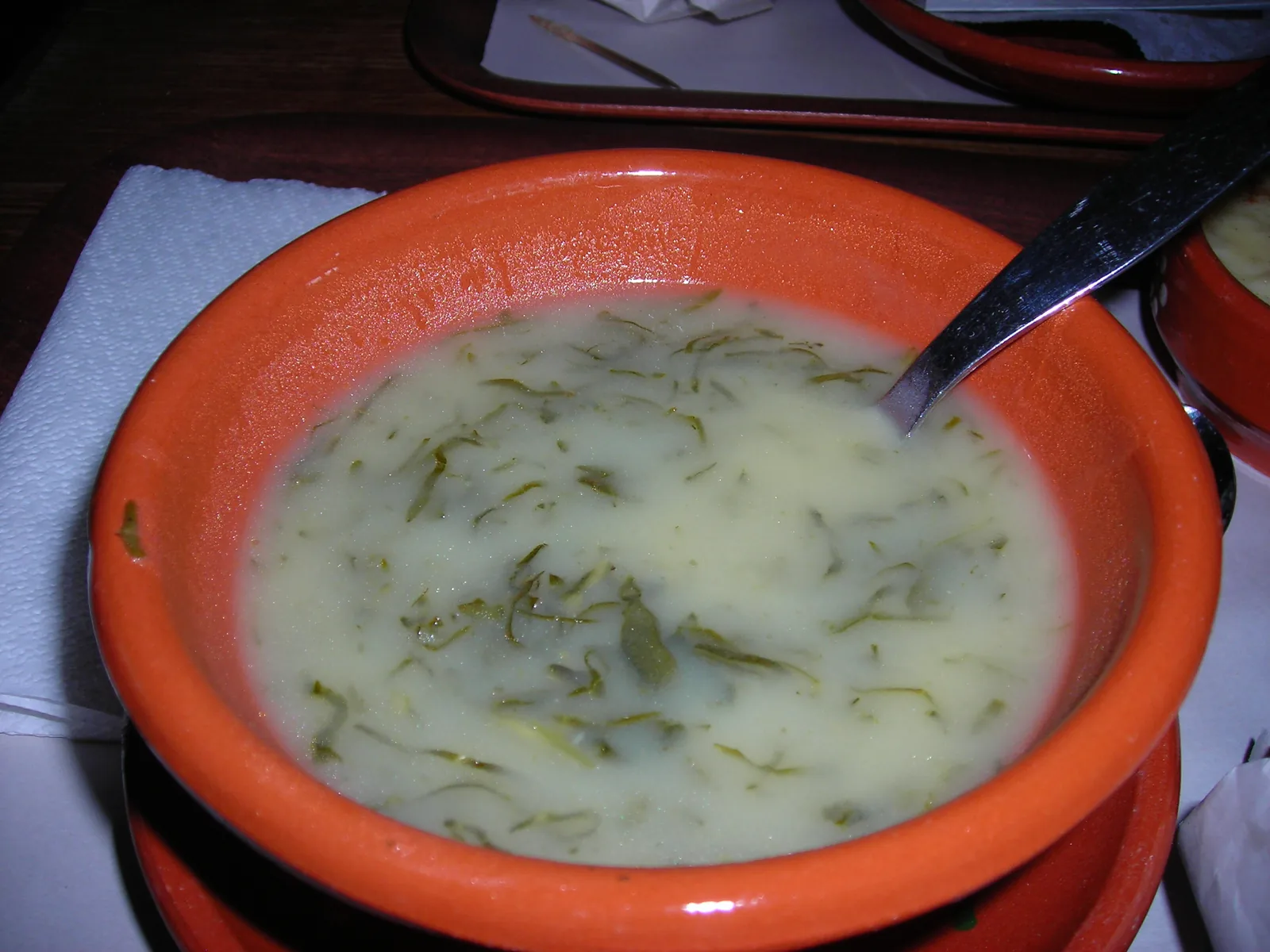
A terracotta bowl of caldo verde — pale potato soup with shredded green kale and a spoon Portugal flag Portugal 50m
Dinner •Minho National Soup

Caldo Verde

Caldo verde recipe: creamy potato soup blended smooth, with ribbons of kale and slices of chouriço, finished with a thread of olive oil. One serving is about 590 g.

Comfort & Warmth

Silky potato soup with finely shredded kale and smoky chouriço — Portugal's best-loved bowl.

Pairs Well With
Crusty broa bread and a glass of vinho verde
Soups & Broths
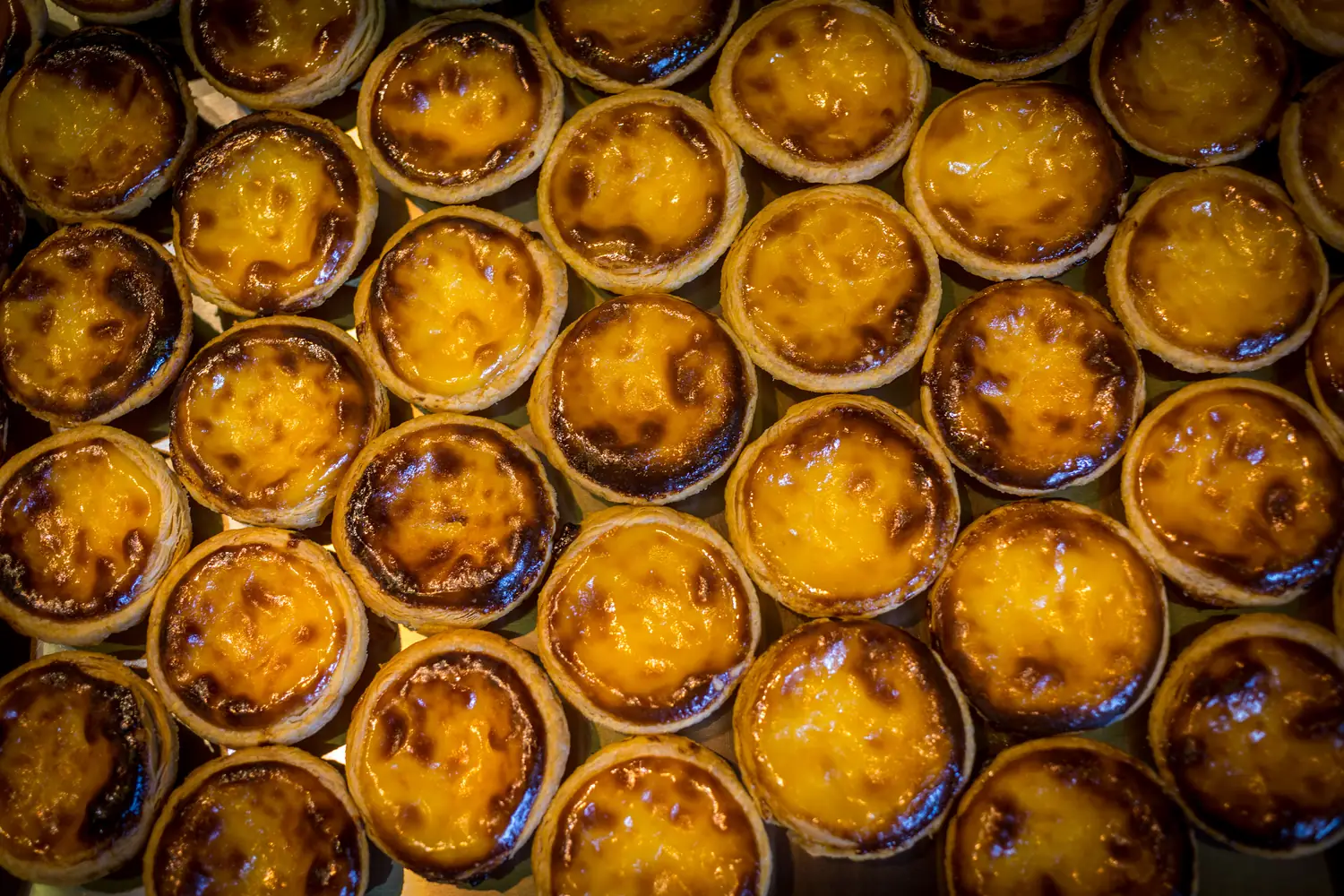
A tray of pastel de nata — golden custard tarts with blistered, caramelised tops in flaky pastry Portugal flag Portugal 50m
Snack & Tea •Belém Monastery Tart

Pastel de Nata

Pastel de nata recipe: shatteringly crisp puff pastry shells filled with warm, vanilla-cinnamon egg custard, baked until blistered on top. One serving is about 187 g (2 tarts).

Sweet Treat

Crisp, flaky pastry cups filled with cinnamon-scented egg custard, blistered in a very hot oven.

Pairs Well With
A small strong coffee (bica) and a dusting of cinnamon
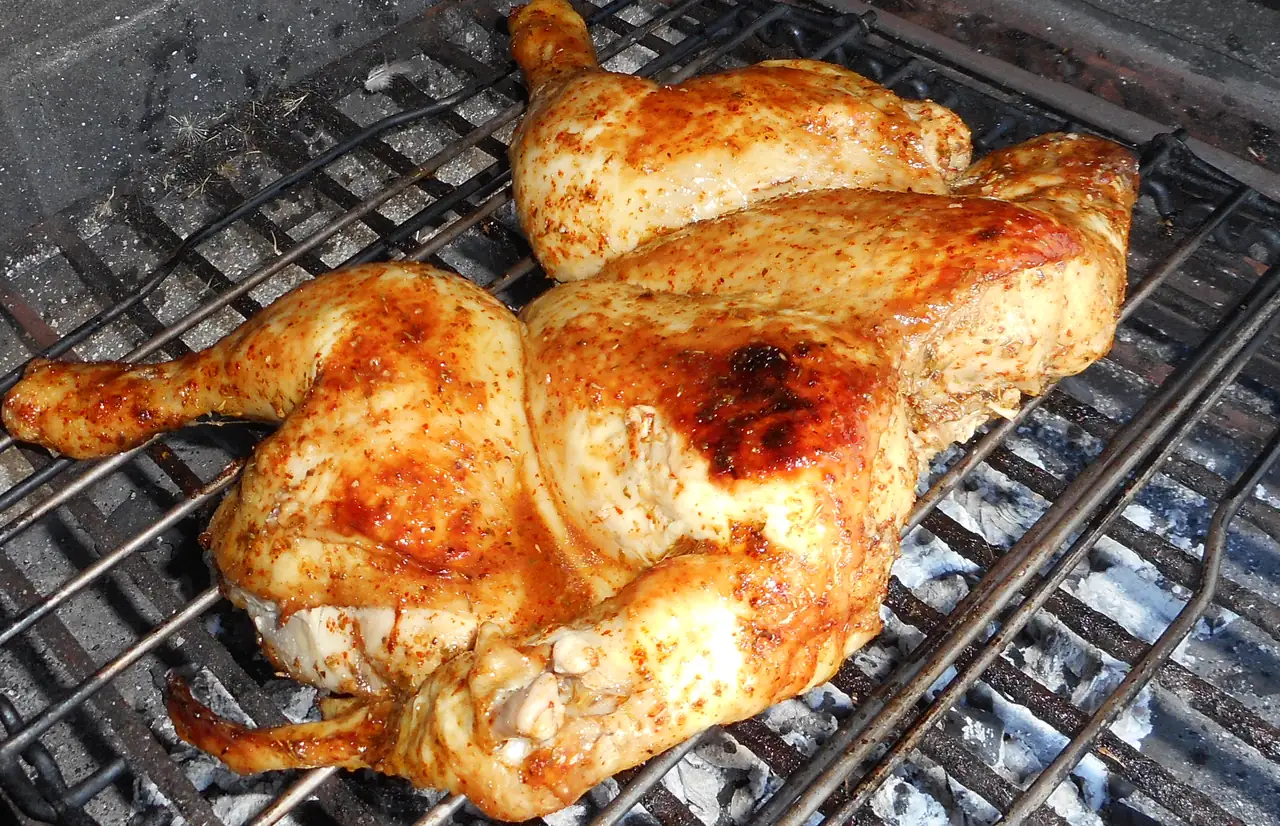
Butterflied piri piri chicken grilling over charcoal, golden-red with chilli spice Portugal flag Portugal 55m
Dinner •Algarve Heritage

Frango Piri Piri

Frango piri piri is Portugal's most famous chicken: a whole bird butterflied flat, rubbed with a fiery paste of piri piri chillies, garlic, lemon and paprika, then grilled over charcoal until the skin turns crisp and red-gold. This piri piri chicken recipe is the Algarve way — an overnight marinade, a hot grill, and a warm butter baste at the end. One serving is about 210 g.

Spicy Char-Grill

A butterflied chicken marinated in piri piri chilli, garlic and lemon, grilled over charcoal until the skin is crisp and reddened.

Pairs Well With
Chips, tomato-onion salad and a cold beer.
High Protein

The Dinner Gazette

Never wonder what’s for dinner again

One email a week with easy dinner ideas from around the world — ingredients, steps and nutrition, tested in our kitchen first.

Delivered every Thursday morning. Unsubscribe anytime.