Curated recipes from 193 countries  •  New seasonal Mediterranean issue out now

Overview

Mauritanian Mechoui

Méchoui, Meshwi

This mauritanian mechoui recipe turns a cumin-, coriander- and garlic-rubbed leg of lamb slowly on a spit beside glowing charcoal embers until the skin crisps and the meat pulls apart by hand, served with a bowl of toasted cumin salt for dipping. Unlike Omani shuwa, which is sealed in banana leaves and buried in an underground pit for a day or two, mechoui cooks in the open air, turned by hand and basted with butter so the outside browns while the inside stays juicy. One serving is about 250 g.

Mechoui takes its name from the Arabic word for roasting, and across the Maghreb it means a whole lamb or sheep cooked on a spit for a feast — in Mauritania it is the dish for Eid al-Adha, weddings and large family gatherings, served at the start of the meal and eaten by hand. The lamb is rubbed with garlic, cumin, coriander and paprika, turned slowly beside the embers rather than over them so the dripping fat cannot flare and char the skin, and torn apart at the table with pinches dipped in toasted cumin salt. This home version keeps the same rub, the same slow turning and the same cumin-salt dip, using a bone-in leg on a rotisserie so a family of eight can cook it without a whole animal and a fire pit.

Pairs well with: Toasted cumin salt, couscous and mint tea

Provenance

Mauritania flag Mauritania

Mauritanian Feast Dish

Middle Eastern

Time Dedication

3h 40m

40m prep • 180m cook

Batch Yield

8 Servings

819 kcal per serving

1 serving ≈ 250 g

Technical Skill

Advanced

Hard (Spit-Roast & Fire)

Meal Timing & Digestive Fit

Breakfast

Not Advised

Lunch

Hearty Midday Main

Dinner

Ideal Hearty Main

Snack & Tea

Inappropriate

High Protein Occasions: Eid al-Adha, wedding feast, large family gathering, outdoor celebration Cost: Moderate — about $6–7 per serving at home
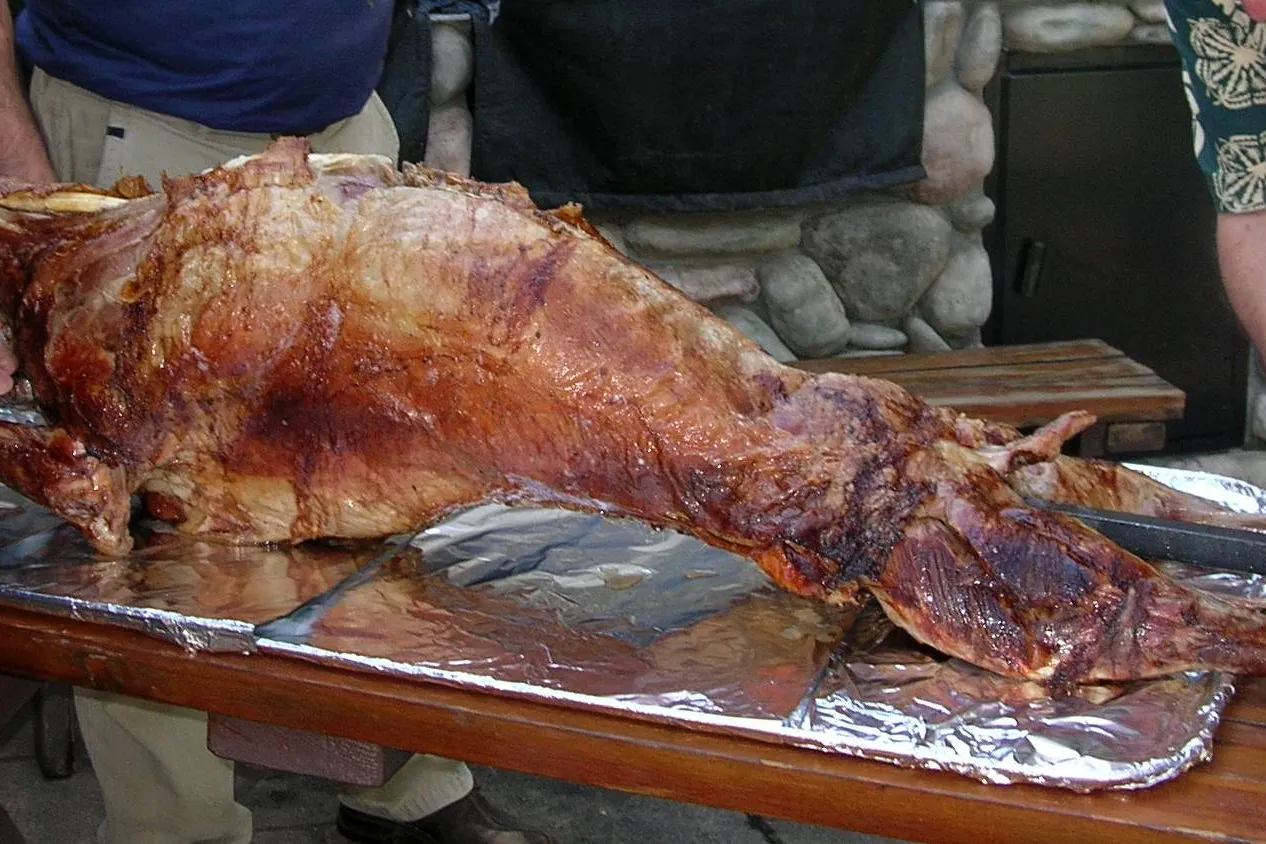
A whole spit-roasted mechoui lamb, golden-brown and crisp, resting on its spit over a foil-covered table as hands begin to carve it

Mauritanian Feast Dish

Photo: Andre Piquet, CC BY 3.0, via Wikimedia Commons

The Heritage Formulary

Measured Ingredients

Estimated cost: Moderate — about $6–7 per serving at home (USD)

A good mechoui pulls apart by hand — if you need a knife to cut it, give it more time on the spit.

Execution Methodology & Culinary Technique

Step-by-Step Cooking Guide

Active 3h 40m
P

Prep Stage: Score, Rub and Marinate

40 Mins • Knife Work

Score the lamb skin in a diamond pattern, then mix the olive oil, lemon juice, crushed garlic, cumin, coriander, paprika, salt and pepper into a thick paste and rub it all over the leg, working it into the scores. Cover and refrigerate overnight, or for at least 4 hours. Meanwhile, dry-toast the cumin seeds for the dip and crush them lightly with the flaky salt. The overnight marinating time is extra — it is not counted in the prep and cook times above.

Maestro Tip: Rub the paste in with your hands, not a brush — fingers push it into the scores where a brush only paints the surface.

  1. 1

    Score the Lamb and Rub in the Spices

    30 Mins Cold marinate, 4°C (40°F)

    Pat the leg dry, score the skin in a shallow diamond pattern, and rub the spice paste all over it, pushing it into the scores and around the bone. Cover tightly and refrigerate overnight, or for at least 4 hours. Take the leg out of the fridge 1 hour before cooking so it comes up to room temperature.

    Cold meat on a hot spit seizes and cooks unevenly — the hour on the bench matters as much as the overnight marinade.

    Done when: The whole leg is evenly coated, the paste sitting in the scores, and the meat is cool but not fridge-cold when it goes on the spit.

  2. 2

    Make the Toasted Cumin Salt

    5 Mins Medium heat, ~175°C (350°F)

    Tip the cumin seeds into a small, dry skillet over medium heat and toast, shaking the pan, for about 1 minute until fragrant but not darkened. Tip into a small bowl, crush lightly so the seeds are cracked rather than powdered, and mix with the flaky salt. Set aside in a small bowl for the table.

    Stop while the seeds are still pale gold — cumin turns bitter within seconds once it darkens.

    Done when: The seeds smell warm and nutty, and the mix is coarse and crunchy, not a fine powder.

  3. 3

    Build the Fire and Mount the Spit

    30 Mins Glowing embers, indirect heat ~180°C (350°F)

    Build a charcoal fire and let it burn down to glowing embers with no open flame. Set the spit up BESIDE the embers, not directly over them, so dripping fat cannot flare and char the skin — the lamb cooks in the radiant heat. Thread the leg lengthwise onto the rotisserie spit, secure it with the prongs, and set a drip pan underneath with the sliced onions in it.

    If you have no rotisserie, roast the leg on a rack over the onion bed in an oven at 160°C (325°F) instead — same rub, same basting, same cumin salt.

    Done when: The coals are grey-white and glowing, the spit turns freely, and the lamb sits beside the heat, not above it.

  4. 4

    Roast Slowly, Turning and Basting

    150 Mins Indirect heat, 160–180°C (325–350°F)

    Turn the spit slowly and steadily for about 2 1/2 hours, brushing the leg with the melted butter every 20–30 minutes. Add fresh coals as needed to keep the heat even, and start with the lamb further from the embers, moving it closer in the last 30 minutes so the skin turns deep amber and crisp. A whole lamb cooks at roughly 15 minutes per kilogram; this 2.5 kg leg needs the full slow roast to turn pull-apart tender.

    Do not rush it with fierce heat — the outside will char while the meat by the bone stays tough. Slow turning is the whole method.

    Done when: The skin is deep amber and crisp, the meat pulls away from the bone with gentle pressure, and a thermometer in the thickest part (not touching bone) reads 88°C (190°F) — well above the 63°C (145°F) food-safety minimum for whole cuts of lamb.

  5. 5

    Rest the Lamb

    20 Mins No heat — tented rest, ~20°C (68°F)

    Lift the leg off the spit onto a warm board, tent it loosely with foil, and rest for 20 minutes. The juices settle back into the meat and the temperature evens out.

    Cut into it straight off the spit and the juices run onto the board instead of staying in the meat.

    Done when: The leg has relaxed, the skin is still crisp under the loose foil, and no juices pool when you press it lightly.

  6. 6

    Carve, Scatter and Serve

    10 Mins Serve hot, ~70°C (158°F)

    Pull and carve the meat into generous pieces by hand and knife, scatter with the chopped parsley, and pile onto a large platter with the roasted onions from the drip pan. Put the bowl of toasted cumin salt on the table so everyone dips pinches of meat into it as they eat.

    Serve it the way a feast serves it — one big platter in the middle of the table, eaten with hands and torn bread, not portioned onto plates in the kitchen.

    Done when: The platter shows crisp-edged pieces and soft pulled meat, the parsley is bright, and the cumin salt is on the table.

Finishing Touches & Plating

Pile the torn meat on a warm platter with the roasted onions, scatter the parsley over it, and set out the toasted cumin salt — the dip is part of the dish, not an afterthought. Serve hot, with bread and salad on the table for everyone to help themselves.
Nutritional Physiology & Benefits

Nutrition

Energy

819

kcal / serving

Protein

58g

Complete AA

Carbs

7g

Complex

Fats

61g

Healthy

Per serving (8 servings · 1 serving ≈ 250 g)
Energy819 kcal
Protein58 g
Carbohydrates7 g
Fat61 g
Fibre1.9 g
Sugar1.5 g
Sodium818 mg
Per 100g
Energy328 kcal
Protein23.2 g
Carbohydrates2.8 g
Fat24.5 g
Fibre0.8 g
Sugar0.6 g
Sodium327 mg

Nutrition values are estimated — calculated from USDA FoodData Central values for the listed ingredients.

Vitamins & minerals: Vitamin B12, zinc and iron (lamb), vitamin C (lemon juice, parsley), vitamin K and folate (parsley).

Slow, Lasting Fullness

One serving carries about 58 g of protein, so a plate of mechoui keeps you full for hours — which is why it anchors a feast rather than needing much else beside it.

Iron, Zinc and Vitamin B12

Lamb is a natural source of iron, zinc and vitamin B12, nutrients that support normal blood formation and immune function as part of a varied diet.

Big Flavour, Almost No Sugar

All the flavour comes from cumin, coriander, paprika, garlic and lemon — a serving has only about 1.5 g of sugar and no sweet sauce.

Food Pairings

What to Eat With

To optimize nutrient absorption and elevate the sensory depth, pair with these authentic accompaniments:

Sides

Couscous with Vegetables

Plain steamed couscous soaks up the lamb juices and the butter from basting, and its soft, neutral grains balance meat that is rich and highly spiced.

Vegetables

Tomato and Cucumber Salad

Cold, crisp tomato and cucumber with lemon cut through the fat of the roast and refresh the palate between bites of rich meat.

Drinks

Mint Tea

Hot, sweet mint tea is the classic Mauritanian finish to a rich meal — it settles the stomach and turns the feast into a long, sociable sitting.

Full Menus

As a Feast Spread

Set the platter in the middle of the table with flatbread, salad and couscous around it, so everyone tears their own meat and dips it in cumin salt — mechoui is a shared dish, not a plated one.

Complete menu

Serve the carved mechoui on a large platter with couscous, a tomato and cucumber salad and flatbread, and finish the meal with hot mint tea.

Digestive Guardrails

What NOT to Combine

To prevent digestive distress, sluggishness, or palate clash, avoid pairing the dish with these elements:

A Second Heavy Roast Main

Mechoui is already a large, rich serving of meat — putting a second roast or a heavy stew beside it doubles the fat and leaves no room for the salad and grains that balance the plate. Serve one roast and let the sides do the rest. This is general guidance, not medical advice.

Drowning It in Creamy Sauce

The lamb is basted in butter and served with its own juices; a heavy cream or mayonnaise sauce adds more fat on top of fat and buries the cumin and smoke that make the dish. A sharp salad or a spoon of harissa does the job better. This is general guidance, not medical advice.

General information only, not medical advice — consult a doctor for personal dietary decisions.

Who Should Eat It

Who Should Eat

  • General adultsA generous feast serving — one plate is plenty, with salad and couscous alongside to balance the richness.
  • ChildrenSuitable from age 2+ in small pieces; the meat is soft and pull-apart. Keep the cumin salt light for young children and skip any harissa.
  • ElderlySuitable — the slow roast makes the meat very tender and easy to chew. Serve the softest pulled meat, not the crisp skin, if chewing is difficult.
  • Pregnant womenGenerally suitable when the meat is cooked right through to 88°C (190°F) as written and served hot. Eat freshly carved meat, not meat that has sat out for hours.
  • Breastfeeding womenGenerally suitable; the protein and iron support recovery — take a full serving with the salad and grains.
  • AthletesAn excellent post-training meal: about 58 g of protein per serving, best eaten with couscous to refill energy stores within a couple of hours of exercise.
  • Weight gainA good choice — take a generous serving with extra couscous and bread.
  • Weight lossA measured portion works — about half a serving of the leanest pulled meat, loaded up with salad and couscous, and go easy on the skin and the butter-basted edges.

Health Conditions — Adjust or Avoid

Conditions

  • DiabetesThe lamb itself is very low in carbs (about 6.9 g per serving); the carbs come from the couscous and bread, so keep those portions modest and ask your clinician about portion size.
  • High blood pressureMost of the sodium comes from the rub and the cumin salt — use less salt in the rub, dip lightly, and ask your clinician about a suitable portion.
  • Kidney diseaseA serving is high in protein and potassium from the meat — eat a smaller portion and ask your clinician whether it fits your plan.
  • GoutEat occasionally and in smaller portions — lamb is moderately high in purines. Ask your clinician about portion size.
  • Stomach issuesThe dish is rich and fatty, which can feel heavy on a sensitive stomach — take a small portion of the leanest meat, skip the crisp fatty skin, and use the cumin salt lightly.
  • Cardiovascular diseaseA rich, high-fat dish — keep the portion modest, favour the leanest pulled meat over the skin, and ask your clinician about how often it fits your diet.
  • Fatty liverKeep the portion modest, choose the leanest meat, skip the skin, and fill the rest of the plate with salad and vegetables.
  • Food allergiesContains milk (butter used for basting). Use oil only for basting to make it dairy-free. No gluten, egg, nuts or seafood in the dish itself; check any bread served alongside.
  • Special therapeutic dietsIf you follow a prescribed low-sodium, low-fat or low-purine diet, use less salt, baste with oil instead of butter, and take a smaller portion — and check with your clinician.

If you have a medical condition, consult your doctor before changing your diet.

Storage & Use

Storage & Use

How to store
Cool quickly, then store carved meat in a shallow airtight container with any pan juices poured over it; keep the cumin salt dry in a sealed jar at room temperature.
In the fridge
Carved meat 3–4 days.
In the freezer
Sliced or pulled meat 2–3 months in freezer bags with the air pressed out.
How to reheat
Reheat gently until steaming hot throughout, to 74°C (165°F) — cover with foil and warm in a 160°C (325°F) oven, or in a covered pan with a splash of water.
Freezing recommended
Yes for carved or pulled meat — it freezes well; the crisp skin does not, so eat that fresh.
Signs it has spoiled
Sour smell, slimy surface, or grey-green discolouration.

More recipes to explore

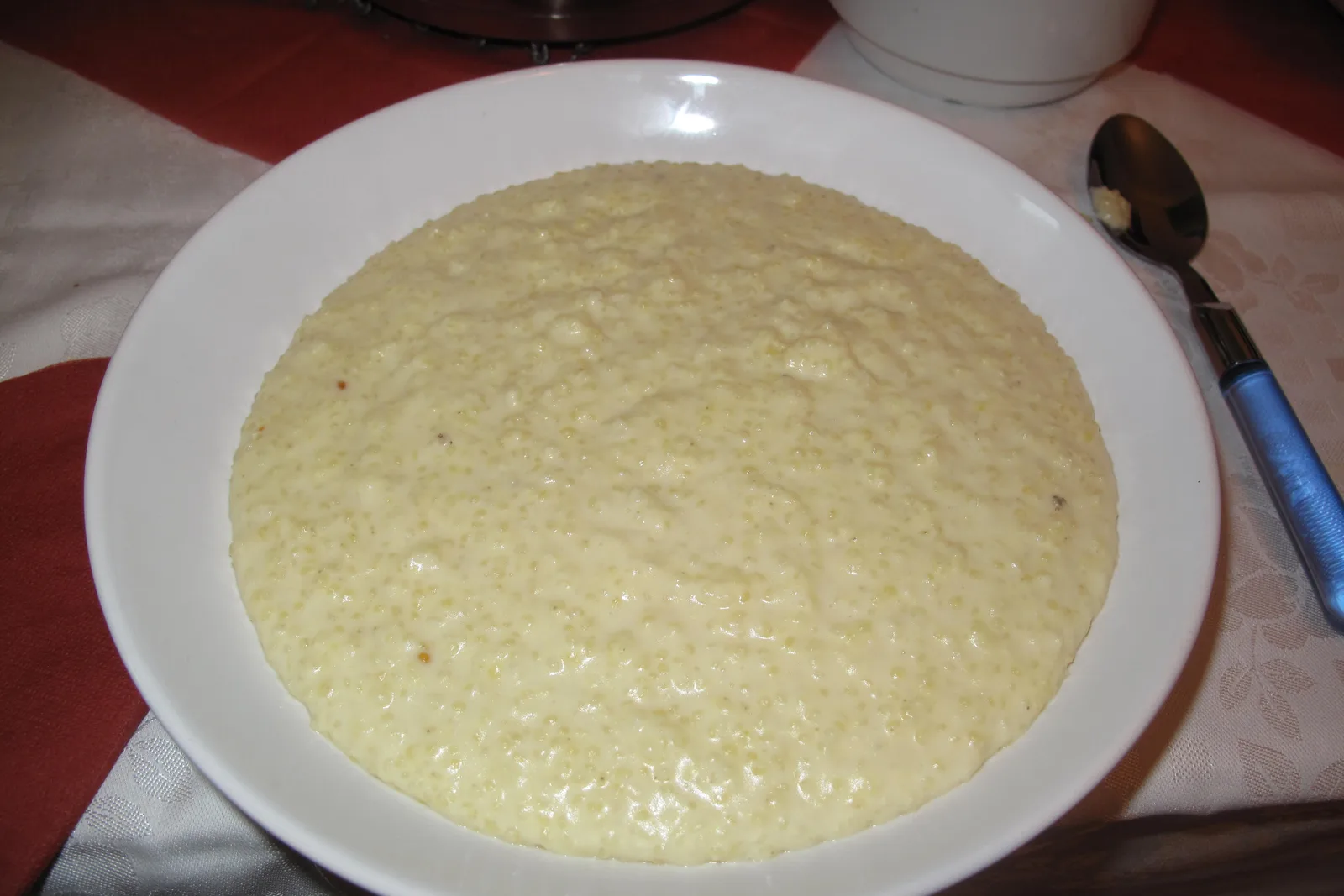
A bowl of thick, creamy millet porridge with milk, served with a spoon Mauritania flag Mauritania 40m
Breakfast •Mauritanian Breakfast

Mauritanian Millet Porridge

This Mauritanian millet porridge recipe makes bouille de mil, the millet porridge Mauritanians wake up to: whole pearl millet simmered in water until soft and creamy, sweetened with a little sugar, and served warm with milk poured over the top. It is simple, filling, and kind to the stomach. One serving is about 335 g.

Slow Morning Energy

A warm bowl of whole-grain millet with milk gives steady, gentle energy to start the day.

Pairs Well With
Serve with hot mint tea and a few dates on the side.
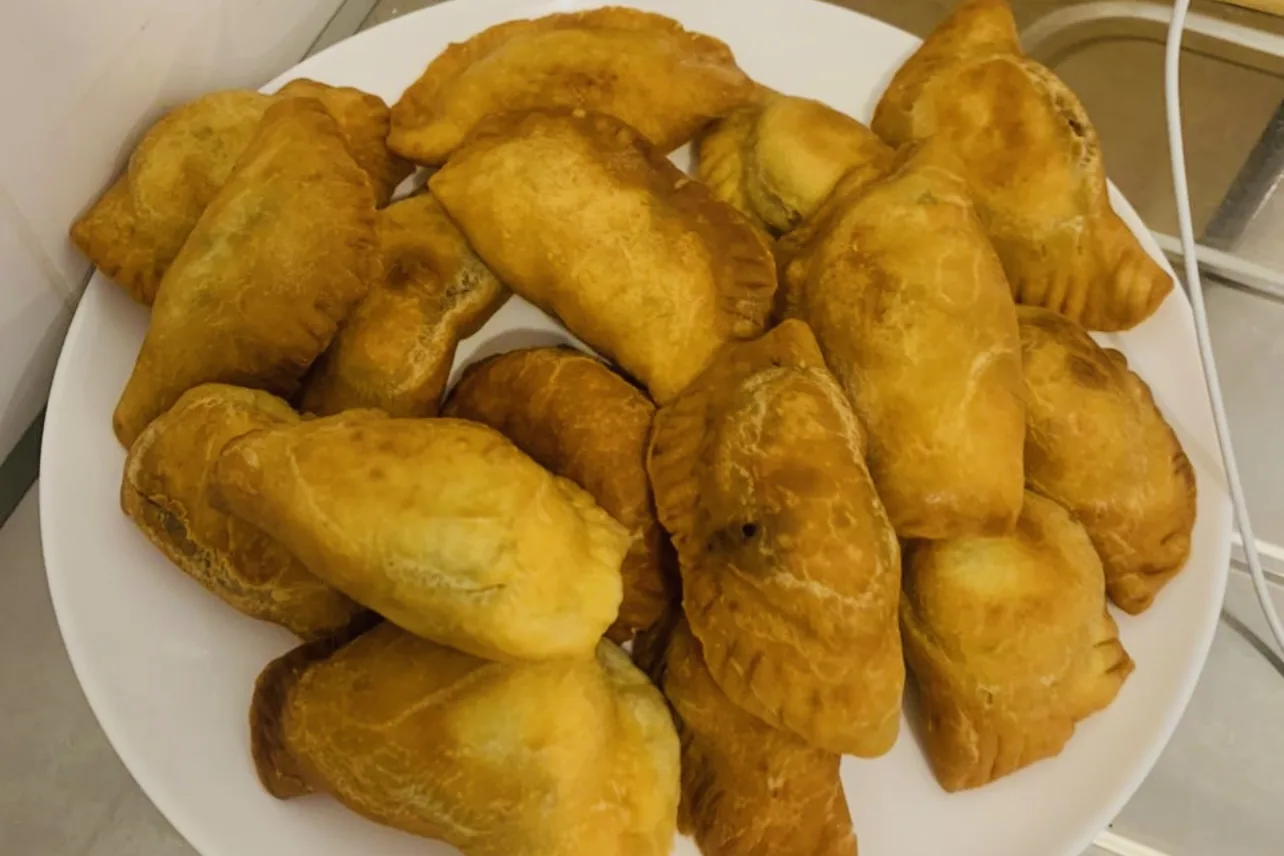
A plate of golden fried Mauritanian fataya, half-moon pastries with crimped edges Mauritania flag Mauritania 2h 5m
Snack & Tea •Nouakchott Street Snack

Mauritanian Fataya

This fataya recipe makes golden, crisp Mauritanian pastries from a soft yeasted dough, filled with spiced ground beef, onion, tomato, carrot and parsley, then deep-fried until puffed and golden. Fataya are the hand-held snack sold at market stalls across Mauritania. One serving (two pastries) is about 172 g.

Snack & Sharing

Crisp fried pastry with a spiced beef and vegetable filling, made for sharing.

Pairs Well With
Spicy onion sauce, a tomato and cucumber salad, and hot mint tea
Bœuf bourguignon — French beef braised in red wine France flag France 4h
Dinner •Burgundy Terroir

Bœuf Bourguignon

Beef braised gently in red wine until the connective tissue melts into a velvet, gelatin-rich sauce — the classic Burgundy Sunday dinner.

Cellular Repair

Beef braised in red wine until spoon-tender, with mushrooms and pearl onions.

Pairs Well With
Parsnip Purée & Steamed French Haricots Verts
High Protein
Vietnamese braised pork belly with golden eggs in caramel sauce Vietnam flag Vietnam 1h 45m
Dinner •One Pot

Vietnamese Braised Pork and Eggs

Pork belly slowly braised in coconut water and caramel until meltingly tender, with golden eggs that soak up the sweet-savoury sauce — the Vietnamese family dish that tastes better the next day.

Comfort & Sustained Energy

Slow-braised pork belly and eggs in coconut water and caramel.

Pairs Well With
Steamed rice & pickled mustard greens
High Protein

The Dinner Gazette

Never wonder what’s for dinner again

One email a week with easy dinner ideas from around the world — ingredients, steps and nutrition, tested in our kitchen first.

Delivered every Thursday morning. Unsubscribe anytime.