Curated recipes from 193 countries  •  New seasonal Mediterranean issue out now

Overview

Mazamorra Morada

Mazamorra, Purple Corn Pudding

Mazamorra morada is Peru's beloved purple pudding: dried purple corn boiled with pineapple peel, cinnamon and cloves until the water turns a deep violet, then sweetened, filled with diced fruit and thickened with potato starch until it is glossy and spoonable. It is served warm, dusted with cinnamon. One serving is about 244 g.

Mazamorra morada is made from maiz morado, the purple corn of the Andes, which has been grown in Peru since long before the Spanish arrived. The corn is boiled to make a deep purple liquid, the same liquid used for chicha morada, the purple corn drink. The pudding is sweetened, filled with fruit and thickened with potato starch, and it is often served beside arroz con leche — the two desserts together are known as el clasico.

Pairs well with: Serve warm with arroz con leche — the two desserts together are called el clasico in Peru.

Provenance

Peru flag Peru

Peruvian Classic

Latin America & Caribbean

Time Dedication

1h 35m

20m prep • 75m cook

Batch Yield

8 Servings

180 kcal per serving

1 serving ≈ 244 g

Technical Skill

Intermediate

Medium (Simmered Pudding)

Meal Timing & Digestive Fit

Breakfast

Not Advised

Lunch

Inappropriate

Dinner

Inappropriate

Snack & Tea

Ideal Light Bite

Occasions: Family desserts, celebrations, Peruvian holidays, after-dinner sweets Cost: Low — about $1 per serving at home
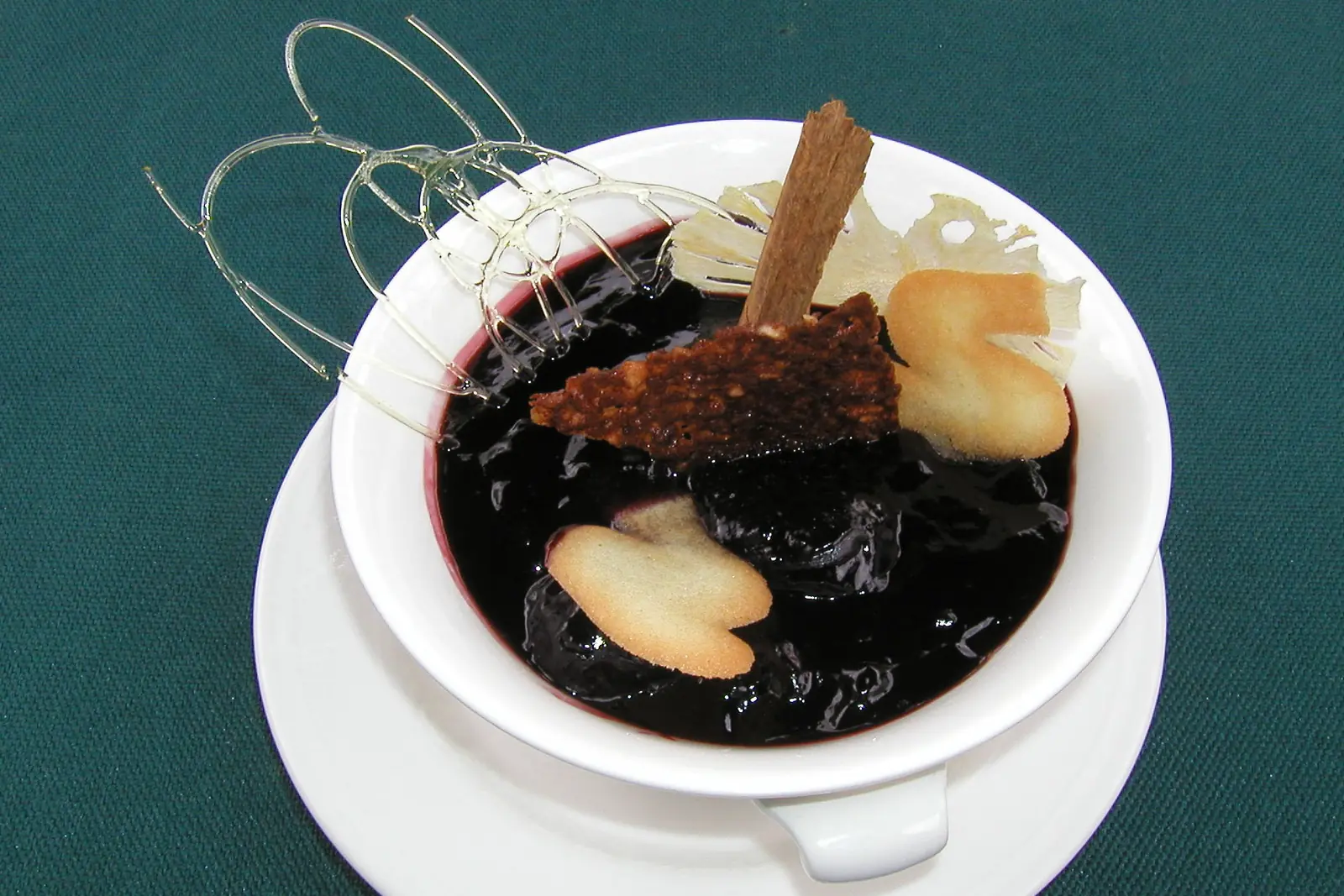
Mazamorra morada: a deep purple corn pudding in a white bowl, garnished with a cinnamon stick and small biscuits

Peruvian Classic

Photo: Brian Snelson, CC BY 2.0, via Wikimedia Commons

The Heritage Formulary

Measured Ingredients

Estimated cost: Low — about $1 per serving at home (USD)

This recipe follows the classic Peruvian method: purple corn boiled with pineapple peel, cinnamon and cloves, sweetened, filled with fruit and thickened with potato starch.

Execution Methodology & Culinary Technique

Step-by-Step Cooking Guide

Active 1h 35m
P

Prep Stage: Rinse the Corn and Dice the Fruit

20 Mins

Rinse the purple corn and put it in a large pot with the water, the pineapple peel, the cinnamon stick and the cloves. Dice the pineapple flesh and the apple, chop the dried apricots and prunes, and measure out the sugar, potato starch and lemon juice so everything is ready when the liquid is done.

Maestro Tip: Keep the pineapple peel: it goes into the pot with the corn and gives the liquid its fruity flavour.

  1. 1

    Boil the Purple Corn

    45 Mins Simmer gently, about 95°C (200°F)

    Put the rinsed purple corn, water, pineapple peel, cinnamon stick and cloves in a large pot. Bring to the boil over high heat, then turn the heat down and simmer gently for 45 minutes, until the liquid is a deep, dark purple. Do not let it boil hard, or the liquid turns cloudy.

    A gentle simmer keeps the liquid clear and glossy; a hard boil makes it murky.

    Done when: The liquid is a deep, clear purple and smells of cinnamon and fruit.

  2. 2

    Strain the Liquid and Add the Sugar

    10 Mins Simmer gently, about 95°C (200°F)

    Lift out the corn, pineapple peel, cinnamon stick and cloves with a slotted spoon and discard them, then strain the liquid through a fine sieve back into the pot. You should have about 1.5 litres of deep purple liquid. Stir in the sugar and simmer for 5 minutes until it dissolves completely.

    Strain through a fine sieve, or a cloth if you have one, so the finished pudding is perfectly smooth.

    Done when: The liquid is clear and purple, and the sugar has dissolved completely.

  3. 3

    Add the Fruit and Simmer

    10 Mins Simmer gently, about 95°C (200°F)

    Add the diced pineapple, apple, dried apricots and prunes to the pot and simmer for 10 minutes, until the fresh fruit is tender but still holds its shape.

    Do not overcook the fruit: it should stay in distinct pieces in the finished pudding, not dissolve into mush.

    Done when: The apple and pineapple are tender when poked with a fork, and the dried fruit has plumped up.

  4. 4

    Thicken with Potato Starch

    5 Mins Low heat, about 85°C (185°F)

    Put the potato starch in a small bowl and stir in 120 ml (1/2 cup) of cold water until it is completely smooth. Turn the heat under the pot to low, then pour the starch mixture in a thin stream, stirring constantly with a wooden spoon. Keep stirring for 2 to 3 minutes as the pudding thickens and turns glossy.

    Stir the starch mixture again just before pouring it in: potato starch settles to the bottom of the bowl in seconds.

    Done when: The pudding coats the back of a spoon thickly and drips off in a slow, glossy ribbon.

  5. 5

    Finish with Lemon and Cinnamon

    5 Mins Serve warm, about 60°C (140°F)

    Take the pot off the heat and stir in the lemon juice. Taste and add a little more sugar if the pudding is too tart. Ladle into small bowls and dust with ground cinnamon before serving warm.

    The pudding thickens more as it cools, so take it off the heat while it still looks slightly loose.

    Done when: The pudding is glossy, deep purple and thick enough to hold its shape in the bowl; the lemon brightens the flavour.

Finishing Touches & Plating

Serve the mazamorra morada warm in small bowls, dusted with ground cinnamon, on its own or beside a spoonful of arroz con leche for the classic Peruvian pairing.

Nutritional Physiology & Benefits

Nutrition

Energy

180

kcal / serving

Protein

1g

Complete AA

Carbs

46g

Complex

Fats

0g

Healthy

Per serving (8 servings · 1 serving ≈ 244 g)
Energy180 kcal
Protein1 g
Carbohydrates46 g
Fat0 g
Fibre2.2 g
Sugar33.5 g
Sodium6 mg
Per 100g
Energy74 kcal
Protein0.2 g
Carbohydrates18.9 g
Fat0.1 g
Fibre0.9 g
Sugar13.7 g
Sodium2 mg

Nutrition values are estimated — calculated from USDA FoodData Central values for the listed ingredients.

Vitamins & minerals: Vitamin C (pineapple and lemon), potassium (fruit), iron (dried apricots and prunes). Nutrition values are estimated.

Fibre and Fruit

About 2.2 g of fibre per serving from the fruit and dried apricots, plus potassium from the fruit.

Light and Sweet

At about 180 kcal a serving, this is a light dessert that finishes a meal without weighing it down.

Naturally Purple

The deep purple colour comes from anthocyanins, the natural pigments of purple corn, with no food colouring added.

Food Pairings

What to Eat With

To optimize nutrient absorption and elevate the sensory depth, pair with these authentic accompaniments:

Sides

Arroz con Leche

Creamy rice pudding beside the tart, fruity mazamorra is the classic Peruvian pairing, and the two colours look beautiful together.

Butter Biscuits

A crisp butter biscuit gives a crunchy contrast to the soft, glossy pudding.

Fresh Mango

Fresh mango slices add a sunny sweetness and a soft texture that suits the pudding.

Drinks

Chicha Morada

Chicha morada, the purple corn drink made from the same corn, is the traditional accompaniment and doubles the purple colour on the table.

Full Menus

Full Menu: Ceviche, Criollo Main, Mazamorra

Start with ceviche, serve a criollo main, and finish with mazamorra morada beside arroz con leche for a classic Peruvian meal.

Complete menu

Start with ceviche, serve a criollo main such as aji de gallina, and finish with mazamorra morada beside arroz con leche — the classic Peruvian pairing.

Digestive Guardrails

What NOT to Combine

To prevent digestive distress, sluggishness, or palate clash, avoid pairing the dish with these elements:

Adding Dry Starch to a Hot Pot

Potato starch poured straight into a hot pot clumps into lumps that never dissolve. Always dissolve it in cold water first, then stir it in slowly. This is general information, not medical advice.

Adding Lemon Juice While Boiling

Lemon juice added while the pudding is still boiling can thin the starch and turn the pudding watery. Take the pot off the heat first, then stir the lemon in. This is general information, not medical advice.

General information only, not medical advice — consult a doctor for personal dietary decisions.

Who Should Eat It

Who Should Eat

  • General adultsA sweet dessert as written; one bowl after a meal is a satisfying finish for most adults.
  • ChildrenSuitable from age 3+; children love the deep purple colour, and a smaller bowl is plenty.
  • ElderlyGood in a modest bowl; the pudding is soft and easy to eat, and it is best served warm rather than very hot.
  • Pregnant womenGenerally suitable when served freshly made and warm; the dried fruit adds fibre. Ask your clinician about portion size.
  • Breastfeeding womenGenerally suitable; the fruit and starch supply steady energy, and the pudding is easy to digest.
  • AthletesA useful post-training dessert: about 46.0 g of carbohydrate per serving from the corn liquid, sugar and fruit.
  • Weight gainA good choice: a full bowl with arroz con leche beside it adds energy easily.
  • Weight lossKeep to a small bowl and use less sugar in the pot; the fruit already sweetens the pudding.

Health Conditions — Adjust or Avoid

Conditions

  • DiabetesOne serving has about 46.0 g of carbohydrate and 33.5 g of sugar; a half bowl with less sugar in the pot is a safer portion. Ask your clinician about portions.
  • High blood pressureOne serving has only about 6 mg of sodium, which is very low; the sugar is the bigger concern, so use less sugar. Ask your clinician about your daily sugar intake.
  • Kidney diseaseDried fruit is high in potassium, so keep to a small bowl if your clinician has advised a potassium limit, and ask about portion size.
  • GoutFruit and starch are low in purines, so this dessert is generally a safe choice. Ask your clinician if you are unsure.
  • Stomach issuesThe pudding is soft and easy to digest, but the dried fruit can be heavy for a sensitive stomach; a smaller bowl, well chewed, is usually easier. Ask your clinician if symptoms persist.
  • Cardiovascular diseaseThis dessert is very low in fat; the sugar is the main concern, so use less sugar and keep the portion small. Ask your clinician about your overall sugar intake.
  • Fatty liverThe sugar in this pudding adds up quickly; use half the sugar and add more fresh fruit instead. Ask your clinician about dietary changes.
  • Food allergiesFree of the major allergens as written: no gluten, dairy, egg, nuts or seafood. Dried fruit may contain sulphites, so check the packet. Ask your clinician before serving to someone with a food allergy.
  • Special therapeutic dietsSuitable as written for vegan and gluten-free diets. Ask your clinician or dietitian before adapting it.

If you have a medical condition, consult your doctor before changing your diet.

Storage & Use

Storage & Use

How to store
Cool to room temperature within 2 hours, then store in an airtight container.
In the fridge
4 days in the fridge in an airtight container.
In the freezer
Up to 1 month; freeze in portions and thaw overnight in the fridge.
How to reheat
Reheat gently in a pan over low heat, stirring often, until steaming hot throughout, to 74°C (165°F); add a splash of water if it has thickened too much.
Freezing recommended
Yes, it freezes well for up to 1 month.
Signs it has spoiled
Sour smell, mould on the surface, or a slimy texture.

More recipes to explore

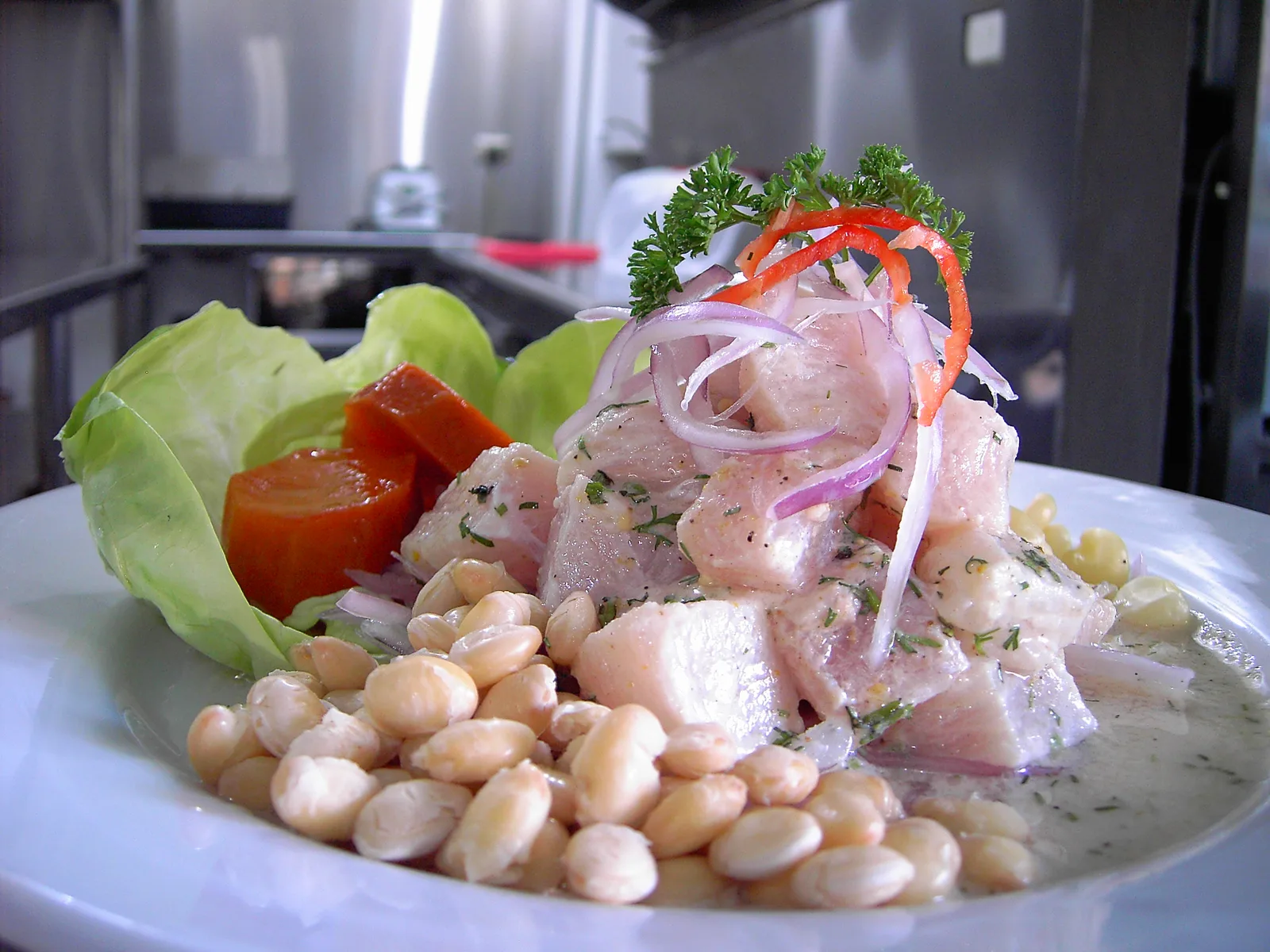
A plate of cebiche de corvina with lime-cured white fish cubes, red onion, ají strips, lettuce, sweet potato and choclo corn Peru flag Peru 35m
Lunch •Coastal Peru

Peruvian Ceviche

Peruvian ceviche is the national dish of Peru: cubes of very fresh sea bass cured in lime juice with red onion, ají limo and cilantro, with the milky, spicy marinade it leaves behind — leche de tigre — spooned over the top. It arrives with boiled sweet potato and big-kernel choclo corn, the sweet and starchy balance to all that citrus and heat. One serving is about 371 g.

Light & Fresh

Fresh sea bass cured in lime juice with red onion, ají limo and leche de tigre, served with sweet potato and choclo.

Pairs Well With
Boiled sweet potato, choclo corn and cancha
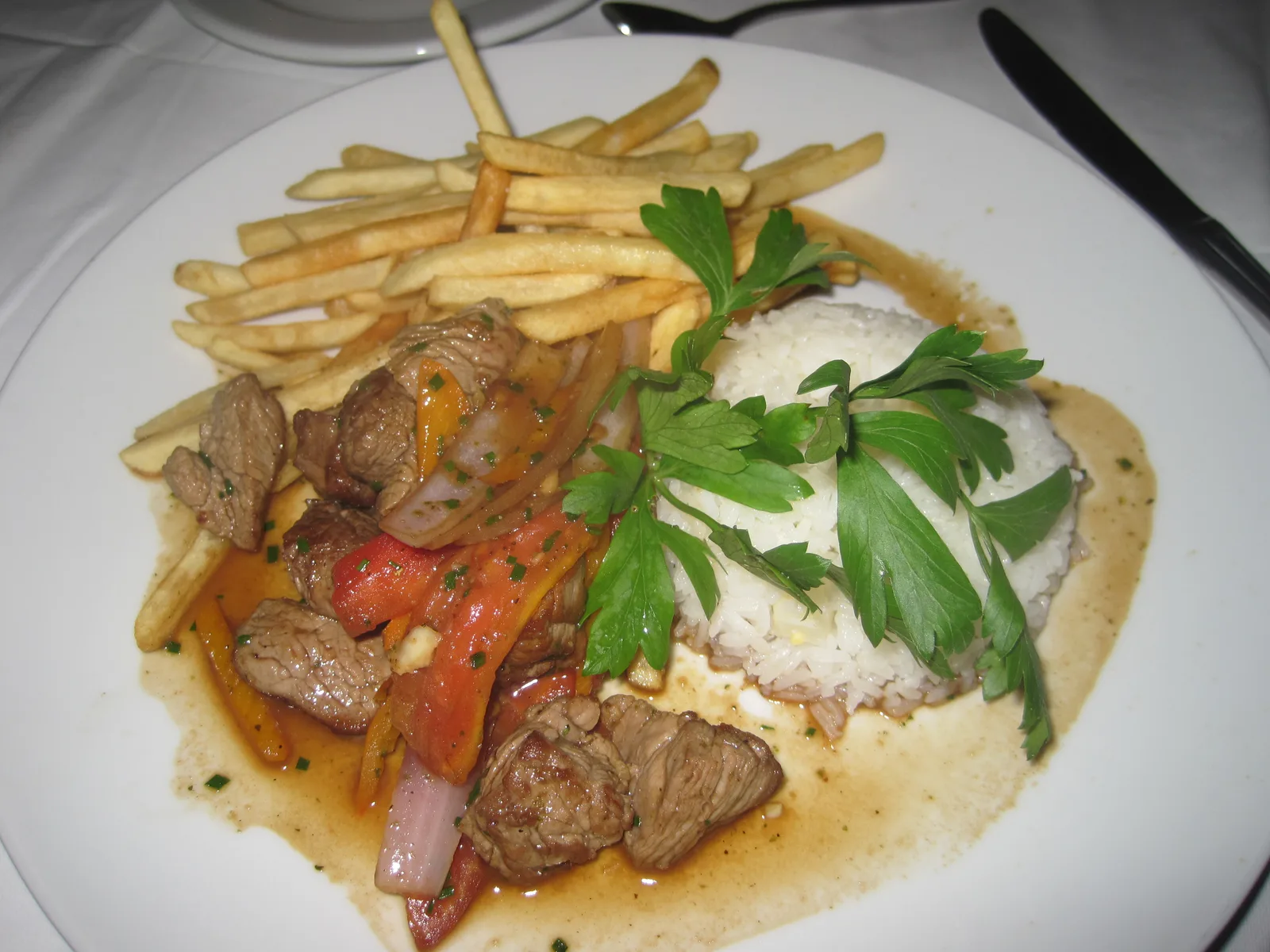
A plate of lomo saltado with seared beef strips, tomato and onion, French fries and a mound of white rice Peru flag Peru 40m
Dinner •Lima Heritage

Lomo Saltado

Lomo saltado is Peru's beloved Chifa stir-fry: strips of sirloin seared at screaming heat in a wok, tossed with red onion, tomato, soy sauce and red wine vinegar, then folded with crisp French fries and served beside white rice. It is the meeting of Cantonese wok cooking and Peruvian ingredients on one plate — smoky, salty, tangy and completely moreish. One serving is about 579 g.

Comfort & Energy

Sirloin seared at high heat with onion, tomato, soy and vinegar, tossed with fries and served with rice.

Pairs Well With
French fries, white rice and salsa criolla
Quick Prep (<30m)
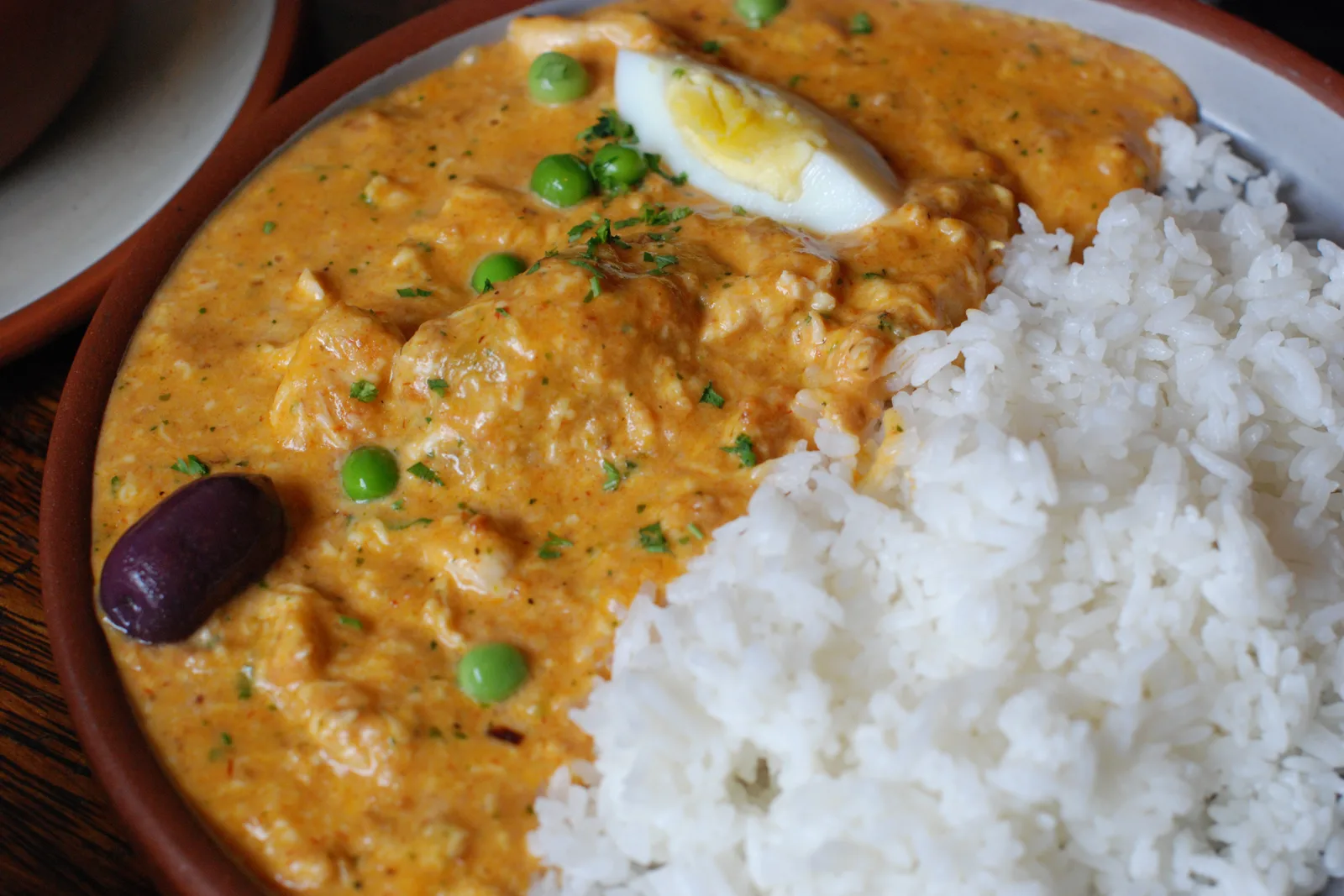
A bowl of ají de gallina with creamy golden chicken sauce, white rice, a boiled egg, peas and a black olive Peru flag Peru 1h
Dinner •Lima Heritage

Ají de Gallina

Ají de gallina is Lima's great comfort stew: poached chicken shredded into a velvety golden sauce of ají amarillo, bread soaked in evaporated milk, ground walnuts and Parmesan, served over white rice with a boiled egg, black olives and boiled potato. It is creamy, nutty, gently spicy and deeply filling — the dish Peruvians ask for when they come home. One serving is about 574 g.

Comfort & Warmth

Poached chicken in a creamy ají amarillo sauce thickened with bread, evaporated milk, walnuts and Parmesan.

Pairs Well With
White rice, boiled potato, boiled egg and black olives
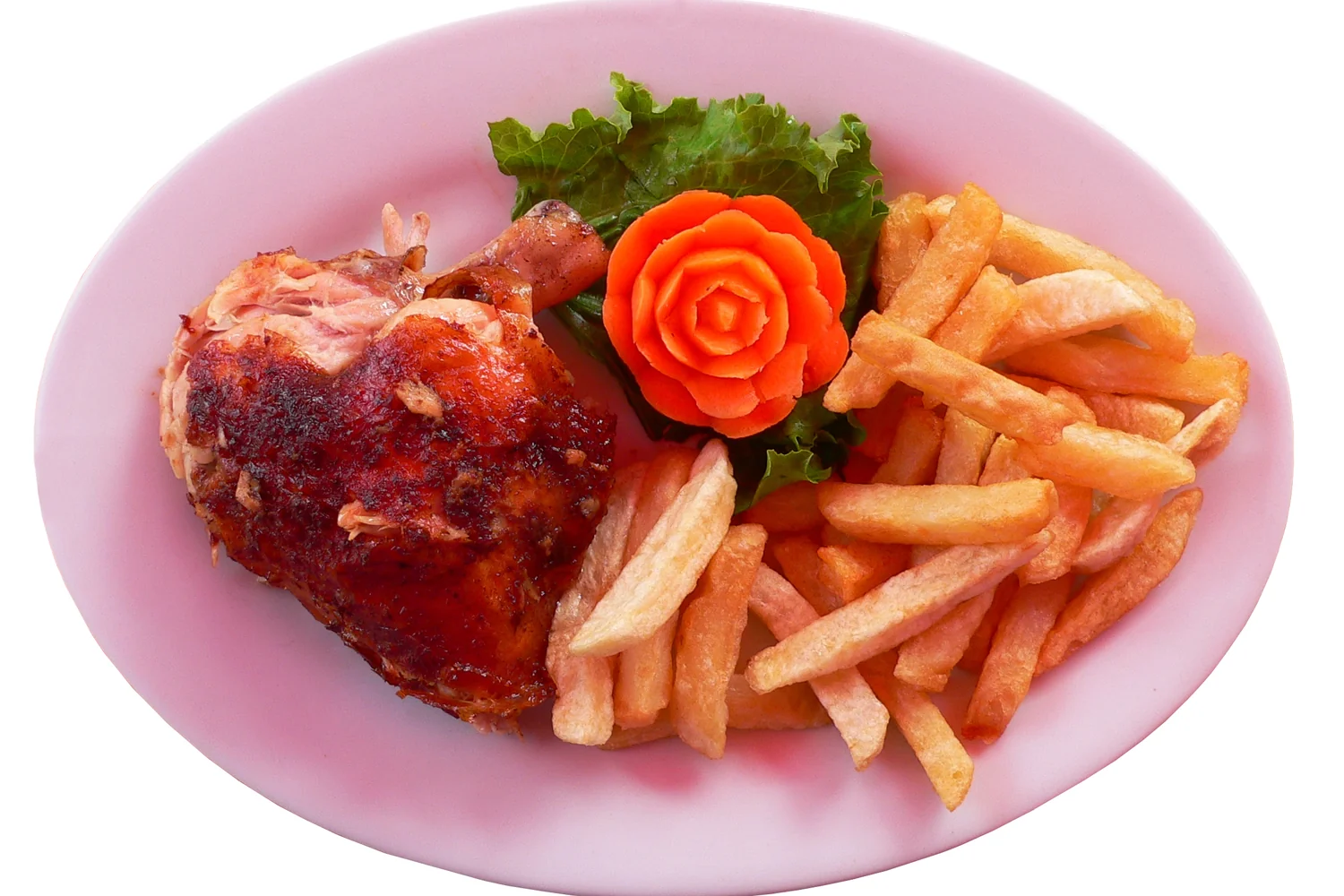
A glossy roasted chicken leg quarter with golden fries, lettuce and a carved carrot rose on a pink plate Peru flag Peru 1h 40m
Dinner •Lima Polleria Heritage

Pollo a la Brasa

This pollo a la brasa recipe marinates a whole chicken overnight in soy sauce, beer, lime, garlic, cumin and paprika, then roasts it slowly until the skin turns dark and crisp and the meat stays juicy. It is served the way every polleria in Lima serves it: a quarter chicken with thick-cut fries, a fresh salad and the two essential sauces, green aji verde and yellow aji amarillo. One serving is about 514 g.

High-Protein & Satisfying

Charcoal-roasted chicken with dark, crisp skin and juicy meat, served the polleria way with thick fries, salad and two aji sauces.

Pairs Well With
Aji verde, fries & salad
High Protein

The Dinner Gazette

Never wonder what’s for dinner again

One email a week with easy dinner ideas from around the world — ingredients, steps and nutrition, tested in our kitchen first.

Delivered every Thursday morning. Unsubscribe anytime.