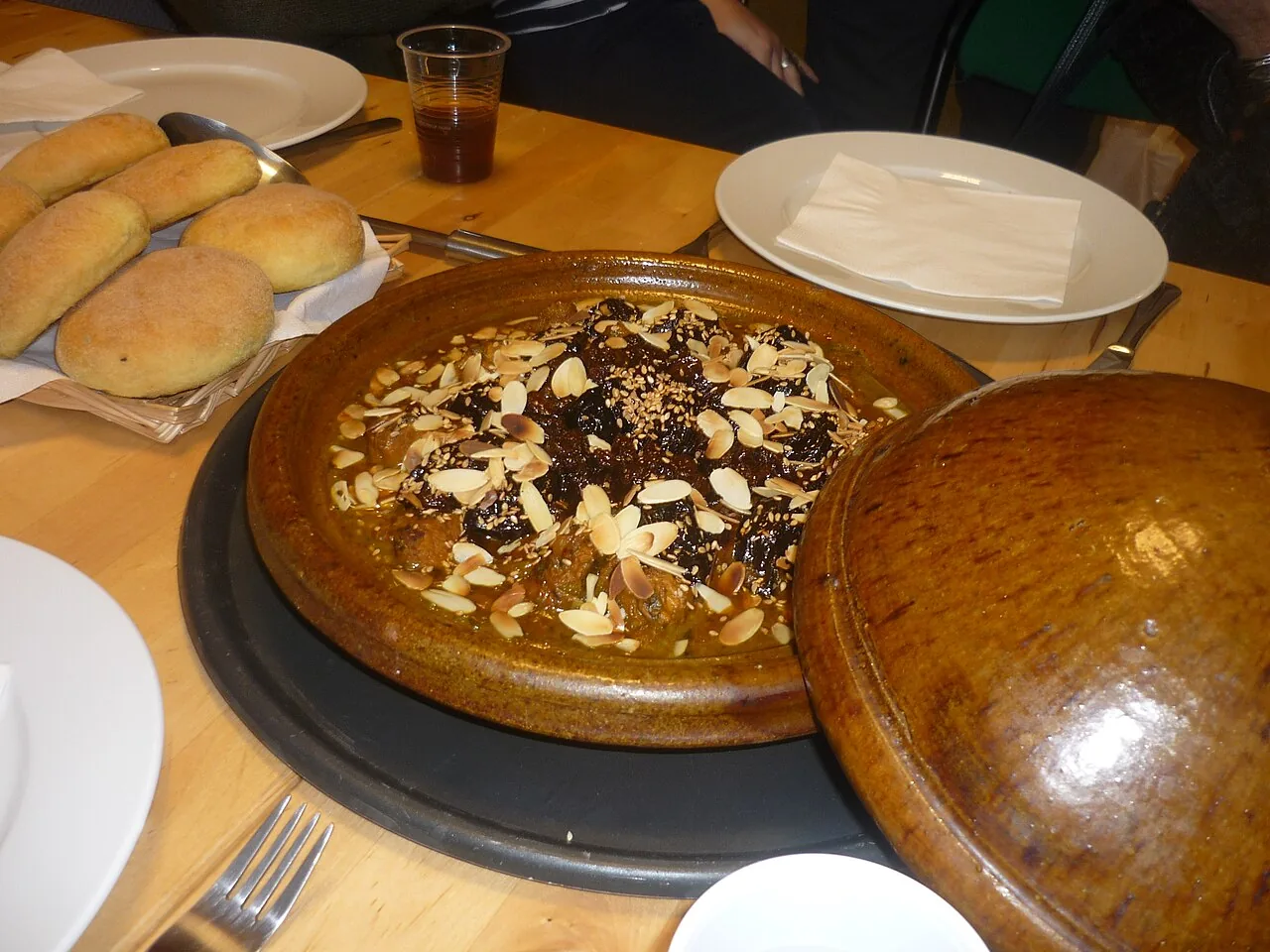
Lamb & Prune Tagine
Clay vessel braised lamb shoulder infused with Ras el Hanout, saffron stamens, and natural sun-dried fruit pectins.
Immunity & Warming
Slow-braised lamb with prunes, almonds and couscous.
Spiced Couscous & Preserved Lemon Salad
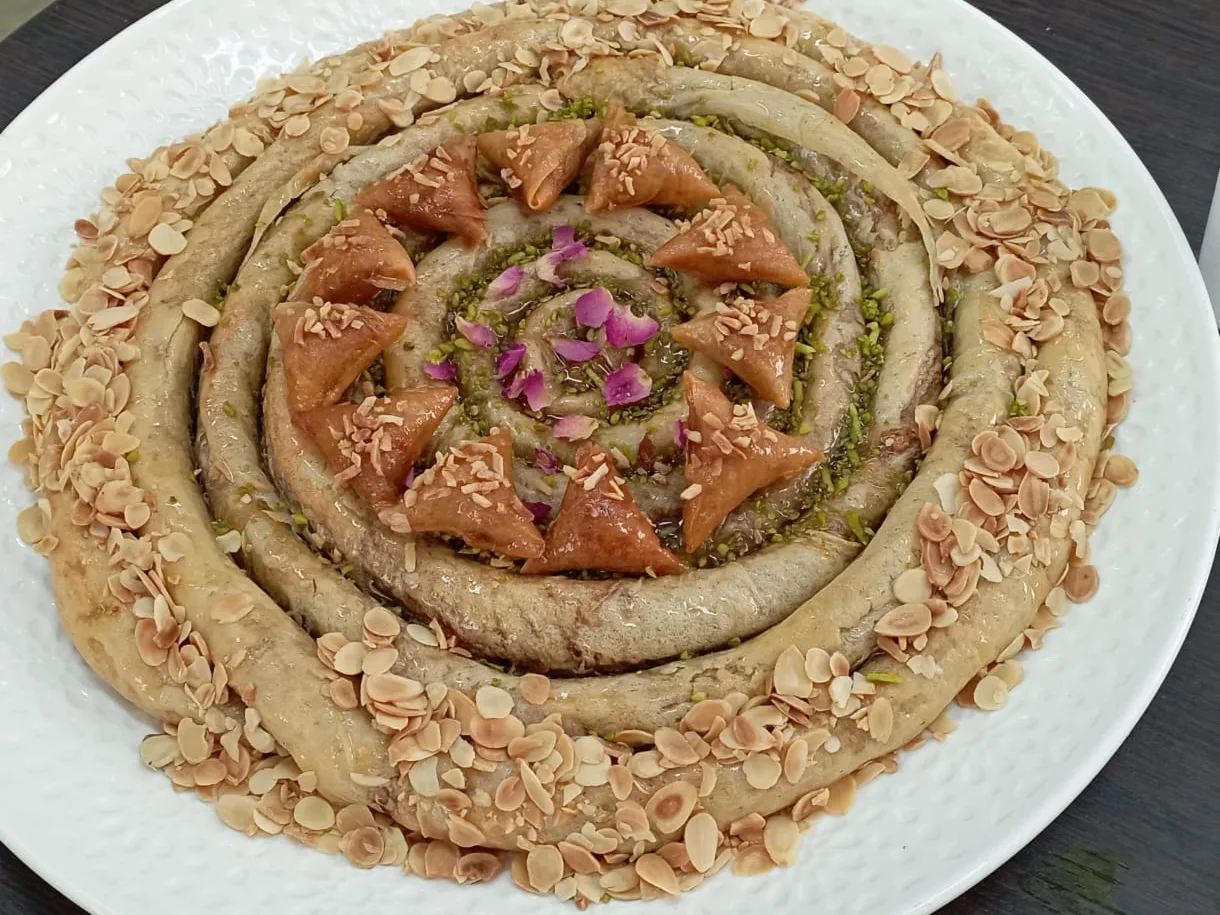
Mhancha, M'hencha, Moroccan Snake Cake, Moroccan Almond Snake Pastry
This mhanncha recipe makes the Moroccan snake pastry the way it is served at celebrations: a fragrant paste of ground almonds, sugar, cinnamon and orange blossom water, rolled into thin filo, coiled into a spiral and baked until crisp and golden, then brushed with warm honey and scattered with flaked almonds. One slice is sweet, nutty and delicately floral, and it tastes of a Moroccan tea table. One serving is about 82 g.
M'hanncha means snake in Arabic, and the name describes exactly what it looks like: a long roll of almond paste wrapped in thin pastry and coiled into a spiral. It is one of Morocco's great celebration pastries, made for weddings, Eid and family gatherings. The traditional pastry is warqa, a paper-thin sheet made by dabbing loose dough onto a hot pan, though filo is the usual substitute outside Morocco. The filling — almonds, sugar, cinnamon and orange blossom water — is the same perfumed combination found across Moroccan sweets.
Pairs well with: Mint tea and fresh fruit, or a small glass of orange blossom lemonade.
Provenance
Morocco
Moroccan Celebration Pastry
Middle Eastern
Time Dedication
1h 10m
40m prep • 30m cook
Batch Yield
10 Servings
397 kcal per serving
1 serving ≈ 82 g
Technical Skill
Intermediate
Medium (Coiling)
Meal Timing & Digestive Fit
Breakfast
Not Advised
Lunch
Inappropriate
Dinner
Inappropriate
Snack & Tea
Ideal Light Bite
Moroccan Celebration Pastry
Photo: Chado07, CC0, via Wikimedia Commons
The Heritage Formulary
Estimated cost: Low — about $1–2 per serving at home (USD)
A traditional Moroccan celebration pastry: orange-blossom almond paste rolled in filo, coiled like a snake and baked golden.
Execution Methodology & Culinary Technique
Prep Stage: Make the Almond Paste
20 Mins • Mixing & Rolling
Put the ground almonds, sugar and cinnamon in a bowl and mix. Add the beaten egg, 60 g of the melted butter and the orange blossom water, then knead with your hands for a minute or two until the mixture comes together as a soft, pliable paste that holds its shape. Cover it and leave it to rest for 10 minutes while you melt the remaining butter and lay out the filo under a damp cloth.
Maestro Tip: If the paste feels crumbly, add orange blossom water half a teaspoon at a time; if it feels sticky, add a spoonful more ground almonds.
15 Mins Room temperature, about 22°C (72°F)
Mix the ground almonds, sugar and cinnamon in a large bowl. Pour in the beaten egg, 60 g of the melted butter and the orange blossom water, then knead by hand until the mixture forms a soft, smooth paste that holds together when squeezed. Cover and rest for 10 minutes. This mhanncha recipe lives or dies on the paste: it should be firm enough to roll, soft enough to bite.
Taste a pinch: it should be sweet, nutty and floral, with cinnamon in the background.
Done when: A smooth, pliable paste that rolls without cracking.
10 Mins Room temperature, about 22°C (72°F)
Divide the paste into 5 equal pieces of about 90 g each. Roll each piece on a clean surface into a log about 30 cm long and as thick as your thumb, with even thickness all the way along so the coil bakes evenly.
Roll with flat palms from the centre outwards, and cover the finished logs with a damp cloth so they do not dry out.
Done when: Five smooth, even logs, about 30 cm long each.
15 Mins Room temperature, about 22°C (72°F)
Lay one filo sheet flat, brush it lightly all over with melted butter, and lay a second sheet on top. Place one almond log along the long edge, then roll the pastry up loosely around it into a long tube, tucking the ends in. Repeat with the remaining logs and sheets, keeping the finished tubes under a damp cloth.
Do not roll the tubes tight: the pastry needs room to puff and crisp in the oven.
Done when: Five long, loose tubes of filo wrapped around almond paste.
5 Mins Room temperature, about 22°C (72°F)
Line a baking tray with parchment. Take the first tube, coil it into a tight spiral in the centre of the tray, then join the next tube to its end and keep coiling outwards, pressing each join gently so the coil holds together. Tuck the final end underneath. Brush the whole coil generously with the remaining melted butter.
A round cake tin keeps the coil perfectly round if your tray is large.
Done when: One neat spiral, about 24 cm across, joins hidden and end tucked under.
30 Mins 180°C (350°F)
Bake in the middle of the oven at 180°C (350°F) for 25 to 30 minutes until the pastry is deep golden, crisp and puffed, and the kitchen smells of toasted almonds. If the top colours too fast, cover it loosely with foil for the last 10 minutes.
Filo goes from golden to burnt in a minute, so watch it from 20 minutes on.
Done when: Deep golden, crisp pastry that sounds hollow when tapped.
5 Mins Warm, about 60°C (140°F)
While the pastry is still hot, brush it all over with the warmed honey so it soaks into the crisp layers and turns glossy. Scatter the toasted flaked almonds and chopped pistachios over the top. Leave for 10 minutes so the honey sets, then cut into wedges and serve warm or at room temperature.
Brush the honey on while the pastry is hot: cold pastry will not absorb it.
Done when: A glossy, golden coil studded with almonds, sweet to the touch and crisp underneath.
Finishing Touches & Plating
Serve the m'hanncha in wedges, warm or at room temperature, with mint tea. It is at its best the day it is baked, when the filo is still crisp and the honey is just set — cut it at the table so everyone sees the coil.

Nutritional Physiology & Benefits
Energy
397
kcal / serving
Protein
10g
Complete AA
Carbs
35g
Complex
Fats
26g
Healthy
| Energy | 397 kcal |
| Protein | 10 g |
| Carbohydrates | 35 g |
| Fat | 26 g |
| Fibre | 4.8 g |
| Sugar | 18.7 g |
| Sodium | 104 mg |
| Energy | 484 kcal |
| Protein | 11.6 g |
| Carbohydrates | 42.9 g |
| Fat | 32.1 g |
| Fibre | 5.9 g |
| Sugar | 22.8 g |
| Sodium | 127 mg |
Nutrition values are estimated — calculated from USDA FoodData Central values for the listed ingredients.
Vitamins & minerals: Provides vitamin E and magnesium from the almonds, plus small amounts of B vitamins and iron from the egg and filo.
Almonds at the Centre
Almonds bring vitamin E, magnesium and 4.8 g of fibre a serving, so this sweet has more to offer than sugar alone.
Baked, Not Fried
The pastry is oven-baked with a brushing of butter, not deep-fried, so it stays light and crisp rather than greasy.
Made for Sharing
One coil makes 10 slices, so it is built for a tea table full of people, not for eating alone.
Food Pairings
To optimize nutrient absorption and elevate the sensory depth, pair with these authentic accompaniments:
Drinks
Mint Tea
The classic partner: hot, sweet mint tea balances the pastry's richness and its freshness lifts the orange blossom.
Orange Blossom Lemonade
A cold, lightly floral lemonade echoes the orange blossom in the filling and refreshes the palate.
Sides
Fresh Fruit
Sliced oranges or figs add juice and acidity that cut through the honeyed sweetness.
Full Menus
Moroccan Tea Table
Serve it with chebakia and briouats for a full Moroccan sweet table at Eid or a wedding, with the coil as the centrepiece.
Complete menu
Serve after a tagine dinner with mint tea, or as the centrepiece of a Moroccan sweet table with chebakia, briouats and fresh figs.
Digestive Guardrails
To prevent digestive distress, sluggishness, or palate clash, avoid pairing the dish with these elements:
Eating Too Much at Once
At 18.7 g of sugar a slice, two or three slices add up fast — enjoy one slice with tea and stop there. This is general food information, not medical advice.
Storing It Uncovered
Filo dries out and turns leathery in open air, and the honey attracts moisture. Keep it covered once cool, or the crispness is lost. This is general food-safety information, not medical advice.
General information only, not medical advice — consult a doctor for personal dietary decisions.
Who Should Eat It
Health Conditions — Adjust or Avoid
If you have a medical condition, consult your doctor before changing your diet.
Storage & Use
Clay vessel braised lamb shoulder infused with Ras el Hanout, saffron stamens, and natural sun-dried fruit pectins.
Immunity & Warming
Slow-braised lamb with prunes, almonds and couscous.
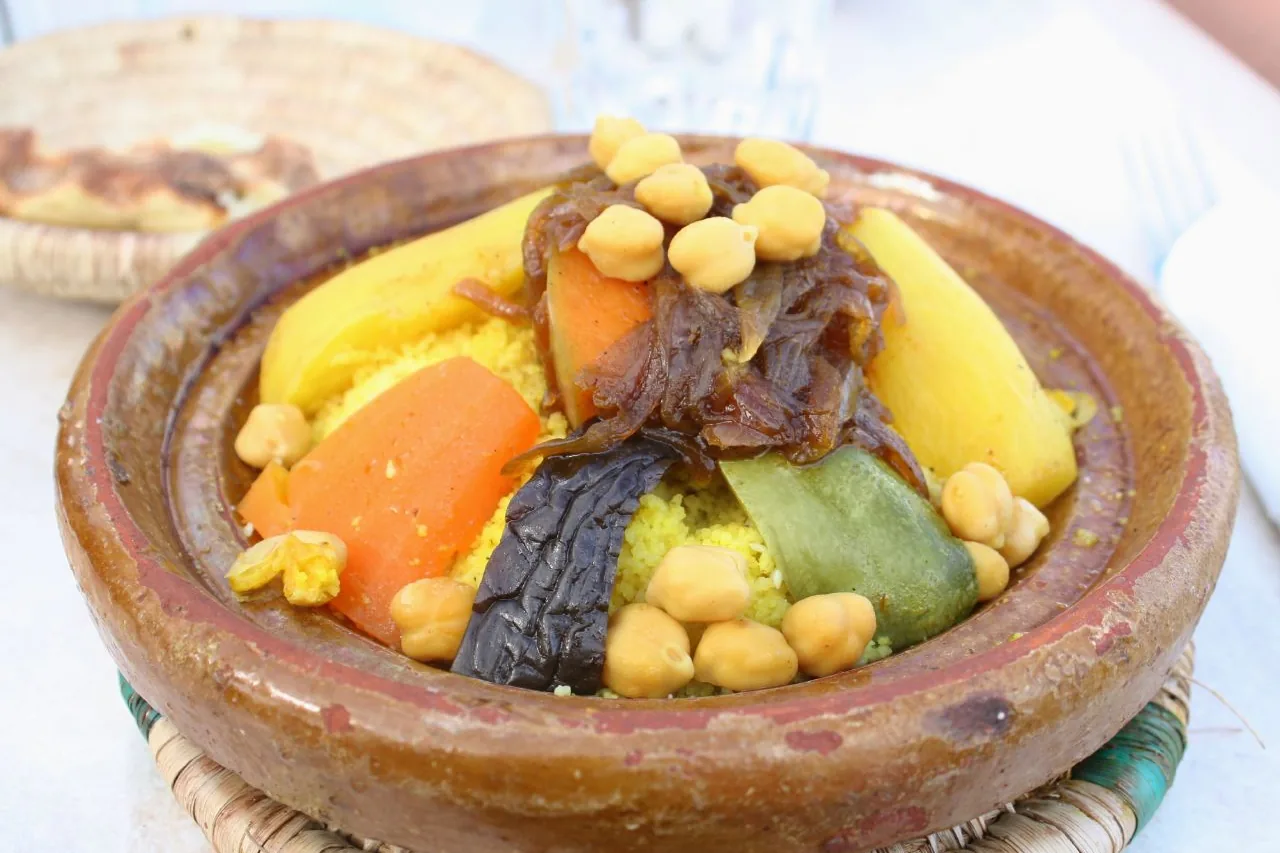
This moroccan couscous recipe steams fine semolina until fluffy, then ladles over a slow-cooked stew of seven vegetables, chickpeas and warm spices. One serving is about 475 g.
Comfort & Warmth
Fluffy steamed semolina with a slow vegetable stew and chickpeas.
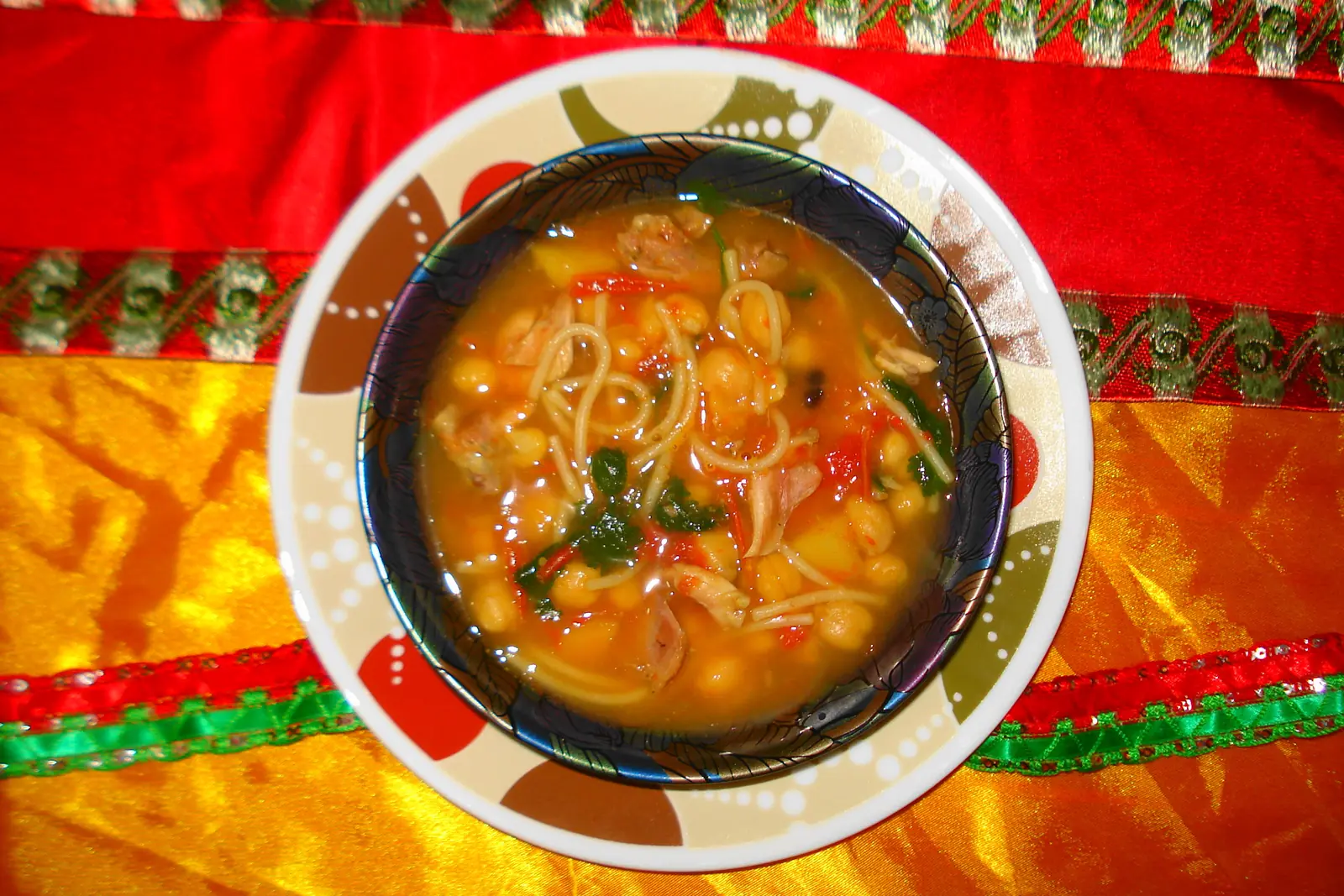
This harira soup recipe simmers lentils, chickpeas, tomatoes and lamb with ginger, cinnamon and fresh herbs, then thickens it the traditional way with a flour slurry. One serving is about 450 g.
Comfort & Warmth
A thick, warming tomato and lentil soup, the soup Moroccans break their fast with.
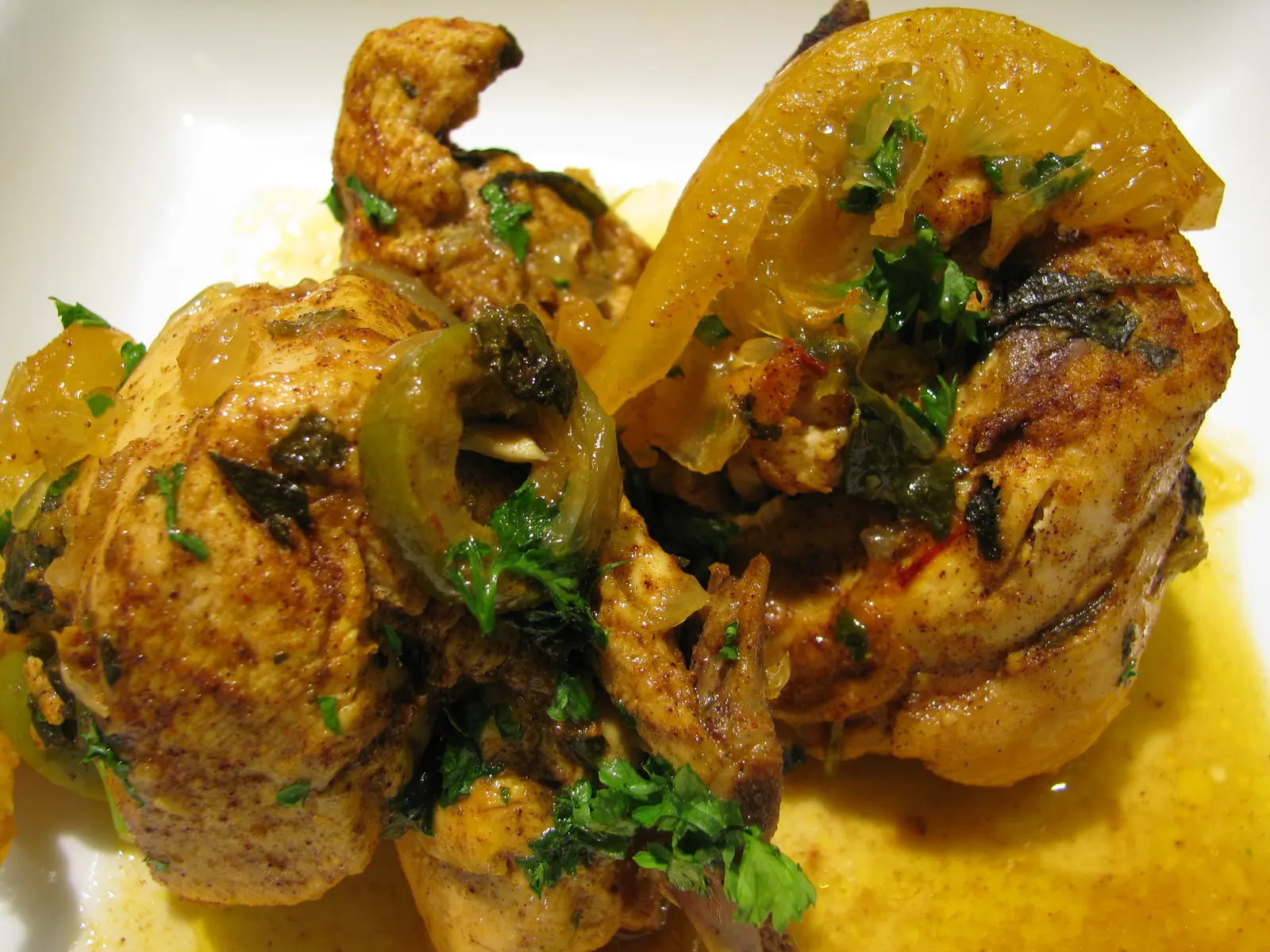
Moroccan chicken tagine is the dish Morocco is best known for: chicken braised slowly with onions, ginger and saffron, then finished with salty preserved lemon and green olives. This moroccan chicken tagine recipe uses a heavy pot instead of a clay tagine, so anyone can make it — the conical lid's job is done by a tight-fitting lid and a gentle flame. One serving is about 315 g.
Slow-Cooked Comfort
Chicken braised slowly with ginger, saffron, preserved lemon and green olives until the meat falls from the bone.