Curated recipes from 193 countries  •  New seasonal Mediterranean issue out now

Overview

Micronesian Chicken Kelaguen

Kelaguen Månnok, Kelaguen Mannok, Chamorro Chicken Kelaguen

This chicken kelaguen recipe turns smoky grilled chicken into something bright and completely different: the meat is chopped fine, cured in fresh lemon juice with grated coconut, green onion and fiery bird's eye chilli, then served cold. It is the Chamorro classic of the Mariana Islands in Micronesia — tangy first, creamy second, with a slow warmth at the end. One serving is about 267 g.

Kelaguen is the Chamorro dish of the Mariana Islands, and its method is older than any written recipe: Pacific islanders have long 'cooked' fish in citrus juice, a technique that probably came from Southeast Asia and spread with migration across the Pacific. It is derived from the Filipino kilawin, brought by Filipino settlers when the Marianas and the Philippines were both part of the Spanish East Indies, and it later picked up Latin American touches — hot peppers introduced by the Spanish in the 17th century, and tortillas, which became the Chamorro titiyas. Chicken is the one kelaguen that is always pre-cooked: it is barbecued over a charcoal or wood fire, chopped fine, and cured in lemon juice with salt, green onion, chilli and grated coconut, then served cold at fiestas and family barbecues.

Pairs well with: Warm titiyas or steamed rice, with red rice and finadene on the side

Provenance

Micronesia flag Micronesia

Chamorro Fiesta Classic

Oceania & Pacific

Time Dedication

1h 15m

20m prep • 55m cook

Batch Yield

4 Servings

443 kcal per serving

1 serving ≈ 267 g

Technical Skill

Intermediate

Medium (Grill & Chill)

Meal Timing & Digestive Fit

Breakfast

Not Advised

Lunch

Prime Metabolic Fit

Dinner

Ideal Hearty Main

Snack & Tea

Inappropriate

High Protein Occasions: Lunch, summer gatherings, barbecues, fiestas, light dinners Cost: Low — about $3–4 per serving at home
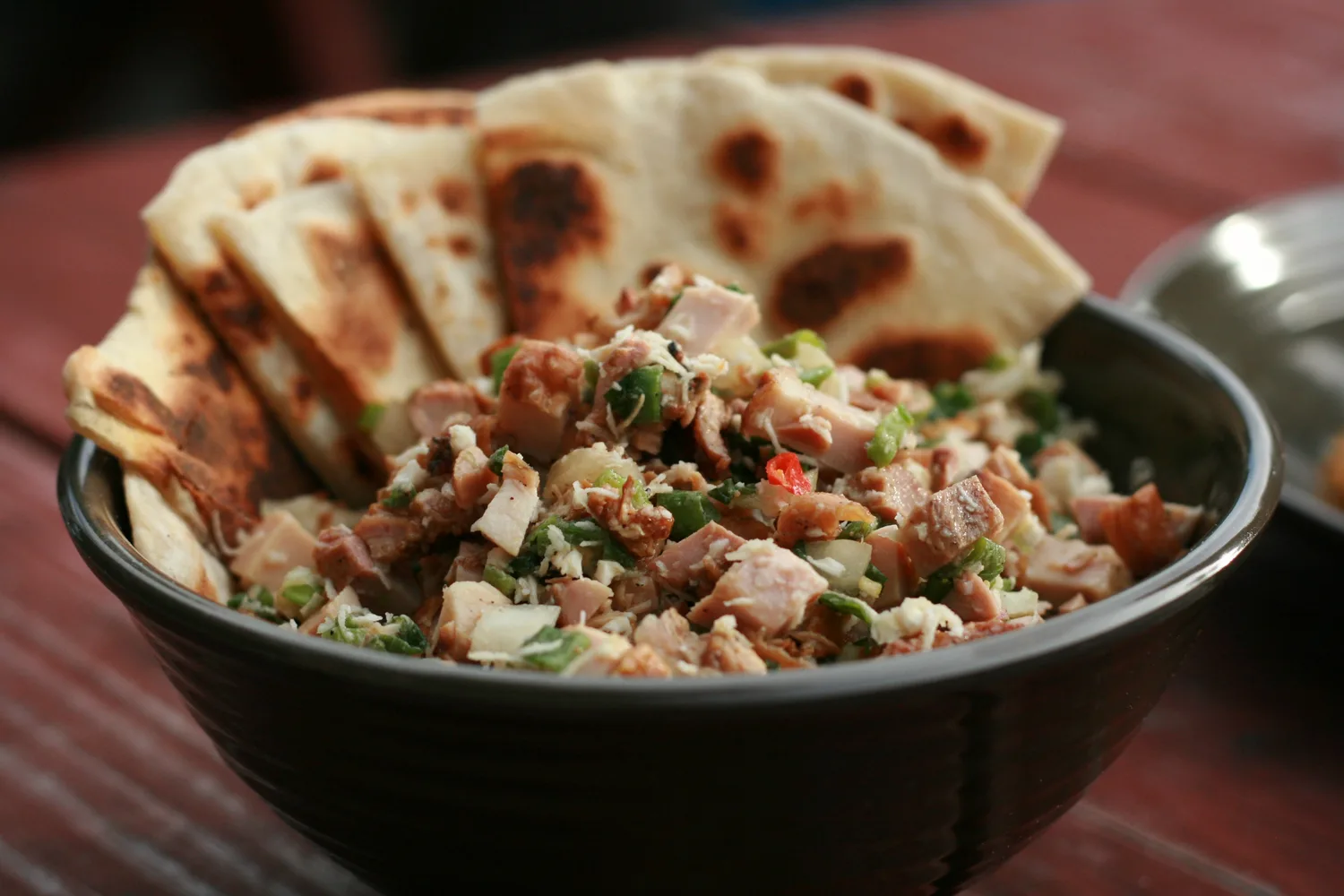
Micronesian chicken kelaguen — finely chopped grilled chicken with green onions, red chilli and grated coconut in a bowl, served with titiyas flatbread

Chamorro Fiesta Classic

Photo: photosbybonbon671, CC BY 2.0, via Wikimedia Commons

The Heritage Formulary

Measured Ingredients

Estimated cost: Low — about $3–4 per serving at home (USD)
A good kelaguen is judged by the chop and the balance: the chicken must be fine enough to drink in the lemon, tangy first and creamy second, never drowned in juice or overloaded with coconut.

Execution Methodology & Culinary Technique

Step-by-Step Cooking Guide

Active 1h 15m
P

Prep Stage: Lemons, Coconut & Chillies

20 Mins • Knife Work

Squeeze the lemons and strain the juice. Grate the coconut, slice the spring onions, dice the yellow onion as finely as you can, and chop the chillies. Pat the chicken thighs dry and trim any excess fat. Everything should be ready before the chicken comes off the grill, so the hot chicken is chopped and cured while it is still warm and drinks in the lemon juice.

Maestro Tip: Chill the bowl you will cure the chicken in: cold chicken cures evenly and stays safe.

  1. 1

    Grill the Chicken

    25 Mins Medium-high grill, 200°C (400°F)

    Heat a charcoal or gas grill to medium-high, about 200°C (400°F). Brush the chicken thighs lightly with the olive oil and season with the black pepper and a pinch of the salt. Grill for about 10–12 minutes per side, turning once, until lightly charred at the edges and cooked right through — a thermometer in the thickest part must read 74°C (165°F). Do not stop at 80 percent cooked: unlike fish ceviche, lemon juice cannot finish cooking chicken safely.

    Charcoal gives the smoky edge that makes kelaguen taste like a fiesta; on gas, grill over the hottest part and do not move the thighs until they release easily.

    Done when: Charred at the edges, juices run clear, and the thickest part reads 74°C (165°F) on a thermometer.

  2. 2

    Rest and Chop Fine

    15 Mins Resting, room temperature, about 21°C (70°F)

    Rest the chicken for 5 minutes so the juices settle, then chop it as finely as you can — small, even pieces about the size of a thumbnail, with a few shreds mixed in. The fine chop is the signature of kelaguen: it lets the lemon juice reach every piece. Put the chopped chicken in the chilled glass or ceramic bowl — never metal, which can react with the lemon juice.

    A heavy cleaver or a sharp chef's knife works best; a food processor turns the chicken to paste, so chop by hand.

    Done when: Chicken is in small, even pieces, still faintly warm and smelling of smoke.

  3. 3

    Cure in Lemon Juice

    30 Mins Chilled, 4°C (39°F)

    Pour the lemon juice over the warm chopped chicken and add the diced yellow onion, the chopped chillies and half the salt. Toss well so every piece is coated, cover the bowl and refrigerate for 30 minutes. The acid firms the chicken, brightens it and carries the chilli heat through the meat — this is the kelaguen cure, and it is what turns grilled chicken into kelaguen.

    Taste a piece after 15 minutes: if the lemon shouts too loudly, the coconut in the next step will soften it — do not add sugar.

    Done when: Chicken tastes tangy all the way through, with the chilli warmth building slowly.

  4. 4

    Fold in Coconut and Serve Cold

    5 Mins Chilled, 4°C (39°F)

    Fold in the grated coconut and the sliced spring onions just before serving, so the coconut stays fresh and slightly chewy instead of turning soggy. Taste and add the remaining salt if needed — the balance should be tangy first, creamy second, with a gentle heat at the end. Serve cold or at room temperature, in a bowl with warm titiyas or rice on the side. Eat the same day.

    If you folded the coconut in too early and the dish looks dry, add a tablespoon of lemon juice — never water.

    Done when: Moist and fluffy, neither drowned in juice nor overloaded with coconut, with flecks of green and red throughout.

Finishing Touches & Plating

Taste once more before it leaves the kitchen — kelaguen is seasoned by tasting, not by measuring, and a little more lemon or salt is often all it needs. Serve it cold, piled in a bowl, with something warm and soft beside it to scoop with.

Nutritional Physiology & Benefits

Nutrition

Energy

443

kcal / serving

Protein

43g

Complete AA

Carbs

9g

Complex

Fats

26g

Healthy

Per serving (4 servings · 1 serving ≈ 267 g)
Energy443 kcal
Protein43 g
Carbohydrates9 g
Fat26 g
Fibre3.1 g
Sugar3.7 g
Sodium672 mg
Per 100g
Energy166 kcal
Protein16.2 g
Carbohydrates3.4 g
Fat9.6 g
Fibre1.2 g
Sugar1.4 g
Sodium252 mg

Nutrition values are estimated — calculated from USDA FoodData Central values for the listed ingredients.

Vitamins & minerals: Vitamin C (lemon juice, chillies), vitamin B6 and niacin (chicken), potassium (coconut, onion), selenium and zinc (chicken).

High Protein, Light Meal

Each serving carries about 43 g of protein for 443 kcal, so it fills you up without feeling heavy — the kind of lunch that leaves you ready for the afternoon, not sleepy.

Cooling and Hydrating

Served cold with lemon juice, onion and chilli, kelaguen is a naturally refreshing dish on a hot day, and the vegetables add water and fibre to the meal.

Vitamin C and Potassium

Lemon juice and chillies supply vitamin C, while coconut and onion add potassium — everyday nutrients from whole foods, with no frying or heavy sauce involved.

Food Pairings

What to Eat With

To optimize nutrient absorption and elevate the sensory depth, pair with these authentic accompaniments:

Sides

Warm Titiyas

The soft Chamorro flatbread is the classic partner: its mild, slightly sweet chew soaks up the lemon juice and cools the chilli, and it is made for scooping kelaguen — exactly as shown in the photo.

Red Rice

Achiote-tinted red rice is the fiesta plate's other half. Its warm, savoury starch balances the cold, sharp kelaguen and turns a light dish into a full meal.

Sauces

Finadene Dipping Sauce

This soy sauce, lemon and chilli condiment echoes the kelaguen's own flavours, so a little on the side lets each person turn the sour and salty notes up a notch.

Full Menus

Grilled Meats as a Main Course

At a Chamorro fiesta, kelaguen sits beside barbecued chicken and ribs: the cold, tangy bowl wakes the palate between bites of smoky, rich meat.

Complete menu

Start with chicken kelaguen served cold in a bowl with warm titiyas for scooping, follow with achiote red rice and grilled chicken or ribs, and finish with fresh coconut water — a full Chamorro fiesta lunch.

Digestive Guardrails

What NOT to Combine

To prevent digestive distress, sluggishness, or palate clash, avoid pairing the dish with these elements:

The 80-Percent Grill Myth

Traditional kelaguen sometimes grills the chicken only about 80 percent of the way and lets the lemon juice finish it, the way acid 'cooks' fish in ceviche. Lemon juice does not kill salmonella or campylobacter in chicken the way heat does, so always grill the chicken fully to 74°C (165°F) first — the lemon is for flavour and texture, not for safety. This is general information, not medical advice.

Leaving Kelaguen Out in the Heat

Kelaguen is a cold dish made to be eaten soon after it is made. Keep it chilled at 4°C (39°F) or below, serve it within two hours of taking it out of the fridge, and eat it the same day. Discard anything left at room temperature longer than that — do not taste-test to decide.

General information only, not medical advice — consult a doctor for personal dietary decisions.

Who Should Eat It

Who Should Eat

  • General adultsAn excellent light lunch: high in protein, modest in carbs, and easy to make ahead for a hot day.
  • ChildrenOnly for older children, and only with the chilli left out or cut to one mild chilli — the lemon tang and heat are strong for young palates. Keep portions small.
  • ElderlyA good choice when the chicken is grilled fully to 74°C (165°F) and the dish is eaten the same day; older adults should skip any version made with undercooked chicken.
  • Pregnant womenFine when the chicken is cooked fully through to 74°C (165°F) and the dish is fresh — the lemon cure is not a substitute for cooking. Avoid any traditional version grilled only part-way.
  • Breastfeeding womenGenerally fine and a useful source of protein; the chilli heat passes only mildly into breast milk, but use less chilli if your baby seems unsettled after feeds.
  • AthletesA strong recovery lunch: about 43 g of protein per serving with light carbs — pair it with red rice or titiyas for more energy after training.
  • Weight gainA good choice as part of a bigger meal — add red rice and an extra spoonful of coconut, and serve generous portions of titiyas.
  • Weight lossA strong option: high protein and fibre for 443 kcal per serving. Keep the coconut to the stated amount and load up the plate with salad and vegetables.

Health Conditions — Adjust or Avoid

Conditions

  • DiabetesLow in carbs (about 9 g per serving) and high in protein, so it has little effect on blood sugar. Watch the starchy sides, not the kelaguen itself; ask your clinician if you are unsure.
  • High blood pressureModerate in sodium (about 672 mg per serving, mostly from the added salt). Use a little less salt and skip extra salty sides such as finadene; ask your clinician about your sodium target.
  • Kidney diseaseHigh in protein and potassium, which some kidney diets limit — keep the portion small and ask your clinician before making it a regular meal.
  • GoutChicken is a moderate source of purines, so eat kelaguen occasionally and in modest portions if you have gout; ask your clinician about your personal limit.
  • Stomach issuesThe lemon juice, raw onion and chilli can irritate a sensitive stomach; if yours is unsettled, use less lemon and chilli, skip the raw onion, and eat a small portion with rice. Ask your clinician if symptoms persist.
  • Cardiovascular diseaseThe chicken itself is lean, but grated coconut is rich in saturated fat — keep to the stated 100 g for four servings and balance the meal with vegetables. Ask your clinician about your fat intake.
  • Fatty liverHigh in protein and light in carbs, which suits most fatty-liver eating patterns, but the saturated fat in coconut means portions matter; ask your clinician for guidance.
  • Food allergiesContains coconut (a tree nut for labelling purposes in some countries). Naturally gluten-free. Titiyas served alongside usually contain wheat gluten — serve the kelaguen with rice instead if you need it gluten-free.
  • Special therapeutic dietsIf you follow a prescribed low-sodium, low-purine or low-saturated-fat diet, adjust the salt and coconut and check with your clinician first.

If you have a medical condition, consult your doctor before changing your diet.

Storage & Use

Storage & Use

How to store
Store in a covered, non-reactive container (glass or ceramic) in the fridge; keep the titiyas separate.
In the fridge
Eat the same day, within 24 hours at most, kept at 4°C (39°F) or below.
In the freezer
Do not freeze — the chicken turns dry and stringy and the coconut goes grainy.
How to reheat
Do not reheat. Serve chilled or at room temperature; if you want to use up leftovers safely, heat the chicken fully to 74°C (165°F) and eat it hot as plain grilled chicken instead.
Freezing recommended
No — freezing is not recommended for kelaguen.
Signs it has spoiled
Sour or off smell beyond the normal lemon tang, slimy chicken, or coconut that smells rancid or soapy.

More recipes to explore

A bowl of smooth orange sweet potato soup topped with pecans Micronesia flag Micronesia 40m
Lunch •Micronesian Island Soup

Micronesian Sweet Potato Soup

This micronesian sweet potato soup recipe simmers sweet potatoes with onion, garlic and ginger, then blends them with coconut milk into a smooth, golden soup finished with lime and spring onion. One serving is about 460 g.

Comfort & Warmth

A smooth, naturally sweet soup that turns a handful of island staples into a warming lunch bowl.

Pairs Well With
Serve hot with a wedge of lime and a slice of crusty bread for dipping.
Soups & Broths
Micronesian fish soup — whole reef fish and root vegetables simmering in creamy coconut milk in a large pot over an open fire Micronesia flag Micronesia 55m
Dinner •Micronesian Everyday Dish

Micronesian Fish Soup

This micronesian fish soup recipe simmers chunks of fresh white fish and taro in a creamy coconut milk broth with tomato, onion, ginger and a bright finish of lime juice. It is the kind of everyday pot that island kitchens across the Federated States of Micronesia cook from the day's catch, with whatever root vegetables are on hand. One serving is about 575 g.

Comfort & Warmth

Fresh white fish and taro simmered in coconut milk with tomato, ginger and lime — a warming, filling one-pot dinner.

Pairs Well With
Steamed white rice, with lime wedges and fresh coconut water
Soups & Broths
Tagliatelle al ragù Bolognese in a bowl with Parmigiano-Reggiano Italy flag Italy 4h 25m
Lunch •Emilia-Romagna

Tagliatelle al Ragù Bolognese

Slow-braised soffritto and coarse ground heritage meats layered over handmade egg yolk dough for mid-day stamina.

Lean Protein

Slow-simmered beef ragù tossed through fresh egg tagliatelle.

Pairs Well With
Bitter Radicchio & Aged Balsamico di Modena
Pasta & Noodles • High Protein
Pad kra pao gai — Thai holy basil chicken with fried egg and rice Thailand flag Thailand 30m
Lunch •Bangkok Street Flame

Pad Kra Pao Gai

High-heat wok flash of holy basil and crushed chillies over minced chicken, served over jasmine rice with a crispy-edged fried egg.

High Energy

Capsaicin brings the heat; holy basil adds a peppery, clove-like aroma.

Pairs Well With
Chilled Cucumber Salad & Fish Sauce Lime Dip
High Protein • Quick Prep (<30m)

The Dinner Gazette

Never wonder what’s for dinner again

One email a week with easy dinner ideas from around the world — ingredients, steps and nutrition, tested in our kitchen first.

Delivered every Thursday morning. Unsubscribe anytime.