Curated recipes from 193 countries  •  New seasonal Mediterranean issue out now

Overview

Moroccan Tfaya

Tfaya, Couscous Tfaya, Tfaya over Couscous

This moroccan tfaya recipe starts with a mound of fluffy steamed couscous and crowns it with tfaya — onions cooked low and slow until jammy and golden, folded with raisins, chickpeas, cinnamon, ginger and honey. Sweet, savoury and warmly spiced at once, it is the topping Moroccan families spoon over couscous on Fridays. One serving is about 380 g.

Tfaya is the sweet-savoury onion topping Morocco spoons over couscous on Fridays, the day of the week's main family meal after prayers. Onions are cooked down for an hour or more with raisins, chickpeas, cinnamon and honey until they turn into a glossy amber compote — a dish shaped by Morocco's place on the old spice routes, where sweet and savoury have always shared the same plate. Couscous itself, the tiny pearls of steamed semolina underneath, was inscribed by UNESCO in 2020 on the Representative List of the Intangible Cultural Heritage of Humanity, jointly for Morocco, Algeria, Mauritania and Tunisia.

Pairs well with: Mint tea, harissa and a crisp cucumber salad

Provenance

Morocco flag Morocco

Moroccan Friday Table

Middle Eastern

Time Dedication

1h 15m

20m prep • 55m cook

Batch Yield

4 Servings

740 kcal per serving

1 serving ≈ 380 g

Technical Skill

Intermediate

Intermediate (Slow Caramelising)

Meal Timing & Digestive Fit

Breakfast

Not Advised

Lunch

Hearty Midday Main

Dinner

Ideal Hearty Main

Snack & Tea

Inappropriate

Occasions: Friday family dinner, vegetarian dinner, feeding a crowd Cost: Low — about $2–3 per serving at home
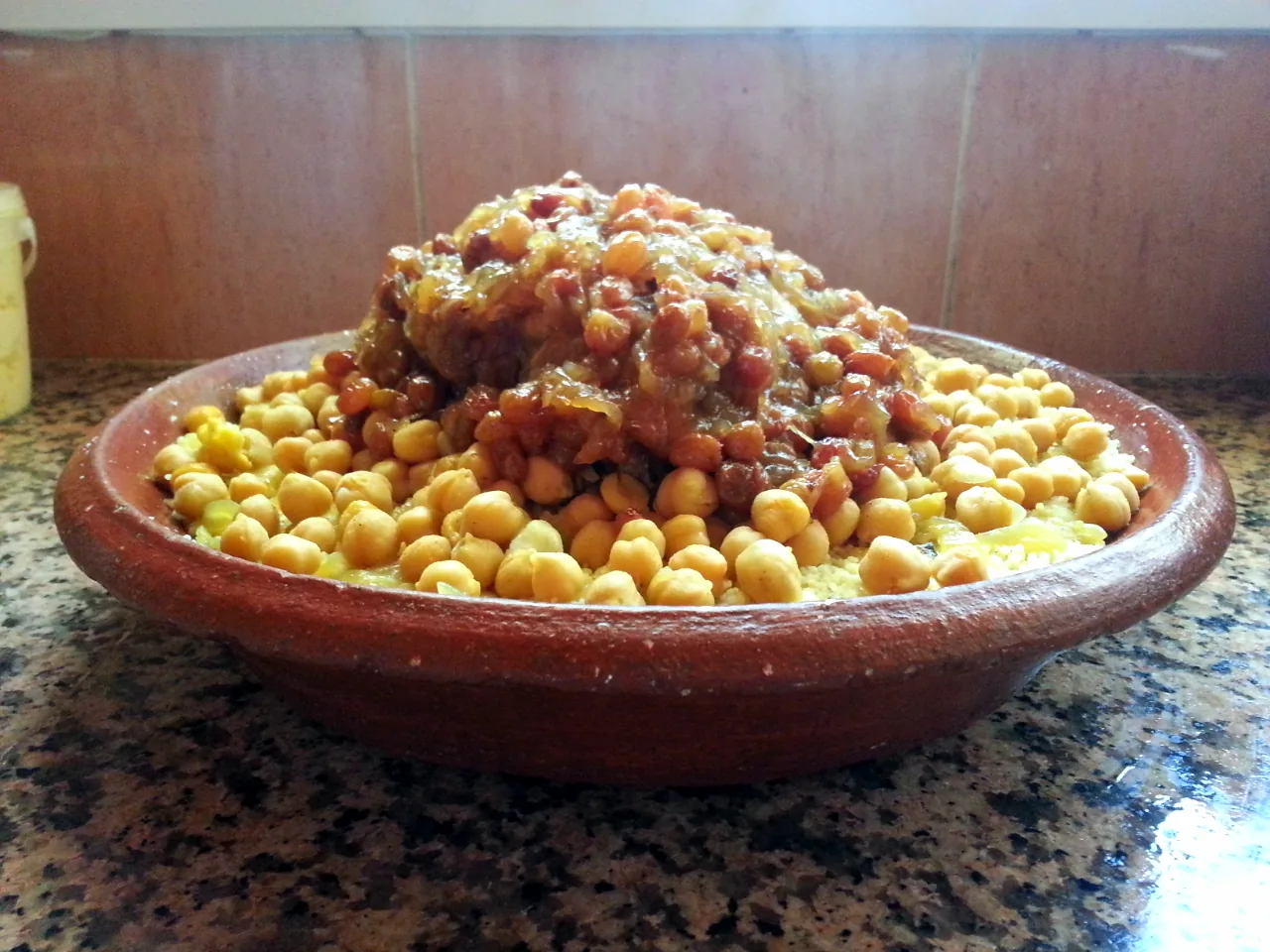
Clay dish of couscous topped with chickpeas and caramelised onion-raisin compote

Moroccan Friday Table

Photo: Ghizwa, CC BY-SA 4.0, via Wikimedia Commons

The Heritage Formulary

Measured Ingredients

Estimated cost: Low — about $2–3 per serving at home (USD)

Good tfaya is glossy and jammy, never watery — the onions should have almost melted into a deep-amber compote.

Execution Methodology & Culinary Technique

Step-by-Step Cooking Guide

Active 1h 15m
P

Prep Stage: Onions, Raisins & Couscous

20 Mins • Slicing & Soaking

Slice all 600 g of onions thinly and evenly so they cook down at the same pace. Put the raisins in warm water to plump while you work, drain and rinse the chickpeas, and measure the spices, honey and butter into small bowls so the caramelising stage runs without pauses.

Maestro Tip: Thin, even onion slices are the whole dish — thick chunks stay raw in the middle while the thin ones burn.

  1. 1

    Soak the Raisins and Slice the Onions

    10 Mins No heat

    Put the raisins in a small bowl, cover with warm water and leave for 10 minutes to plump. Meanwhile peel the onions, halve them and slice as thinly as you can, about 3 mm. Drain the raisins and rinse the chickpeas.

    Plumped raisins swell juicy instead of drying out and hardening in the pan.

    Done when: Onions in a tall even pile of thin slices; raisins soft and swollen.

  2. 2

    Sweat the Onions Low and Slow

    20 Mins Low heat, ~120°C (250°F)

    Melt 30 g of the butter with the olive oil in a wide heavy pan over low heat. Add the sliced onions and half the salt, stir to coat, cover and cook for 20 minutes, stirring every 5 minutes, until the onions have collapsed, turned pale gold and smell sweet.

    Keep the heat low — onions that brown too fast turn bitter instead of sweet.

    Done when: Onions soft, translucent and golden, with no crisp or browned edges.

  3. 3

    Caramelise with Spices, Raisins and Chickpeas

    20 Mins Low-medium heat, ~140°C (285°F)

    Uncover the pan, stir in the cinnamon, ginger, turmeric and pepper, and cook for 1 minute until fragrant. Add the chickpeas, drained raisins and honey, then cook uncovered for 15–20 minutes, stirring often, until the mixture is glossy, jammy and deep amber and the onions have almost melted. Stir in the orange blossom water at the very end if using.

    If the pan looks dry before the onions turn jammy, add a spoonful of water — never more heat.

    Done when: A thick, glossy, deep-amber compote that holds its shape on a spoon.

  4. 4

    Steam the Couscous

    10 Mins Boiling water, 100°C (212°F)

    While the tfaya finishes, put the couscous in a wide bowl with the remaining salt, pour over the 360 ml of boiling water, cover and leave for 5 minutes. Uncover, dot with the remaining 30 g of butter and fluff with a fork until every grain is separate and steaming.

    Fluff twice — once right after the butter goes in and once more before serving — so the grains stay light, never clumped.

    Done when: Couscous fluffy, separate and steaming, with no wet clumps.

  5. 5

    Toast the Almonds

    5 Mins Medium heat, ~160°C (320°F)

    Toast the flaked almonds in a dry pan over medium heat for 3–5 minutes, shaking the pan often, until pale gold and fragrant. Tip them straight onto a plate so they stop cooking.

    Almonds go from golden to burnt in seconds — stay at the pan and shake it often.

    Done when: Almonds pale gold, crisp and nutty-smelling.

  6. 6

    Assemble the Tfaya over Couscous

    5 Mins No heat

    Mound the steamed couscous on a wide clay dish or platter and make a shallow well in the centre. Spoon the hot tfaya compote into the well and over the top, letting it cascade down the sides. Scatter with toasted almonds and chopped parsley and serve at once, with extra tfaya in a bowl on the side.

    Serve it in the middle of the table — tfaya is a sharing dish, and everyone takes their own spoonful of topping.

    Done when: A golden mound of couscous crowned with glossy amber topping, almonds and green parsley.

Finishing Touches & Plating

Mound the couscous high, crown it generously with the glossy tfaya compote, and finish with toasted almonds and parsley. Serve immediately while the couscous is steaming and the topping is hot.

Nutritional Physiology & Benefits

Nutrition

Energy

740

kcal / serving

Protein

20g

Complete AA

Carbs

118g

Complex

Fats

23g

Healthy

Per serving (4 servings · 1 serving ≈ 380 g)
Energy740 kcal
Protein20 g
Carbohydrates118 g
Fat23 g
Fibre13.5 g
Sugar30.7 g
Sodium318 mg
Per 100g
Energy195 kcal
Protein5.2 g
Carbohydrates31 g
Fat6.1 g
Fibre3.6 g
Sugar8.1 g
Sodium84 mg

Nutrition values are estimated — calculated from USDA FoodData Central values for the listed ingredients.

Vitamins & minerals: Vitamin C and B6 (onion), folate and iron (chickpeas), vitamin E (almonds), potassium (raisins).

Fibre from Chickpeas and Onion

Chickpeas and slow-cooked onion bring 13.5 g of fibre per serving, which supports digestion and helps the meal feel satisfying.

Slow, Steady Energy

Couscous and chickpeas release their energy gradually, so this sweet-savoury dinner keeps you full for hours without heaviness.

Steamed, Not Fried

The couscous is steamed and the topping is cooked gently in a little butter and oil, so the dish is rich in flavour without being greasy.

Food Pairings

What to Eat With

To optimize nutrient absorption and elevate the sensory depth, pair with these authentic accompaniments:

Drinks

Sweet Mint Tea

Hot mint tea is the classic Moroccan partner — its fresh, sweet warmth echoes the cinnamon and honey in the tfaya.

Vegetables

Cucumber and Tomato Salad

A crisp, cool salad with lemon cuts through the topping's sweetness and gives the plate a fresh crunch.

Sides

Crusty Bread

Warm bread is made for mopping up the glossy tfaya juices left on the plate.

More Pairings

Harissa on the Side

A small spoonful of harissa lets anyone who wants heat add it — the chilli sharpens the sweet onions without changing the dish.

Complete menu

Serve the tfaya-topped couscous in the middle of the table with cucumber and tomato salad, harissa on the side, and finish with hot sweet mint tea.

Digestive Guardrails

What NOT to Combine

To prevent digestive distress, sluggishness, or palate clash, avoid pairing the dish with these elements:

Very Sweet Desserts Straight After

The topping already carries honey, raisins and cinnamon, so a rich sweet dessert on top can push the sugar load high in one meal. A piece of fruit or mint tea is a lighter finish. This is general information, not medical advice.

Sugary Soft Drinks

Sweet fizzy drinks double the sugar of an already sweet-savoury plate and add nothing the meal needs. Water or unsweetened mint tea suits it better. This is general information, not medical advice.

General information only, not medical advice — consult a doctor for personal dietary decisions.

Who Should Eat It

Who Should Eat

  • General adultsA good choice — a satisfying, meat-free dinner with fibre, protein and warm spice.
  • ChildrenUsually popular — the sweet onions and raisins appeal to children; keep the harissa on the side and cut the honey a little for younger children.
  • ElderlyA good choice — soft, easy to chew and easy to digest; keep the portion modest if appetite is small.
  • Pregnant womenGenerally suitable — chickpeas add folate and iron; keep the honey modest and eat the dish freshly made and piping hot.
  • Breastfeeding womenA good choice — filling and rich in slow energy; drink plenty of water or mint tea alongside.
  • AthletesA strong recovery meal — about 118 g of carbs with 19.8 g of protein per serving; add an extra spoonful of chickpeas after hard training.
  • Weight gainA good choice — take a generous second helping of couscous and topping, and add extra almonds.
  • Weight lossKeep the couscous portion modest and load up on the onion and chickpea topping, and skip the extra honey — the raisins already sweeten it.

Health Conditions — Adjust or Avoid

Conditions

  • DiabetesThe topping is sweet — honey and raisins add about 30.7 g of sugar per serving. Keep the portion small, favour the onion and chickpea topping over extra couscous, and ask your clinician about portion size.
  • High blood pressureSodium is modest at about 318 mg a serving. Keep the added salt light and skip the bread if it is salted; ask your clinician if you follow a low-sodium plan.
  • Kidney diseaseChickpeas and couscous add potassium and protein, so portions matter. Ask your clinician whether this dish fits your plan.
  • GoutChickpeas are moderate in purines; a single serving is usually fine, but keep portions modest and ask your clinician if you are in a flare.
  • Stomach issuesOnions and chickpeas can cause gas for sensitive stomachs. Eat a small portion, chew well, and ask your clinician if symptoms persist.
  • Cardiovascular diseaseThe dish is built on vegetables, legumes and unsaturated olive oil with modest saturated fat from butter. Keep the butter as written and ask your clinician about portion size.
  • Fatty liverThe sugar from honey and raisins is the main watch point — keep the portion modest and skip extra honey. Ask your clinician about portion size.
  • Food allergiesContains wheat (couscous is semolina) and tree nuts (almonds). Not suitable for coeliac disease or nut allergy; omit the almonds and use quinoa for a gluten-free base.
  • Special therapeutic dietsVegetarian but not vegan because of the butter — swap in olive oil for a vegan version. Ask your clinician or dietitian before changing a prescribed diet.

If you have a medical condition, consult your doctor before changing your diet.

Storage & Use

Storage & Use

How to store
Cool quickly and store the couscous and tfaya topping separately in airtight containers.
In the fridge
Topping 4 days; cooked couscous 3 days.
In the freezer
Topping 3 months; couscous 2 months.
How to reheat
Reheat the topping gently on the hob with a splash of water until steaming; reheat to 74°C (165°F). Steam or microwave the couscous with a splash of water to fluff it again.
Freezing recommended
Yes — the topping freezes very well for up to 3 months; the flavours deepen after freezing.
Signs it has spoiled
Sour smell, slimy onions, or mould on the couscous.

More recipes to explore

Moroccan lamb and prune tagine with almonds and sesame Morocco flag Morocco 2h 35m
Lunch •Atlas Mountains

Lamb & Prune Tagine

Clay vessel braised lamb shoulder infused with Ras el Hanout, saffron stamens, and natural sun-dried fruit pectins.

Immunity & Warming

Slow-braised lamb with prunes, almonds and couscous.

Pairs Well With
Spiced Couscous & Preserved Lemon Salad
High Protein
A clay bowl of Moroccan couscous with vegetables, chickpeas, carrot and pumpkin Morocco flag Morocco 1h 15m
Dinner •Maghreb Friday Table

Moroccan Couscous with Vegetables

This moroccan couscous recipe steams fine semolina until fluffy, then ladles over a slow-cooked stew of seven vegetables, chickpeas and warm spices. One serving is about 475 g.

Comfort & Warmth

Fluffy steamed semolina with a slow vegetable stew and chickpeas.

Pairs Well With
Harissa, mint tea and crusty bread
Quick Prep (<30m)
A bowl of Moroccan harira soup with chickpeas, noodles and fresh herbs Morocco flag Morocco 1h 15m
Lunch •Ramadan Iftar Table

Harira Soup

This harira soup recipe simmers lentils, chickpeas, tomatoes and lamb with ginger, cinnamon and fresh herbs, then thickens it the traditional way with a flour slurry. One serving is about 450 g.

Comfort & Warmth

A thick, warming tomato and lentil soup, the soup Moroccans break their fast with.

Pairs Well With
Dates, chebakia and mint tea
Soups & Broths • High Protein
Moroccan chicken tagine with preserved lemon slices, green olives and fresh parsley Morocco flag Morocco 1h 15m
Dinner •Moroccan Heritage

Moroccan Chicken Tagine

Moroccan chicken tagine is the dish Morocco is best known for: chicken braised slowly with onions, ginger and saffron, then finished with salty preserved lemon and green olives. This moroccan chicken tagine recipe uses a heavy pot instead of a clay tagine, so anyone can make it — the conical lid's job is done by a tight-fitting lid and a gentle flame. One serving is about 315 g.

Slow-Cooked Comfort

Chicken braised slowly with ginger, saffron, preserved lemon and green olives until the meat falls from the bone.

Pairs Well With
Couscous, khobz bread and mint tea.
High Protein

The Dinner Gazette

Never wonder what’s for dinner again

One email a week with easy dinner ideas from around the world — ingredients, steps and nutrition, tested in our kitchen first.

Delivered every Thursday morning. Unsubscribe anytime.