Curated recipes from 193 countries  •  New seasonal Mediterranean issue out now

Overview

Nanaimo Bars

Nanaimo squares, London Fog bars

Nanaimo bars are Canada's most famous no-bake square: a chewy cocoa, graham crumb, coconut and walnut base, a thick vanilla custard buttercream in the middle, and a thin, snappy layer of chocolate on top. This nanaimo bars recipe makes 16 bars in a 20 cm square pan, with no oven needed at all — the fridge does the work. One bar is about 66 g.

The recipe for the bar as it is known today first appeared in the Women's Auxiliary to the Nanaimo Hospital Cookbook, published in 1952 in Nanaimo, British Columbia, and the name 'Nanaimo bar' was first printed in a 1953 Edith Adams column in the Vancouver Sun. In 1986 the City of Nanaimo held a contest to find the definitive recipe, won by Joyce Hardcastle of Nanaimo, and in 2006 a National Post readers' poll declared the Nanaimo bar Canada's favourite confection. Canada Post honoured the bar with a stamp in 2019.

Pairs well with: Coffee or black tea

Provenance

Canada flag Canada

British Columbia Classic

North America

Time Dedication

40m

30m prep • 10m cook

Batch Yield

16 Servings

307 kcal per serving

1 serving ≈ 66 g

Technical Skill

Easy

Easy (No-Bake)

Meal Timing & Digestive Fit

Breakfast

Not Advised

Lunch

Inappropriate

Dinner

Inappropriate

Snack & Tea

Ideal Light Bite

Occasions: Christmas baking, bake sales, afternoon tea, picnics, coffee break, potlucks Cost: Low — about $1 per bar at home
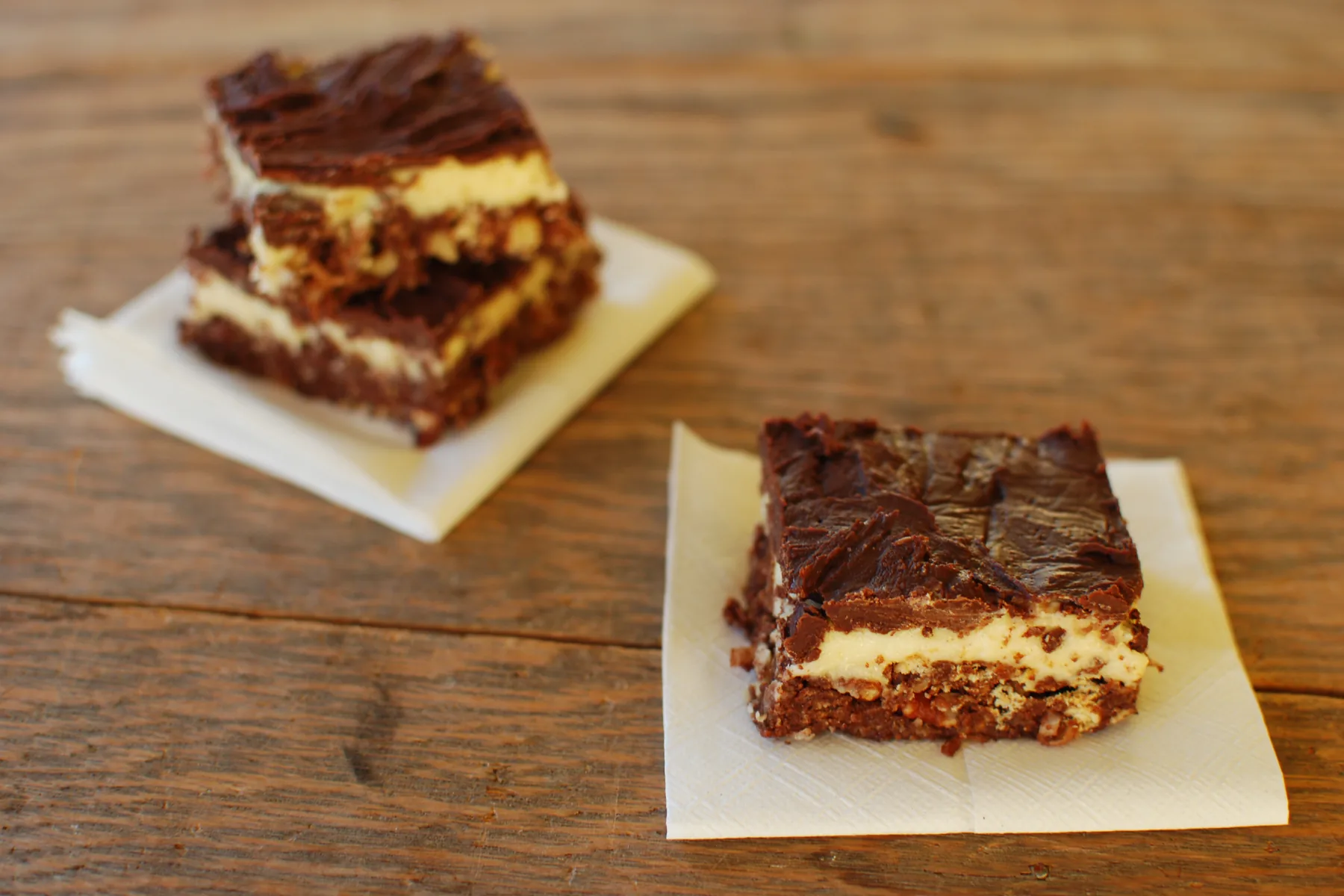
Three-layer Nanaimo bars with chocolate tops and pale custard filling on white napkins

British Columbia Classic

Photo: Craig Dugas, CC BY-SA 2.0, via Wikimedia Commons

The Heritage Formulary

Measured Ingredients

Estimated cost: Low — about $1 per bar at home (USD)

Three distinct layers, a firm crumb base, a thick custard filling and a thin chocolate top that cuts cleanly.

Execution Methodology & Culinary Technique

Step-by-Step Cooking Guide

Active 40m
P

Prep Stage: Crumbs, Soft Butter, Lined Pan

15 Mins • Crushing, Softening

Crush the graham crackers to fine crumbs and chop the walnuts while the filling butter comes to room temperature — soft butter beats smooth, cold butter stays lumpy. Line a 20 cm (8 inch) square pan with parchment, leaving an overhang on two sides so you can lift the whole slab out later. Measure the filling ingredients now, because the base sets fast once it is pressed in.

Maestro Tip: Parchment overhang is the whole trick: without it, the chilled slab is very hard to lift out in one piece.

  1. 1

    Make the chocolate crumb base

    10 mins Medium heat, about 70°C (160°F)

    Melt 115 g butter with 50 g sugar and 30 g cocoa in a saucepan over medium heat, stirring until smooth. Take the pan off the heat, whisk in the beaten egg, then return it to low heat and stir for 1–2 minutes until the mixture thickens slightly — it should coat a spoon. Take it off the heat and stir in 200 g graham crumbs, 100 g coconut and 50 g walnuts until everything is evenly damp. Press the mixture firmly and evenly into the lined pan, using the back of a spoon or a flat glass.

    Press hard — a loosely packed base crumbles when you cut it. Run a flat glass over the top to level it.

    Done when: A firm, even layer that holds together when pressed with a fingertip.

  2. 2

    Chill the base

    30 mins Fridge, about 4°C (40°F)

    Put the pan in the fridge for 30 minutes until the base is cold and firm to the touch. A warm base melts the filling and the layers slide into each other.

    Use this time to make the filling — it goes on as soon as the base is cold.

    Done when: Cold, hard base that does not dent when pressed.

  3. 3

    Beat the custard buttercream

    10 mins Room temperature

    Beat 60 g soft butter with 20 g custard powder, 30 ml milk and 5 ml vanilla until smooth, then beat in 240 g sifted icing sugar a little at a time until the filling is thick, pale and spreadable. It should hold soft peaks and taste gently of vanilla custard. Spread it evenly over the cold base, right to the edges, and smooth the top with a spatula.

    If the filling is too stiff to spread, beat in milk half a teaspoon at a time; if it is too soft, chill the bowl for 10 minutes.

    Done when: A thick, pale-yellow layer, smooth on top, about 1 cm thick.

  4. 4

    Chill the filling

    30 mins Fridge, about 4°C (40°F)

    Return the pan to the fridge for 30 minutes until the filling is firm. A soft filling squashes out sideways when you pour the warm chocolate on top.

    Score the chocolate later, not now — the filling needs to be cold first.

    Done when: Filling that feels firm and does not move when the pan is tilted.

  5. 5

    Pour the chocolate topping

    5 mins Low heat, about 50°C (120°F)

    Melt 115 g semisweet chocolate with 15 g butter in a heatproof bowl over simmering water, stirring until glossy and smooth. Pour it over the cold filling and tilt the pan so it runs into a thin, even layer. Let it sit for 5 minutes, then lightly score the top into 16 squares with a knife — this stops the chocolate cracking when you cut the bars later.

    The butter in the topping is not optional: it keeps the chocolate from setting rock-hard and shattering.

    Done when: A thin, glossy chocolate layer, scored into squares.

  6. 6

    Chill, then cut with a hot knife

    2 hours chilling Fridge, about 4°C (40°F)

    Chill the pan for at least 2 hours, or overnight, until the chocolate is set. Lift the slab out by the parchment, then cut along the scored lines with a large knife dipped in hot water and wiped dry between cuts — a hot, clean blade slices the chocolate instead of cracking it.

    Warm the knife under hot tap water and dry it before every cut; a cold knife drags and cracks the top.

    Done when: Clean-cut bars with three neat layers: dark base, pale custard middle, glossy chocolate top.

Finishing Touches & Plating

Serve the bars cold or at cool room temperature, straight from the fridge. If they have been in the fridge overnight, let them sit for 10 minutes before eating — the filling softens and the flavours open up.

Nutritional Physiology & Benefits

Nutrition

Energy

307

kcal / serving

Protein

3g

Complete AA

Carbs

38g

Complex

Fats

18g

Healthy

Per serving (16 servings · 1 serving ≈ 66 g)
Energy307 kcal
Protein3 g
Carbohydrates38 g
Fat18 g
Fibre2.0 g
Sugar27.5 g
Sodium97 mg
Per 100g
Energy468 kcal
Protein4.3 g
Carbohydrates57.8 g
Fat26.6 g
Fibre3 g
Sugar42 g
Sodium148 mg

Nutrition values are estimated — calculated from USDA FoodData Central values for the listed ingredients.

Vitamins & minerals: Small amounts of B vitamins and vitamin E (egg, walnuts, cocoa), calcium (milk, butter) and iron (cocoa, graham crumbs).

Quick Energy in a Small Square

About 38 g of carbohydrate per bar gives fast energy — a handy snack before a walk or between meals.

A Little Fibre from Nuts and Coconut

Walnuts and coconut add about 2 g of fibre per bar, along with a little vitamin E and magnesium.

A Slow, Satisfying Treat

Small, rich and cold from the fridge, Nanaimo bars are made to be eaten one at a time, unhurried, with a hot drink.

Food Pairings

What to Eat With

To optimize nutrient absorption and elevate the sensory depth, pair with these authentic accompaniments:

Drinks

Black coffee or tea

Unsweetened coffee or black tea cuts through the very sweet filling and lets the cocoa and custard flavours show.

Vegetables

Fresh berries

A few raspberries or strawberries add acidity and freshness beside a rich, sweet bar.

More Pairings

Vanilla ice cream

A small scoop of vanilla ice cream turns one bar into a proper dessert and echoes the custard middle.

Full Menus

Full menu: Nanaimo bar, black coffee, berries

One bar with coffee, then berries to finish — a simple Canadian afternoon tea.

Complete menu

Serve one Nanaimo bar with black coffee after a light lunch, or as the sweet finish to a poutine lunch with fresh berries on the side.

Digestive Guardrails

What NOT to Combine

To prevent digestive distress, sluggishness, or palate clash, avoid pairing the dish with these elements:

Eating Nanaimo bars with a very sweet drink

The bars are already very sweet, about 28 g of sugar each, so a sweetened drink on the side adds a lot more sugar; unsweetened tea or coffee is the lighter choice. This is general information, not medical advice.

Leaving the bars out in a warm room

The buttercream filling softens and the chocolate melts above room temperature, so the layers slide apart; keep the bars chilled until serving. This is general information, not medical advice.

General information only, not medical advice — consult a doctor for personal dietary decisions.

Who Should Eat It

Who Should Eat

  • General adultsA sweet, rich snack for most adults; one bar with tea or coffee is a sensible portion.
  • ChildrenChildren love them; serve one bar, cold from the fridge, and keep the rest for another day.
  • ElderlySoft and easy to eat, with no hard crust; a small bar with unsweetened tea suits older eaters.
  • Pregnant womenFine in moderation when the egg in the base is cooked through; the filling is very sweet, so one bar is usually enough.
  • Breastfeeding womenAn energy-rich snack for long days; pair with fruit or nuts rather than a second bar.
  • AthletesQuick carbohydrate after training, though low in protein — better as a treat than a recovery meal.
  • Weight gainSmall, sweet and energy-dense, which helps when appetite is low.
  • Weight lossVery sweet and rich for their size, so one bar with a large cup of tea is the lighter way to enjoy them.

Health Conditions — Adjust or Avoid

Conditions

  • DiabetesVery high in sugar, about 28 g per bar, so one bar only and not every day — ask your clinician about fitting it into your meal plan.
  • High blood pressureLow in sodium per bar, but the rich butter and sugar still make it a treat food; ask your clinician if you are watching your overall pattern.
  • Kidney diseaseLow in protein per bar, which suits some kidney diets, but the sugar and fat are high; ask your clinician for personal advice.
  • GoutButter and sugar are not high in purines, so an occasional bar is usually fine; ask your clinician if you have frequent flare-ups.
  • Stomach issuesVery sweet, buttery bars can feel heavy and trigger reflux for some people; eat slowly and avoid eating them late at night. Ask your clinician if symptoms persist.
  • Cardiovascular diseaseHigh in saturated fat and sugar from butter and chocolate; keep it an occasional treat, and ask your clinician for personal guidance.
  • Fatty liverHigh in sugar and saturated fat, so one bar occasionally with tea is the better way to enjoy it; ask your clinician about your overall pattern.
  • Food allergiesContains wheat (graham crumbs), milk (butter), egg, tree nuts (walnuts) and coconut. Not suitable for gluten-free, dairy-free, egg-free or nut-free diets as written.
  • Special therapeutic dietsFor therapeutic diets, a sugar-reduced filling would be needed — ask your clinician or dietitian before adapting this recipe.

If you have a medical condition, consult your doctor before changing your diet.

Storage & Use

Storage & Use

How to store
Cool completely, then store in a single layer in a covered container in the fridge.
In the fridge
Up to 1 week, in a covered container.
In the freezer
Up to 3 months, wrapped well; thaw in the fridge.
How to reheat
Do not reheat — serve cold or at cool room temperature.
Freezing recommended
Yes — bars freeze well and thaw in about an hour in the fridge.
Signs it has spoiled
Sour or off smell, mould, a slimy filling, or chocolate that smells rancid — discard, do not taste to check.

More recipes to explore

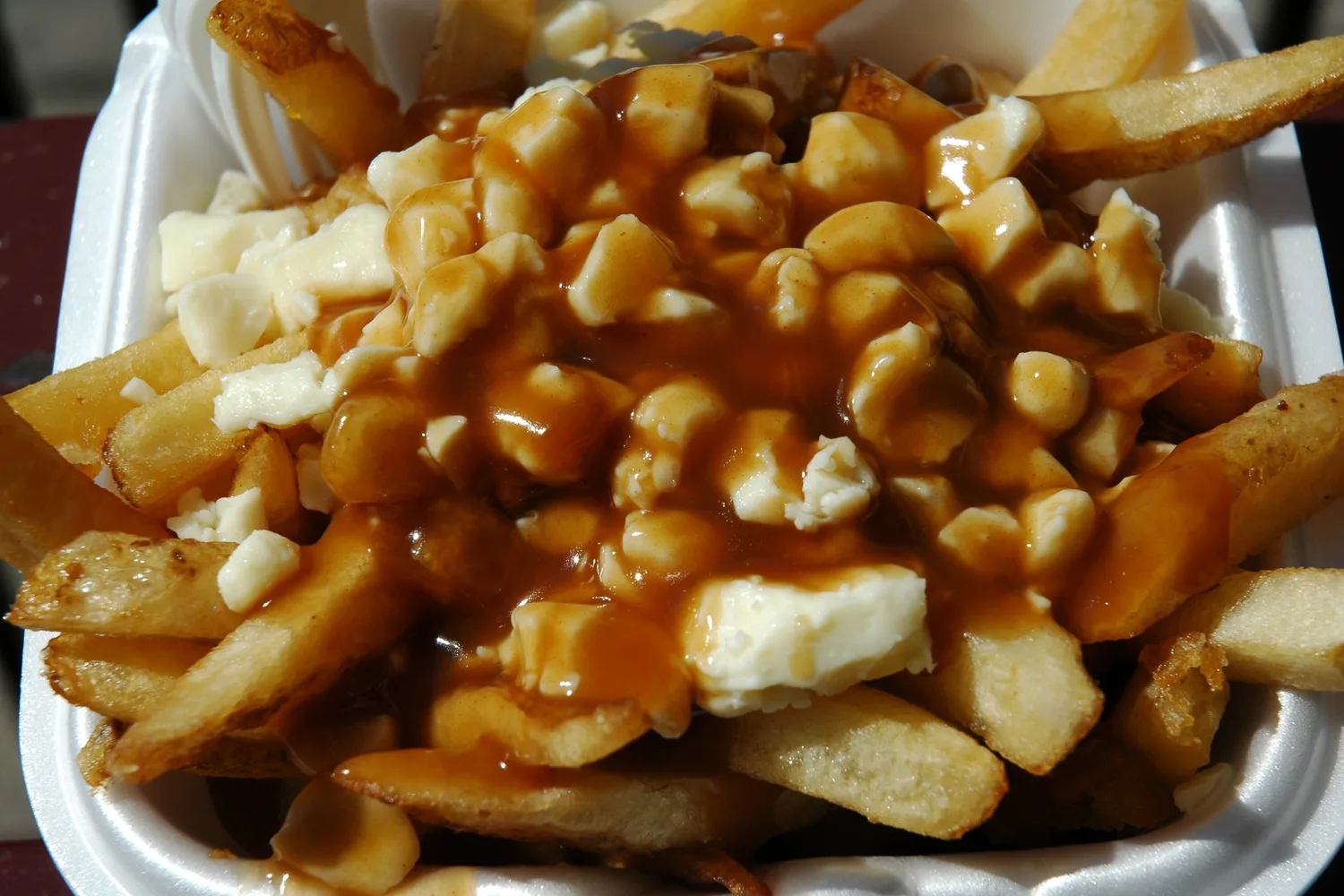
A close-up of classic poutine: golden french fries topped with white cheese curds and glossy brown gravy Canada flag Canada 55m
Lunch •Quebec Classic

Poutine

Poutine is Quebec's most famous dish: hot, crispy french fries topped with fresh cheese curds and a ladle of steaming beef gravy, served the moment the curds start to soften. This poutine recipe uses real cheese curds — never shredded cheese — and fries the potatoes twice so they stay crisp under the gravy. One serving is about 348 g.

Hearty Comfort Food

Crispy double-fried potatoes, squeaky fresh cheese curds and hot beef gravy — Quebec's most famous comfort dish.

Pairs Well With
Green salad & pickles
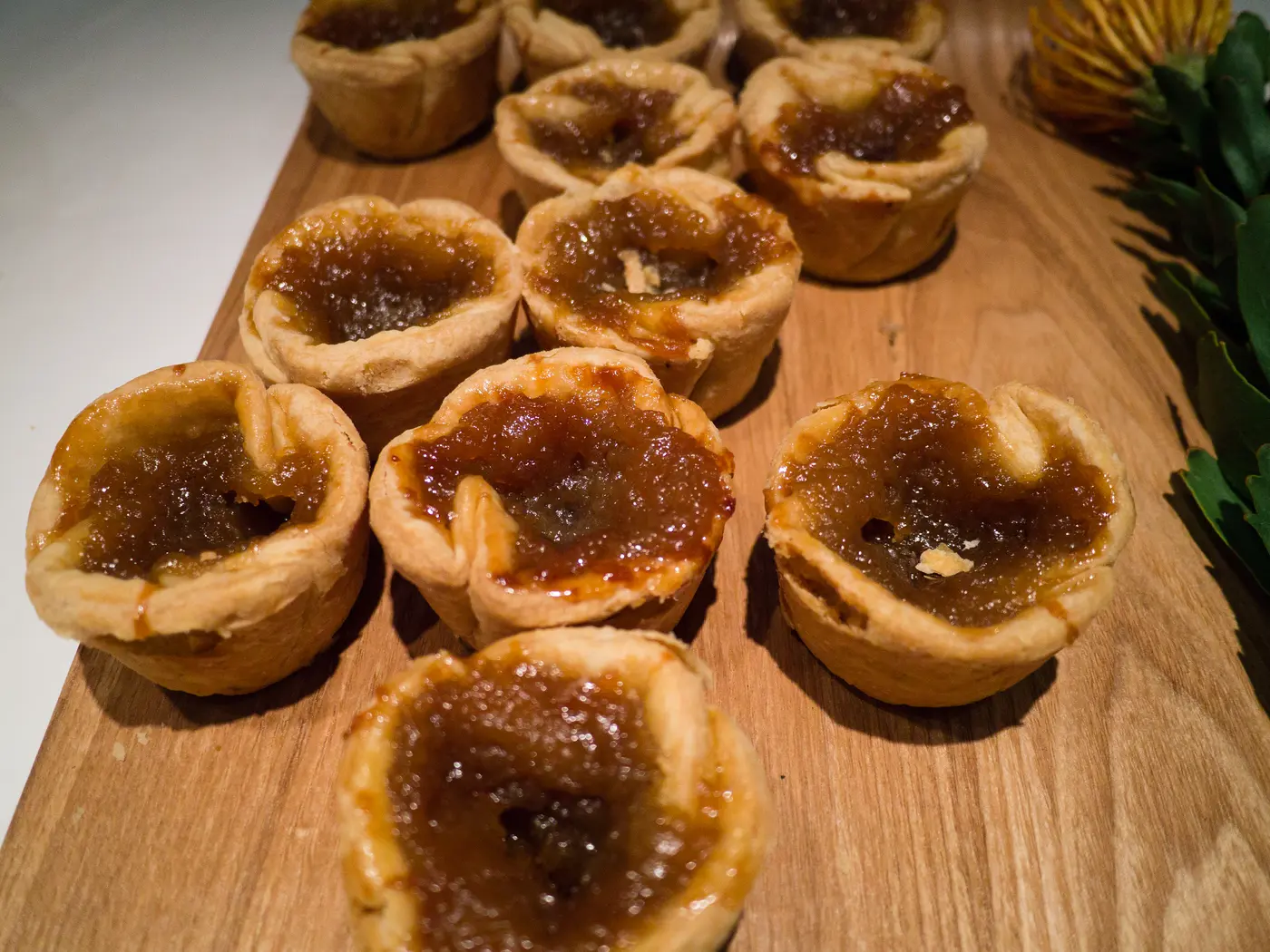
Golden butter tarts with glossy brown-sugar filling arranged on a wooden board Canada flag Canada 1h 5m
Snack & Tea •Ontario Classic

Butter Tarts

Butter tarts are Canada's most loved small pastry: flaky pastry cups filled with a gooey mixture of butter, brown sugar and egg, sometimes with raisins, baked until the filling bubbles and just sets. This butter tarts recipe makes 12 golden tarts with crisp shells and a soft, caramel centre — the classic Ontario version, firm enough to hold and soft enough to run. One tart is about 75 g.

Sweet & Comforting

Flaky pastry cups filled with a gooey butter, brown sugar and egg filling — Canada's most loved small pastry.

Pairs Well With
Tea & coffee
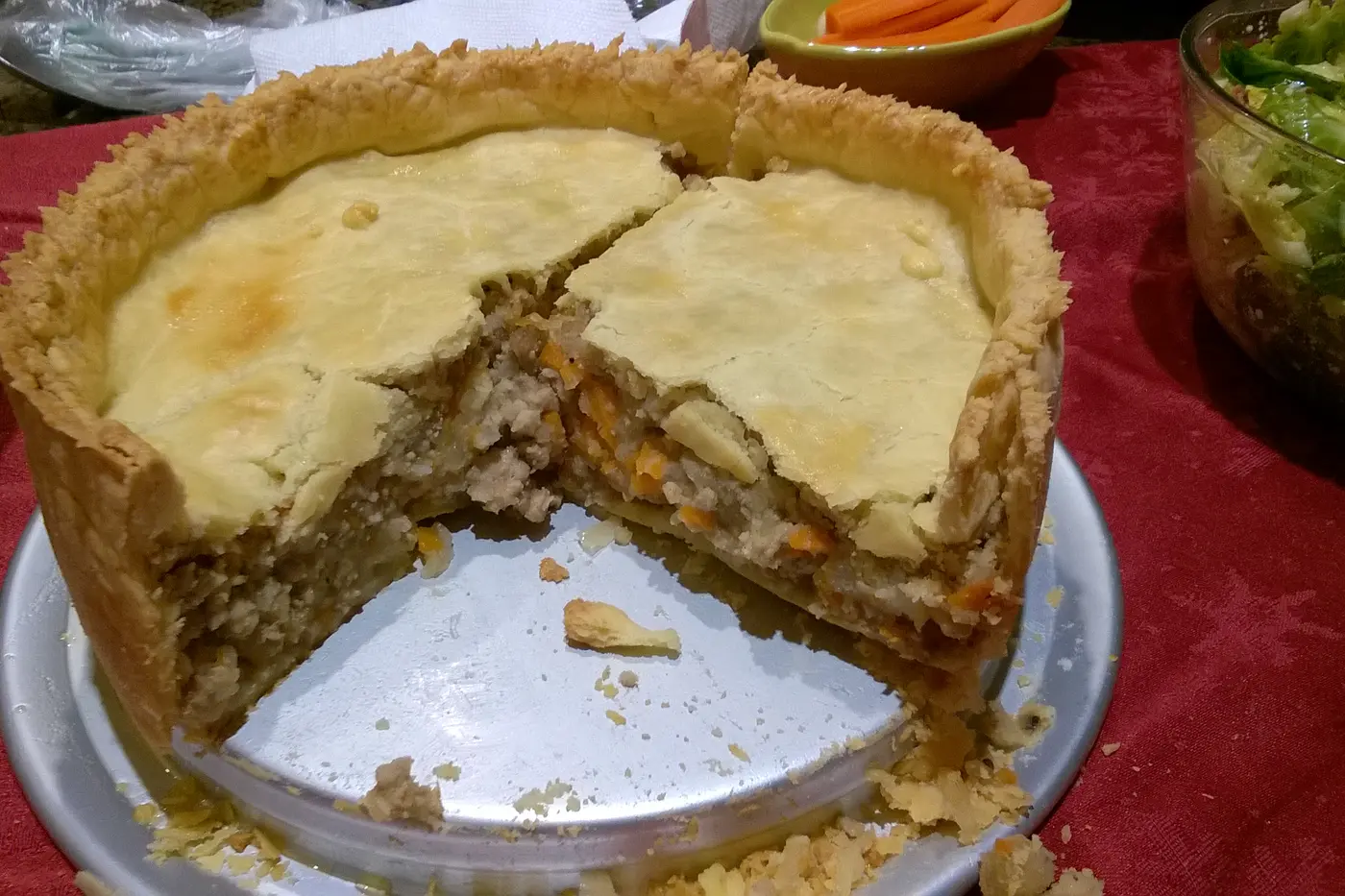
A deep-dish tourtière with a slice cut, showing the spiced ground-meat filling in golden pastry Canada flag Canada 2h
Dinner •Quebec Christmas Classic

Tourtière

Tourtière is the French-Canadian spiced pork pie: a deep-dish pie with a buttery double crust and a filling of ground pork, a little beef, mashed potato and onion, scented with cinnamon, cloves and savoury. It is the centrepiece of Quebec's Christmas Eve réveillon, served after midnight Mass. Unlike the Australian meat pie, which is a hand-held beef pie with tomato sauce, tourtière is a large, sliceable pie built for sharing, and its warm spices — not gravy — are what make it. This tourtiere recipe makes one deep-dish pie for eight. One slice is about 255 g.

Hearty & Festive

A deep-dish pie of spiced ground pork and potato in buttery pastry — the centrepiece of Quebec's Christmas Eve réveillon.

Pairs Well With
Green salad & pickles
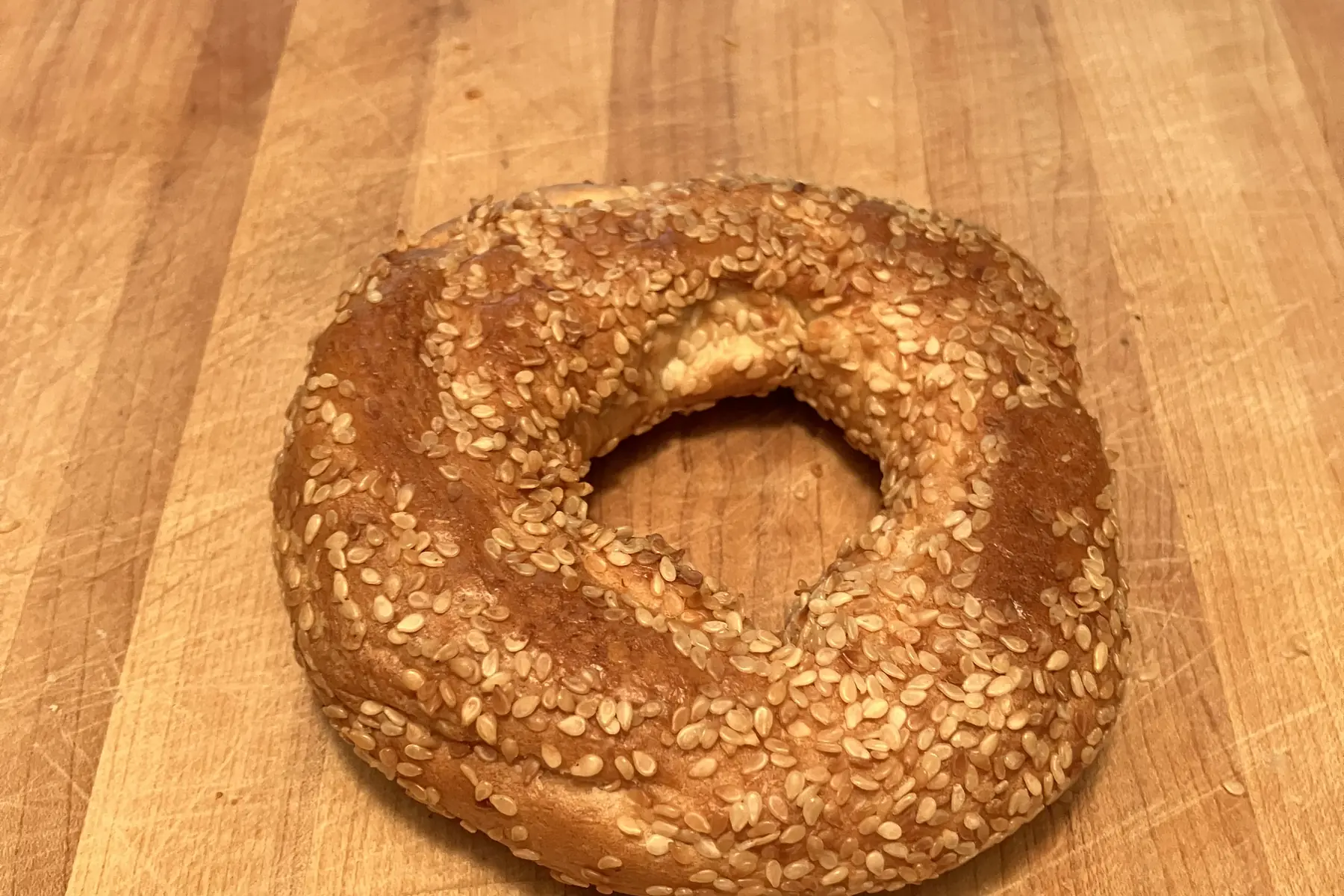
A golden sesame-seed Montreal bagel with a large hole on a wooden board Canada flag Canada 55m
Breakfast •Montreal Classic

Montreal-Style Bagels

Montreal-style bagels are smaller, sweeter and chewier than New York bagels: the dough has malt and honey and no salt, the rings are boiled in honey-sweetened water, and they are baked hot until the crust crackles. This montreal bagels recipe makes 12 sesame and poppy seed bagels, best eaten warm from the oven with cream cheese. One bagel is about 78 g.

Chewy & Comforting

Small, hand-rolled bagels boiled in honey water and baked until golden — sweet, dense and chewy, with a bigger hole than a New York bagel.

Pairs Well With
Cream cheese and coffee

The Dinner Gazette

Never wonder what’s for dinner again

One email a week with easy dinner ideas from around the world — ingredients, steps and nutrition, tested in our kitchen first.

Delivered every Thursday morning. Unsubscribe anytime.