Curated recipes from 193 countries  •  New seasonal Mediterranean issue out now

Overview

Oi Muchim

Korean Spicy Cucumber Salad, Oi Saengchae

This oi muchim recipe is the Korean banchan of crisp cucumber tossed in a spicy, sour dressing of gochugaru, rice vinegar, garlic and toasted sesame oil. The cucumbers are salted first so they stay crunchy, then mixed with spring onion and carrot and left to rest for ten minutes while the dressing soaks in. One serving is about 150 g.

Oi muchim means seasoned cucumber, and it is one of the most common banchan in Korea — the small side dishes that arrive with almost every meal, from home kitchens to barbecue restaurants. Cucumbers have been grown on the Korean peninsula for centuries, and the seasoned-cucumber style, tossed with chilli flakes, vinegar and sesame, became a summer staple because it needs no cooking and cools the palate next to grilled meat and hot stews. Some family versions add a spoonful of fish sauce, but this recipe keeps the dressing plant-based with tamari, which is how many modern Korean home cooks make it.

Pairs well with: Serve cold as a banchan with steamed rice and a grilled or stewed main, with kimchi and a light soup on the side.

Provenance

South Korea flag South Korea

Korean Banchan Classic

East & South Asia

Time Dedication

20m

20m prep • 0m cook

Batch Yield

4 Servings

71 kcal per serving

1 serving ≈ 150 g

Technical Skill

Easy

Easy (No Cooking)

Meal Timing & Digestive Fit

Breakfast

Not Advised

Lunch

Hearty Midday Main

Dinner

Ideal Hearty Main

Snack & Tea

Inappropriate

Quick Prep (<30m) Occasions: Summer meals, barbecues, Korean dinners, picnics, light lunches Cost: Low — about $1–2 per serving at home

Sliced cucumbers tossed in a red gochugaru dressing with sesame, served as Korean oi muchim

Korean Banchan Classic

Photo: Valenzuela400, CC BY-SA 4.0, via Wikimedia Commons

The Heritage Formulary

Measured Ingredients

Estimated cost: Low — about $1–2 per serving at home (USD)
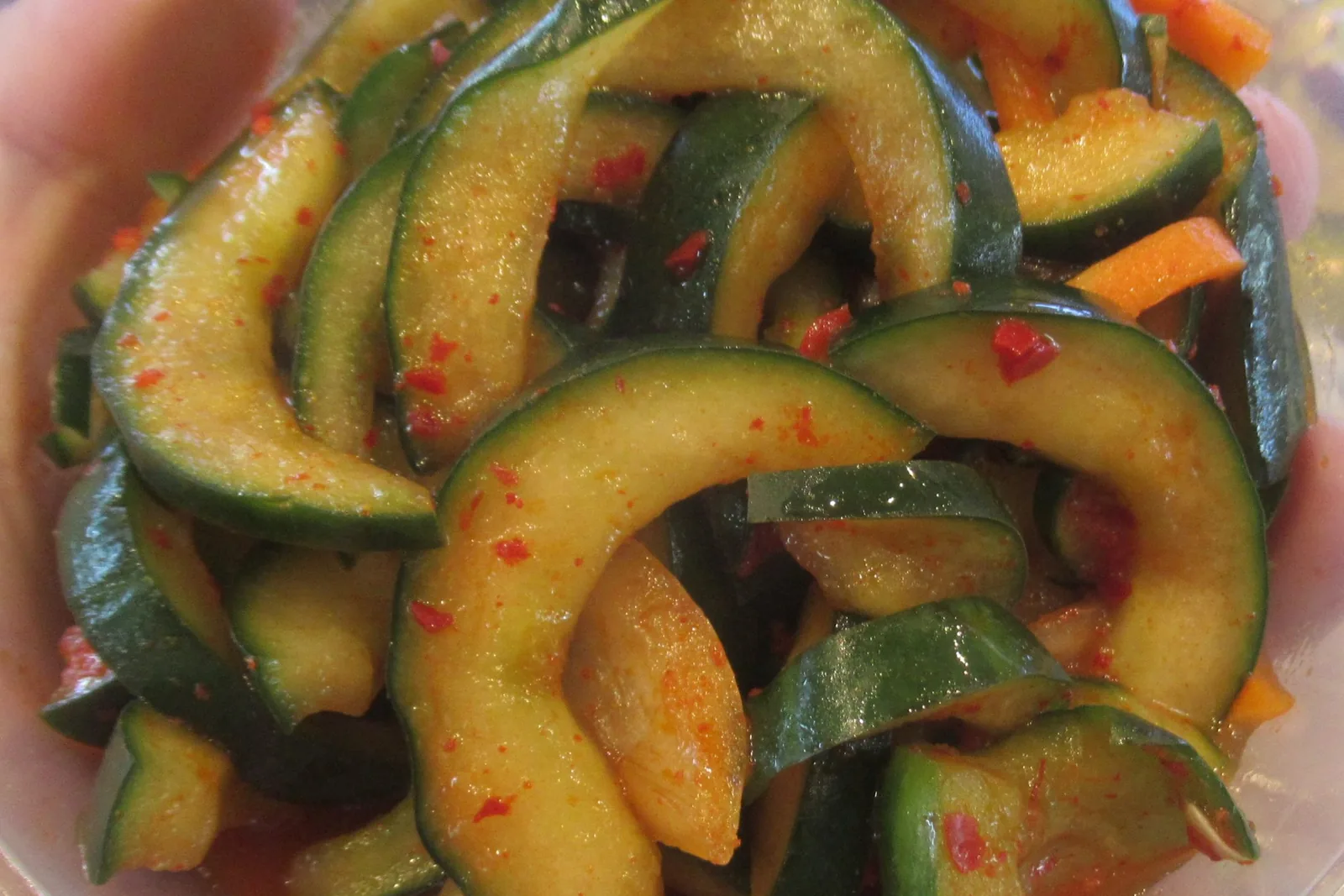
Good oi muchim is cold, crunchy and glossy with red dressing — never limp, watery or swimming in liquid at the bottom of the bowl.

Execution Methodology & Culinary Technique

Step-by-Step Cooking Guide

Active 20m
P

Prep Stage: Salt, Drain, Dress

20 Mins • Knife, Bowl & Colander

Slice the cucumbers into thin half-moons, toss with the salt and leave for 10 minutes while you cut the carrot and spring onions and whisk the dressing. The salting draws out water so the cucumbers stay crisp and the dressing clings instead of pooling at the bottom of the bowl.

Maestro Tip: Slice the cucumbers no thicker than 3 mm — thick slices stay watery and never pick up the dressing properly.

  1. 1

    Salt the cucumbers

    10 minutes Room temperature, about 20°C (68°F)

    Put the sliced cucumbers (500 g) in a bowl, sprinkle over the salt (3 g) and toss well. Leave for 10 minutes — the salt draws out water and firms the flesh so the salad stays crunchy.

    Do not skip the rest — unsalted cucumber goes limp and waters down the dressing within minutes.

    Done when: Cucumber slices slightly wilted at the edges, with liquid pooling in the bowl.

  2. 2

    Drain and squeeze

    2 minutes Room temperature, about 20°C (68°F)

    Tip the cucumbers into a colander, press them very gently with your hands to squeeze out the extra water, and shake them dry. Do not rinse — the light salt left behind seasons the salad. Return them to a clean, dry bowl.

    Squeeze gently, a handful at a time — pressing too hard crushes the slices and makes them mushy.

    Done when: Cucumbers damp but not dripping; no puddle in the bowl.

  3. 3

    Whisk the dressing

    2 minutes Room temperature, about 20°C (68°F)

    In a small bowl, whisk the tamari (15 ml), rice vinegar (15 ml), sugar (8 g), minced garlic (9 g), gochugaru (8 g) and sesame oil (10 ml) until the sugar dissolves and the dressing turns glossy red.

    Taste the dressing now: it should be spicy, sour and a little sweet all at once. Adjust the vinegar or sugar before it touches the cucumber.

    Done when: Sugar dissolved, dressing glossy and evenly red.

  4. 4

    Toss and rest

    11 minutes Room temperature, about 20°C (68°F)

    Add the carrot matchsticks (30 g) and spring onions (30 g) to the cucumbers, pour over the dressing and toss with your hands or tongs until every slice is coated. Cover and rest for 10 minutes so the flavours soak in.

    Tossing with your hands coats the slices more evenly than a spoon and does not break them.

    Done when: Every slice coated in red dressing; salad glossy, not watery.

  5. 5

    Serve

    1 minute Room temperature, about 20°C (68°F)

    Give the salad a final toss, taste for salt and heat, and pile it into a serving bowl. Sprinkle the toasted sesame seeds (5 g) over the top and serve cold or at room temperature.

    If you made it ahead, drain off any liquid that has collected before serving so the salad stays crisp.

    Done when: Salad cold, crunchy and bright red, sesame seeds on top.

Finishing Touches & Plating

Taste and adjust before serving: a little more vinegar if you want it sharper, a pinch more sugar if the gochugaru bites too hard. Sprinkle the sesame seeds over the top at the last moment so they stay crunchy, and serve cold or at room temperature.

Nutritional Physiology & Benefits

Nutrition

Energy

71

kcal / serving

Protein

2g

Complete AA

Carbs

10g

Complex

Fats

3g

Healthy

Per serving (4 servings · 1 serving ≈ 150 g)
Energy71 kcal
Protein2 g
Carbohydrates10 g
Fat3 g
Fibre1.9 g
Sugar4.9 g
Sodium507 mg
Per 100g
Energy47 kcal
Protein1.27 g
Carbohydrates6.67 g
Fat2.2 g
Fibre1.27 g
Sugar3.27 g
Sodium338 mg

Nutrition values are estimated — calculated from USDA FoodData Central values for the listed ingredients.

Vitamins & minerals: Vitamin K and vitamin C from the cucumber and spring onions, potassium from the cucumber and carrot, and a little calcium from the sesame seeds. Nutrition values are estimated.

Hydrating and light

Cucumbers are about 95% water, so each 150 g serving is hydrating and light while still giving you 1.9 g of fibre.

Big flavour, few calories

At about 71 kcal a serving, oi muchim adds crunch, heat and tang to a meal for very little energy, which is why it works so well next to rich grilled meat.

Vitamin K, vitamin C and potassium

The cucumbers, garlic and spring onions supply vitamin K, vitamin C and potassium as part of a varied diet, and the sesame adds a little calcium.

Food Pairings

What to Eat With

To optimize nutrient absorption and elevate the sensory depth, pair with these authentic accompaniments:

Sides

Steamed rice

Plain steamed rice soaks up the spicy, vinegary dressing and cools the heat, which is why oi muchim is almost always served with a bowl of rice.

Grilled bulgogi or pork belly

The cool crunch and sharp dressing cut through rich, fatty grilled meat like bulgogi or samgyeopsal, refreshing the palate between bites.

Soups

Doenjang jjigae or seaweed soup

A mild soup such as doenjang jjigae or a simple seaweed soup balances the salad's sharp vinegar and chilli with warmth and depth.

Drinks

Cold barley tea or light lager

Cold barley tea or a light lager cools the gochugaru heat without fighting the sesame flavour.

Complete menu

Serve oi muchim as a banchan with steamed rice, kimchi and a grilled main such as bulgogi or grilled chicken, with a light soup on the side.

Digestive Guardrails

What NOT to Combine

To prevent digestive distress, sluggishness, or palate clash, avoid pairing the dish with these elements:

Skipping the salt and drain step

Skipping the salting step leaves the cucumbers watery, and the dressing slides off instead of clinging. Salt for 10 minutes and squeeze gently. This is general information, not medical advice.

Serving without warning about sesame and soy

This recipe contains sesame (oil and seeds) and soy (tamari), both common allergens. Tell anyone with a sesame or soy allergy before serving. This is general information, not medical advice.

General information only, not medical advice — consult a doctor for personal dietary decisions.

Who Should Eat It

Who Should Eat

  • General adultsA light, crunchy side as written; one serving of about 150 g sits easily next to rice and grilled meat.
  • ChildrenChildren usually like the crunch but not the heat — make their portion with half the gochugaru and no extra chilli.
  • ElderlySoft, easy to chew and low in calories, but the salt and vinegar can be sharp — serve a small portion and rinse the cucumbers well after salting.
  • Pregnant womenFine as written; the cucumbers are raw but washed, and there is no fish sauce or raw seafood in this version. Wash the vegetables well and ask your clinician if unsure.
  • Breastfeeding womenFine in a normal portion; the chilli heat does not pass into breast milk in any meaningful amount, though very spicy food can occasionally unsettle a sensitive baby.
  • AthletesA refreshing, hydrating side with about 71 kcal a serving, but it is too light to count as recovery food on its own — pair it with rice and a protein main.
  • Weight gainAt 71 kcal a serving this salad will not add much energy; treat it as a side and get your calories from the rice and main dish.
  • Weight lossAn excellent choice at 71 kcal a serving — mostly water and fibre, with a big flavour payoff for very few calories. Watch the added sugar if you count it closely.

Health Conditions — Adjust or Avoid

Conditions

  • DiabetesOne serving carries about 10.0 g of carbohydrate, including 4.9 g of sugar from the dressing and the cucumber itself. The 2 tsp of sugar can be halved or left out. Ask your clinician about portion size.
  • High blood pressureAt about 507 mg of sodium per serving, mostly from the tamari and the salt, this is a salty side. Use low-sodium tamari and rinse the cucumbers well after salting. Ask your clinician.
  • Kidney diseaseCucumbers are low in potassium, but the sodium from the soy sauce may matter on a restricted diet. Use less tamari and ask your clinician or dietitian before eating it.
  • GoutVery low in purines as written, so it is not a concern for most people with gout. Ask your clinician if you have gout.
  • Stomach issuesRaw onion, garlic, vinegar and chilli can trigger reflux or discomfort for some people. If that is you, use less garlic and gochugaru. Ask your clinician if symptoms persist.
  • Cardiovascular diseaseLow in fat and calories with no saturated fat to speak of, but the sodium is worth watching. Keep the portion to one serving and ask your clinician about how often it fits your diet.
  • Fatty liverVery light and low in fat as written, so it fits easily into a lighter meal. Ask your clinician for personalised advice.
  • Food allergiesContains sesame and soy (tamari). It is free of gluten when gluten-free tamari is used, and free of egg, dairy, nuts and fish. Ask your clinician if you have a food allergy.
  • Special therapeutic dietsSuitable for vegan and gluten-free diets when gluten-free tamari is used; for a soy-free version, use coconut aminos instead. Ask your clinician or dietitian before adapting it.

If you have a medical condition, consult your doctor before changing your diet.

Storage & Use

Storage & Use

How to store
Store in a sealed container in the fridge; drain off any collected liquid before serving again.
In the fridge
Keeps 2 days in the fridge at 4°C (40°F) or below in a sealed container; the cucumbers soften a little each day.
In the freezer
Do not freeze — the cucumbers turn soft and watery when thawed.
How to reheat
Do not reheat — serve cold or at room temperature.
Freezing recommended
No — freezing ruins the crunch.
Signs it has spoiled
Slimy texture, sour or off smell beyond the normal vinegar tang, or visible mould — discard if any appear.

More recipes to explore

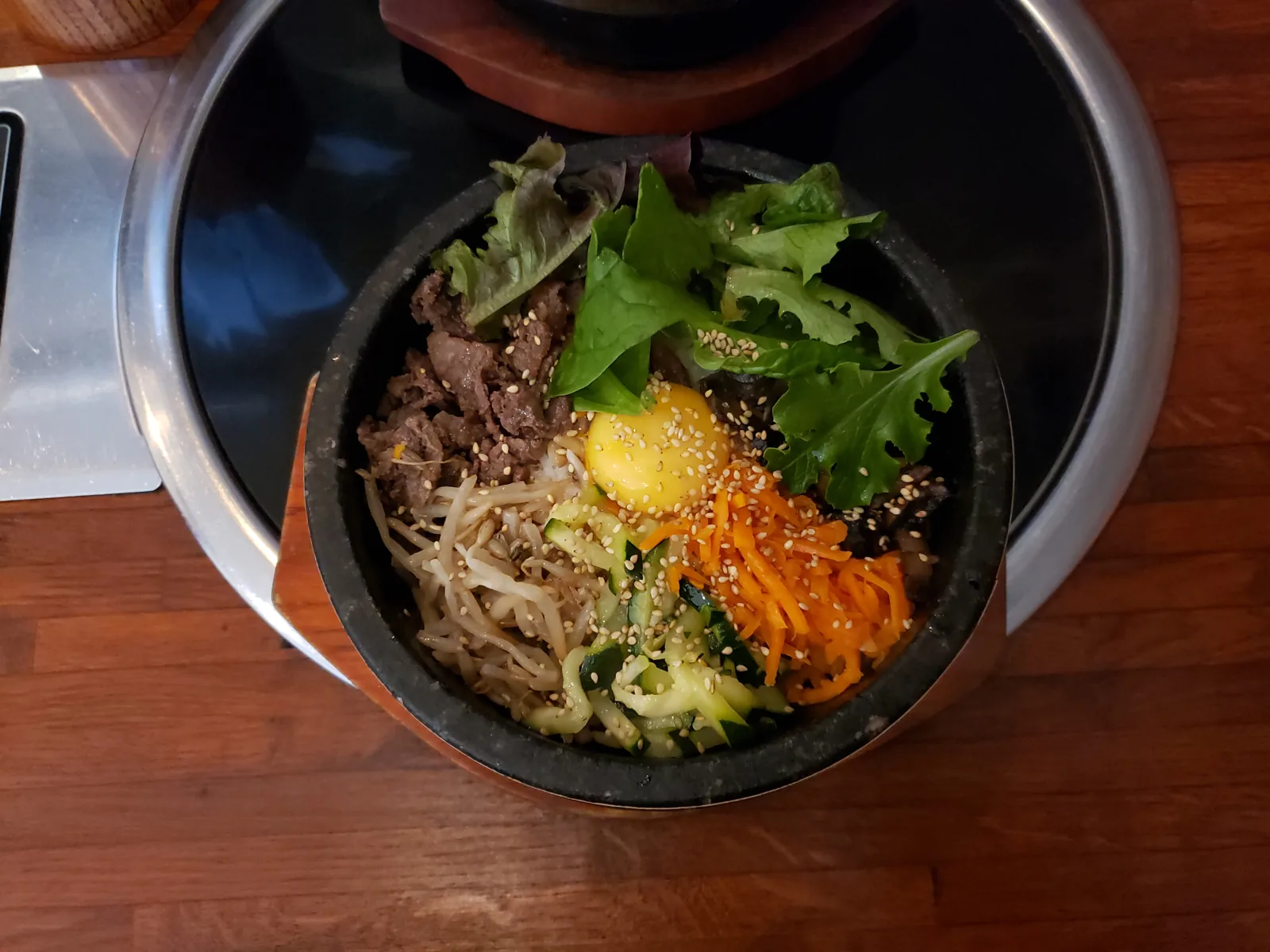
Dolsot bibimbap in a hot black stone bowl — bulgogi beef, egg yolk, carrots, zucchini, bean sprouts and sesame seeds over rice South Korea flag South Korea 1h 5m
Dinner •Korean Heritage

Bibimbap

This bibimbap recipe builds Korea's most famous rice bowl the dolsot way: hot rice in a sizzling stone pot, ringed with five separately seasoned namul vegetables, bulgogi beef and a fried egg, with gochujang to stir through at the table. The stone bowl crisps the bottom layer of rice into golden nurungji while you eat. One serving is about 510 g.

Colourful & Satisfying

Warm rice, five seasoned vegetables, bulgogi beef and a fried egg, mixed at the table with gochujang.

Pairs Well With
Kimchi, kongnamul-guk (bean sprout soup) & barley tea
Korean fried chicken pieces coated in a glossy red yangnyeom glaze South Korea flag South Korea 45m
Dinner •Korean Heritage

Korean Fried Chicken

This Korean fried chicken recipe is the real thing: boneless chicken in a thin potato-starch batter, fried twice — once to cook it through, once at higher heat to drive out moisture and shatter the crust — then tossed in a glossy yangnyeom glaze of gochujang, honey and garlic. The double fry is what keeps the skin crisp under the sauce. One serving is about 250 g.

Crispy & Bold

Double-fried chicken in a thin potato-starch crust, tossed in a sticky sweet-spicy yangnyeom glaze.

Pairs Well With
Pickled radish (chikin-mu), cold beer & steamed rice
High Protein • Quick Prep (<30m)
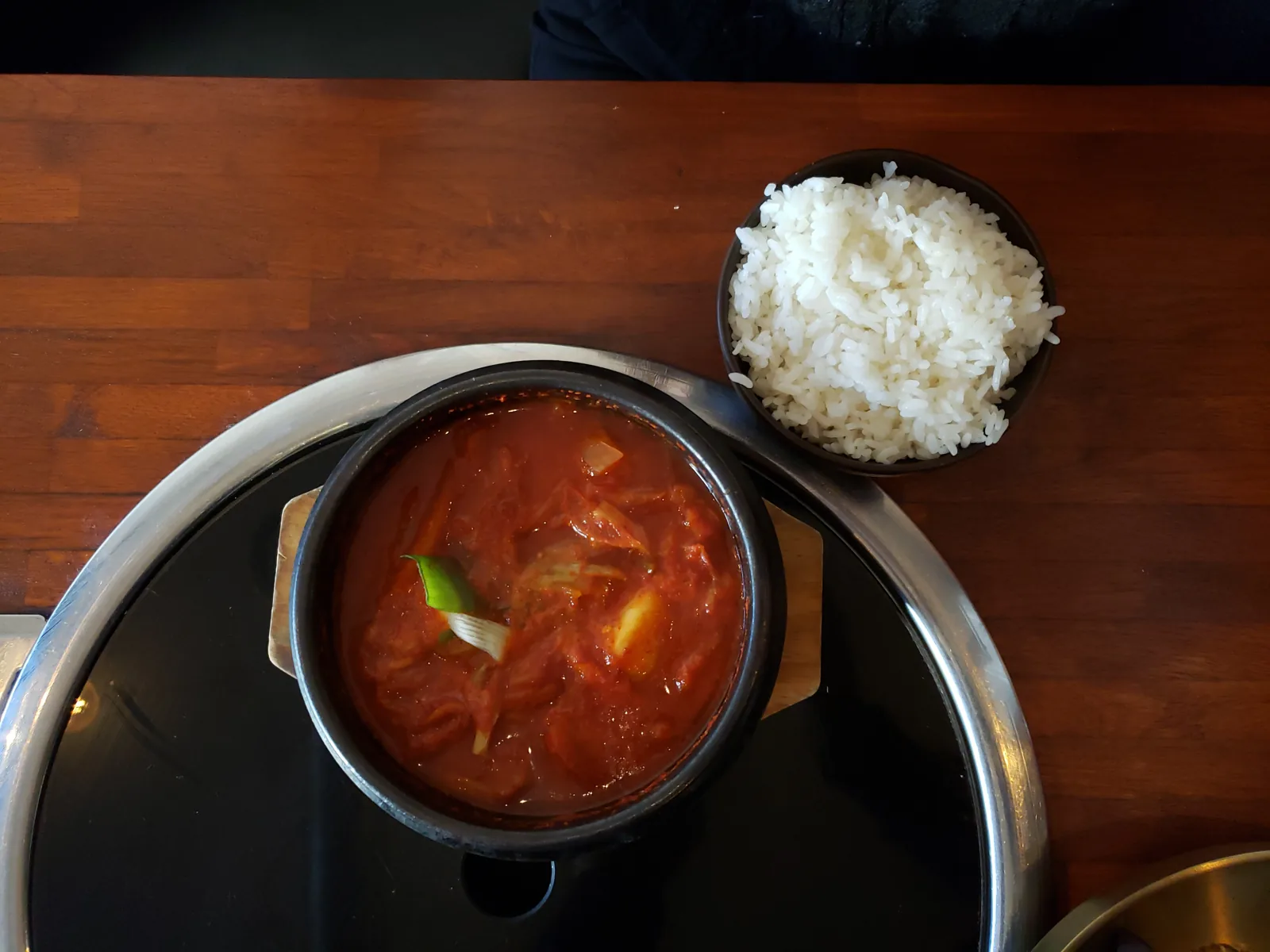
Kimchi jjigae — a red kimchi stew with tofu and spring onions in a black stone pot, served with a bowl of rice South Korea flag South Korea 45m
Dinner •Korean Heritage

Kimchi Jjigae

This kimchi jjigae recipe is the Korean comfort stew: aged, well-fermented kimchi fried with pork belly, then simmered in its own brine with tofu until the broth turns brick-red and rich. It is a stew, not the kimchi itself — the North Korean white kimchi published earlier is the pickled cabbage, while this is what you cook with it. One serving is about 425 g.

Comfort & Warmth

Aged kimchi and pork belly simmered in kimchi brine with tofu — sour, spicy and deeply savoury.

Pairs Well With
Steamed rice, fried egg & banchan
Soups & Broths • Fermented / Gut Health
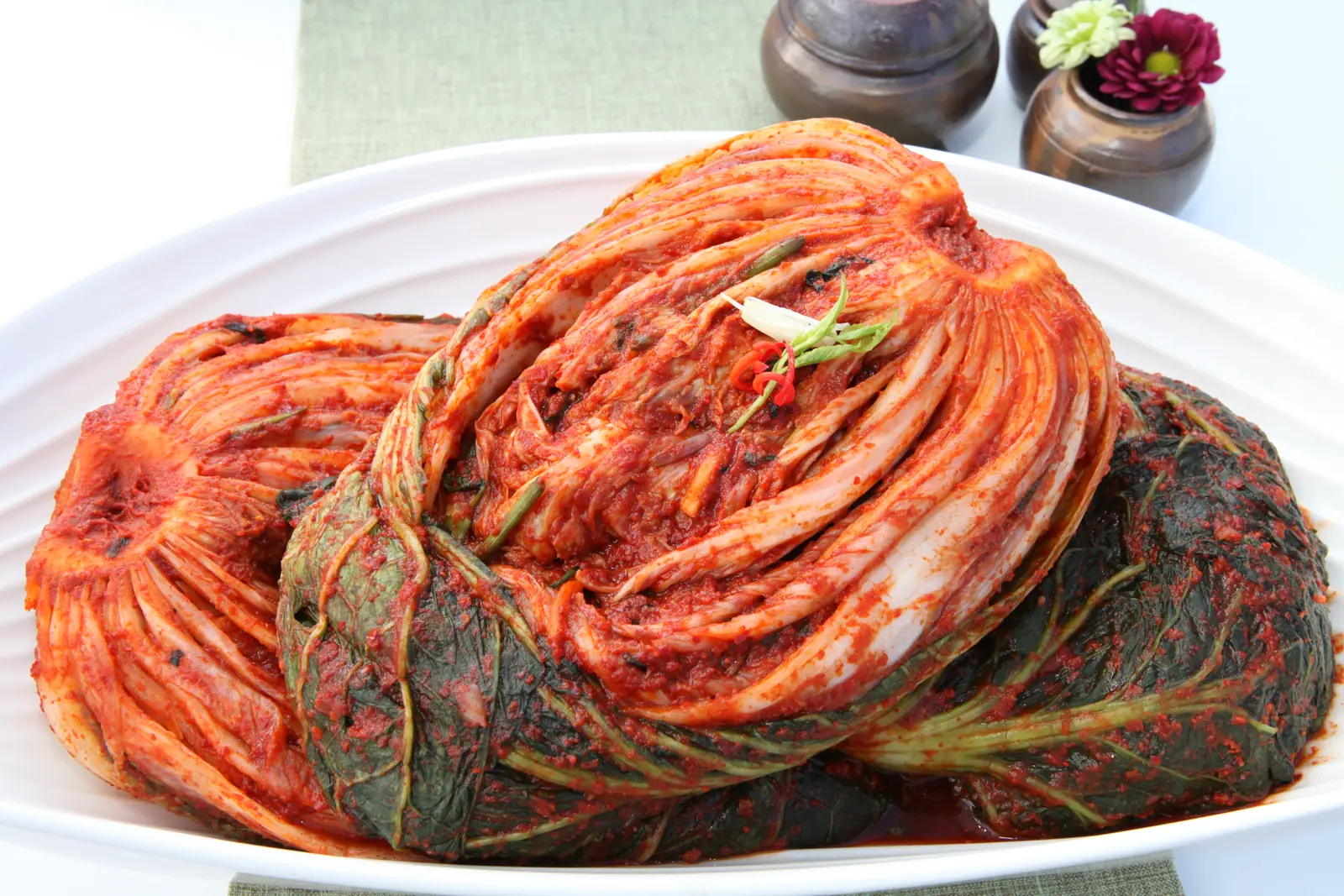
Whole heads of baechu kimchi coated in red gochugaru paste on a white platter South Korea flag South Korea 2h 35m
Dinner •Korean Kimjang Heritage

Baechu Kimchi

This kimchi recipe turns one head of napa cabbage into classic baechu kimchi: salted leaves packed with a bright red gochugaru paste, then left to ferment until tangy and fizzy. It is the spicy southern-style kimchi most people picture when they hear the word kimchi, and it keeps for weeks in the fridge. One serving is about 165 g.

Fermented & Fiery

Crisp, spicy, sour napa cabbage kimchi — Korea's everyday banchan, fermented at home in a jar.

Pairs Well With
Serve a small bowl with steamed rice, grilled meat or a fried egg.
Fermented / Gut Health

The Dinner Gazette

Never wonder what’s for dinner again

One email a week with easy dinner ideas from around the world — ingredients, steps and nutrition, tested in our kitchen first.

Delivered every Thursday morning. Unsubscribe anytime.