Curated recipes from 193 countries  •  New seasonal Mediterranean issue out now

Overview

Pan de Yema

Honduran Egg Yolk Bread, Bolillo de Yema, Pan Dulce de Yema

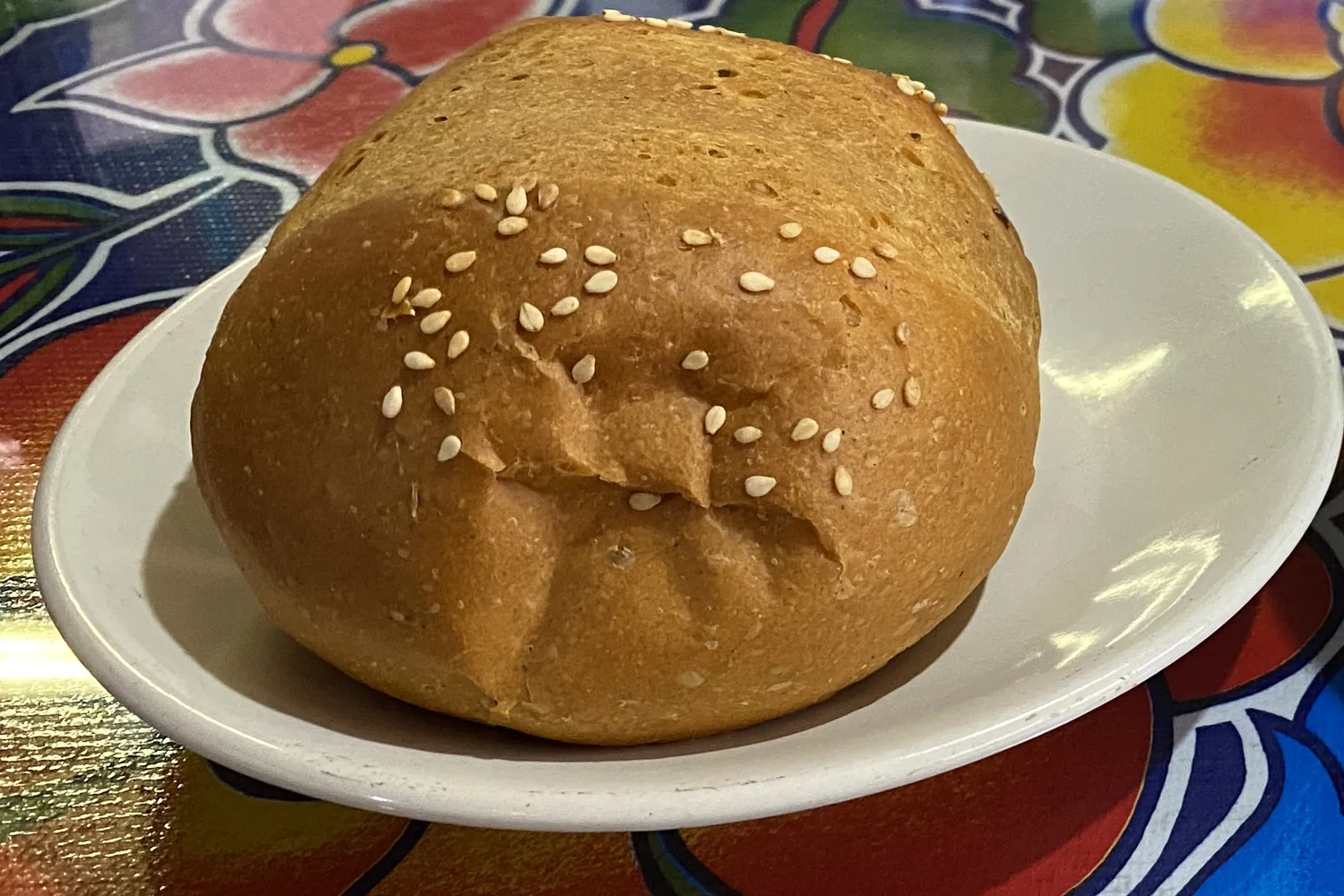
This pan de yema recipe turns eight golden egg yolks, milk and butter into soft, lightly sweet rolls with a tender yellow crumb and a sesame-speckled crust. The dough is yeasted, so the rolls rise high and stay soft for days — the Honduran bakery classic for breakfast, and the roll Honduran cooks bake for Christmas torrejas. One serving is one roll, about 79 g.

Pan de yema is the yolk bread of the Spanish colonial baking tradition: wheat, yeast and sugar arrived with Spanish bakers, and the yolk-rich dough became the festive bread of Latin American panaderias. In Honduras the bolillo de yema is an everyday bakery roll, and at Christmas the same bread is baked larger and sliced for torrejas, the syrup-soaked dessert of the season. Honduran baker Bryan Ford's semitas de yema, a related yolk-rich sweet bun, carry the same tradition into the modern bakery.

Pairs well with: Hot coffee or chocolate de agua

Provenance

Honduras flag Honduras

Honduran Heritage

Latin America & Caribbean

Time Dedication

2h 25m

120m prep • 25m cook

Batch Yield

12 Servings

282 kcal per serving

1 serving ≈ 79 g

Technical Skill

Intermediate

Medium (Yeasted Dough)

Meal Timing & Digestive Fit

Breakfast

Prime Morning Fit

Lunch

Inappropriate

Dinner

Inappropriate

Snack & Tea

Inappropriate

Occasions: Breakfast, Christmas torrejas, coffee time, weekend baking Cost: Low — about $0.30–0.40 per serving at home
A golden pan de yema roll topped with sesame seeds on a white plate

Honduran Heritage

Photo: ProtoplasmaKid, CC BY-SA 4.0, via Wikimedia Commons

The Heritage Formulary

Measured Ingredients

Estimated cost: Low — about $0.30–0.40 per serving at home (USD)

A true pan de yema is deep golden from its yolks, soft and lightly sweet, with a sesame-topped crust.

Execution Methodology & Culinary Technique

Step-by-Step Cooking Guide

Active 2h 25m
P

Mix, Knead and Rise

2 Hours • Yeasted Dough

Whisk the 500 g flour with the 7 g yeast, 100 g sugar and 5 g salt, then work in the 8 yolks, 240 ml lukewarm milk, 5 ml vanilla and 60 g softened butter. Knead until smooth and elastic, then rest the dough in a warm spot until doubled, about 60 minutes. Divide into 12 pieces, shape into smooth rolls and set them on a lined tray.

Maestro Tip: The dough should feel soft and a little tacky — like an earlobe. If it sticks to your hands, knead a minute longer instead of adding flour, or the rolls turn dry.

  1. 1

    Mix the Dough

    15 Mins Room temperature, about 22°C (72°F)

    Whisk the 500 g flour, 7 g instant yeast, 100 g sugar and 5 g salt in a large bowl. In a jug, whisk the 8 yolks with the 240 ml lukewarm milk and 5 ml vanilla. Pour the yolk mixture into the flour and stir with a wooden spoon until a shaggy dough forms, then work in the 60 g softened butter a spoonful at a time.

    Milk hotter than 43°C (110°F) kills the yeast — test it on your wrist; it should feel warm, not hot.

    Done when: A soft, shaggy dough with no dry flour left in the bowl.

  2. 2

    Knead Until Smooth

    10 Mins Room temperature, about 22°C (72°F)

    Turn the dough onto a lightly floured surface and knead for 8 to 10 minutes, pushing it away with the heel of your hand, folding it back and turning it. The dough is ready when it is smooth, elastic and springs back when poked, and a stretched piece forms a thin window without tearing.

    Resist adding extra flour — a tacky dough bakes into a softer roll. A bench scraper lifts sticky dough off the counter.

    Done when: A smooth ball that springs back slowly when poked.

  3. 3

    First Rise

    60 Mins Warm spot, about 26°C (79°F)

    Shape the dough into a ball, set it in a lightly oiled bowl and turn it once to coat. Cover with a damp cloth or cling film and rest in a warm spot until doubled in size, about 60 minutes.

    A cold kitchen slows the rise — set the bowl in the oven with only the light on, or on top of the fridge.

    Done when: The dough has doubled and a poked dent stays put instead of springing back.

  4. 4

    Shape the Rolls

    10 Mins Room temperature, about 22°C (72°F)

    Punch the dough down gently and turn it onto the counter. Divide into 12 equal pieces of about 88 g each. Roll each piece into a tight, smooth ball by cupping your hand over it and rolling in small circles, then set the rolls seam-down on a parchment-lined baking tray, well spaced.

    Even pieces bake evenly — weigh the first few if you are unsure, then eyeball the rest.

    Done when: Twelve smooth, round rolls, evenly spaced on the tray.

  5. 5

    Second Rise and Egg Wash

    25 Mins Warm spot, about 26°C (79°F)

    Cover the tray loosely and rest the rolls until puffy and nearly doubled, about 25 minutes. Near the end, heat the oven to 180°C (350°F). Whisk the reserved yolk with the 15 ml milk and brush it gently over each roll, then sprinkle with the 10 g sesame seeds.

    Brush lightly — a thick coat of egg wash pools and browns in blotches.

    Done when: Puffy rolls, glossy with egg wash and speckled with sesame.

  6. 6

    Bake Until Deep Golden

    25 Mins 180°C (350°F)

    Bake for 22 to 25 minutes, until the rolls are deep golden brown all over and sound hollow when tapped underneath. A thermometer pushed into the centre of a roll should read at least 88°C (190°F). Cool on a wire rack for at least 15 minutes before serving.

    If the tops brown too fast after 15 minutes, lay a loose sheet of foil over the tray.

    Done when: Deep golden crusts, hollow-sounding bases and an internal temperature of at least 88°C (190°F).

Finishing Touches & Plating

Serve the rolls warm or at room temperature, plain or split and buttered. In Honduras the same roll is baked a little larger at Christmas, sliced and soaked in syrup for torrejas — a second life for any roll left over.

Nutritional Physiology & Benefits

Nutrition

Energy

282

kcal / serving

Protein

7g

Complete AA

Carbs

42g

Complex

Fats

9g

Healthy

Per serving (12 servings · 1 serving ≈ 79 g)
Energy282 kcal
Protein7 g
Carbohydrates42 g
Fat9 g
Fibre1.4 g
Sugar9.7 g
Sodium179 mg
Per 100g
Energy356 kcal
Protein9.4 g
Carbohydrates53.2 g
Fat11.4 g
Fibre1.7 g
Sugar12.2 g
Sodium226 mg

Nutrition values are estimated — calculated from USDA FoodData Central values for the listed ingredients.

Vitamins & minerals: Egg yolks bring vitamin A, vitamin D and choline, with B vitamins and iron from the enriched dough. Nutrition is estimated.

Uses the Whole Egg's Best Part

Eight yolks go into the dough and one more glazes it — this pan de yema recipe turns the part of the egg most bakers throw away into the bread's colour, flavour and softness.

Steady Morning Energy

One roll gives about 282 kcal with 42.1 g of carbohydrate, so it works as a real breakfast that keeps you going until lunch.

Yolks, Vitamin D and Choline

The yolks bring vitamin A, vitamin D and choline, and the enriched dough adds B vitamins and iron — real nutrients, not just sweetness.

Food Pairings

What to Eat With

To optimize nutrient absorption and elevate the sensory depth, pair with these authentic accompaniments:

Drinks

Hot Honduran Coffee

Black coffee's bitterness balances the roll's sweetness, and in Honduras the two are the classic breakfast pair — the roll is made to be dunked.

Sides

Salted Butter

A thin spread of cold salted butter melts into the warm crumb and the salt sharpens the yolk richness — the simplest and best partner.

Fresh Tropical Fruit

Sliced mango or papaya adds juice and brightness next to the rich roll, and its acidity cuts the sweetness so a second roll feels lighter.

Full Menus

Chocolate de Agua

A cup of frothy hot chocolate made with water is the Oaxacan and Honduran way to serve pan de yema — the roll soaks up the chocolate without falling apart.

Complete menu

Serve a warm roll with salted butter and a mug of black coffee, or make it a full breakfast with scrambled eggs and fresh mango on the side.

Digestive Guardrails

What NOT to Combine

To prevent digestive distress, sluggishness, or palate clash, avoid pairing the dish with these elements:

Storing Warm Rolls in a Sealed Bag

Warm rolls wrapped in plastic trap steam, so the crust turns soggy and mould arrives faster. Let them cool completely on a rack before wrapping. This is general food-safety information, not medical advice.

Adding Flour to a Sticky Dough

A tacky dough is correct for pan de yema; flouring it heavily makes dry, dense rolls. Knead a minute longer instead and let the gluten do the work. This is general cooking information, not medical advice.

General information only, not medical advice — consult a doctor for personal dietary decisions.

Who Should Eat It

Who Should Eat

  • General adultsA satisfying breakfast roll — best warm with coffee, not as an all-day grazing food.
  • ChildrenA lunchbox favourite; the sweetness is real, so one roll is a sensible portion for children.
  • ElderlySoft, easy to chew and easy to digest — a good choice with coffee or hot chocolate.
  • Pregnant womenGenerally suitable; the yolks are fully baked through, but the sugar is real, so keep to one roll — ask your clinician.
  • Breastfeeding womenGenerally suitable; the energy is useful, but watch the sugar if you eat it often.
  • AthletesAbout 42.1 g of carbohydrate a roll makes it a handy pre-training snack — eat it 1 to 2 hours before exercise.
  • Weight gainA good choice — the roll is energy-dense and easy to eat, and a second roll with butter adds calories without much volume.
  • Weight lossAt 282 kcal a roll with 9.7 g of sugar, this is a treat: take one roll and pair it with fruit rather than a second roll.

Health Conditions — Adjust or Avoid

Conditions

  • DiabetesAbout 42.1 g of carbohydrate and 9.7 g of sugar a roll — take one roll and pair it with protein such as an egg; ask your clinician.
  • High blood pressureAbout 179 mg of sodium a roll is moderate, but the sugar is the bigger issue — keep the portion to one roll; ask your clinician.
  • Kidney diseaseEgg yolk is high in phosphorus, which some kidney diets limit — check your phosphorus allowance first; ask your clinician.
  • GoutEgg yolk is low in purines, so it is generally fine in small portions; the sugar is the main thing to watch; ask your clinician.
  • Stomach issuesSoft and easy to digest when fresh, but a rich yeasted roll can feel heavy — try half a roll first; ask your clinician.
  • Cardiovascular diseaseThe yolks bring about 9.0 g of fat a roll, so one roll occasionally fits better than a daily habit; ask your clinician.
  • Fatty liverThe 9.7 g of sugar a roll is moderate, but the fat adds up — keep it occasional and small; ask your clinician.
  • Food allergiesContains gluten (wheat), egg (yolks) and milk (butter, whole milk); the topping is sesame. Check every label.
  • Special therapeutic dietsNot suitable for gluten-free, dairy-free, egg-free or low-sugar therapeutic diets without a full recipe change — ask your clinician or dietitian.

If you have a medical condition, consult your doctor before changing your diet.

Storage & Use

Storage & Use

How to store
Cool completely, then store in a paper bag inside a plastic bag, or in an airtight container. Keeps 2 to 3 days at room temperature.
In the fridge
Up to 1 week wrapped in the fridge; bring to room temperature or warm before eating.
In the freezer
Up to 3 months, wrapped individually — thaw at room temperature.
How to reheat
Warm in an oven at 160°C (325°F) for 5 minutes until heated through to at least 74°C (165°F) inside.
Freezing recommended
Yes — it freezes very well, wrapped individually, for up to 3 months.
Signs it has spoiled
Mould spots, a sour or fermented smell, or a slimy surface.

More recipes to explore

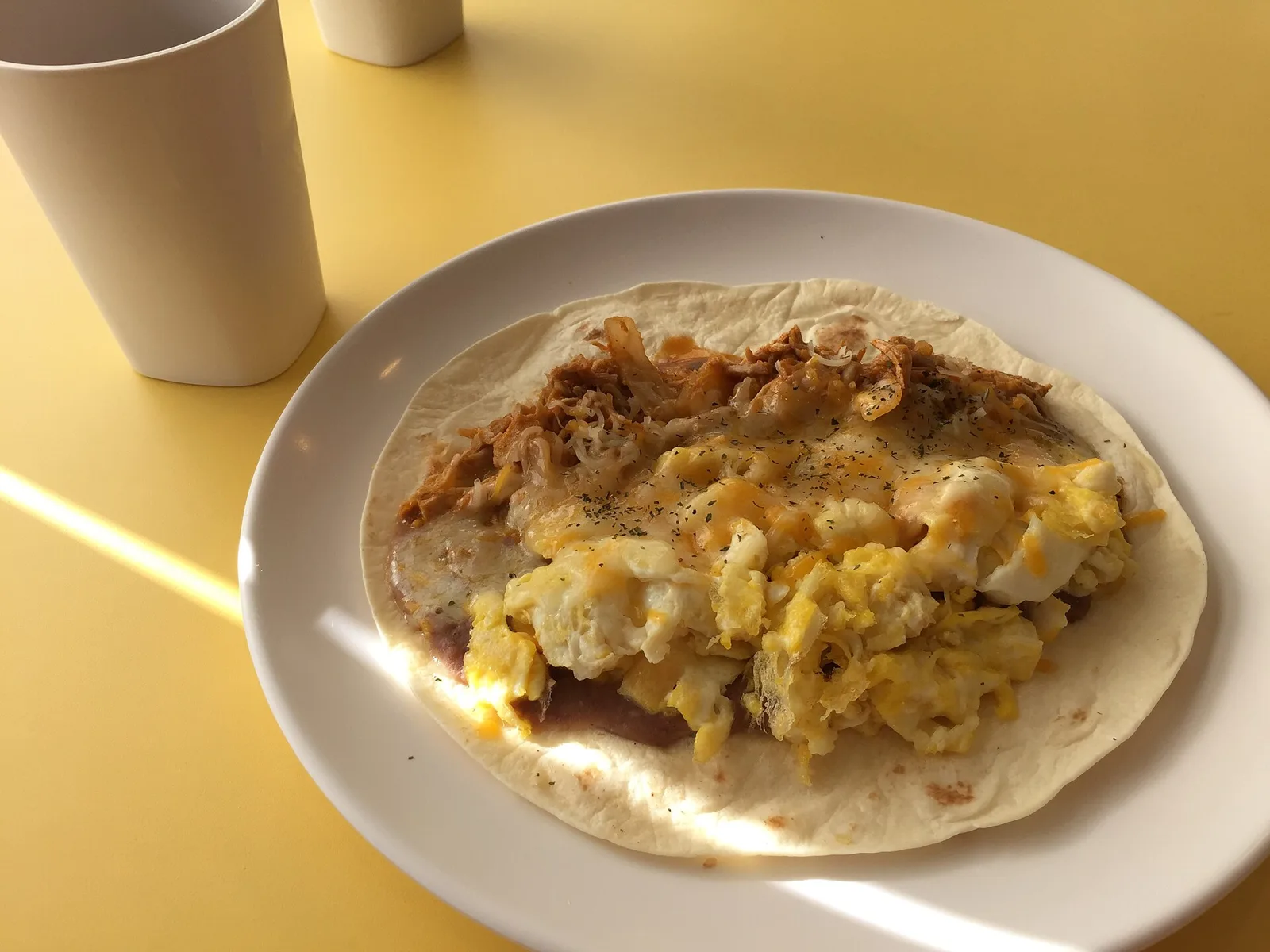
An open baleada on a white plate: a flour tortilla topped with refried beans, scrambled egg and melted cheese Honduras flag Honduras 45m
Breakfast •La Ceiba Heritage

Baleadas

This baleadas recipe makes Honduras's favourite breakfast the way it is sold from street stalls and home kitchens along the north coast: thick, soft flour tortillas, cooked on a dry griddle until golden and speckled, then spread with warm mashed red beans, piled with soft scrambled egg and crumbled salty cheese, and finished with a spoonful of crema. Each baleada is folded in half and eaten hot, by hand, while the cheese is still melting into the beans. One serving is one baleada, about 335 g.

Hearty & Filling

Honduras's best-known breakfast: a thick, soft flour tortilla folded around mashed red beans, scrambled egg and crumbled salty cheese.

Pairs Well With
Sliced avocado and a hot sauce on the side, with a cup of sweet Honduran coffee or a glass of fresh orange juice.
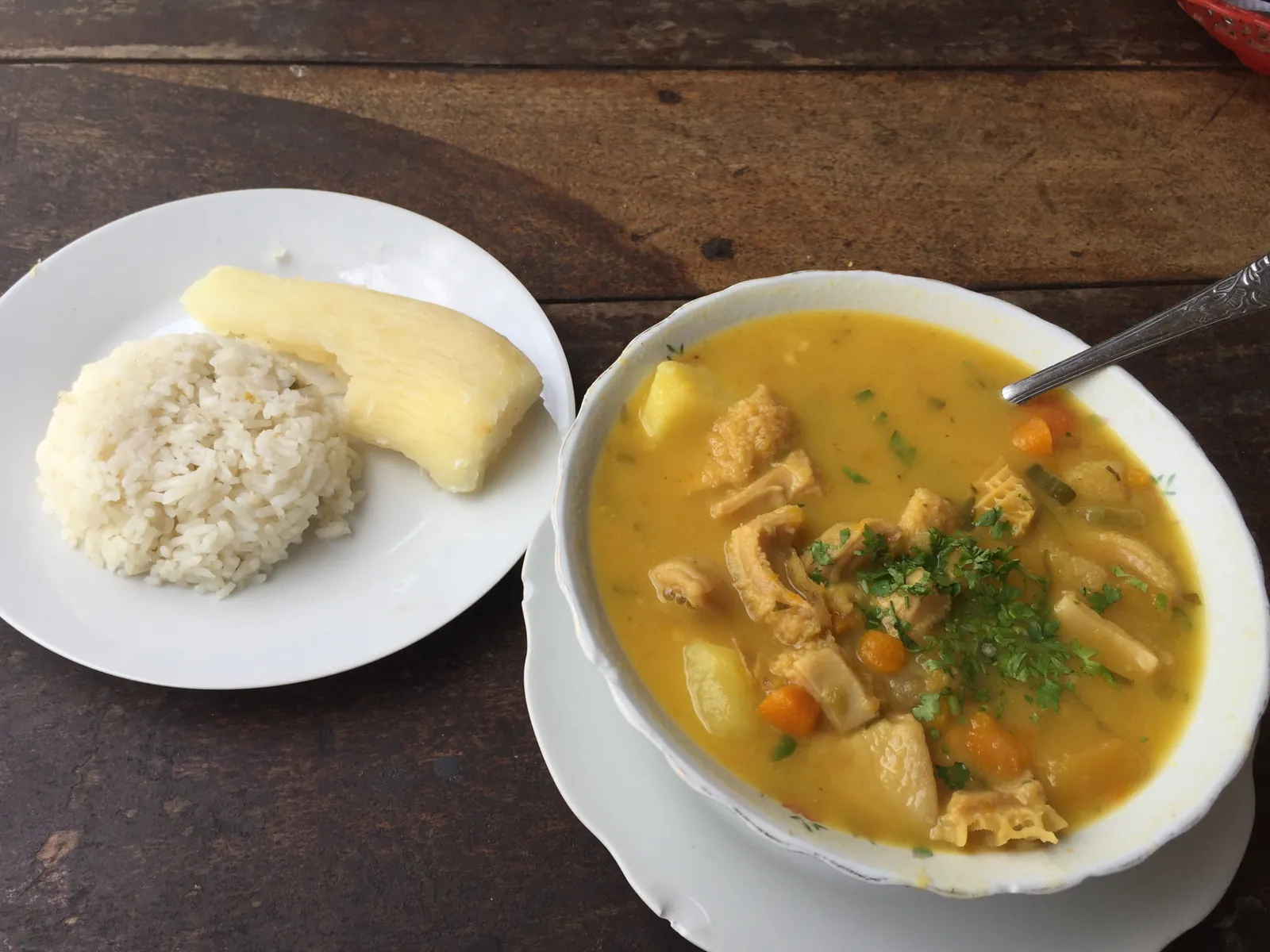
A bowl of sopa de mondongo with strips of tripe, carrots and potatoes, garnished with cilantro, served with white rice and boiled yuca on the side Honduras flag Honduras 3h 45m
Lunch •Honduran Heritage

Honduran Sopa de Mondongo

This honduran sopa de mondongo recipe is Honduras's slow-cooked tripe soup: beef tripe simmered for hours until tender, then loaded with yuca, green plantain, corn, carrots and potatoes in a tomato, cumin and cilantro broth. It is a weekend lunch in Honduran homes, served steaming hot with lime wedges, white rice and warm tortillas for squeezing and scooping. One serving is about 600 g, soup and vegetables together.

Comfort & Warmth

Slow-simmered beef tripe with yuca, plantain and corn in a tomato, cumin and cilantro broth.

Pairs Well With
White rice and warm corn tortillas, with lime wedges and chopped cilantro on the side.
Soups & Broths
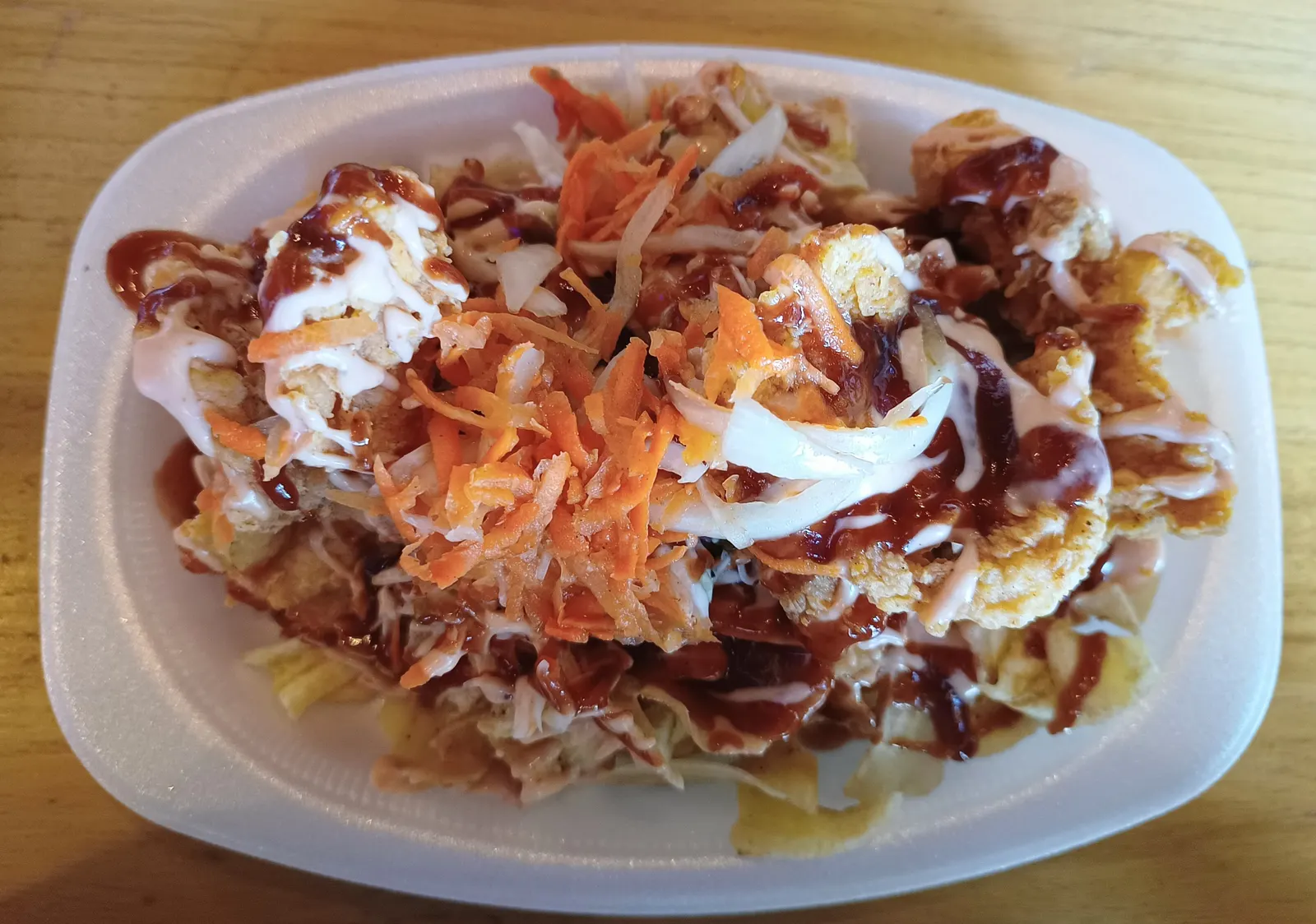
Pollo chuco on a plate: crispy fried chicken over fried plantain tajadas with shredded cabbage, carrot, pickled onion and sauces Honduras flag Honduras 1h 5m
Dinner •San Pedro Sula Heritage

Pollo Chuco

Pollo chuco is the beloved street-food plate of San Pedro Sula, Honduras: flour-dredged chicken fried until crisp and golden, piled over crunchy fried green-plantain slices called tajadas, then finished with lime-dressed cabbage, pickled red onion, fresh chimol salsa and a drizzle of tomato and pink sauces. Every bite mixes crunch, tang, heat and creaminess. One serving is about 480 g.

Hearty Street-Food Comfort

A filling plate of fried chicken, crisp plantains and fresh toppings that works as a satisfying dinner.

Pairs Well With
Serve with an ice-cold agua fresca or a light lager, and lime wedges on the side.
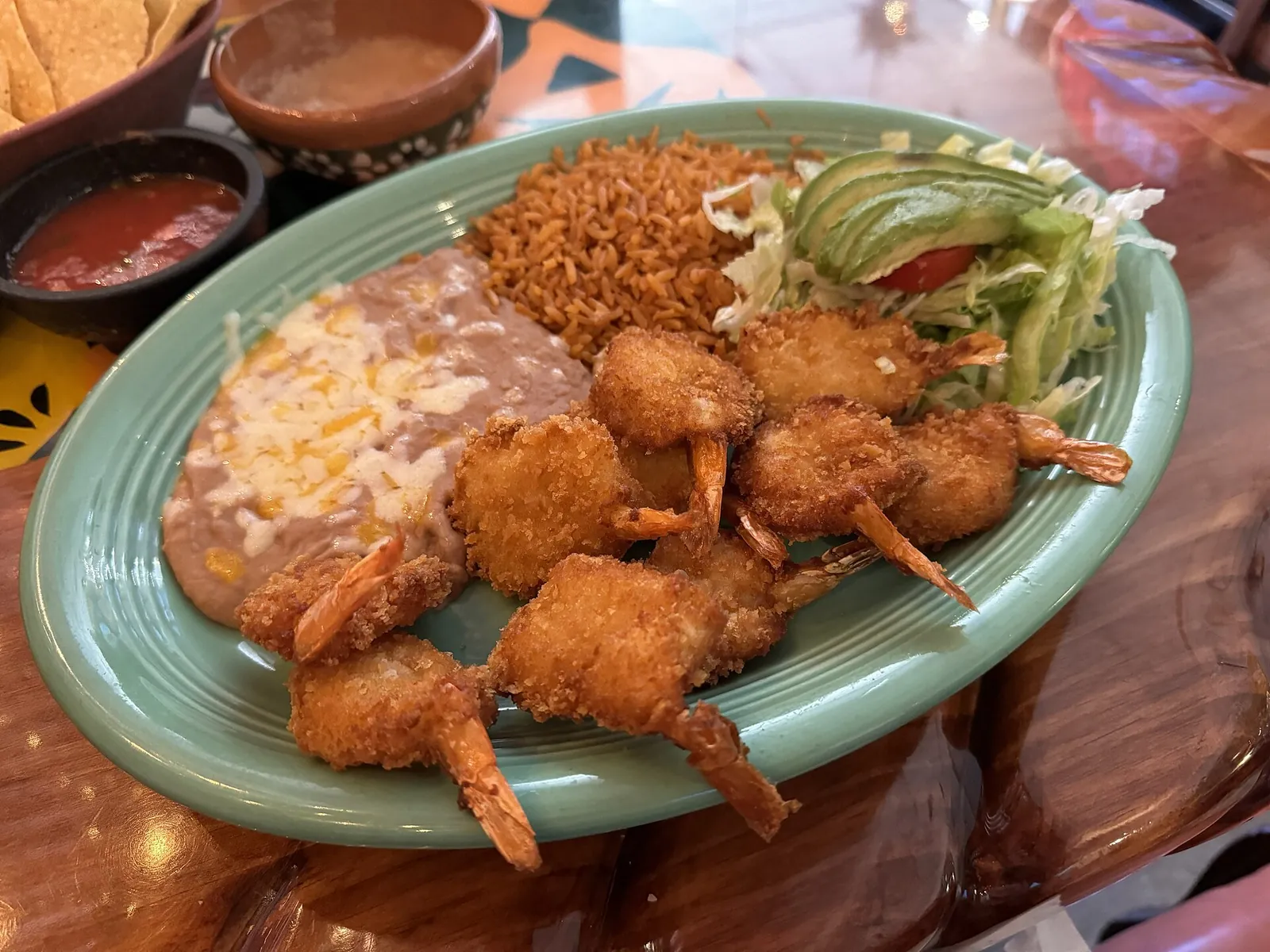
A plate of golden breaded shrimp with refried beans, red rice and avocado salad Honduras flag Honduras 40m
Dinner •Honduran Coastal Favourite

Camarones Empanizados Hondureños

This camarones empanizados recipe starts with large shrimp tossed in lime, garlic and paprika, then runs each one through flour, beaten egg and panko breadcrumbs before a quick fry in hot oil. The crumb turns deep golden and shatteringly crisp while the shrimp inside stays sweet and juicy. It is the coastal favourite of Honduras, served with rice, beans and avocado. One serving is about 185 g.

Coastal Comfort

Large shrimp dredged in flour, dipped in beaten egg and rolled in panko, fried golden and crisp — the Honduran coast's favourite way to eat shrimp.

Pairs Well With
Red rice, refried beans & avocado

The Dinner Gazette

Never wonder what’s for dinner again

One email a week with easy dinner ideas from around the world — ingredients, steps and nutrition, tested in our kitchen first.

Delivered every Thursday morning. Unsubscribe anytime.