Curated recipes from 193 countries  •  New seasonal Mediterranean issue out now

Overview

Pepián

Pepián de Pollo, Chicken Pepián

This pepian recipe builds Guatemala's national dish the traditional way — pumpkin and sesame seeds toasted on a dry comal, blended with charred tomatoes, tomatillos and dried chillies into a thick recado, then simmered with chicken, chayote and green beans. One serving is about 430 g.

Pepián is one of the oldest dishes of Guatemala, with roots in the Maya kitchens of the Kaqchikel people of Chimaltenango in the western highlands, where cooks ground toasted squash seeds into a thick sauce long before the Spanish arrived. The name most likely comes from pepitoria, the toasted pumpkin seeds that thicken the sauce and give it its nutty flavour. Colonial-era cooks added Spanish ingredients — onion, garlic, cinnamon and cloves — to the Maya base of seeds, tomatoes and chillies, and the dish became the stew Guatemala serves at family gatherings and festivals. In 2007 the Guatemalan government declared pepián part of the nation's Intangible Cultural Heritage.

Pairs well with: White rice, warm corn tortillas and fresh avocado

Provenance

Guatemala flag Guatemala

Guatemala's National Dish

Latin America & Caribbean

Time Dedication

1h 45m

30m prep • 75m cook

Batch Yield

6 Servings

610 kcal per serving

1 serving ≈ 430 g

Technical Skill

Intermediate

Medium (Toast & Blend)

Meal Timing & Digestive Fit

Breakfast

Not Advised

Lunch

Hearty Midday Main

Dinner

Ideal Hearty Main

Snack & Tea

Inappropriate

High Protein Occasions: Family dinners, Sunday lunch, celebrations, festivals Cost: Low — about $3–4 per serving at home
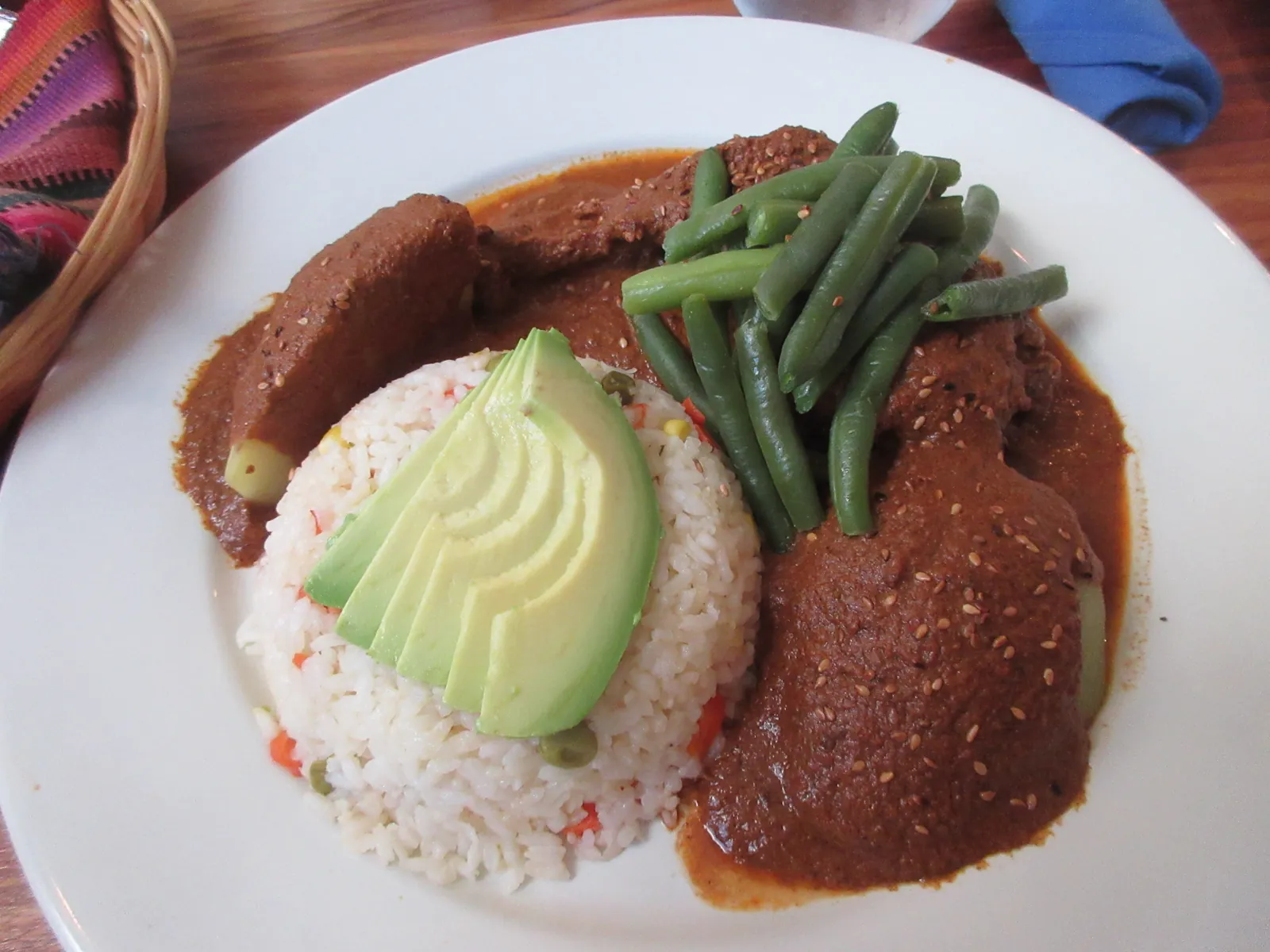
A plate of pepián — chicken in thick reddish-brown toasted-seed sauce with green beans, white rice and sliced avocado

Guatemala's National Dish

Photo: Infrogmation of New Orleans, CC BY-SA 4.0, via Wikimedia Commons

The Heritage Formulary

Measured Ingredients

Estimated cost: Low — about $3–4 per serving at home (USD)

A true pepián is thickened only with toasted pumpkin and sesame seeds — the sauce should coat the chicken and vegetables, never run thin like soup.

Execution Methodology & Culinary Technique

Step-by-Step Cooking Guide

Active 1h 45m
P

Prep Stage: De-seed the Chillies and Cut the Vegetables

30 Mins • Knife Work

Cut the chillies open, pull out the seeds and veins, and set them to soak in hot water for 15 minutes. While they soak, peel and cube the chayote, trim and cut the green beans, quarter the onion and chop the cilantro. Measure the seeds and spices into small bowls so the toasting moves fast.

Maestro Tip: Wear gloves for the chillies — the oils linger on your fingers long after you wash them.

  1. 1

    Simmer the Chicken

    30 Mins Gentle simmer, about 95°C (203°F)

    Put the chicken pieces in a large pot with the chicken broth and enough water to cover. Bring to a gentle simmer — never a hard boil — and cook for 30 minutes until the meat is tender and reaches 74°C (165°F) at the bone. Lift the chicken out, keep the broth, and skim off any foam.

    A hard boil makes the chicken stringy; a gentle simmer keeps it juicy for the sauce.

    Done when: The chicken is tender and the juices run clear at the bone.

  2. 2

    Toast the Seeds, Chillies and Spices

    10 Mins Medium heat, about 180°C (350°F)

    Heat a large dry comal or cast-iron skillet over medium heat. Toast the pumpkin seeds first — they puff and pop when ready, about 3 minutes — then the sesame seeds until pale gold, about 3 minutes, then the cinnamon stick, cloves and peppercorns for 1 minute. Toast the soaked chillies for 30 seconds per side. Work in separate batches and tip each batch into a bowl to cool.

    Burnt seeds turn the whole sauce bitter — pull them off the heat the moment they smell fragrant and golden.

    Done when: The seeds are golden and fragrant, the pumpkin seeds have popped, and nothing is blackened.

  3. 3

    Char the Tomatoes, Tomatillos, Onion and Garlic

    10 Mins Medium-high heat, about 200°C (400°F)

    In the same dry skillet, char the tomato halves cut-side down, the whole tomatillos, the onion quarters and the unpeeled garlic, turning them until they are blackened in spots and soft, about 10 minutes. Char the tortilla until crisp on both sides. Peel the garlic once it is cool enough to handle.

    The blackened spots are not a mistake — they give the recado its smoky depth.

    Done when: The vegetables are soft and blistered with blackened spots.

  4. 4

    Blend the Recado

    10 Mins Room temperature, about 20°C (68°F)

    Grind the toasted seeds, cinnamon, cloves and peppercorns to a fine powder in a spice grinder or blender. Add the soaked chillies, charred tomatoes, tomatillos, onion, garlic and torn tortilla, then blend with a ladle of the reserved chicken broth until completely smooth — a full 2 to 3 minutes. The sauce should be thick and velvety, with no grit.

    Blend longer than you think: a silky recado needs time, and any grit will stay gritty in the finished stew.

    Done when: The sauce is smooth, thick and reddish-brown, with no visible flecks.

  5. 5

    Simmer the Stew with Vegetables

    25 Mins Gentle simmer, about 90°C (194°F)

    Heat the oil in the large pot, pour in the blended recado — it will hiss and splatter, so use a lid as a shield — and fry for 5 minutes, stirring constantly. Thin with the remaining chicken broth until the sauce coats a spoon, add the salt, then return the chicken with the chayote and green beans. Simmer gently for 20 minutes until the vegetables are tender and the chicken is hot through at 74°C (165°F). Stir in the cilantro just before serving.

    If the sauce gets too thick as it simmers, thin it with a splash of the reserved broth — it should coat, not bury, the chicken.

    Done when: The chayote is tender but holds its shape, the beans are bright and tender, and the sauce clings thickly to the chicken.

Finishing Touches & Plating

Ladle the chicken, vegetables and plenty of sauce into wide bowls, with white rice, warm corn tortillas and sliced avocado on the side. Sprinkle a few extra toasted sesame seeds over the top if you like.
Nutritional Physiology & Benefits

Nutrition

Energy

610

kcal / serving

Protein

50g

Complete AA

Carbs

23g

Complex

Fats

37g

Healthy

Per serving (6 servings · 1 serving ≈ 430 g)
Energy610 kcal
Protein50 g
Carbohydrates23 g
Fat37 g
Fibre7.8 g
Sugar6.8 g
Sodium695 mg
Per 100g
Energy142 kcal
Protein11.6 g
Carbohydrates5.3 g
Fat8.5 g
Fibre1.8 g
Sugar1.6 g
Sodium162 mg

Nutrition values are estimated — calculated from USDA FoodData Central values for the listed ingredients.

Vitamins & minerals: Vitamin A (tomatoes, chillies), vitamin E (pumpkin and sesame seeds), magnesium and zinc (seeds), iron (chicken), potassium (chayote, tomatoes).

Protein That Satisfies

About 50 g of protein per serving from the chicken, so a bowl of pepián genuinely fills you up.

Seeds, Not Cream

Pumpkin and sesame seeds thicken the sauce and bring magnesium, zinc and vitamin E — richness built from seeds, not cream or butter.

Vegetables in Every Bowl

Chayote, green beans, tomatoes and tomatillos mean every serving carries fibre, potassium and vitamin A along with the chicken.

Food Pairings

What to Eat With

To optimize nutrient absorption and elevate the sensory depth, pair with these authentic accompaniments:

Sides

White Rice

Plain white rice is the classic partner — it soaks up the thick recado and its mild flavour lets the toasted seeds shine.

Vegetables

Sliced Avocado

Cool, creamy avocado contrasts with the warm, spiced sauce and adds healthy fats to the plate.

Drinks

Horchata or Hibiscus Water

A cold, sweet horchata or tart hibiscus water cuts through the richness of the seed sauce and refreshes the palate.

Full Menus

A Guatemalan Family Table

Serve the pepián as the centrepiece with rice, warm corn tortillas and avocado, the way Guatemalan families serve it on Sundays and at celebrations.

Complete menu

Serve the chicken and vegetables smothered in recado with white rice, warm corn tortillas and sliced avocado, and finish with a cold horchata or hibiscus water.

Digestive Guardrails

What NOT to Combine

To prevent digestive distress, sluggishness, or palate clash, avoid pairing the dish with these elements:

Burning the Seeds or Chillies

Toasted past golden, pumpkin and sesame seeds turn bitter, and burnt chillies add a harsh, acrid note that no amount of simmering can fix — the whole sauce must be started again. This is general cooking guidance, not medical advice.

Sesame and Seed Allergy

The sauce is built on sesame and pumpkin seeds, so it is not safe for anyone with a sesame or seed allergy — there is no simple swap that keeps it pepián. This is general information, not medical advice; ask a clinician if you are unsure.

General information only, not medical advice — consult a doctor for personal dietary decisions.

Who Should Eat It

Who Should Eat

  • General adultsA rich, hearty dinner — filling and warming, best as a main meal rather than a light supper.
  • ChildrenSuitable from age 6+ if you keep the chillies mild; the sauce is smooth and the chicken and vegetables are tender.
  • ElderlyEasy to eat and full of flavour; keep the portion moderate and the sauce mild.
  • Pregnant womenGenerally suitable if the chicken is fully cooked through to 74°C (165°F); keep the portion moderate.
  • Breastfeeding womenGenerally suitable; the protein and seeds support recovery — keep the portion moderate.
  • AthletesA strong post-workout dinner: about 50 g of protein per serving with rice for glycogen.
  • Weight gainA good choice — take a full portion with rice, tortillas and avocado.
  • Weight lossAn occasional treat — the sauce is rich; take a modest portion and load up on the vegetables and a smaller scoop of rice.

Health Conditions — Adjust or Avoid

Conditions

  • DiabetesThe rice is the main source of carbs — keep it to about a cup cooked and ask your clinician about portion size.
  • High blood pressureThe broth and salt carry the sodium; season lightly and ask your clinician about a suitable portion.
  • Kidney diseaseLimit the portion — the seeds are high in potassium and phosphorus; ask your clinician about portion size.
  • GoutEat occasionally and in smaller portions — chicken is moderately high in purines; ask your clinician if you are unsure.
  • Stomach issuesThe sauce is usually gentle, but dried chillies can irritate a sensitive stomach — use fewer chillies and ask your clinician if you are unsure.
  • Cardiovascular diseaseAn occasional food — the sauce is rich in fat from seeds and oil; balance the rest of the day and ask your clinician about portion size.
  • Fatty liverAn occasional treat — the sauce is rich; keep the portion small and favour the chicken and vegetables. Ask your clinician if you are unsure.
  • Food allergiesContains sesame and pumpkin seeds; the sauce is gluten-free when thickened with corn tortilla. Do not serve to anyone with a sesame or seed allergy; ask a clinician if you are unsure.
  • Special therapeutic dietsIf you follow a prescribed low-sodium or low-fat diet, use less salt and oil and a smaller portion of sauce, and check with your clinician.

If you have a medical condition, consult your doctor before changing your diet.

Storage & Use

Storage & Use

How to store
Cool the stew quickly and store the chicken and sauce together in an airtight container.
In the fridge
3 days; the flavour improves after a day.
In the freezer
Sauce 3 months; chicken in sauce 2 months.
How to reheat
Warm gently in a pan over low heat until steaming throughout; reheat to 74°C (165°F). Add a splash of broth if it has thickened.
Freezing recommended
Yes — the recado sauce freezes very well for up to 3 months.
Signs it has spoiled
Sour or yeasty smell, mould on the surface, or slimy chicken.

More recipes to explore

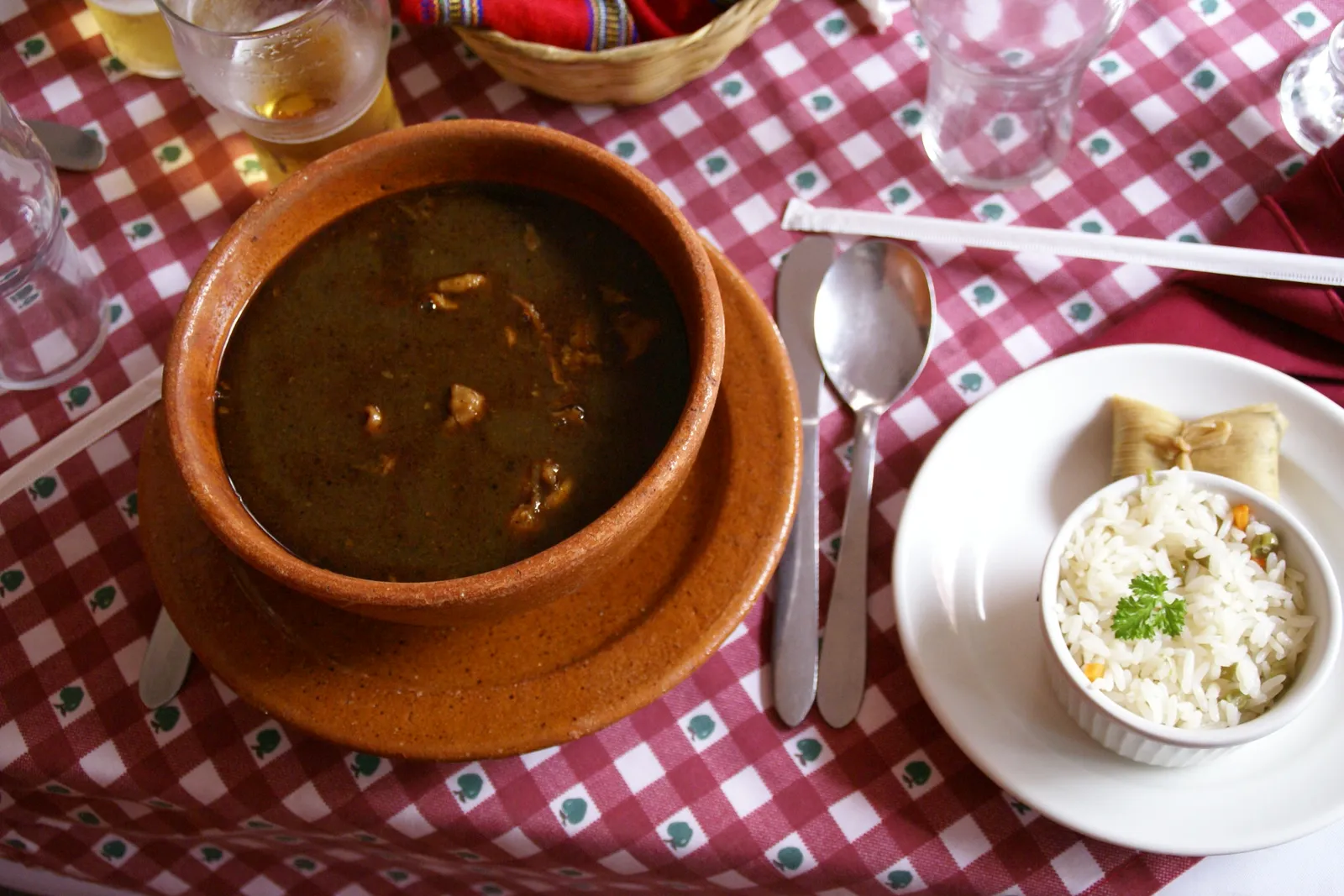
A clay bowl of dark red-brown kakik turkey soup with pieces of turkey, served with white rice and a small tamale Guatemala flag Guatemala 2h 25m
Dinner •Cobán Heritage

Kak'ik

This kakik recipe is the turkey soup of Cobán in Guatemala's Alta Verapaz: bone-in turkey legs simmered until tender in a deep red broth of charred tomatoes, tomatillos, guaque, pasa and cobanero chiles, coloured with achiote and lifted at the end with fresh mint and cilantro. The name comes from the Q'eqchi' Maya words kaq, red, and ik, chile — red and spicy, exactly what lands in the bowl. One serving is about 640 g, soup and turkey together.

Comfort & Warmth

Cobán's brick-red turkey soup, simmered with charred tomatoes, tomatillos, dried chiles and achiote, finished with fresh mint and cilantro.

Pairs Well With
White rice and small white tamales, with avocado slices and a bottle of hot sauce on the table.
Soups & Broths
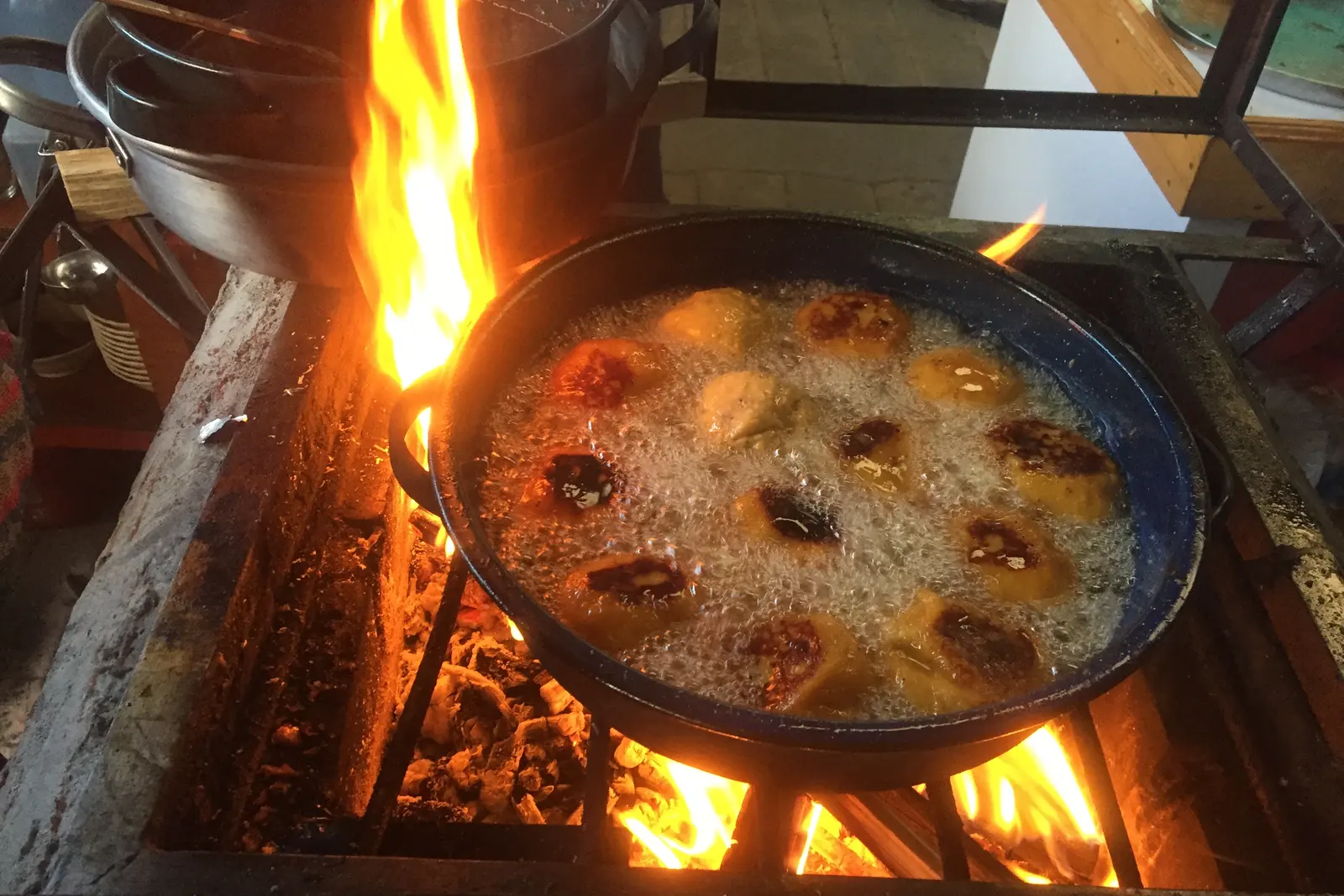
Golden rellenitos de platano frying in bubbling oil in a pan over a wood fire in Guatemala Guatemala flag Guatemala 55m
Snack & Tea •Guatemalan Market Snack

Rellenitos de Plátano

Rellenitos de platano are golden, egg-shaped fritters made from sweet mashed ripe plantains stuffed with a dark, cinnamon-scented black bean paste, fried until crisp outside and soft inside, then dusted with powdered sugar. One serving is about 280 g (3 rellenitos). This rellenitos de platano recipe makes 12 fritters in about 55 minutes, using just two main ingredients and pantry spices.

Sweet Comfort

A warm, sweet street snack of mashed ripe plantain wrapped around a cinnamon-spiced black bean filling.

Pairs Well With
Serve warm with a cup of coffee or hot chocolate and a spoonful of crema or honey on the side.
Bœuf bourguignon — French beef braised in red wine France flag France 4h
Dinner •Burgundy Terroir

Bœuf Bourguignon

Beef braised gently in red wine until the connective tissue melts into a velvet, gelatin-rich sauce — the classic Burgundy Sunday dinner.

Cellular Repair

Beef braised in red wine until spoon-tender, with mushrooms and pearl onions.

Pairs Well With
Parsnip Purée & Steamed French Haricots Verts
High Protein
Vietnamese braised pork belly with golden eggs in caramel sauce Vietnam flag Vietnam 1h 45m
Dinner •One Pot

Vietnamese Braised Pork and Eggs

Pork belly slowly braised in coconut water and caramel until meltingly tender, with golden eggs that soak up the sweet-savoury sauce — the Vietnamese family dish that tastes better the next day.

Comfort & Sustained Energy

Slow-braised pork belly and eggs in coconut water and caramel.

Pairs Well With
Steamed rice & pickled mustard greens
High Protein

The Dinner Gazette

Never wonder what’s for dinner again

One email a week with easy dinner ideas from around the world — ingredients, steps and nutrition, tested in our kitchen first.

Delivered every Thursday morning. Unsubscribe anytime.