Curated recipes from 193 countries  •  New seasonal Mediterranean issue out now

Overview

Picarones

Peruvian Sweet Potato Doughnuts, Picarones with Chancaca

This picarones recipe turns mashed sweet potato and squash into crisp golden rings, fried and drenched in spiced chancaca syrup. One serving is about 260 g (three rings with syrup), best eaten hot from the fryer.

Picarones were born in colonial Lima, when Spanish buñuelos — fried dough fritters — met the Andean larder. Cooks replaced the wheat-only dough with mashed sweet potato and squash, two native crops, and flavoured the rings with anise. The chancaca syrup came from the sugar mills of the coast, where unrefined cane sugar was boiled with cinnamon, cloves and orange into a dark, fragrant molasses. Today picaroneras still fry them to order on street corners across Lima, shaping each ring by hand over a pot of hot oil.

Pairs well with: A cup of black coffee or herbal tea, served alongside the hot rings.

Provenance

Peru flag Peru

Lima Heritage

Latin America & Caribbean

Time Dedication

1h 55m

70m prep • 45m cook

Batch Yield

6 Servings

547 kcal per serving

1 serving ≈ 260 g

Technical Skill

Intermediate

Medium (Fried Dough)

Meal Timing & Digestive Fit

Breakfast

Not Advised

Lunch

Inappropriate

Dinner

Inappropriate

Snack & Tea

Ideal Light Bite

Occasions: Afternoon snacks, street-food nights, dessert after lunch, festive gatherings Cost: Low — about $1–2 per serving at home
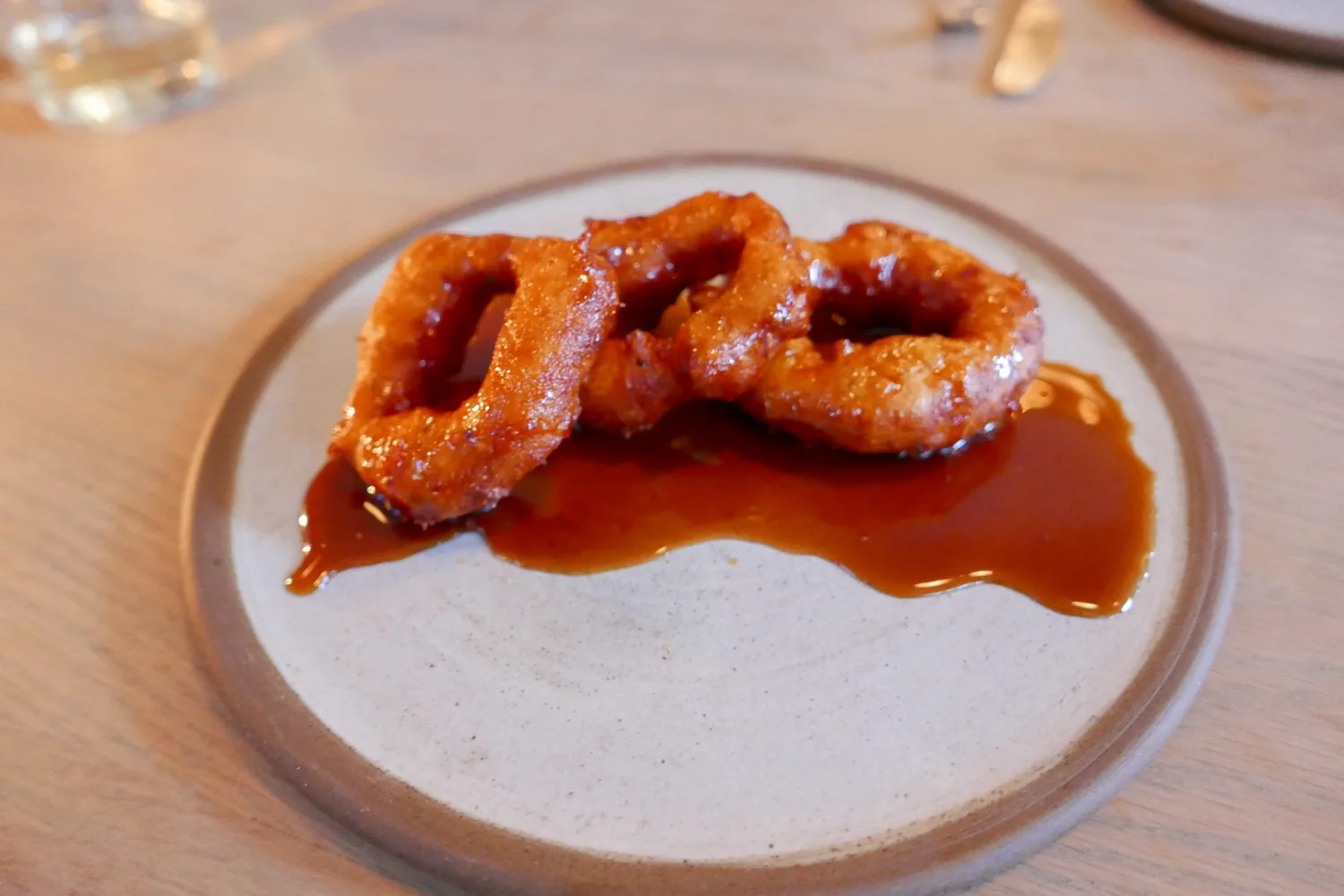
Three golden picarones rings glazed with dark chancaca syrup on a plate

Lima Heritage

Photo: Lou Stejskal, CC BY 2.0, via Wikimedia Commons

The Heritage Formulary

Measured Ingredients

Estimated cost: Low — about $1–2 per serving at home (USD)

Made the classic Lima way: a yeast dough of mashed sweet potato and squash with anise, shaped into rings by hand, fried crisp and served with chancaca syrup.

Execution Methodology & Culinary Technique

Step-by-Step Cooking Guide

Active 1h 55m
P

Prep Stage: Boil, Mash, Mix & Rise

70 Mins • Boiling, Mashing, Mixing & Rising

Boil the sweet potato and squash until very tender, drain well and mash smooth. Dissolve the yeast in warm water with a pinch of sugar, then mix it into the mash with the flour, sugar, crushed anise and salt to make a soft, sticky dough. Cover and let it rise for 1 hour while you make the chancaca syrup.

Maestro Tip: Drain the vegetables really well and mash them hot — a watery mash makes a slack dough that will not hold a ring shape.

  1. 1

    Boil and Mash the Sweet Potato and Squash

    20 Mins Boiling water 100°C (212°F)

    Peel the sweet potato and squash, cut into chunks, and boil in salted water for 15–20 minutes until very tender. Drain thoroughly, return to the hot pot for a minute to steam off the water, then mash until completely smooth and leave to cool until just warm.

    A potato ricer gives the smoothest mash; lumps of vegetable will tear the rings when you shape them.

    Done when: A smooth, thick mash with no lumps and no standing water.

  2. 2

    Mix the Dough

    10 Mins Room temperature

    Dissolve the yeast in the 60 ml warm water with 1 tsp of the sugar and leave 10 minutes until foamy. Stir the yeasted water into the warm mash with the remaining sugar, the crushed anise and the salt, then mix in the sifted flour a little at a time until you have a soft, sticky dough that just holds together.

    Do not add extra flour to make the dough firm — a soft, sticky dough fries light and airy, a stiff one fries heavy.

    Done when: A soft dough that clings to the spoon but can be scooped and shaped with wet hands.

  3. 3

    Let the Dough Rise

    60 Mins Warm spot, about 25°C (77°F)

    Cover the bowl with a damp cloth and leave in a warm spot for about 1 hour until the dough is puffy and has risen by about half. While it rises, make the syrup so it is ready and warm.

    If your kitchen is cool, put the bowl in a turned-off oven with the light on.

    Done when: Puffy dough, visibly risen, with a yeasty smell.

  4. 4

    Make the Chancaca Syrup

    20 Mins Medium heat, about 95°C (200°F)

    Put the chopped panela, 300 ml water, cinnamon stick, cloves and orange peel in a pan. Bring to a boil, then simmer for 15–20 minutes until the sugar has dissolved and the syrup coats a spoon. Strain out the spices and peel and keep the syrup warm.

    Do not let the syrup boil hard or it will turn bitter; a gentle simmer keeps it smooth and clear.

    Done when: A dark, glossy syrup that runs slowly off a spoon.

  5. 5

    Shape the Rings

    15 Mins Room temperature

    Heat the oil in a deep, heavy pot to 175°C (350°F). Wet your hands, scoop a ball of dough about the size of a small egg, and with wet fingers stretch it into a ring about 8 cm across, using your thumb to make the hole. Work in small batches so the rings keep their shape.

    Keep a bowl of water beside you and wet your hands before every ring — the sticky dough slides off wet fingers but sticks to dry ones.

    Done when: Smooth rings with an even hole, ready for the oil.

  6. 6

    Fry Until Golden

    15 Mins Oil 175°C (350°F)

    Slip 3–4 rings at a time into the hot oil and fry for 2–3 minutes per side, turning once, until deep golden brown and crisp. Lift them out with a slotted spoon and drain briefly on paper, then fry the next batch. Keep the oil at 175°C (350°F) between batches.

    Fry only a few at a time — crowding the pot drops the oil temperature and the rings turn greasy.

    Done when: Deep golden, crisp outside, puffed and soft inside.

  7. 7

    Serve Warm with Syrup

    5 Mins Serve hot

    Pile the hot rings on a warm plate and pour the warm chancaca syrup generously over the top, letting it pool around them. Serve at once, with extra syrup on the side for anyone who wants more.

    Picarones wait for nobody — they are at their best in the first 10 minutes, while the contrast between crisp crust and soft centre is still there.

    Done when: Hot rings glistening with syrup, crisp outside and soft inside.

Finishing Touches & Plating

Serve the picarones piled on a warm plate, syrup poured generously over the top, and eat them at once while the outside is still crisp and the inside is soft.

Nutritional Physiology & Benefits

Nutrition

Energy

547

kcal / serving

Protein

9g

Complete AA

Carbs

107g

Complex

Fats

9g

Healthy

Per serving (6 servings · 1 serving ≈ 260 g)
Energy547 kcal
Protein9 g
Carbohydrates107 g
Fat9 g
Fibre5.9 g
Sugar40.2 g
Sodium356 mg
Per 100g
Energy210 kcal
Protein3.5 g
Carbohydrates41.2 g
Fat3.6 g
Fibre2.3 g
Sugar15.5 g
Sodium137 mg

Nutrition values are estimated — calculated from USDA FoodData Central values for the listed ingredients.

Vitamins & minerals: Sweet potato and squash supply vitamin A, vitamin C and potassium, while the unrefined cane sugar in the syrup adds small amounts of iron and calcium.

About 547 kcal per Serving of Three Rings

Three rings carry about 107.2 g of carbohydrate, mostly from sweet potato and squash, making picarones a quick, satisfying energy snack.

Vitamin A from Sweet Potato and Squash

Sweet potato and butternut squash give the dough its golden colour and natural sweetness, along with vitamin A and potassium.

Simple Vegetable Dough, No Butter or Egg

The dough itself has no added butter or egg — the richness comes from the vegetables and the frying oil, and the syrup from unrefined cane sugar.

Food Pairings

What to Eat With

To optimize nutrient absorption and elevate the sensory depth, pair with these authentic accompaniments:

Drinks

Black Coffee

Hot black coffee cuts the sweetness of the chancaca syrup and is the classic drink with street picarones.

Herbal Tea

A light herbal tea lets the anise and cinnamon in the rings come through without adding more sugar.

More Pairings

Vanilla Ice Cream

A spoonful of vanilla ice cream beside the hot rings makes a simple dessert plate — hot, crisp dough against cold cream.

Sides

Fresh Mango or Pineapple

Fresh sliced mango or pineapple after the rings refreshes the palate and echoes the tropical sweetness of the syrup.

Complete menu

Serve three hot picarones with chancaca syrup as an afternoon snack with coffee, after a light lunch of ceviche or a simple salad.

Digestive Guardrails

What NOT to Combine

To prevent digestive distress, sluggishness, or palate clash, avoid pairing the dish with these elements:

Drowning the Rings in Syrup

The chancaca syrup is almost pure sugar, so drowning the rings in it doubles the sugar load without adding anything useful. A generous drizzle is enough. This is general food information, not medical advice.

Frying in Oil That Is Too Cool or Too Hot

Frying in oil that is too cool makes the rings soak up fat and turn greasy instead of crisp; too hot and they burn outside while staying raw inside. Keep the oil at 175°C (350°F). This is general food information, not medical advice.

General information only, not medical advice — consult a doctor for personal dietary decisions.

Who Should Eat It

Who Should Eat

  • General adultsA sweet, fried snack — three rings with syrup, about 547 kcal, is a proper treat best eaten hot and fresh.
  • ChildrenChildren love the sweet rings, but they are fried and sugary, so one or two rings with a little syrup is enough for younger children.
  • ElderlySoft inside and easy to chew, but fried and sweet — two rings with tea is the comfortable portion.
  • Pregnant womenFine as an occasional snack when the rings are fried fresh in clean oil and served hot; keep the syrup light. Ask your clinician about portions.
  • Breastfeeding womenAn energy-rich snack for a hungry afternoon; enjoy a few rings with coffee or tea rather than a whole batch.
  • AthletesQuick energy after training, with about 107.2 g of carbohydrate per serving of three rings, plus potassium from the sweet potato.
  • Weight gainEnergy-dense and easy to eat, so a full serving with extra syrup suits weight gain as an afternoon snack.
  • Weight lossAbout 547 kcal per serving of three rings, so keep it to one or two rings and go easy on the syrup.

Health Conditions — Adjust or Avoid

Conditions

  • DiabetesVery high in sugar and refined flour, about 107.2 g carbohydrate and 40.2 g sugar per serving, so this is a rare treat in a small portion, not a regular snack. Ask your clinician about portions.
  • High blood pressureAbout 356 mg sodium per serving is moderate, but the sugar load is high, so keep the portion small. Ask your clinician about portions.
  • Kidney diseaseSweet potato and squash are high in potassium, so people limiting potassium should keep the portion small and occasional. Ask your clinician about portions.
  • GoutFried sweet dough is not a classic gout trigger, but the sugar and frying fat add up, so one or two rings is enough. Ask your clinician about portions.
  • Stomach issuesFried food and a heavy sugar syrup can be hard on a sensitive stomach; eat them hot, slowly, and in a small portion. Ask your clinician about portions.
  • Cardiovascular diseaseFried in oil and coated in sugar syrup, so this is an occasional treat rather than a regular snack. Ask your clinician about portions.
  • Fatty liverThe syrup is concentrated sugar, about 40.2 g per serving, so keep the portion to one or two rings and do not eat them often. Ask your clinician about portions.
  • Food allergiesContains wheat (gluten). The dough itself is egg-free and dairy-free, but check the frying oil and syrup for cross-contact. Ask your clinician about safe alternatives.
  • Special therapeutic dietsNot suitable for gluten-free or low-sugar therapeutic diets as written. Ask your clinician before adapting it.

If you have a medical condition, consult your doctor before changing your diet.

Storage & Use

Storage & Use

How to store
Eat the rings fresh. Store any leftover syrup separately in a sealed jar.
In the fridge
Keeps 1 day in the fridge at 4°C (40°F) or below, in a covered container; the syrup keeps 1 week refrigerated. The rings lose their crispness, so they are best eaten fresh.
In the freezer
Do not freeze finished picarones — they go soggy on thawing. The syrup freezes well for up to 1 month in a sealed container.
How to reheat
Reheat leftover rings in a 180°C (350°F) oven for 5 minutes until crisp and hot, to 74°C (165°F) inside; warm the syrup separately and pour it over just before serving.
Freezing recommended
No — syrup only.
Signs it has spoiled
Soggy, sour-smelling dough, or syrup that smells fermented.

More recipes to explore

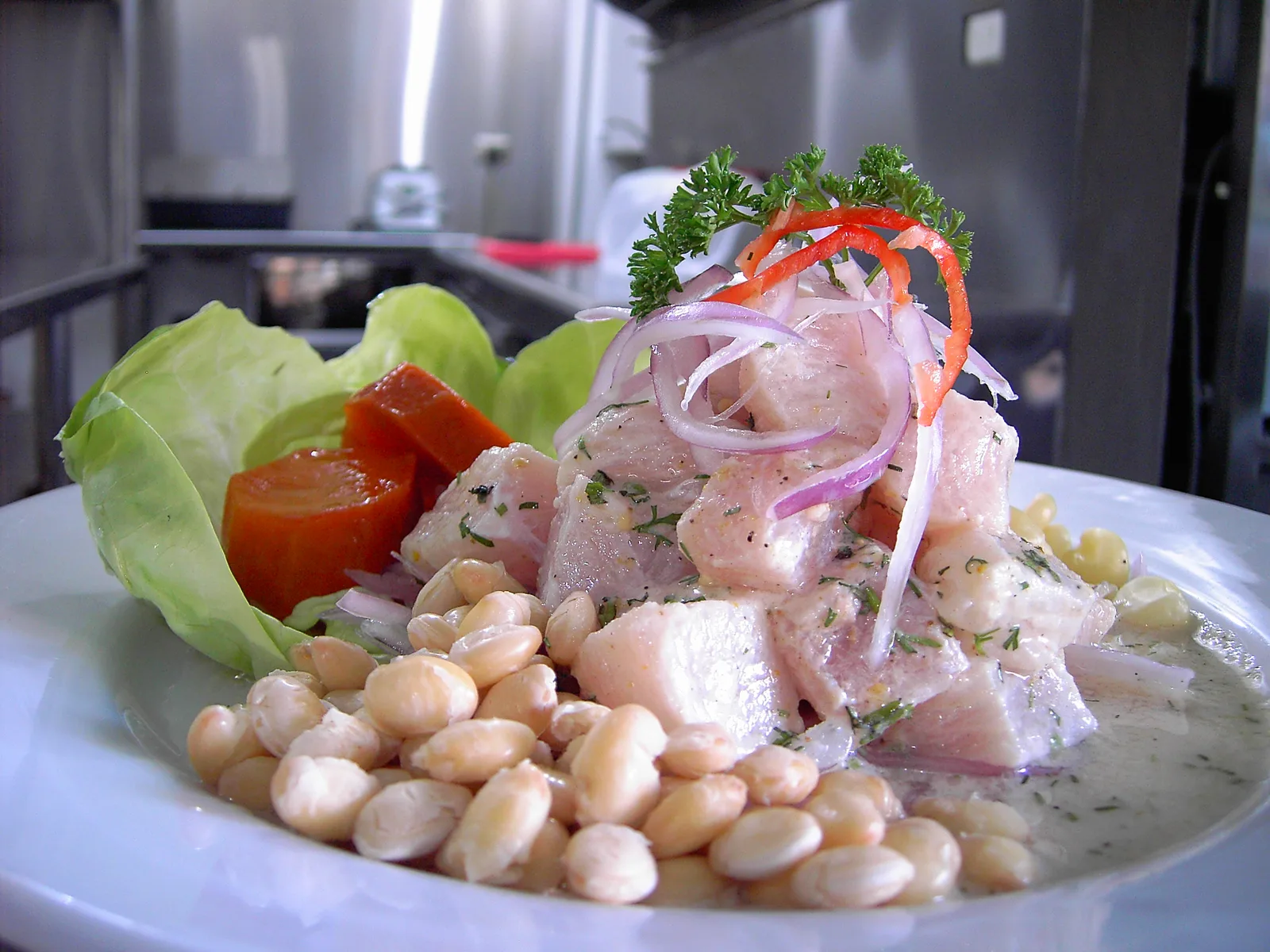
A plate of cebiche de corvina with lime-cured white fish cubes, red onion, ají strips, lettuce, sweet potato and choclo corn Peru flag Peru 35m
Lunch •Coastal Peru

Peruvian Ceviche

Peruvian ceviche is the national dish of Peru: cubes of very fresh sea bass cured in lime juice with red onion, ají limo and cilantro, with the milky, spicy marinade it leaves behind — leche de tigre — spooned over the top. It arrives with boiled sweet potato and big-kernel choclo corn, the sweet and starchy balance to all that citrus and heat. One serving is about 371 g.

Light & Fresh

Fresh sea bass cured in lime juice with red onion, ají limo and leche de tigre, served with sweet potato and choclo.

Pairs Well With
Boiled sweet potato, choclo corn and cancha
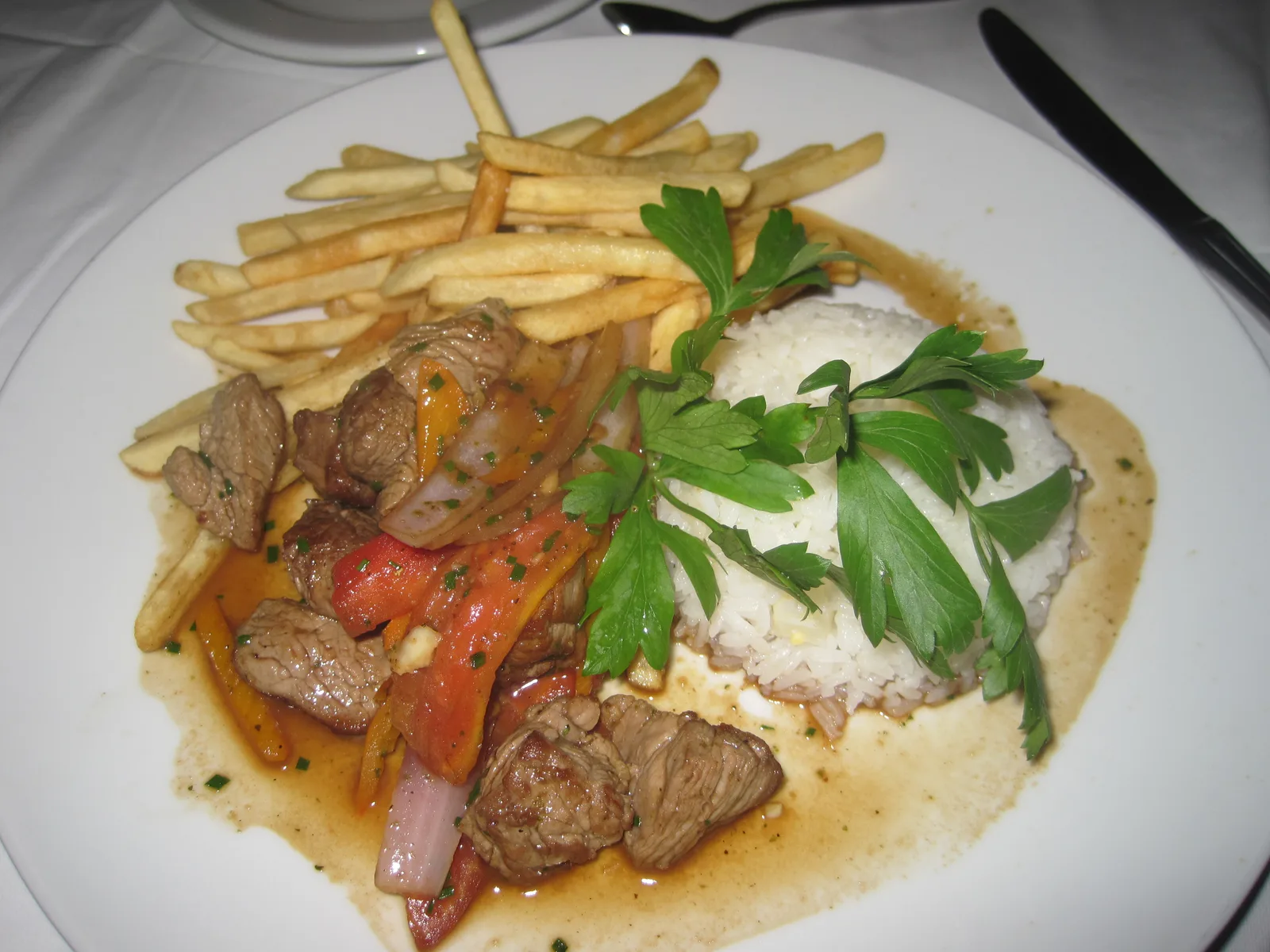
A plate of lomo saltado with seared beef strips, tomato and onion, French fries and a mound of white rice Peru flag Peru 40m
Dinner •Lima Heritage

Lomo Saltado

Lomo saltado is Peru's beloved Chifa stir-fry: strips of sirloin seared at screaming heat in a wok, tossed with red onion, tomato, soy sauce and red wine vinegar, then folded with crisp French fries and served beside white rice. It is the meeting of Cantonese wok cooking and Peruvian ingredients on one plate — smoky, salty, tangy and completely moreish. One serving is about 579 g.

Comfort & Energy

Sirloin seared at high heat with onion, tomato, soy and vinegar, tossed with fries and served with rice.

Pairs Well With
French fries, white rice and salsa criolla
Quick Prep (<30m)
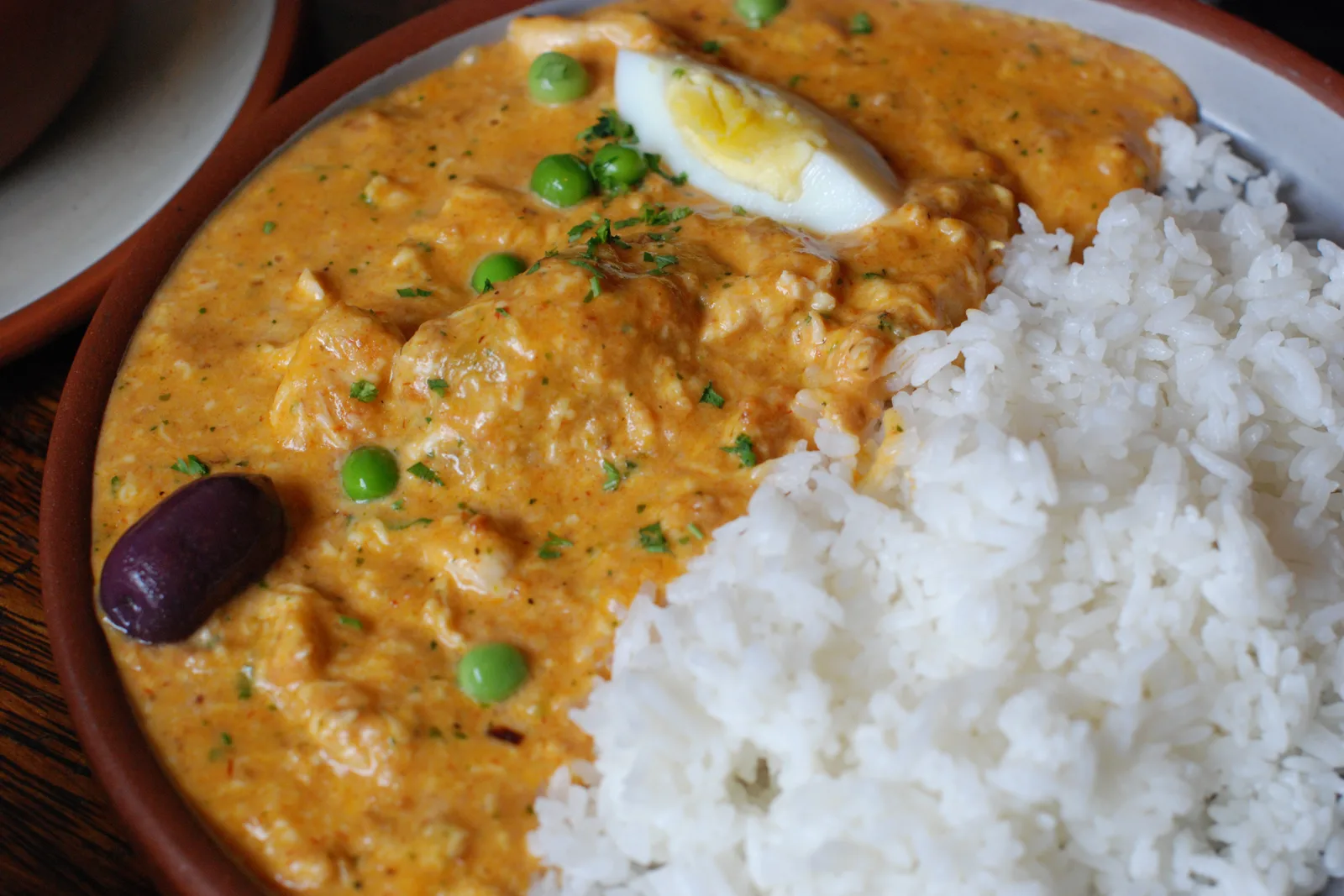
A bowl of ají de gallina with creamy golden chicken sauce, white rice, a boiled egg, peas and a black olive Peru flag Peru 1h
Dinner •Lima Heritage

Ají de Gallina

Ají de gallina is Lima's great comfort stew: poached chicken shredded into a velvety golden sauce of ají amarillo, bread soaked in evaporated milk, ground walnuts and Parmesan, served over white rice with a boiled egg, black olives and boiled potato. It is creamy, nutty, gently spicy and deeply filling — the dish Peruvians ask for when they come home. One serving is about 574 g.

Comfort & Warmth

Poached chicken in a creamy ají amarillo sauce thickened with bread, evaporated milk, walnuts and Parmesan.

Pairs Well With
White rice, boiled potato, boiled egg and black olives
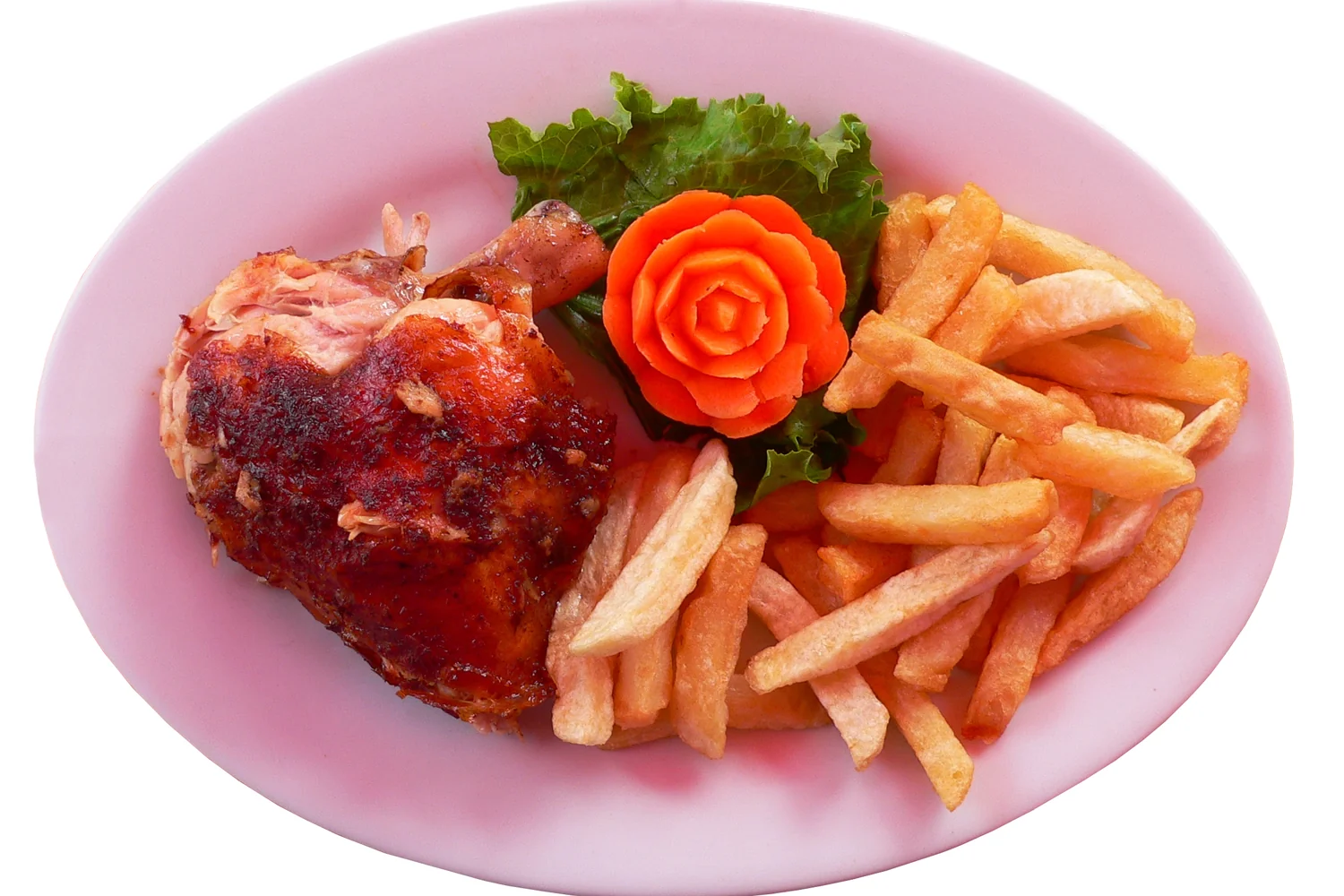
A glossy roasted chicken leg quarter with golden fries, lettuce and a carved carrot rose on a pink plate Peru flag Peru 1h 40m
Dinner •Lima Polleria Heritage

Pollo a la Brasa

This pollo a la brasa recipe marinates a whole chicken overnight in soy sauce, beer, lime, garlic, cumin and paprika, then roasts it slowly until the skin turns dark and crisp and the meat stays juicy. It is served the way every polleria in Lima serves it: a quarter chicken with thick-cut fries, a fresh salad and the two essential sauces, green aji verde and yellow aji amarillo. One serving is about 514 g.

High-Protein & Satisfying

Charcoal-roasted chicken with dark, crisp skin and juicy meat, served the polleria way with thick fries, salad and two aji sauces.

Pairs Well With
Aji verde, fries & salad
High Protein

The Dinner Gazette

Never wonder what’s for dinner again

One email a week with easy dinner ideas from around the world — ingredients, steps and nutrition, tested in our kitchen first.

Delivered every Thursday morning. Unsubscribe anytime.