Curated recipes from 193 countries  •  New seasonal Mediterranean issue out now

Overview

Polvo a Lagareiro

Polvo à Lagareiro, Roast Octopus Lagareiro Style

This polvo a lagareiro recipe is Portugal's great olive-oil dish: a whole octopus simmered until tender, then roasted until the edges crisp, and served over punched potatoes with a generous pour of hot garlic oil. The name comes from the lagareiro, the man who ran the olive press — and the dish uses his oil the way he would have, without holding back. One serving is about 400 g.

Lagareiro means the man who runs the olive press, and this dish is named for him because of how much olive oil goes into it — the oil is not a dressing, it is the dish. It is said to come from Tras-os-Montes in northern Portugal, where octopus was boiled, then finished over heat and served with potatoes and the new season's oil. Today it is a Christmas Eve classic across Portugal and a fixture in Lisbon taverns: simmer first so the octopus is tender, roast briefly so the edges crisp, and pour the garlic oil over it without holding back.

Pairs well with: Crusty bread, boiled cabbage and carrots, and a glass of cold vinho verde.

Provenance

Portugal flag Portugal

Portuguese Olive-Oil Classic

Mediterranean & Italy

Time Dedication

1h 35m

25m prep • 70m cook

Batch Yield

4 Servings

599 kcal per serving

1 serving ≈ 400 g

Technical Skill

Intermediate

Intermediate (Two-Stage Cooking)

Meal Timing & Digestive Fit

Breakfast

Not Advised

Lunch

Hearty Midday Main

Dinner

Ideal Hearty Main

Snack & Tea

Inappropriate

High Protein Occasions: Christmas Eve in Portugal, festive family dinners, summer evenings, a dinner-party main Cost: Medium — about $6–8 per serving at home
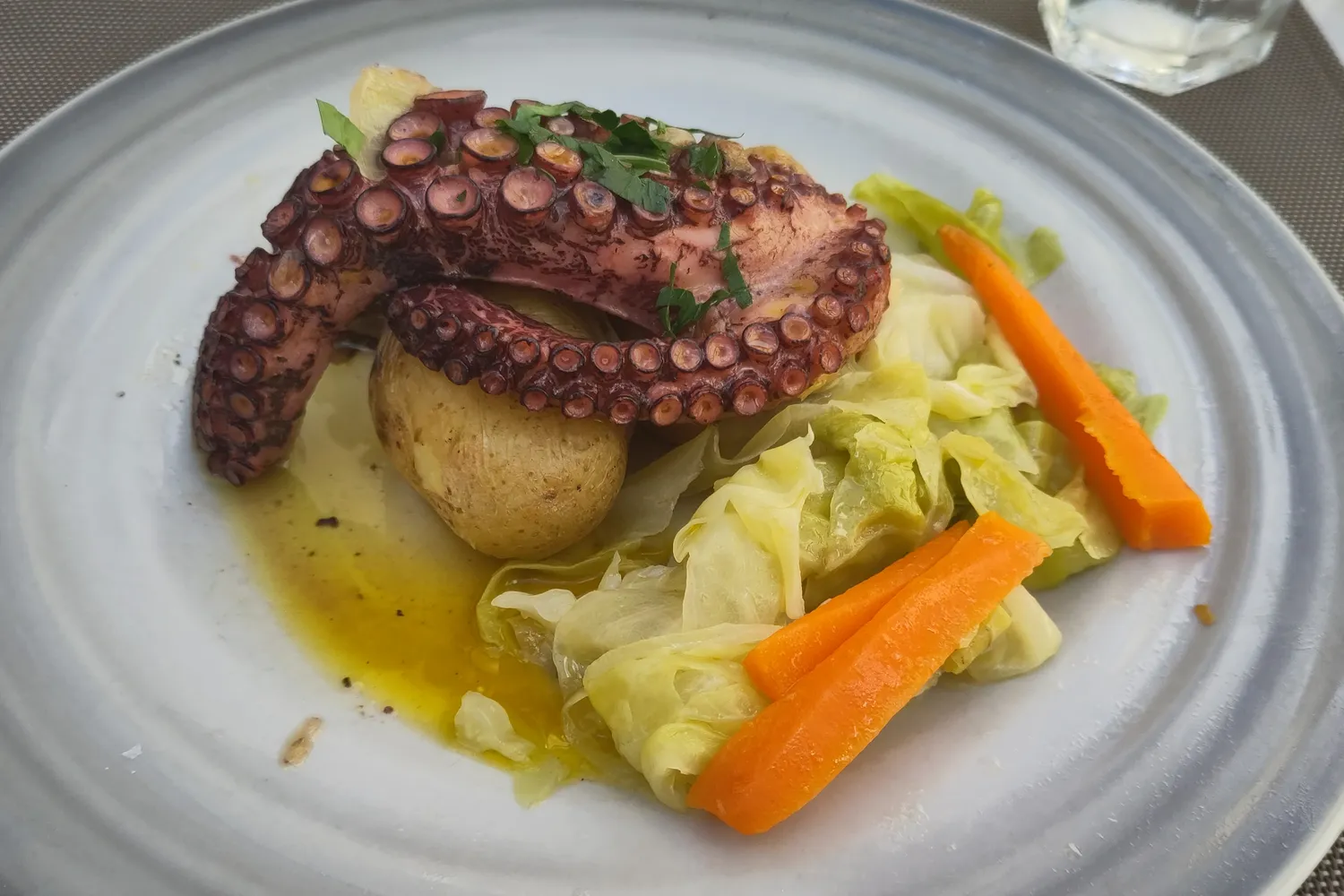
Roast octopus tentacles over a punched potato with boiled cabbage and carrots, drizzled with olive oil.

Portuguese Olive-Oil Classic

Photo: Exilexi, CC BY 4.0, via Wikimedia Commons

The Heritage Formulary

Measured Ingredients

Estimated cost: Medium — about $6–8 per serving at home (USD)

Made with a whole octopus simmered until tender, roasted until the edges crisp, and served over punched potatoes with hot garlic olive oil.

Execution Methodology & Culinary Technique

Step-by-Step Cooking Guide

Active 1h 35m
P

Prep Stage: Clean the Octopus and Ready the Potatoes

25 Mins • Hands-On

Rinse the cleaned octopus under cold water and check that the beak — the hard piece at the centre where the tentacles meet — has been removed, along with the eyes and ink sac; your fishmonger will usually do this. Scrub the potatoes and leave the skins on. Peel and halve the onion, slice the garlic, and have the bay leaves, lemon and parsley ready. Pat the octopus dry once it is out of the pot — a dry surface crisps in the oven instead of steaming.

Maestro Tip: If you buy frozen octopus, thaw it slowly in the fridge overnight. Frozen octopus is often more tender than fresh, because the freezing breaks down some of the tough fibres.

  1. 1

    Simmer the Octopus Until Tender

    45 Mins • Cooking Gentle simmer, about 90°C (194°F)

    Bring a large pot of unsalted water to a gentle simmer — never a rolling boil, which toughens octopus. Add the halved onion and the bay leaves, lower the octopus in tentacles first, and simmer very gently for 40–45 minutes. The octopus is ready when a skewer slides into the thickest part of a tentacle with only a little resistance. Lift it out, let it cool for 10 minutes, and cut the tentacles apart at the joints.

    Do not salt the simmering water — salt in the water firms the flesh. Salt goes on the potatoes and at the table instead.

    Done when: A skewer slides in easily; the tentacles curl and the skin turns deep purple-red.

  2. 2

    Roast and Punch the Potatoes

    40 Mins • Cooking Oven 200°C (400°F)

    While the octopus simmers, put the scrubbed potatoes in a pot of cold salted water, bring to the boil and cook for 20–25 minutes until completely tender. Drain, then roast them in their skins with a drizzle of the olive oil and coarse salt at 200°C (400°F) for 15 minutes. Take them out and punch each one once with the flat of your hand through a folded tea towel — this is the batatas a murro, the punched potatoes, and the cracks are what catch the oil.

    Punch the potatoes while they are hot — cold potatoes crack instead of flattening, and the towel stops them from scalding your hand.

    Done when: Potatoes fork-tender inside, skins wrinkled and crisped, each one cracked open.

  3. 3

    Make the Hot Garlic Oil

    3 Mins • Cooking Low heat, about 120°C (250°F)

    Warm half the remaining olive oil in a small pan over low heat with the sliced garlic for 2–3 minutes, just until the garlic turns pale gold and smells sweet. Take it off the heat at once and stir in the lemon juice and black pepper — the oil should be hot, not smoking.

    Garlic goes from golden to bitter in under a minute, so stand over the pan and pull it off the heat the moment it colours.

    Done when: Garlic pale gold and fragrant; the oil shimmers and smells sweet.

  4. 4

    Roast the Octopus Until the Edges Crisp

    12 Mins • Cooking Oven 220°C (425°F)

    Heat the oven to 220°C (425°F). Put the cut tentacles and the punched potatoes in a roasting dish, brush with a little olive oil, and roast for 10–12 minutes until the edges of the tentacles are crisp and browned in places. The octopus is already cooked through from the simmer — this step is only for the crisp outside, so do not leave it in longer.

    A hot oven and a short roast is the whole trick — a cool oven or a long roast dries the octopus out instead of crisping it.

    Done when: Tentacle edges crisp and browned, suckers curled, flesh hot through — octopus is safe at 63°C (145°F) inside.

  5. 5

    Plate, Pour the Garlic Oil and Serve

    2 Mins • Hands-On No heat

    Arrange the punched potatoes on a warm platter, lay the roasted tentacles over them, and pour the hot garlic oil over everything. Scatter the chopped parsley, add lemon wedges, and serve immediately.

    Serve on a warm platter — the thin tentacles lose their heat in under a minute on a cold plate.

    Done when: Hot, crisp-edged tentacles glistening with garlic oil over cracked golden potatoes.

Finishing Touches & Plating

Spoon the hot garlic oil over the octopus and potatoes so it pools on the plate, scatter the parsley, and serve at once with lemon wedges. The oil on the plate is part of the dish — put bread on the table for it.

Nutritional Physiology & Benefits

Nutrition

Energy

599

kcal / serving

Protein

50g

Complete AA

Carbs

47g

Complex

Fats

23g

Healthy

Per serving (4 servings · 1 serving ≈ 400 g)
Energy599 kcal
Protein50 g
Carbohydrates47 g
Fat23 g
Fibre5.2 g
Sugar2.9 g
Sodium1190 mg
Per 100g
Energy150 kcal
Protein12.4 g
Carbohydrates11.7 g
Fat5.8 g
Fibre1.3 g
Sugar0.7 g
Sodium298 mg

Nutrition values are estimated — calculated from USDA FoodData Central values for the listed ingredients.

Vitamins & minerals: Provides vitamin B12, selenium, iron and copper from the octopus, plus vitamin C from the lemon and vitamin K from the parsley.

Lean Protein, Filling Potatoes

One serving carries about 49.5 g of protein for 599 kcal — octopus is one of the leanest high-protein seafoods, and the potatoes add slow, filling carbohydrate.

B12, Iron and Selenium

Octopus is unusually rich in vitamin B12, iron, selenium and copper — nutrients that support red blood cells and normal immune function.

Olive Oil, Garlic and Lemon

The dressing is olive oil, garlic, lemon and parsley — the Portuguese lagareiro pattern: generous fat from a whole food, no cream, no butter, no sauce from a jar.

Food Pairings

What to Eat With

To optimize nutrient absorption and elevate the sensory depth, pair with these authentic accompaniments:

Sides

Crusty Bread

Bread is not optional with this dish — it is for mopping up the garlic oil left on the plate, which is half the pleasure of the meal.

Green Salad with Lemon

A simple green salad with lemon dressing adds freshness and crunch, and gives the rich oil something bright to play against.

Vegetables

Boiled Cabbage and Carrots

Boiled cabbage and carrots are what Portuguese restaurants serve alongside it — their sweetness and soft texture balance the salty, crisp octopus.

Drinks

Cold Vinho Verde

A cold, light vinho verde is the Portuguese pairing: its gentle fizz and acidity cut through the olive oil and suit the seafood perfectly.

Complete menu

Serve polvo a lagareiro as the centre of the table with crusty bread, boiled cabbage and carrots, and a cold vinho verde — or as a festive main after a light soup.

Digestive Guardrails

What NOT to Combine

To prevent digestive distress, sluggishness, or palate clash, avoid pairing the dish with these elements:

Roasting Raw Octopus Without Simmering First

Octopus roasted from raw turns tough and rubbery, and it is harder to cook evenly to a safe temperature. Always simmer it tender first, then roast briefly for the crisp edges. Cook octopus to at least 63°C (145°F) inside. This is general food-safety information, not medical advice.

Very Large Portions for People Watching Sodium

One serving carries about 1,190 mg of sodium — octopus is naturally salty, and the salted potato water adds more. People with high blood pressure should keep the portion modest and go easy on extra salt. This is general food information, not medical advice.

General information only, not medical advice — consult a doctor for personal dietary decisions.

Who Should Eat It

Who Should Eat

  • General adultsA lean, high-protein main for most adults — rich in flavour from the olive oil, but light in fat for a roast.
  • ChildrenBest for older children who like seafood — the tentacles can look daunting, so cut them into small pieces and let them try the potatoes first.
  • ElderlyA good protein choice, but the octopus is firm and chewy — slice it thinly, and skip it for anyone who struggles to chew.
  • Pregnant womenGenerally safe when fully cooked — the octopus here is simmered then roasted, so it is cooked right through. Keep the portion modest, as octopus is naturally salty.
  • Breastfeeding womenA lean, iron-rich protein that fits well; the omega-3 content is modest, so it complements oily fish rather than replacing it.
  • AthletesAbout 49.5 g of protein per serving with slow carbohydrate from the potatoes — a strong recovery meal after training.
  • Weight gainLess useful on its own — it is high in protein but moderate in calories, so eat a full portion of potatoes and plenty of bread for the oil.
  • Weight lossA strong choice: about 599 kcal with 49.5 g of protein, so it is very filling — just measure the olive oil and watch the bread.

Health Conditions — Adjust or Avoid

Conditions

  • DiabetesModerate in carbohydrate — about 46.8 g per serving, mostly from the potatoes — and high in protein, so it is gentler on blood sugar than a pasta main. Ask your clinician.
  • High blood pressureHigh in sodium — about 1,190 mg per serving, mostly natural to the octopus. Keep the portion modest and skip extra salt on the potatoes. Ask your clinician.
  • Kidney diseaseVery high in protein and moderately high in phosphorus; keep portions small and ask your clinician.
  • GoutOctopus is moderately high in purines, so people with gout should eat it only occasionally and in a small portion — ask your clinician.
  • Stomach issuesFirm, chewy seafood can be hard to digest — eat slowly, chew well, and keep the portion modest if your stomach is sensitive.
  • Cardiovascular diseaseLean protein with healthy olive-oil fat and very little saturated fat — a heart-friendly main. The sodium is the thing to watch. Ask your clinician.
  • Fatty liverLean and moderate in fat, so it fits well — keep the olive oil measured and pair it with vegetables. Ask your clinician.
  • Food allergiesContains mollusc (octopus). People with shellfish or mollusc allergy must avoid it — ask your clinician.
  • Special therapeutic dietsNot suitable for a low-sodium or low-purine diet without adjustment — keep the portion small and check with your clinician.

If you have a medical condition, consult your doctor before changing your diet.

Storage & Use

Storage & Use

How to store
Cool the cooked octopus within 2 hours and store in a sealed container in the fridge, in its oil.
In the fridge
Up to 2 days in a sealed container.
In the freezer
Up to 2 months, in a sealed container with its oil — though the texture softens on thawing.
How to reheat
Reheat gently in a covered pan over low heat with a splash of oil until hot through. Reheat to 74°C (165°F). Do not microwave on high — it toughens fast.
Freezing recommended
Only if needed — best eaten the day it is roasted.
Signs it has spoiled
Strong fishy or ammonia smell, slimy surface, or discolouration.

More recipes to explore

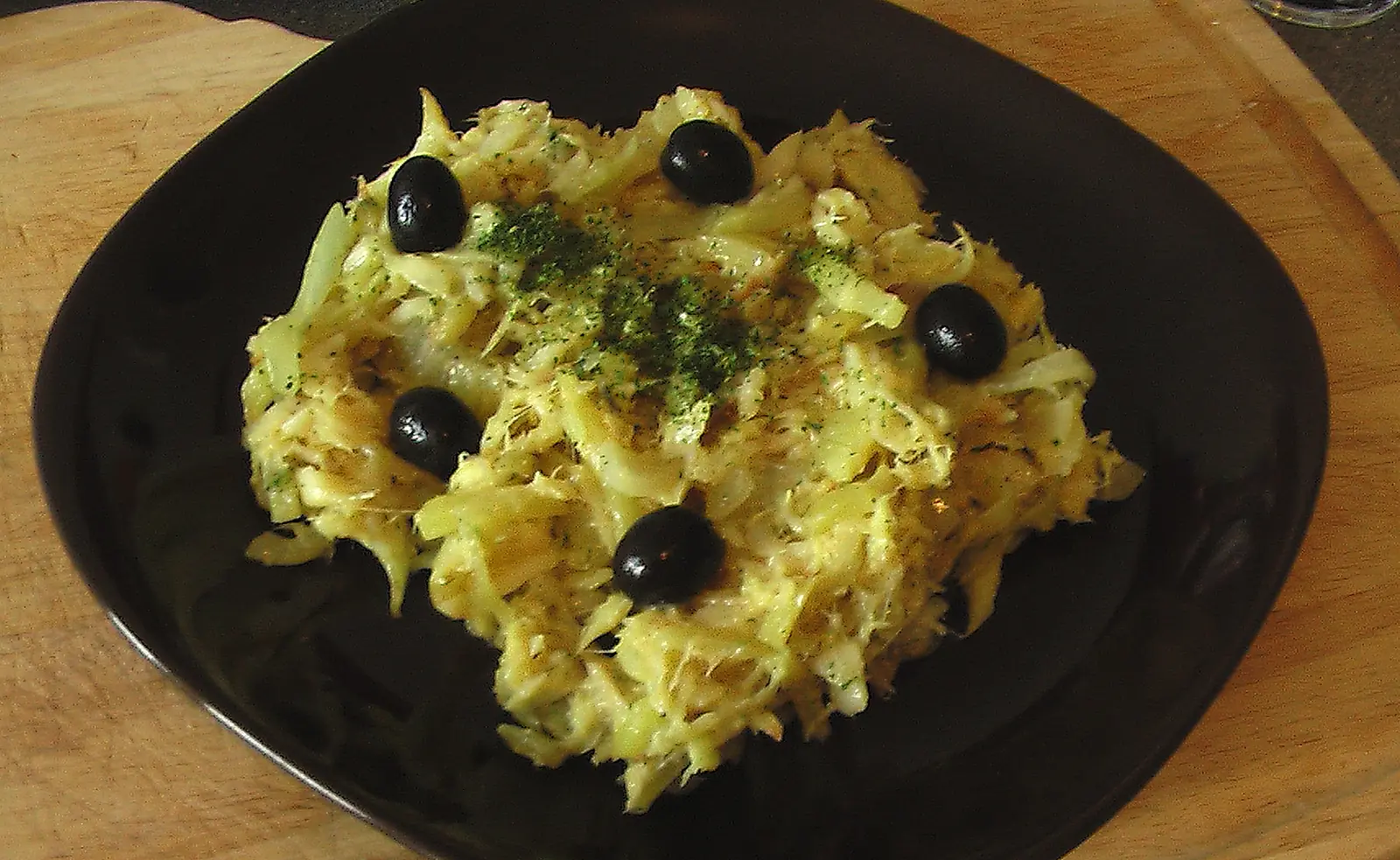
A plate of bacalhau à brás — shredded salt cod with egg and matchstick potatoes, black olives and parsley Portugal flag Portugal 50m
Dinner •Lisbon Tavern Classic

Bacalhau à Brás

Bacalhau à brás recipe: desalted shredded cod, golden matchstick potatoes and softly scrambled egg, finished with black olives and parsley. One serving is about 350 g.

Comfort & Protein

Shredded salt cod folded with egg and crisp matchstick potatoes — a filling, protein-rich Lisbon supper.

Pairs Well With
A simple green salad and a glass of vinho verde
High Protein
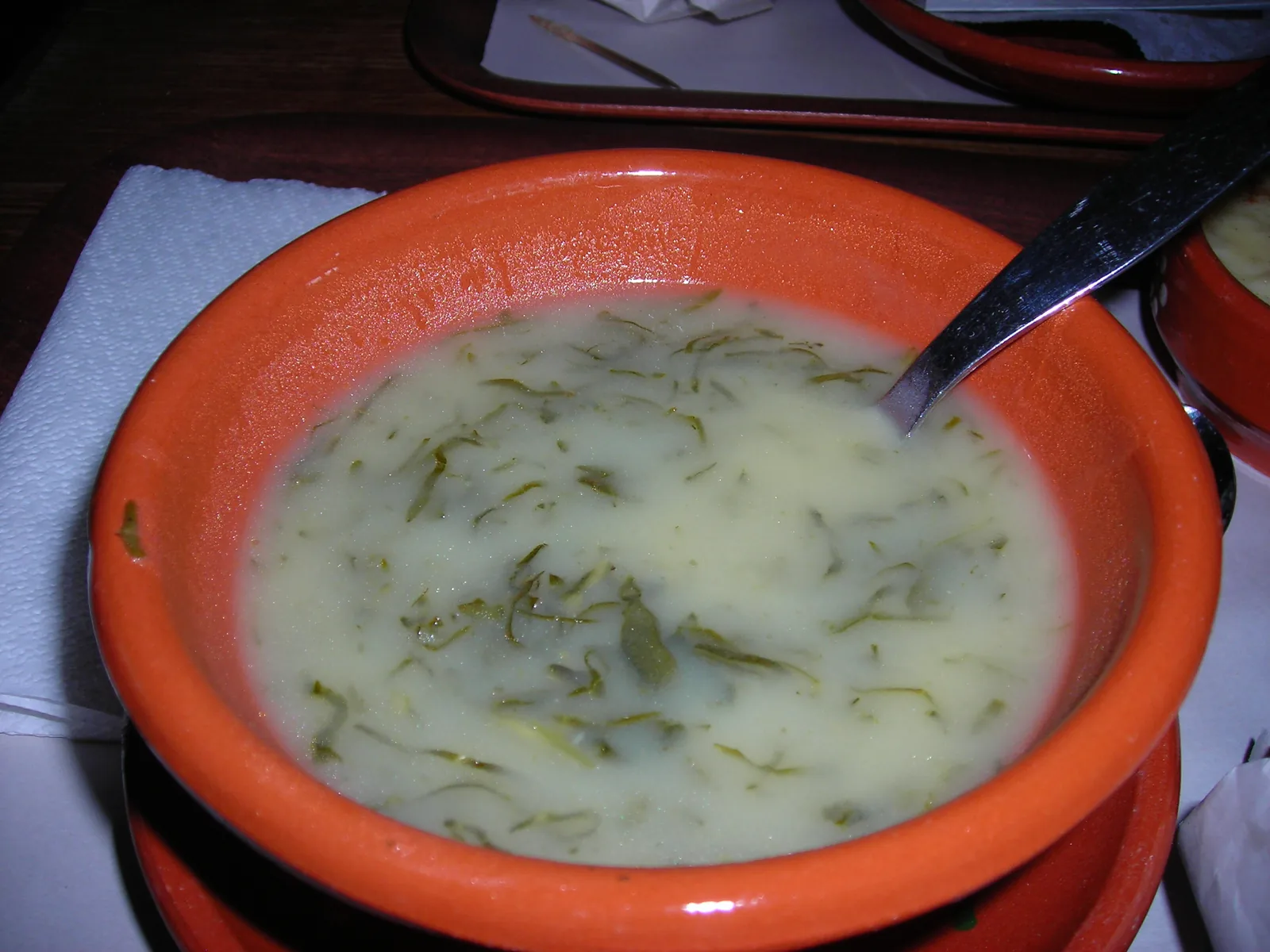
A terracotta bowl of caldo verde — pale potato soup with shredded green kale and a spoon Portugal flag Portugal 50m
Dinner •Minho National Soup

Caldo Verde

Caldo verde recipe: creamy potato soup blended smooth, with ribbons of kale and slices of chouriço, finished with a thread of olive oil. One serving is about 590 g.

Comfort & Warmth

Silky potato soup with finely shredded kale and smoky chouriço — Portugal's best-loved bowl.

Pairs Well With
Crusty broa bread and a glass of vinho verde
Soups & Broths
A tray of pastel de nata — golden custard tarts with blistered, caramelised tops in flaky pastry Portugal flag Portugal 50m
Snack & Tea •Belém Monastery Tart

Pastel de Nata

Pastel de nata recipe: shatteringly crisp puff pastry shells filled with warm, vanilla-cinnamon egg custard, baked until blistered on top. One serving is about 187 g (2 tarts).

Sweet Treat

Crisp, flaky pastry cups filled with cinnamon-scented egg custard, blistered in a very hot oven.

Pairs Well With
A small strong coffee (bica) and a dusting of cinnamon
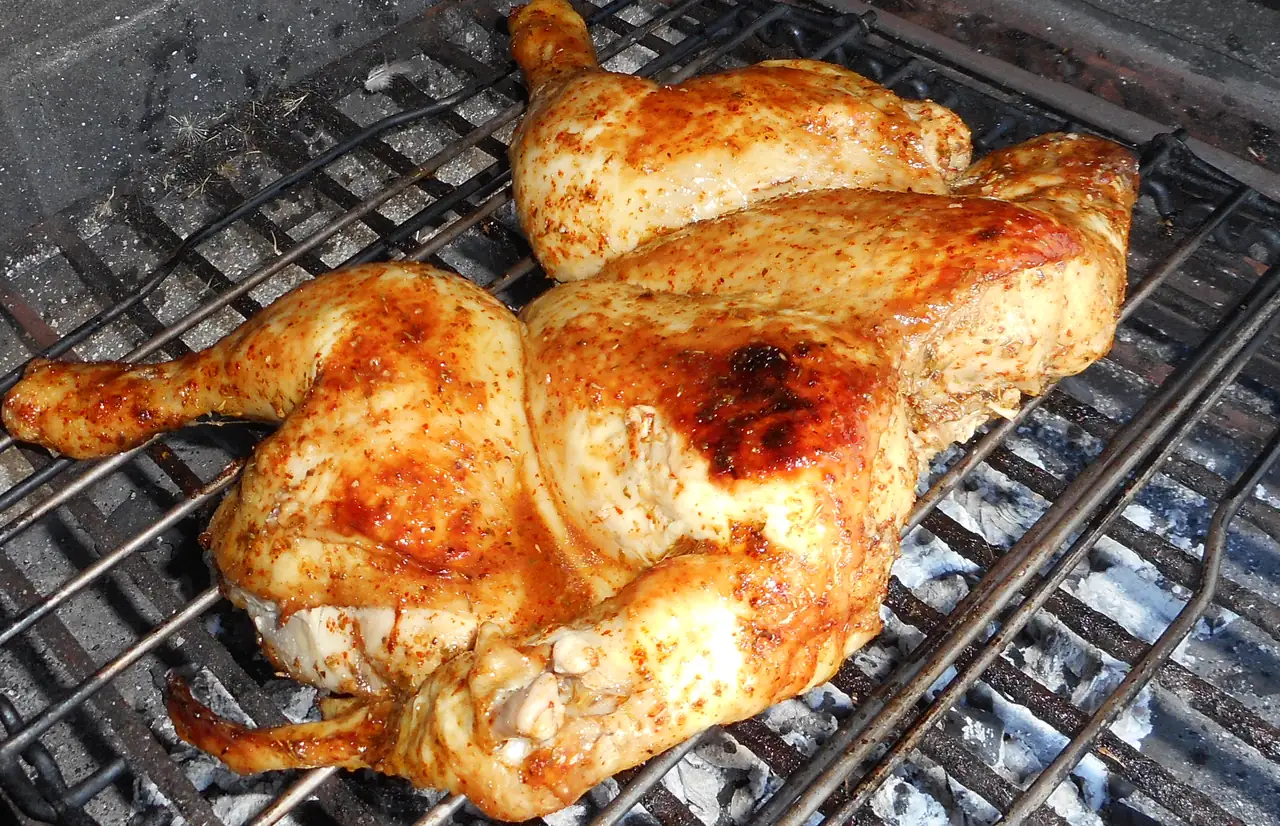
Butterflied piri piri chicken grilling over charcoal, golden-red with chilli spice Portugal flag Portugal 55m
Dinner •Algarve Heritage

Frango Piri Piri

Frango piri piri is Portugal's most famous chicken: a whole bird butterflied flat, rubbed with a fiery paste of piri piri chillies, garlic, lemon and paprika, then grilled over charcoal until the skin turns crisp and red-gold. This piri piri chicken recipe is the Algarve way — an overnight marinade, a hot grill, and a warm butter baste at the end. One serving is about 210 g.

Spicy Char-Grill

A butterflied chicken marinated in piri piri chilli, garlic and lemon, grilled over charcoal until the skin is crisp and reddened.

Pairs Well With
Chips, tomato-onion salad and a cold beer.
High Protein

The Dinner Gazette

Never wonder what’s for dinner again

One email a week with easy dinner ideas from around the world — ingredients, steps and nutrition, tested in our kitchen first.

Delivered every Thursday morning. Unsubscribe anytime.