Curated recipes from 193 countries  •  New seasonal Mediterranean issue out now

Overview

Ponche Crema

Venezuelan Eggnog, Ponche de Crema, Venezuelan Cream Punch

This ponche crema recipe makes Venezuela's Christmas eggnog: egg yolks whisked with sweetened condensed milk and whole milk, gently cooked with cinnamon and lemon zest until thick and silky, then finished with aged Venezuelan rum and vanilla. It is rich, sweet and warmly spiced, and it is served ice-cold in small glasses at Christmas. One serving is about 138 g.

Ponche crema was created in Venezuela in the early 20th century by Eliodoro González P., who patented his recipe in 1904 and sold the creamy liqueur from his Caracas business. Families soon began making their own versions at home — egg yolks, condensed milk, milk and aged Venezuelan rum — and it became the drink of the Venezuelan Christmas table, poured in small glasses beside hallacas, pan de jamón and pernil. The original recipe remains a family secret, but the homemade versions all keep the same rich, spiced character.

Pairs well with: Serve ice-cold ponche crema in small glasses with pan de jamon and hallacas

Provenance

Venezuela flag Venezuela

Caracas Heritage

Latin America & Caribbean

Time Dedication

35m

15m prep • 20m cook

Batch Yield

8 Servings

275 kcal per serving

1 serving ≈ 138 g

Technical Skill

Intermediate

Medium (Cooked Custard)

Meal Timing & Digestive Fit

Breakfast

Not Advised

Lunch

Inappropriate

Dinner

Inappropriate

Snack & Tea

Ideal Light Bite

Occasions: Christmas, New Year, family celebrations, holiday gifts Cost: Low — about $1 per serving at home
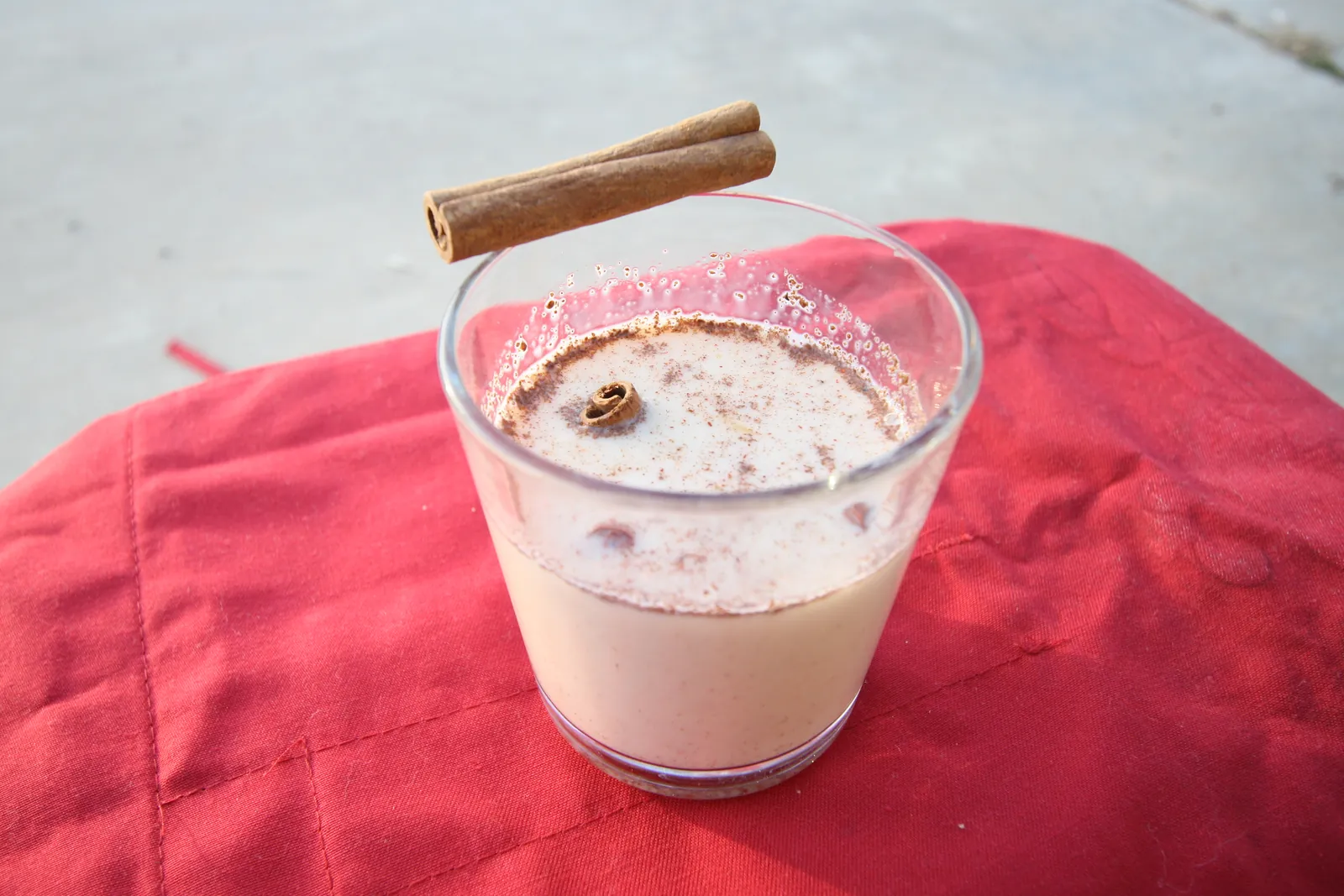
A glass of creamy pale eggnog dusted with cinnamon, with a cinnamon stick resting across the rim, on a red cloth

Caracas Heritage

Photo: Wheeler Cowperthwaite, CC BY 2.0, via Wikimedia Commons

The Heritage Formulary

Measured Ingredients

Estimated cost: Low — about $1 per serving at home (USD)

A good ponche crema is thick enough to coat the glass, pale gold, silky smooth with no lumps, and spiced with cinnamon and nutmeg — never thin or curdled.

Execution Methodology & Culinary Technique

Step-by-Step Cooking Guide

Active 35m
P

Separate the Yolks and Warm the Milk

15 Mins

Separate the 6 egg yolks into a large heatproof bowl, taking care that no white gets in, and whisk them until they turn pale and a little thick. Meanwhile put the 480ml of whole milk in a saucepan with the cinnamon stick and the lemon zest, and set it over medium heat. Keep the condensed milk, rum, vanilla and nutmeg measured and close at hand — once the custard starts to thicken, everything moves fast.

Maestro Tip: Separate each egg over a small bowl before tipping the yolk into the big bowl, so one broken yolk cannot spoil the whole batch.

  1. 1

    Warm the Spiced Milk

    10 Mins Medium heat, about 80°C (175°F)

    Put the 480ml of whole milk in a medium saucepan with the cinnamon stick and the 2g of lemon zest. Heat over medium heat, stirring now and then, until the milk is steaming and small bubbles appear around the edge — about 80°C (175°F). Do not let it boil. Take the pan off the heat.

    Milk boils over in seconds once it starts, so stay by the pan and pull it off the heat as soon as it steams.

    Done when: Steaming milk with small bubbles at the edge, smelling faintly of cinnamon and lemon.

  2. 2

    Whisk the Yolks with Condensed Milk

    5 Mins Room temperature, about 20°C (68°F)

    Whisk the 6 egg yolks in a large heatproof bowl for about 2 minutes, until they turn pale yellow and a little thick. Add the 397g of sweetened condensed milk and the 1g of ground nutmeg, and whisk until the mixture is smooth and glossy.

    Whisking the yolks pale first is what makes the finished ponche crema thick and silky instead of thin.

    Done when: A smooth, pale golden cream with no streaks of yolk.

  3. 3

    Temper and Cook the Custard

    10 Mins Low heat, about 74°C (165°F), never above 82°C (180°F)

    Pour a ladle of the hot milk into the yolk mixture, whisking all the time, then pour in the rest in a slow stream, still whisking. Pour everything back into the saucepan and cook over low heat, stirring constantly with a wooden spoon, for about 8 minutes, until the custard thickens enough to coat the back of the spoon and reaches 74°C (165°F). Do not let it boil, or the yolks will curdle.

    If you see the first flecks of curdling, take the pan straight off the heat and whisk hard — it can often be saved if you catch it early.

    Done when: A custard that coats the back of a spoon and holds a line when you draw a finger through it, at 74°C (165°F).

  4. 4

    Add the Rum and Vanilla

    2 Mins Off the heat, cooling from about 74°C (165°F)

    Take the pan off the heat. Fish out the cinnamon stick and discard it. Stir in the 120ml of aged rum and the 10ml of vanilla extract until everything is combined.

    The rum goes in off the heat so its flavour stays bright and the custard does not thin out.

    Done when: A smooth, pale gold liqueur with no lumps and a warm smell of rum and vanilla.

  5. 5

    Chill Until Ice-Cold

    4 hours (chilling) Chilled, about 4°C (40°F)

    Pour the ponche crema through a fine sieve into a clean bottle or jug, put the lid on, and refrigerate for at least 4 hours, preferably overnight, until it is ice-cold and thick. It thickens as it chills.

    Straining catches any tiny flecks of cooked egg and any zest, so the drink pours perfectly smooth.

    Done when: Ice-cold, thick and silky when poured.

  6. 6

    Serve in Small Glasses

    5 Mins Ice-cold, about 4°C (40°F)

    Shake the bottle well, then pour the ponche crema into small glasses — about 138 g per glass. Dust each glass with a pinch of the ground cinnamon and serve at once, ice-cold.

    Small glasses are traditional: ponche crema is rich and strong, and a little goes a long way.

    Done when: Cold, thick glasses of pale gold ponche crema, dusted with cinnamon.

Finishing Touches & Plating

Shake the chilled bottle well, pour into small glasses, dust each with a pinch of ground cinnamon, and serve ice-cold.

Nutritional Physiology & Benefits

Nutrition

Energy

275

kcal / serving

Protein

8g

Complete AA

Carbs

31g

Complex

Fats

10g

Healthy

Per serving (8 servings · 1 serving ≈ 138 g)
Energy275 kcal
Protein8 g
Carbohydrates31 g
Fat10 g
Fibre0.1 g
Sugar30.4 g
Sodium96 mg
Per 100g
Energy199 kcal
Protein5.7 g
Carbohydrates22.3 g
Fat7.1 g
Fibre0.1 g
Sugar22 g
Sodium70 mg

Nutrition values are estimated — calculated from USDA FoodData Central values for the listed ingredients.

Vitamins & minerals: Vitamin A and B vitamins (egg yolks), calcium and vitamin D (whole milk), and small amounts of iron (egg yolks).

Rich, Festive Energy

One small 138 g serving gives about 275 kcal — a rich, satisfying sip, which is why ponche crema is served in small glasses, not big ones.

Real, Simple Ingredients

Egg yolks, milk, rum, vanilla and spices — no mixes or flavourings, just the classic pantry ingredients Venezuelan families have used for generations.

A Slow Christmas Ritual

Made ahead and chilled overnight, ponche crema is the drink Venezuelan families pour while they cook the Christmas dinner together — hallacas, pan de jamón and pernil.

Food Pairings

What to Eat With

To optimize nutrient absorption and elevate the sensory depth, pair with these authentic accompaniments:

Sides

Pan de Jamón

The salty-sweet Christmas ham bread is the perfect partner — its olives, ham and raisins balance the sweet, creamy liqueur.

Hallacas

The savoury Christmas tamale in its banana leaf sits happily beside a small glass of ponche crema — rich with rich, and the drink's spices echo the hallaca's seasoning.

Tequeños

Hot, salty fried cheese sticks cut straight through the sweetness of the ponche crema — the salt makes the next sip taste even better.

Full Menus

Venezuelan Christmas Table

Pour ponche crema as the drink of the Christmas table, with hallacas, pan de jamón and pernil for dinner and dulce de lechosa to finish.

Complete menu

Pour ice-cold ponche crema with hallacas, pan de jamón and pernil for a Venezuelan Christmas dinner, and finish with dulce de lechosa.

Digestive Guardrails

What NOT to Combine

To prevent digestive distress, sluggishness, or palate clash, avoid pairing the dish with these elements:

Serving It to Children

Ponche crema contains rum, so it is an adults-only drink — keep it away from children and make the alcohol-free version (rum replaced with milk) for them instead. This is general information, not medical advice.

Leaving It Out of the Fridge

This is an egg-and-milk drink and it spoils fast at room temperature, so keep it refrigerated at 4°C (40°F) or below and use it within 3 to 4 days — rum does not make it shelf-stable. This is general information, not medical advice.

General information only, not medical advice — consult a doctor for personal dietary decisions.

Who Should Eat It

Who Should Eat

  • General adultsA rich Christmas drink — one small 138 g glass is the traditional serving.
  • ChildrenNot for children — it contains rum. Make the alcohol-free version, with the rum replaced by milk, for them instead.
  • ElderlyKeep to one small glass — it is sweet, rich and alcoholic, and the sugar is about 30.4 g a serving.
  • Pregnant womenAvoid the rum version entirely during pregnancy; the alcohol-free version is the safer choice, and ask your clinician if you are unsure.
  • Breastfeeding womenAvoid the rum version while breastfeeding; if you do drink, keep it to one small glass well before a feed and ask your clinician if you are unsure.
  • AthletesRich in energy and sugar but not a recovery drink — the alcohol slows recovery, so save it for a rest day.
  • Weight gainAt about 275 kcal in a small glass, ponche crema is an easy way to add energy on a festive day.
  • Weight lossAbout 275 kcal and 30.4 g of sugar in one small glass, so keep it to a single serving or skip it — a second glass adds up fast.

Health Conditions — Adjust or Avoid

Conditions

  • DiabetesAbout 30.4 g of sugar a serving, mostly from the condensed milk, so one small glass is the limit and many people will want a smaller one; ask your clinician about a suitable serving.
  • High blood pressureSodium is low, about 96 mg a serving, but the alcohol can raise blood pressure — keep to one small glass and ask your clinician if you are unsure.
  • Kidney diseaseAbout 7.9 g of protein a serving from egg yolk and milk; ask your clinician whether it fits your diet.
  • GoutAlcohol can raise uric acid, so a small serving is wiser than a large one, and many people avoid it altogether; ask your clinician if you are unsure.
  • Stomach issuesA rich, creamy, alcoholic drink — take a small serving, cold, after food rather than on an empty stomach, and ask your clinician if symptoms persist.
  • Cardiovascular diseaseAbout 9.8 g of fat and alcohol in every glass, so keep the portion to one small serving and ask your clinician if you are unsure.
  • Fatty liverAlcohol and sugar together are hard on the liver, so this drink is best avoided; ask your clinician if you are unsure.
  • Food allergiesContains egg and milk. No gluten, peanut, tree nut, fish or shellfish.
  • Special therapeutic dietsThis is a festive alcoholic drink, not a therapeutic food; anyone on a special diet should ask their clinician before drinking it.

If you have a medical condition, consult your doctor before changing your diet.

Storage & Use

Storage & Use

How to store
Cool completely, strain into a clean bottle with a lid, and refrigerate.
In the fridge
3 to 4 days at 4°C (40°F) or below; shake well before serving. The rum does not make it shelf-stable.
In the freezer
Do not freeze — the custard splits and turns grainy on thawing.
How to reheat
Do not reheat — serve ice-cold. If it has been out of the fridge, chill it again before serving.
Freezing recommended
No — freezing spoils the creamy texture.
Signs it has spoiled
A sour smell, a curdled or lumpy texture, or any mould.

More recipes to explore

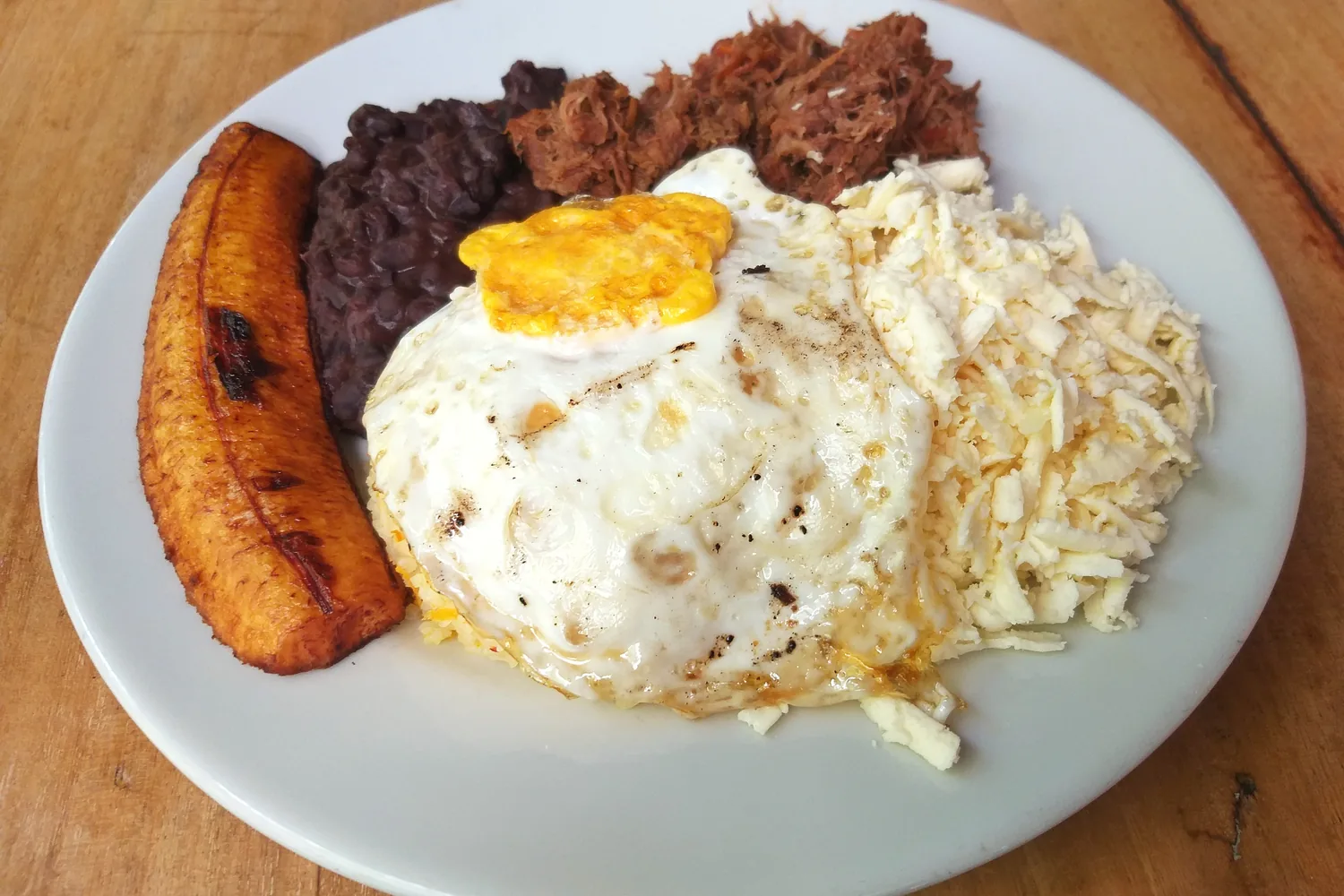
Pabellón Criollo plate with shredded beef, black beans, fried plantain, a fried egg and grated white cheese over white rice Venezuela flag Venezuela 3h
Lunch •Venezuelan National Dish

Pabellón Criollo

This pabellon criollo recipe is Venezuela's national plate: slow-braised shredded beef in a pepper and tomato sofrito, creamy black beans, fluffy white rice, sweet fried plantains and a fried egg, finished with grated white cheese. One serving is about 680 g.

Hearty & Satisfying

A complete plate of beef, beans, rice, plantain and egg that keeps you full for hours.

Pairs Well With
Serve with a cold papelón con limón or a light beer, and a simple avocado salad on the side.
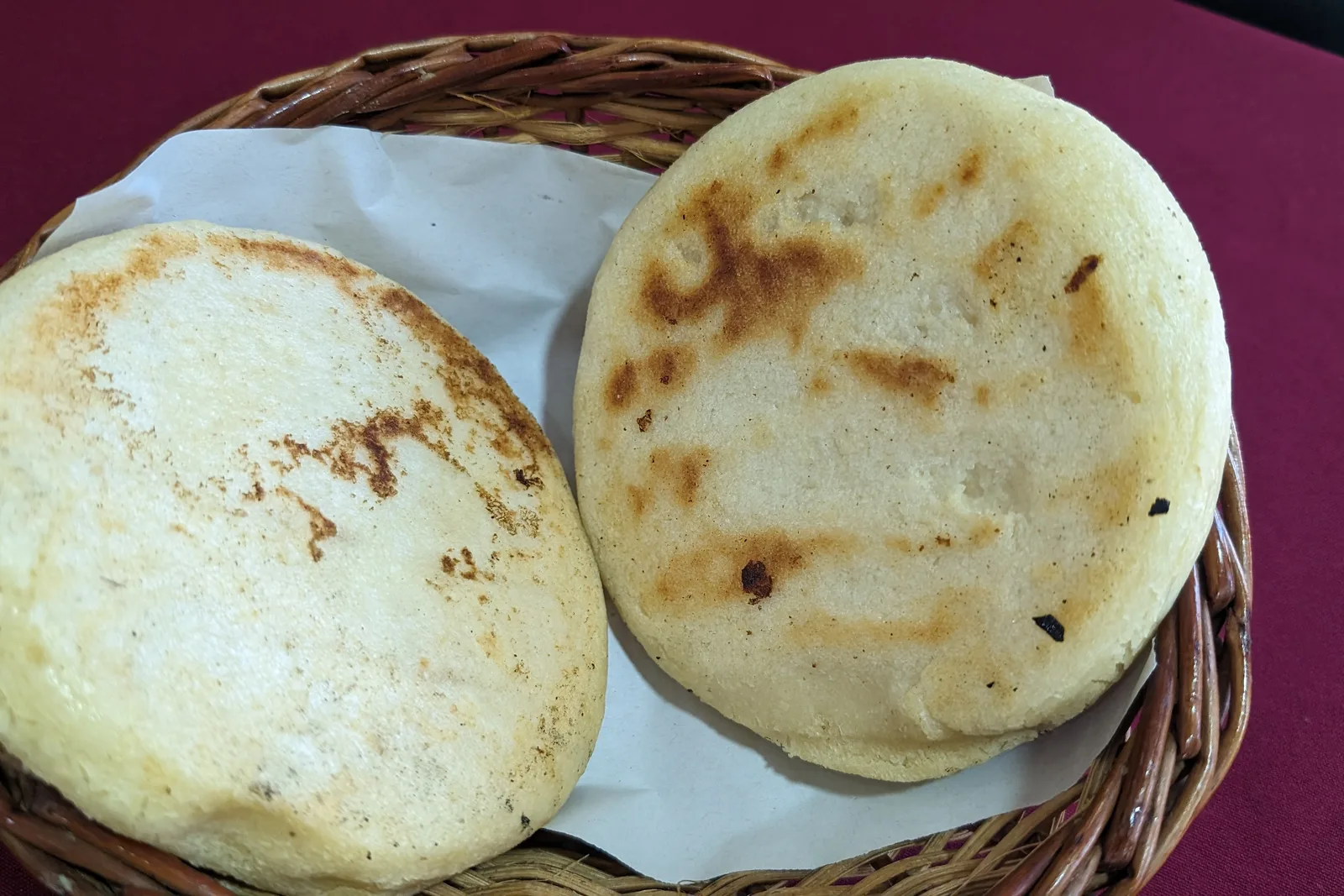
Two golden grilled Venezuelan arepas in a wicker basket lined with white paper Venezuela flag Venezuela 40m
Breakfast •Caracas Heritage

Venezuelan Arepas

This Venezuelan arepas recipe starts with just pre-cooked white cornmeal, warm water and salt, kneaded into a soft dough and shaped into thick cakes. They grill until crisp and golden outside and soft inside, finish in a hot oven so they puff, then get split open and stuffed with melted mozzarella, crumbled queso fresco, creamy avocado and tomato. Venezuelan arepas are the thick, stuffed kind: a whole breakfast you can hold in one hand. One serving is about 275 g, one stuffed arepa.

Comfort & Warmth

Thick grilled corn cakes made from white masarepa, split open like a pocket and stuffed with melting cheese, avocado and tomato.

Pairs Well With
Fresh orange juice or coffee, with a bowl of black beans or scrambled eggs on the side.
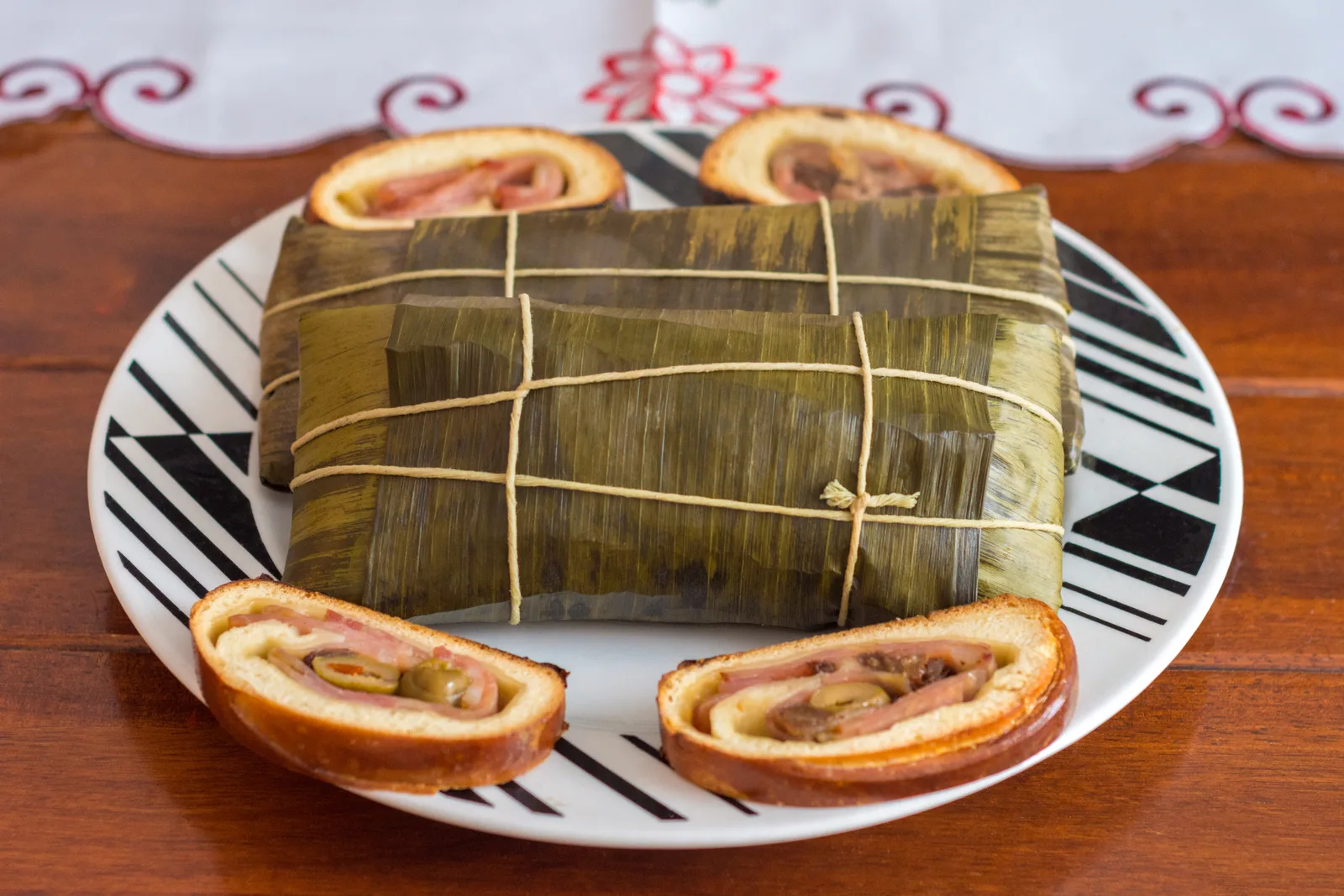
Two hallacas wrapped in banana leaves and tied with string, served on a plate with slices of pan de jamón Venezuela flag Venezuela 5h
Dinner •Venezuela's Christmas Dish

Hallacas

This hallacas recipe makes 12 golden parcels of annatto-coloured corn dough filled with a rich three-meat guiso, garnished with pepper, onion, olives, capers and raisins, then folded in banana leaves and boiled. One hallaca is about 300 g, a full festive dinner on its own. Hallacas are Venezuela's Christmas dish, made in big family batches and served with pan de jamón.

Festive & Filling

Golden annatto corn dough wrapped around a slow-cooked stew of beef, pork and chicken, folded in banana leaves — the parcel Venezuelan families gather to make every December.

Pairs Well With
Pan de jamón and ensalada de gallina, with a glass of ponche crema
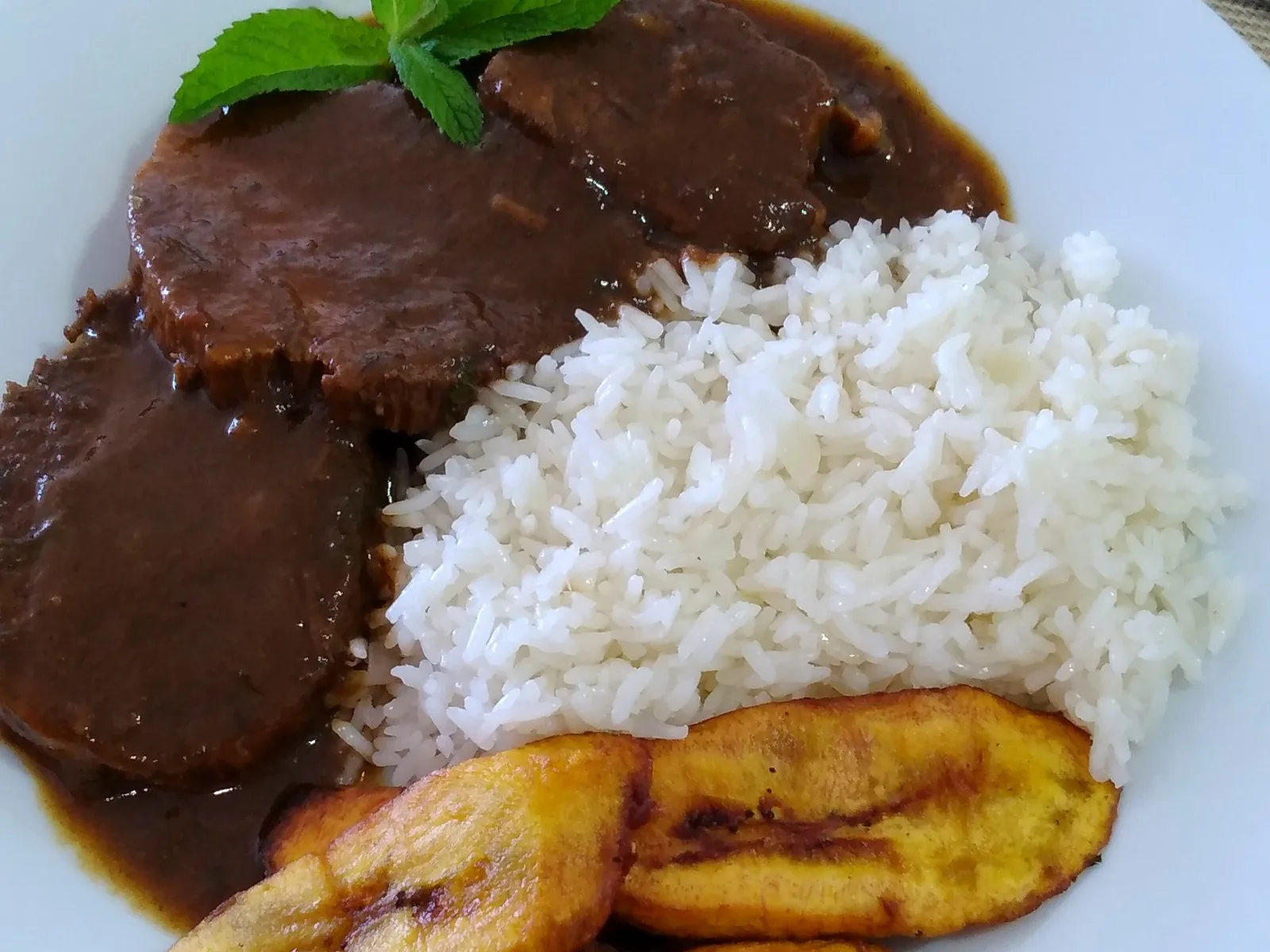
Slices of asado negro in a dark glossy sauce with white rice and golden fried plantains, garnished with mint Venezuela flag Venezuela 3h 30m
Dinner •Caracas Heritage

Asado Negro

Asado negro is Venezuela's dark, glossy beef roast: eye of round seared in caramelized panela, then braised low and slow in red wine, beef stock and soft vegetables until it slices like butter. The sauce is sweet, savoury and almost black, and it belongs over white rice with fried plantains. One serving is about 591 g.

Comfort & Warmth

Beef eye of round seared in caramelized panela, then braised in red wine and stock until tender.

Pairs Well With
White rice, fried plantains and a glass of red wine
High Protein

The Dinner Gazette

Never wonder what’s for dinner again

One email a week with easy dinner ideas from around the world — ingredients, steps and nutrition, tested in our kitchen first.

Delivered every Thursday morning. Unsubscribe anytime.