-
1
Make the Caramel
10 Mins • Hands-On
Medium heat; caramel about 170°C (340°F)
Put the 150 g of sugar and the 60 ml of water in a small, heavy pan over medium heat. Stir once to dissolve, then stop stirring and let it boil until it turns a deep amber — about 8 minutes. Swirl the pan gently if the colour is uneven, but never stir, or the sugar will crystallise. Working quickly, pour the caramel into the buttered mould and tilt it so the caramel coats the base and a little way up the sides.
Deep amber, not pale gold and not dark brown: pale caramel tastes only of sugar, and dark caramel tastes bitter. If it smokes, it is burnt — start again.
Done when: A deep amber caramel coating the base of the mould, beginning to set.
-
2
Make the Port and Cinnamon Syrup
10 Mins • Hands-On
Boil, then simmer; syrup to about 103°C (217°F) if using a thermometer
Put the 500 g of sugar and the 500 ml of water in a large pan with the cinnamon stick, the lemon peel and the melted butter. Bring to the boil, stirring until the sugar dissolves, then simmer gently for 5 minutes so the cinnamon and lemon perfume the syrup. Take the pan off the heat, lift out the cinnamon stick and lemon peel, and leave the syrup to cool for 10 minutes — it should be warm, not hot, when it meets the yolks.
The butter melts into the syrup and gives the finished pudding its silky, glossy richness — this is the vegetarian stand-in for the traditional pork fat (toucinho).
Done when: A clear, fragrant syrup, warm to the touch, with the cinnamon and lemon removed.
-
3
Whisk the Yolks with Port
5 Mins • Hands-On
No heat — room temperature about 20°C (68°F)
Put the fifteen yolks in a large bowl and break them gently with a fork, then stir in the Port wine. Do not whisk hard or beat in air — bubbles become holes in the finished pudding. Pass the yolks through a fine sieve into a clean bowl to remove the white membrane (the chalazae) and any strands, which keeps the texture perfectly smooth.
Stir, do not whisk: the yolks should be just combined and still a deep, even gold. Froth on top means you have beaten in air.
Done when: Smooth, deep-gold yolks with the Port stirred in, no bubbles and no white strands.
-
4
Combine Syrup and Yolks
5 Mins • Hands-On
Syrup cooled to about 60°C (140°F)
Pour the warm syrup into the sieved yolks in a thin stream, stirring gently all the time with a wooden spoon. If the syrup is too hot it will scramble the yolks, so check it first — it should feel warm, not hot, on the inside of your wrist. Strain the whole mixture once more through a fine sieve into a jug, to catch any last trace of egg white.
The second straining is what makes this pudding silk instead of grainy — do not skip it.
Done when: A smooth, even, golden liquid with no lumps and no foam on the surface.
-
5
Fill the Mould and Bake in a Water Bath
50 Mins • Baking
Oven 180°C (350°F); custard centre at least 71°C (160°F)
Pour the mixture gently into the caramel-lined mould. Set the mould in the deep roasting tray and pour boiling water into the tray until it comes halfway up the sides of the mould. Bake at 180°C (350°F) for 45–50 minutes. The pudding is done when the surface is lightly golden and the centre still trembles slightly when you shake the tray — it firms up as it cools. A skewer pushed into the centre should come out clean, and the centre should reach at least 71°C (160°F).
Do not overbake — five minutes too long and the pudding turns rubbery and dull. Trembling when it comes out is correct; it sets as it cools.
Done when: Lightly golden surface, centre set but trembling slightly; a skewer comes out clean.
-
6
Cool, Chill and Turn Out
5 Mins • Hands-On, Plus 4 Hours Chilling
No heat; chill at 4°C (40°F) or below
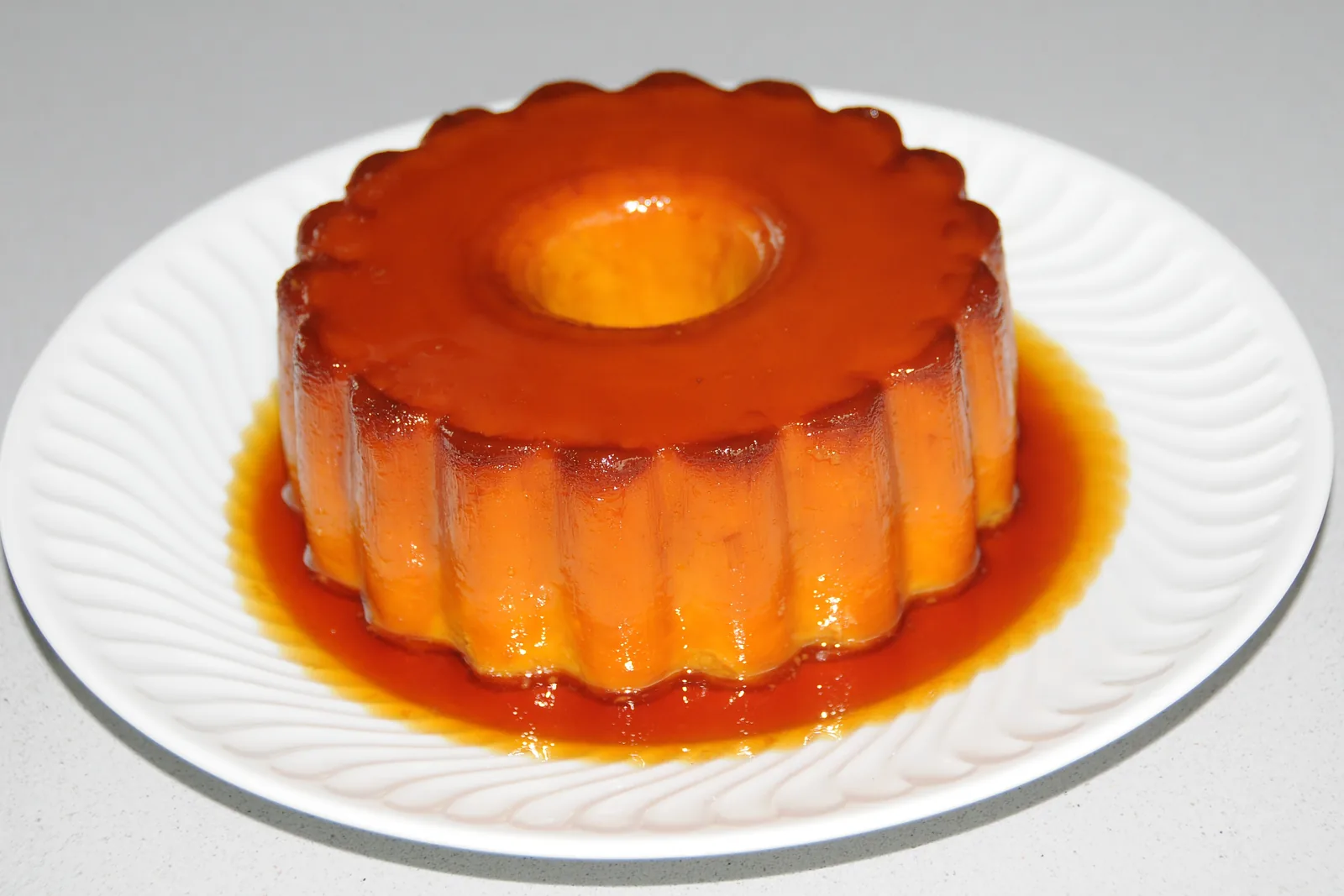
Lift the mould out of the water bath and leave it to cool for 30 minutes, then chill in the fridge for at least 4 hours — overnight is best. The pudding must be cold before it is turned out, or it will break. To unmould, run a thin knife around the edge, set a rimmed plate on top, and flip it over in one quick movement. Lift the mould off slowly so the caramel runs down over the pudding, then dust lightly with ground cinnamon.
If the pudding sticks, dip the base of the mould in hot water for 10 seconds and try again — the caramel melts and releases it.
Done when: A smooth, deep-gold pudding with amber caramel running down its sides, served cold.
auto_awesome Finishing Touches & Plating
Turn the chilled pudim out onto a rimmed plate so the caramel pools around it, dust lightly with ground cinnamon, slice with a hot, wet knife, and serve cold — with strong coffee, the way families in Braga do.

 Portugal
50m