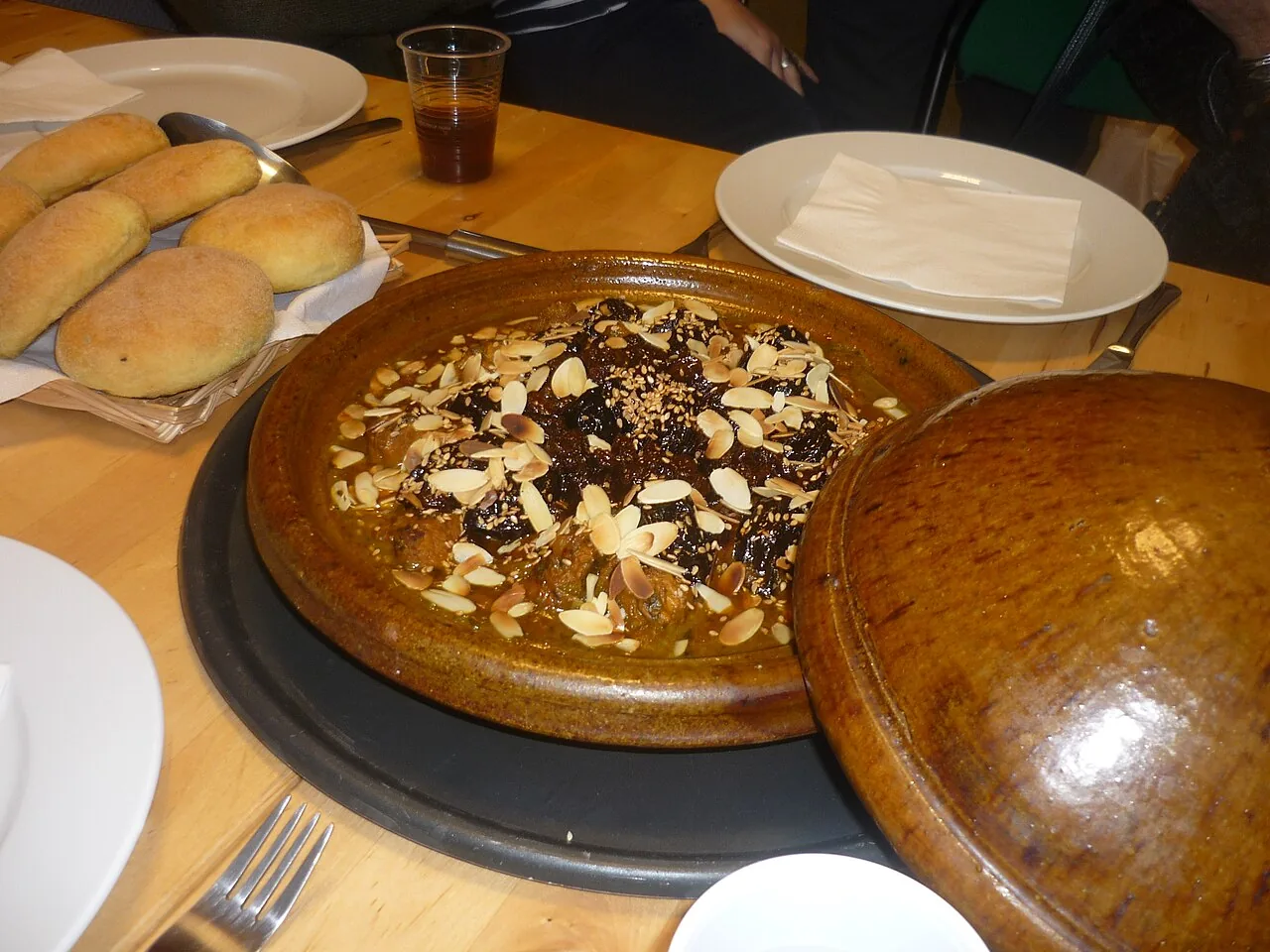
Lamb & Prune Tagine
Clay vessel braised lamb shoulder infused with Ras el Hanout, saffron stamens, and natural sun-dried fruit pectins.
Immunity & Warming
Slow-braised lamb with prunes, almonds and couscous.
Spiced Couscous & Preserved Lemon Salad
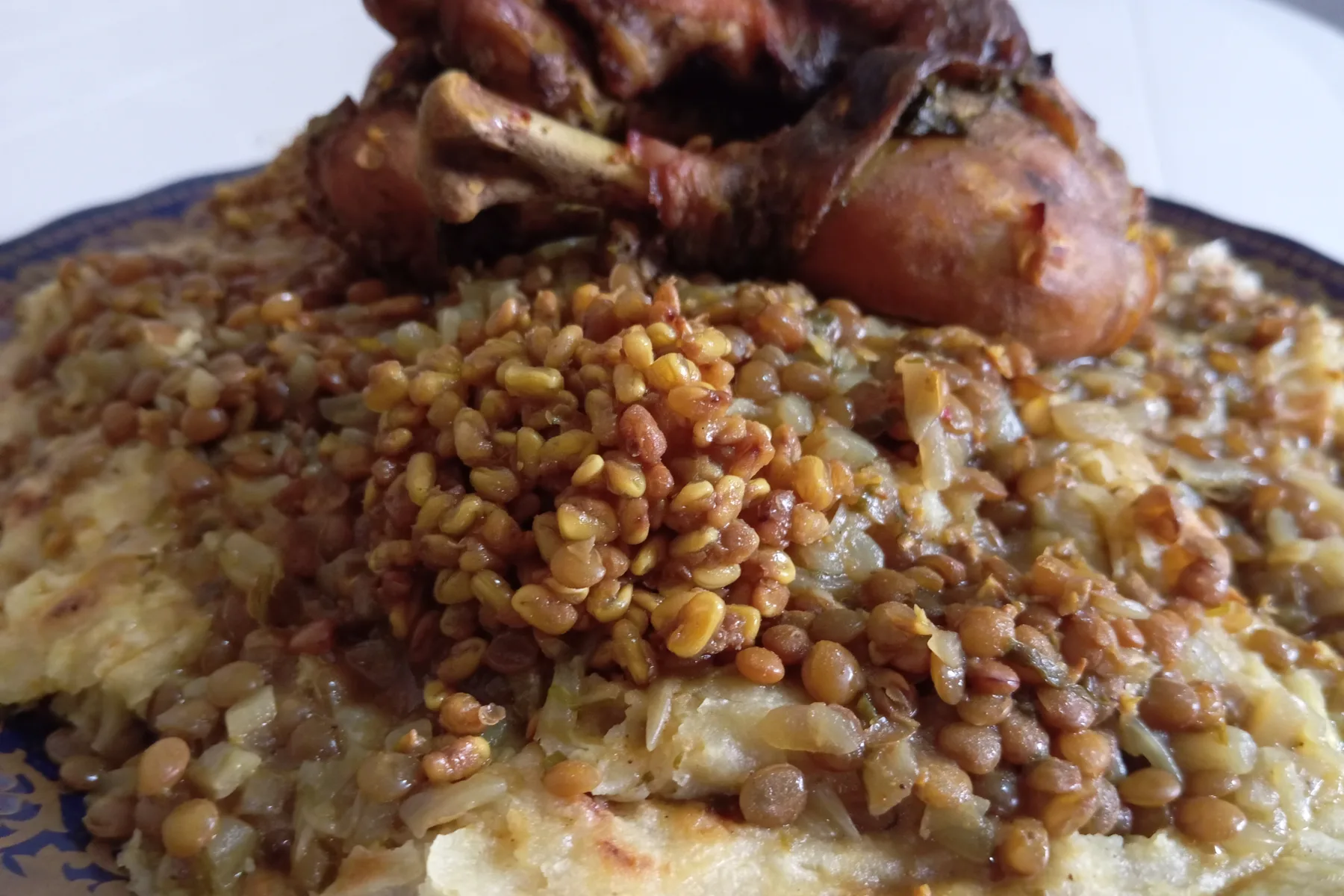
Rfissa de Poulet, Trid, Moroccan Chicken Rfissa
This rfissa recipe braises chicken thighs with brown lentils, fenugreek seeds, onion, ginger and ras el hanout until the meat falls from the bone and the broth turns rich and golden. The stew is ladled over shredded msemen flatbread, which soaks up the broth, and finished with dates, hard-boiled egg and fresh coriander. One serving is about 435 g.
Rfissa is the dish Morocco cooks for its happiest and most tender moments: it is served to new mothers, who are traditionally given the fenugreek-rich broth for strength, and at family celebrations, where the whole household gathers around one big dish. The name comes from the shredded msemen — the flatbread is torn, or 'ruffled', into pieces and soaked in the chicken broth until it drinks it all up. Every Moroccan family has its own rfissa, but the bones of it never change: chicken, lentils, fenugreek and msemen, with dates and egg on top.
Pairs well with: Dates and hard-boiled egg on the side, with mint tea to finish.
Provenance
Morocco
Moroccan Celebration Classic
Middle Eastern
Time Dedication
1h 40m
25m prep • 75m cook
Batch Yield
6 Servings
867 kcal per serving
1 serving ≈ 435 g
Technical Skill
Intermediate
Medium (One Pot)
Meal Timing & Digestive Fit
Breakfast
Not Advised
Lunch
Hearty Midday Main
Dinner
Ideal Hearty Main
Snack & Tea
Inappropriate
Moroccan Celebration Classic
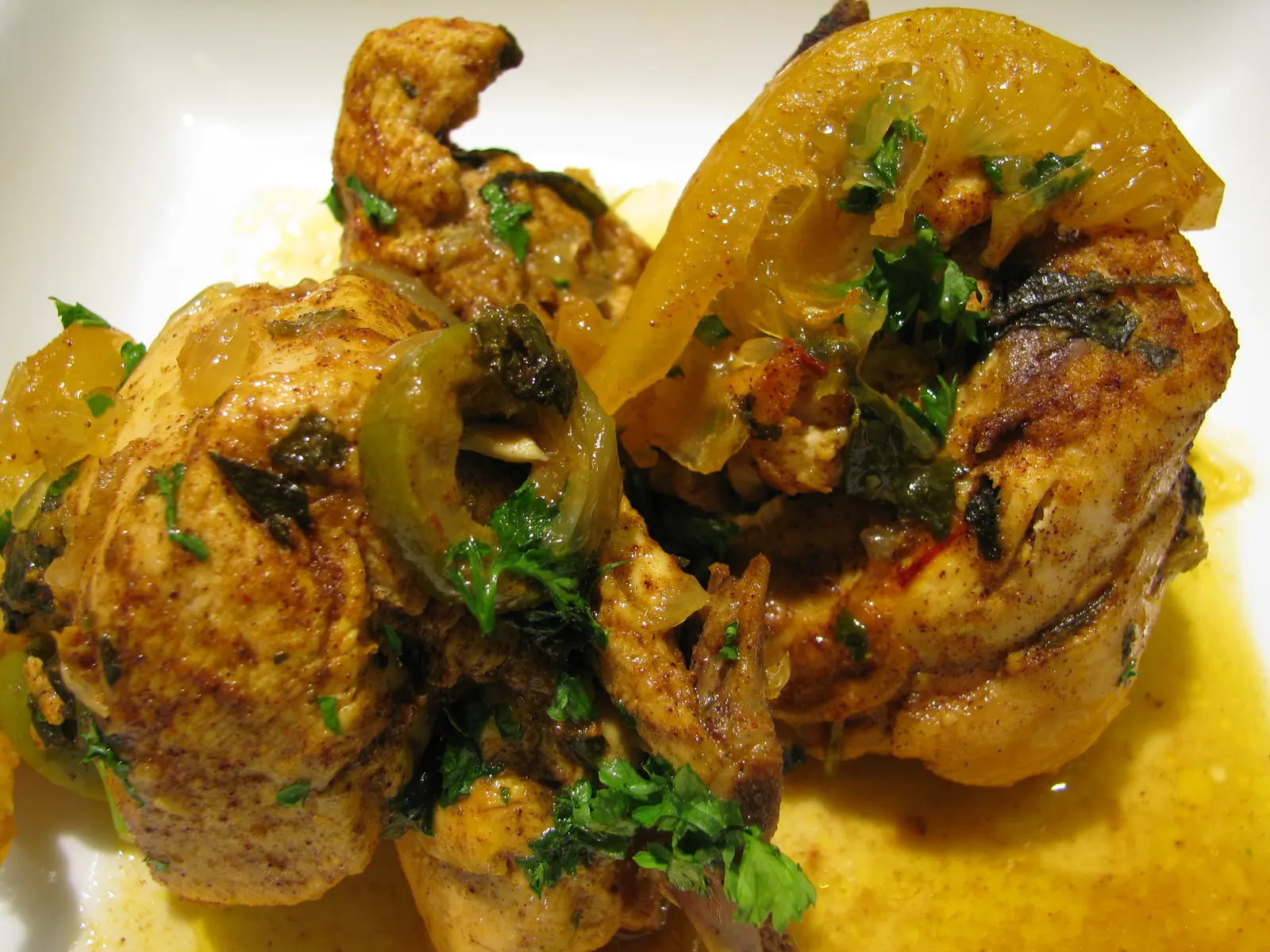
Photo: مصطفى ملو, CC BY-SA 4.0, via Wikimedia Commons
The Heritage Formulary
Estimated cost: Moderate — about $3–4 per serving at home (USD)
A good rfissa has chicken that falls from the bone, lentils that are tender but whole, and msemen that is soaked through with broth — never dry bread, and never a soup with bread floating in it.
Execution Methodology & Culinary Technique
Prep Stage: Soak, Chop and Measure
25 Mins • Soak, Chop and Measure
Rinse the lentils and fenugreek seeds, pick over them for stones, and soak in cold water for 10 minutes, then drain. Chop the onions finely, mince the garlic, grate the fresh ginger, and measure out the turmeric, ground ginger, ras el hanout, pepper and salt. Pat the chicken thighs dry and season with half the salt. Tear the msemen into bite-size pieces and keep them dry.
Maestro Tip: Soaking the lentils and fenugreek together saves time and helps both cook evenly in the broth — do not skip the soak, or the lentils stay hard in the middle.
10 minutes Medium-high heat, about 190°C (375°F)
Heat the olive oil in a large heavy pot over medium-high heat. Lay the chicken thighs in skin-side down, in a single layer, and brown for about 5 minutes until the skin is deep golden, then turn and brown the other side for 3 minutes. Lift the thighs out onto a plate; they are not cooked yet, only browned.
Do not crowd the pot — brown in two batches if needed, or the chicken steams instead of browning.
Done when: Skin deep golden and crisp at the edges, chicken still pink inside.
5 minutes Medium heat, about 160°C (320°F)
Lower the heat, add the chopped onion to the same pot and cook for 4 minutes until soft and translucent, scraping up the browned bits from the bottom. Stir in the garlic, fresh ginger, turmeric, ground ginger, ras el hanout and black pepper and cook for 1 minute until fragrant, then pour in 800 ml of water and the remaining salt, stirring well.
The browned bits on the bottom are flavour — scrape them up into the broth.
Done when: Onion soft, spices fragrant, broth golden and steaming.
45 minutes Low simmer, about 95°C (203°F)
Return the chicken thighs to the pot, skin-side up, and bring the broth to a gentle simmer. Cover, lower the heat and cook for 45 minutes, turning the thighs once halfway, until the meat is falling from the bone and a thermometer in the thickest part reads at least 74°C (165°F). The broth should reduce slightly and smell richly of spices.
A gentle simmer, not a rolling boil — boiling hard makes the chicken stringy and the broth cloudy.
Done when: Chicken tender enough to pull apart with a fork, and at least 74°C (165°F) inside.
20 minutes Low simmer, about 95°C (203°F)
Lift the chicken out and keep it warm. Add the drained lentils and fenugreek seeds to the broth and simmer for about 20 minutes until the lentils are tender but still hold their shape. While they cook, stir the smen or butter into the broth, tear the msemen into a wide serving dish, and warm the serving plates.
Taste a lentil at 15 minutes — they go from tender to mushy fast, and rfissa wants them whole.
Done when: Lentils tender but intact, broth thick enough to coat a spoon.
5 minutes Serve hot, above 60°C (140°F)
Lay the chicken thighs over the shredded msemen in the serving dish. Ladle the hot lentil broth over everything, a ladle at a time, until the bread is well soaked but not swimming — the msemen should drink the broth, not drown in it. Arrange the halved dates and the halved eggs on top and scatter the coriander over.
Ladle slowly and let each ladleful soak in before adding the next — soaked bread is the point of rfissa.
Done when: Bread glistening and soaked through, chicken on top, dates and eggs arranged neatly.
5 minutes Serve hot, above 60°C (140°F)
Leave the dish to rest for 5 minutes so the msemen finishes absorbing the broth, then bring it to the table in the serving dish and let everyone help themselves. Serve with extra broth in a jug for anyone who wants more.
Rfissa is a sharing dish — serve it in the middle of the table, not plated in the kitchen.
Done when: Bread fully soaked, broth rich and hot, table ready.
Finishing Touches & Plating
Rfissa is finished at the table, not in the kitchen: the bread keeps drinking the broth as it sits, and everyone takes what they want. Serve it with the dates and eggs on top, the extra broth in a jug, and mint tea to follow — and make sure the serving dish is big enough, because second helpings are certain.

Nutritional Physiology & Benefits
Energy
867
kcal / serving
Protein
42g
Complete AA
Carbs
77g
Complex
Fats
44g
Healthy
| Energy | 867 kcal |
| Protein | 42 g |
| Carbohydrates | 77 g |
| Fat | 44 g |
| Fibre | 14.9 g |
| Sugar | 14.7 g |
| Sodium | 627 mg |
| Energy | 199 kcal |
| Protein | 9.7 g |
| Carbohydrates | 17.7 g |
| Fat | 10.1 g |
| Fibre | 3.4 g |
| Sugar | 3.4 g |
| Sodium | 144 mg |
Nutrition values are estimated — calculated from USDA FoodData Central values for the listed ingredients.
Vitamins & minerals: Vitamin B6 and niacin (chicken), iron and folate (lentils), vitamin C (onion and coriander), vitamin A (egg).
Protein That Keeps You Full
About 42.4 g of protein per serving from chicken, lentils and egg makes rfissa a genuinely filling dinner, not a light soup.
Lentils Add Fibre and Iron
About 14.9 g of fibre per serving, mostly from the lentils, plus iron and folate — the lentils are doing real nutritional work here.
Fenugreek, Ginger and Turmeric
The spice base — fenugreek, ginger and turmeric — gives the broth its warmth and colour, and the fresh coriander and dates finish it with brightness and sweetness.
Food Pairings
To optimize nutrient absorption and elevate the sensory depth, pair with these authentic accompaniments:
Sides
Extra Msemen on the Side
A few pieces of plain msemen alongside let everyone mop up the last of the broth, which is too good to leave in the dish.
Vegetables
Cucumber and Tomato Salad
A cool, sharp salad of cucumber, tomato and onion with lemon cuts through the rich broth and gives the plate a fresh contrast.
Drinks
Mint Tea
Hot, sweet mint tea is the Moroccan table drink with a rich dinner — its freshness balances the fenugreek and the chicken fat.
More Pairings
Fresh Orange Slices
Orange slices with a little cinnamon after the rfissa refresh the palate and are the classic Moroccan way to finish a rich meal.
Complete menu
Start with a cucumber and tomato salad, serve the rfissa in the middle of the table with dates and mint tea, and finish with orange slices and cinnamon.
Digestive Guardrails
To prevent digestive distress, sluggishness, or palate clash, avoid pairing the dish with these elements:
Do Not Drown the Bread
Pouring all the broth on at once turns the msemen to mush. Ladle it slowly and let each ladleful soak in — soaked bread is the dish, porridge is not. This is general guidance, not medical advice.
Do Not Serve Undercooked Chicken
The chicken must reach at least 74°C (165°F) in the thickest part; braised chicken that is still pink near the bone is a food-safety risk. Check with a thermometer before serving. This is general food-safety information, not medical advice.
General information only, not medical advice — consult a doctor for personal dietary decisions.
Who Should Eat It
Health Conditions — Adjust or Avoid
If you have a medical condition, consult your doctor before changing your diet.
Storage & Use
Clay vessel braised lamb shoulder infused with Ras el Hanout, saffron stamens, and natural sun-dried fruit pectins.
Immunity & Warming
Slow-braised lamb with prunes, almonds and couscous.
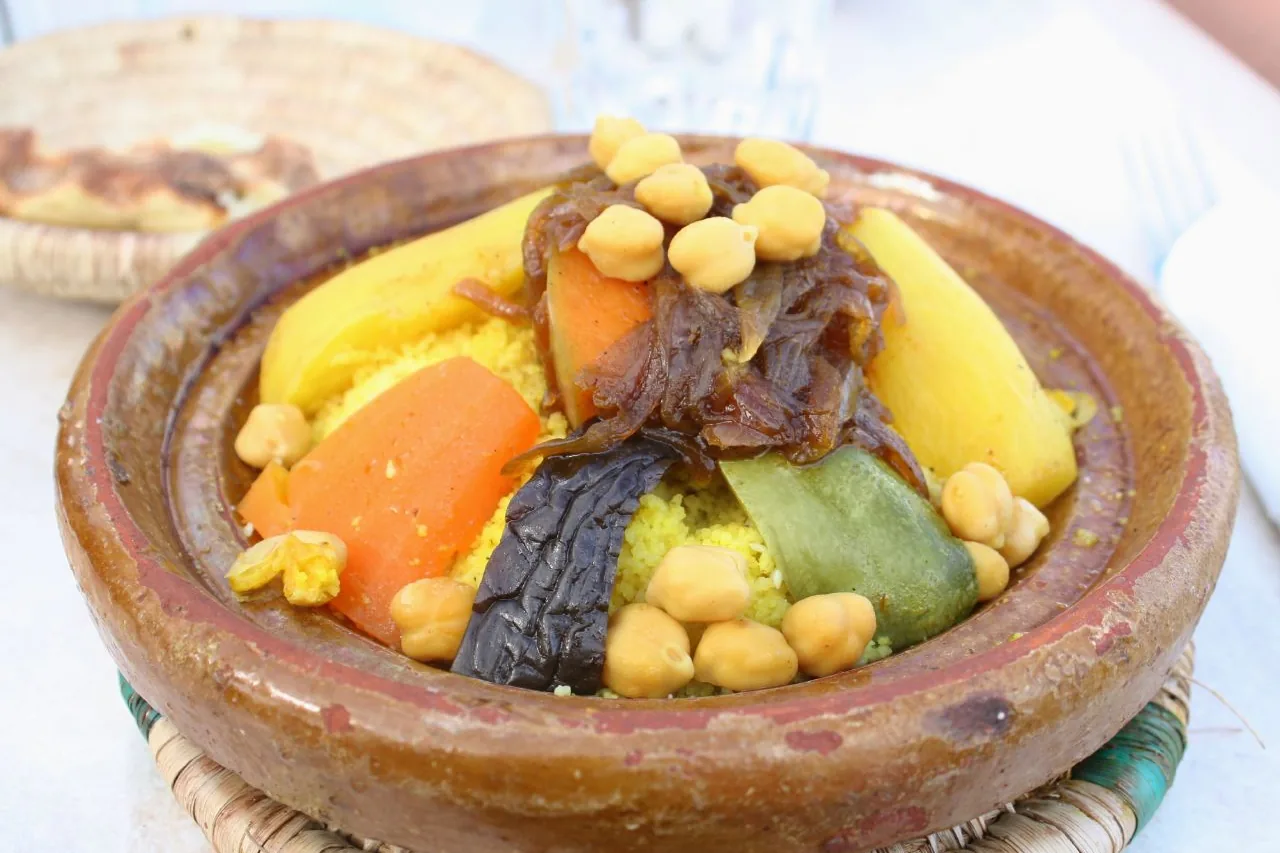
This moroccan couscous recipe steams fine semolina until fluffy, then ladles over a slow-cooked stew of seven vegetables, chickpeas and warm spices. One serving is about 475 g.
Comfort & Warmth
Fluffy steamed semolina with a slow vegetable stew and chickpeas.
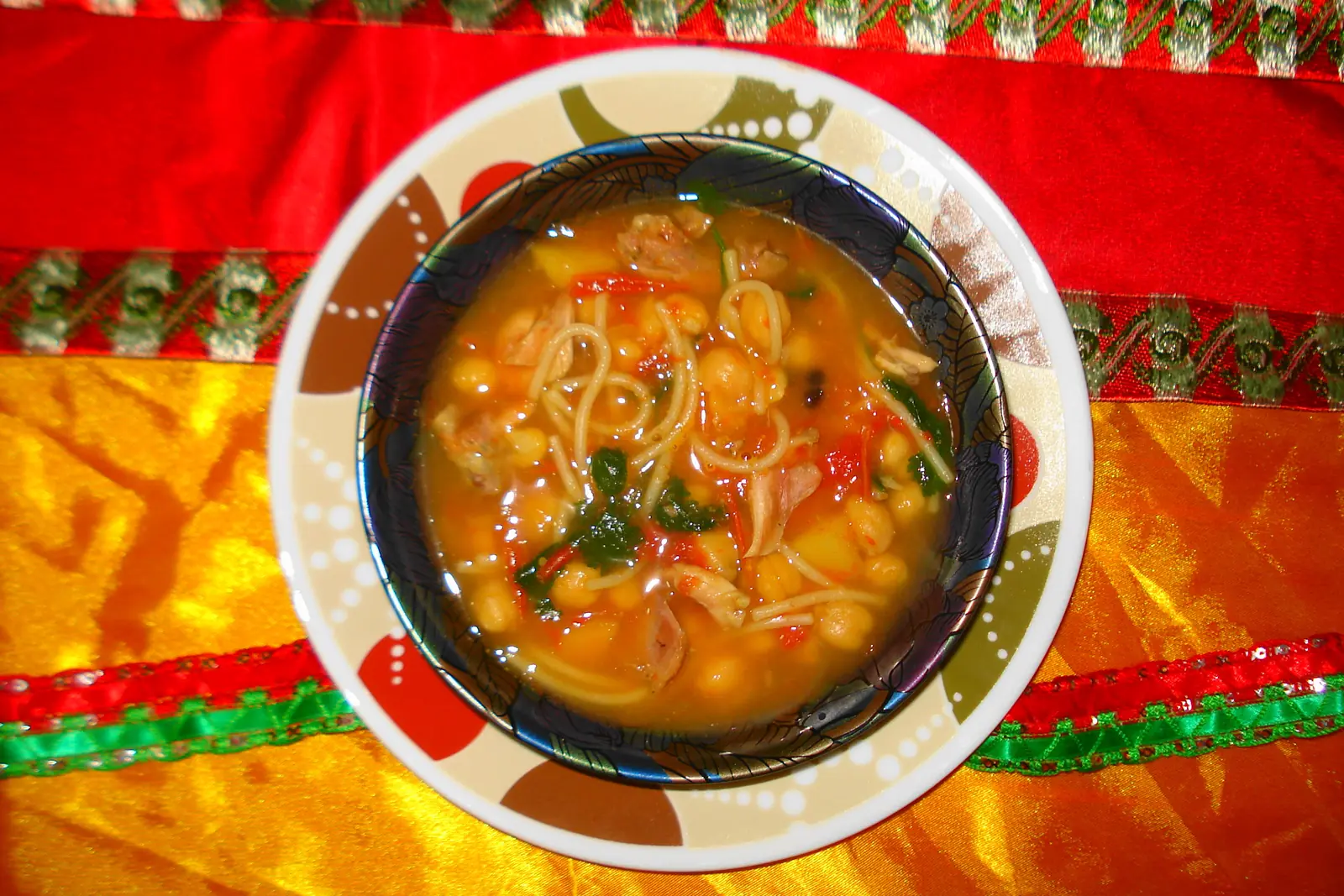
This harira soup recipe simmers lentils, chickpeas, tomatoes and lamb with ginger, cinnamon and fresh herbs, then thickens it the traditional way with a flour slurry. One serving is about 450 g.
Comfort & Warmth
A thick, warming tomato and lentil soup, the soup Moroccans break their fast with.
Moroccan chicken tagine is the dish Morocco is best known for: chicken braised slowly with onions, ginger and saffron, then finished with salty preserved lemon and green olives. This moroccan chicken tagine recipe uses a heavy pot instead of a clay tagine, so anyone can make it — the conical lid's job is done by a tight-fitting lid and a gentle flame. One serving is about 315 g.
Slow-Cooked Comfort
Chicken braised slowly with ginger, saffron, preserved lemon and green olives until the meat falls from the bone.