-
1
Soften the soffritto
10 minutes
Medium heat, about 160°C (320°F)
Warm 30 ml of the olive oil in a large heavy pot over medium heat. Add the onion, carrot and celery with a pinch of salt and cook, stirring often, until the onion is soft and translucent and the carrot has lost its raw edge. Add the garlic and rosemary and cook for 1 minute more, until fragrant.
Do not brown the vegetables — a soffritto should sweat gently, not fry, or the soup turns bitter.
Done when: Onion is soft and translucent; the pot smells sweet and savoury.
-
2
Add kale, beans and tomatoes
5 minutes
Medium heat, about 160°C (320°F)
Stir in the shredded cavolo nero a handful at a time, letting each handful wilt before adding the next. Add the cannellini beans and the crushed tomatoes with their juice, and stir everything together so the greens are coated in tomato.
If the kale looks like too much for the pot, do not worry — it wilts down to a quarter of its volume in minutes.
Done when: Kale is wilted and dark green; beans and tomato are mixed through.
-
3
Simmer in the stock
40 minutes
Low simmer, about 95°C (200°F)
Pour in the warm vegetable stock, bring the pot to a gentle simmer, then lower the heat, cover loosely and cook for 40 minutes. Stir occasionally, scraping the bottom so nothing catches. The kale should be completely tender and the beans creamy by the end.
A lazy bubble, not a rolling boil: hard boiling breaks the beans and clouds the soup.
Done when: Kale is silky and tender; a bean squashes easily between finger and thumb.
-
4
Stir in the bread and rest
15 minutes
Low heat, about 95°C (200°F)
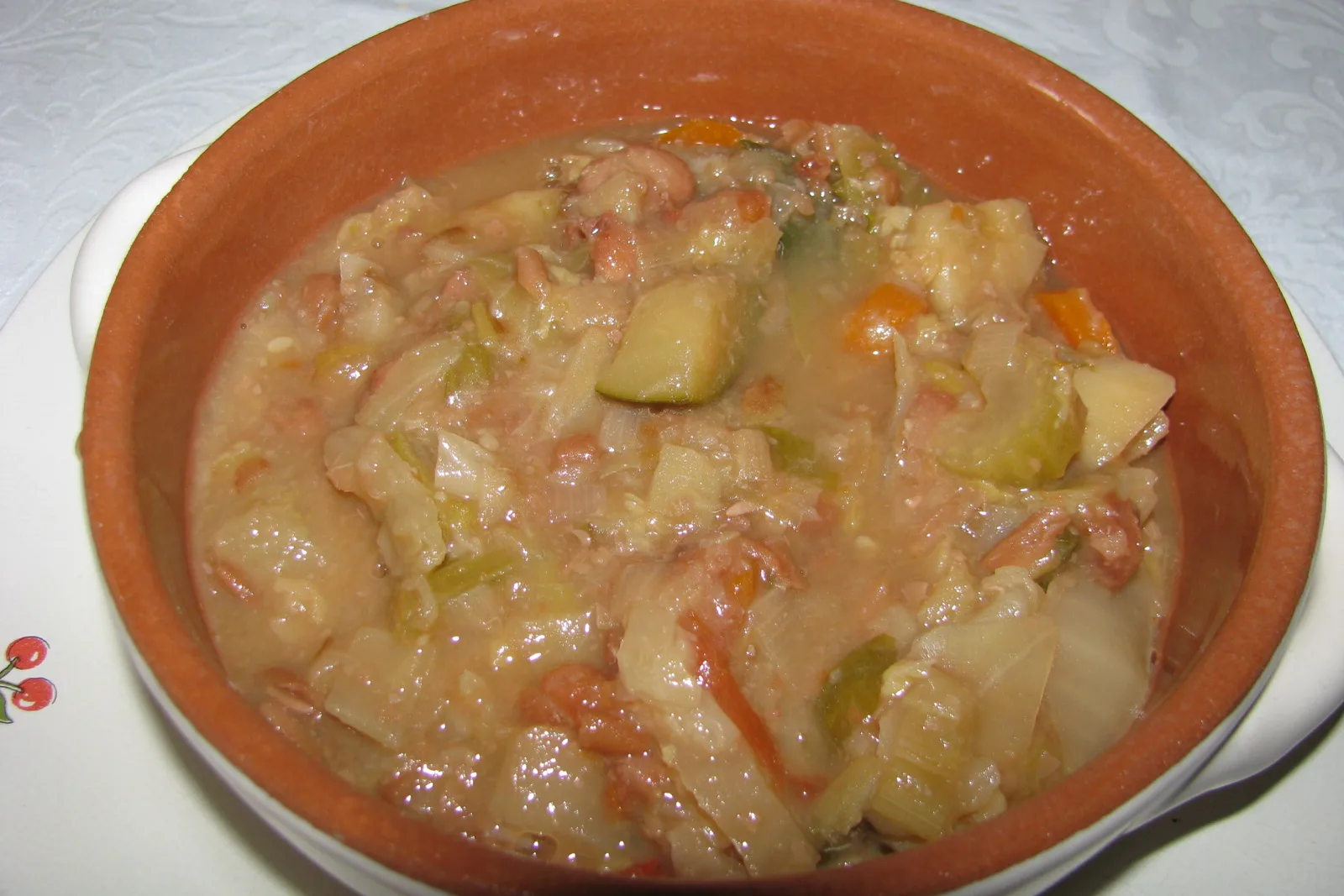
Stir the torn bread into the pot a handful at a time, pushing it under the surface so it soaks. Cook for 10 minutes more, stirring now and then, until the bread has melted into the soup and the ribollita is thick enough to stand a spoon in. Take it off the heat, cover and rest for 10 minutes so the bread finishes drinking up the stock.
If the soup gets too thick, loosen it with a splash of hot stock; if it is too thin, simmer uncovered for a few minutes more.
Done when: The soup is thick, dark and porridge-like; the bread has disappeared into it.
-
5
Finish with oil and pepper
2 minutes
No heat — off the stove
Taste and adjust the salt. Ladle into deep bowls, drizzle over the remaining olive oil and grind over black pepper. The oil on top is not decoration — it is the last flavour the spoon meets, and it should be the best oil you own.
Serve it thick: ribollita is eaten with a spoon standing up in it, not drunk from the bowl.
Done when: Each bowl is thick, glossy with oil, and steaming.
auto_awesome Finishing Touches & Plating
Ribollita is famously better the next day — the name means "reboiled" — so if you can, make it a day ahead, chill it overnight and reheat it gently, adding a splash of stock. Serve it in deep bowls with good olive oil and black pepper.

 Italy
4h 25m