
Curated recipes from 193 countries  •  New seasonal Mediterranean issue out now

Overview

Sambal Matah

Sambal Mentah, Raw Balinese Sambal, Balinese Shallot Salsa

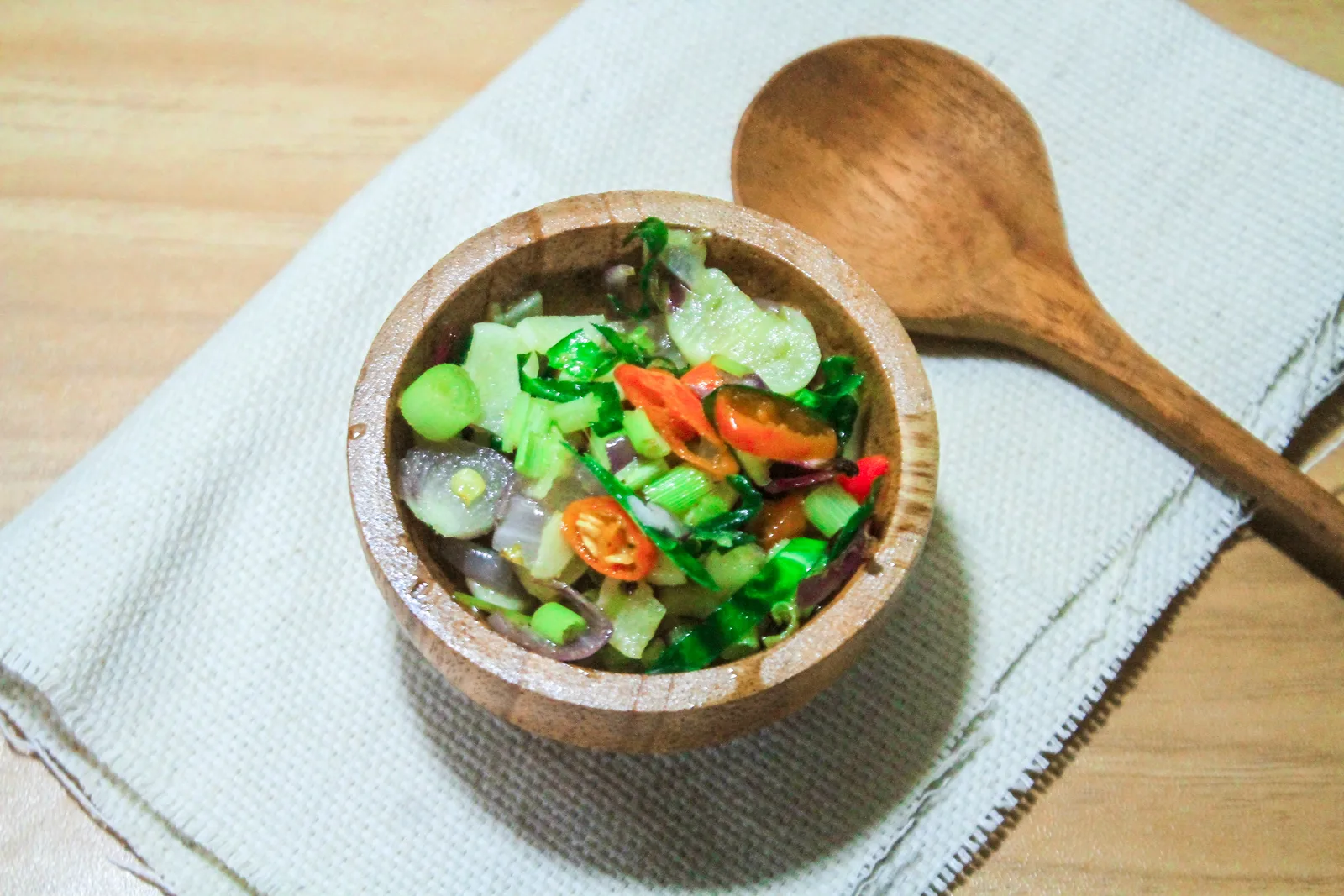
This sambal matah recipe makes Bali's famous raw sambal: shallots sliced paper-thin, fiery bird's eye chillies, lemongrass and kaffir lime leaves, tossed with lime juice and finished with hot coconut oil that hisses as it hits the bowl. Nothing here is cooked — matah means raw in Balinese — so the condiment stays bright, crisp and sharply fragrant, a world away from the slow-fried sambals of Java and Malaysia. One serving is about 36 g, a generous spoonful beside rice.

Sambal matah comes from Bali, where it sits beside almost every grilled fish and plate of rice. The name says it all: matah comes from the Balinese word for raw, and unlike most Indonesian sambals, which are fried or pounded, this one is never cooked — only the coconut oil is heated, then poured over the bowl so it hisses and softens the shallots. Shallots, bird's eye chillies, lemongrass and kaffir lime leaves are the classic quartet, and a little toasted shrimp paste is common in Bali; this version leaves it out so the condiment stays plant-based. It is the sharp, fresh counterpoint to Bali's rich ceremonial dishes like ayam betutu and babi guling.

Pairs well with: Grilled fish or chicken, steamed rice and cucumber

Provenance

Indonesia flag Indonesia

Balinese Heritage

East & South Asia

Time Dedication

30m

25m prep • 5m cook

Batch Yield

6 Servings

66 kcal per serving

1 serving ≈ 36 g

Technical Skill

Easy

Easy (No-Cook)

Meal Timing & Digestive Fit

Breakfast

Not Advised

Lunch

Inappropriate

Dinner

Inappropriate

Snack & Tea

Ideal Light Bite

Occasions: Rice-and-lauk dinners, grilled fish nights, Balinese feasts, everyday Indonesian meals Cost: Low — about $1–2 per serving at home
A small wooden bowl of sambal matah: raw shallots, red bird's eye chillies and green lemongrass glistening with coconut oil

Balinese Heritage

Photo: Windi Utari, CC BY-SA 4.0, via Wikimedia Commons

The Heritage Formulary

Measured Ingredients

Estimated cost: Low — about $1–2 per serving at home (USD)

A good sambal matah is bright and crisp, with shallots sliced paper-thin, heat that arrives fast and clean, and a fresh lime-lemongrass fragrance.

Execution Methodology & Culinary Technique

Step-by-Step Cooking Guide

Active 30m
P

Prep Stage: Slice Everything Paper-Thin

25 Mins • Slicing & Mixing

Peel the shallots and slice them 1–2 mm thick. Slice the bird's eye chillies into thin rings, keeping the seeds for heat. Trim the lemongrass to the pale lower part and slice it into fine threads, strip the kaffir lime leaves from their ribs and shred them, mince the garlic, and squeeze the lime.

Maestro Tip: Thin slicing is the whole dish: thick shallot slices stay harsh even after the hot oil, while paper-thin ones turn sweet and crisp.

  1. 1

    Slice the shallots and chillies

    10 Mins Room temperature, about 20°C (68°F)

    Peel 100 g of shallots and slice them as thinly as you can, 1–2 mm, into a medium bowl. Slice the 30 g of bird's eye chillies into thin rings and add them, seeds and all, to the bowl.

    Wear gloves if your skin is sensitive to chilli, and keep your hands away from your eyes.

    Done when: Shallots in even, translucent ribbons; chillies in fine rings.

  2. 2

    Slice the aromatics and season

    5 Mins Room temperature, about 20°C (68°F)

    Slice the pale lower part of the lemongrass into the finest threads you can manage, shred the kaffir lime leaves after removing their stiff centre ribs, and mince the garlic. Add them to the bowl with the lime juice, sugar and salt, and toss everything together.

    Only the pale, tender base of the lemongrass is edible — the green tops are woody and bitter.

    Done when: Everything evenly mixed, smelling sharply of lime and lemongrass.

  3. 3

    Heat the coconut oil

    5 Mins About 160°C (320°F)

    Warm the 30 g of coconut oil in a small pan over medium heat for 1–2 minutes, until it shimmers and runs like water. Take it off the heat the moment it shimmers — it should be hot, not smoking.

    Hot oil softens the raw shallot and wakes up the lemongrass; smoking oil turns bitter.

    Done when: Oil clear, shimmering and very hot, with no smoke.

  4. 4

    Pour, rest and serve

    10 Mins Hot oil, about 160°C (320°F), cooling to room temperature

    Pour the hot oil over the bowl in a slow stream — it will hiss and sizzle. Stir once or twice, then leave the sambal to rest for 10 minutes so the flavours settle into the shallots. Serve at room temperature, a spoonful at a time.

    Ten minutes of rest takes the raw edge off the shallots; serve it the same day for the brightest flavour.

    Done when: Shallots glossy and slightly softened at the edges, still crisp in the middle.

Finishing Touches & Plating

Spoon the sambal matah beside grilled fish, fried chicken or plain steamed rice — a little goes a long way, so let everyone take as much heat as they want.

Nutritional Physiology & Benefits

Nutrition

Energy

66

kcal / serving

Protein

1g

Complete AA

Carbs

5g

Complex

Fats

5g

Healthy

Per serving (6 servings · 1 serving ≈ 36 g)
Energy66 kcal
Protein1 g
Carbohydrates5 g
Fat5 g
Fibre0.7 g
Sugar2.2 g
Sodium132 mg
Per 100g
Energy185 kcal
Protein1.8 g
Carbohydrates14.6 g
Fat14.1 g
Fibre1.9 g
Sugar6 g
Sodium369 mg

Nutrition values are estimated — calculated from USDA FoodData Central values for the listed ingredients.

Vitamins & minerals: Shallots and chillies provide vitamin C and vitamin B6; lemongrass and lime add vitamin C and small amounts of iron and potassium. All nutrition values are estimated.

Light and Fresh

About 66 calories a serving, built on raw vegetables and herbs, with no frying and no heavy sauce.

Raw Means Bright

Because nothing is cooked, the shallots, chillies and lemongrass keep their fresh bite, colour and fragrance.

Ready in 30 Minutes

Ten minutes of slicing and a sizzle of hot oil is all it takes — there is no cooking to watch over.

Food Pairings

What to Eat With

To optimize nutrient absorption and elevate the sensory depth, pair with these authentic accompaniments:

Sides

Steamed White Rice

Plain rice is the classic partner: it soaks up the chilli oil and lets you ration the heat spoonful by spoonful.

Grilled Fish

The sharp, citrusy sambal cuts through rich grilled fish, which is how it is most often served in Bali.

Vegetables

Cucumber Slices

Cool, crisp cucumber calms the chilli heat between bites and echoes the fresh crunch of the shallots.

Drinks

Iced Lime Tea

Cold lime tea cools the mouth and its citrus matches the lime juice and lemongrass in the sambal.

Full Menus

Full Menu: Rice, Sambal Matah, Grilled Chicken

Rice, a spoonful of sambal matah and grilled chicken with cucumber is the everyday Balinese plate — one fiery spoonful, the rest calm.

Complete menu

Sambal matah with steamed white rice, grilled fish and cucumber slices — a full Balinese rice-and-lauk plate.

Digestive Guardrails

What NOT to Combine

To prevent digestive distress, sluggishness, or palate clash, avoid pairing the dish with these elements:

Storing It at Room Temperature

Raw shallots in oil spoil quickly at warm temperatures; keep the sambal in a sealed jar in the fridge and eat it within 2 days. This is general food information, not medical advice.

Using Thick Shallot Slices

Thick slices stay harsh and raw-tasting even after the hot oil, and they overpower the chillies and lemongrass. Slice paper-thin. This is general food information, not medical advice.

Adding Shrimp Paste Without Saying So

Many Balinese versions include a little toasted shrimp paste, but this version leaves it out so the sambal stays plant-based; if you add it, warn shellfish-allergic guests. This is general food information, not medical advice.

General information only, not medical advice — consult a doctor for personal dietary decisions.

Who Should Eat It

Who Should Eat

  • General adultsA bright, fiery condiment for most adults; start with one spoonful — the bird's eye chillies are genuinely hot.
  • ChildrenToo hot for most children; make them a mild version with the chillies left out and extra lime.
  • ElderlySoft, small pieces are easy to eat, but the chilli heat may be too much — serve a small spoonful with plenty of rice.
  • Pregnant womenAll the ingredients are raw vegetables and herbs, so wash everything well and eat it freshly made; skip it if raw shallots upset your stomach. Ask your clinician if unsure.
  • Breastfeeding womenA light, plant-based condiment; the chilli heat rarely reaches the milk but can upset a sensitive baby, so keep the portion small.
  • AthletesVery low in calories, so it adds flavour without energy — pair it with rice and grilled chicken or fish for a full recovery meal.
  • Weight gainAt 66 calories a spoonful it adds almost no energy; the rice and main dish are what add the calories.
  • Weight lossA 66-calorie spoonful that makes plain rice and grilled fish taste like a feast — a useful flavour boost on a weight-loss day.

Health Conditions — Adjust or Avoid

Conditions

  • DiabetesAbout 5 g of carbohydrate per serving, mostly from the shallots; the sugar is only 3 g for the whole bowl. Ask your clinician about portions.
  • High blood pressureSodium is about 132 mg per serving, mostly from the pinch of salt; use less salt if you need to. Ask your clinician about portions.
  • Kidney diseaseLow in protein and phosphorus, but the salt adds up if you eat several spoonfuls; keep the portion as stated. Ask your clinician.
  • GoutPlant-based and low in purines as written; traditional versions with shrimp paste are higher in purines, so this version is the safer choice. Ask your clinician.
  • Stomach issuesRaw shallots, chillies and lime juice can all irritate a sensitive stomach; use fewer chillies and eat a small portion with rice. Ask your clinician if unsure.
  • Cardiovascular diseaseLow in saturated fat when the coconut oil is kept to 30 g for the whole bowl; the chilli heat means it is a condiment, not a main dish. Ask your clinician about portions.
  • Fatty liverA light, low-calorie condiment with no frying; keep the oil as stated rather than adding more. Ask your clinician about portions.
  • Food allergiesContains no shellfish, egg, milk, gluten or nuts as written. Some traditional versions add shrimp paste, so always ask before eating sambal matah elsewhere.
  • Special therapeutic dietsVegan, vegetarian, gluten-free and dairy-free as written. Not low-sodium. Ask your clinician about any therapeutic diet.

If you have a medical condition, consult your doctor before changing your diet.

Storage & Use

Storage & Use

How to store
Spoon into a clean glass jar with a tight lid and refrigerate; keep the serving spoon clean and dry.
In the fridge
Up to 2 days at 4°C (40°F) or below; the flavour softens after the first day.
In the freezer
Not recommended — the raw shallots turn soft and watery when thawed.
How to reheat
Do not reheat — serve at room temperature; if the coconut oil has set in the fridge, let the jar stand for 20 minutes until the oil melts again.
Freezing recommended
No — make it fresh; it takes 30 minutes.
Signs it has spoiled
Sour or off smell, slimy shallots, fizzing, or any mould — throw it away.

More recipes to explore

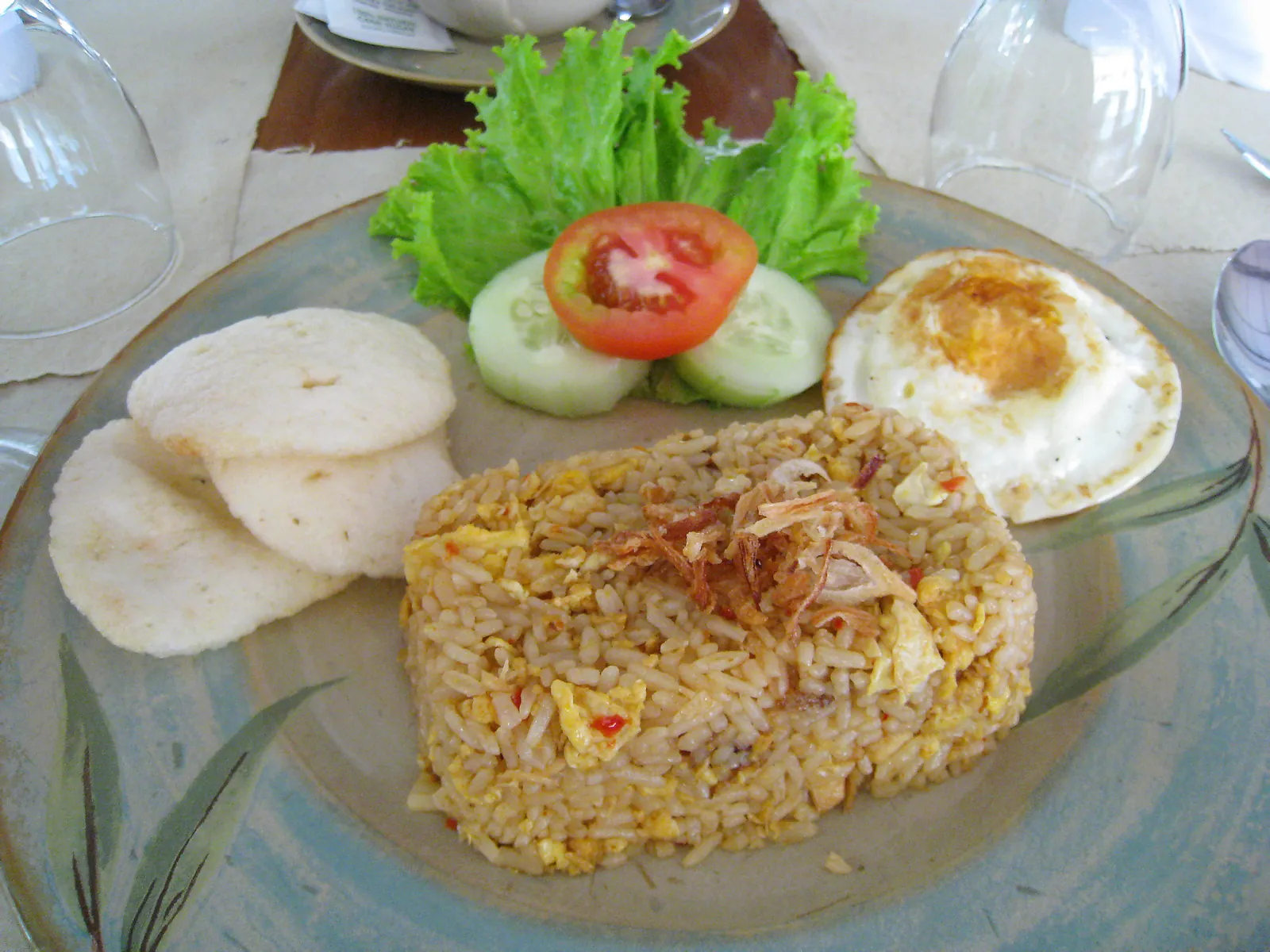
Indonesian nasi goreng — a mound of fried rice with egg and fried shallots, a fried egg, prawn crackers, cucumber, tomato and lettuce Indonesia flag Indonesia 35m
Dinner •Jakarta Street Classic

Indonesian Nasi Goreng

This Indonesian nasi goreng recipe turns a bowl of day-old rice into something far better than the sum of its parts: smoky, sweet-savoury grains coated in kecap manis, tossed with chicken, carrot and peas, and crowned with a fried egg and crunchy prawn crackers. It is the kind of dinner that comes together in one wok in about half an hour, and it tastes like a Jakarta street stall at its best. One serving is about 470 g.

Comfort & Satisfying

A one-wok dinner of sweet-savoury fried rice, chicken and a fried egg, served the Indonesian way with cucumber, tomato and prawn crackers.

Pairs Well With
A fried egg on top, cool cucumber and tomato, and a handful of prawn crackers, with iced tea to drink.
Quick Prep (<30m)
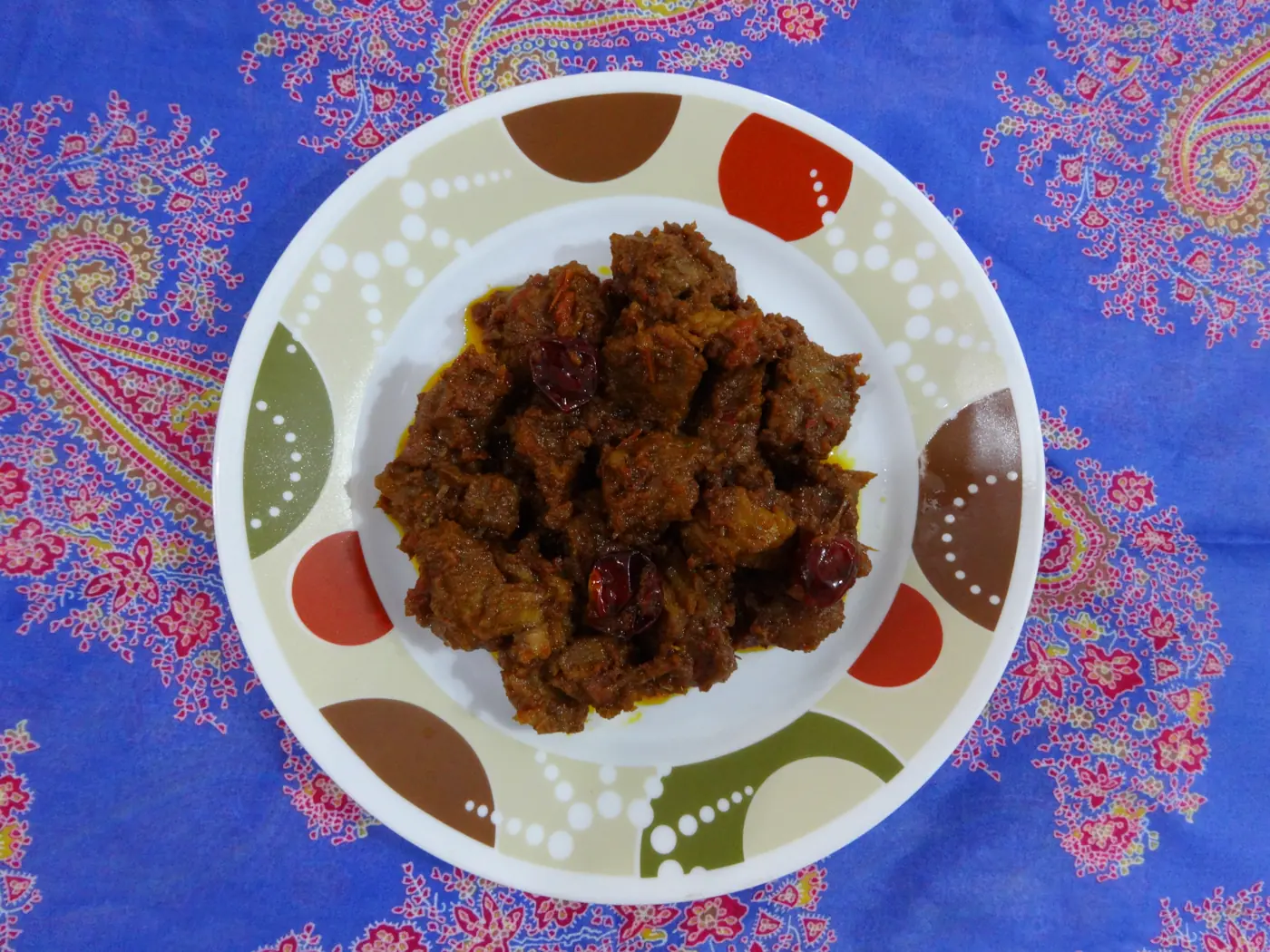
A plate of beef rendang — dark brown beef chunks coated in a dry, caramelised spice paste Indonesia flag Indonesia 4h
Dinner •West Sumatra Heritage

Beef Rendang

This beef rendang recipe slow-braises beef chuck in coconut milk with lemongrass, galangal, chillies and warm spices for about four hours, until the sauce has almost disappeared and the meat is coated in a dark, dry, caramelised spice paste. It is the Minangkabau dish from West Sumatra that sits at the heart of Padang cooking: deeply savoury, gently hot, and rich without being saucy. One serving is about 380 g.

Rich & Satisfying

Slow-braised beef in spiced coconut milk, reduced until the meat is coated in a dark, caramelised spice paste.

Pairs Well With
Steamed jasmine rice & pickled cucumber (acar timun)
High Protein
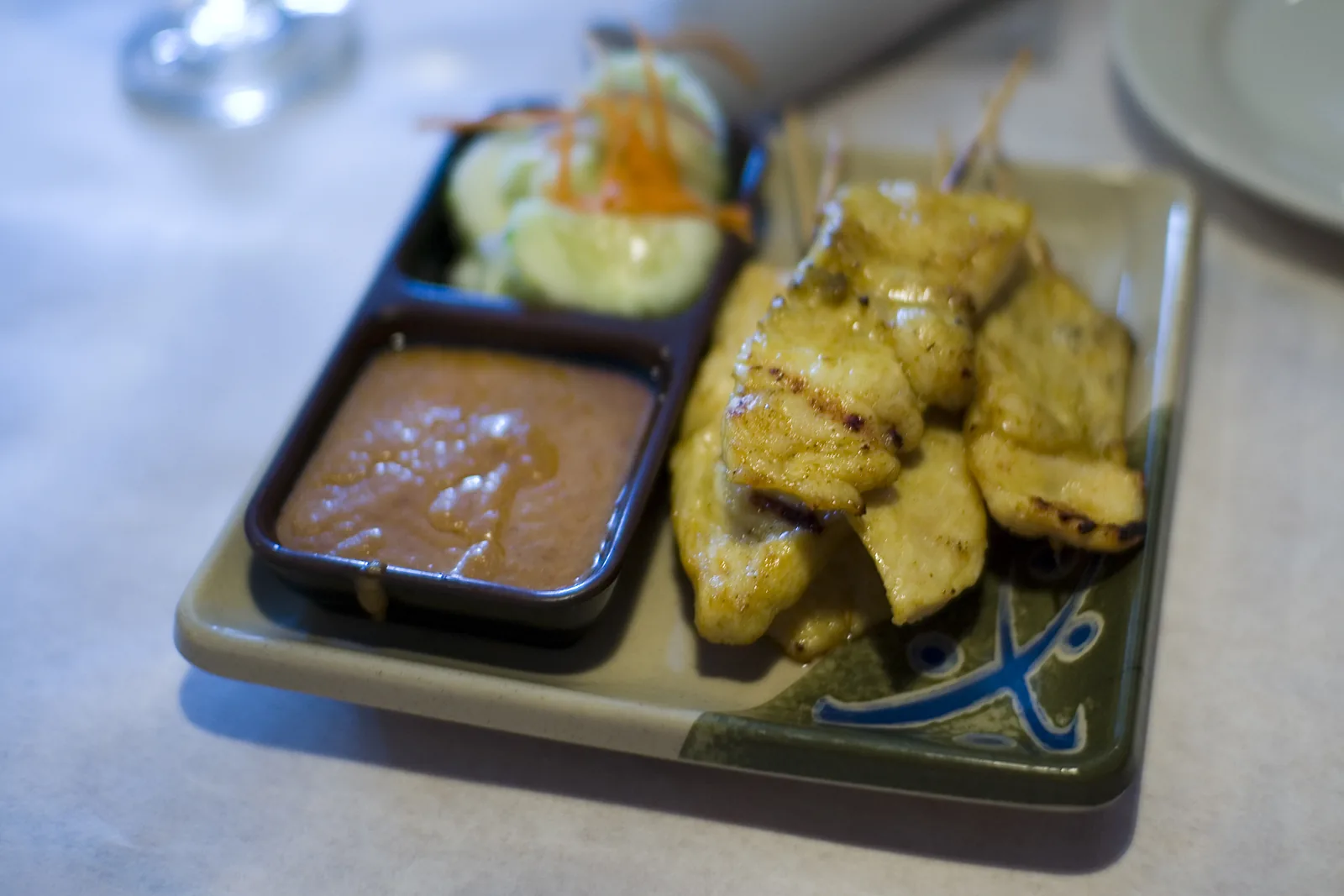
Grilled chicken satay skewers with peanut sauce and cucumber salad on a plate Indonesia flag Indonesia 45m
Dinner •Java Street Food

Chicken Satay

This chicken satay recipe turns chicken breast into golden, char-edged skewers marinated in turmeric, coconut milk, garlic and sweet soy sauce, then grilled and served with a warm, creamy peanut sauce. One serving is about 290 g: three skewers, a generous spoonful of peanut sauce and a cool cucumber-shallot salad. It is the Indonesian street-food classic — sate ayam — made for a weeknight grill.

High-Protein Grilling

Grilled chicken skewers in a turmeric-coconut marinade, served with a homemade peanut sauce — high in protein and cooked fast over high heat.

Pairs Well With
Lontong rice cakes and a cool cucumber-shallot salad balance the rich peanut sauce.
High Protein • Quick Prep (<30m)
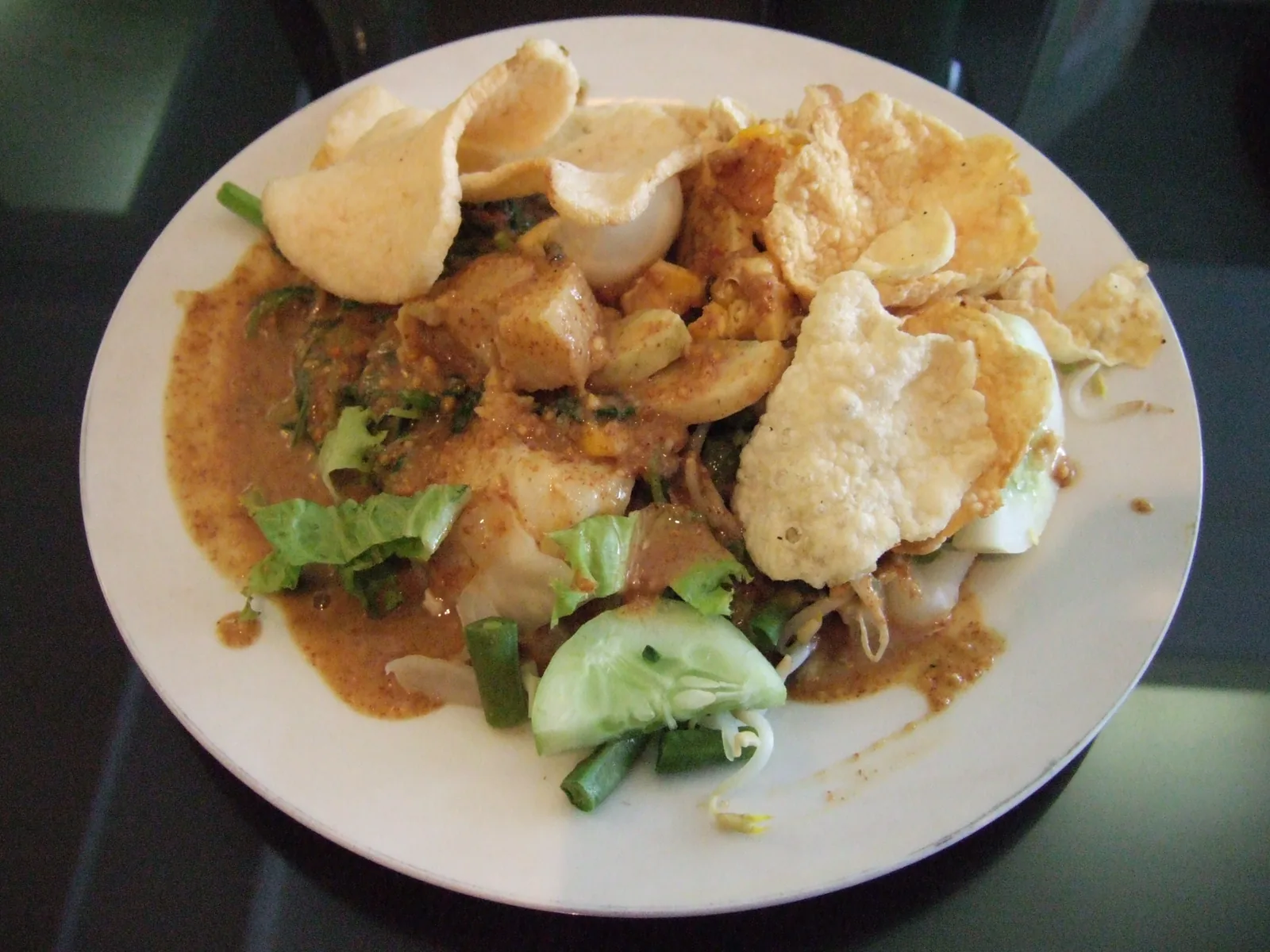
A plate of gado-gado: mixed vegetables, tofu and boiled egg coated in peanut sauce, topped with prawn crackers and cucumber slices. Indonesia flag Indonesia 45m
Lunch •Jakarta Street Food Classic

Gado-Gado

Gado-gado is Indonesia's best-loved salad: warm potatoes, green beans, cabbage, bean sprouts, cucumber and carrot, with fried tofu, boiled egg and crunchy prawn crackers, all coated in a thick, sweet-savoury peanut sauce. One serving is about 584 g.

Fresh & Filling

Warm vegetables, tofu and egg under a rich peanut sauce — a complete meat-free lunch.

Pairs Well With
Serve warm with prawn crackers on the side and a glass of iced tea.

The Dinner Gazette

Never wonder what’s for dinner again

One email a week with easy dinner ideas from around the world — ingredients, steps and nutrition, tested in our kitchen first.

Delivered every Thursday morning. Unsubscribe anytime.