Curated recipes from 193 countries  •  New seasonal Mediterranean issue out now

Overview

Samlor Korko

Samlor Kako, Samlar Kako, Cambodian Stirring Soup, Khmer Mixed Vegetable Soup

This samlor korko recipe pounds lemongrass, galangal, turmeric, garlic and shallot into a green kroeung paste, then simmers it with catfish, pumpkin, eggplant, long beans and spinach in a coconut-milk broth seasoned with prahok and thickened with toasted rice powder. One serving is about 470 g.

Samlor korko — the name means 'stirring soup' — is often counted among Cambodia's national dishes, alongside the sour samlor machu. It is built on green kroeung, the pounded paste of lemongrass, galangal, turmeric, garlic and shallot, seasoned with prahok, Cambodia's fermented fish paste, and thickened with toasted rice powder. Families cook it with whatever vegetables the season gives — pumpkin, eggplant, long beans, green papaya, moringa leaves — and with fish from the Tonle Sap lake and the Mekong river, sometimes with pork as well. It is a different soup from samlor machu, which is defined by its sour tamarind broth rather than kroeung.

Pairs well with: Steamed jasmine rice and green papaya salad

Provenance

Cambodia flag Cambodia

Khmer Heritage

East & South Asia

Time Dedication

1h

25m prep • 35m cook

Batch Yield

4 Servings

296 kcal per serving

1 serving ≈ 470 g

Technical Skill

Intermediate

Medium (Pound & Simmer)

Meal Timing & Digestive Fit

Breakfast

Not Advised

Lunch

Prime Metabolic Fit

Dinner

Ideal Hearty Main

Snack & Tea

Inappropriate

Soups & Broths Occasions: Family lunches, rainy-day meals, harvest-season cooking, everyday Khmer tables Cost: Low — about $3–4 per serving at home
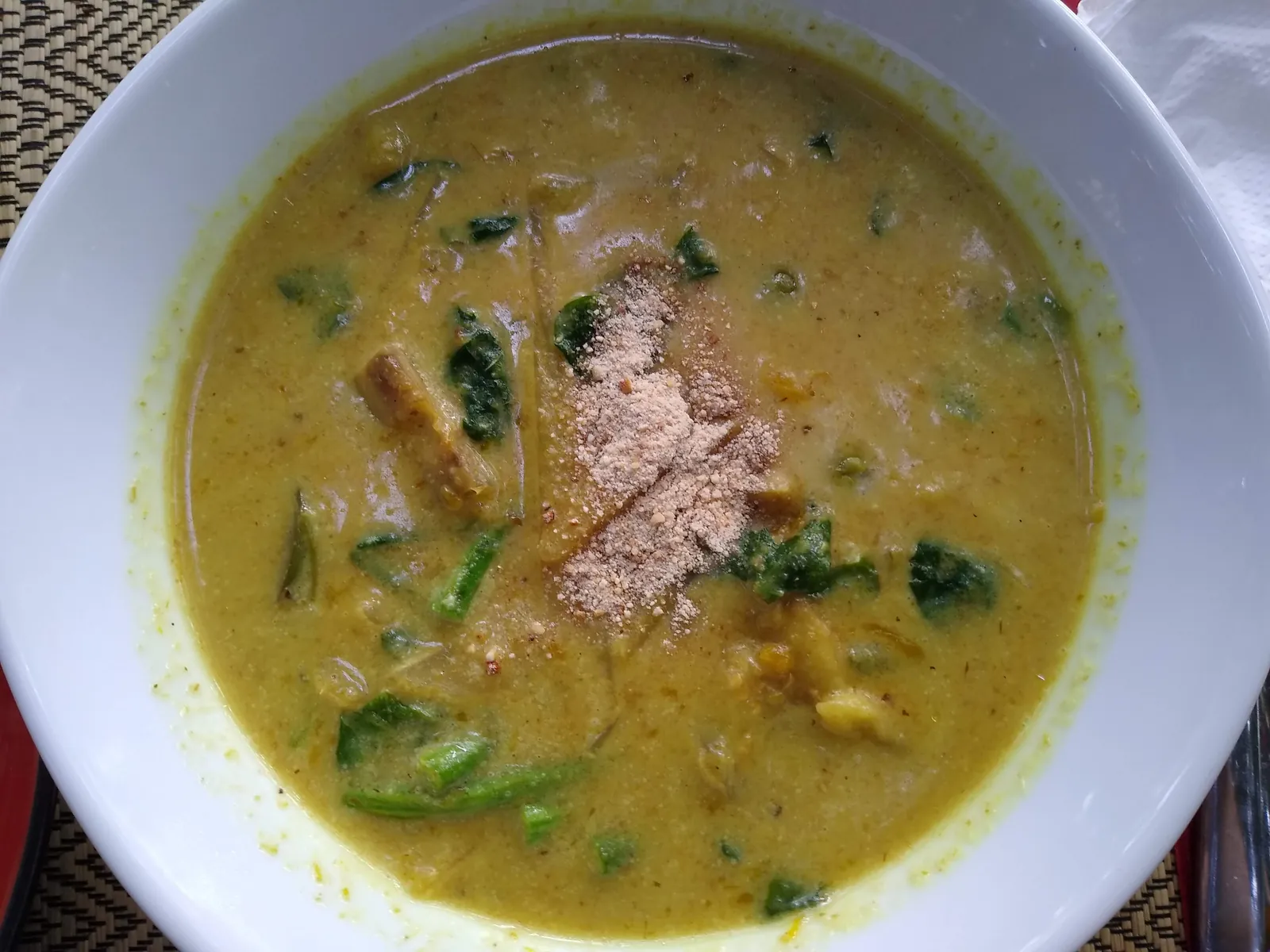
Samlor korko in a white bowl — thick yellow-green Khmer soup with leafy greens and a dusting of toasted rice powder

Khmer Heritage

Photo: Mx. Granger, CC0, via Wikimedia Commons

The Heritage Formulary

Measured Ingredients

Estimated cost: Low — about $3–4 per serving at home (USD)

Made the Khmer way: kroeung pounded fresh, prahok stirred in, toasted rice powder to thicken.

Execution Methodology & Culinary Technique

Step-by-Step Cooking Guide

Active 1h
P

Prep Stage: Pound the Kroeung, Cut the Vegetables

25 Mins • Pounding & Cutting

Pound the lemongrass, galangal, turmeric, garlic, shallot, soaked chillies and kaffir lime leaves into a coarse green kroeung paste in a mortar. Cut the pumpkin and eggplant into chunks, trim the long beans, rinse the spinach, and cut the catfish into chunks. Toast the rice in a dry pan until golden, cool it and grind it coarse for the toasted rice powder.

Maestro Tip: Pound the fibrous lemongrass and galangal first — they take the longest to break down, and everything else joins once they are soft.

  1. 1

    Pound the Kroeung

    10 Mins Room temperature, ~22°C (72°F)

    Put the sliced lemongrass, galangal, turmeric, garlic, shallot, soaked dried chillies and torn kaffir lime leaves in a stone mortar with a pinch of salt. Pound with the pestle until a coarse, fragrant green paste forms, with no long fibres left.

    Add a spoon of water if the paste sticks to the pestle — it helps the grinding without thinning the soup later.

    Done when: A coarse green paste that smells of lemongrass and lime leaf.

  2. 2

    Simmer the Broth

    10 Mins Medium heat, ~180°C (350°F), simmer ~95°C (203°F)

    Stir the prahok into 100 ml of hot water, mash it, and strain out any bones or stringy pieces. Pour the water into a pot, add the kroeung paste and fry for 3 minutes until fragrant, then add the fish sauce, palm sugar and the remaining 700 ml of water. Bring to a gentle simmer.

    Frying the kroeung first wakes up the aromatics — a raw paste tastes grassy, a fried one tastes deep.

    Done when: A fragrant, pale-green broth, gently simmering.

  3. 3

    Add Coconut Milk and Vegetables

    15 Mins Gentle simmer, ~95°C (203°F)

    Pour in the coconut milk, then add the pumpkin, eggplant and long beans. Simmer for 12 minutes until the pumpkin is just tender — the vegetables should hold their shape, not fall apart.

    Start with the hardest vegetable first; the pumpkin needs the longest, the beans the shortest.

    Done when: Pumpkin tender to a fork, eggplant soft, beans still bright green.

  4. 4

    Add the Fish

    10 Mins Gentle simmer, ~95°C (203°F)

    Slide the catfish chunks into the simmering soup and cook for 6 minutes without stirring hard, until the fish turns opaque and flakes easily. Fish is done at 63°C (145°F) inside — overcooking makes it fall apart into the broth.

    Do not stir once the fish is in; nudge the pot gently instead, so the chunks stay whole.

    Done when: Opaque fish that flakes at a touch; 63°C (145°F) inside.

  5. 5

    Thicken and Finish

    10 Mins Gentle simmer, ~95°C (203°F)

    Stir in the toasted rice powder and the spinach, and simmer for 3 minutes until the broth thickens to a rustic, spoon-coating body. Taste and adjust with a little more fish sauce or palm sugar — the soup should taste savoury, faintly sweet and deeply herbal, never sharply salty.

    Sprinkle the rice powder in slowly while stirring, or it clumps.

    Done when: A thick, golden-green soup that coats the spoon.

  6. 6

    Rest and Serve

    5 Mins Low heat, ~80°C (175°F)

    Rest for 5 minutes off the heat, then ladle into deep bowls. Serve hot, with the toasted rice powder dusted over the top if you like.

    Five minutes of rest lets the rice powder finish thickening the broth.

    Done when: A steaming bowl of thick, fragrant soup with vegetables and fish visible.

Finishing Touches & Plating

Ladle into deep bowls while steaming hot, and serve with jasmine rice — the soup is thick enough to eat with a spoon and a bowl of rice beside it.

Nutritional Physiology & Benefits

Nutrition

Energy

296

kcal / serving

Protein

18g

Complete AA

Carbs

25g

Complex

Fats

15g

Healthy

Per serving (4 servings · 1 serving ≈ 470 g)
Energy296 kcal
Protein18 g
Carbohydrates25 g
Fat15 g
Fibre5.7 g
Sugar7.5 g
Sodium959 mg
Per 100g
Energy63 kcal
Protein3.8 g
Carbohydrates5.3 g
Fat3.2 g
Fibre1.2 g
Sugar1.6 g
Sodium204 mg

Nutrition values are estimated — calculated from USDA FoodData Central values for the listed ingredients.

Vitamins & minerals: Vitamin A (pumpkin, spinach), vitamin C (long beans, spinach), vitamin D and B12 (catfish), iron (spinach, catfish), potassium (pumpkin, eggplant).

Five Vegetables in One Bowl

Pumpkin, eggplant, long beans and spinach give fibre, vitamin A and vitamin C in a single bowl — about 5.7 g of fibre per serving.

Gentle Protein from Fish

Catfish gives about 17.9 g of protein per serving in a light, easy-to-digest form, with very little fat of its own.

Kroeung: Fresh Herbs, Not Powder

The paste is pounded fresh from lemongrass, galangal, turmeric and lime leaf, so the soup tastes bright and herbal rather than dusty.

Food Pairings

What to Eat With

To optimize nutrient absorption and elevate the sensory depth, pair with these authentic accompaniments:

Sides

Steamed Jasmine Rice

Plain jasmine rice is the classic partner — it soaks up the thick broth and turns a bowl of soup into a full lunch.

Vegetables

Bok Lhong

Crisp green papaya salad adds crunch and sourness that cuts through the rich, savoury soup.

Sauces

Prahok Ktiss

A spoon of prahok ktiss on the side deepens the fermented-fish flavour for those who love it.

Drinks

Iced Lemongrass Tea

Cold, lightly sweet lemongrass tea echoes the kroeung in the soup and cools the palate.

Complete menu

Serve the soup with steamed jasmine rice, bok lhong on the side and iced lemongrass tea.

Digestive Guardrails

What NOT to Combine

To prevent digestive distress, sluggishness, or palate clash, avoid pairing the dish with these elements:

Do Not Eat It If You Are Allergic to Fish

The soup contains catfish, prahok (fermented fish) and fish sauce, so it is not safe for anyone with a fish allergy. This is general information, not medical advice.

Do Not Leave the Soup Out Overnight

Fish and coconut milk spoil quickly at room temperature, so refrigerate leftovers within 2 hours and reheat to 74°C (165°F). This is general information, not medical advice.

General information only, not medical advice — consult a doctor for personal dietary decisions.

Who Should Eat It

Who Should Eat

  • General adultsA hearty, savoury lunch — one bowl with rice is a full meal.
  • ChildrenMild and vegetable-rich, so children usually enjoy it; pick out the chillies and the prahok is already cooked through.
  • ElderlySoft vegetables and flaked fish suit older diners, but the soup is salty — a moderate bowl is best.
  • Pregnant womenThe fish is fully cooked and the soup is rich in vegetables, but it is very salty — a small bowl is best. Ask your clinician for personal advice.
  • Breastfeeding womenA nourishing, protein-rich soup; keep the portion moderate because of the salt. Ask your clinician for personal advice.
  • AthletesAbout 17.9 g of protein with plenty of vegetables — a good light lunch after training, with rice for carbohydrate.
  • Weight gainOnly 296 kcal per serving, so it will not help weight gain on its own — eat it with a full bowl of rice.
  • Weight lossLight at 296 kcal a serving, so it suits weight loss — but watch the salt, and fill up on the vegetables.

Health Conditions — Adjust or Avoid

Conditions

  • DiabetesAbout 25.1 g of carbohydrate per serving, mostly from vegetables — the rice beside it is the real carbohydrate. Ask your clinician for personal advice.
  • High blood pressureSodium is 959 mg per serving from prahok, fish sauce and salt — a high-sodium soup, so eat a small bowl. Ask your clinician for personal advice.
  • Kidney diseaseHigh in sodium and protein — a small portion only. Ask your clinician for personal advice.
  • GoutFish is low in purines, but prahok is concentrated — an occasional small bowl is the safer choice. Ask your clinician for personal advice.
  • Stomach issuesMild and easy on the stomach, but prahok is strongly flavoured — skip it if fermented foods upset you. Ask your clinician for personal advice.
  • Cardiovascular diseaseLow in saturated fat and rich in vegetables — one of the lighter soups, apart from the salt. Ask your clinician for personal advice.
  • Fatty liverLight at 296 kcal with good fibre — the soup itself suits a fatty-liver diet, but watch the salt. Ask your clinician for personal advice.
  • Food allergiesContains fish (catfish, prahok, fish sauce) — do not eat if you are allergic to fish. Ask your clinician for personal advice.
  • Special therapeutic dietsFits gluten-free and dairy-free diets; not suitable for low-sodium or fish-free therapeutic diets. Ask your clinician for personal advice.

If you have a medical condition, consult your doctor before changing your diet.

Storage & Use

Storage & Use

How to store
Cool quickly and store in a sealed container in the fridge.
In the fridge
Up to 2 days in the fridge.
In the freezer
1 month (the vegetables soften on thawing).
How to reheat
Warm gently until steaming hot, at least 74°C (165°F); stir well.
Freezing recommended
No — best fresh; the vegetables lose their texture when frozen.
Signs it has spoiled
Sour smell, slimy vegetables, or a grey film on the surface.

More recipes to explore

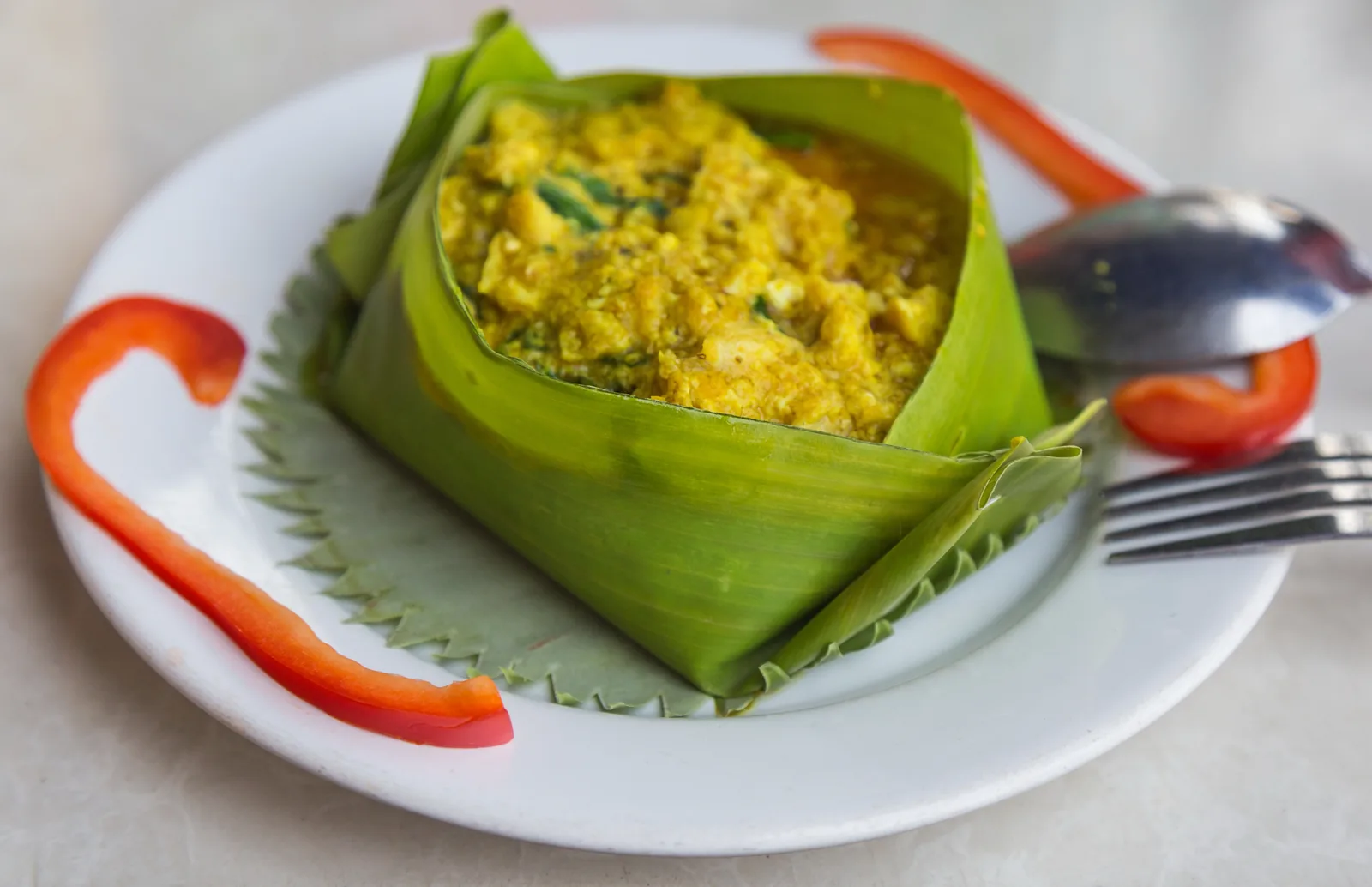
Cambodian fish amok, a yellow steamed fish mousse in a folded banana leaf cup on a white plate Cambodia flag Cambodia 1h
Dinner •Cambodian Heritage

Cambodian Fish Amok

This cambodian fish amok recipe turns fresh white fish, yellow kroeung paste and coconut milk into a silky steamed mousse, set in a banana leaf cup and finished with coconut cream, lime leaf and chilli. It is Cambodia's most loved celebration dish, gentle rather than fiery, and it eats like a savoury custard with rice. One serving is about 240 g, without the rice.

Comfort & Warmth

A steamed fish mousse in a banana leaf cup, fragrant with lemongrass and coconut, served hot with rice.

Pairs Well With
Steamed jasmine rice and a crisp green papaya salad.
High Protein
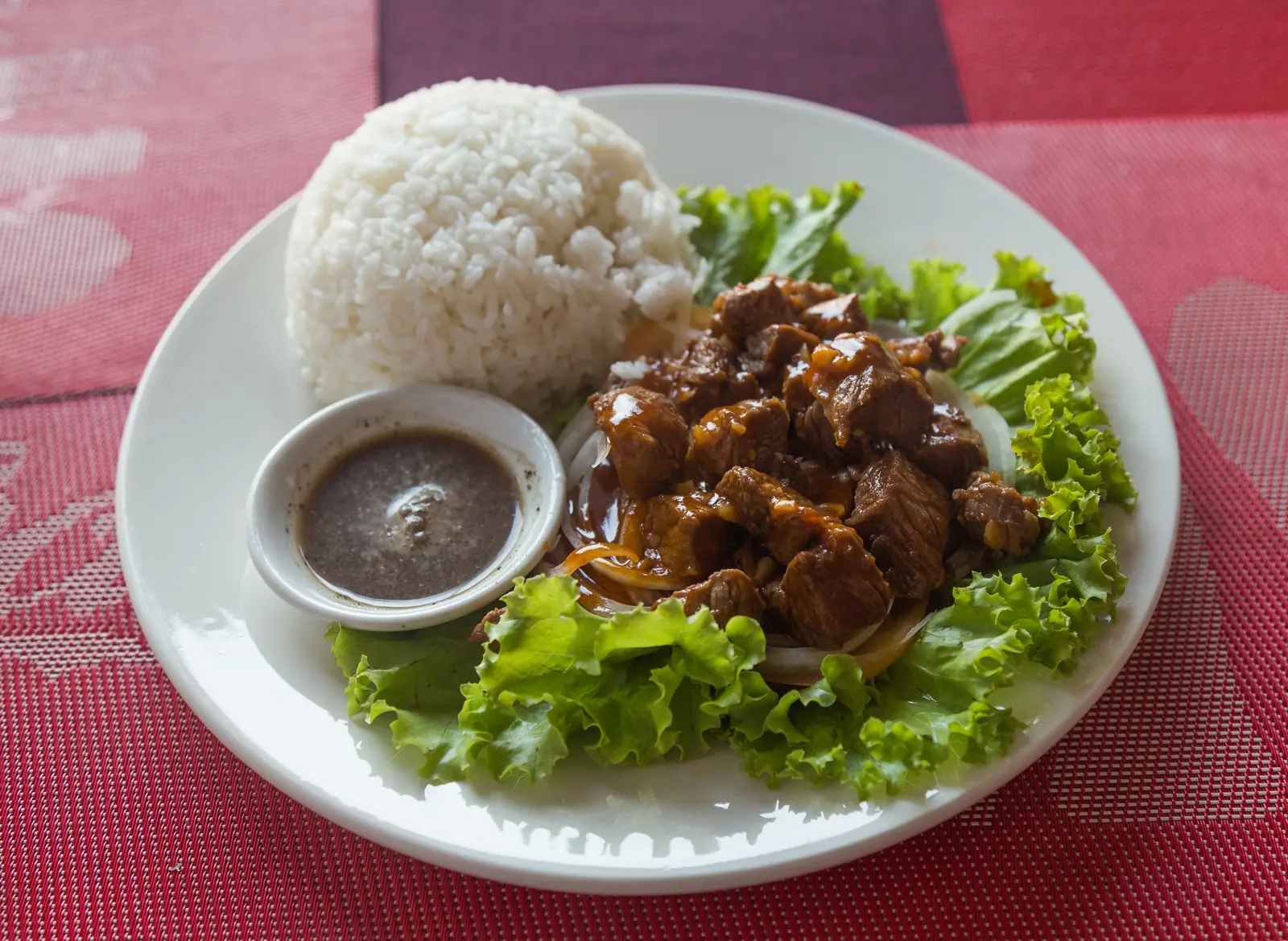
Cambodian lok lak: stir-fried beef cubes on lettuce with rice and a small bowl of lime-pepper dipping sauce Cambodia flag Cambodia 35m
Dinner •Cambodian Heritage

Cambodian Lok Lak

This cambodian lok lak recipe shakes cubes of marinated beef in a very hot wok until browned at the edges, then piles them over crisp lettuce, tomato, onion and cucumber with a fried egg and a bowl of lime-pepper dipping sauce. The dip is the soul of the dish: sharp lime, salt and cracked Kampot pepper cut straight through the rich beef. One serving is about 535 g, with rice.

Hearty & Satisfying

Stir-fried beef cubes over lettuce, tomato and onion, with the sharp lime-and-Kampot-pepper dip that defines the dish.

Pairs Well With
Steamed jasmine rice and the lime-pepper dip.
High Protein
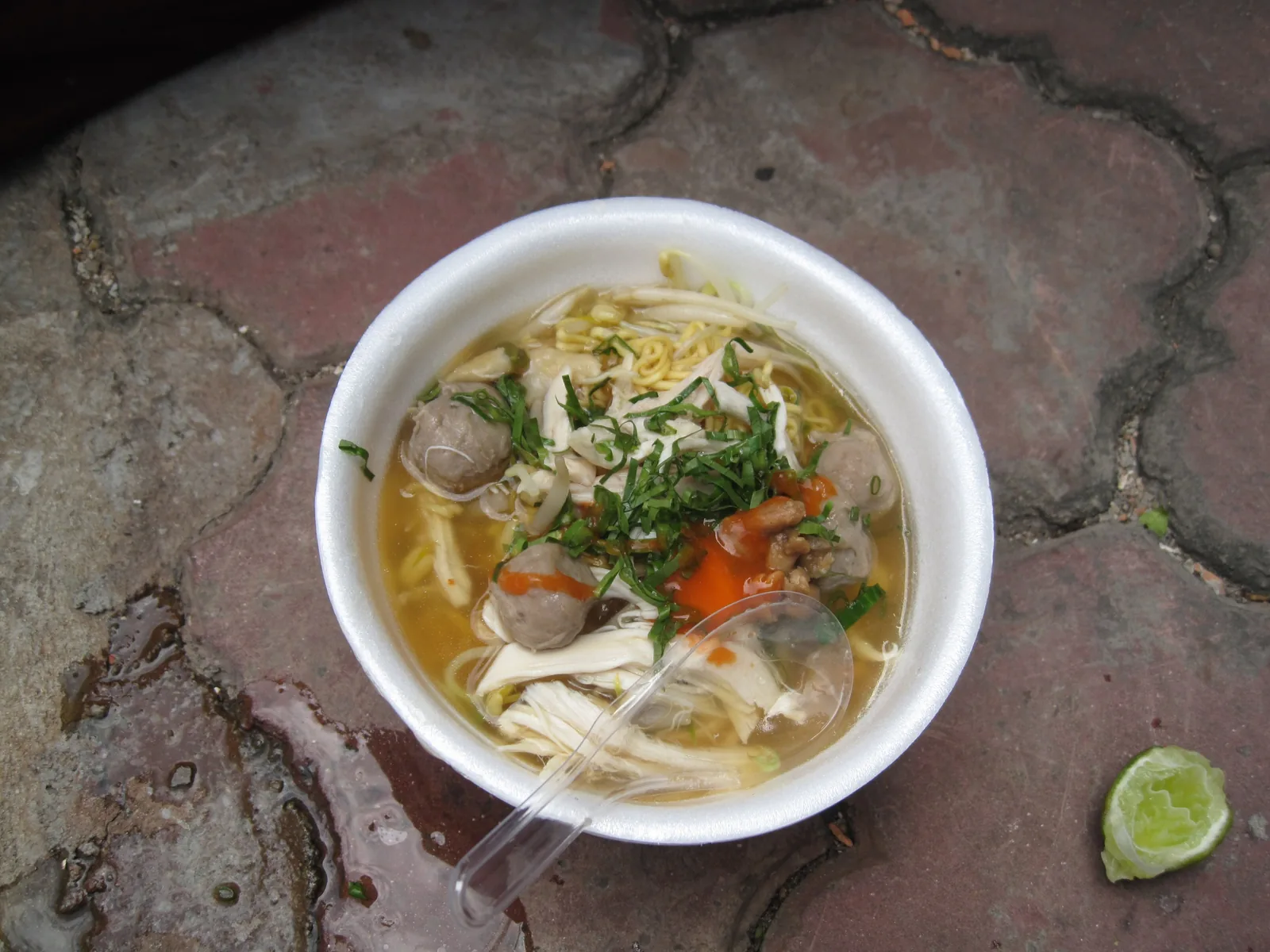
Khmer kuy teav: a street-stall bowl of Cambodian pork noodle soup with meatballs, bean sprouts, herbs and chilli Cambodia flag Cambodia 3h
Breakfast •Cambodian Heritage

Khmer Kuy Teav

This kuy teav recipe simmers pork bones with dried shrimp and squid into a clear, gently sweet broth, then ladles it over rice noodles with seasoned minced pork, sliced liver, shrimp and a soft egg. Bean sprouts, herbs, fried garlic, lime and chilli go on at the table, so every bowl is seasoned to taste. One serving is about 850 g, broth and toppings together.

Warm & Nourishing

A clear pork-bone broth with rice noodles, minced pork, liver, shrimp and a tangle of fresh herbs — Cambodia's classic breakfast bowl.

Pairs Well With
Fried garlic, fresh herbs, lime wedges and chilli sauce at the table.
Soups & Broths • Pasta & Noodles
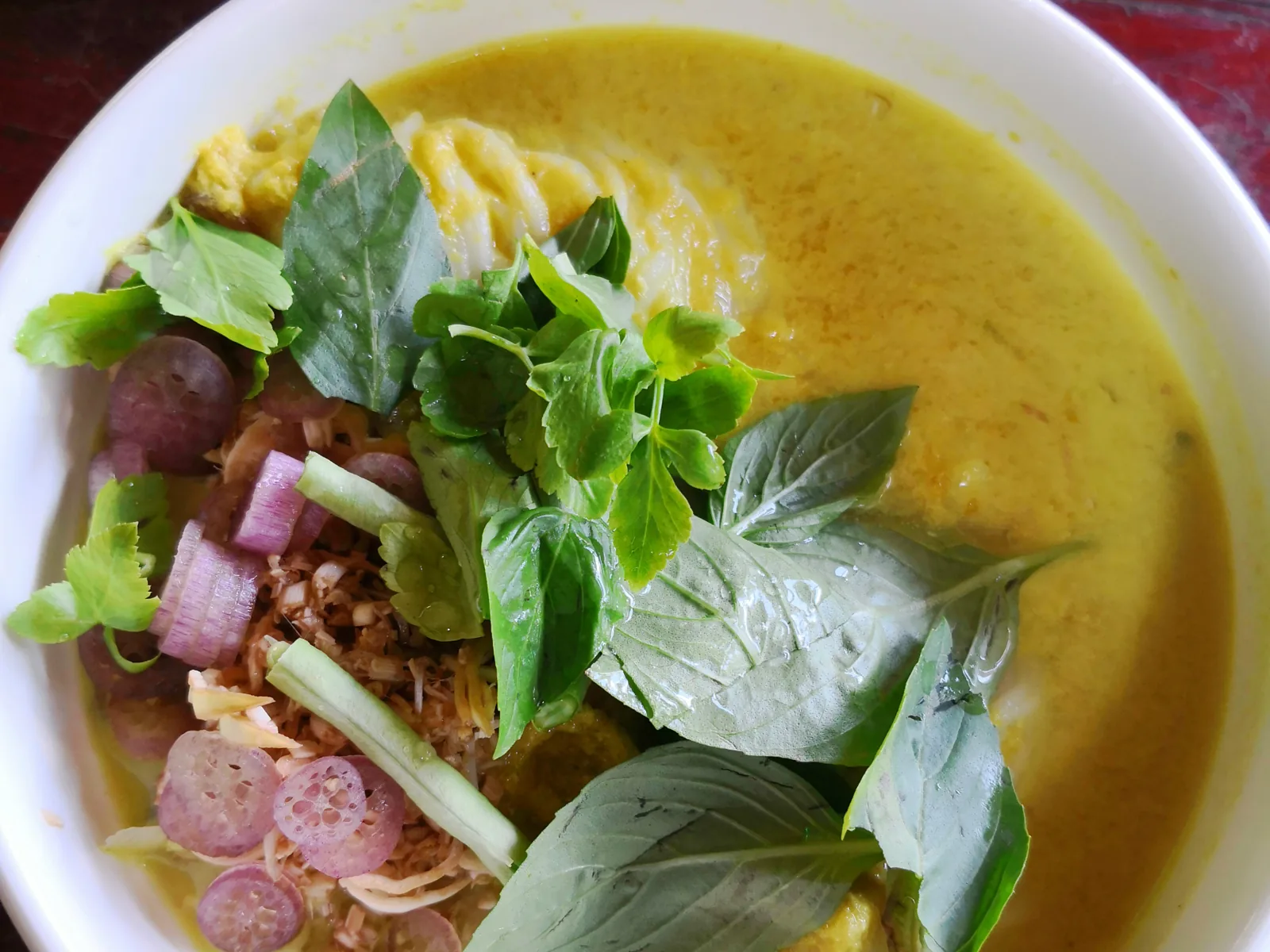
Nom banh chok in a white bowl: yellow fish curry over rice noodles with fresh basil, banana flower and herbs Cambodia flag Cambodia 1h
Breakfast •Cambodian Heritage

Nom Banh Chok

This nom banh chok recipe makes Cambodia's beloved breakfast noodles: soft rice noodles ladled with a fragrant yellow fish curry built on kroeung — lemongrass, galangal, turmeric, garlic and kaffir lime — with coconut milk, then piled high with bean sprouts, cucumber, banana flower, basil and mint. It is often called Khmer noodles, and it is eaten all over Cambodia in the morning. One serving is about 560 g.

Comfort & Warmth

Lightly fermented rice noodles in a fragrant yellow fish curry with kroeung, coconut milk and a pile of fresh herbs and vegetables.

Pairs Well With
Extra herbs and chillies on the side, with a hot Cambodian coffee or iced tea.
Pasta & Noodles

The Dinner Gazette

Never wonder what’s for dinner again

One email a week with easy dinner ideas from around the world — ingredients, steps and nutrition, tested in our kitchen first.

Delivered every Thursday morning. Unsubscribe anytime.