Curated recipes from 193 countries  •  New seasonal Mediterranean issue out now

Overview

Sate Lilit

Sate Lilit Ikan, Balinese Fish Satay

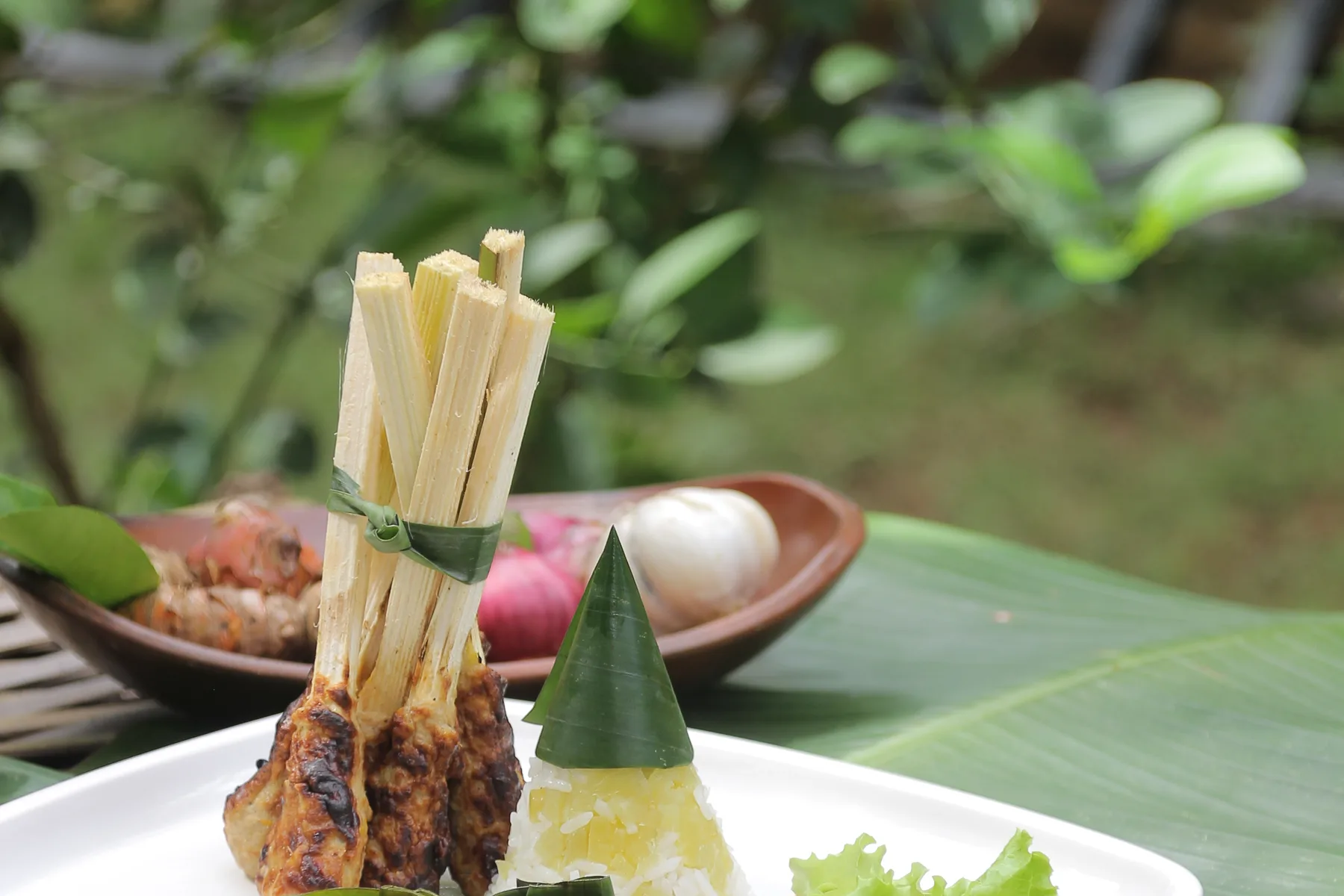
This sate lilit recipe makes Bali's beloved minced-fish satay: white fish pounded with grated coconut and a fragrant paste of shallot, galangal, turmeric and chilli, then moulded around lemongrass stalks and grilled until golden and charred at the edges. No peanut sauce, no bamboo skewers — the lemongrass is the skewer and the seasoning in one. One serving is about 175 g: three skewers.

Sate lilit comes from Bali, where it is one of the island's signature dishes alongside suckling pig and duck betutu. Its name says how it is made: sate means skewered meat, and lilit means to wrap or wind — the minced fish is wound around a stalk of lemongrass instead of being cut into cubes. The lemongrass does two jobs at once: it holds the fish over the fire and perfumes it from the inside as it grills. It is a feast dish in Bali, made for temple festivals and family gatherings, and it is traditionally cooked over coconut husks, which give the fish a gentle smoky sweetness.

Pairs well with: Steamed jasmine rice, sambal matah & a cucumber salad

Provenance

Indonesia flag Indonesia

Balinese Heritage

East & South Asia

Time Dedication

45m

30m prep • 15m cook

Batch Yield

4 Servings

273 kcal per serving

1 serving ≈ 175 g

Technical Skill

Intermediate

Intermediate (Grilled Satay)

Meal Timing & Digestive Fit

Breakfast

Not Advised

Lunch

Hearty Midday Main

Dinner

Ideal Hearty Main

Snack & Tea

Inappropriate

High Protein Occasions: Family dinners, barbecues, Balinese feasts, summer grilling Cost: Low — about $3–4 per serving at home
Grilled sate lilit skewers on lemongrass stalks with a cone of yellow rice, served with shallots, garlic and turmeric on a banana leaf

Balinese Heritage

Photo: Kresnanta, CC BY-SA 4.0, via Wikimedia Commons

The Heritage Formulary

Measured Ingredients

Estimated cost: Low — about $3–4 per serving at home (USD)

A good sate lilit holds its shape on the lemongrass, grills golden with charred edges, and stays moist inside.

Execution Methodology & Culinary Technique

Step-by-Step Cooking Guide

Active 45m
P

Prep Stage: Paste, Fish, Lemongrass

30 Mins • Paste and Moulding

Make the spice paste first, then mince the fish and mix everything while the grill heats. Trim and pound the lemongrass stalks before you touch the fish, and keep the mixture in the fridge until the moment you mould it — cold mince holds its shape far better than warm mince.

Maestro Tip: Fry a teaspoon of the mixture in a pan and taste it before you mould the skewers — it is the only chance to fix the salt and chilli.

  1. 1

    Prepare the Lemongrass Skewers

    10 Mins No heat — room temperature, about 20°C (68°F)

    Trim the tops off the 12 lemongrass stalks and peel away the tough outer layers until you reach the pale, flexible core. Cut them to about 20 cm long, then pound the thick root ends flat with the side of a knife or a rolling pin — the flattened end grips the mince and stops it sliding off on the grill.

    If a stalk feels thin or woody, set it aside for the paste and use a thicker one; a snapped skewer on a hot grill is a mess.

    Done when: Stalks trimmed to even lengths, root ends flattened and flexible.

  2. 2

    Blend the Spice Paste

    10 Mins No heat — room temperature, about 20°C (68°F)

    Put the shallots, garlic, red chillies, galangal, turmeric, coriander, toasted candlenuts, toasted shrimp paste, palm sugar and lime juice into a small blender or mortar. Blend or pound to a fairly smooth paste, stopping to scrape the sides down twice. It does not need to be silky — a little texture is fine.

    Toast the candlenuts and shrimp paste first: 2 minutes in a dry pan until fragrant. Raw candlenuts taste flat, and untoasted shrimp paste smells harsh.

    Done when: A thick, golden-orange paste that smells warm and citrusy.

  3. 3

    Mix and Mould the Fish

    15 Mins No heat — room temperature, about 20°C (68°F)

    Pulse the fish in a food processor until just minced — stop while it still has a little texture, not a smooth paste. Tip into a bowl with the spice paste, grated coconut, coconut milk, finely sliced lemongrass and salt, and mix with your hands until sticky and even. Fry a teaspoon of the mixture, taste, and adjust the salt. Divide into 12 portions and mould each one firmly around the flattened end of a lemongrass stalk, pressing it into a neat oval about 7 cm long.

    Wet hands stop the mince sticking to your fingers. Press firmly — air pockets make the satay fall apart on the grill.

    Done when: Twelve firm ovals clinging tightly to their stalks, with no cracks or loose ends.

  4. 4

    Grill the Satay

    12 Mins Medium-high heat, about 200°C (400°F)

    Brush the grill or a griddle pan with oil and heat it until hot. Lay the skewers on the grill and cook for 10–12 minutes, turning every 3 minutes and brushing lightly with oil, until the fish is golden all over with charred edges. The centre must reach 63°C (145°F) — cut one open to check: the flesh should be opaque white all the way through, with no translucent centre.

    Do not move the skewers for the first 3 minutes; the fish needs that time to set and release cleanly from the grill.

    Done when: Golden-brown with charred edges, firm to the touch, and opaque white inside at 63°C (145°F).

  5. 5

    Rest and Serve

    3 Mins No heat — room temperature, about 20°C (68°F)

    Lift the skewers onto a warm plate and let them rest for 2 minutes — the juices settle and the mince firms up. Serve three skewers per person with steamed rice and sambal matah on the side.

    Serve the skewers standing up in a small glass or laid across the rice so the lemongrass stays visible — it is half the charm of the dish.

    Done when: Hot skewers, juices settled, ready to eat.

Finishing Touches & Plating

Slide the skewers onto a warm plate with steamed rice and a spoonful of sambal matah — raw shallot, chilli and lemongrass with lime. Eat while the fish is hot and the lemongrass is still fragrant.

Nutritional Physiology & Benefits

Nutrition

Energy

273

kcal / serving

Protein

25g

Complete AA

Carbs

13g

Complex

Fats

14g

Healthy

Per serving (4 servings · 1 serving ≈ 175 g)
Energy273 kcal
Protein25 g
Carbohydrates13 g
Fat14 g
Fibre3.4 g
Sugar5.3 g
Sodium128 mg
Per 100g
Energy156 kcal
Protein14.1 g
Carbohydrates7.5 g
Fat7.9 g
Fibre1.9 g
Sugar3 g
Sodium73 mg

Nutrition values are estimated — calculated from USDA FoodData Central values for the listed ingredients.

Vitamins & minerals: Vitamin B12 and selenium (fish), vitamin C (lime, chillies), potassium and manganese (coconut, spices).

Lean Fish Protein

About 25 g of lean protein per serving from white fish, which helps keep you full long after dinner.

Spice, Not Sauce

Turmeric, galangal, lemongrass and lime bring the fragrance of Bali with almost no calories of their own.

Coconut and Lemongrass

Grated coconut adds a little fibre and healthy fats, and the lemongrass skewer flavours the fish as it grills.

Food Pairings

What to Eat With

To optimize nutrient absorption and elevate the sensory depth, pair with these authentic accompaniments:

Sides

Steamed Jasmine Rice

Plain steamed rice soaks up the juices and the spice paste, and gives the lean fish a proper dinner base.

Sauces

Sambal Matah

Sambal matah — raw shallot, chilli, lemongrass and lime — is the classic Balinese partner; its sharp freshness lifts the rich grilled fish.

Vegetables

Cucumber Salad

Cool cucumber with a little vinegar and salt calms the chilli heat between bites and keeps the plate fresh.

Drinks

Iced Lime Tea

A cold glass of iced tea with lime is the usual drink with grilled satay in Bali — sweet, cold and refreshing.

Complete menu

Serve the sate lilit with steamed jasmine rice, sambal matah and a cucumber salad, then finish with fresh mango — the cool fruit tames the chilli.

Digestive Guardrails

What NOT to Combine

To prevent digestive distress, sluggishness, or palate clash, avoid pairing the dish with these elements:

Fierce Heat, Raw Centre

Grilling the skewers over fierce heat chars the outside while the centre stays raw. Use medium-high heat and turn often so the fish cooks through evenly. This is general information, not medical advice.

Warm Minced Fish Left Standing

Leaving the moulded skewers at room temperature for hours lets bacteria grow in the minced fish. Keep the mixture chilled until the grill is hot, and cook within 2 hours of mixing. This is general information, not medical advice.

General information only, not medical advice — consult a doctor for personal dietary decisions.

Who Should Eat It

Who Should Eat

  • General adultsAn excellent high-protein dinner: three skewers with rice and sambal make a complete, satisfying meal.
  • ChildrenSuitable for children over 3 years if you leave out the chillies and the shrimp paste; the fish is soft and easy to chew. Serve one skewer, cut into pieces.
  • ElderlyGood choice: soft minced fish, no bones and no hard chewing; keep the chilli mild and serve with soft rice.
  • Pregnant womenFine when the fish is grilled right through to 63°C (145°F) and served hot; choose a low-mercury white fish such as snapper or cod. Ask your clinician if unsure.
  • Breastfeeding womenGenerally suitable; the fish and coconut give useful protein and energy. Keep the chilli moderate if your baby is sensitive to spicy food.
  • AthletesAbout 25 g of protein per serving with modest fat — a strong post-training dinner, especially with rice for carbohydrate.
  • Weight gainAdd a second helping of rice and a spoonful of peanut sauce on the side for extra energy.
  • Weight lossKeep to three skewers and swap the rice for a big cucumber and tomato salad; the fish itself is lean and filling.

Health Conditions — Adjust or Avoid

Conditions

  • DiabetesAbout 13 g of carbohydrate per serving, mostly from the coconut and palm sugar, so it fits most meal plans; serve with plain rice in a measured portion and ask your clinician if unsure.
  • High blood pressureSodium is about 521 mg per serving, mainly from the salt and shrimp paste; halve the shrimp paste and salt if you follow a low-sodium diet, and ask your clinician about your target.
  • Kidney diseaseFish and coconut are sources of potassium and phosphorus; keep to one serving if you follow a limit, and ask your clinician.
  • GoutFish and shrimp paste contain purines; white fish is lower in purines than oily fish, but keep portions modest and ask your clinician if unsure.
  • Stomach issuesChilli, lemongrass and shrimp paste can irritate a sensitive stomach; make a mild batch without chilli and eat a small portion, and ask your clinician if unsure.
  • Cardiovascular diseaseWhite fish is lean and the fat is mostly from coconut; enjoy as part of a varied diet with plenty of vegetables, and ask your clinician about your overall diet.
  • Fatty liverThe fish itself is lean; the coconut adds saturated fat, so keep the coconut at the stated amount and skip fried sides, and ask your clinician if you follow a prescribed diet.
  • Food allergiesContains fish, shellfish (shrimp paste), tree nuts (candlenut) and coconut. Leave out the shrimp paste and candlenut if you are allergic to shellfish or tree nuts.
  • Special therapeutic dietsNaturally gluten-free and dairy-free; for a low-sodium plan, omit the shrimp paste and halve the salt, and check with your clinician.

If you have a medical condition, consult your doctor before changing your diet.

Storage & Use

Storage & Use

How to store
Cool quickly and store in a sealed container in the fridge; keep raw and cooked skewers apart.
In the fridge
Cooked skewers keep 2 days in the fridge at 4°C (40°F) or below, in a sealed container.
In the freezer
The raw moulded skewers freeze well for 1 month, wrapped tightly; thaw in the fridge and grill from cold. Do not freeze cooked skewers — the fish dries out.
How to reheat
Reheat in a hot oven at 180°C (350°F) for 5 minutes, or in a pan, until steaming hot at 74°C (165°F) all the way through.
Freezing recommended
Yes for the raw moulded skewers; no for cooked ones.
Signs it has spoiled
Sour or ammonia smell, slimy surface, or grey flesh.

More recipes to explore

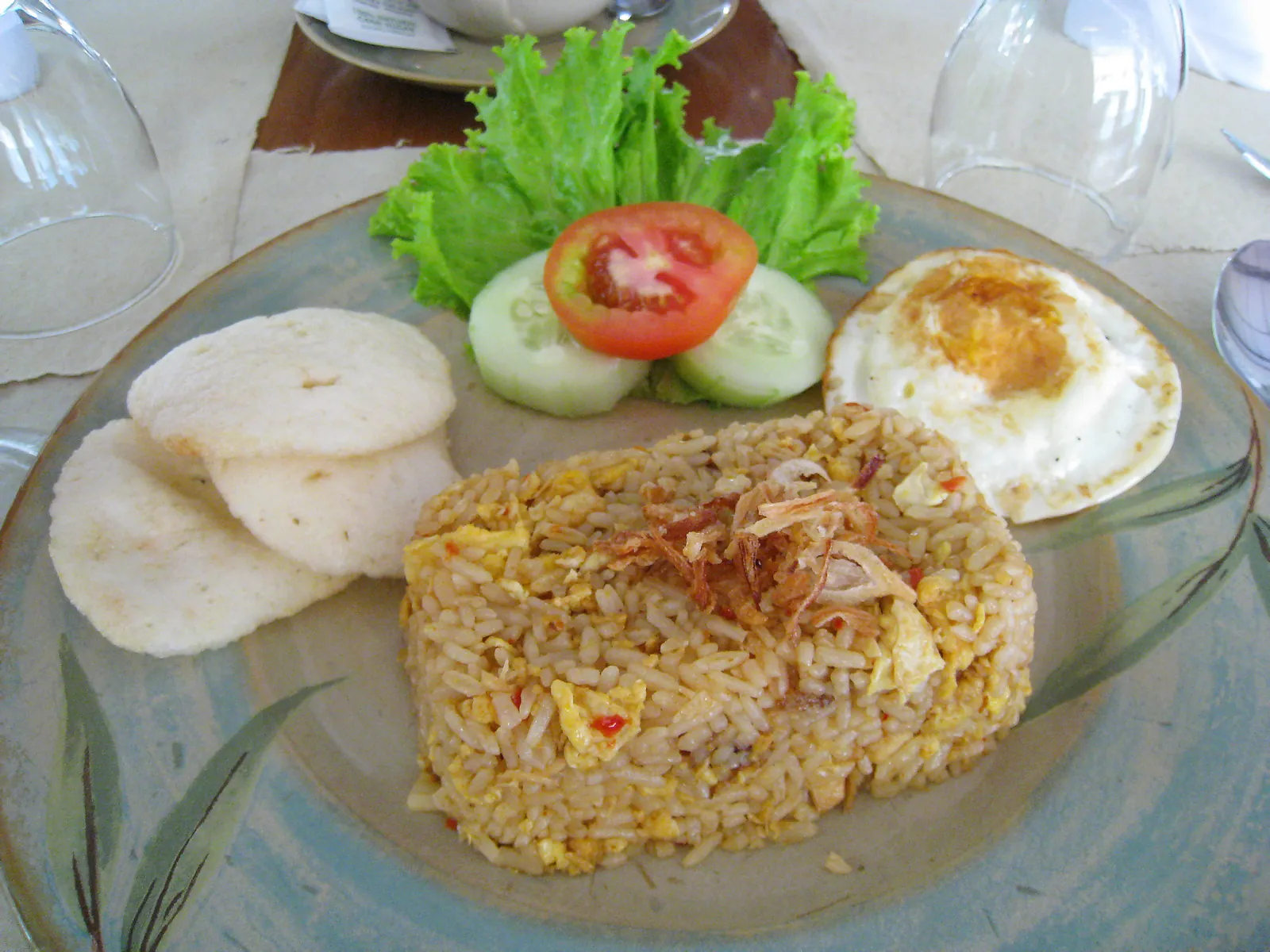
Indonesian nasi goreng — a mound of fried rice with egg and fried shallots, a fried egg, prawn crackers, cucumber, tomato and lettuce Indonesia flag Indonesia 35m
Dinner •Jakarta Street Classic

Indonesian Nasi Goreng

This Indonesian nasi goreng recipe turns a bowl of day-old rice into something far better than the sum of its parts: smoky, sweet-savoury grains coated in kecap manis, tossed with chicken, carrot and peas, and crowned with a fried egg and crunchy prawn crackers. It is the kind of dinner that comes together in one wok in about half an hour, and it tastes like a Jakarta street stall at its best. One serving is about 470 g.

Comfort & Satisfying

A one-wok dinner of sweet-savoury fried rice, chicken and a fried egg, served the Indonesian way with cucumber, tomato and prawn crackers.

Pairs Well With
A fried egg on top, cool cucumber and tomato, and a handful of prawn crackers, with iced tea to drink.
Quick Prep (<30m)
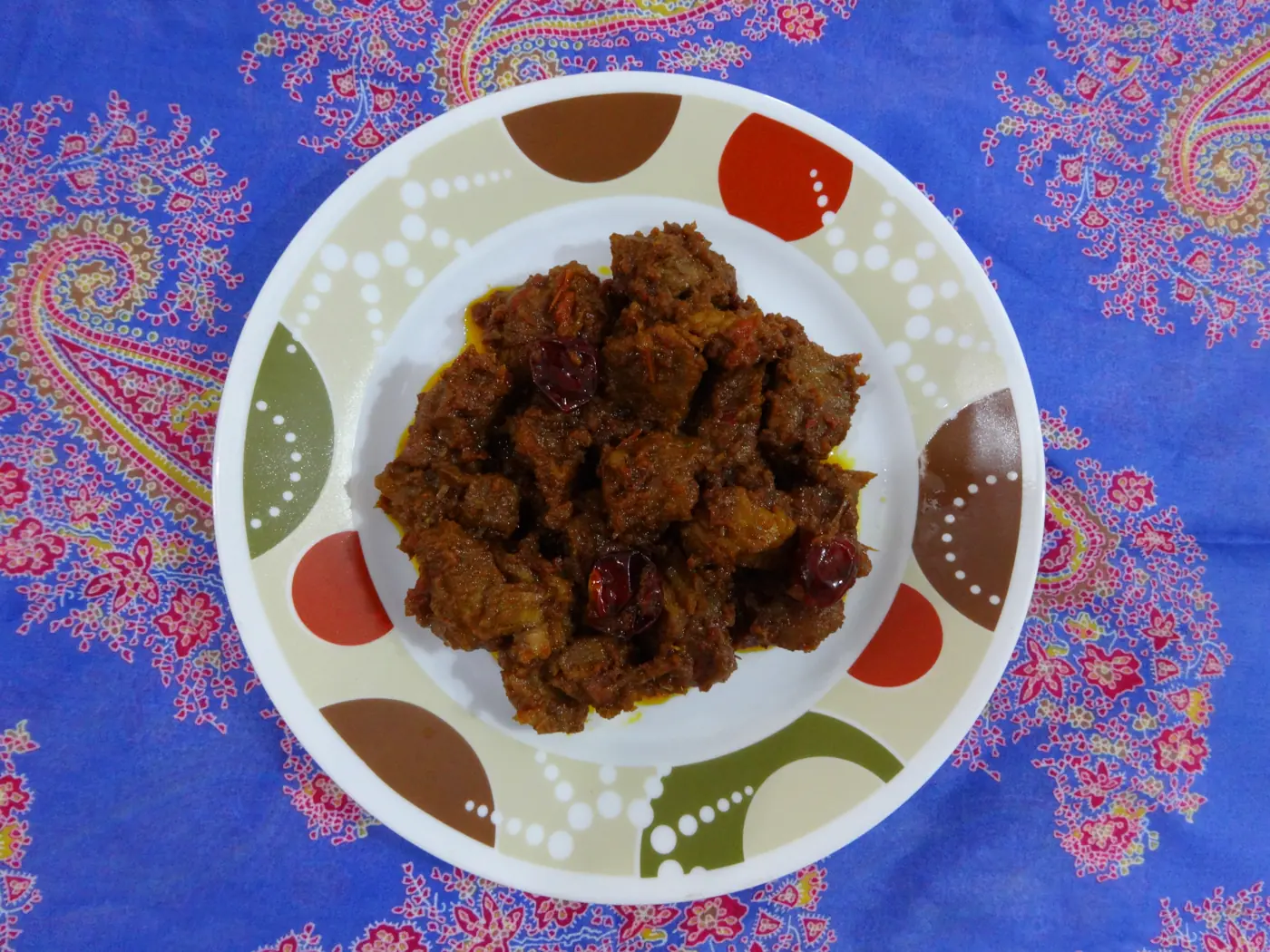
A plate of beef rendang — dark brown beef chunks coated in a dry, caramelised spice paste Indonesia flag Indonesia 4h
Dinner •West Sumatra Heritage

Beef Rendang

This beef rendang recipe slow-braises beef chuck in coconut milk with lemongrass, galangal, chillies and warm spices for about four hours, until the sauce has almost disappeared and the meat is coated in a dark, dry, caramelised spice paste. It is the Minangkabau dish from West Sumatra that sits at the heart of Padang cooking: deeply savoury, gently hot, and rich without being saucy. One serving is about 380 g.

Rich & Satisfying

Slow-braised beef in spiced coconut milk, reduced until the meat is coated in a dark, caramelised spice paste.

Pairs Well With
Steamed jasmine rice & pickled cucumber (acar timun)
High Protein
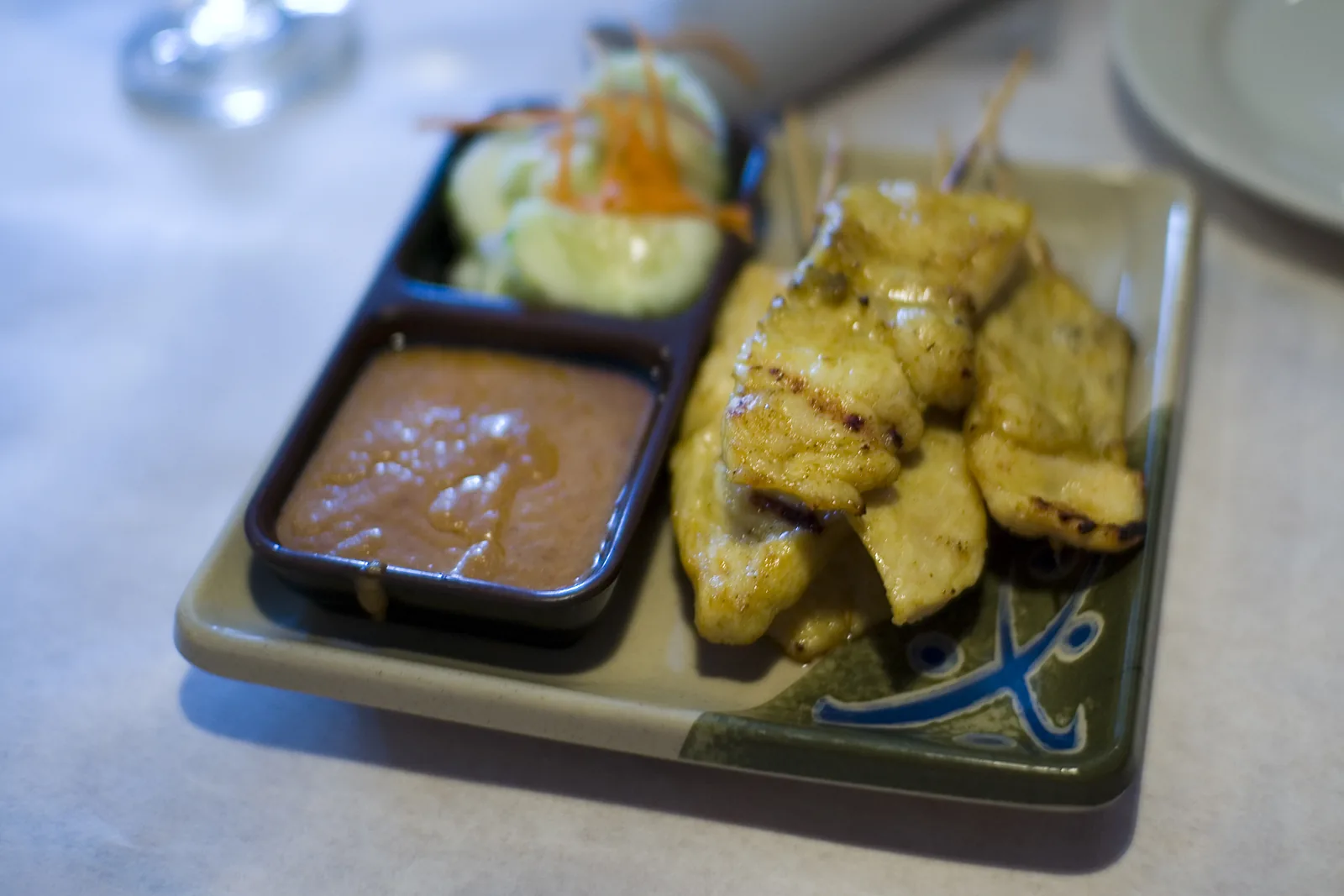
Grilled chicken satay skewers with peanut sauce and cucumber salad on a plate Indonesia flag Indonesia 45m
Dinner •Java Street Food

Chicken Satay

This chicken satay recipe turns chicken breast into golden, char-edged skewers marinated in turmeric, coconut milk, garlic and sweet soy sauce, then grilled and served with a warm, creamy peanut sauce. One serving is about 290 g: three skewers, a generous spoonful of peanut sauce and a cool cucumber-shallot salad. It is the Indonesian street-food classic — sate ayam — made for a weeknight grill.

High-Protein Grilling

Grilled chicken skewers in a turmeric-coconut marinade, served with a homemade peanut sauce — high in protein and cooked fast over high heat.

Pairs Well With
Lontong rice cakes and a cool cucumber-shallot salad balance the rich peanut sauce.
High Protein • Quick Prep (<30m)
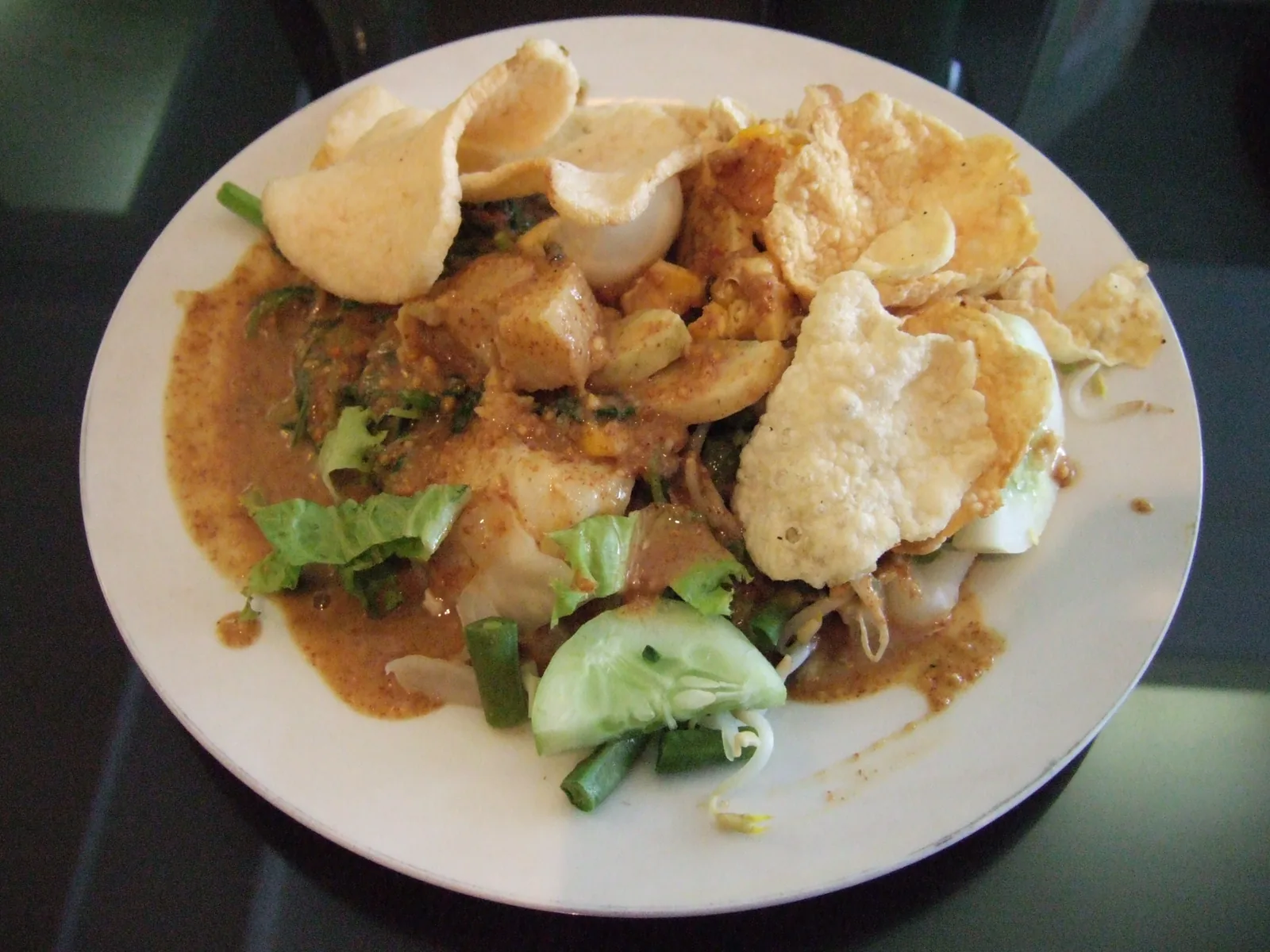
A plate of gado-gado: mixed vegetables, tofu and boiled egg coated in peanut sauce, topped with prawn crackers and cucumber slices. Indonesia flag Indonesia 45m
Lunch •Jakarta Street Food Classic

Gado-Gado

Gado-gado is Indonesia's best-loved salad: warm potatoes, green beans, cabbage, bean sprouts, cucumber and carrot, with fried tofu, boiled egg and crunchy prawn crackers, all coated in a thick, sweet-savoury peanut sauce. One serving is about 584 g.

Fresh & Filling

Warm vegetables, tofu and egg under a rich peanut sauce — a complete meat-free lunch.

Pairs Well With
Serve warm with prawn crackers on the side and a glass of iced tea.

The Dinner Gazette

Never wonder what’s for dinner again

One email a week with easy dinner ideas from around the world — ingredients, steps and nutrition, tested in our kitchen first.

Delivered every Thursday morning. Unsubscribe anytime.