
Curated recipes from 193 countries  •  New seasonal Mediterranean issue out now

Overview

Sate Padang

Sate Padang Pariaman, Padang Beef Satay, Sate Darek

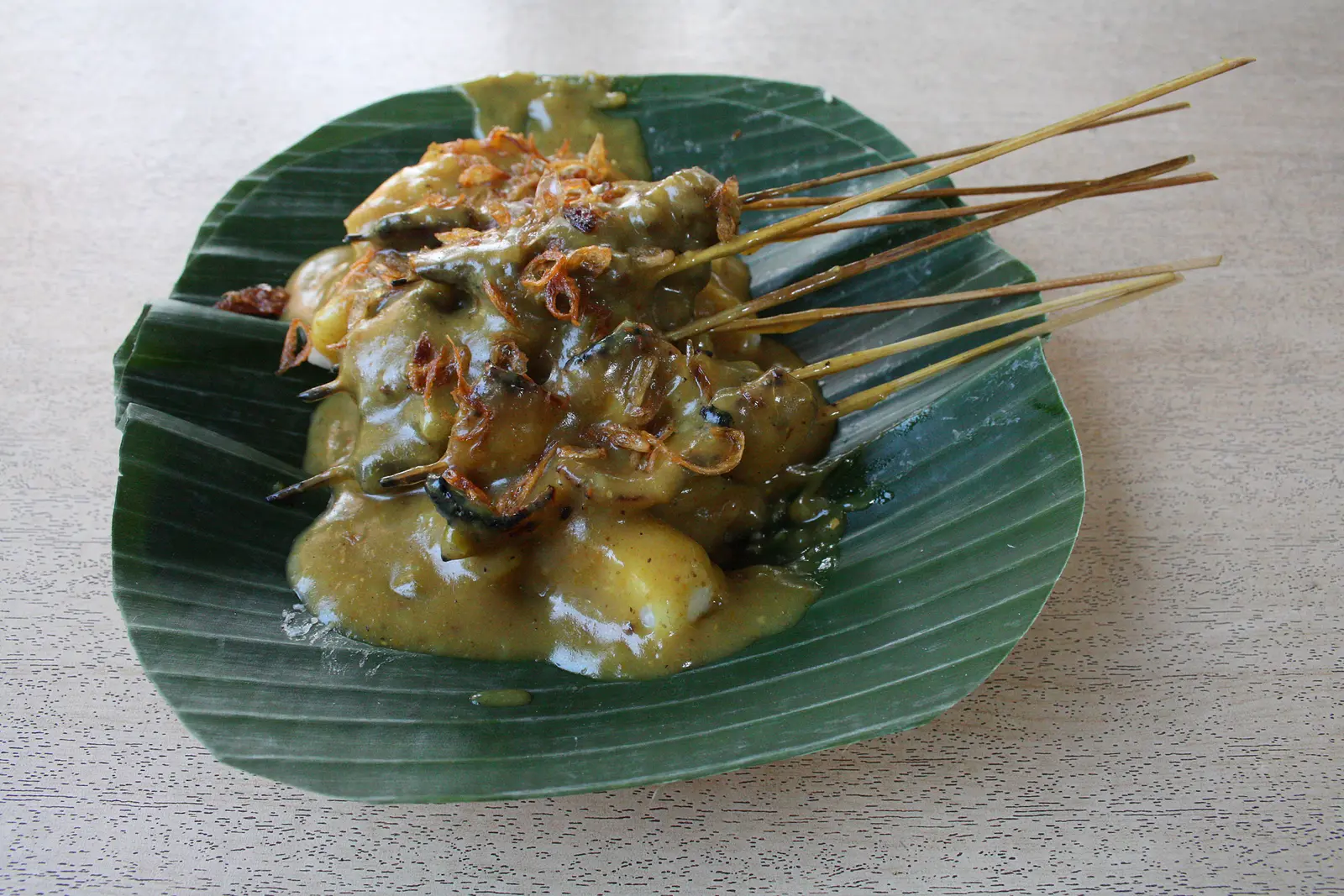
This sate padang recipe turns beef into tender, smoky skewers boiled in spiced stock, grilled over charcoal and smothered in a thick yellow sauce of turmeric, galangal, ginger and chillies, thickened with rice flour. One serving is about 355 g: three skewers with sauce, ketupat rice cakes and fried shallots. It is the Minangkabau satay of West Sumatra — the yellow sauce, not peanut sauce, is what makes it sate padang.

Sate padang comes from the Minangkabau people of West Sumatra, where Padang food is famous across Indonesia for its bold, spiced cooking. Unlike the peanut sauce served with most Indonesian satay, sate padang is defined by its thick yellow sauce — a curry-like gravy of turmeric, galangal, ginger and chillies, thickened with rice flour and made with the beef's own cooking stock. Vendors sell it from pushcarts and small stalls, grilling beef, tongue or offal over charcoal and ladling the sauce over the skewers with ketupat rice cakes. There are three well-known versions, named for their towns: Pariaman with a red sauce, Padang Panjang with a yellow sauce, and Padang city with a sauce in between.

Pairs well with: Ketupat rice cakes and cool cucumber balance the rich, spicy yellow sauce.

Provenance

Indonesia flag Indonesia

Minangkabau Street Food

East & South Asia

Time Dedication

2h 15m

30m prep • 105m cook

Batch Yield

4 Servings

678 kcal per serving

1 serving ≈ 355 g

Technical Skill

Advanced

Hard (Boil, Grill and Sauce)

Meal Timing & Digestive Fit

Breakfast

Not Advised

Lunch

Hearty Midday Main

Dinner

Ideal Hearty Main

Snack & Tea

Inappropriate

High Protein Occasions: Weekend grilling, family dinners, casual street-food nights, festive gatherings Cost: Moderate — about $4–5 per serving at home
Beef satay skewers smothered in thick yellow turmeric sauce with fried shallots, served on a banana leaf with ketupat rice cakes

Minangkabau Street Food

Photo: Gunawan Kartapranata, CC BY-SA 3.0, via Wikimedia Commons

The Heritage Formulary

Measured Ingredients

Estimated cost: Moderate — about $4–5 per serving at home (USD)

Beef is boiled until fork-tender, then grilled until the centre reaches 71°C (160°F), and the yellow sauce is thickened with rice flour until it coats a spoon.

Execution Methodology & Culinary Technique

Step-by-Step Cooking Guide

Active 2h 15m
P

Make the Spice Paste

30 minutes

Blend the shallots, garlic, red chillies, turmeric, ginger, galangal, coriander, cumin and salt into a smooth, bright yellow spice paste. Rub half of the paste over the beef cubes, cover and leave for 20 minutes while you set out the skewers and the rice flour slurry. Keep the rest of the paste for the sauce.

Maestro Tip: A truly smooth paste makes a silky sauce — blend for a full minute and scrape the sides down halfway through. Never reuse paste that has touched raw meat.

  1. 1

    Boil the Beef Until Tender

    90 Minutes Simmer, about 95°C (203°F)

    Put the beef cubes in a large pot with enough water to cover them, then bring to the boil and skim off the foam. Simmer gently for 90 minutes until the beef is fork-tender, then lift the beef out and strain 400 g of the cooking liquid for the sauce.

    Keep the heat low — a hard boil toughens the beef. Save the cooking liquid; it is the base of the yellow sauce.

    Done when: A cube pulls apart easily with two forks and the cooking liquid smells richly of beef.

  2. 2

    Make the Thick Yellow Sauce

    15 Minutes Medium heat, about 90°C (194°F)

    Blend the shallots, garlic, red chillies, turmeric, ginger, galangal, coriander, cumin and salt into a smooth paste. Heat the vegetable oil in a pan, fry half of the paste for 3 minutes until fragrant, then pour in the 400 g beef stock and the coconut milk. Stir in the rice flour slurry and simmer for 10 minutes, stirring, until the sauce is thick enough to coat a spoon.

    Stir the rice flour slurry again just before pouring it in — rice flour settles fast and lumps if it sits.

    Done when: The sauce is glossy, golden yellow and thick enough to coat the back of a spoon without running off.

  3. 3

    Season and Thread the Skewers

    15 Minutes Room temperature, about 21°C (70°F)

    Rub the remaining spice paste over the boiled beef cubes. Soak 12 bamboo skewers in water for 15 minutes, then thread 4 cubes onto each skewer, leaving a small gap between cubes so the heat reaches all sides.

    Thread the cubes through their flattest side so they sit flat on the grill and do not spin when you turn the skewer.

    Done when: Each skewer holds 4 cubes snugly with small gaps between them and an even yellow coating.

  4. 4

    Grill the Satay

    15 Minutes High heat, 230°C (450°F); beef must reach 71°C (160°F)

    Heat a charcoal grill or grill pan until very hot. Brush the skewers lightly with oil and lay them over the heat. Grill for 12–15 minutes, turning every 3 minutes, until the outside is dark and charred at the edges and the centre of the largest cube reaches 71°C (160°F).

    Do not press the skewers down — it squeezes the juices out. If the paste flares up, move the skewers to a cooler part of the grill for a moment.

    Done when: The outside is dark and caramelised with charred edges, and the centre of the largest cube reaches 71°C (160°F) on a meat thermometer.

  5. 5

    Serve the Sate Padang

    5 Minutes Serving temperature, about 60°C (140°F)

    Lay the grilled skewers on a banana leaf or a serving plate, spoon the thick yellow sauce generously over the top, and scatter the fried shallots over everything. Serve at once with the ketupat rice cakes on the side.

    Serve the sauce on top, not underneath — the hot beef warms the sauce just enough without thinning it out.

    Done when: The plate shows glossy dark skewers under a thick yellow sauce, with golden fried shallots and white ketupat visible around the edges.

Finishing Touches & Plating

Lay the grilled skewers on a banana leaf or a plate, spoon the thick yellow sauce generously over the top, and scatter the fried shallots over everything. Serve at once with ketupat rice cakes on the side — sate padang is at its best while the beef is still hot and the sauce is glossy.

Nutritional Physiology & Benefits

Nutrition

Energy

678

kcal / serving

Protein

51g

Complete AA

Carbs

45g

Complex

Fats

31g

Healthy

Per serving (4 servings · 1 serving ≈ 355 g)
Energy678 kcal
Protein51 g
Carbohydrates45 g
Fat31 g
Fibre3.4 g
Sugar3.4 g
Sodium726 mg
Per 100g
Energy191 kcal
Protein14.4 g
Carbohydrates12.6 g
Fat8.8 g
Fibre1 g
Sugar1 g
Sodium205 mg

Nutrition values are estimated — calculated from USDA FoodData Central values for the listed ingredients.

Vitamins & minerals: Provides iron, zinc and vitamin B12 from the beef, vitamin C from the chillies, and vitamin B6 from the shallots. Nutrition is estimated.

High in Protein

About 51.0 g of protein per serving from the beef, which supports muscle maintenance and keeps a grilled dinner filling for hours.

Iron and Vitamin B12

Beef is naturally rich in iron and vitamin B12, both of which the body uses to make healthy red blood cells.

Warming Spices and Vitamin C

Turmeric, ginger and galangal give the yellow sauce its colour and warmth, and the fresh chillies add vitamin C to the plate.

Food Pairings

What to Eat With

To optimize nutrient absorption and elevate the sensory depth, pair with these authentic accompaniments:

Sides

Ketupat Rice Cakes

Dense compressed rice cakes are the classic sate padang partner: their plain bite soaks up the thick yellow sauce and turns the skewers into a full meal.

Vegetables

Cucumber and Lime Salad

Cool cucumber with a squeeze of lime cuts through the rich, spicy sauce and refreshes the palate between skewers.

Drinks

Jasmine Tea

Unsweetened jasmine tea cleanses the palate after the rich beef and coconut-milk sauce without adding more sugar to the meal.

Full Menus

Satay, Ketupat and Soto Padang Menu

For a full Padang-style dinner, serve the satay first with ketupat and the yellow sauce, then follow with a light beef soup such as soto padang.

Complete menu

Serve the sate padang with ketupat rice cakes, cucumber salad and a pot of jasmine tea for a complete West Sumatran dinner.

Digestive Guardrails

What NOT to Combine

To prevent digestive distress, sluggishness, or palate clash, avoid pairing the dish with these elements:

Beef Allergy — Do Not Serve

This dish is built on beef, so anyone with a beef allergy must not eat it — there is no substitute that keeps it sate padang. This is general information, not medical advice.

Extra Sauce and Salty Drinks

The yellow sauce is salty and the fried shallots add more salt, with about 726 mg of sodium per serving. Piling on extra sauce or salty drinks pushes the salt load up fast — keep the sauce to the stated spoonfuls. This is general information, not medical advice.

Undercooked Beef

Beef cubes are small and cook fast on the grill, so it is tempting to pull them off early — but undercooked beef can carry harmful bacteria. Always grill until the centre reaches 71°C (160°F). This is general information, not medical advice.

General information only, not medical advice — consult a doctor for personal dietary decisions.

Who Should Eat It

Who Should Eat

  • General adultsA rich, high-protein dinner — three skewers with thick yellow sauce, ketupat and fried shallots make a complete and very filling main course.
  • ChildrenBeef is a good source of protein and iron for growing children, but this dish is spicy — serve the chilli sauce on the side and cut the meat off the skewers for younger children.
  • ElderlyChoose tender beef and boil it until it is truly soft, then cut the cubes small and serve with soft ketupat rice cakes so the meal is easy to chew.
  • Pregnant womenSafe when the beef is boiled and grilled right through to 71°C (160°F) with no pink centre — keep raw meat and its marinade away from the finished skewers.
  • Breastfeeding womenA filling, iron-rich dinner; the chillies pass no flavour into breast milk, so eat the spice level you enjoy.
  • AthletesAbout 51 g of protein per serving makes this a strong post-training dinner — the ketupat rice cakes top up carbohydrate after a hard session.
  • Weight gainAdd an extra ketupat rice cake and a second spoonful of the thick yellow sauce to lift the energy of the meal.
  • Weight lossThe beef and sauce are rich, so keep to three skewers, go easy on the sauce and the fried shallots, and fill the plate with cucumber and salad.

Health Conditions — Adjust or Avoid

Conditions

  • DiabetesThe ketupat rice cakes add about 45 g of carbohydrate per serving, so keep to the stated portion and favour the cucumber garnish; ask your clinician about portions.
  • High blood pressureThis dish is salty — about 726 mg of sodium per serving, mostly from the salt and the sauce — so keep the sauce light and skip extra fried shallots; ask your clinician about portions.
  • Kidney diseaseHigh in protein, sodium and potassium, so it may not suit a restricted kidney diet; ask your clinician before eating it.
  • GoutBeef is a red meat with a moderate purine load, so keep the portion small and do not eat it often during a flare; ask your clinician for advice.
  • Stomach issuesThe chillies, galangal and rich sauce can irritate a sensitive stomach — use fewer chillies and a smaller amount of sauce; ask your clinician if symptoms flare.
  • Cardiovascular diseaseBeef and coconut milk make this dish rich in saturated fat, so keep portions moderate and balance the plate with vegetables; ask your clinician about portions.
  • Fatty liverThe grilled beef and lean cooking help, but the sauce is rich — keep the sauce light and skip sugary drinks with the meal; ask your clinician about portions.
  • Food allergiesContains beef. The sauce is thickened with rice flour, which is naturally gluten-free, but check the rice flour label for cross-contact if you are coeliac; ask your clinician if you are unsure.
  • Special therapeutic dietsHigh-protein and naturally gluten-free, but rich and salty — it can be adapted by cutting the coconut milk and salt, but ask your clinician or dietitian before relying on it for a therapeutic diet.

If you have a medical condition, consult your doctor before changing your diet.

Storage & Use

Storage & Use

How to store
Cool the skewers quickly and store them in an airtight container, off the sticks; keep the sauce and fried shallots in separate containers so the shallots stay crisp.
In the fridge
Cooked beef 3–4 days; yellow sauce 3 days; ketupat 2 days; fried shallots keep crisp for 1 week in an airtight jar.
In the freezer
Grilled beef skewers (off the sticks) up to 2 months; freeze the sauce separately for up to 1 month.
How to reheat
Reheat the beef on a hot grill or in the oven until steaming hot throughout, to 74°C (165°F); warm the sauce gently, stirring, or it will split.
Freezing recommended
Yes for the grilled beef and the sauce; ketupat does not freeze well.
Signs it has spoiled
Sour or off smell, slimy surface on the beef, or mould on the sauce.

More recipes to explore

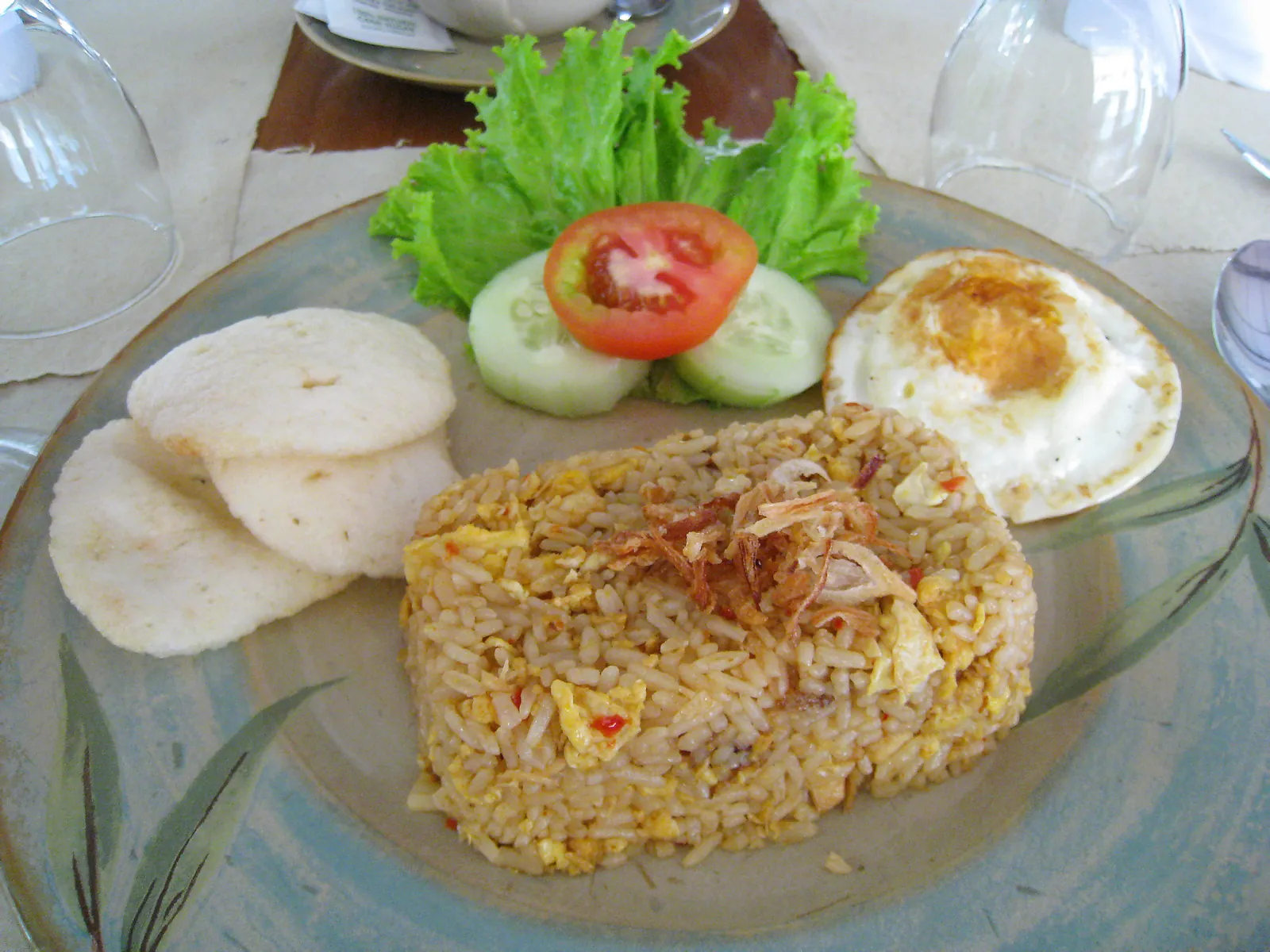
Indonesian nasi goreng — a mound of fried rice with egg and fried shallots, a fried egg, prawn crackers, cucumber, tomato and lettuce Indonesia flag Indonesia 35m
Dinner •Jakarta Street Classic

Indonesian Nasi Goreng

This Indonesian nasi goreng recipe turns a bowl of day-old rice into something far better than the sum of its parts: smoky, sweet-savoury grains coated in kecap manis, tossed with chicken, carrot and peas, and crowned with a fried egg and crunchy prawn crackers. It is the kind of dinner that comes together in one wok in about half an hour, and it tastes like a Jakarta street stall at its best. One serving is about 470 g.

Comfort & Satisfying

A one-wok dinner of sweet-savoury fried rice, chicken and a fried egg, served the Indonesian way with cucumber, tomato and prawn crackers.

Pairs Well With
A fried egg on top, cool cucumber and tomato, and a handful of prawn crackers, with iced tea to drink.
Quick Prep (<30m)
A plate of beef rendang — dark brown beef chunks coated in a dry, caramelised spice paste Indonesia flag Indonesia 4h
Dinner •West Sumatra Heritage

Beef Rendang

This beef rendang recipe slow-braises beef chuck in coconut milk with lemongrass, galangal, chillies and warm spices for about four hours, until the sauce has almost disappeared and the meat is coated in a dark, dry, caramelised spice paste. It is the Minangkabau dish from West Sumatra that sits at the heart of Padang cooking: deeply savoury, gently hot, and rich without being saucy. One serving is about 380 g.

Rich & Satisfying

Slow-braised beef in spiced coconut milk, reduced until the meat is coated in a dark, caramelised spice paste.

Pairs Well With
Steamed jasmine rice & pickled cucumber (acar timun)
High Protein
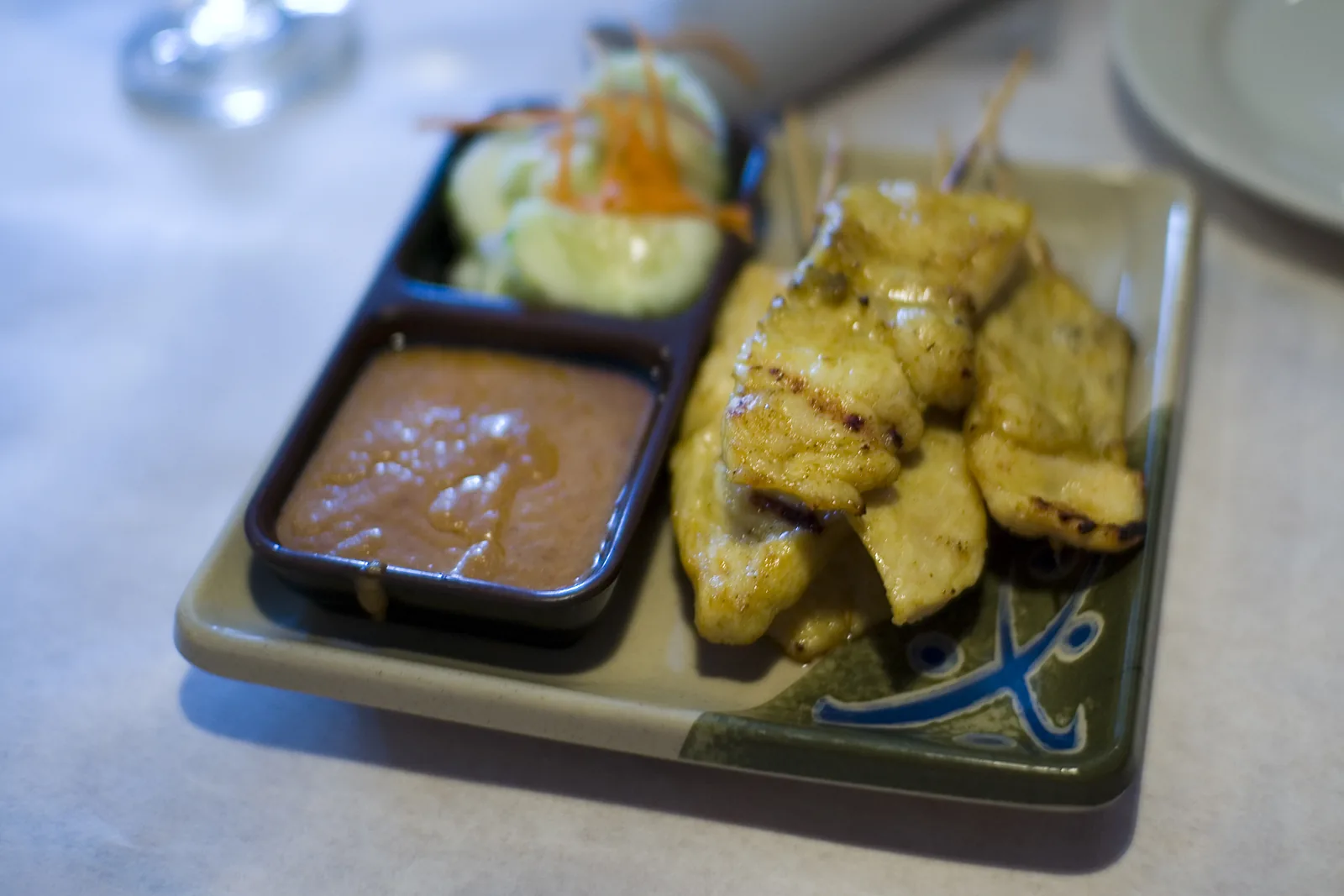
Grilled chicken satay skewers with peanut sauce and cucumber salad on a plate Indonesia flag Indonesia 45m
Dinner •Java Street Food

Chicken Satay

This chicken satay recipe turns chicken breast into golden, char-edged skewers marinated in turmeric, coconut milk, garlic and sweet soy sauce, then grilled and served with a warm, creamy peanut sauce. One serving is about 290 g: three skewers, a generous spoonful of peanut sauce and a cool cucumber-shallot salad. It is the Indonesian street-food classic — sate ayam — made for a weeknight grill.

High-Protein Grilling

Grilled chicken skewers in a turmeric-coconut marinade, served with a homemade peanut sauce — high in protein and cooked fast over high heat.

Pairs Well With
Lontong rice cakes and a cool cucumber-shallot salad balance the rich peanut sauce.
High Protein • Quick Prep (<30m)
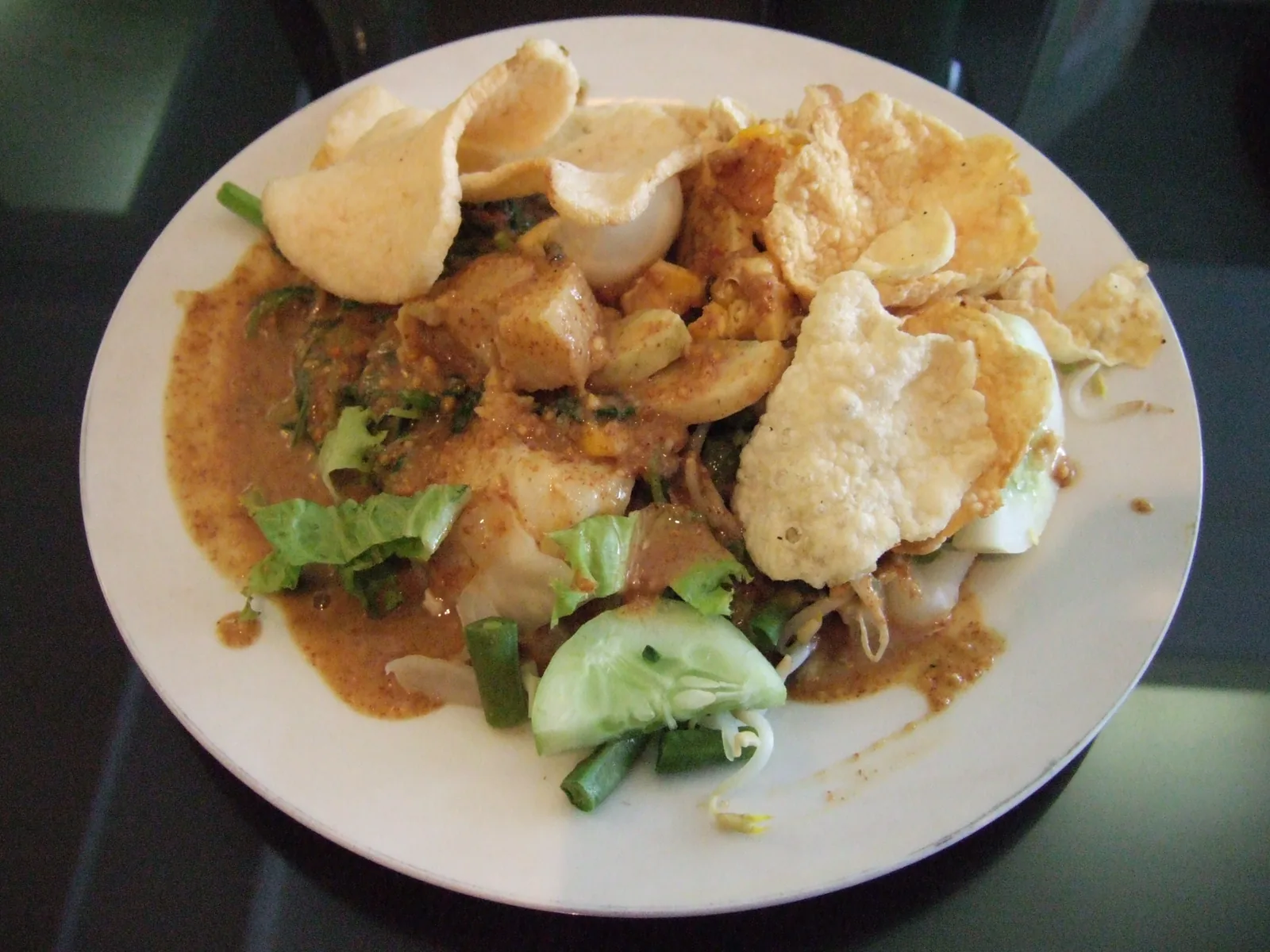
A plate of gado-gado: mixed vegetables, tofu and boiled egg coated in peanut sauce, topped with prawn crackers and cucumber slices. Indonesia flag Indonesia 45m
Lunch •Jakarta Street Food Classic

Gado-Gado

Gado-gado is Indonesia's best-loved salad: warm potatoes, green beans, cabbage, bean sprouts, cucumber and carrot, with fried tofu, boiled egg and crunchy prawn crackers, all coated in a thick, sweet-savoury peanut sauce. One serving is about 584 g.

Fresh & Filling

Warm vegetables, tofu and egg under a rich peanut sauce — a complete meat-free lunch.

Pairs Well With
Serve warm with prawn crackers on the side and a glass of iced tea.

The Dinner Gazette

Never wonder what’s for dinner again

One email a week with easy dinner ideas from around the world — ingredients, steps and nutrition, tested in our kitchen first.

Delivered every Thursday morning. Unsubscribe anytime.