Curated recipes from 193 countries  •  New seasonal Mediterranean issue out now

Overview

Shan Noodles

Shan Khao Swe; Shan Khao Swé; Shan-style tomato chicken noodles

This shan noodles recipe is Shan State's beloved bowl: soft rice noodles topped with a rich tomato chicken sauce, then finished with pickled mustard greens, crushed peanuts, spring onions and fresh coriander. The sauce is tangy and savoury rather than creamy, and every bowl is seasoned to taste at the table with soy sauce, chilli oil and lime. One serving is about 570 g.

Shan noodles — Shan khao swè — come from the Shan people of eastern Myanmar, the highland state that borders China, Thailand and Laos, and the dish carries all three neighbours in it: Chinese-style rice noodles, Thai-style sour pickles and chilli, and Burmese tomato cooking. It is now eaten all over Myanmar, and is especially common in Mandalay as well as in Shan State itself. There are two ways to serve it — dry, with the tomato meat sauce spooned over the noodles, and in a light soup — and the toppings stay the same either way: pickled mustard greens, crushed peanuts, fried garlic, spring onions and coriander, with soy sauce, chilli oil and lime on the table.

Pairs well with: Light chicken broth, pickled mustard greens & green tea

Provenance

Myanmar flag Myanmar

Shan State Classic

East & South Asia

Time Dedication

50m

20m prep • 30m cook

Batch Yield

4 Servings

740 kcal per serving

1 serving ≈ 570 g

Technical Skill

Intermediate

Easy (Stovetop)

Meal Timing & Digestive Fit

Breakfast

Not Advised

Lunch

Prime Metabolic Fit

Dinner

Ideal Hearty Main

Snack & Tea

Inappropriate

Pasta & Noodles Occasions: Weekday lunches, family meals, cold days, casual gatherings Cost: Low — about $3–4 per serving at home
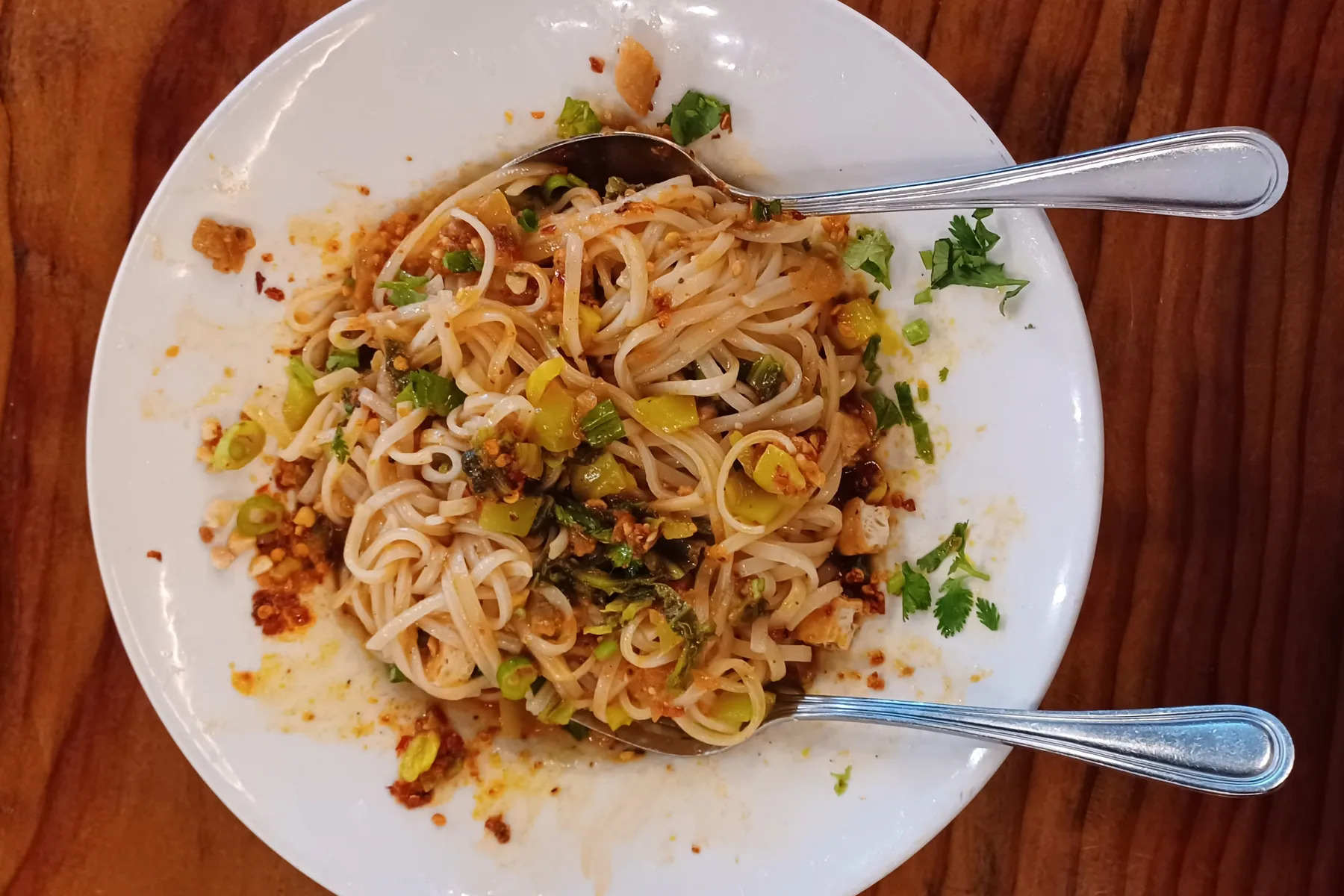
A bowl of Shan noodles — rice noodles tossed in tomato sauce with pickled mustard greens, crushed peanuts, spring onions, coriander and tofu

Shan State Classic

Photo: Mx. Granger, CC0, via Wikimedia Commons

The Heritage Formulary

Measured Ingredients

Estimated cost: Low — about $3–4 per serving at home (USD)

Shan home cooking: rice noodles with a tomato chicken sauce, pickled mustard greens, peanuts and herbs.

Execution Methodology & Culinary Technique

Step-by-Step Cooking Guide

Active 50m
P

Prep Stage: Noodles Soaking, Aromatics Chopped, Chicken Cut

20 Mins • Soaking, Chopping & Cutting

Put the rice noodles in a large bowl, cover with warm water and leave them to soak while you work. Finely chop the tomatoes, garlic, shallots and pickled mustard greens, grate the ginger, and cut the chicken into small bite-size pieces. Crush the peanuts, slice the spring onions, pick the coriander leaves and squeeze the lime, so everything is ready before the pan gets hot.

Maestro Tip: Start the noodles soaking first — they need the full 15 minutes, and the chopping takes about the same time, so nothing waits around.

  1. 1

    Soak the rice noodles

    15 Mins • Soaking Warm water, about 60°C (140°F) — not boiling

    Put the dried rice noodles in a large bowl and cover with warm water. Leave them for about 15 minutes, until they are pliable but still have a firm core. Drain and set aside — they will finish cooking in boiling water later.

    Do not use boiling water for the soak or the noodles turn mushy before they reach the pot.

    Done when: Noodles bend easily without snapping, but still feel firm in the middle.

  2. 2

    Fry the aromatics and brown the chicken

    8 Mins • Frying Medium-high heat; chicken cooked through to at least 74°C (165°F)

    Heat the oil in a large pan or wok over medium-high heat. Add the garlic, shallots and ginger and fry for about 1 minute, until fragrant and just turning golden. Add the chicken pieces and cook, stirring, for 4–5 minutes, until no pink remains on the outside.

    Keep the aromatics moving — garlic burns in seconds once it colours, and burnt garlic makes the whole sauce bitter.

    Done when: Chicken opaque all over, no pink visible; garlic pale gold, not brown.

  3. 3

    Build the tomato sauce

    12 Mins • Simmering Medium heat, gentle simmer about 95°C (200°F); chicken kept at or above 74°C (165°F)

    Stir in the fermented soybean paste, soy sauce, fish sauce, sugar, chilli powder and turmeric, then add the chopped tomatoes and tomato paste. Pour in the chicken broth, stir well and bring to a gentle simmer. Cook for about 10 minutes, stirring now and then, until the tomatoes have broken down into a thick, spoonable sauce that coats the chicken.

    If the sauce gets too thick, add broth a spoonful at a time — it should flow like a loose curry, not sit like a paste.

    Done when: Tomatoes collapsed into the sauce; sauce thick enough to coat a spoon; chicken tender.

  4. 4

    Cook the noodles

    4 Mins • Boiling Rolling boil, 100°C (212°F)

    While the sauce simmers, bring a large pot of water to a rolling boil. Add the drained, soaked noodles and cook for 2–4 minutes, following the packet time, until just tender. Drain at once and rinse briefly under cold water so they stop cooking and do not stick together.

    Taste a strand at 2 minutes — rice noodles go from chewy to soggy fast, and they keep softening in the hot sauce.

    Done when: Noodles tender and chewy, not soft or mushy.

  5. 5

    Assemble the bowls

    5 Mins • Serving Serve hot; sauce kept above 74°C (165°F) until served

    Divide the noodles between four bowls. Spoon the hot tomato chicken sauce generously over each portion, then top with pickled mustard greens, crushed peanuts, spring onions and coriander. Squeeze lime over each bowl and set soy sauce and chilli oil on the table so everyone seasons their own bowl.

    Toss each bowl once or twice with chopsticks before eating — the sauce should coat every strand, not sit in a puddle at the bottom.

    Done when: Noodles glossy with sauce, toppings bright and evenly scattered.

Finishing Touches & Plating

Serve at once, while the noodles are hot and the toppings are still crisp. A small bowl of light chicken broth on the side, as in Shan noodle shops, turns it into a full lunch.
Nutritional Physiology & Benefits

Nutrition

Energy

740

kcal / serving

Protein

44g

Complete AA

Carbs

104g

Complex

Fats

17g

Healthy

Per serving (4 servings · 1 serving ≈ 570 g)
Energy740 kcal
Protein44 g
Carbohydrates104 g
Fat17 g
Fibre7.5 g
Sugar11.1 g
Sodium1407 mg
Per 100g
Energy130 kcal
Protein7.7 g
Carbohydrates18.2 g
Fat3.1 g
Fibre1.3 g
Sugar1.9 g
Sodium247 mg

Nutrition values are estimated — calculated from USDA FoodData Central values for the listed ingredients.

Vitamins & minerals: Vitamin C and lycopene (tomatoes), vitamin B6 and niacin (chicken), vitamin K and folate (pickled mustard greens, spring onions), vitamin E (peanuts).

A Filling, Protein-Rich Lunch

About 740 kcal and 43.7 g of protein per serving make one bowl a genuinely substantial lunch — the chicken and peanuts do the heavy work, not the noodles alone.

Real Tomatoes, No Packet Sauce

The sauce is fresh tomatoes, garlic, shallots, ginger and fermented soybean paste — whole ingredients, with nothing from a jar except the paste and soy sauce.

Tomatoes, Greens and Peanuts

Tomatoes bring vitamin C and lycopene, pickled mustard greens bring vitamin K and folate, and peanuts add vitamin E and fibre — a bowl with vegetables in it, not just noodles.

Food Pairings

What to Eat With

To optimize nutrient absorption and elevate the sensory depth, pair with these authentic accompaniments:

Vegetables

Extra Pickled Mustard Greens

The sour crunch of the greens cuts through the rich tomato sauce and keeps each bite from feeling heavy — it is the contrast the dish is built around, so a little extra on the side is never wrong.

Soups

A Small Bowl of Light Chicken Broth

Shan noodle shops serve a little broth alongside the dry noodles. Sipping it between bites cleanses the palate and adds warmth without adding another heavy dish.

Drinks

Unsweetened Green Tea

Plain hot green tea washes down the savoury, slightly oily sauce and the peanuts, and its mild bitterness balances the tomatoes' sweetness.

Sauces

Chilli Oil on the Table

The sauce itself is mild, so chilli oil lets each person set their own heat. A spoonful stirred through the noodles adds warmth and a toasty chilli flavour without changing the dish.

Complete menu

Serve the Shan noodles with a small bowl of light chicken broth, extra pickled mustard greens on the side and unsweetened green tea, finishing with fresh fruit.

Digestive Guardrails

What NOT to Combine

To prevent digestive distress, sluggishness, or palate clash, avoid pairing the dish with these elements:

A Heavy Coconut Curry on Top

Pouring a rich coconut curry over Shan noodles buries the tangy tomato flavour and the sour pickled greens that define the dish, and turns a light noodle bowl greasy. The tomato sauce is the sauce — nothing else is needed. This is a cooking note, not medical advice.

Leaving Cooked Noodles Out for Hours

Cooked rice noodles and chicken left at room temperature cool into the range where bacteria grow fastest. Serve hot and refrigerate leftovers within 2 hours. This is general food-safety information, not medical advice.

General information only, not medical advice — consult a doctor for personal dietary decisions.

Who Should Eat It

Who Should Eat

  • General adultsA full, satisfying lunch — one bowl of about 570 g is a complete meal for most adults.
  • ChildrenChildren usually love the soft noodles and mild tomato sauce; leave the chilli powder out of their portion and cut the chicken small.
  • ElderlySoft noodles and tender chicken are easy to chew; keep the pickled greens modest if salt is a concern and serve the noodles well drained so the bowl is not slippery.
  • Pregnant womenServe freshly cooked and piping hot, with the chicken heated all the way through. Ask your clinician about portion size and about fermented soybean paste if you are unsure.
  • Breastfeeding womenFilling and energy-rich, with plenty of protein; balance the bowl with the pickled greens rather than a second helping of noodles.
  • AthletesAbout 43.7 g of protein per serving makes this a strong post-training lunch; the noodles replace glycogen after a hard session.
  • Weight gainEnergy-rich at 740 kcal a serving — take a full bowl with extra chicken and peanuts.
  • Weight lossAt 740 kcal a serving it is a big lunch — take a smaller portion of noodles, load up on the chicken and pickled greens, and go easy on the peanuts.

Health Conditions — Adjust or Avoid

Conditions

  • DiabetesAbout 103.6 g of carbohydrate per serving from the rice noodles — keep to a modest portion of noodles and add more chicken and pickled greens. Ask your clinician about portion size.
  • High blood pressureAbout 1,407 mg of sodium per serving is high, mostly from the soybean paste, soy sauce and fish sauce — use low-sodium soy sauce, halve the fish sauce and skip extra soy sauce at the table. Ask your clinician about portion size.
  • Kidney diseaseHigh in protein and sodium, and the pickled greens add salt — keep portions moderate and ask your clinician whether this dish fits your plan.
  • GoutChicken and the fermented soybean paste are purine-rich — enjoy in a modest portion on occasion rather than as a regular meal. Ask your clinician about portion size.
  • Stomach issuesTomatoes, chilli and pickled greens can irritate a sensitive stomach; the plain noodles and chicken are gentle, so eat slowly, skip the chilli and keep the pickled greens light. Ask your clinician about portion size.
  • Cardiovascular diseaseThe chicken is lean, but the sodium is high and the peanuts add fat — treat this as an occasional meal, keep the portion modest and go easy on the peanuts. Ask your clinician about portion size.
  • Fatty liverA rich, salty noodle bowl — keep the portion modest, use less oil when frying the aromatics and skip a second helping. Ask your clinician about portion size.
  • Food allergiesContains peanuts, soy (soy sauce and soybean paste) and fish (fish sauce); rice noodles are naturally gluten-free but most soy sauce contains wheat — use tamari and check the noodle packet. This is general information, not medical advice.
  • Special therapeutic dietsNot suitable for low-sodium or peanut-free plans as written; tamari can replace soy sauce for gluten-free diets. Ask your clinician or dietitian before adapting it.

If you have a medical condition, consult your doctor before changing your diet.

Storage & Use

Storage & Use

How to store
Cool within 2 hours, then store the sauce and the noodles in separate sealed containers.
In the fridge
3 days for the sauce; 2 days for the cooked noodles.
In the freezer
2 months for the tomato chicken sauce only; the noodles do not freeze well and turn mushy.
How to reheat
Reheat the sauce in a pan until steaming hot all the way through, to 74°C (165°F); warm the noodles briefly in boiling water, then drain.
Freezing recommended
Yes for the sauce; no for the noodles.
Signs it has spoiled
Sour smell in the sauce, slimy noodle surface, or any mould.

More recipes to explore

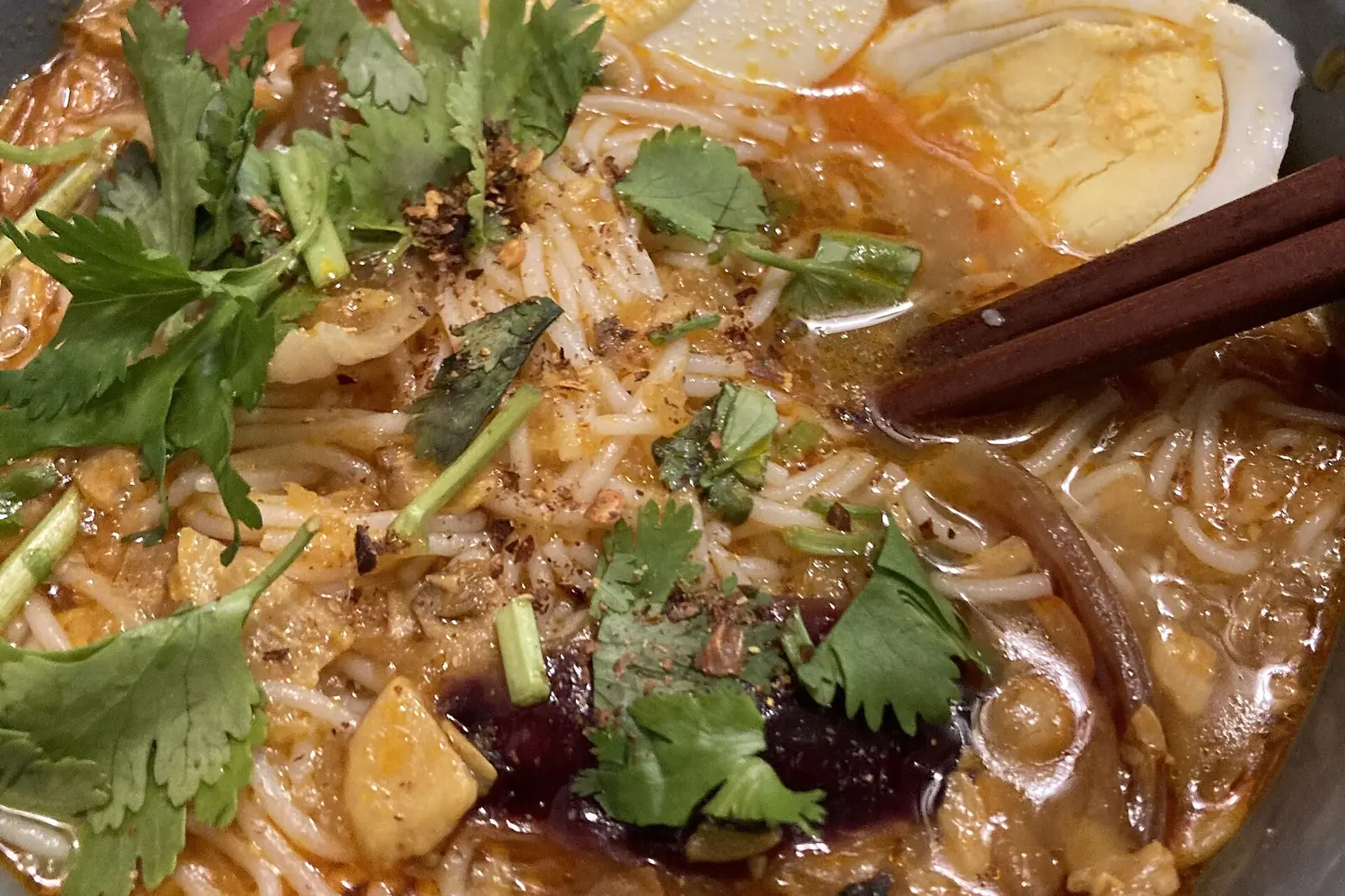
A bowl of mohinga — rice noodles in thick golden fish broth with a halved boiled egg, fresh cilantro and chilli flakes, chopsticks resting on the bowl Myanmar flag Myanmar 1h 45m
Breakfast •Myanmar National Dish

Mohinga

This mohinga recipe simmers catfish with lemongrass, ginger and turmeric into a fragrant broth, then thickens it with toasted chickpea and rice flour until it coats the spoon. It is ladled over soft rice vermicelli with flaked fish, tender banana stem, a halved boiled egg, crisp fried shallots, cilantro and lime. One serving is about 600 g, broth, noodles and toppings together.

Warm & Comforting

A thick, lemongrass-scented catfish broth ladled over rice noodles with egg, herbs and lime — Myanmar's classic breakfast bowl.

Pairs Well With
Fried shallots, fresh herbs, lime wedges and chilli flakes at the table.
Soups & Broths • Pasta & Noodles
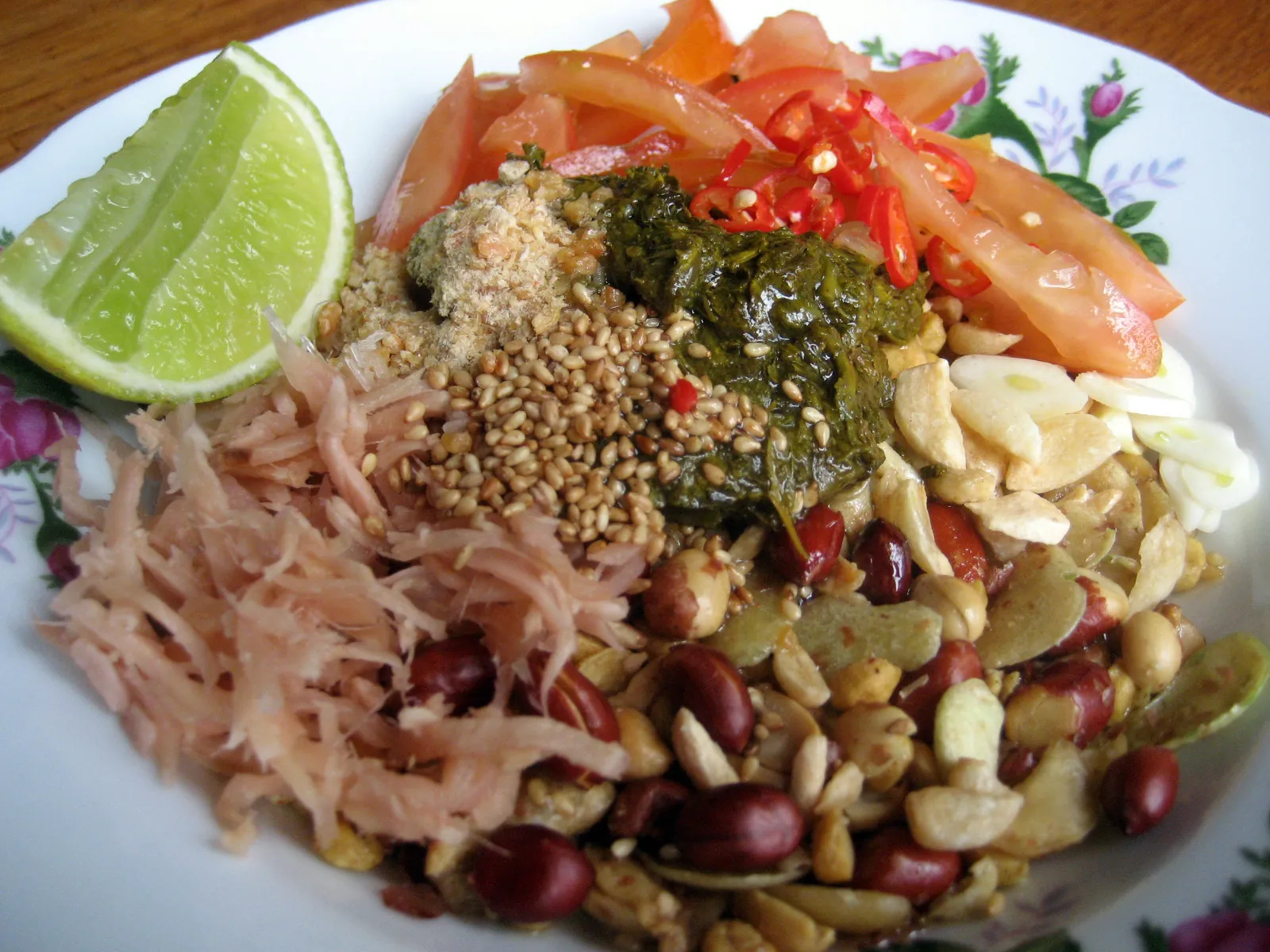
Lahpet thoke — Burmese fermented tea leaf salad with peanuts, sesame seeds, tomato, chilli and lime on a plate Myanmar flag Myanmar 30m
Snack & Tea •Burmese National Dish

Lahpet Thoke

This lahpet thoke recipe is Myanmar's most distinctive snack: dark, tangy fermented tea leaves tossed by hand with shredded cabbage, tomato, roasted peanuts, toasted sesame, fried garlic and crisp yellow split peas, then dressed with lime juice, soy sauce and sesame oil. It is sour, salty, crunchy and fresh all at once, and it comes together in 30 minutes with only a few minutes of frying. One serving is about 178 g.

Tangy & Crunchy

Fermented tea leaves tossed with crunchy peanuts, sesame and fresh vegetables — a sour, savoury Burmese snack that is eaten, not drunk.

Pairs Well With
Hot green tea & steamed rice
Fermented / Gut Health
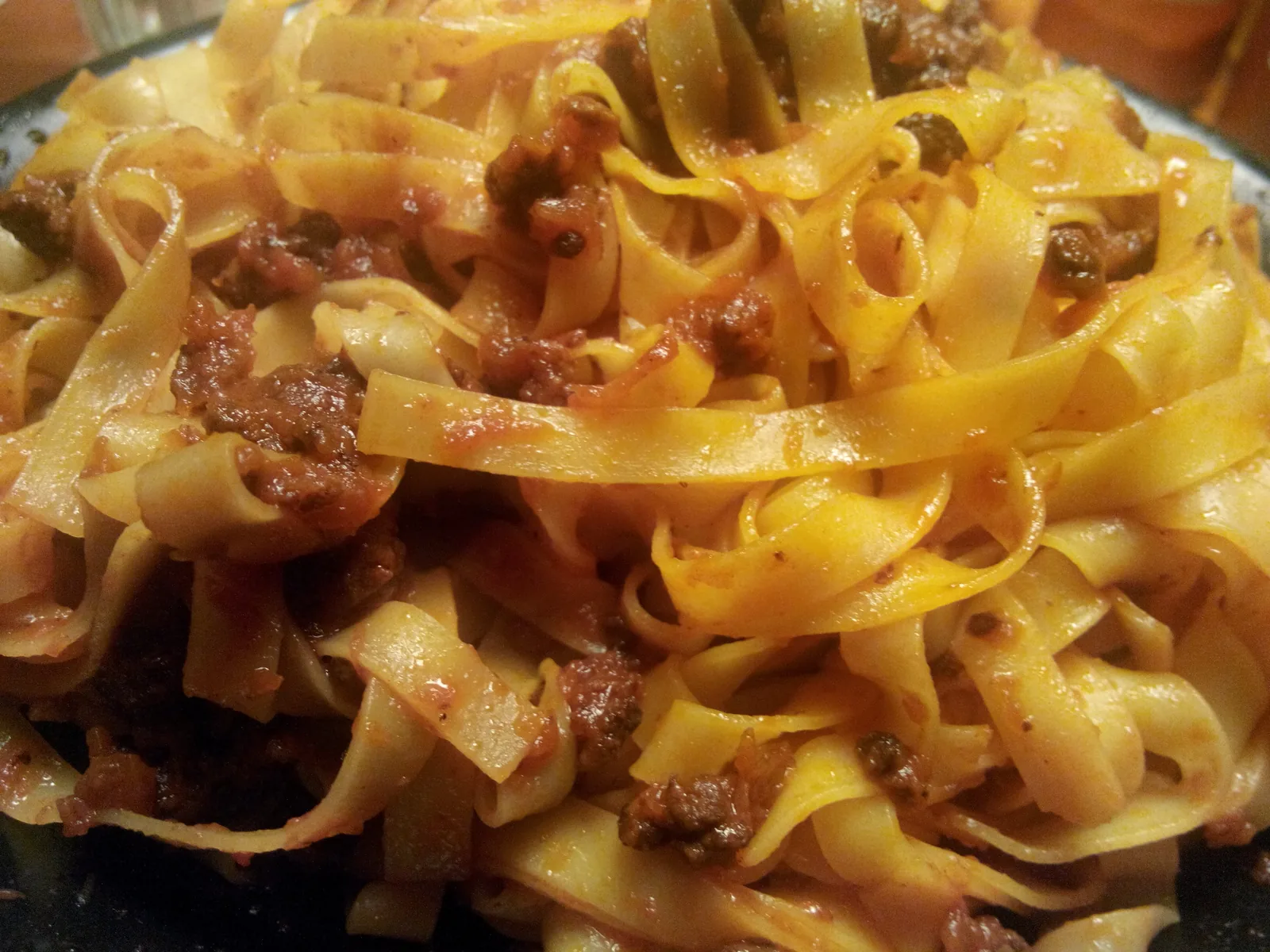
Tagliatelle al ragù Bolognese in a bowl with Parmigiano-Reggiano Italy flag Italy 4h 25m
Lunch •Emilia-Romagna

Tagliatelle al Ragù Bolognese

Slow-braised soffritto and coarse ground heritage meats layered over handmade egg yolk dough for mid-day stamina.

Lean Protein

Slow-simmered beef ragù tossed through fresh egg tagliatelle.

Pairs Well With
Bitter Radicchio & Aged Balsamico di Modena
Pasta & Noodles • High Protein
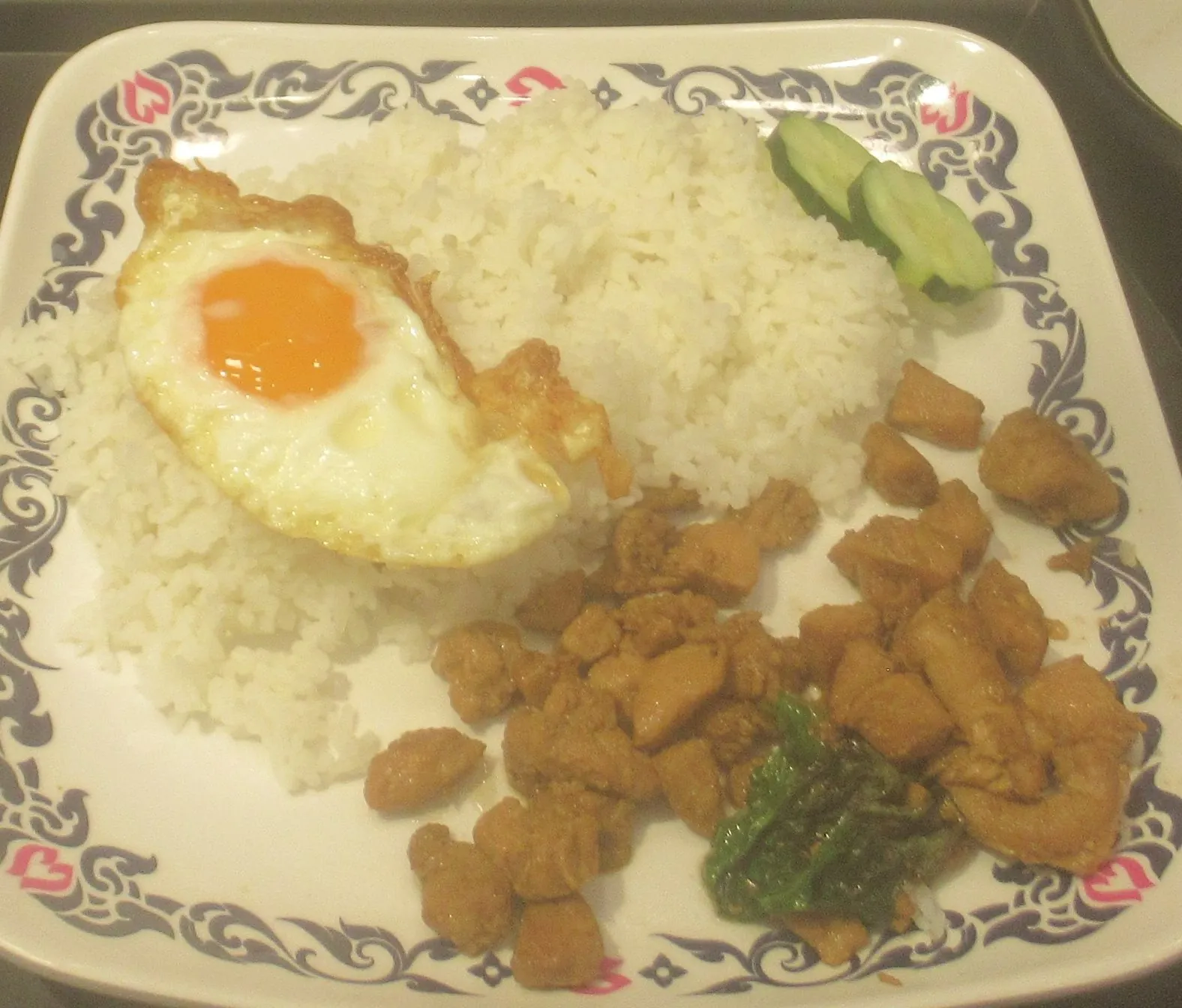
Pad kra pao gai — Thai holy basil chicken with fried egg and rice Thailand flag Thailand 30m
Lunch •Bangkok Street Flame

Pad Kra Pao Gai

High-heat wok flash of holy basil and crushed chillies over minced chicken, served over jasmine rice with a crispy-edged fried egg.

High Energy

Capsaicin brings the heat; holy basil adds a peppery, clove-like aroma.

Pairs Well With
Chilled Cucumber Salad & Fish Sauce Lime Dip
High Protein • Quick Prep (<30m)

The Dinner Gazette

Never wonder what’s for dinner again

One email a week with easy dinner ideas from around the world — ingredients, steps and nutrition, tested in our kitchen first.

Delivered every Thursday morning. Unsubscribe anytime.