Curated recipes from 193 countries  •  New seasonal Mediterranean issue out now

Overview

St. Galler Bratwurst

St. Galler Kalbsbratwurst, St. Gallen Veal Bratwurst, Olma Bratwurst, St. Galler Bratwurst IGP

This st galler bratwurst recipe makes the pale veal sausage of St. Gallen from scratch — a fine emulsion of veal, pork, back fat and milk, seasoned with mace and white pepper, stuffed into natural casings, poached and then grilled. It is served the St. Gallen way, with onion sauce and golden rösti, and never with mustard. One serving is about 370 g.

Butchers in St. Gallen were already writing rules for their bratwurst in 1438, when a guild statute set out which meats could go into it and how much bacon it must contain. The modern sausage is a pale, fine emulsion of veal, pork, bacon and fresh milk, seasoned with white pepper and mace; since 2008 it has carried a protected geographical indication. In St. Gallen, serving it with mustard is famously taboo — it is eaten with onion sauce and rösti instead.

Pairs well with: Onion sauce, golden rösti and a cold Swiss lager or apple juice.

Provenance

Switzerland flag Switzerland

St. Gallen Heritage

Nordic & European

Time Dedication

1h 20m

35m prep • 45m cook

Batch Yield

4 Servings

603 kcal per serving

1 serving ≈ 370 g

Technical Skill

Advanced

Hard (Sausage Making)

Meal Timing & Digestive Fit

Breakfast

Not Advised

Lunch

Hearty Midday Main

Dinner

Ideal Hearty Main

Snack & Tea

Inappropriate

Occasions: Weekend grilling, OLMA fair season, family dinners, Swiss national celebrations Cost: Moderate — about $5–6 per serving at home
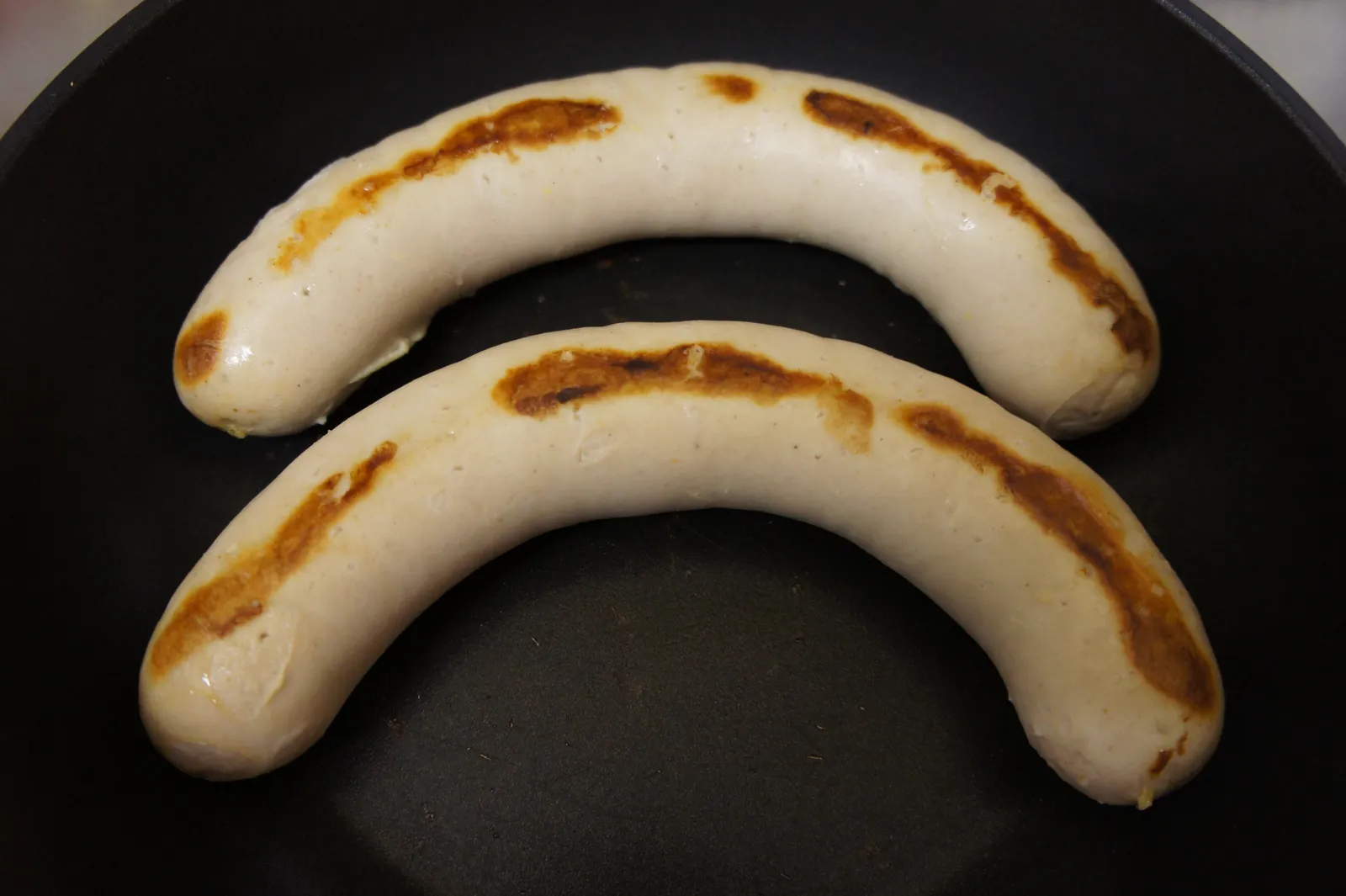
Two pale grilled St. Galler bratwursts with golden grill marks in a black pan

St. Gallen Heritage

Photo: Schofför, CC BY-SA 3.0, via Wikimedia Commons

The Heritage Formulary

Measured Ingredients

Estimated cost: Moderate — about $5–6 per serving at home (USD)

Made the St. Gallen way: a fine veal-and-pork emulsion with milk, poached then grilled, with onion sauce and rösti — and no mustard.

Execution Methodology & Culinary Technique

Step-by-Step Cooking Guide

Active 1h 20m
P

Prep Stage: Sausage Mixture & Rösti

35 Mins • Grinding, Stuffing & Grating

Chill the grinder parts, the bowl and all the meat in the freezer for 30 minutes before you start — a cold emulsion is the whole secret. Grind the veal, pork and back fat, then mix with the milk, ice water, salt, white pepper, mace, nutmeg, cardamom and lemon zest until the mixture turns pale and sticky. Stuff into the soaked casings and twist into 4 links of about 130 g each. Meanwhile, grate the potatoes for the rösti and squeeze them dry.

Maestro Tip: If the meat warms up, the fat smears and the sausage turns crumbly — work fast, and chill the bowl again if it feels warm.

  1. 1

    Grind the Meats Ice-Cold

    15 Mins Cold, below 4°C (40°F)

    Put the grinder parts, the mixing bowl and the cubed veal, pork and back fat in the freezer for 30 minutes. Grind the meats and fat together through the fine plate into the cold bowl, keeping everything as cold as you can.

    Grind the fat with the meat, not separately — it blends into the emulsion instead of sitting in greasy pockets.

    Done when: A fine, even mince, still cold to the touch.

  2. 2

    Emulsify with Milk & Spices

    10 Mins Cold, below 4°C (40°F)

    Add the cold milk, ice water, 6 g of the salt, white pepper, mace, nutmeg, cardamom and lemon zest to the mince. Mix with your hands or a paddle for 3–4 minutes until the mixture turns pale, smooth and sticky, and holds together when you lift a handful.

    The mixture is ready when it pulls away from the bowl in one piece — under-mixing gives a crumbly sausage.

    Done when: A pale, sticky paste that holds its shape in your hand.

  3. 3

    Stuff & Link the Sausages

    15 Mins Cold, below 4°C (40°F)

    Rinse the soaked casings and slide one onto the stuffer nozzle. Fill steadily, without forcing, until the casing is full but not tight, then twist into 4 links of about 130 g each. Prick any air bubbles with a clean pin.

    A loosely filled casing shrinks and wrinkles; an overfilled one bursts in the poaching water — aim for firm, not drum-tight.

    Done when: 4 even, plump links with no air pockets.

  4. 4

    Poach Gently

    15 Mins Water 80°C (175°F); core 71°C (160°F)

    Bring a large pan of water to 80°C (175°F) — steaming, not boiling — and lower the sausages in. Poach gently for 15 minutes until the centre of the thickest sausage reads 71°C (160°F) on a thermometer. Lift out and pat dry.

    Boiling water bursts casings and makes the sausage mealy — keep the water at a bare shimmer, never a rolling boil.

    Done when: Firm sausages, pale and even, 71°C (160°F) at the centre.

  5. 5

    Grill the Sausages & Fry the Rösti

    20 Mins Medium heat, about 180°C (350°F)

    While the sausages poach, mix the grated potato with the remaining 2 g of salt and shape into 4 flat cakes. Melt 20 g of the butter in a large pan over medium heat and fry the rösti for 8–10 minutes per side until deep golden and crisp. In a second pan, grill the poached sausages over medium heat for 8–10 minutes, turning often, until golden with grill marks.

    Press the rösti down once and leave it alone — moving it stops the crust from forming.

    Done when: Rösti crisp and golden on both sides; sausages evenly browned.

  6. 6

    Make the Onion Sauce

    10 Mins Medium heat

    Melt the remaining 15 g of butter in a small pan, sweat the onion rings for 5 minutes until soft, then stir in the flour and tomato purée and cook for 1 minute. Pour in the wine and stock, stir until smooth, and simmer for 5 minutes until glossy and just thick enough to coat a spoon. Season with salt and pepper.

    Add the wine first and let it bubble for a minute — it cooks off the alcohol and lifts the browned bits from the pan.

    Done when: A glossy sauce that coats the back of a spoon.

Finishing Touches & Plating

Rest the sausages for 2 minutes, then serve each one with a spoonful of onion sauce and a wedge of rösti — no mustard on the table.

Nutritional Physiology & Benefits

Nutrition

Energy

603

kcal / serving

Protein

25g

Complete AA

Carbs

35g

Complex

Fats

39g

Healthy

Per serving (4 servings · 1 serving ≈ 370 g)
Energy603 kcal
Protein25 g
Carbohydrates35 g
Fat39 g
Fibre4.2 g
Sugar4.3 g
Sodium964 mg
Per 100g
Energy163 kcal
Protein6.7 g
Carbohydrates9.5 g
Fat10.5 g
Fibre1.1 g
Sugar1.2 g
Sodium261 mg

Nutrition values are estimated — calculated from USDA FoodData Central values for the listed ingredients.

Vitamins & minerals: Veal and pork supply B12, iron and zinc; potatoes add vitamin C and potassium, and onions add vitamin C and folate.

High-Quality Protein

About 24.8 g of protein per serving from veal and pork, which helps keep a dinner filling and supports everyday muscle maintenance.

Made from Scratch

The sausage is made from veal, pork, milk and spices with no artificial additives — you know exactly what is in it.

Balanced Plate

Served with potato rösti, onion and a green salad, the plate balances protein with vegetables and starch.

Food Pairings

What to Eat With

To optimize nutrient absorption and elevate the sensory depth, pair with these authentic accompaniments:

Sides

Golden Rösti

Crisp, golden rösti is the classic St. Gallen partner — its crunch contrasts with the soft, pale sausage.

Sauces

Onion Sauce

The sweet-savoury onion sauce is the traditional dressing for the sausage, spooned over the top instead of mustard.

Vegetables

Green Salad

A sharp green salad cuts through the rich sausage and rösti and keeps the plate balanced.

Drinks

Cold Lager

A cold lager's bitterness and fizz refresh the palate between rich, fatty bites.

Complete menu

Serve one bratwurst per person with onion sauce, a wedge of rösti and a green salad, and finish with a slice of apple tart.

Digestive Guardrails

What NOT to Combine

To prevent digestive distress, sluggishness, or palate clash, avoid pairing the dish with these elements:

Undercooked Sausages

Ground meat must reach 71°C (160°F) at the centre; eating undercooked sausage carries a risk of foodborne illness. This is general food information, not medical advice.

Fierce Heat That Bursts the Casings

Grilling over fierce heat bursts the casings and dries the sausage out, so keep the heat medium and turn the sausages gently. This is general food information, not medical advice.

General information only, not medical advice — consult a doctor for personal dietary decisions.

Who Should Eat It

Who Should Eat

  • General adultsA hearty dinner — about 603 kcal per serving with rösti and onion sauce, best with a green salad.
  • ChildrenChildren usually like the mild, soft sausage; cut it into small pieces and skip the wine in the sauce, using stock instead.
  • ElderlySoft, easy to chew and mild in flavour; cut the sausage into slices and serve with soft rösti.
  • Pregnant womenPregnant women should eat it only when the sausage is cooked right through to 71°C (160°F) and piping hot.
  • Breastfeeding womenBreastfeeding women can eat it as part of a varied diet; it is a rich, occasional meal.
  • AthletesAthletes get about 24.8 g of protein plus potato carbs for recovery — a solid post-training dinner.
  • Weight gainFor weight gain, add an extra wedge of rösti and a second spoonful of onion sauce.
  • Weight lossFor weight loss, eat one sausage with a big green salad and a small portion of rösti.

Health Conditions — Adjust or Avoid

Conditions

  • DiabetesThe rösti adds about 35.0 g of carbs per serving, so keep the potato portion modest. Ask your clinician about portions.
  • High blood pressureSodium is about 964 mg per serving, largely from the sausage salt; a smaller portion with more salad is the safer way to enjoy it. Ask your clinician about portions.
  • Kidney diseaseThe dish is high in protein and sodium, and potatoes add potassium, so people with kidney disease should keep portions small and check with their clinician.
  • GoutVeal and pork are moderate in purines; a smaller portion with more vegetables is the safer way to enjoy it. Ask your clinician about portions.
  • Stomach issuesA rich sausage with onion sauce can feel heavy on a sensitive stomach; eat slowly and keep the portion small. Ask your clinician if symptoms persist.
  • Cardiovascular diseaseAbout 38.8 g of fat per serving, much of it saturated, so this is an occasional treat rather than a regular dinner. Ask your clinician about portions.
  • Fatty liverThe combination of saturated fat and starchy rösti means a smaller portion with extra salad is wiser. Ask your clinician about portions.
  • Food allergiesContains milk, pork (including the natural hog casing) and gluten (a little flour in the onion sauce). Ask your clinician if you have a known allergy.
  • Special therapeutic dietsOn a therapeutic diet, ask your clinician or dietitian whether the sodium, fat and protein levels fit your plan.

If you have a medical condition, consult your doctor before changing your diet.

Storage & Use

Storage & Use

How to store
Cool within 2 hours and store in a covered container; keep the onion sauce separate.
In the fridge
Cooked sausages keep 3 days in the fridge at 4°C (40°F) or below; raw links keep 2 days.
In the freezer
Up to 3 months in a sealed bag or container; thaw overnight in the fridge.
How to reheat
Reheat in a hot oven at 190°C (375°F) until steaming hot throughout, to 74°C (165°F).
Freezing recommended
Yes — cooked sausages freeze well; freeze the rösti separately.
Signs it has spoiled
A sour smell, slimy casing or grey meat means it should be thrown away.

More recipes to explore

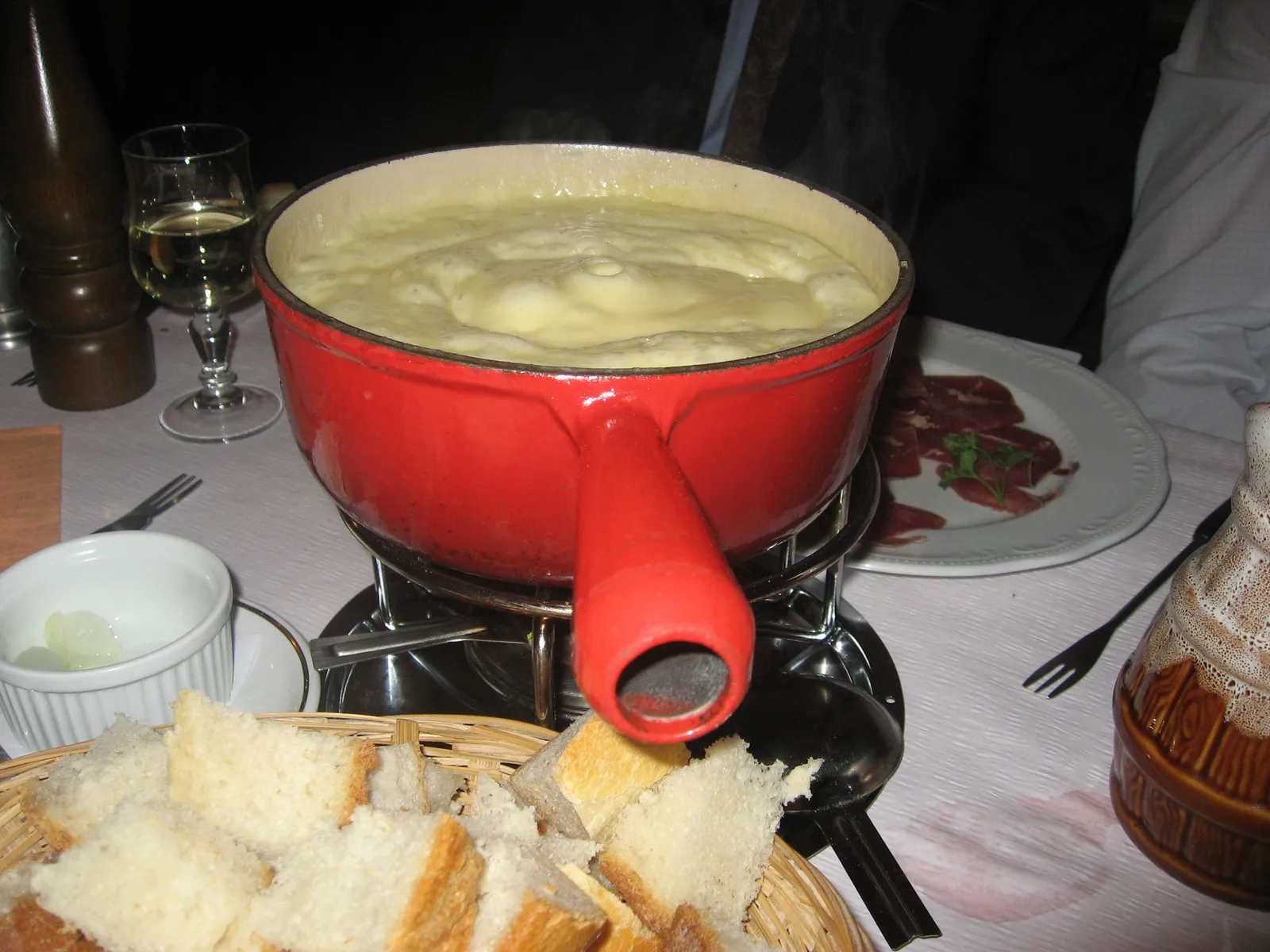
A red fondue pot of melted cheese with bread cubes and a glass of white wine Switzerland flag Switzerland 40m
Dinner •Swiss Alpine Classic

Swiss Cheese Fondue

Swiss cheese fondue is the Alps in a pot: Gruyere and Emmental melted slowly into dry white wine with garlic and a splash of kirsch, kept warm at the table while everyone dips cubes of bread into the bubbling cheese. One serving is about 310 g.

Comfort & Togetherness

Gruyere and Emmental melted in white wine, shared from one pot.

Pairs Well With
Cubes of crusty bread, boiled potatoes and cornichons on the side
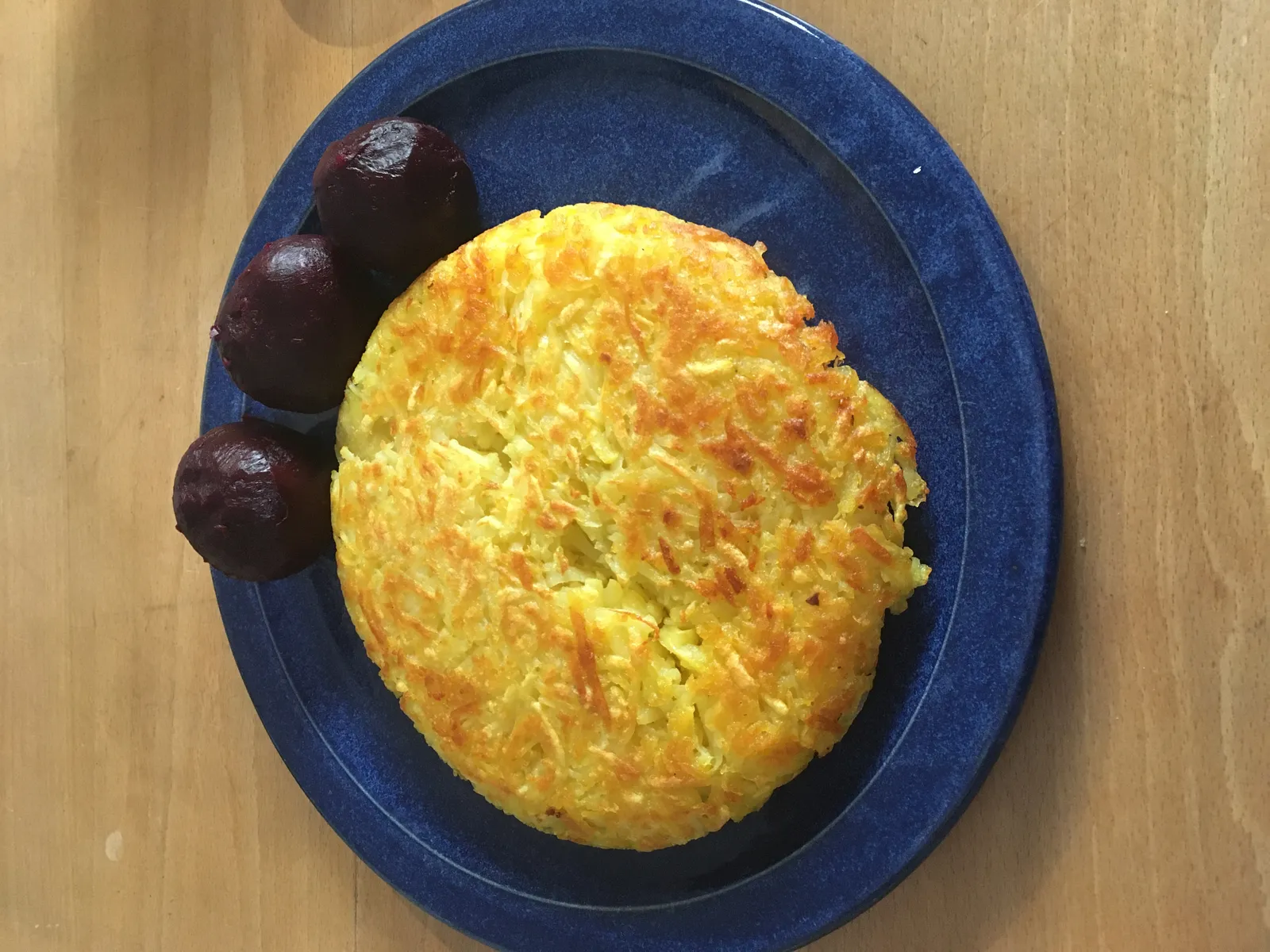
A large golden rosti potato cake on a blue plate Switzerland flag Switzerland 40m
Lunch •Bernese Farmhouse Classic

Rösti

Rösti is Switzerland's crisp potato cake: grated potato pressed into one large golden disc and fried in butter until the outside shatters and the inside stays soft, then topped with a fried egg. One serving is about 240 g.

Simple & Satisfying

One large crisp cake of grated potato, pan-fried in butter and topped with a fried egg.

Pairs Well With
A fried egg on top and a simple green salad with sharp vinaigrette
Quick Prep (<30m)
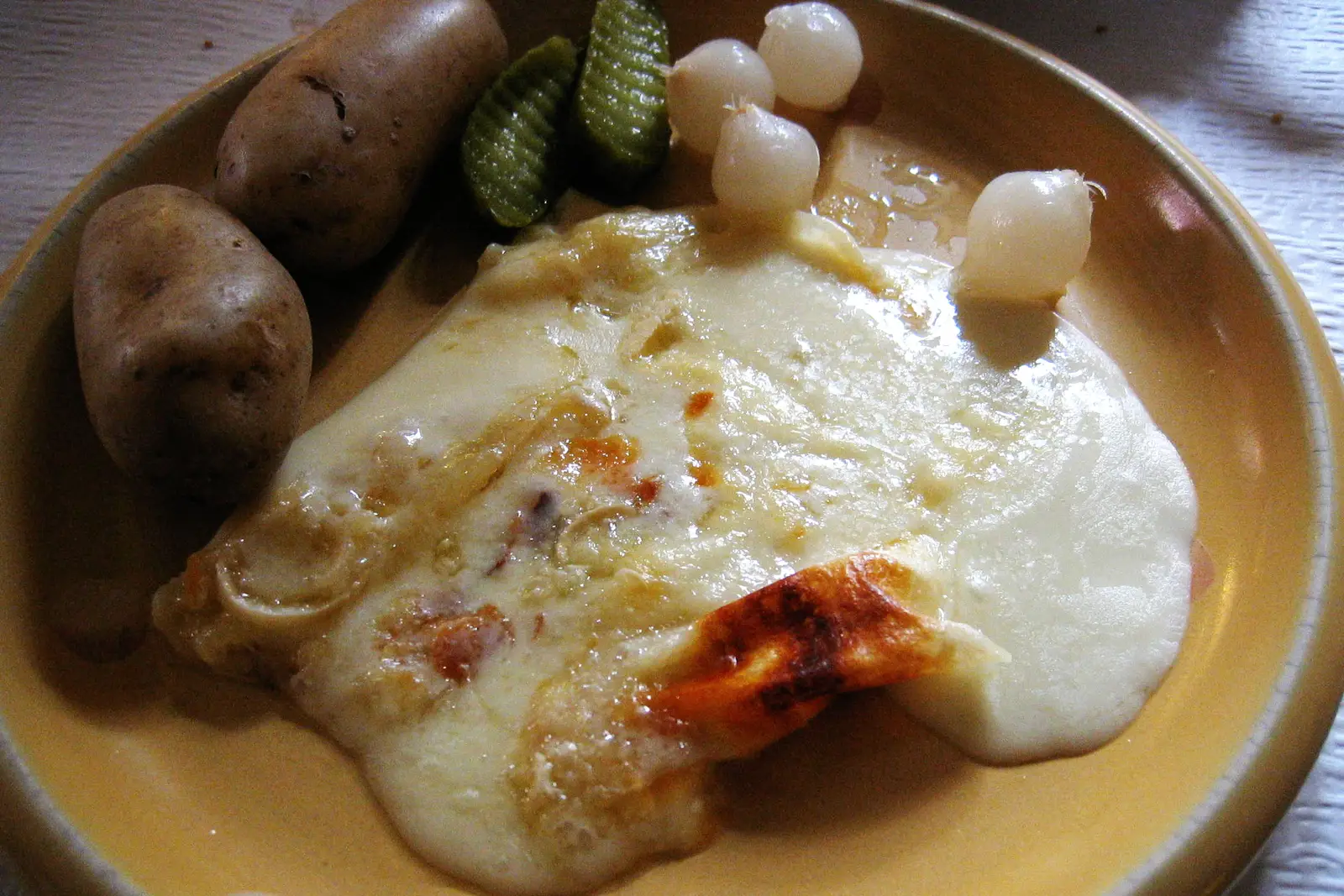
Melted raclette cheese scraped over a plate with boiled potatoes and pickles Switzerland flag Switzerland 40m
Dinner •Valais Alpine Classic

Raclette

Raclette is the Swiss Alps' other great melted-cheese meal: a half-wheel of raclette cheese is warmed until the cut face bubbles, then scraped in ribbons over boiled potatoes, with cornichons and pickled onions to cut the richness. One serving is about 365 g.

Comfort & Togetherness

Melted raclette cheese scraped over boiled potatoes with pickles.

Pairs Well With
Boiled potatoes, cornichons, pickled onions and a green salad
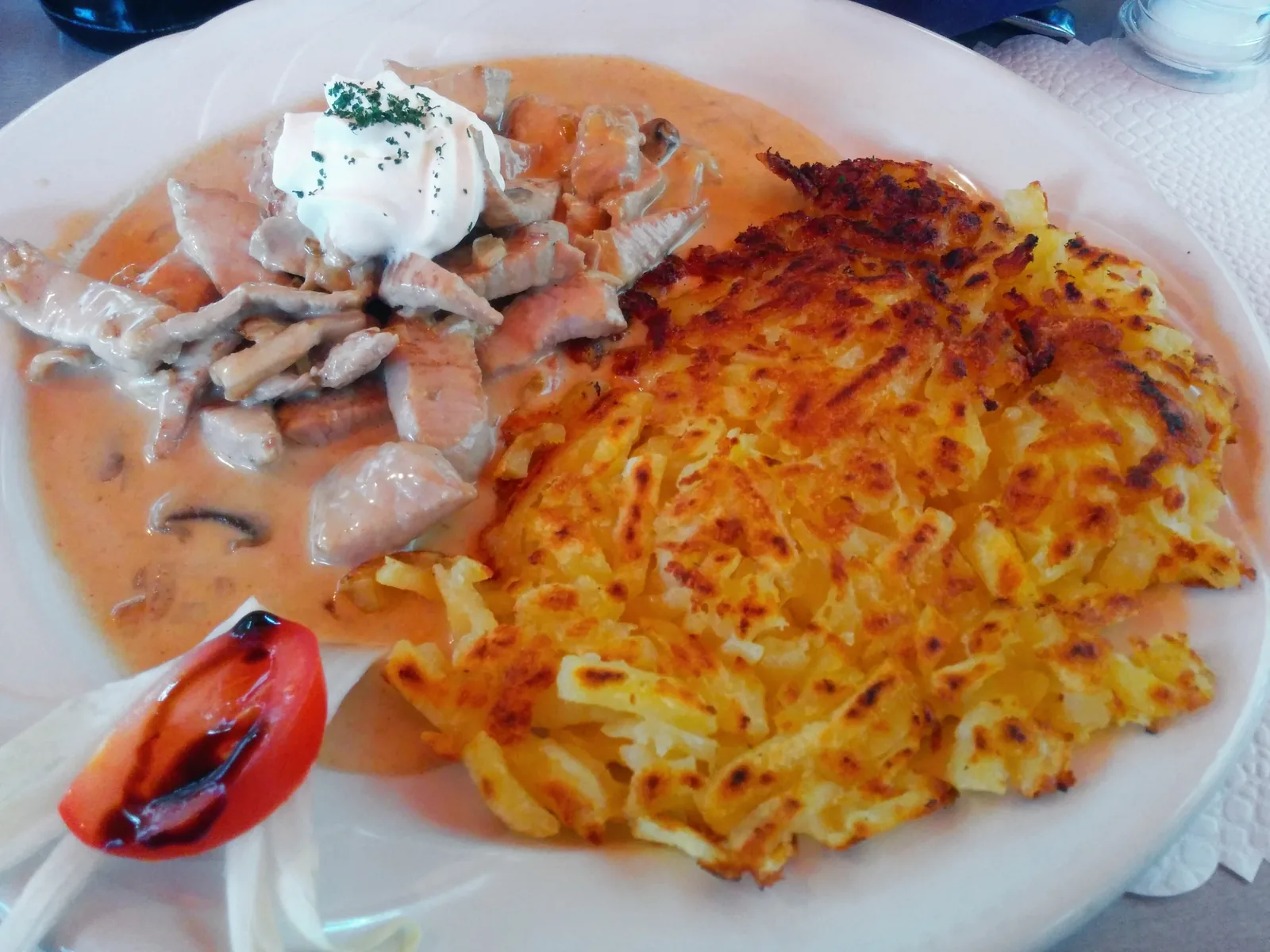
A plate of Zürcher Geschnetzeltes — veal strips in cream sauce with a dollop of cream — beside golden rösti. Switzerland flag Switzerland 40m
Dinner •Zurich Classic

Zürcher Geschnetzeltes

Zürcher Geschnetzeltes is Zurich's signature dish: thin strips of veal quickly seared, then finished in a white-wine and cream sauce with mushrooms and onion. One serving is about 335 g, before the rösti it is traditionally served with.

Rich & Comforting

Tender strips of veal in a white-wine cream sauce with mushrooms — Zurich's classic, with rösti.

Pairs Well With
Serve with golden rösti and a glass of dry Swiss white wine.
High Protein

The Dinner Gazette

Never wonder what’s for dinner again

One email a week with easy dinner ideas from around the world — ingredients, steps and nutrition, tested in our kitchen first.

Delivered every Thursday morning. Unsubscribe anytime.