Curated recipes from 193 countries  •  New seasonal Mediterranean issue out now

Overview

St Lucian Bouyon

Saint Lucian Bouyon, Bouyon Soup

This st lucian bouyon recipe simmers seasoned chicken and pork with red kidney beans, dasheen, green banana and yam until the broth turns thick and golden, then finishes with hand-rolled flour dumplings and fresh spinach. The dumplings and red beans are what make it bouyon: without them it would be an ordinary meat soup. One serving is about 650 g.

Bouyon takes its name from the French word bouillon, and it grew out of the meeting of West African, French Creole and Indigenous Caribbean foodways on St Lucia over several centuries. Like its cousins across the French Caribbean, it is a Saturday soup — a big one-pot meal built from whatever meat and ground provisions the household has, with flour dumplings rolled by hand and dropped into the simmering broth. In St Lucia it remains a foundational dish, cooked for family gatherings and ordinary weekdays alike, and every cook has a firm opinion about which provisions belong in the pot.

Pairs well with: Fried bakes, sliced avocado & iced lime squash

Provenance

Saint Lucia flag Saint Lucia

Saint Lucian Heritage

Latin America & Caribbean

Time Dedication

2h 35m

35m prep • 120m cook

Batch Yield

8 Servings

580 kcal per serving

1 serving ≈ 650 g

Technical Skill

Intermediate

Intermediate (One-Pot Broth)

Meal Timing & Digestive Fit

Breakfast

Not Advised

Lunch

Hearty Midday Main

Dinner

Ideal Hearty Main

Snack & Tea

Inappropriate

Soups & Broths Occasions: Saturday soup day, family gatherings, rainy days, Sunday dinner, festive weekends Cost: Low — about $3–4 per serving at home
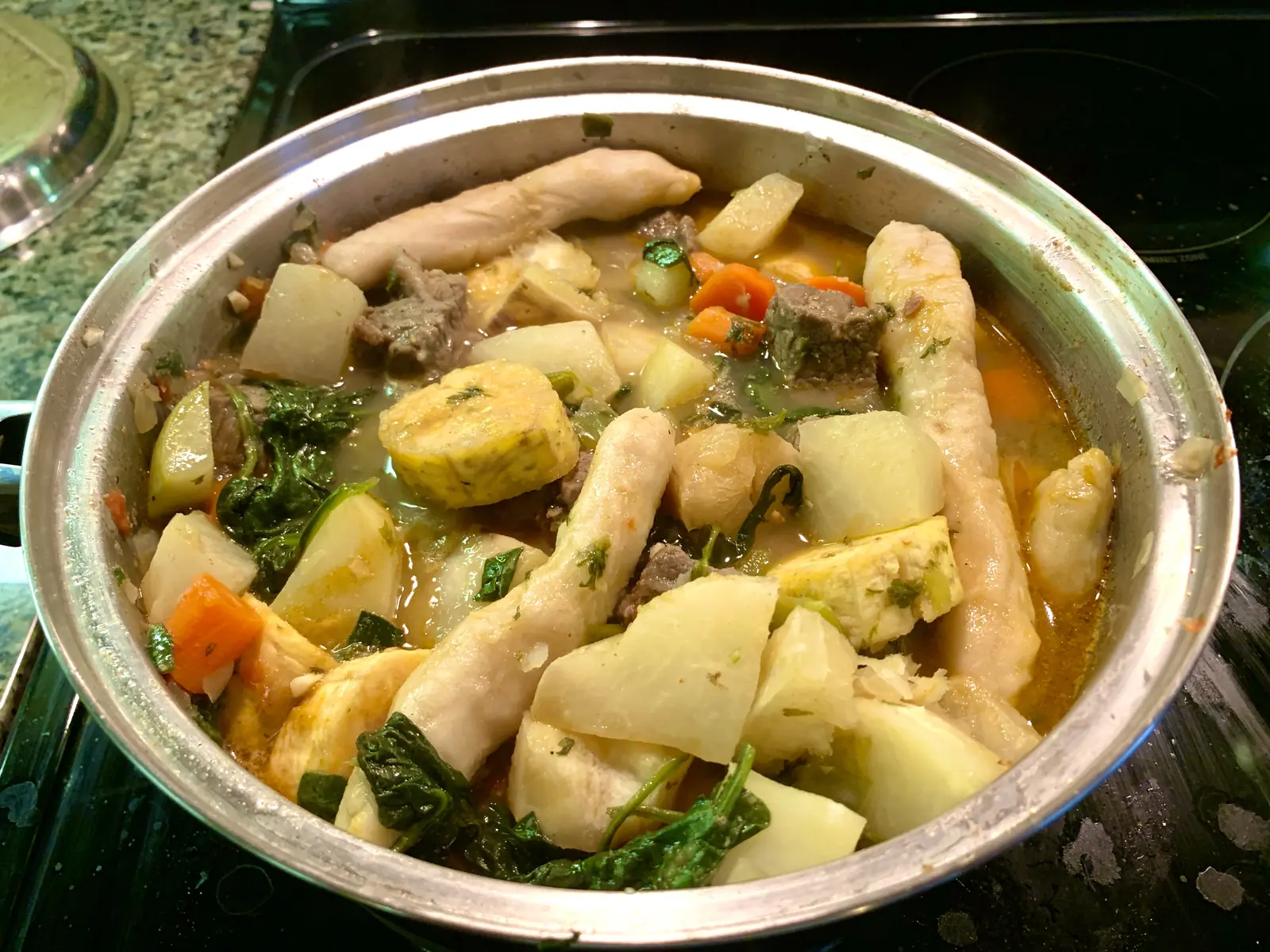
A pot of bouyon soup with meat, long flour dumplings, root vegetables, plantain, carrots and leafy greens in broth

Saint Lucian Heritage

Photo: LittleT889, CC BY-SA 4.0, via Wikimedia Commons

The Heritage Formulary

Measured Ingredients

Estimated cost: Low — about $3–4 per serving at home (USD)

A true St Lucian bouyon is judged by its dumplings and its thickened broth: the flour dumplings must be present and cooked through, and the dasheen starch should leave the broth coating the spoon.

Execution Methodology & Culinary Technique

Step-by-Step Cooking Guide

Active 2h 35m
P

Prep Stage: Season, Peel and Cut

35 minutes

Season the chicken and pork with lime juice, half the onion, the garlic and the chopped green seasoning, and leave to rest while you work. Peel the dasheen, yam, sweet potato, pumpkin and green bananas and cut them into large, even chunks — about the size of a small fist — and keep them in a bowl of cold water so they do not darken. If you are starting from dried beans, these should already be soaked overnight and boiled tender before you begin.

Maestro Tip: Cut the provisions big: small pieces fall apart and turn the pot to mush long before the meats are tender. Wear gloves for the dasheen — raw taro can itch the skin.

  1. 1

    Season the Meats

    15 Mins • Rest Refrigerator, 4°C (39°F)

    Rub the chicken thighs and pork chunks all over with the lime juice, 1 teaspoon of the salt, the crushed garlic, half the chopped onion and half the green seasoning. Cover and rest in the refrigerator for 15 minutes while you peel the provisions. The lime and salt season the meat right through, and the herbs give the broth its fresh Caribbean base.

    Do not skip the rest — even 15 minutes makes a real difference to the flavour of the meat.

    Done when: Meat is evenly coated and smells fresh and herby.

  2. 2

    Brown the Meats and Build the Broth

    25 Mins • Browning Medium-high heat, ~190°C (375°F)

    Heat the oil in a very large pot (at least 8 litres) over medium-high heat. Brown the chicken and pork in batches, about 4 minutes a side, until golden — do not crowd the pot or the meat will steam instead of browning. Return all the meat to the pot, add the tomato paste and the remaining onion, and stir for 1 minute. Pour in the 2.5 litres of cold water, scraping up the browned bits from the bottom, and add the whole Scotch bonnet pepper. Bring to a gentle boil, then lower to a simmer and skim off any foam.

    The browned bits on the bottom of the pot are pure flavour — scrape them up when the water goes in.

    Done when: Broth is simmering gently with a thin layer of golden fat on top; meat is browned on all sides.

  3. 3

    Add the Beans and Hard Provisions

    40 Mins • Simmer Gentle simmer, ~95°C (203°F)

    Stir in the cooked red kidney beans, the dasheen, yam, green banana, sweet potato and pumpkin. The pot should be full but the liquid should still cover everything — top up with a little hot water if needed. Cover loosely and simmer gently for 40 minutes, stirring once or twice so nothing sticks. The dasheen slowly releases its starch and the broth begins to thicken; the pumpkin softens and can be mashed against the side of the pot to thicken it further.

    Keep the simmer gentle — a hard boil breaks the provisions apart and clouds the broth.

    Done when: Yam and dasheen yield easily to a fork; the broth coats the back of a spoon.

  4. 4

    Add the Carrots and Check the Meats

    15 Mins • Simmer Gentle simmer, ~95°C (203°F)

    Add the carrots and the remaining green seasoning and simmer for 15 minutes more. Lift out a piece of chicken and a piece of pork and check them: the chicken should be cooked right through to the bone with no pink at the joints, and the pork should be tender enough to cut with a spoon. Check the chicken with a thermometer — it must reach 74°C (165°F) at the thickest part. Taste the broth and add the remaining half teaspoon of salt only if it needs it.

    Salt goes in last because the broth concentrates as it simmers — seasoning early is how a pot ends up too salty.

    Done when: Chicken reaches 74°C (165°F) internally; pork is spoon-tender; carrots are soft but still hold their shape.

  5. 5

    Make and Drop the Dumplings

    20 Mins • Rolling Boil Gentle boil, 100°C (212°F)

    While the pot simmers, make the dumplings: mix the 200g flour with a pinch of salt, then add about 120 ml of cold water a little at a time, kneading until you have a stiff, smooth dough. Pinch off pieces and roll them between your palms into thin logs about as long as your little finger — the St Lucian shape. Bring the pot to a gentle boil and drop the dumplings in one at a time, then leave them alone for 2 minutes before stirring, so they set and do not stick together. Simmer for 18–20 minutes until the dumplings are cooked through, swollen and chewy.

    Roll the dumplings thin: they swell as they cook, and fat ones stay doughy in the middle. Do not stir for the first 2 minutes after they go in.

    Done when: Dumplings have doubled in size, float near the surface, and are cooked right through with no raw flour in the centre.

  6. 6

    Finish With Spinach and Rest

    10 Mins • Rest Off the heat, cooling from ~95°C (203°F)

    Fish out the whole Scotch bonnet pepper and discard it — it has given its warmth to the broth. Stir in the spinach and let it wilt in the residual heat for 2 minutes. Take the pot off the heat, cover, and rest for 10 minutes so the broth settles and the dumplings finish absorbing flavour. Ladle into deep bowls, making sure every bowl gets meat, beans, a dumpling and a mix of provisions.

    Resting matters: a bouyon served straight off the boil tastes sharp, while ten minutes of rest lets the flavours knit together.

    Done when: Spinach is wilted and bright green; the broth is thick enough to coat a spoon; every bowl holds a cross-section of the pot.

Finishing Touches & Plating

Serve in deep bowls with lime wedges on the side so each person can brighten their own bowl. Squeeze the lime over the bouyon just before eating — the acidity lifts the rich broth and helps the body absorb the iron from the beans and meat.

Nutritional Physiology & Benefits

Nutrition

Energy

580

kcal / serving

Protein

30g

Complete AA

Carbs

77g

Complex

Fats

18g

Healthy

Per serving (8 servings · 1 serving ≈ 650 g)
Energy580 kcal
Protein30 g
Carbohydrates77 g
Fat18 g
Fibre11.4 g
Sugar9.7 g
Sodium569 mg
Per 100g
Energy89 kcal
Protein4.5 g
Carbohydrates11.9 g
Fat2.7 g
Fibre1.8 g
Sugar1.5 g
Sodium88 mg

Nutrition values are estimated — calculated from USDA FoodData Central values for the listed ingredients.

Vitamins & minerals: Vitamin A (pumpkin, carrots, spinach), vitamin C (spinach, Scotch bonnet, lime), potassium and iron (red beans, meats, dasheen), B vitamins and zinc (chicken, pork). Nutrition is estimated.

Steady, Filling Energy

Ground provisions, dumplings and red beans supply slow-release starch and fibre, so one bowl keeps you full for hours without a heavy, greasy feeling.

Iron and Protein

Chicken, pork and red kidney beans together provide about 29.5 g of protein and a useful amount of iron per serving, with the lime juice helping the body absorb the iron.

Fibre and Vegetables

Dasheen, yam, pumpkin, carrots and spinach add about 11.4 g of fibre per serving plus vitamin A and vitamin C, all in a single one-pot meal.

Food Pairings

What to Eat With

To optimize nutrient absorption and elevate the sensory depth, pair with these authentic accompaniments:

Sides

Fried Bakes

St Lucia's soft fried bakes are made for this pot: tear one open and use it to mop up the thickened broth, which is too good to leave in the bowl.

Vegetables

Sliced Avocado

Cool, buttery avocado on the side balances the hot, salty broth and adds healthy fats that make the meal more satisfying.

Drinks

Iced Lime Squash

Cold lime squash cuts through the richness of the pork and the heat of the Scotch bonnet, and its acidity refreshes the palate between spoonfuls.

Full Menus

A Small Green Salad First

Start with a light salad of lettuce, cucumber and tomato with lime dressing: the fresh crunch wakes up the appetite before the heavy, warming main pot.

Complete menu

Start with a small green salad with lime dressing, then serve the bouyon as the main course in deep bowls with fried bakes and sliced avocado on the side, and finish with iced lime squash.

Digestive Guardrails

What NOT to Combine

To prevent digestive distress, sluggishness, or palate clash, avoid pairing the dish with these elements:

Extra Salty Cured Meats on the Side

Bouyon already carries a good amount of sodium from the pork and added salt (about 569 mg per serving). Pairing it with salt fish, salted ham or extra soy sauce can push sodium far higher, which is a concern for blood pressure. This is general information, not medical advice — ask a clinician about your own sodium limits.

Sugary Soft Drinks With the Meal

The dumplings, provisions and beans already supply plenty of starch, so a large sugary drink adds fast sugar on top of a starchy meal and can spike blood sugar. Water or unsweetened lime squash is the better match. This is general information, not medical advice.

Biting Into the Whole Scotch Bonnet

The pepper is cooked whole on purpose so it warms the broth gently; biting into it releases a concentrated burst of capsaicin that can burn the mouth and upset the stomach. Fish it out and discard it before serving.

General information only, not medical advice — consult a doctor for personal dietary decisions.

Who Should Eat It

Who Should Eat

  • General adultsA complete one-pot meal — protein, starch, fibre and vegetables in a single bowl; one serving is usually enough.
  • ChildrenSuitable from age 3+ with the Scotch bonnet left out or removed early; cut the meat and provisions small and check the dumplings are cooked through.
  • ElderlyExcellent — soft, warm and easy to chew once the meat is tender; keep the salt moderate and the dumplings small.
  • Pregnant womenGenerally suitable; make sure the chicken reaches 74°C (165°F) right through and the dumplings are fully cooked, and keep the Scotch bonnet whole so the heat stays gentle.
  • Breastfeeding womenGenerally suitable; the iron, protein and fluids support recovery — keep the salt moderate and drink water alongside.
  • AthletesA strong post-training meal: about 29.5 g of protein per serving with plenty of starchy carbs for glycogen, plus salt to replace sweat losses.
  • Weight gainA good choice — have a full bowl with extra dumplings and provisions, and add a fried bake on the side.
  • Weight lossChoose a smaller bowl, load up on the vegetables and beans, and take only one or two dumplings — the provisions are filling, so a small portion still satisfies.

Health Conditions — Adjust or Avoid

Conditions

  • DiabetesThe dumplings, dasheen, yam and banana are starchy, so keep to one modest bowl and favour the beans, spinach and meat; ask your clinician about a portion that fits your plan.
  • High blood pressureUse half the added salt, skip any salt pork in favour of fresh pork, and drink less of the broth — most of the sodium sits in the liquid. Ask your clinician about your own sodium limits.
  • Kidney diseaseLimit the broth and the beans (sodium and potassium) and keep the portion small; ask your clinician about portion size.
  • GoutEat occasionally and in smaller portions — the pork, chicken and rich broth are moderately high in purines, and the beans add more. Ask your clinician if you have frequent flares.
  • Stomach issuesThe broth itself is usually gentle, but skip the Scotch bonnet entirely and go easy on the onion and garlic if your stomach is sensitive.
  • Cardiovascular diseaseChoose a leaner pork cut, trim the chicken skin before serving, and favour the beans and vegetables over extra dumplings; ask your clinician about saturated fat in your diet.
  • Fatty liverKeep the portion modest, favour chicken and beans over the fattier pork, and load up on the spinach and carrots; ask your clinician about your overall eating pattern.
  • Food allergiesContains wheat (gluten) in the flour dumplings — the defining ingredient, so it cannot be left out of this dish. Also contains pork and chicken. Naturally dairy-free and egg-free.
  • Special therapeutic dietsIf you follow a prescribed low-sodium, low-purine or gluten-free diet, this dish needs changes that alter its character — check with your clinician or dietitian before eating it.

If you have a medical condition, consult your doctor before changing your diet.

Storage & Use

Storage & Use

How to store
Cool quickly in shallow containers and store in an airtight container, with the dumplings kept in the broth so they do not dry out.
In the fridge
3–4 days in the refrigerator.
In the freezer
Up to 3 months; the roots soften slightly after freezing.
How to reheat
Reheat gently on the stove until steaming hot throughout, to 74°C (165°F); add a splash of water if the broth has thickened.
Freezing recommended
Yes, up to 3 months; the flavour is often better the next day as the broth settles. Freeze the dumplings separately if you can, as they soften on reheating.
Signs it has spoiled
Sour or off smell, slimy texture on the meat, or mould on the surface.

More recipes to explore

A plain mug of frothy cocoa tea with a spoon beside it Saint Lucia flag Saint Lucia 40m
Breakfast •Saint Lucian Heritage

Saint Lucian Cocoa Tea

Saint Lucian cocoa tea is not hot chocolate from a packet. It starts with a real cocoa stick — roasted cocoa beans ground and pressed into a hard, dark stick — grated into spiced water, simmered until deep and fragrant, then softened with milk and sweetened to taste. The result is rich, lightly bitter, warmly spiced and deeply comforting. One serving is about 350 g.

Comfort & Warmth

Grated cocoa stick simmered with bay leaves, cinnamon and nutmeg, finished with milk and sugar.

Pairs Well With
Fried bakes & saltfish, fresh fruit
Bœuf bourguignon — French beef braised in red wine France flag France 4h
Dinner •Burgundy Terroir

Bœuf Bourguignon

Beef braised gently in red wine until the connective tissue melts into a velvet, gelatin-rich sauce — the classic Burgundy Sunday dinner.

Cellular Repair

Beef braised in red wine until spoon-tender, with mushrooms and pearl onions.

Pairs Well With
Parsnip Purée & Steamed French Haricots Verts
High Protein
Vietnamese braised pork belly with golden eggs in caramel sauce Vietnam flag Vietnam 1h 45m
Dinner •One Pot

Vietnamese Braised Pork and Eggs

Pork belly slowly braised in coconut water and caramel until meltingly tender, with golden eggs that soak up the sweet-savoury sauce — the Vietnamese family dish that tastes better the next day.

Comfort & Sustained Energy

Slow-braised pork belly and eggs in coconut water and caramel.

Pairs Well With
Steamed rice & pickled mustard greens
High Protein
A mound of classic ratatouille with eggplant, zucchini, tomato and onion on a white plate France flag France 1h 15m
Dinner •Nice Provençal

Ratatouille

This ratatouille recipe cooks eggplant, zucchini, peppers and tomatoes separately first, so each vegetable keeps its own texture, then brings them together for a slow, fragrant simmer. One serving is about 400 g.

Light & Vegetable-Rich

Slow-simmered summer vegetables in olive oil — light, fragrant and full of fibre.

Pairs Well With
Crusty sourdough bread, grilled fish or a fried egg

The Dinner Gazette

Never wonder what’s for dinner again

One email a week with easy dinner ideas from around the world — ingredients, steps and nutrition, tested in our kitchen first.

Delivered every Thursday morning. Unsubscribe anytime.