Curated recipes from 193 countries  •  New seasonal Mediterranean issue out now

Overview

Swiss Fotzelschnitten

Swiss French Toast; Fotzelschnitte

This swiss fotzelschnitten recipe is Switzerland's answer to French toast: thick slices of day-old Zopf, the Swiss braided egg loaf, dipped in a plain egg and milk custard and fried in butter until the edges turn crisp and golden and the middle stays soft. It is the thrifty breakfast Swiss grandmothers made from bread nobody wanted to throw away, served hot with cinnamon sugar, jam or applesauce. One serving is about 175 g (two slices).

Fotzelschnitten is the Swiss way of never wasting bread. The name comes from the Swiss-German word Fotzel, a torn-off scrap — in this case a slice of stale bread given a second life. Swiss grandmothers took day-old bread, often the braided Sunday Zopf, dipped it in egg and milk and fried it in butter, then dusted it with cinnamon sugar or served it with apple puree. It belongs to the same thrifty family as the German Arme Ritter, or poor knights, and a 14th-century German cookbook, Das Buch von Guter Spisen, already tells cooks to cut old bread into poor knights and fry them in fat.

Pairs well with: Cinnamon sugar, applesauce or jam, and a hot coffee

Provenance

Switzerland flag Switzerland

Swiss Classic

Nordic & European

Time Dedication

22m

10m prep • 12m cook

Batch Yield

4 Servings

395 kcal per serving

1 serving ≈ 175 g

Technical Skill

Easy

Easy (Pan-Fried)

Meal Timing & Digestive Fit

Breakfast

Prime Morning Fit

Lunch

Inappropriate

Dinner

Inappropriate

Snack & Tea

Inappropriate

Quick Prep (<30m) Occasions: Slow weekend breakfasts, school-holiday mornings, brunch with family, using up day-old Zopf Cost: Low — about $1–2 per serving at home
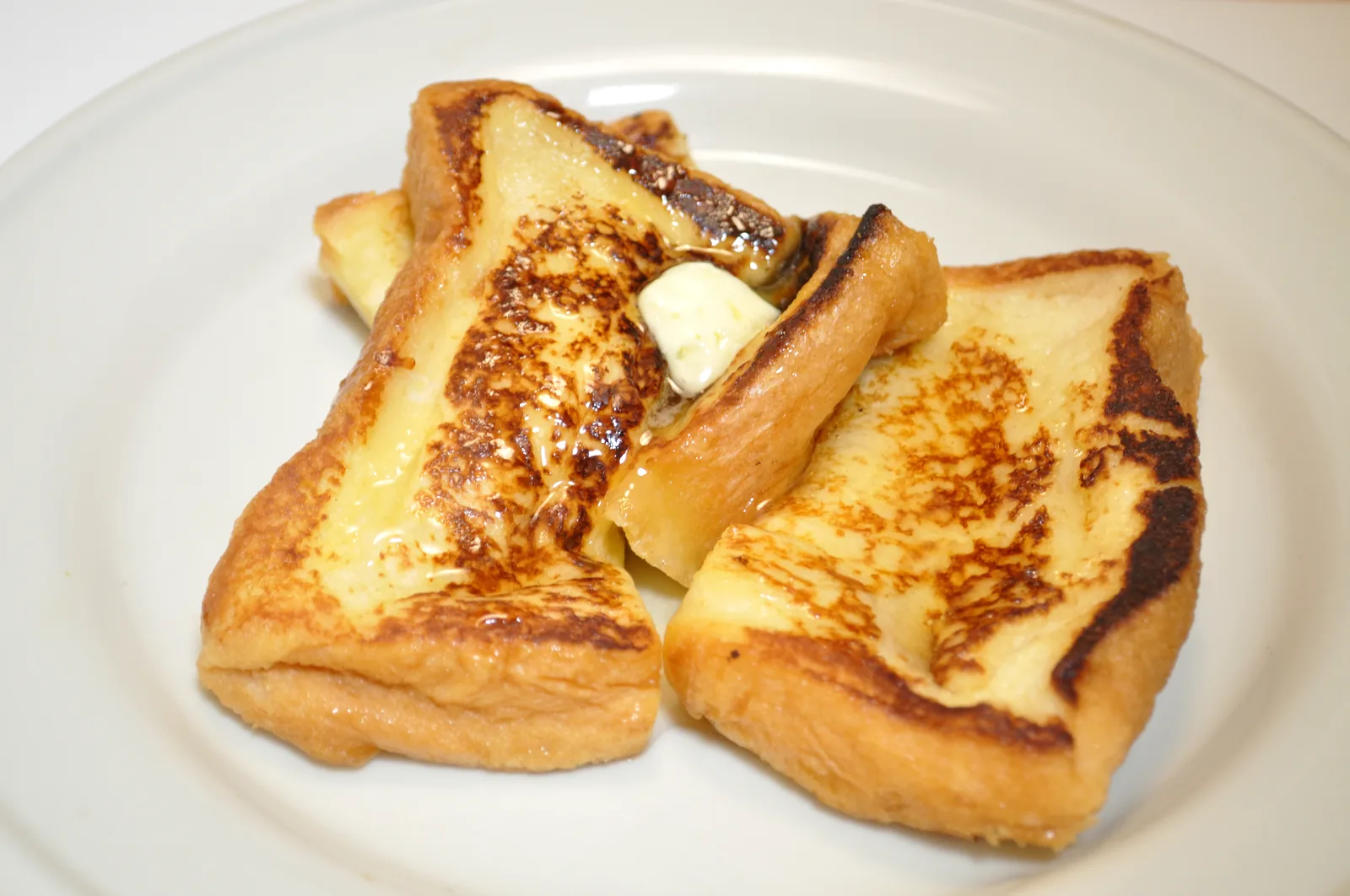
Golden egg-dipped toast slices with a pat of melting butter on a clean white plate

Swiss Classic

Photo: Ocdp, CC0, via Wikimedia Commons

The Heritage Formulary

Measured Ingredients

Estimated cost: Low — about $1–2 per serving at home (USD)

A good fotzelschnitte is deep golden and crisp at the edges, soft and custardy in the middle, and dusted with cinnamon sugar while still hot.

Execution Methodology & Culinary Technique

Step-by-Step Cooking Guide

Active 22m
P

Prep Stage: Whisk the Custard

10 Mins • Slicing, Whisking & Soaking

Cut the day-old Zopf into 8 slices about 2 cm thick. Whisk the 3 eggs, 180 ml of milk, 15 g of sugar, 5 ml of vanilla extract and a pinch of salt in a wide, shallow dish until smooth, and mix the cinnamon sugar in a small bowl. Lay the slices in the custard so they can soak while the pan heats.

Maestro Tip: Stale Zopf is the secret: fresh bread soaks up too much custard and falls apart in the pan, while day-old slices hold their shape and fry crisp.

  1. 1

    Cut the Zopf into slices

    2 Mins Room temperature, about 20°C (68°F)

    Cut the day-old Zopf into 8 slices about 2 cm (3/4 inch) thick, using a serrated knife so the braided crumb does not squash. Lay the slices in a single layer next to your shallow dish.

    Even slices fry evenly — a thick slice stays custardy inside while a thin one dries out.

    Done when: 8 even slices, about 2 cm thick, holding their shape.

  2. 2

    Whisk the egg custard

    3 Mins Room temperature, about 20°C (68°F)

    Crack the 3 eggs into a wide, shallow dish and whisk with the 180 ml of milk, 15 g of sugar, 5 ml of vanilla extract and 1 g of salt until the mixture is smooth and pale gold, with no streaks of egg white left.

    A wide dish, not a bowl, lets the slices lie flat and soak evenly.

    Done when: Custard smooth, pale gold, with no visible egg white.

  3. 3

    Mix the cinnamon sugar and soak the slices

    5 Mins Room temperature, about 20°C (68°F)

    Mix the 12 g of sugar with the 2 g of cinnamon in a small bowl and set it aside. Lay the 8 Zopf slices in the custard and leave them for about 2 minutes, then turn them over for 2 more minutes so both sides drink up the custard. Lift each slice out and let the excess drip off for a few seconds.

    The slices should feel heavy and soaked through, but not so wet that they sag — lift them gently with a fork or spatula.

    Done when: Bread soaked through and heavy, holding its shape.

  4. 4

    Fry the first batch

    6 Mins Medium heat, about 175°C (350°F)

    Melt 15 g of the butter in a large frying pan over medium heat until it foams. Lay 4 soaked slices in the pan without crowding them and fry for about 3 minutes a side, until deep golden and crisp at the edges and the egg in the centre has set to at least 71°C (160°F).

    Do not move the slices while the first side browns — lifting them early tears the custard crust.

    Done when: Deep golden and crisp at the edges, custard set in the middle.

  5. 5

    Fry the second batch and serve

    6 Mins Medium heat, about 175°C (350°F)

    Melt the remaining 15 g of butter and fry the last 4 slices the same way, about 3 minutes a side, until deep golden and the centre has set to at least 71°C (160°F). Dust all 8 slices with the cinnamon sugar while they are still hot and serve at once with applesauce or jam on the side.

    Keep the first batch warm on a plate in a low oven while the second batch fries, so everything reaches the table hot.

    Done when: All 8 slices golden, crisp-edged and hot, dusted with cinnamon sugar.

Finishing Touches & Plating

Serve the fotzelschnitten straight from the pan, dusted with cinnamon sugar while still hot, with applesauce or jam on the side for spooning over.

Nutritional Physiology & Benefits

Nutrition

Energy

395

kcal / serving

Protein

14g

Complete AA

Carbs

48g

Complex

Fats

16g

Healthy

Per serving (4 servings · 1 serving ≈ 175 g)
Energy395 kcal
Protein14 g
Carbohydrates48 g
Fat16 g
Fibre2.1 g
Sugar10.7 g
Sodium522 mg
Per 100g
Energy226 kcal
Protein7.9 g
Carbohydrates27.4 g
Fat9.1 g
Fibre1.2 g
Sugar6.1 g
Sodium298 mg

Nutrition values are estimated — calculated from USDA FoodData Central values for the listed ingredients.

Vitamins & minerals: Eggs and milk provide vitamin B12, vitamin D, calcium and riboflavin; the Zopf adds iron, thiamin and folate. All nutrition values are estimated.

A Thrifty Classic

Turns day-old Zopf that might be thrown away into a golden breakfast — good for the kitchen and the budget.

Simple, Honest Ingredients

Bread, eggs, milk, cinnamon and butter: nothing processed, nothing you cannot pronounce.

On the Table in 22 Minutes

One bowl, one pan, and breakfast is ready before the coffee has finished brewing.

Food Pairings

What to Eat With

To optimize nutrient absorption and elevate the sensory depth, pair with these authentic accompaniments:

Vegetables

Warm Applesauce

The classic Swiss partner: tart, soft applesauce cuts through the buttery sweetness and is how Swiss grandmothers served fotzelschnitten.

Sides

Fresh Berries

Sharp berries cut through the buttery sweetness and add colour and freshness to the plate.

Jam or Preserves

A spoonful of apricot or raspberry jam adds a second, fruity sweetness that suits the eggy Zopf crumb.

Drinks

Hot Coffee

Strong black coffee balances the sugar and cinnamon, and it is how most Swiss families drink it at breakfast.

Full Menus

Full Menu: Fotzelschnitten, Applesauce, Coffee

Fotzelschnitten with warm applesauce, fresh berries and a pot of hot coffee is a slow Swiss weekend breakfast that needs nothing else.

Complete menu

Fotzelschnitten with warm applesauce, fresh berries and a pot of hot coffee — a full Swiss weekend breakfast.

Digestive Guardrails

What NOT to Combine

To prevent digestive distress, sluggishness, or palate clash, avoid pairing the dish with these elements:

Using Fresh Bread

Fresh bread soaks up too much custard and falls apart in the pan. Day-old Zopf holds its shape and fries crisp. This is general food information, not medical advice.

Frying on High Heat

High heat burns the sugar in the custard before the egg inside has set, leaving a dark crust and a raw middle. Keep it at medium heat, about 175°C (350°F). This is general food information, not medical advice.

Soaking the Bread Too Long

More than a few minutes in the custard and the slices turn to mush. Two minutes a side is enough for sturdy Zopf. This is general food information, not medical advice.

General information only, not medical advice — consult a doctor for personal dietary decisions.

Who Should Eat It

Who Should Eat

  • General adultsA sweet, filling breakfast for most adults; two slices with applesauce is a satisfying plate.
  • ChildrenChildren love fotzelschnitten — cut them into fingers for small hands and go easy on the cinnamon sugar.
  • ElderlySoft and easy to chew; serve warm with applesauce and a little less sugar if preferred.
  • Pregnant womenThe eggs are cooked through in the hot pan, which is the safe way to eat eggs in pregnancy; serve freshly fried and hot. Ask your clinician if unsure.
  • Breastfeeding womenA filling, energy-rich breakfast for nursing mothers; the cinnamon is fine in normal amounts.
  • AthletesAbout 14 g of protein and 48 g of carbohydrate a serving — a useful energy-rich breakfast before a long morning.
  • Weight gainAt 395 calories a serving before toppings, it is an easy way to add energy in the morning.
  • Weight lossA 395-calorie breakfast that is mostly carbohydrate and sugar; keep it to one serving and skip the extra jam.

Health Conditions — Adjust or Avoid

Conditions

  • DiabetesAbout 48 g of carbohydrate per serving, mostly from the bread and sugar; keep the portion to two slices and skip the jam. Ask your clinician about portions.
  • High blood pressureSodium is about 522 mg per serving, mostly from the bread and salt; choose low-salt bread if you need to. Ask your clinician about portions.
  • Kidney diseaseEggs and milk add protein and phosphorus; keep the portion as stated and eat it occasionally if you are on a restricted diet. Ask your clinician.
  • GoutEggs and milk are low in purines; the dish is fine in normal portions. Ask your clinician.
  • Stomach issuesFried, buttery bread and cinnamon can be heavy on a sensitive stomach; eat a small portion and skip extra sugar. Ask your clinician if unsure.
  • Cardiovascular diseaseThe butter and egg yolk add saturated fat, so this is a sometimes breakfast rather than an everyday one. Ask your clinician about portions.
  • Fatty liverFried in butter with added sugar, so keep it occasional and pair it with fruit rather than extra jam. Ask your clinician about portions.
  • Food allergiesContains wheat (gluten), egg and milk — the three main allergens in this dish. Do not serve it to anyone allergic to any of them. Ask your clinician if unsure.
  • Special therapeutic dietsA sweet, fried bread dish that does not fit low-sugar, low-fat or gluten-free diets as written; ask your clinician or dietitian before adapting it.

If you have a medical condition, consult your doctor before changing your diet.

Storage & Use

Storage & Use

How to store
Cool completely, then stack with baking paper between the slices in a sealed container.
In the fridge
Up to 2 days at 4°C (40°F) or below.
In the freezer
Freeze for up to 1 month at -18°C (0°F), separated by baking paper.
How to reheat
Reheat in a dry pan over medium heat or in a 180°C (350°F) oven for 5 minutes until hot and 74°C (165°F) in the centre; do not microwave or they turn soggy.
Freezing recommended
Yes — they freeze well and reheat crisply.
Signs it has spoiled
Sour smell, slimy surface, or any mould — throw them away.

More recipes to explore

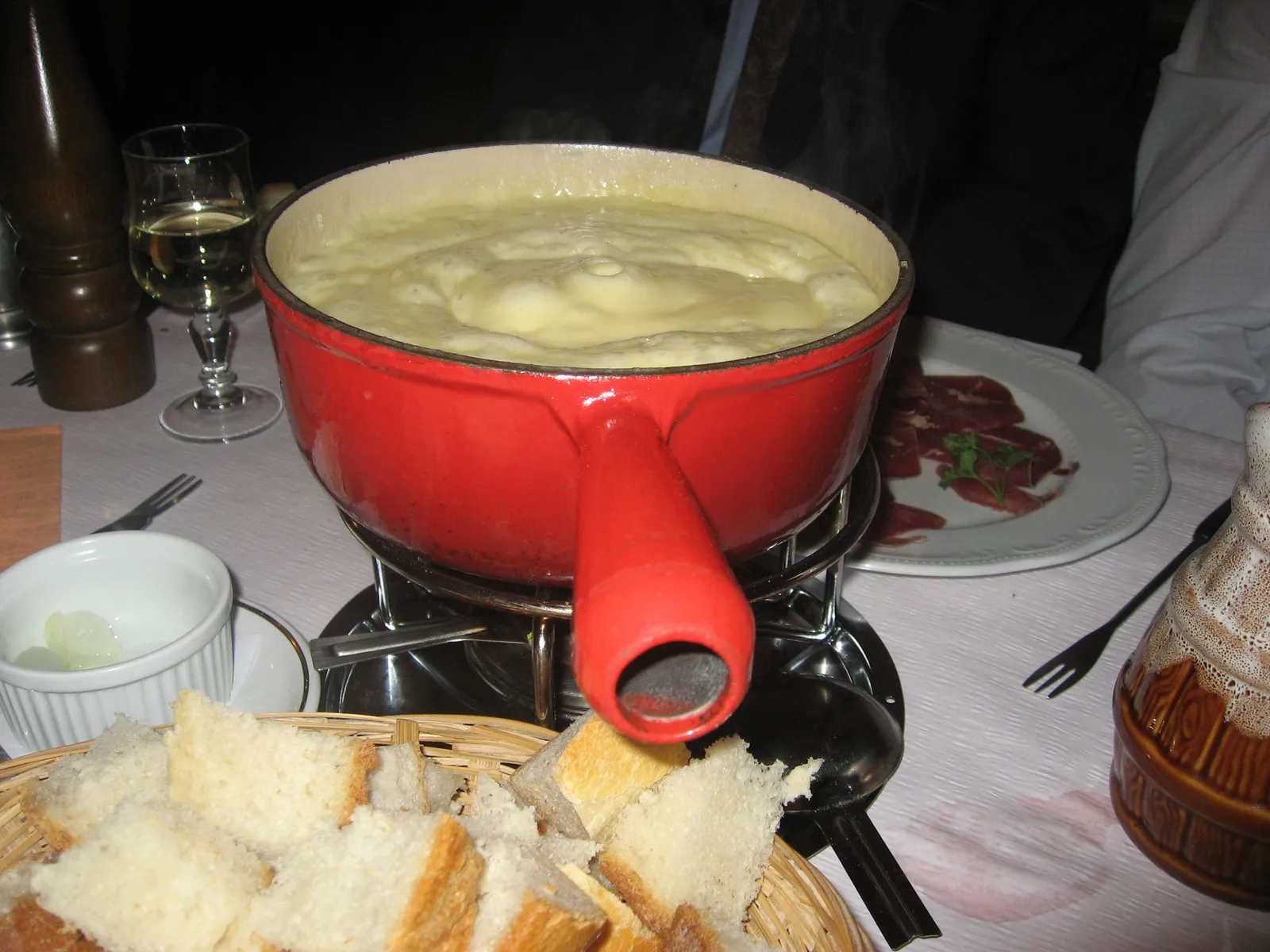
A red fondue pot of melted cheese with bread cubes and a glass of white wine Switzerland flag Switzerland 40m
Dinner •Swiss Alpine Classic

Swiss Cheese Fondue

Swiss cheese fondue is the Alps in a pot: Gruyere and Emmental melted slowly into dry white wine with garlic and a splash of kirsch, kept warm at the table while everyone dips cubes of bread into the bubbling cheese. One serving is about 310 g.

Comfort & Togetherness

Gruyere and Emmental melted in white wine, shared from one pot.

Pairs Well With
Cubes of crusty bread, boiled potatoes and cornichons on the side
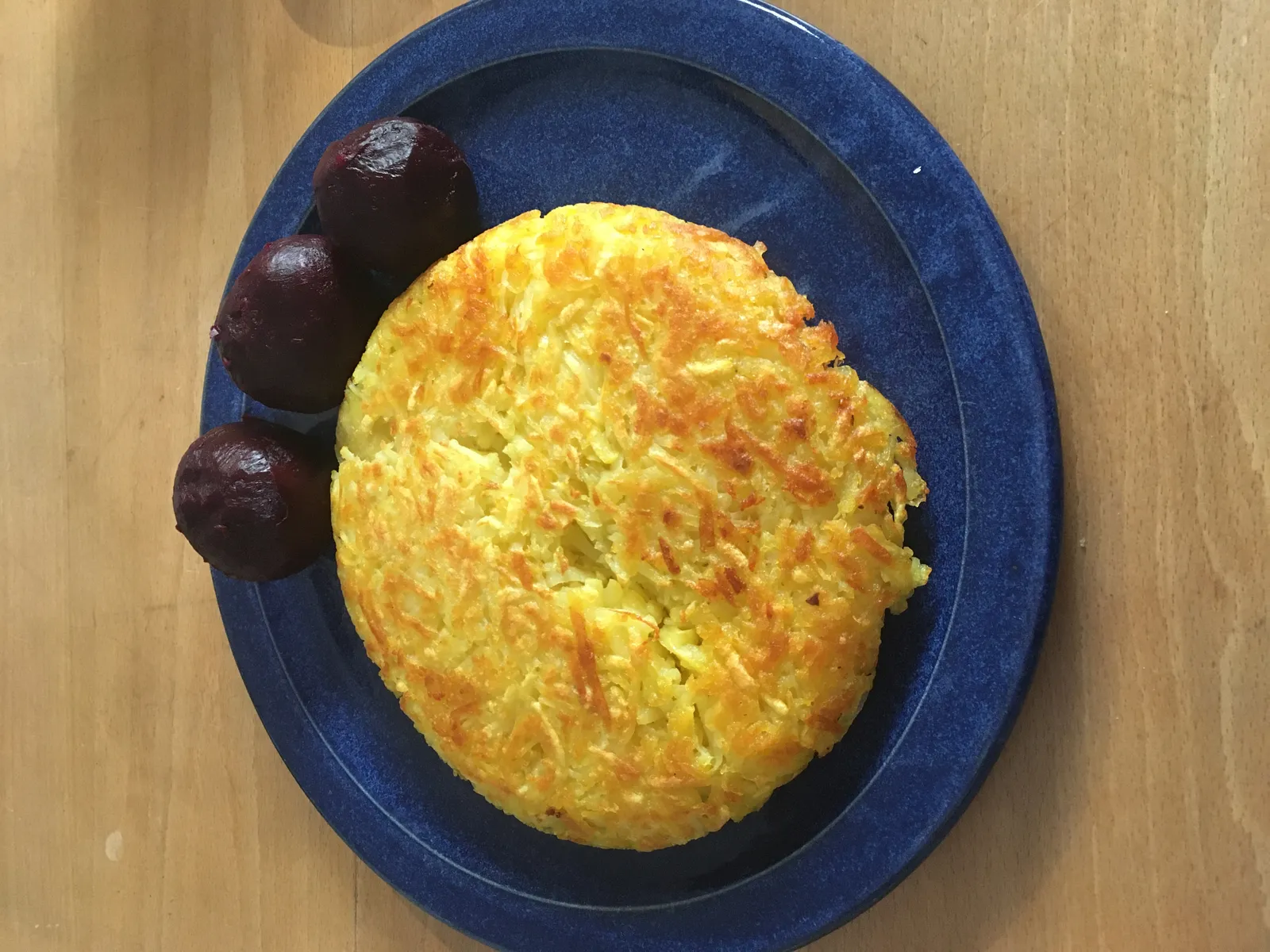
A large golden rosti potato cake on a blue plate Switzerland flag Switzerland 40m
Lunch •Bernese Farmhouse Classic

Rösti

Rösti is Switzerland's crisp potato cake: grated potato pressed into one large golden disc and fried in butter until the outside shatters and the inside stays soft, then topped with a fried egg. One serving is about 240 g.

Simple & Satisfying

One large crisp cake of grated potato, pan-fried in butter and topped with a fried egg.

Pairs Well With
A fried egg on top and a simple green salad with sharp vinaigrette
Quick Prep (<30m)
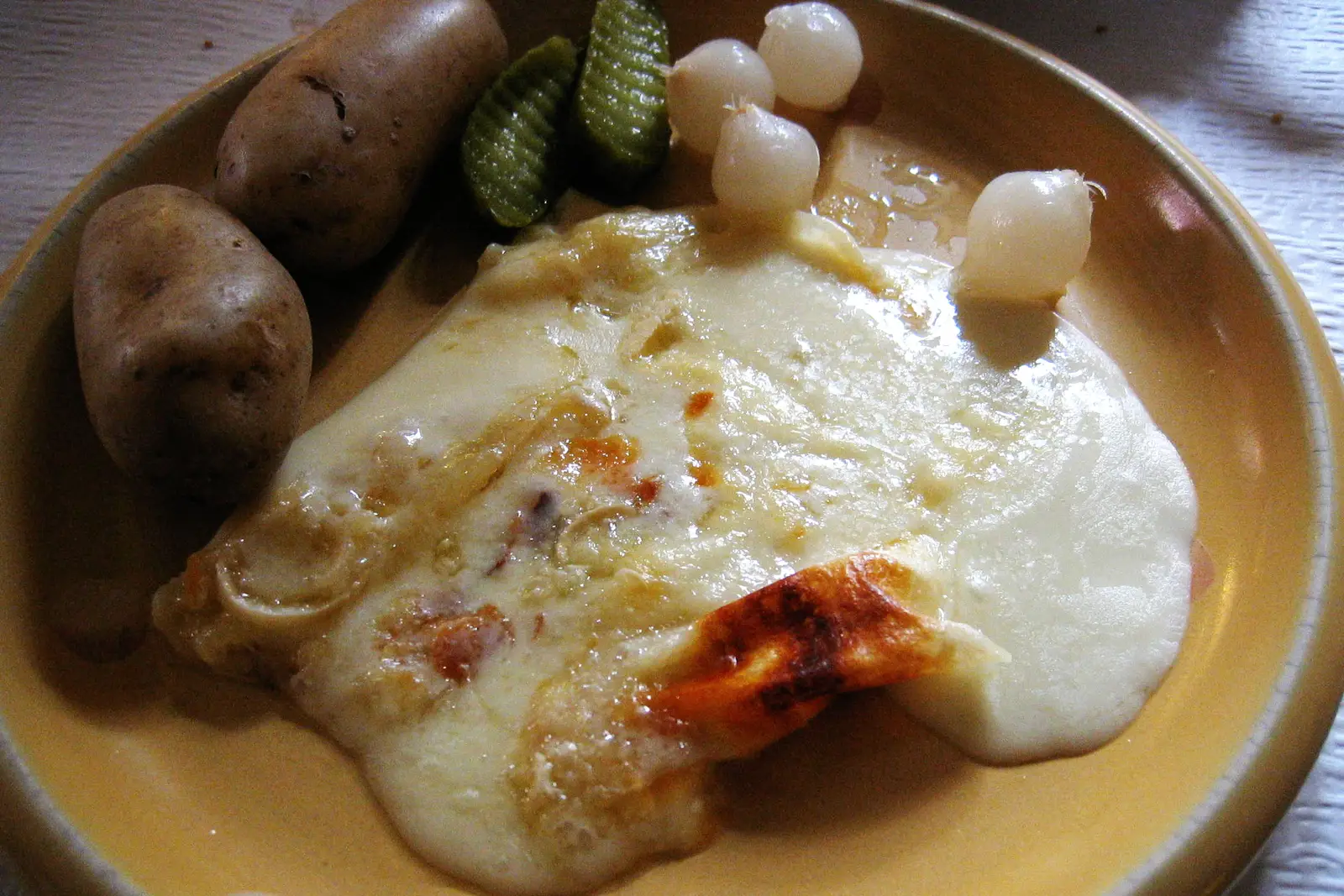
Melted raclette cheese scraped over a plate with boiled potatoes and pickles Switzerland flag Switzerland 40m
Dinner •Valais Alpine Classic

Raclette

Raclette is the Swiss Alps' other great melted-cheese meal: a half-wheel of raclette cheese is warmed until the cut face bubbles, then scraped in ribbons over boiled potatoes, with cornichons and pickled onions to cut the richness. One serving is about 365 g.

Comfort & Togetherness

Melted raclette cheese scraped over boiled potatoes with pickles.

Pairs Well With
Boiled potatoes, cornichons, pickled onions and a green salad
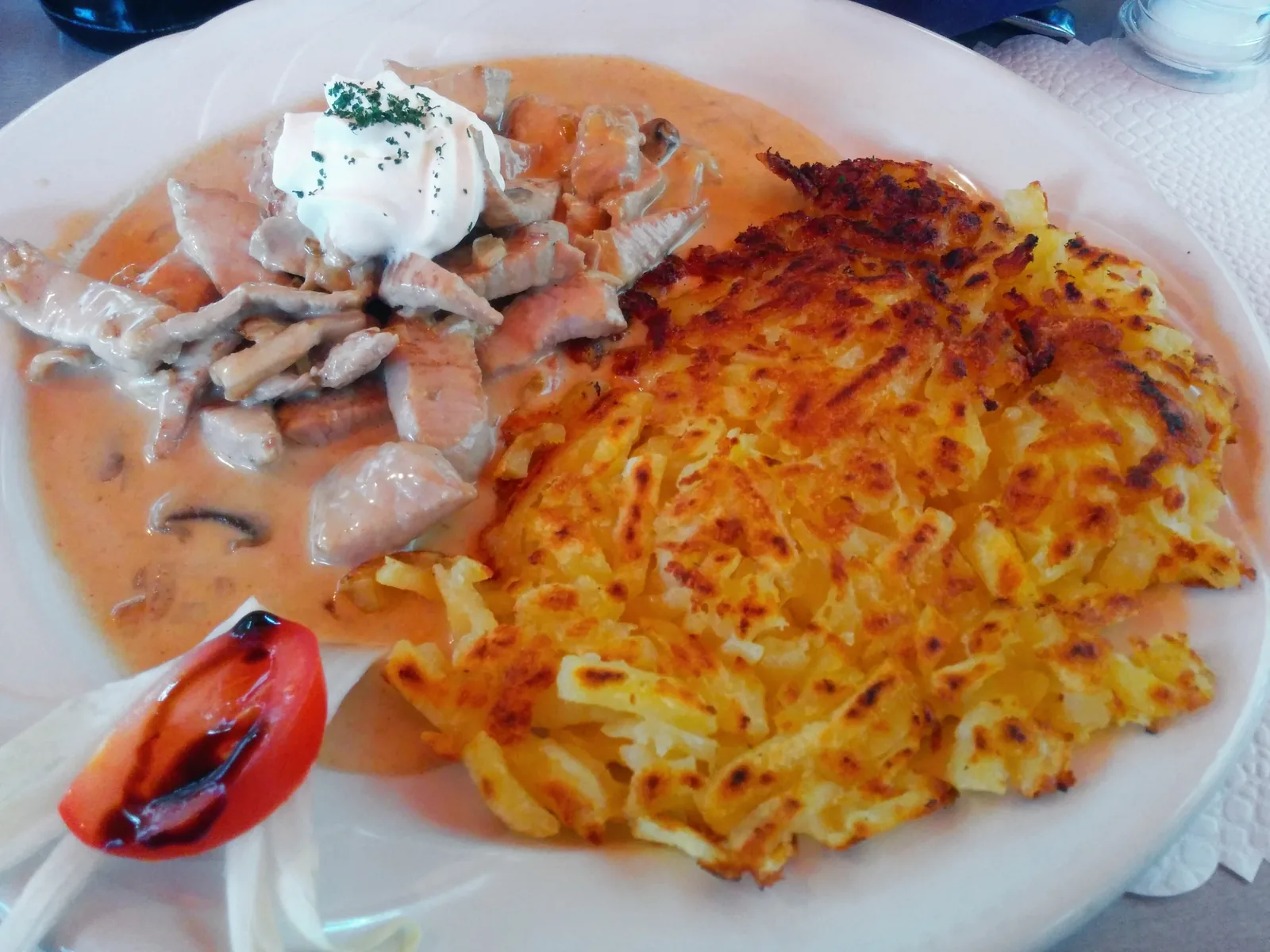
A plate of Zürcher Geschnetzeltes — veal strips in cream sauce with a dollop of cream — beside golden rösti. Switzerland flag Switzerland 40m
Dinner •Zurich Classic

Zürcher Geschnetzeltes

Zürcher Geschnetzeltes is Zurich's signature dish: thin strips of veal quickly seared, then finished in a white-wine and cream sauce with mushrooms and onion. One serving is about 335 g, before the rösti it is traditionally served with.

Rich & Comforting

Tender strips of veal in a white-wine cream sauce with mushrooms — Zurich's classic, with rösti.

Pairs Well With
Serve with golden rösti and a glass of dry Swiss white wine.
High Protein

The Dinner Gazette

Never wonder what’s for dinner again

One email a week with easy dinner ideas from around the world — ingredients, steps and nutrition, tested in our kitchen first.

Delivered every Thursday morning. Unsubscribe anytime.