Curated recipes from 193 countries  •  New seasonal Mediterranean issue out now

Overview

Tacaca

Tacacá, Amazonian Tucupi Soup

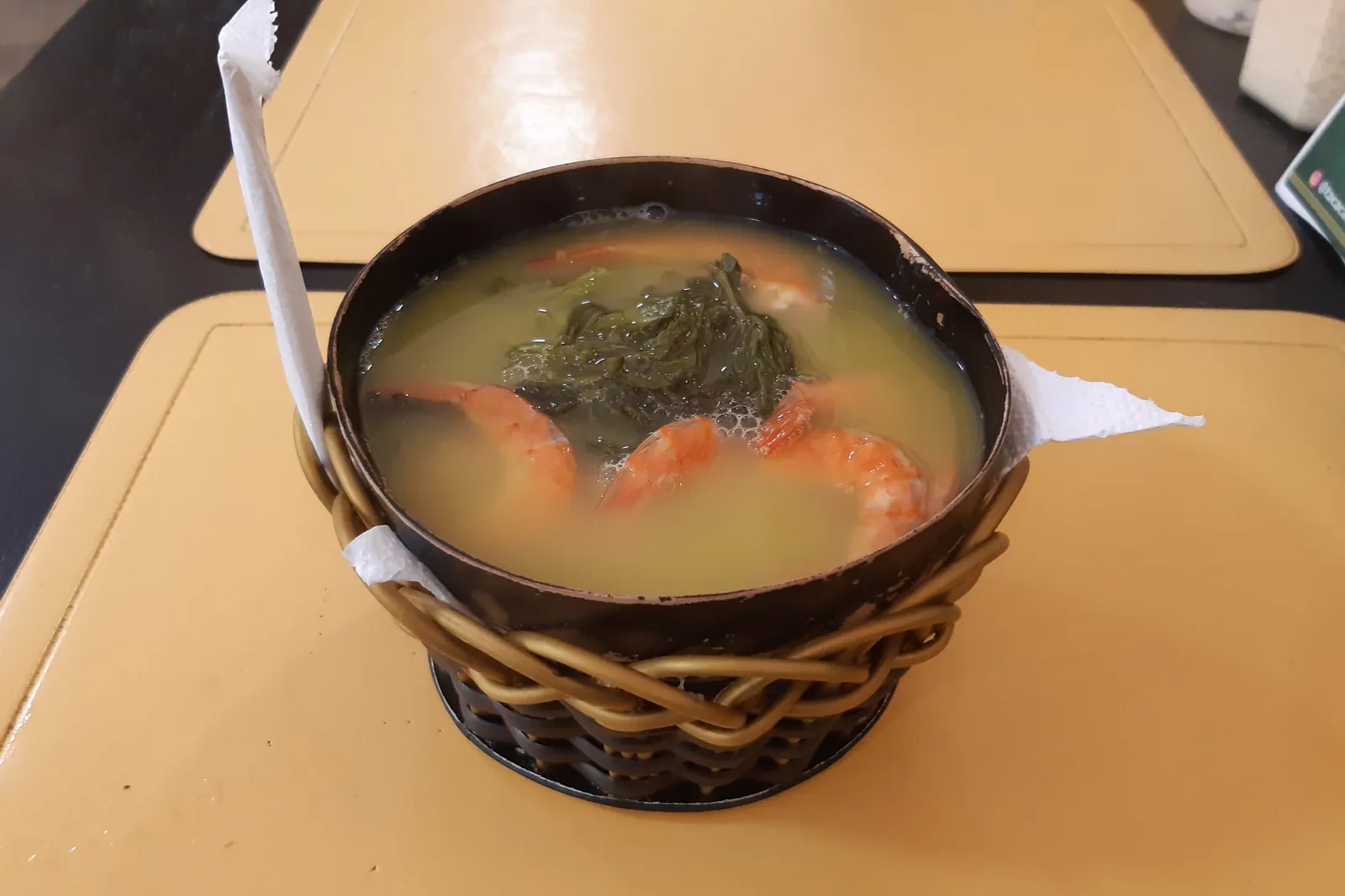
Tacaca is the iconic soup of Belém in northern Brazil — golden tucupi broth with dried shrimp, tingling jambu leaves and a clear tapioca gel, served boiling hot in a gourd bowl. One serving is 393 g and holds 177 kcal, so it is a light but protein-rich lunch.

Tacaca is the iconic soup of Belém, the capital of Pará in northern Brazil, sold by street vendors — tacacazeiras — from stalls around the city. It is made from tucupi, the yellow juice pressed from grated manioc, fermented and boiled, with dried shrimp, jambu leaves that tingle the mouth, and goma, a clear tapioca gel. The four parts are cooked separately and assembled to order in a cuia, a gourd bowl, and eaten boiling hot with a spoon. It is a dish of Indigenous Amazonian origin, shaped by centuries of Belém's markets.

Pairs well with: A cold guaraná and tapioca crêpes

Provenance

Brazil flag Brazil

Belém Street-Food Classic

Latin America & Caribbean

Time Dedication

1h 5m

25m prep • 40m cook

Batch Yield

4 Servings

177 kcal per serving

1 serving ≈ 393 g

Technical Skill

Intermediate

Moderate

Meal Timing & Digestive Fit

Breakfast

Not Advised

Lunch

Prime Metabolic Fit

Dinner

Ideal Hearty Main

Snack & Tea

Inappropriate

Soups & Broths Occasions: Lunch, Street-food nights, Brazilian dinners, Adventurous cooking Cost: Medium — about $3–4 per serving at home (tucupi and dried shrimp are speciality items)

Tacaca — a bowl of golden tucupi soup with shrimp and jambu leaves, served in a cuia gourd bowl in Belém, Brazil

Belém Street-Food Classic

Photo: Ridiculopathy, CC0, via Wikimedia Commons

The Heritage Formulary

Measured Ingredients

Estimated cost: Medium — about $3–4 per serving at home (tucupi and dried shrimp are speciality items) (USD)
Simmer the tucupi for at least 20 minutes — raw tucupi is not safe to taste. Assemble each bowl to order and serve boiling hot. Nutrition is estimated from USDA values; tucupi, jambu and culantro are estimates from similar foods.

Execution Methodology & Culinary Technique

Step-by-Step Cooking Guide

Active 1h 5m
P

Prep Stage: Soak, Chop and Measure

25 Mins • Soak & Knife Work

Rinse and soak the dried shrimp in cold water for 2 hours (passive), then chop the garlic, culantro and pimenta-de-cheiro, pick the jambu leaves, and measure out the tucupi and tapioca starch.

Maestro Tip: Start the shrimp soaking first — everything else takes 25 minutes.

  1. 1

    Soak the Dried Shrimp

    2 Hrs (Passive) Cold water, room temperature, about 20°C (68°F)

    Rinse the dried shrimp under cold water, then put them in a bowl, cover with cold water and leave to soak for 2 hours, changing the water once halfway through. Drain well before cooking.

    Soaking softens the shrimp and tames the salt — do not skip it.

    Done when: Shrimp plump and soft, no longer hard

  2. 2

    Simmer the Tucupi

    30 Mins Simmer at about 95°C (203°F)

    Pour the tucupi into a large pot, add the minced garlic, the chopped pimenta-de-cheiro and the salt. Bring to a gentle simmer and cook for at least 20 to 30 minutes — never less.

    Raw tucupi contains compounds that release hydrocyanic acid — thorough simmering makes it safe. Never taste raw tucupi.

    Done when: Broth golden, fragrant and simmering steadily

  3. 3

    Make the Goma

    10 Mins Medium heat, about 90°C (194°F)

    Whisk the tapioca starch into the cold water until fully dissolved, then heat gently in a small saucepan, stirring constantly. It will turn into a clear, thick gel — the goma.

    Keep stirring — it thickens all at once and lumps if you stop.

    Done when: A clear, glossy, spoon-coating gel

  4. 4

    Add the Shrimp and Jambu

    5 Mins Simmer at about 95°C (203°F)

    Add the soaked shrimp to the simmering tucupi and cook for 3 to 4 minutes until pink and heated through. Add the jambu leaves and culantro and cook for 1 minute more, just until the leaves wilt.

    Jambu wilts in seconds — add it last so it keeps its tingle.

    Done when: Shrimp pink and opaque, jambu just wilted

  5. 5

    Assemble the Bowls

    5 Mins Serve boiling hot, about 85°C (185°F)

    Spoon the goma into each cuia (gourd bowl), ladle over the boiling-hot tucupi, and add the shrimp and jambu. Serve immediately with a spoon.

    Serve it boiling hot — tacaca is eaten straight away, spoonful by spoonful, with the shrimp and jambu.

    Done when: Steaming bowls, golden broth, shrimp and jambu on top

Finishing Touches & Plating

Spoon the goma into each cuia (gourd bowl), ladle over the boiling-hot tucupi, add the shrimp and jambu, and serve immediately with a spoon.

Nutritional Physiology & Benefits

Nutrition

Energy

177

kcal / serving

Protein

17g

Complete AA

Carbs

25g

Complex

Fats

1g

Healthy

Per serving (4 servings · 1 serving ≈ 393 g)
Energy177 kcal
Protein17 g
Carbohydrates25 g
Fat1 g
Fibre0.9 g
Sugar1.6 g
Sodium1184 mg
Per 100g
Energy45 kcal
Protein4.2 g
Carbohydrates6.3 g
Fat0.3 g
Fibre0.2 g
Sugar0.4 g
Sodium302 mg

Nutrition values are estimated — calculated from USDA FoodData Central values for the listed ingredients.

Vitamins & minerals: Vitamin C from the peppers and jambu, iron and calcium from the dried shrimp, and vitamin A from the greens. Nutrition is estimated.

Light but Protein-Rich

About 16.5 g of protein a serving at only 177 kcal — the dried shrimp does the heavy lifting.

Jambu's Famous Tingle

Jambu (Acmella oleracea) contains spilanthol, which makes the mouth tingle and go slightly numb — the signature sensation of tacaca.

A Taste of the Amazon

Tucupi, jambu and goma are ingredients you will find nowhere else — a bowl of the Amazon rainforest.

Food Pairings

What to Eat With

To optimize nutrient absorption and elevate the sensory depth, pair with these authentic accompaniments:

Drinks

A Cold Guaraná

The sweet, fizzy Amazonian soda cools the chilli heat and the hot broth between spoonfuls.

Vegetables

A Simple Salad of Chicória-do-Pará

The same culantro leaf, fresh and crisp, echoes the soup's flavours and adds a green crunch.

Sides

Tapioca Crêpes (Beiju)

Crisp tapioca crêpes are a natural partner — the same starch, in a different form.

Full Menus

A Belém Street-Food Night

Serve tacaca with açaí and grilled fish for a taste of Belém's markets.

Complete menu

Tacaca with açaí and grilled fish

Digestive Guardrails

What NOT to Combine

To prevent digestive distress, sluggishness, or palate clash, avoid pairing the dish with these elements:

Skipping the Tucupi Simmer

Raw tucupi contains compounds that release hydrocyanic acid — it must be simmered for at least 20 minutes before serving. Never taste it raw. This is general food safety information, not medical advice.

Overcooking the Jambu

Jambu wilts in seconds and loses its tingle if boiled — add it at the very end. This is general food information, not medical advice.

General information only, not medical advice — consult a doctor for personal dietary decisions.

Who Should Eat It

Who Should Eat

  • General adultsA light, protein-rich soup — a taste of the Amazon for adventurous eaters.
  • ChildrenThe jambu tingle and the chilli may be too much for small children — serve them the broth without the pimenta-de-cheiro.
  • ElderlyLight and easy to eat, and the soup is served hot and soothing.
  • Pregnant womenMake sure the shrimp is fully cooked and the tucupi well simmered; avoid it if you are unsure of the source.
  • Breastfeeding womenSafe as part of a varied diet; the chilli and jambu tingle are the only things to watch.
  • AthletesLight and refreshing, but pair it with bread or rice — the soup alone is too low in energy after training.
  • Weight gainAt 177 kcal a serving it is a light addition — serve a bigger portion with tapioca crêpes to add energy.
  • Weight lossA good choice at about 177 kcal a serving — a generous bowl of soup with 16.5 g of protein.

Health Conditions — Adjust or Avoid

Conditions

  • DiabetesAbout 24.7 g of carbs a serving, mostly from the tapioca goma — watch the portion and check your glucose as usual.
  • High blood pressureSodium is high at 1,184 mg a serving, mostly from the dried shrimp — soak the shrimp well and use less salt.
  • Kidney diseaseSodium and potassium from the shrimp and tucupi may need watching; ask your clinician whether this soup fits your plan.
  • GoutShrimp is moderate in purines — keep the portion small if gout is a concern.
  • Stomach issuesChilli and the jambu tingle can irritate a sensitive stomach or reflux — use less pimenta, or skip this dish on a bad day.
  • Cardiovascular diseaseLow in fat and rich in protein, but the sodium is high — a concern if you watch salt for your heart.
  • Fatty liverLow in calories and fat, so it fits a lighter eating pattern.
  • Food allergiesContains shellfish (shrimp). Naturally gluten-free. Tucupi is made from manioc (cassava) — check with a clinician if you have a cassava sensitivity.
  • Special therapeutic dietsA traditional dish with unusual ingredients — tucupi must be thoroughly cooked and the shrimp fully heated. Please ask your clinician for advice about your individual condition.

If you have a medical condition, consult your doctor before changing your diet.

Storage & Use

Storage & Use

How to store
Keep in sealed containers in the fridge
In the fridge
Up to 2 days, broth and goma stored separately
In the freezer
Not recommended — the goma turns watery and the jambu loses its texture when thawed
How to reheat
Reheat the broth to a rolling simmer and heat through to at least 74°C (165°F); warm the goma gently
Freezing recommended
No
Signs it has spoiled
A sour or off smell, a slimy surface, or visible mould — discard if any of these appear

More recipes to explore

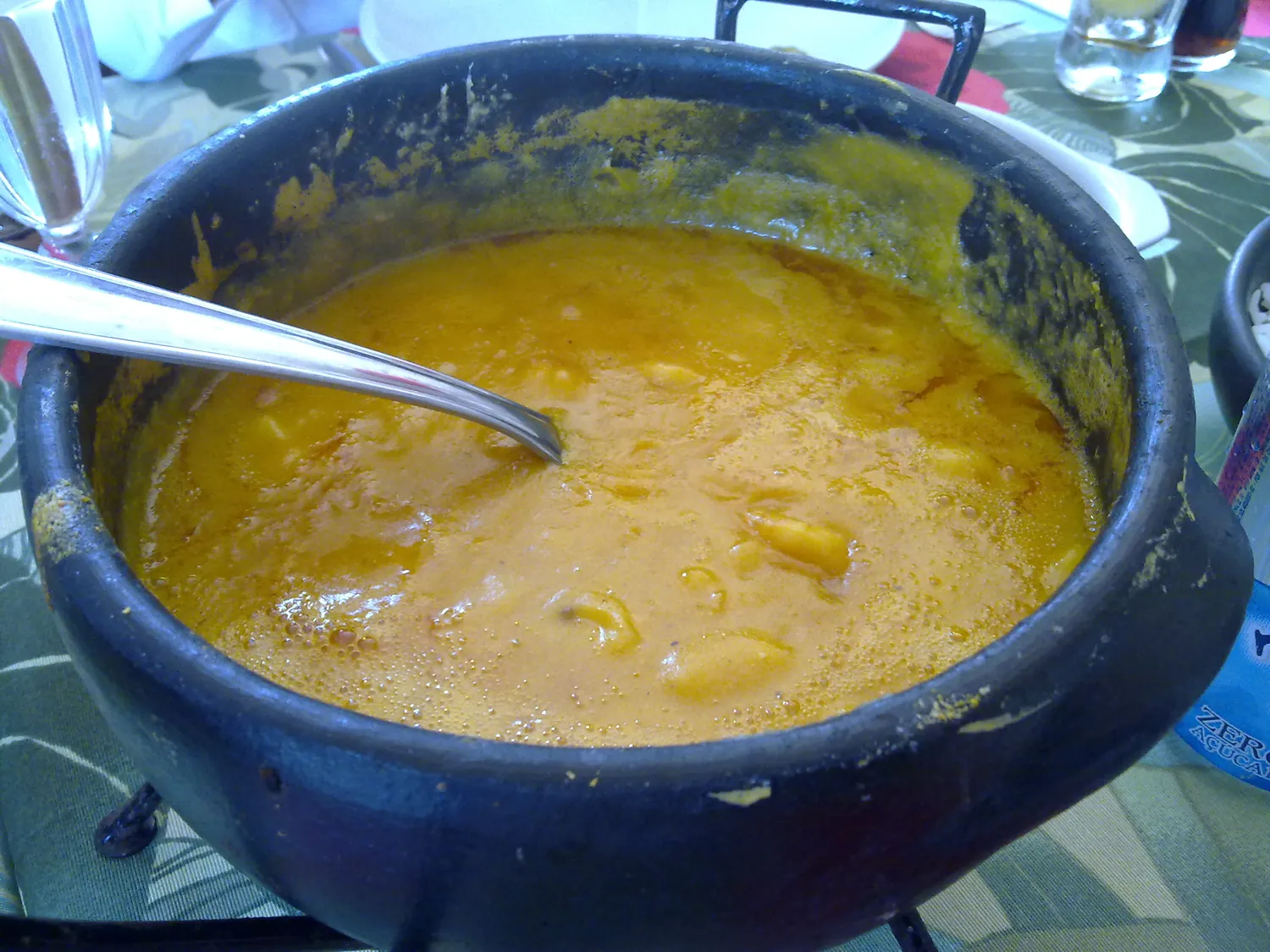
A black clay pot of golden-orange bobó de camarão, a thick cassava cream with shrimp, with a serving spoon Brazil flag Brazil 1h 5m
Dinner •Bahian Cassava Cream

Bobó de Camarão

This bobo de camarao recipe is Bahia's creamy shrimp dish: fresh shrimp folded into a thick purée of boiled cassava blended with coconut milk, coloured golden-orange with dendê oil and finished with lime and cilantro. Unlike a stew, the cassava is blended smooth, so the whole dish eats like a rich, spoonable cream. One serving is about 470 g.

Rich & Comforting

Shrimp folded into a thick, smooth cassava cream made with coconut milk and red palm oil, served hot with rice.

Pairs Well With
Steamed white rice, farofa and a crisp green salad
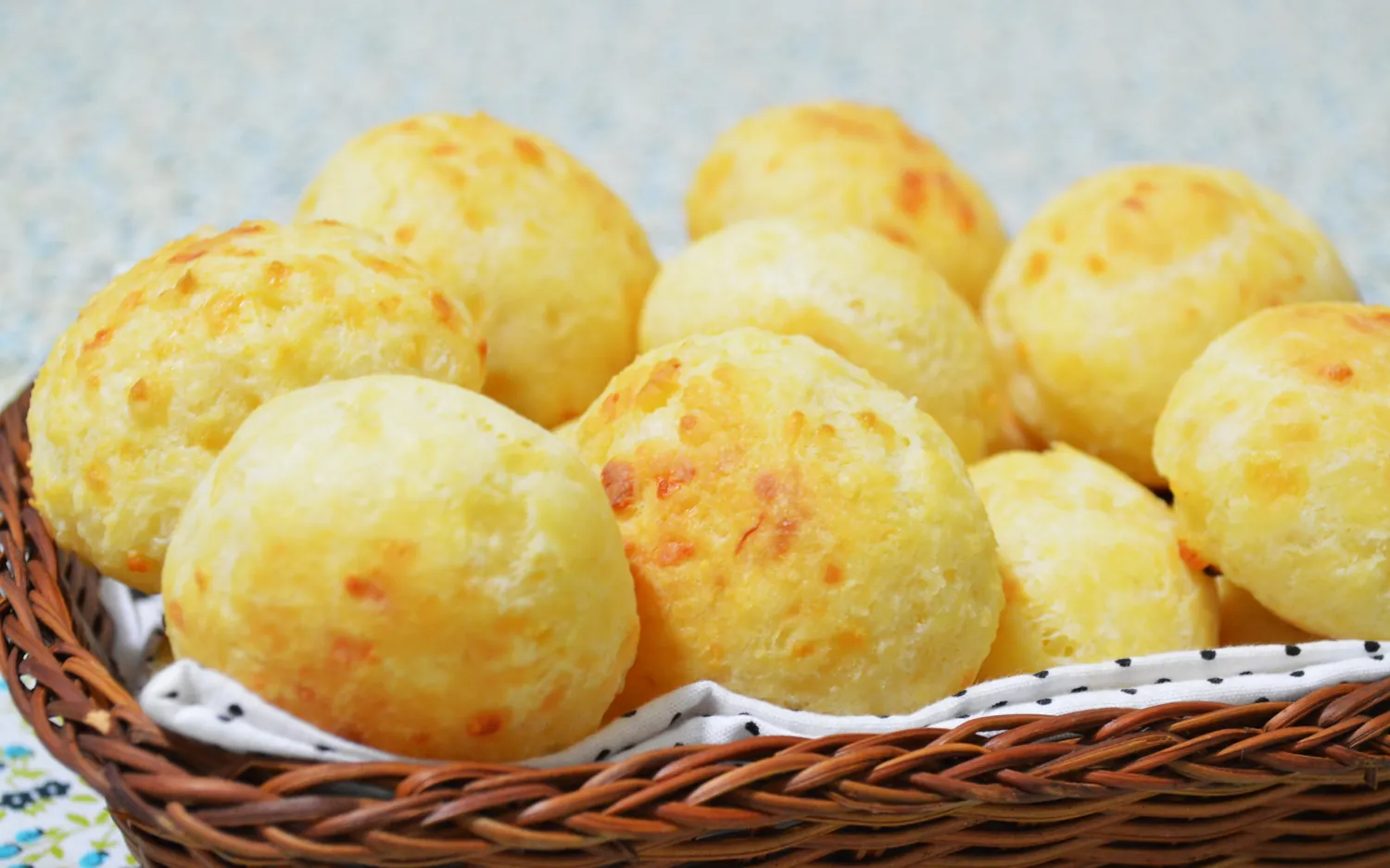
A basket of golden, round pão de queijo, Brazilian cheese bread rolls Brazil flag Brazil 45m
Snack & Tea •Minas Gerais Cheese Bread

Pão de Queijo

This pao de queijo recipe makes Brazil's famous cheese bread: small, golden rolls with a crisp shell and a soft, stretchy, chewy centre, made from tapioca starch, milk, oil, eggs and cheese. There is no wheat flour and no yeast — the rolls puff up on steam in a hot oven. One serving is 4 rolls, about 134 g.

Warm & Chewy Snack

Golden tapioca cheese rolls with a crisp shell and a soft, stretchy centre, baked in under half an hour.

Pairs Well With
Black coffee, fresh fruit, or a light soup
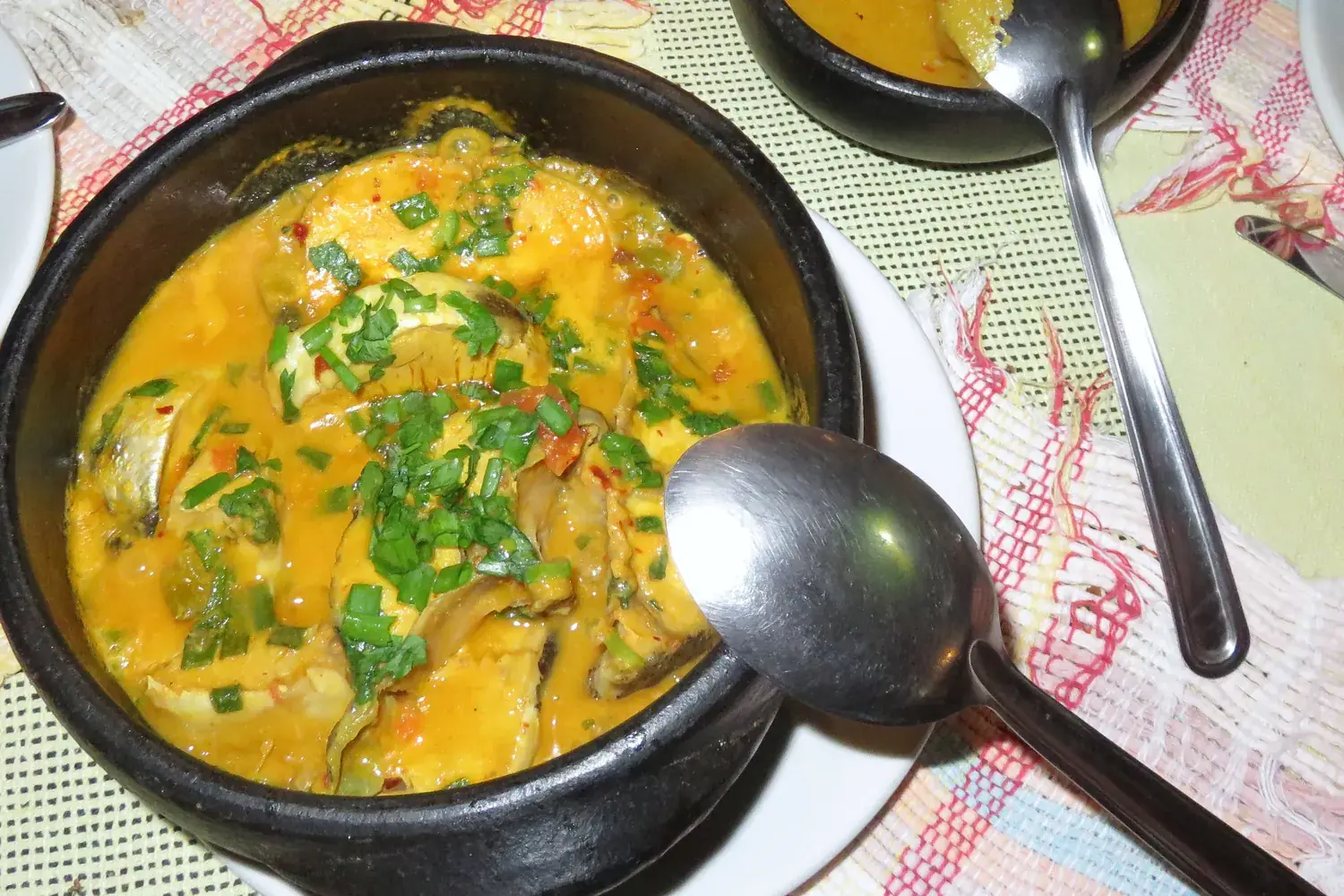
A black clay pot of moqueca baiana, fish chunks in a golden-orange coconut sauce with fresh herbs, beside rice and pirão Brazil flag Brazil 55m
Dinner •Bahian Fish Stew

Moqueca Baiana

This moqueca baiana recipe is Bahia's famous fish stew: thick fillets of white fish layered with onion, peppers and tomato, then simmered gently in coconut milk with dendê oil until the sauce turns golden-orange. The fish stays in whole, flaky pieces in a fragrant broth — a stew, not a purée. One serving is about 450 g.

Coastal & Aromatic

Firm white fish simmered in coconut milk and red palm oil with peppers and tomato, served hot in its clay pot.

Pairs Well With
Steamed white rice, pirão and farofa
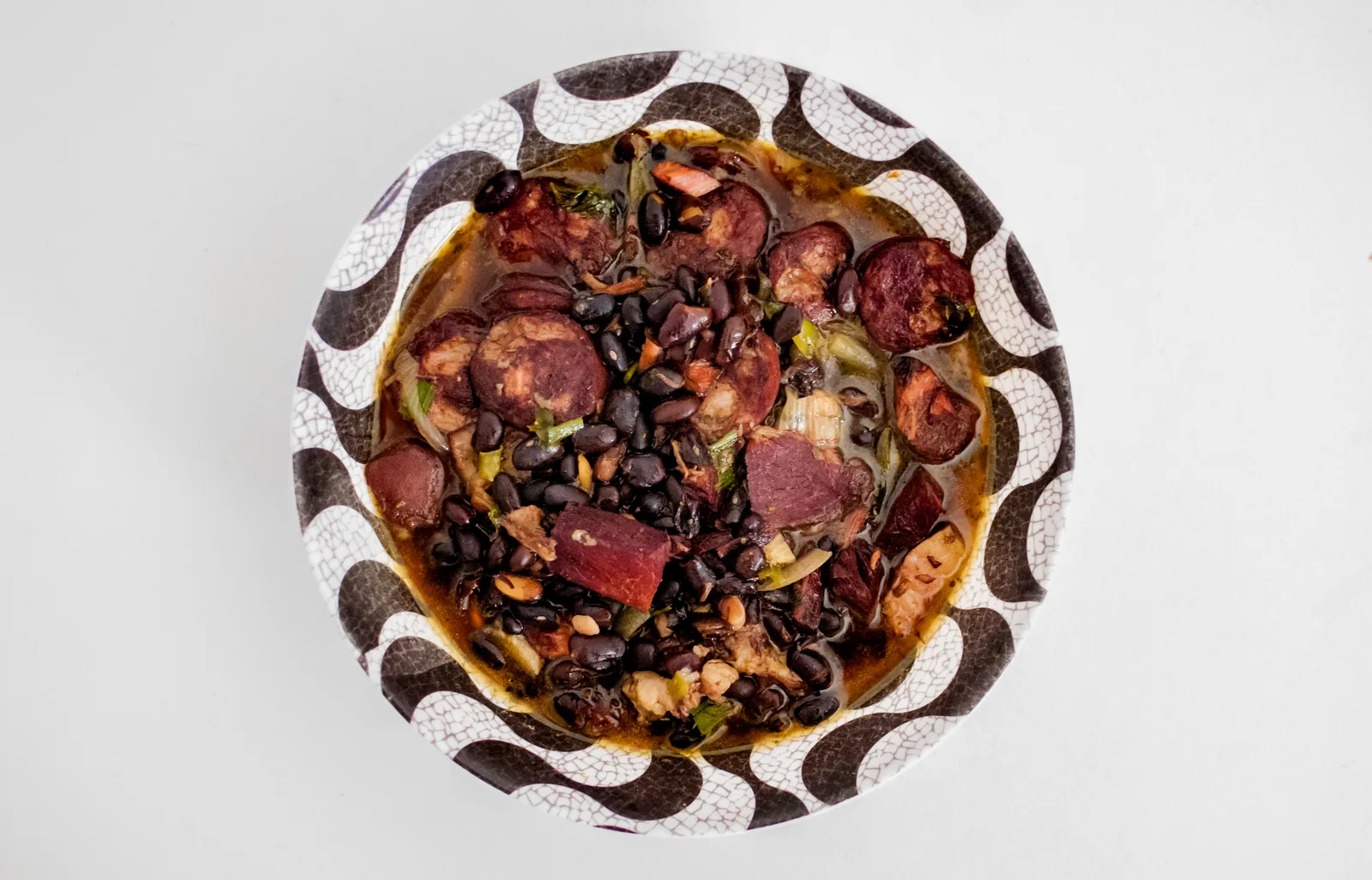
A bowl of Brazilian feijoada — black beans with rounds of sausage and pieces of pork Brazil flag Brazil 3h 30m
Dinner •Brazilian National Dish

Brazilian Feijoada

This Brazilian feijoada recipe is the real Saturday lunch: black beans simmered for hours with pork shoulder, smoky linguiça, bacon and beef until the broth turns thick and dark, then served with white rice, garlicky collard greens, orange slices and farofa. It is a slow, generous pot built for sharing. One serving is about 450 g.

Rich & Hearty

Brazil's national dish — black beans slow-cooked with pork, sausage and beef, served with rice, greens and orange.

Pairs Well With
Serve with white rice, sautéed collard greens, orange slices and farofa.

The Dinner Gazette

Never wonder what’s for dinner again

One email a week with easy dinner ideas from around the world — ingredients, steps and nutrition, tested in our kitchen first.

Delivered every Thursday morning. Unsubscribe anytime.