
Curated recipes from 193 countries  •  New seasonal Mediterranean issue out now

Overview

Tamales de Elote

Sweet Corn Tamales, Tamal de Elote, Salvadoran Corn Tamales

This tamales de elote recipe makes the Salvadoran sweet corn tamale: tender fresh corn ground to a coarse, milky batter with butter, sugar and a little masa, spooned into softened corn husks and steamed until soft, sweet and spoon-tender. They are nothing like a savoury tamale — there is no meat, no chilli, just the taste of fresh corn. One serving is about 200 g, two tamales.

Tamales de elote are the sweet corn tamales of El Salvador and Central America, made when the young corn — elote tierno — is in season. Unlike savoury tamales, which are built on dried masa and filled with meat, these are made from fresh corn ground with butter and sugar, so they come out soft, sweet and almost cake-like. They are festival food, cooked in big batches for holidays and family gatherings, and eaten warm with coffee or atol de elote. The same sweet corn tamale is made across Central America and Mexico, which is why Honduras does not have a separate version of the dish.

Pairs well with: Hot coffee, atol de elote and crumbled queso fresco.

Provenance

El Salvador flag El Salvador

Salvadoran Heritage

Latin America & Caribbean

Time Dedication

2h

45m prep • 75m cook

Batch Yield

6 Servings

394 kcal per serving

1 serving ≈ 200 g

Technical Skill

Intermediate

Medium (Blending & Steaming)

Meal Timing & Digestive Fit

Breakfast

Not Advised

Lunch

Inappropriate

Dinner

Inappropriate

Snack & Tea

Ideal Light Bite

Occasions: Festival snack, holiday treat, afternoon coffee, family celebration Cost: Low — about $1–2 per serving at home
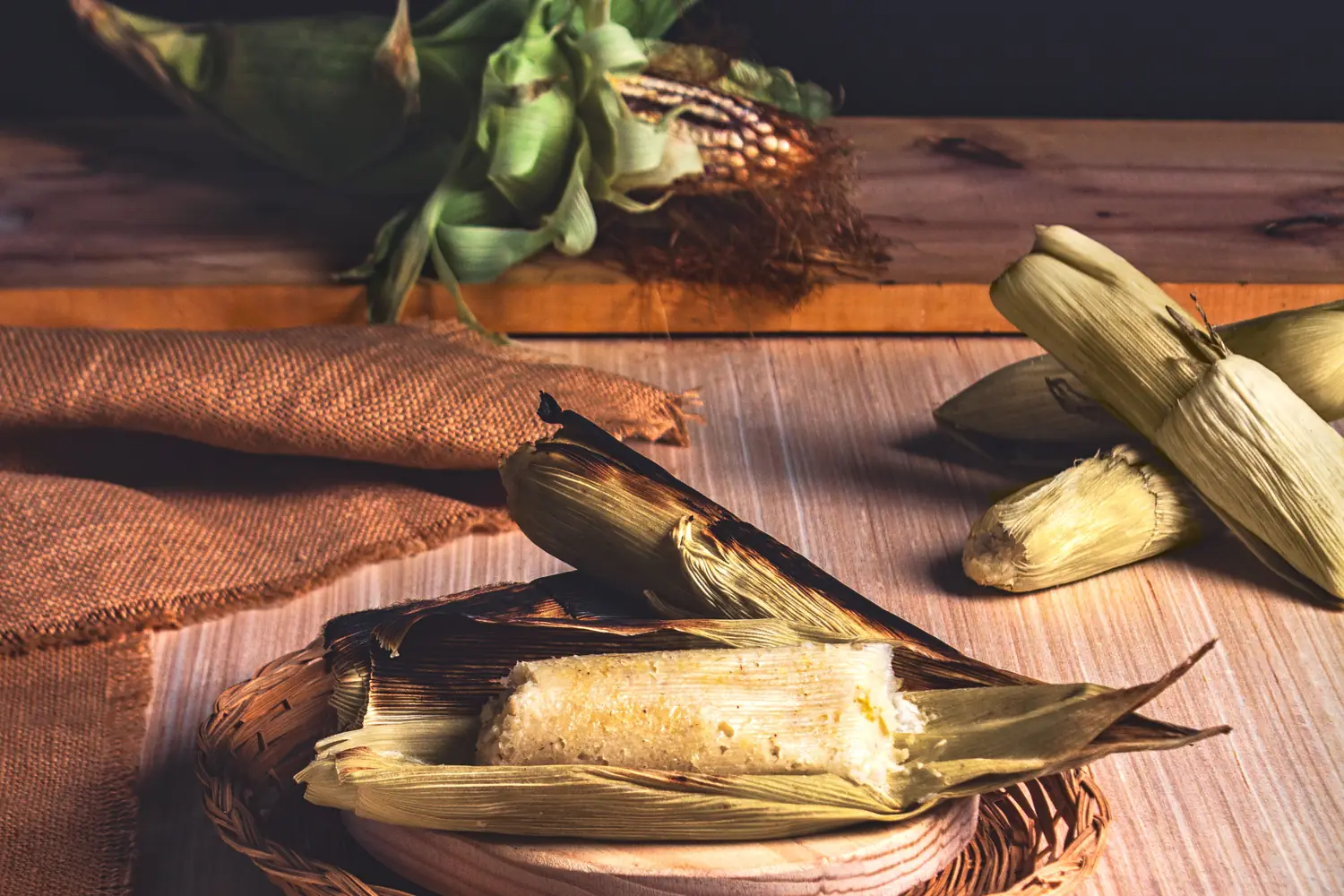
A sweet corn tamale unwrapped from its corn husk on a woven tray, with fresh corn cobs and husks beside it

Salvadoran Heritage

Photo: Contrastmatters, CC BY-SA 4.0, via Wikimedia Commons

The Heritage Formulary

Measured Ingredients

Estimated cost: Low — about $1–2 per serving at home (USD)

A good tamal de elote is judged by its texture: soft and moist, sweet but not cloying, and pulling cleanly from the husk.

Execution Methodology & Culinary Technique

Step-by-Step Cooking Guide

Active 2h
P

Prep Stage: Soak the Husks & Cut the Corn

45 Mins • Soaking & Cutting

Put the dried husks in a large bowl, cover with warm water and soak for at least 30 minutes until soft and pliable, then drain and pat dry. Meanwhile, stand each ear of corn upright in a large bowl and slice the kernels off the cob with a sharp knife, getting close to the cob to catch the milky liquid — that corn milk is what keeps the tamales moist. Beat the softened butter with the sugar until light and fluffy.

Maestro Tip: Use the tenderest, youngest corn you can find — old, starchy corn makes dry, heavy tamales.

  1. 1

    Soak the Husks & Cut the Corn

    15 Mins Room temperature, about 20°C (68°F)

    Soak the husks in warm water for 30 minutes until soft and pliable, then drain and pat dry. Cut the kernels off the cobs, keeping all the milky liquid that comes with them.

    Keep the corn milk — it is the moisture and sweetness of the whole dish.

    Done when: Soft, pliable husks and a bowl of milky kernels.

  2. 2

    Blend the Batter

    10 Mins Room temperature, about 20°C (68°F)

    Blend the corn kernels in batches until mostly smooth but still slightly chunky. Beat the softened butter with the sugar until light and fluffy, then fold in the blended corn, masa harina, baking powder, salt and cinnamon. Add the milk a spoonful at a time only if the batter is too stiff — it should hold its shape on a spoon.

    Do not over-blend the corn to a smooth puree — a little texture makes a tender tamale.

    Done when: A thick batter that holds its shape on a spoon.

  3. 3

    Fill & Fold the Tamales

    20 Mins Room temperature, about 20°C (68°F)

    Lay a husk flat with the wide end towards you. Spoon about 3 tablespoons of batter into the centre, fold one long side over, then the other, and fold the narrow end up. Tie with a thin strip of husk if you like, but a snug fold is enough.

    Do not overfill — the batter expands as it steams, and an overfilled tamale bursts.

    Done when: Neat, snug parcels with the batter fully enclosed.

  4. 4

    Steam Until Set

    70 Mins Steaming, about 100°C (212°F)

    Stand the tamales upright, open end up, in a steamer basket over boiling water. Cover tightly and steam over medium heat for 60–70 minutes, checking the water level every 20 minutes and topping up with boiling water so the pot never runs dry.

    Keep the lid on — lifting it lets the steam out and the tamales take longer to set.

    Done when: The tamale pulls cleanly away from the husk when it is done.

  5. 5

    Rest & Serve Warm

    5 Mins Serving temperature, about 70°C (158°F)

    Rest the tamales for 5 minutes, then serve warm in their husks, opened at the table. Eat with a spoon, with coffee or atol de elote.

    Resting lets the tamale firm up just enough to hold its shape.

    Done when: Warm, sweet tamales that hold their shape when unwrapped.

Finishing Touches & Plating

Serve the tamales de elote warm in their husks, with hot coffee or atol de elote and a little crumbled queso fresco on the side.

Nutritional Physiology & Benefits

Nutrition

Energy

394

kcal / serving

Protein

7g

Complete AA

Carbs

58g

Complex

Fats

18g

Healthy

Per serving (6 servings · 1 serving ≈ 200 g)
Energy394 kcal
Protein7 g
Carbohydrates58 g
Fat18 g
Fibre4.0 g
Sugar25.8 g
Sodium411 mg
Per 100g
Energy197 kcal
Protein3.3 g
Carbohydrates28.9 g
Fat9.1 g
Fibre2 g
Sugar12.9 g
Sodium206 mg

Nutrition values are estimated — calculated from USDA FoodData Central values for the listed ingredients.

Vitamins & minerals: Fresh corn supplies vitamin C, folate and vitamin B1; milk and butter add calcium and vitamin A.

Fresh Corn Goodness

Fresh sweet corn brings fibre, vitamin C and folate, with no artificial flavouring.

Naturally Meat-Free

A vegetarian festival food — corn, butter, milk and sugar, with no meat at all.

Gentle Energy

One serving carries about 57.7 g of carbohydrate, which makes two tamales a satisfying afternoon snack.

Food Pairings

What to Eat With

To optimize nutrient absorption and elevate the sensory depth, pair with these authentic accompaniments:

Drinks

Hot Coffee

Black coffee is the classic partner — its bitterness balances the sweet, buttery corn.

Atol de Elote

A warm corn drink doubles down on the corn flavour and turns the snack into a small feast.

Sides

Queso Fresco

Crumbled salty cheese against the sweet tamale is the traditional Salvadoran contrast.

More Pairings

Fresh Fruit

Mango or papaya adds a bright, juicy note after the rich, buttery tamale.

Complete menu

Serve two tamales with hot coffee and fresh mango, then a glass of atol de elote.

Digestive Guardrails

What NOT to Combine

To prevent digestive distress, sluggishness, or palate clash, avoid pairing the dish with these elements:

Do Not Let the Steamer Run Dry

If the pot boils dry, the tamales scorch and the husks burn — check the water every 20 minutes and top up with boiling water. This is general food information, not medical advice.

Do Not Use Canned Corn

Canned corn is too wet and too flat-tasting for this dish — the batter turns soggy and the tamales will not set properly. Use fresh corn, or thawed frozen corn as a second choice. This is general food information, not medical advice.

General information only, not medical advice — consult a doctor for personal dietary decisions.

Who Should Eat It

Who Should Eat

  • General adultsA sweet, gentle snack — two tamales with coffee is a proper afternoon break.
  • ChildrenChildren usually love the sweet corn taste; serve one tamale and skip the extra sugar on top.
  • ElderlySuitable in a modest portion — the tamale is soft and easy to eat.
  • Pregnant womenGenerally suitable; the corn and milk add gentle energy — keep to one or two tamales.
  • Breastfeeding womenGenerally suitable; the corn and butter add energy — keep the portion modest.
  • AthletesA useful snack before training: about 57.7 g of carbohydrate per serving for quick energy.
  • Weight gainA good choice — sweet and energy-dense, and easy to eat two at a time.
  • Weight lossNot the lightest choice — keep to one tamale with coffee instead of a sweet drink.

Health Conditions — Adjust or Avoid

Conditions

  • DiabetesAbout 57.7 g of carbohydrate and 25.8 g of sugar per serving — high for a snack. Keep to one tamale. Ask your clinician about portion size.
  • High blood pressureAbout 411 mg of sodium per serving — moderate. The butter is the richer part. Ask your clinician about portion size.
  • Kidney diseaseLow in protein and moderate in potassium from the corn — keep the portion modest. Ask your clinician about portion size.
  • GoutCorn is low in purines, so a modest portion is usually fine. Ask your clinician about portion size.
  • Stomach issuesSteamed corn is usually gentle, but the butter and sugar can be heavy for a sensitive stomach. Keep the portion small. Ask your clinician about portion size.
  • Cardiovascular diseaseButter makes this rich in saturated fat — keep it to an occasional treat. Ask your clinician about portion size.
  • Fatty liverSweet and energy-dense; keep the portion to one tamale. Ask your clinician about portion size.
  • Food allergiesContains milk (butter, milk) and corn. No gluten, egg, nuts or seafood in the recipe. Ask your clinician about portion size.
  • Special therapeutic dietsIf you follow a prescribed low-sugar plan, the sugar and corn make this hard to fit — check with your clinician.

If you have a medical condition, consult your doctor before changing your diet.

Storage & Use

Storage & Use

How to store
Store the tamales in their husks in a covered container.
In the fridge
4 days in the fridge at 4°C (40°F) or below.
In the freezer
Up to 2 months, wrapped tightly in their husks.
How to reheat
Reheat by steaming for 10–12 minutes until steaming hot, to 74°C (165°F); or microwave for 1–2 minutes in a damp cloth.
Freezing recommended
Yes — tamales freeze very well in their husks.
Signs it has spoiled
Sour smell, slimy husk, or mould spots on the corn.

More recipes to explore

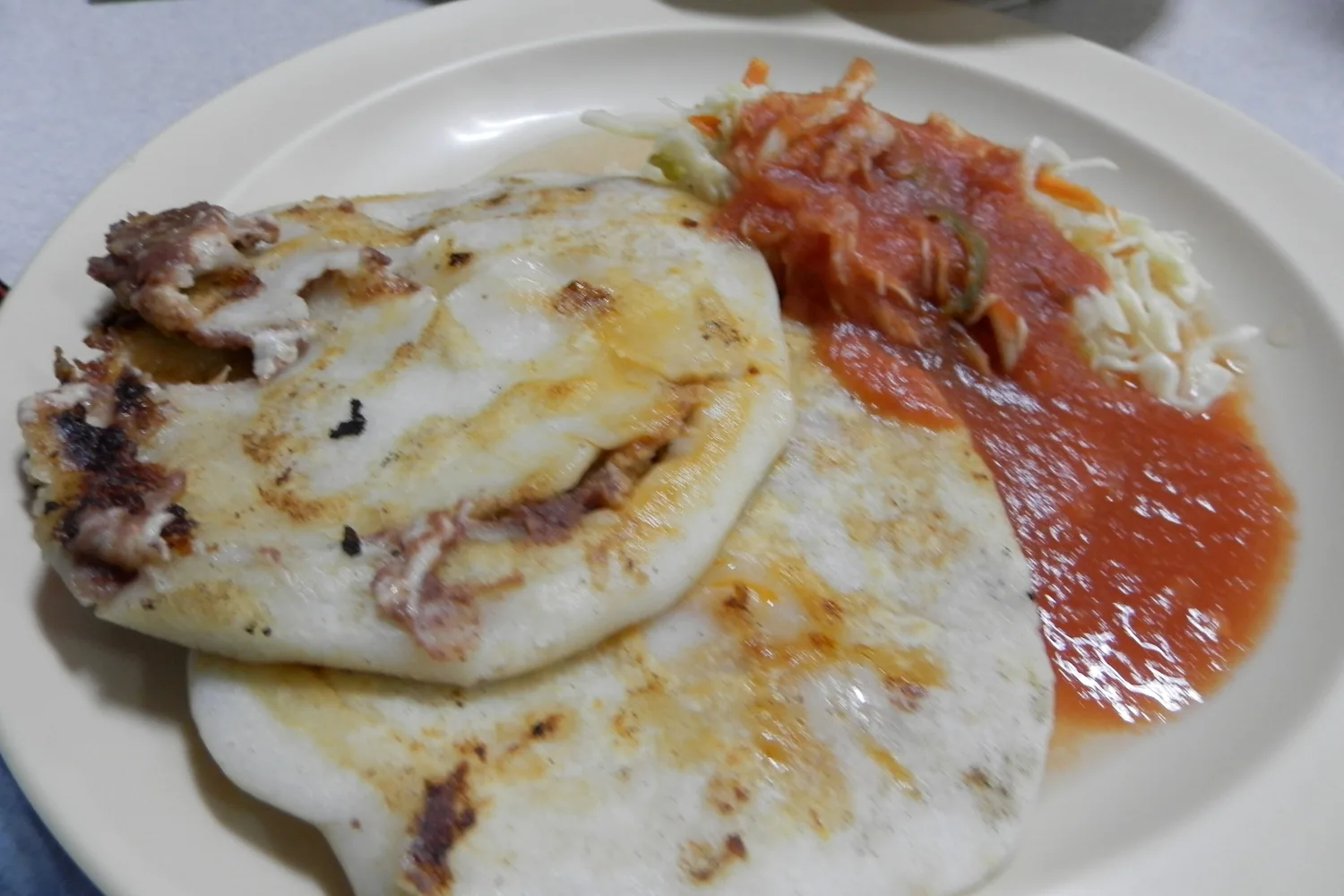
Two golden griddled pupusas on a plate with curtido cabbage slaw and red tomato salsa, melted cheese showing at the edge El Salvador flag El Salvador 1h 15m
Lunch •San Salvador Heritage

Pupusas

This pupusas recipe makes the stuffed corn cakes El Salvador is known for: soft nixtamalized masa wrapped around a molten filling of seasoned pork, refried beans and quesillo-style cheese, then griddled until the outside is golden and speckled and the cheese runs when you bite in. They are eaten hot, straight off the comal, with a pile of tangy curtido cabbage slaw and tomato salsa on the side. One serving is two pupusas, about 330 g.

Comfort & Warmth

El Salvador's national dish: thick corn masa cakes stuffed with pork, beans and melted cheese, griddled on a hot comal and served with curtido.

Pairs Well With
Curtido (pickled cabbage slaw) and salsa roja, with a cold horchata or tamarind drink on the side.
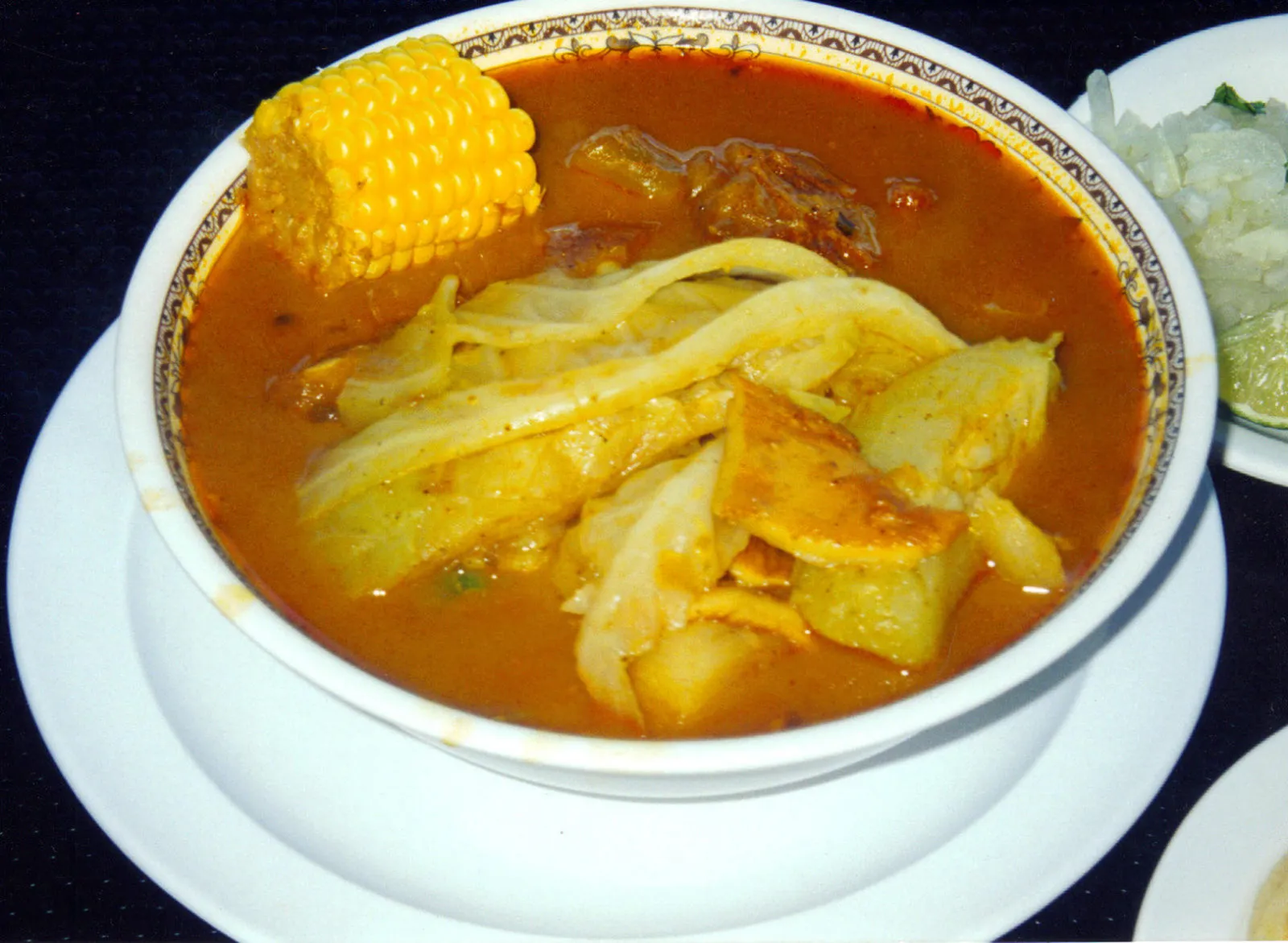
A bowl of sopa de pata, orange-red achiote broth with corn on the cob, cabbage and chunks of yuca El Salvador flag El Salvador 4h 5m
Lunch •Salvadoran Heritage

Sopa de Pata

This sopa de pata recipe is El Salvador's most famous soup: cow's feet and tripe simmered for hours until the broth turns rich and gelatinous, then loaded with yuca, chayote, corn, green plantain and cabbage, and coloured a warm orange-red with achiote. It is a weekend lunch in Salvadoran homes, served steaming hot with lime wedges and warm tortillas for squeezing and scooping. One serving is about 640 g, soup and vegetables together.

Comfort & Warmth

El Salvador's slow-simmered cow's foot and tripe soup, thick with yuca, corn and chayote in a red achiote broth.

Pairs Well With
Warm corn tortillas and lime wedges, with a little chopped onion and cilantro on the side.
Soups & Broths
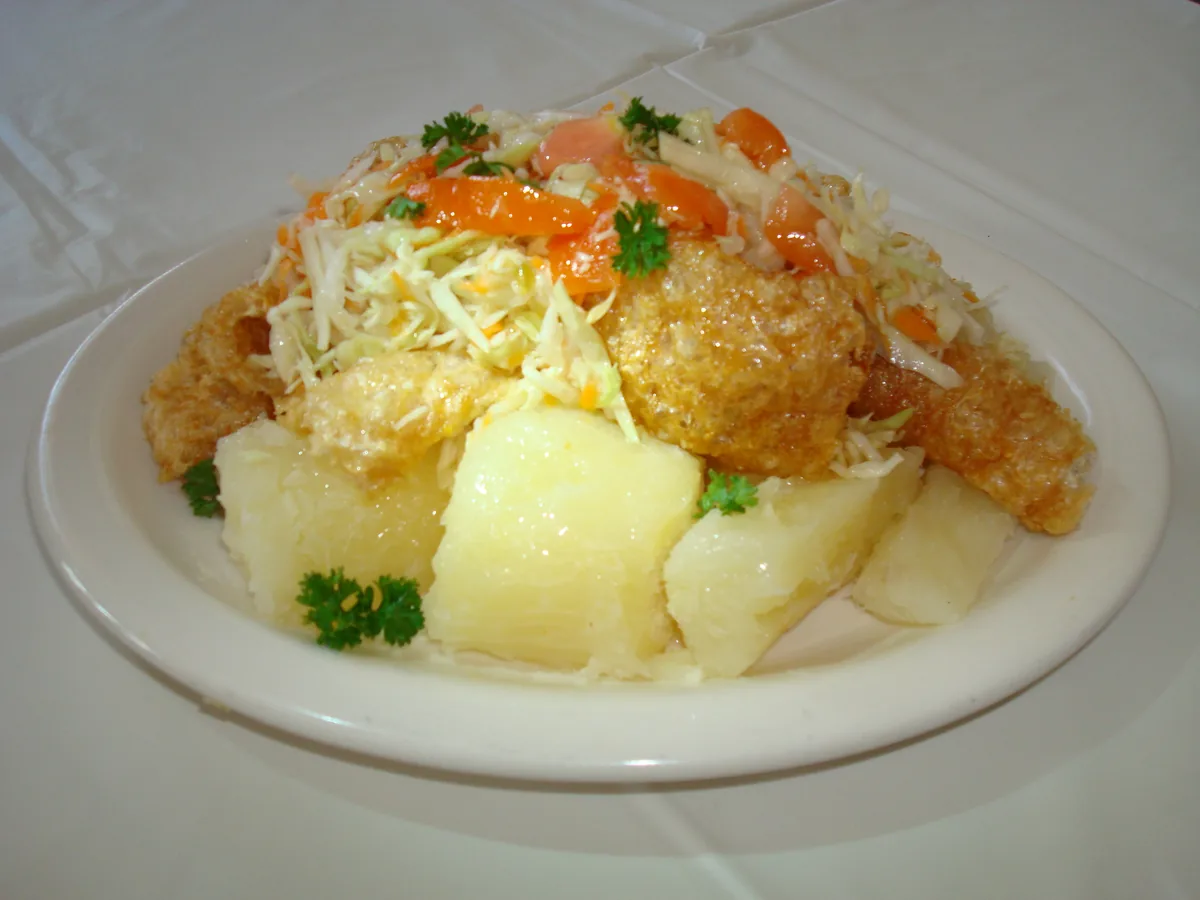
A plate of yuca con chicharron — boiled cassava chunks topped with golden crispy pork cracklings and shredded cabbage, carrot and tomato slaw El Salvador flag El Salvador 1h 35m
Lunch •Salvadoran Street-Food Classic

Yuca con Chicharrón

This yuca con chicharron recipe is the Salvadoran street-food plate: cassava boiled until soft and fluffy, topped with pork belly simmered until tender and then fried crisp in its own fat, with tangy curtido cabbage slaw and fresh tomato salsa on the side. It is the same trio of yuca, chicharron and cabbage slaw that is sold from market stalls across El Salvador. One serving is about 590 g.

Comfort & Energy

Tender boiled cassava with crisp fried pork, tangy curtido and fresh tomato salsa — a filling Salvadoran street-food plate.

Pairs Well With
Warm corn tortillas, fried plantains and a cold horchata or limeade
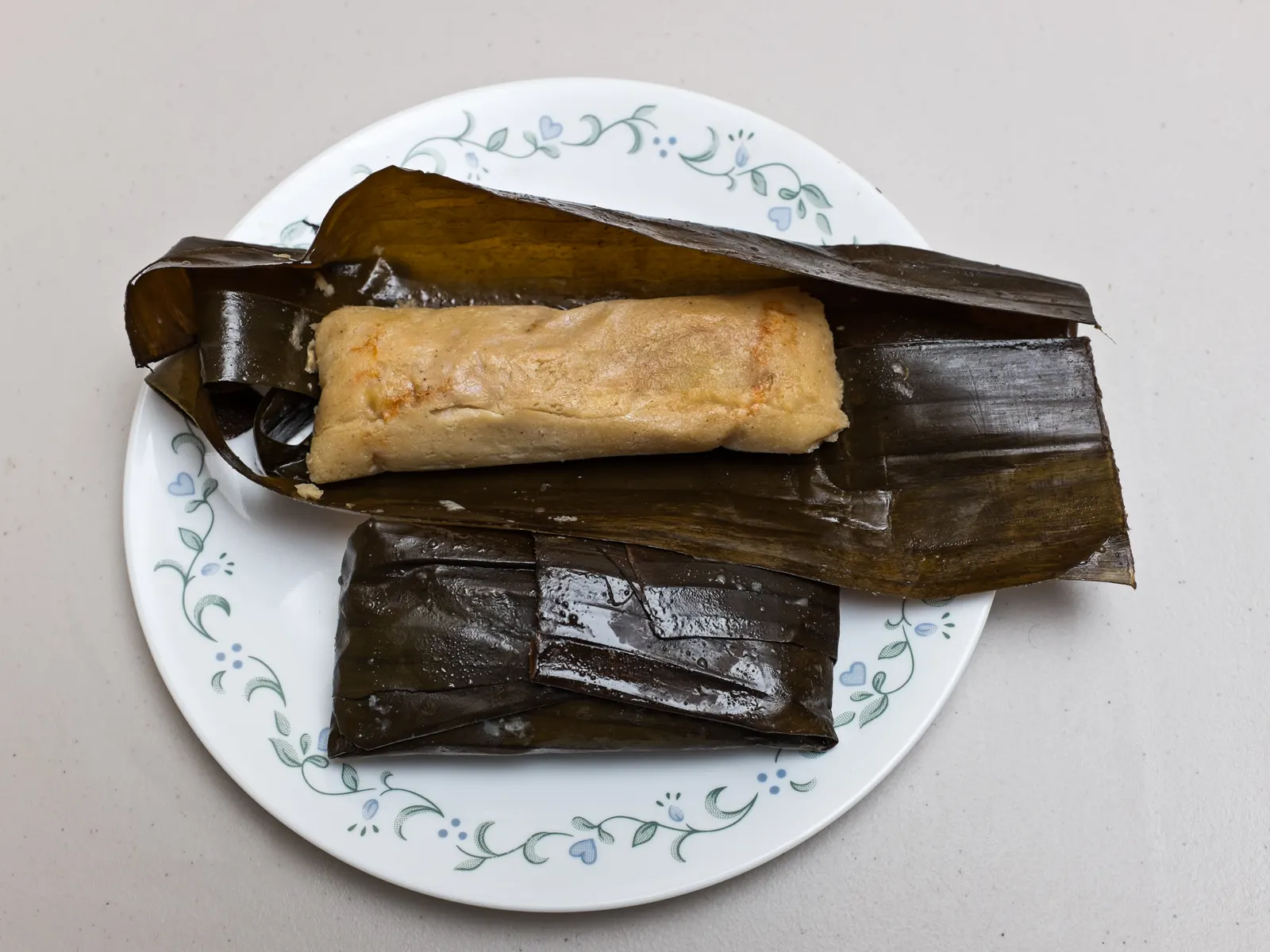
Two Salvadoran chicken tamales on a plate, one unwrapped from its banana leaf showing soft golden masa El Salvador flag El Salvador 3h 30m
Dinner •Salvadoran Heritage

Tamales de Gallina

This tamales de gallina recipe makes soft Salvadoran chicken tamales the traditional way: a pre-cooked corn masa spread on banana leaves, wrapped around shredded chicken, potato, chickpeas, olives and capers, then steamed until tender. One serving (two tamales) is about 458 g. The banana leaf gives the masa a gentle, grassy scent that corn husks never quite match.

Hearty & Festive

A filling, protein-rich festive main built around corn masa, chicken and vegetables.

Pairs Well With
Serve warm with curtido, the Salvadoran pickled cabbage slaw, and a mild tomato salsa.

The Dinner Gazette

Never wonder what’s for dinner again

One email a week with easy dinner ideas from around the world — ingredients, steps and nutrition, tested in our kitchen first.

Delivered every Thursday morning. Unsubscribe anytime.