Curated recipes from 193 countries  •  New seasonal Mediterranean issue out now

Overview

Tonga Manabita

Tonga de Gallina, Manabí Packed Lunch, Pandao

This tonga manabita recipe packs a whole Manabí lunch into a bijao leaf: yellow rice stained with achiote, a rich seco de gallina chicken stew, a slice of fried ripe plantain and a thick peanut sauce, all folded up and tied so it stays hot. It was invented as a field worker's lunch in Chone, carried into the hills and opened at midday, and it is still the packed meal of Manabí. One serving is about 410 g.

The tonga was born in Chone, in the rural heart of Manabí, as a packed lunch for the men who went into the hills to work — during the rubber boom, women wrapped the day's food in a bijao leaf so it stayed hot and could be carried. Inside went what the farm gave: rice, a piece of chicken stew, fried ripe plantain and the thick peanut sauce that is Manabí's signature. The tradition is so central to the province that Manabí was named a World Region of Gastronomy for 2026 by the International Institute of Gastronomy, Culture, Arts and Tourism.

Pairs well with: Yellow rice and chicken stew in a bijao leaf, with fried plantain and peanut sauce

Provenance

Ecuador flag Ecuador

Manabí Heritage

Latin America & Caribbean

Time Dedication

1h 30m

25m prep • 65m cook

Batch Yield

4 Servings

773 kcal per serving

1 serving ≈ 410 g

Technical Skill

Intermediate

Medium (Leaf-Wrapped)

Meal Timing & Digestive Fit

Breakfast

Not Advised

Lunch

Prime Metabolic Fit

Dinner

Ideal Hearty Main

Snack & Tea

Inappropriate

High Protein Occasions: Packed lunches, family lunch, Manabí festivals, field workdays Cost: Low — about $3–4 per serving at home
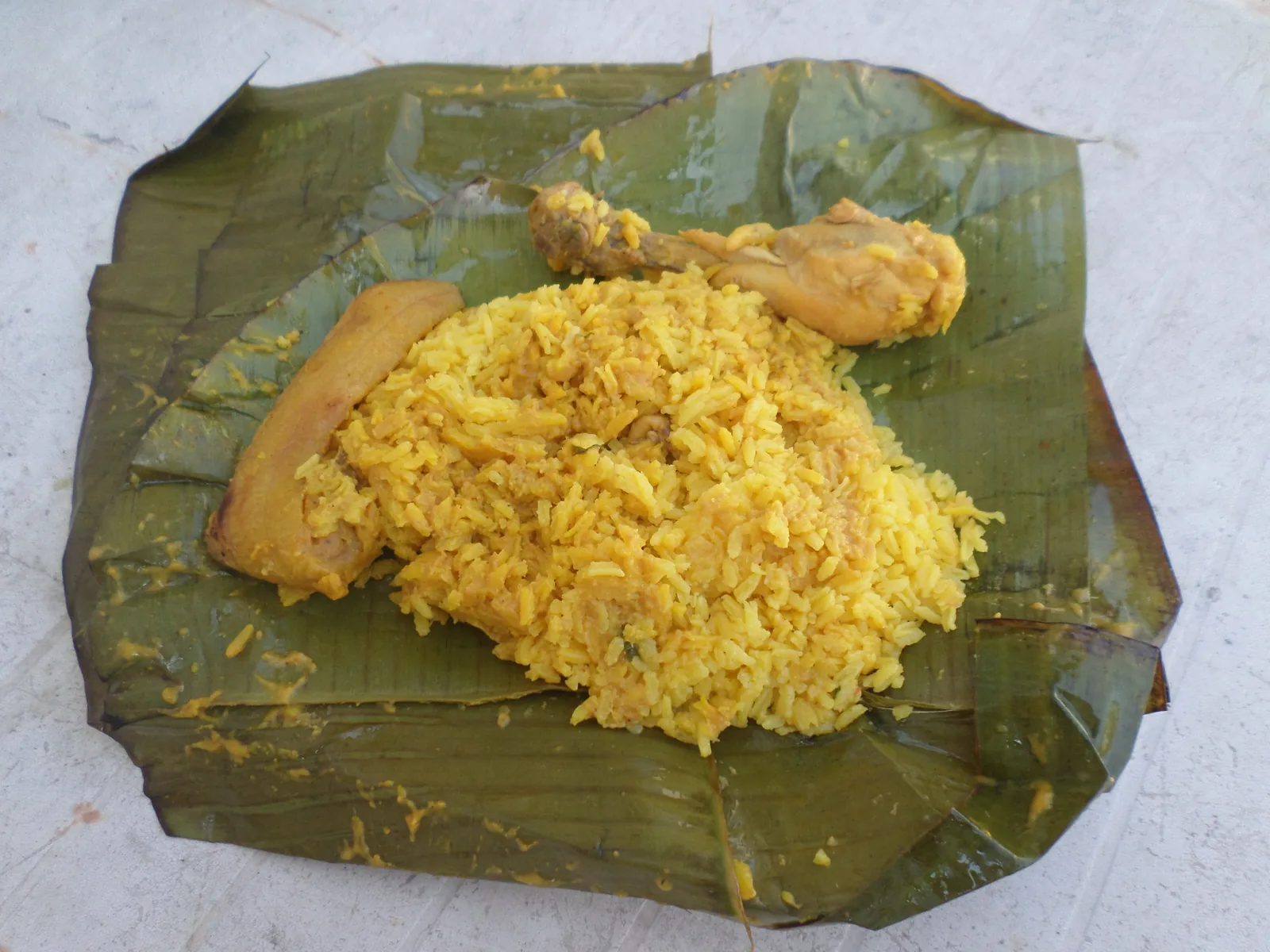
Tonga Manabita: yellow rice with a chicken drumstick and a fried ripe plantain, served on an opened green bijao leaf

Manabí Heritage

Photo: Aaronmormot, CC BY-SA 4.0, via Wikimedia Commons

The Heritage Formulary

Measured Ingredients

Estimated cost: Low — about $3–4 per serving at home (USD)

A good tonga is generous and moist, the rice stained yellow, the chicken tender, and the leaf opened at the table.

Execution Methodology & Culinary Technique

Step-by-Step Cooking Guide

Active 1h 30m
P

Prep Stage: Stew Started, Leaves Softened

25 Mins • Chopping & Softening Leaves

A tonga is four dishes cooked separately and packed together: the chicken stew simmers while the rice cooks, the plantain fries, and the peanut sauce thickens. Chop everything and soften the leaves before you start cooking, because the stew needs a full 40 minutes and the packing happens while everything is still hot — the leaf is the plate, the parcel and the lunchbox all at once.

Maestro Tip: Pass the leaves briefly over a flame or a hot dry pan until they turn glossy — stiff leaves crack when you fold them.

  1. 1

    Stew the Chicken

    40 Mins Gentle simmer, about 95°C (200°F)

    Heat 15 ml of the oil in a large pot over medium heat. Fry the onion for 3 minutes until soft, then add the red pepper and garlic and fry for 2 minutes more. Stir in the achiote and cumin, add the chicken pieces and brown them for 5 minutes, then add the tomato and the chicken stock. Cover and simmer gently for 30 minutes, until the chicken is tender and the juices run clear, and the meat reaches 74°C (165°F) inside.

    Keep the simmer gentle — a hard boil toughens the chicken and clouds the sauce.

    Done when: The chicken is tender and pulls easily from the bone; the sauce is rich and reddish-gold.

  2. 2

    Cook the Yellow Rice

    20 Mins Low heat, about 95°C (200°F)

    While the chicken simmers, put the rinsed rice in a pot with 450 ml of water, half the salt and a pinch of achiote. Bring to the boil, stir once, cover tightly, lower the heat and cook for 15 minutes without lifting the lid. Take it off the heat and rest it for 5 minutes, then fluff with a fork.

    Do not lift the lid while the rice cooks — the steam is what finishes it.

    Done when: The rice is fluffy, separate and golden yellow, with no water left in the pot.

  3. 3

    Make the Peanut Sauce

    10 Mins Low heat, about 90°C (195°F)

    Put the peanut butter in a small pan with 100 ml of water, the lime juice and a pinch of salt. Warm over low heat, stirring all the time, until the sauce is thick, smooth and glossy — about 8 minutes. It should coat a spoon and hold a ribbon when you lift the spoon out.

    Stir without stopping or the peanut sauce catches on the bottom of the pan.

    Done when: The sauce is thick, glossy and smooth, like a soft paste rather than a soup.

  4. 4

    Fry the Plantain

    8 Mins Medium heat, about 170°C (340°F)

    Heat the rest of the oil in a frying pan over medium heat. Fry the plantain slices for about 3 minutes on each side, until soft, deep golden and caramelised at the edges. Lift them out and drain briefly on a plate lined with a paper napkin.

    Ripe plantain burns fast — watch the colour and take it out as soon as it is golden.

    Done when: The plantain is soft all the way through, golden with darker caramel edges.

  5. 5

    Pack the Parcels

    10 Mins No heat

    Lay a softened bijao leaf flat, shiny side down. Spoon a quarter of the yellow rice into the centre, ladle over a chicken piece with plenty of its stew juices, lay a piece of fried plantain alongside, and spoon over the peanut sauce. Scatter with cilantro, fold the leaf over the filling and tie it with a strip of leaf so the parcel holds.

    Pack while everything is hot — the leaf keeps the meal warm for hours.

    Done when: Each parcel is a neat, tied bundle about the size of a small book, with no filling spilling out.

  6. 6

    Rest and Open at the Table

    5 Mins No heat

    Let the parcels rest for 5 minutes so the rice soaks up the stew juices. Serve each tonga still wrapped, and open it at the table — the leaf is the plate. Eat the rice, chicken, plantain and peanut sauce together, in the same mouthful, with a glass of fresh fruit juice.

    Open the leaf away from you so the steam escapes without burning your hands.

    Done when: The leaf opens to a steaming mound of yellow rice, tender chicken, golden plantain and peanut sauce.

Finishing Touches & Plating

Serve the tonga still wrapped in its leaf, opened at the table. The pleasure of the dish is in the opening — the steam, the smell of the leaf, and the yellow rice, chicken, plantain and peanut sauce all together on the green leaf.

Nutritional Physiology & Benefits

Nutrition

Energy

773

kcal / serving

Protein

37g

Complete AA

Carbs

97g

Complex

Fats

27g

Healthy

Per serving (4 servings · 1 serving ≈ 410 g)
Energy773 kcal
Protein37 g
Carbohydrates97 g
Fat27 g
Fibre6.0 g
Sugar16.5 g
Sodium806 mg
Per 100g
Energy188 kcal
Protein9 g
Carbohydrates23.8 g
Fat6.7 g
Fibre1.5 g
Sugar4 g
Sodium197 mg

Nutrition values are estimated — calculated from USDA FoodData Central values for the listed ingredients.

Vitamins & minerals: Chicken provides protein and B vitamins; rice and plantain add energy, potassium and vitamin C; peanuts add healthy fats and vitamin E. All nutrition values are estimated.

A Full, Energy-Rich Lunch

With about 97.5 g of carbohydrate and 36.9 g of protein per serving, the rice, chicken and plantain make a lunch that keeps a working person full all afternoon.

Plantain, Rice and Peanuts

Plantain brings potassium and vitamin C, rice brings steady energy, and peanuts bring healthy fats and vitamin E — most of the parcel comes from plants.

Protein and B Vitamins From Chicken

The chicken stew adds lean protein and B vitamins, and the bone-in pieces keep the meat juicy without extra fat.

Food Pairings

What to Eat With

To optimize nutrient absorption and elevate the sensory depth, pair with these authentic accompaniments:

Drinks

Fresh Fruit Juice

A glass of fresh passion fruit or orange juice is the Manabí drink with a tonga — its acidity cuts the rich peanut sauce and the fried plantain.

Vegetables

Avocado Slices

Slices of ripe avocado add a cool, creamy contrast to the hot, savoury parcel, and they are a natural partner for rice and plantain.

Pickled Red Onion

A spoonful of pickled red onion adds sharpness and crunch that lifts the rich stew and the sweet plantain.

Sauces

Extra Peanut Sauce on the Side

A small bowl of extra peanut sauce lets each person add more of the dish's signature flavour — the sauce is what makes a tonga taste like Manabí.

Complete menu

Open the leaf at the table and eat the rice, chicken, plantain and peanut sauce together, with a glass of fresh fruit juice and a slice of lime.

Digestive Guardrails

What NOT to Combine

To prevent digestive distress, sluggishness, or palate clash, avoid pairing the dish with these elements:

Undercooked Chicken

Chicken must reach 74°C (165°F) all the way through, including near the bone; undercooked chicken can carry harmful bacteria. Simmer it until the meat pulls easily from the bone — do not serve it pink. This is general information, not medical advice.

Peanuts and Allergies

The peanut sauce is a defining part of this dish, so anyone with a peanut allergy must not eat it — there is no safe swap that keeps it a tonga. This is general information, not medical advice.

General information only, not medical advice — consult a doctor for personal dietary decisions.

Who Should Eat It

Who Should Eat

  • General adultsA complete, generous lunch — one parcel is a full meal on its own.
  • ChildrenMild, sweet from the plantain and easy to eat; open the parcel and serve the rice and chicken in small spoonfuls.
  • ElderlySoft rice, tender chicken and soft plantain are gentle on the teeth; serve the chicken off the bone.
  • Pregnant womenThe chicken must be cooked through to 74°C (165°F); the leaf wrap keeps the meal hot and safe. Ask your clinician about any concerns.
  • Breastfeeding womenAn energy-rich lunch that fits well; enjoy it with fresh fruit juice.
  • AthletesAbout 36.9 g of protein and 97.5 g of carbohydrate per serving — a strong recovery lunch after training.
  • Weight gainEnergy-dense from the rice, plantain and peanut sauce, and easy to eat — add extra peanut sauce and plantain.
  • Weight lossVery filling for its calories thanks to the protein and fiber, but the rice and peanut sauce add up — keep to one parcel and go easy on the extra sauce.

Health Conditions — Adjust or Avoid

Conditions

  • DiabetesRice and plantain are the main carbohydrates — keep the rice portion modest and balance it with the chicken and salad. Ask your clinician about portion sizes.
  • High blood pressureThe dish uses only 6 g of salt for the whole batch; the peanut sauce is the saltiest part, so do not add extra salt. Ask your clinician about sodium limits.
  • Kidney diseaseA rich, protein-heavy meal with a large rice portion — smaller servings and lighter sides are kinder to the kidneys. Ask your clinician about protein and sodium limits.
  • GoutChicken is moderate in purines; keep the serving modest and skip second helpings of chicken. Ask your clinician about purine limits.
  • Stomach issuesThe parcel is gentle and easy to digest, but the fried plantain and peanut sauce can feel heavy — eat a small portion and avoid eating it late at night. Ask your clinician if symptoms persist.
  • Cardiovascular diseaseThe peanut sauce and fried plantain add fat; fry the plantain in as little oil as possible and keep the sauce portion modest. Ask your clinician about fat intake.
  • Fatty liverThe peanut sauce and frying oil add fat; use less oil for the plantain and keep portions moderate. Ask your clinician about fat intake.
  • Food allergiesContains peanuts and chicken. Anyone with a peanut allergy must not eat it. This is general information, not medical advice.
  • Special therapeutic dietsA home-cooked leaf-wrapped meal whose salt and portions can be adjusted — discuss the right portion with your clinician or dietitian.

If you have a medical condition, consult your doctor before changing your diet.

Storage & Use

Storage & Use

How to store
Keep the parcels wrapped in their leaves, then wrap in cling film; store the peanut sauce separately if any is left.
In the fridge
2 days at 4°C (40°F) or below.
In the freezer
1 month, wrapped well; the rice and chicken freeze better than the plantain.
How to reheat
Warm the wrapped parcel in a steamer or a 180°C (350°F) oven until the centre reaches 74°C (165°F), about 20 minutes.
Freezing recommended
Yes, wrapped well.
Signs it has spoiled
Sour smell, slimy surface, or mould on the leaf or the rice.

More recipes to explore

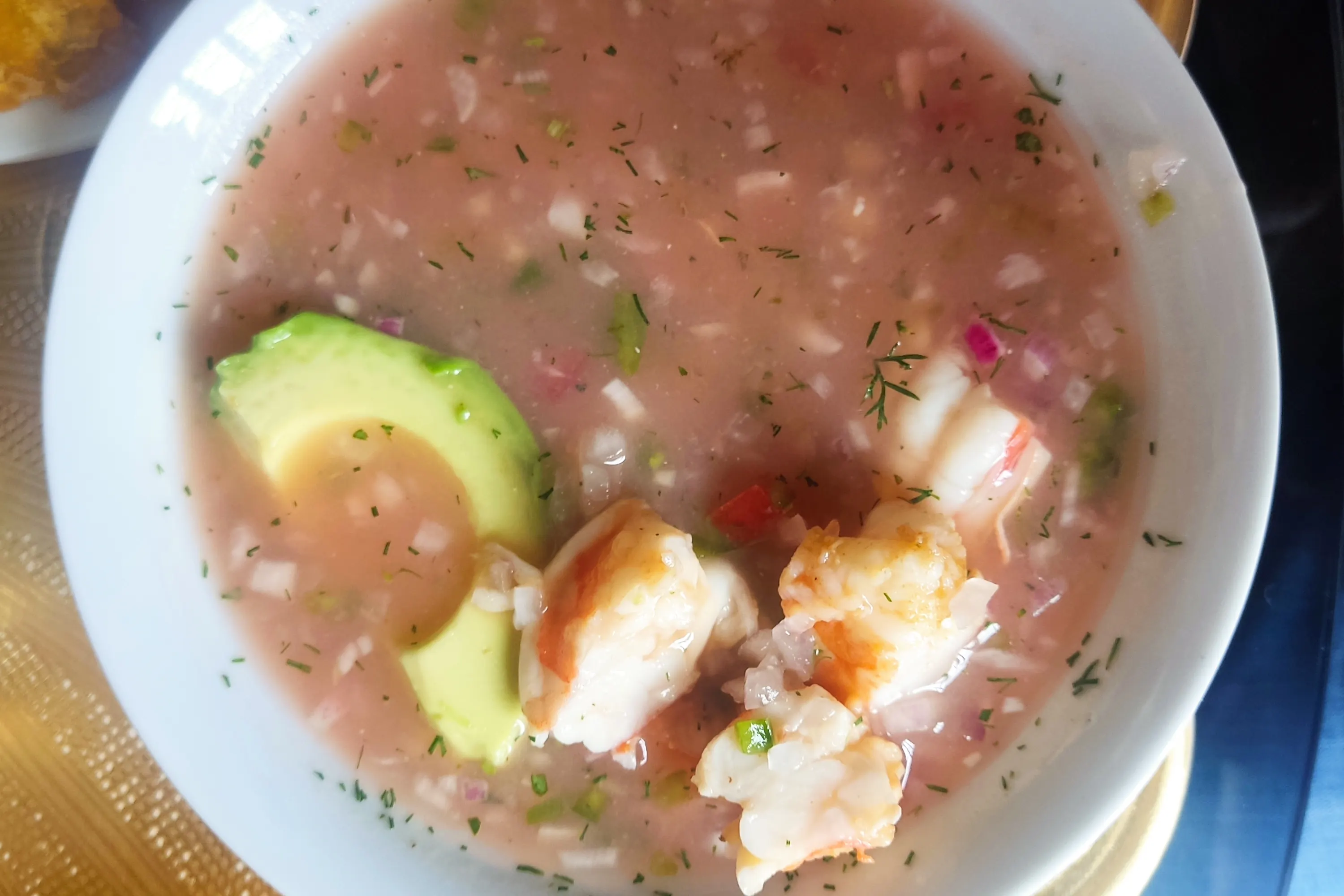
A white bowl of Ecuadorian shrimp ceviche in pink tomato-citrus sauce with cooked shrimp, red onion, cilantro and an avocado slice Ecuador flag Ecuador 30m
Lunch •Coastal Ecuador

Ecuadorian Ceviche

Ecuadorian ceviche is a bowl of poached shrimp in a pink-orange sauce of tomato, lime and orange juice, with red onion and cilantro. Unlike the Peruvian version, where raw fish is cured in lime juice, the shrimp here is cooked first, so the dish is saucy, cold and gentle rather than sharp. One serving is about 341 g.

Light & Fresh

Poached shrimp in a bright lime, orange and tomato sauce, served chilled with crunchy sides.

Pairs Well With
Chifles, popcorn and avocado slices
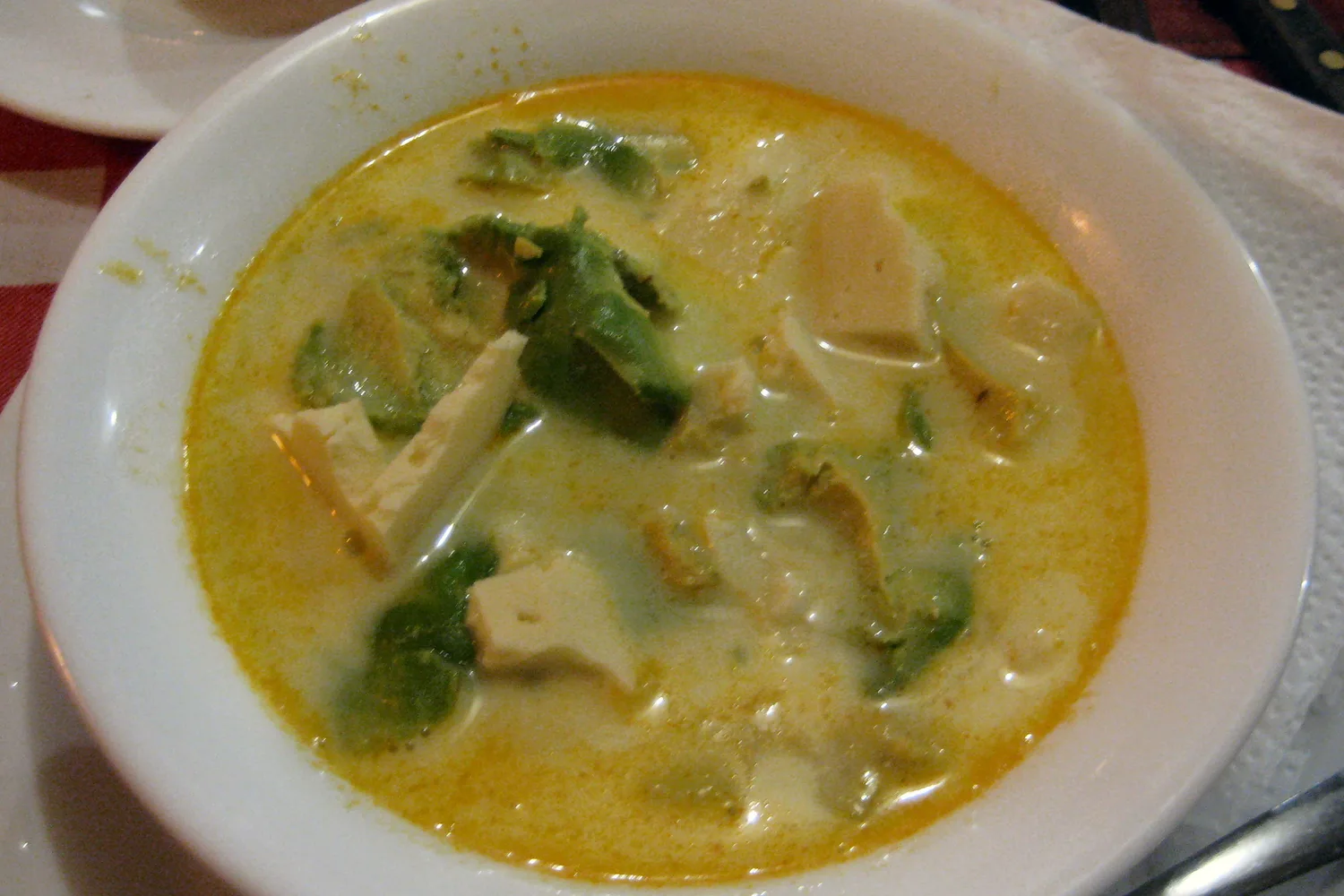
A bowl of golden locro de papa, Ecuadorian potato and cheese soup, topped with avocado chunks and cubes of white cheese Ecuador flag Ecuador 55m
Dinner •Andean Heritage

Locro de Papa

Locro de papa is Ecuador's golden potato and cheese soup, thickened by the potatoes themselves and finished with creamy avocado and crumbled queso fresco. One serving is about 675 g. It is a one-pot, meat-free dinner that tastes like the cool Andean evenings it comes from.

Comfort & Warmth

A thick, golden potato and cheese soup from the Ecuadorian highlands, finished with fresh avocado.

Pairs Well With
Crusty bread and a simple lettuce and tomato salad, with hot panela water or herbal tea to drink.
Soups & Broths
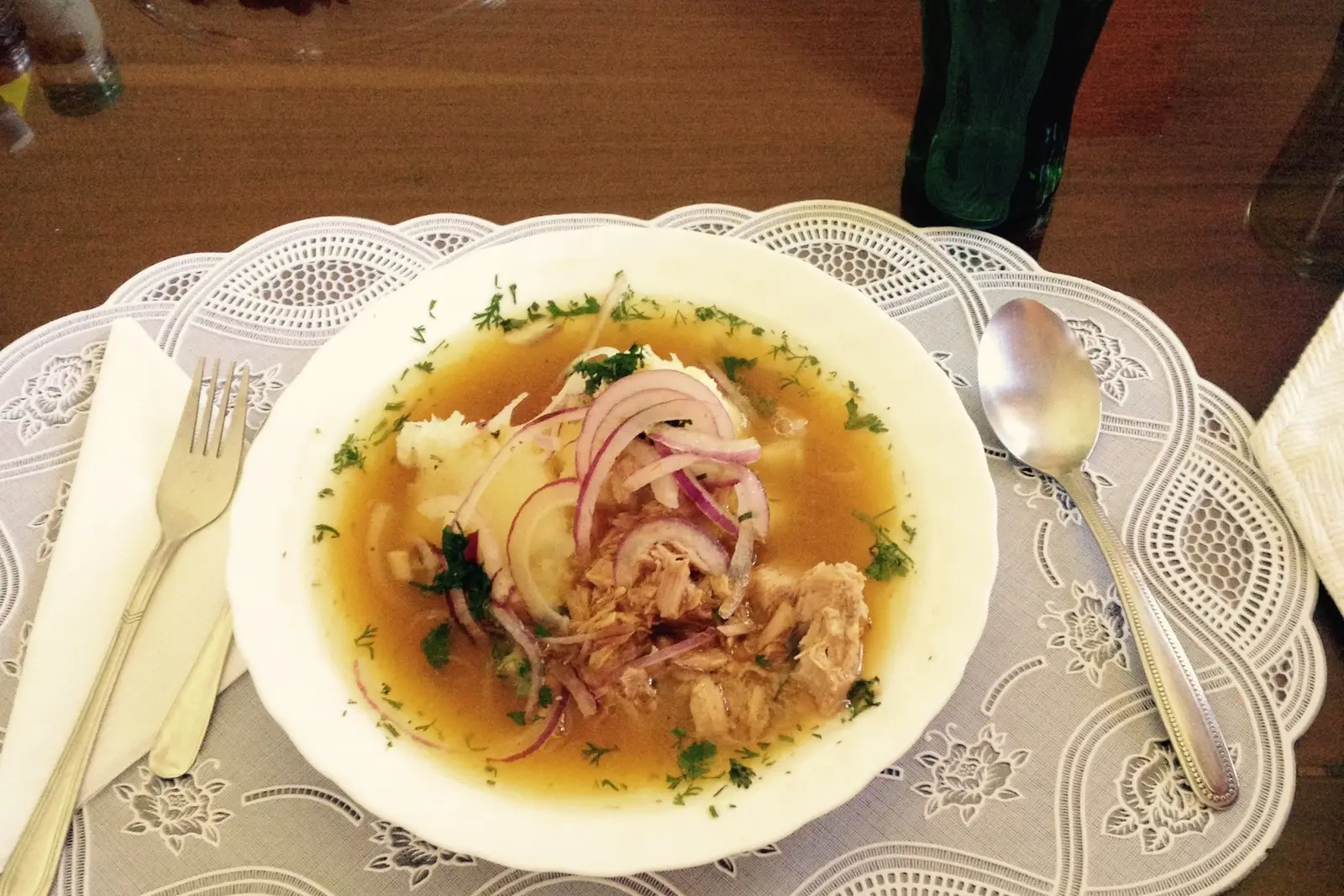
A bowl of encebollado with flaked tuna, pickled red onion rings, yuca and golden broth, sprinkled with cilantro Ecuador flag Ecuador 1h 20m
Lunch •Guayaquil Heritage

Encebollado

This encebollado recipe is Ecuador's beloved coastal soup: fresh albacore tuna simmered in a tomato, onion and cumin broth with tender chunks of yuca, then ladled into bowls under a bright mound of lime-pickled red onion and tomato. The broth is light and savoury, the onion topping is sharp and fresh, and the chifles and tostado on the side add the crunch every Ecuadorian expects. One serving is about 600 g, soup and toppings together.

Comfort & Warmth

Fresh tuna and yuca simmered in a tomato-cumin broth, finished with lime-pickled red onion and crunchy plantain chips.

Pairs Well With
Chifles (plantain chips) and tostado (toasted corn) for crunch, avocado slices, and lime wedges to squeeze over the bowl.
Soups & Broths
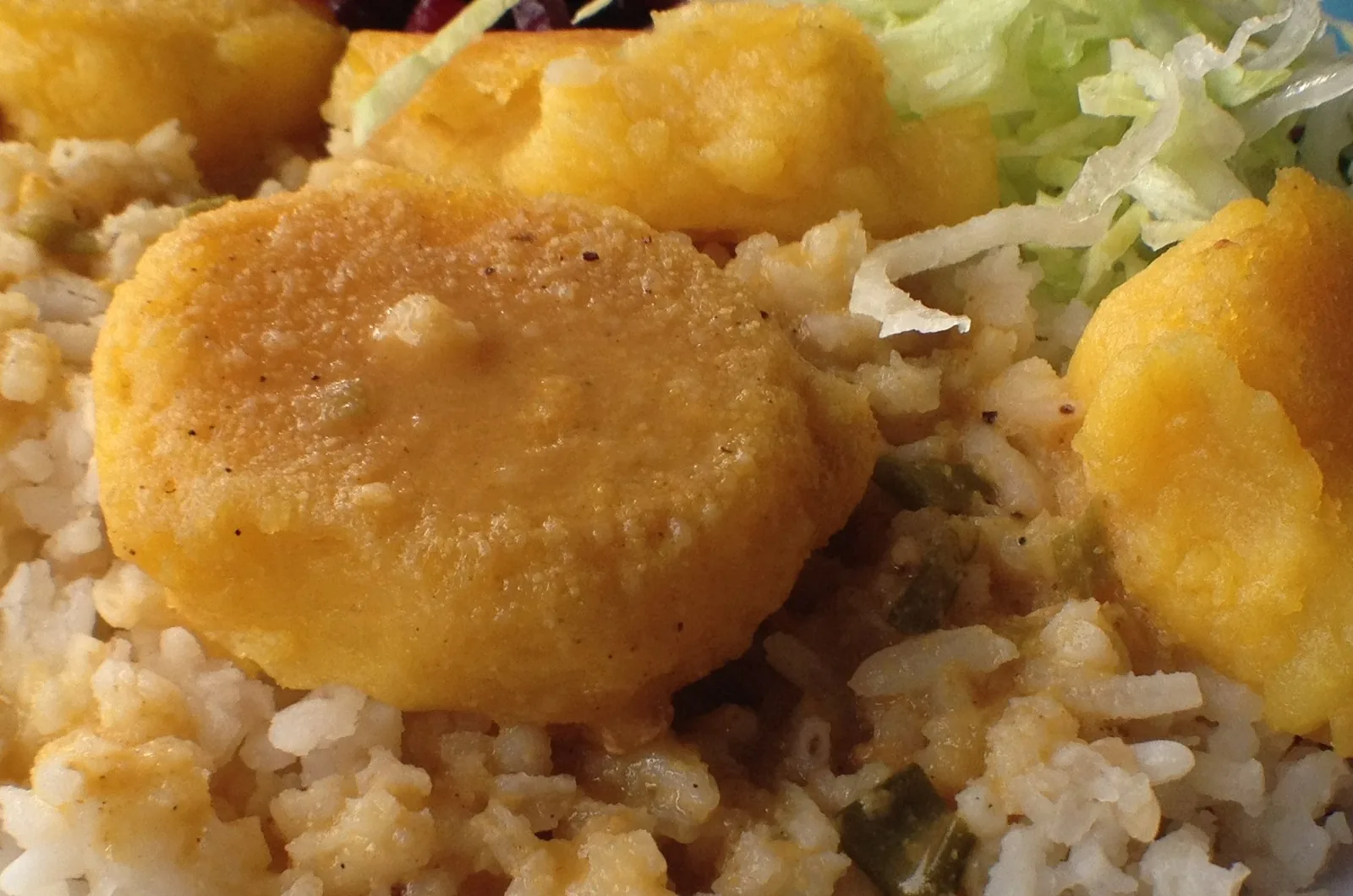
Golden llapingacho potato patties on rice with peanut sauce and shredded lettuce Ecuador flag Ecuador 1h
Lunch •Andean Heritage

Llapingacho

Llapingacho is Ecuador's most loved potato dish: mashed potato mixed with onion and annatto oil, wrapped around fresh cheese, flattened into cakes and fried until the outside is crisp and golden and the centre turns gooey. It is served with a fried egg, peanut sauce and a little salad. One serving is about 464 g.

Golden & Comforting

Mashed potato mixed with onion and annatto oil, stuffed with fresh cheese and fried golden.

Pairs Well With
Fried egg, peanut sauce and a fresh salad

The Dinner Gazette

Never wonder what’s for dinner again

One email a week with easy dinner ideas from around the world — ingredients, steps and nutrition, tested in our kitchen first.

Delivered every Thursday morning. Unsubscribe anytime.