
Curated recipes from 193 countries  •  New seasonal Mediterranean issue out now

Overview

Torta di Pane

Ticino Bread Cake, Bread Pudding Cake

Torta di pane is Ticino's bread cake: stale white bread soaked in warm milk until soft, then mixed with cocoa, raisins, pine nuts, crushed amaretti and lemon zest and baked into a dense, dark, moist cake. This torta di pane recipe makes one 24 cm cake, cut into 8 slices. One serving (one slice) is about 126 g.

Torta di pane is the best-known dessert of Ticino, Switzerland's Italian-speaking canton, and a classic peasant food: it was baked in the village communal ovens and served at local festivals as a way to use up leftover white bread. Every family has its own version, but the bones never change — stale bread, milk, cocoa, raisins, pine nuts and amaretti — and across the border in Lombardy the same cake is called torta paesana. It is still a regular dessert in Ticino's grotti, the rustic taverns of the canton.

Pairs well with: Strong black coffee or black tea.

Provenance

Switzerland flag Switzerland

Ticino Tradition

Nordic & European

Time Dedication

2h 25m

80m prep • 65m cook

Batch Yield

8 Servings

348 kcal per serving

1 serving ≈ 126 g

Technical Skill

Intermediate

Medium (Soak & Bake)

Meal Timing & Digestive Fit

Breakfast

Not Advised

Lunch

Inappropriate

Dinner

Inappropriate

Snack & Tea

Ideal Light Bite

Occasions: Afternoon tea, coffee breaks, village festivals, using up leftover bread Cost: Low — about $1–2 per serving at home
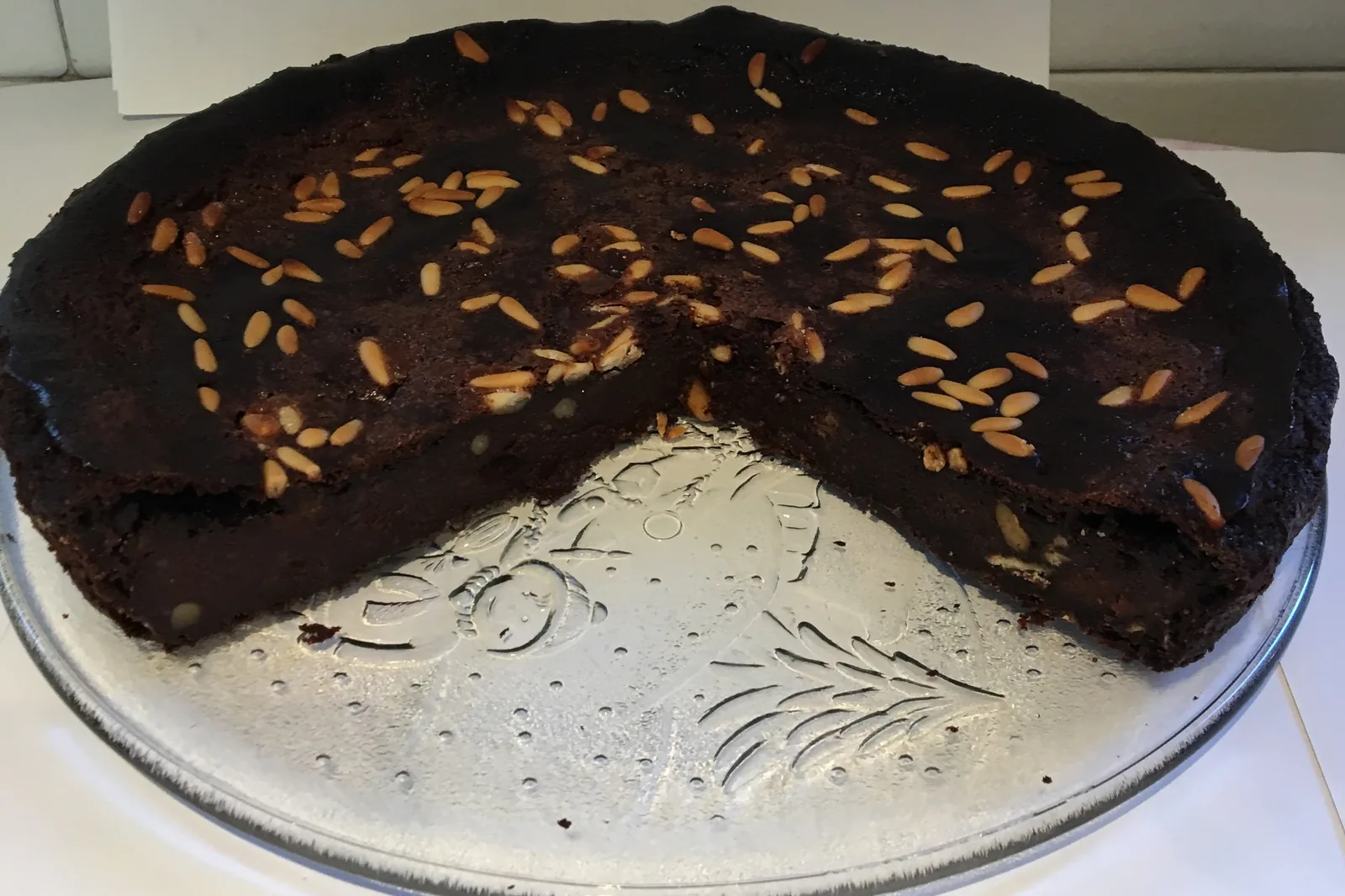
A dark chocolate torta di pane studded with pine nuts on a glass plate, with one slice cut out

Ticino Tradition

Photo: M&A, CC BY-SA 4.0, via Wikimedia Commons

The Heritage Formulary

Measured Ingredients

Estimated cost: Low — about $1–2 per serving at home (USD)

Stale bread soaked in warm milk with cocoa, sugar, raisins, pine nuts and crushed amaretti, baked in a buttered tin until firm and dark.

Execution Methodology & Culinary Technique

Step-by-Step Cooking Guide

Active 2h 25m
P

Prep Stage: Soak the Bread

80 Mins • Soak & Prep

Cut the stale bread into 2 cm cubes and put them in a large bowl. Warm the milk with the vanilla and salt until hot but not boiling, then pour it over the bread, cover and leave to soak for 60 minutes. While it soaks, soak the raisins in warm water, grease a 24 cm round tin with butter and heat the oven to 180°C (350°F).

Maestro Tip: Warm milk soaks in far faster than cold — with cold milk the bread needs several hours, so always warm it first.

  1. 1

    Soak the Bread in Warm Milk

    60 Mins • Soak Warm milk, about 60°C (140°F)

    Cut the bread into 2 cm cubes and put them in a large bowl. Warm the milk with the vanilla and salt until hot but not boiling, pour it over the bread and press the cubes down so they are all wet. Cover and leave to soak for 60 minutes. Meanwhile, soak the raisins in a bowl of warm water for 20 minutes, then drain.

    Use bread that is at least a day old — fresh bread turns to glue, while stale bread holds its shape and drinks up the milk.

    Done when: The bread is soft all the way through and falls apart when pressed with a fork.

  2. 2

    Mix the Batter

    10 Mins • Mix Room temperature, about 20°C (68°F)

    Uncover the bread and mash it with a fork until it is a thick, even mush. Beat in the eggs and sugar, then stir in the sifted cocoa, cinnamon and lemon zest. Drain the raisins and fold them in with the 30 g pine nuts and the crushed amaretti, mixing until everything is evenly spread through the batter.

    Mash well but do not blend — a few small lumps of bread give the cake its rustic texture.

    Done when: The batter is thick, dark and even, with raisins and nuts in every spoonful.

  3. 3

    Fill the Tin and Bake

    65 Mins • Bake 180°C (350°F)

    Scrape the batter into the buttered 24 cm tin and smooth the top with the back of a spoon. Scatter the remaining 10 g pine nuts over the top and dot with the small knobs of butter. Bake in the centre of the oven for 60–65 minutes until the top is dark and firm and the centre barely wobbles when you shake the tin.

    If the top darkens too fast, lay a sheet of foil loosely over the tin for the last 15 minutes.

    Done when: The top is dark and firm, the edges have pulled slightly away from the tin, and a knife comes out with only a little damp crumb.

  4. 4

    Cool and Slice

    15 Mins • Cool Room temperature, about 20°C (68°F)

    Leave the cake in the tin for 15 minutes, then run a knife around the edge and turn it out onto a wire rack. Cool completely before slicing — a warm cake crumbles. Cut into 8 slices with a sharp knife, wiping the blade between cuts.

    Cutting while warm crumbles the cake — wait until it is fully cool for neat slices.

    Done when: The slices hold their shape, with a dense, moist, dark crumb studded with raisins.

Finishing Touches & Plating

Serve the torta di pane at room temperature, one slice per person, with strong black coffee — the crumb should be dense, dark and moist, studded with raisins and pine nuts, with a dusting of icing sugar if you like.

Nutritional Physiology & Benefits

Nutrition

Energy

348

kcal / serving

Protein

9g

Complete AA

Carbs

52g

Complex

Fats

13g

Healthy

Per serving (8 servings · 1 serving ≈ 126 g)
Energy348 kcal
Protein9 g
Carbohydrates52 g
Fat13 g
Fibre3.3 g
Sugar29.7 g
Sodium335 mg
Per 100g
Energy276 kcal
Protein7.4 g
Carbohydrates41.3 g
Fat10.2 g
Fibre2.6 g
Sugar23.6 g
Sodium266 mg

Nutrition values are estimated — calculated from USDA FoodData Central values for the listed ingredients.

Vitamins & minerals: Calcium and vitamin B12 (milk and egg), iron and potassium (raisins, cocoa), vitamin E and magnesium (pine nuts), small amounts of B vitamins (bread, egg).

Uses Up Leftover Bread

Stale bread, milk and eggs become a cake instead of going in the bin — an old, practical way to waste nothing.

Steady Energy

Bread, raisins and sugar give steady energy, which is why a small slice with coffee is a classic Ticino afternoon break.

Raisins and Pine Nuts Add Minerals

Raisins bring iron and potassium, and pine nuts bring vitamin E and magnesium, to a simple pantry cake.

Food Pairings

What to Eat With

To optimize nutrient absorption and elevate the sensory depth, pair with these authentic accompaniments:

Drinks

Strong Black Coffee

Bitter coffee is the classic partner — it cuts the richness of the cake and makes the cocoa taste deeper.

Black Tea

Plain black tea refreshes the palate between bites of the dense, sweet cake.

Sides

Fresh Grapes

A few fresh grapes add a sharp, juicy contrast to the dense crumb.

More Pairings

Vanilla Ice Cream

A warm slice with a scoop of vanilla ice cream turns the everyday cake into a simple dessert.

Complete menu

Serve one slice of torta di pane with strong black coffee after lunch, with a few fresh grapes on the side.

Digestive Guardrails

What NOT to Combine

To prevent digestive distress, sluggishness, or palate clash, avoid pairing the dish with these elements:

Baking Until Bone Dry

The cake is dense and moist, so a knife that comes out with a little damp crumb is normal — waiting for a bone-dry skewer means an overbaked, dry cake. Take it out when the top is firm and the centre barely wobbles. This is general information, not medical advice.

Very Sweet Drinks

The cake is already rich and sweet, so sweetened milky coffee or hot chocolate on the side can make the whole break overwhelmingly sweet. Choose black coffee or plain tea instead. This is general information, not medical advice.

General information only, not medical advice — consult a doctor for personal dietary decisions.

Who Should Eat It

Who Should Eat

  • General adultsA rich cake at 348 kcal a slice — one slice with black coffee is a treat, not an everyday snack.
  • ChildrenChildren love the sweet, chocolatey slices; one small slice is plenty, and it is soft and easy to chew.
  • ElderlySoft and easy to chew, but sweet and rich — a small slice with tea is a good afternoon treat.
  • Pregnant womenThe egg and milk provide protein and calcium during pregnancy, but the cake is high in sugar, so keep it to an occasional small slice and check with your clinician.
  • Breastfeeding womenA satisfying snack that provides energy; keep to one slice because of the sugar and saturated fat from the butter and pine nuts.
  • AthletesEnergy-dense, so a slice works as quick fuel after training, but it is low in protein for recovery — pair it with something protein-rich.
  • Weight gainEnergy-dense for its size, so it can help add calories between meals — one slice as a snack.
  • Weight lossRich in sugar and butter, so it is a treat rather than an everyday snack — a small slice, and skip the sweet drink with it.

Health Conditions — Adjust or Avoid

Conditions

  • DiabetesHigh in sugar and fast carbohydrate, so it raises blood sugar quickly — people with diabetes should eat a small piece only occasionally and check with their clinician.
  • High blood pressureThe salt is low, but the cake is rich in saturated fat, so keep the portion to one small slice if you watch your blood pressure; check with your clinician.
  • Kidney diseaseMilk, egg and raisins are high in potassium and phosphorus in larger amounts, so people with kidney disease should eat this rarely and in a small portion; ask your clinician.
  • GoutLow in purines, so gout is not a particular concern with this cake; the sugar and fat are the bigger issues.
  • Stomach issuesDense and rich, so it can feel heavy on a sensitive stomach — eat a small slice slowly and stop if it bothers you.
  • Cardiovascular diseaseButter and pine nuts are high in saturated fat, so this is an occasional treat rather than a regular snack for heart health; check with your clinician.
  • Fatty liverA rich, sugary cake is heavy on the liver in large amounts — keep it to one small slice occasionally; ask your clinician for guidance.
  • Food allergiesContains wheat (gluten), milk (butter), egg and tree nuts (pine nuts, amaretti made with almonds). There is no peanut or soy in this recipe. If you are allergic to wheat, milk, egg or tree nuts, do not eat this cake.
  • Special therapeutic dietsNot suitable for low-sugar, low-fat or low-cholesterol therapeutic diets; a version with less sugar is lighter but will not taste the same. Ask your clinician or dietitian before changing your diet.

If you have a medical condition, consult your doctor before changing your diet.

Storage & Use

Storage & Use

How to store
Cool completely, then store in an airtight tin or container at room temperature.
In the fridge
5 days in an airtight container; bring back to room temperature before eating, as cold torta di pane tastes hard.
In the freezer
2 months, wrapped tightly in cling film inside a freezer bag; thaw in the fridge overnight.
How to reheat
Warm a slice in a 160°C (325°F) oven for 5 minutes if you like it warm; reheat to at least 74°C (165°F) if it has been refrigerated.
Freezing recommended
Yes — it freezes well; slice before freezing so you can thaw one piece at a time.
Signs it has spoiled
Sour smell from the milk, or mould spots.

More recipes to explore

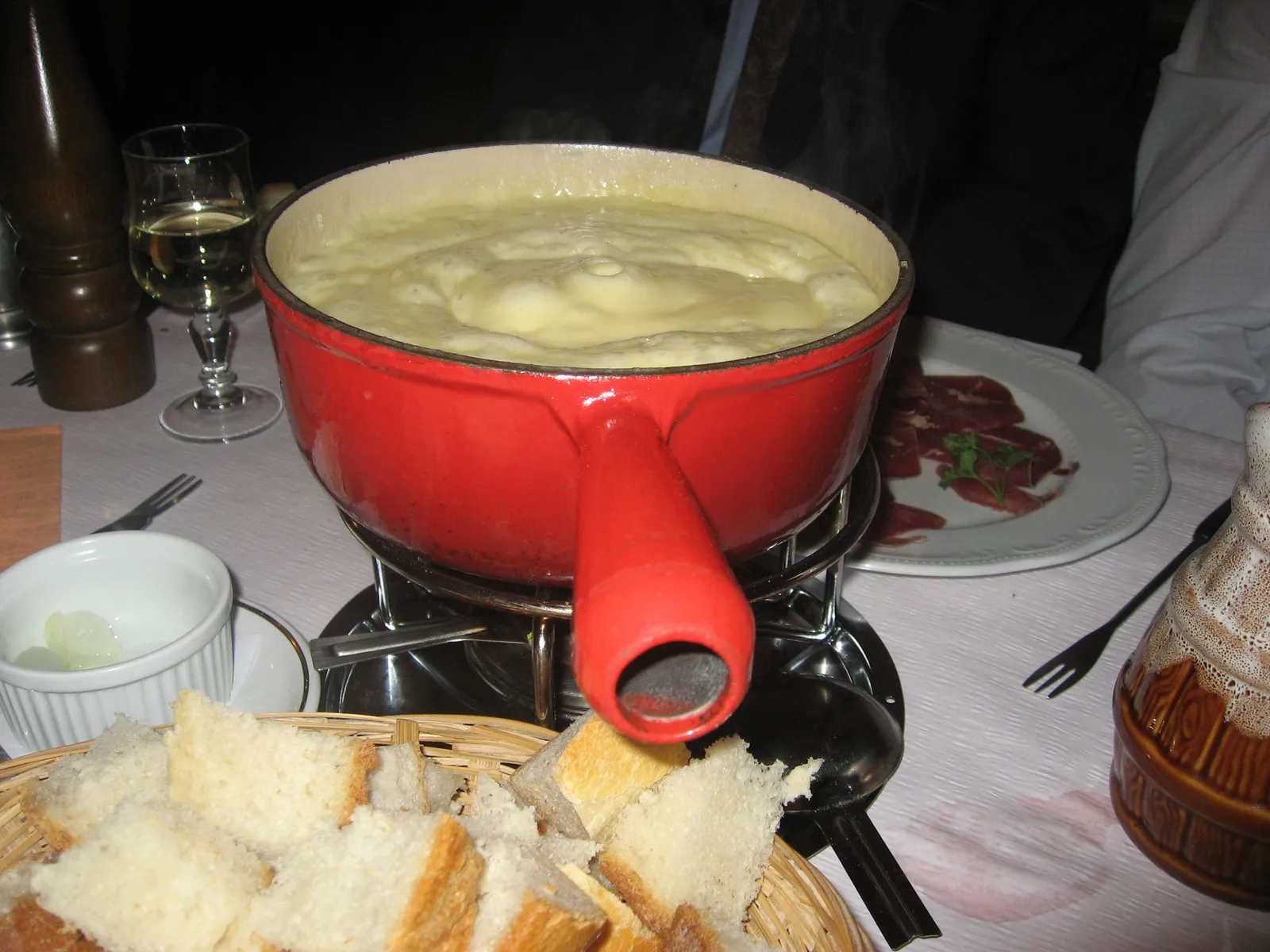
A red fondue pot of melted cheese with bread cubes and a glass of white wine Switzerland flag Switzerland 40m
Dinner •Swiss Alpine Classic

Swiss Cheese Fondue

Swiss cheese fondue is the Alps in a pot: Gruyere and Emmental melted slowly into dry white wine with garlic and a splash of kirsch, kept warm at the table while everyone dips cubes of bread into the bubbling cheese. One serving is about 310 g.

Comfort & Togetherness

Gruyere and Emmental melted in white wine, shared from one pot.

Pairs Well With
Cubes of crusty bread, boiled potatoes and cornichons on the side
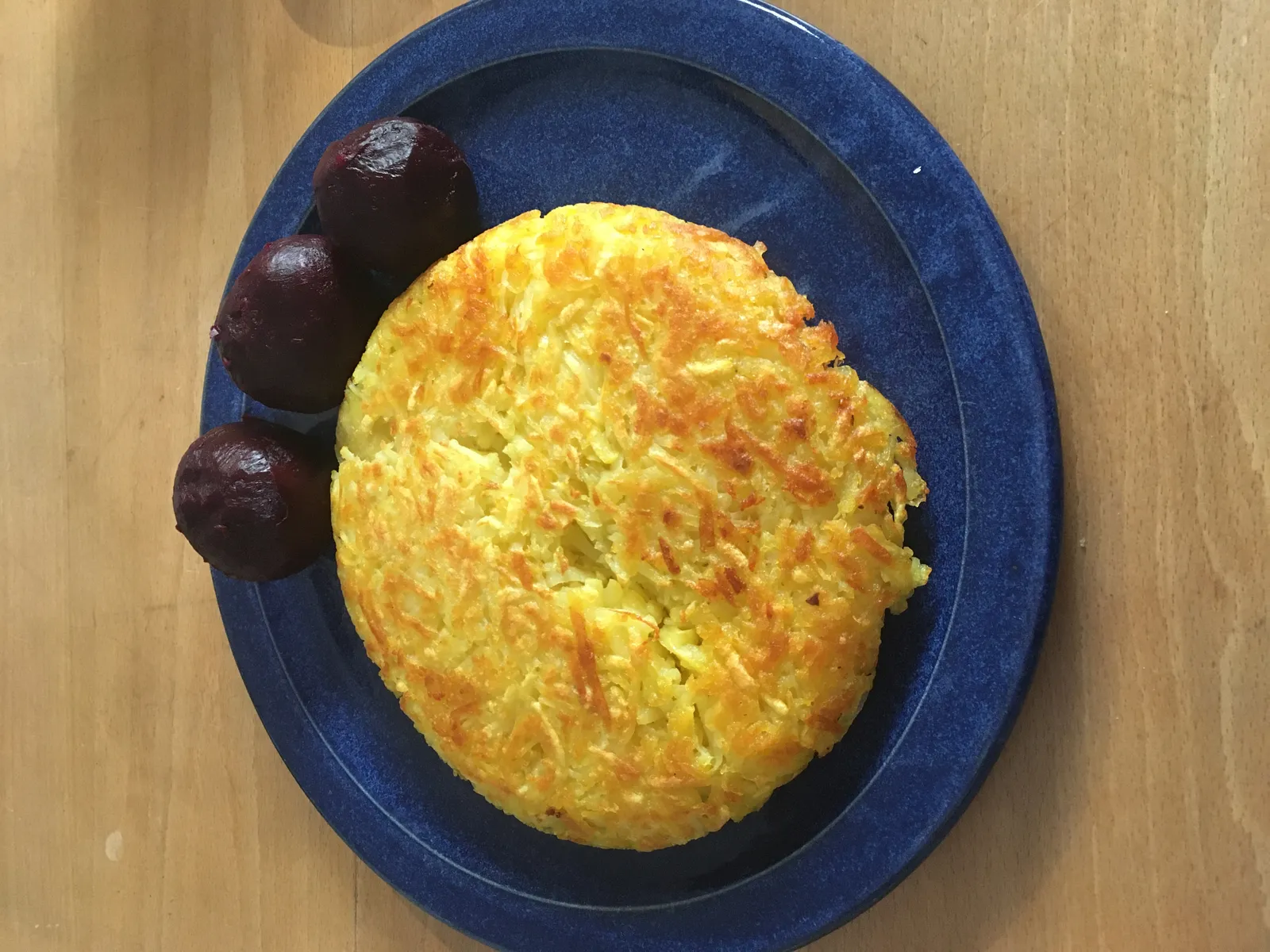
A large golden rosti potato cake on a blue plate Switzerland flag Switzerland 40m
Lunch •Bernese Farmhouse Classic

Rösti

Rösti is Switzerland's crisp potato cake: grated potato pressed into one large golden disc and fried in butter until the outside shatters and the inside stays soft, then topped with a fried egg. One serving is about 240 g.

Simple & Satisfying

One large crisp cake of grated potato, pan-fried in butter and topped with a fried egg.

Pairs Well With
A fried egg on top and a simple green salad with sharp vinaigrette
Quick Prep (<30m)
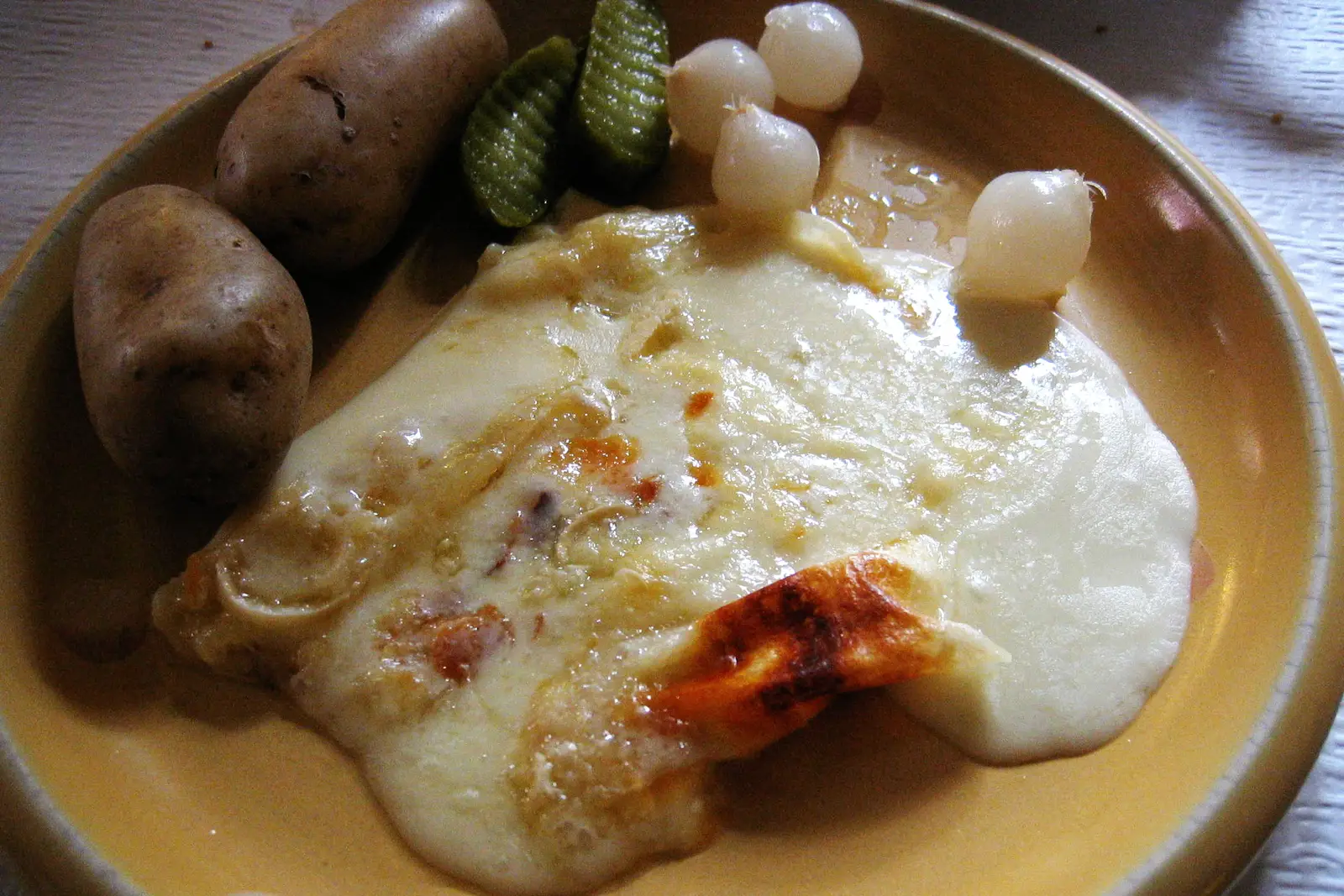
Melted raclette cheese scraped over a plate with boiled potatoes and pickles Switzerland flag Switzerland 40m
Dinner •Valais Alpine Classic

Raclette

Raclette is the Swiss Alps' other great melted-cheese meal: a half-wheel of raclette cheese is warmed until the cut face bubbles, then scraped in ribbons over boiled potatoes, with cornichons and pickled onions to cut the richness. One serving is about 365 g.

Comfort & Togetherness

Melted raclette cheese scraped over boiled potatoes with pickles.

Pairs Well With
Boiled potatoes, cornichons, pickled onions and a green salad
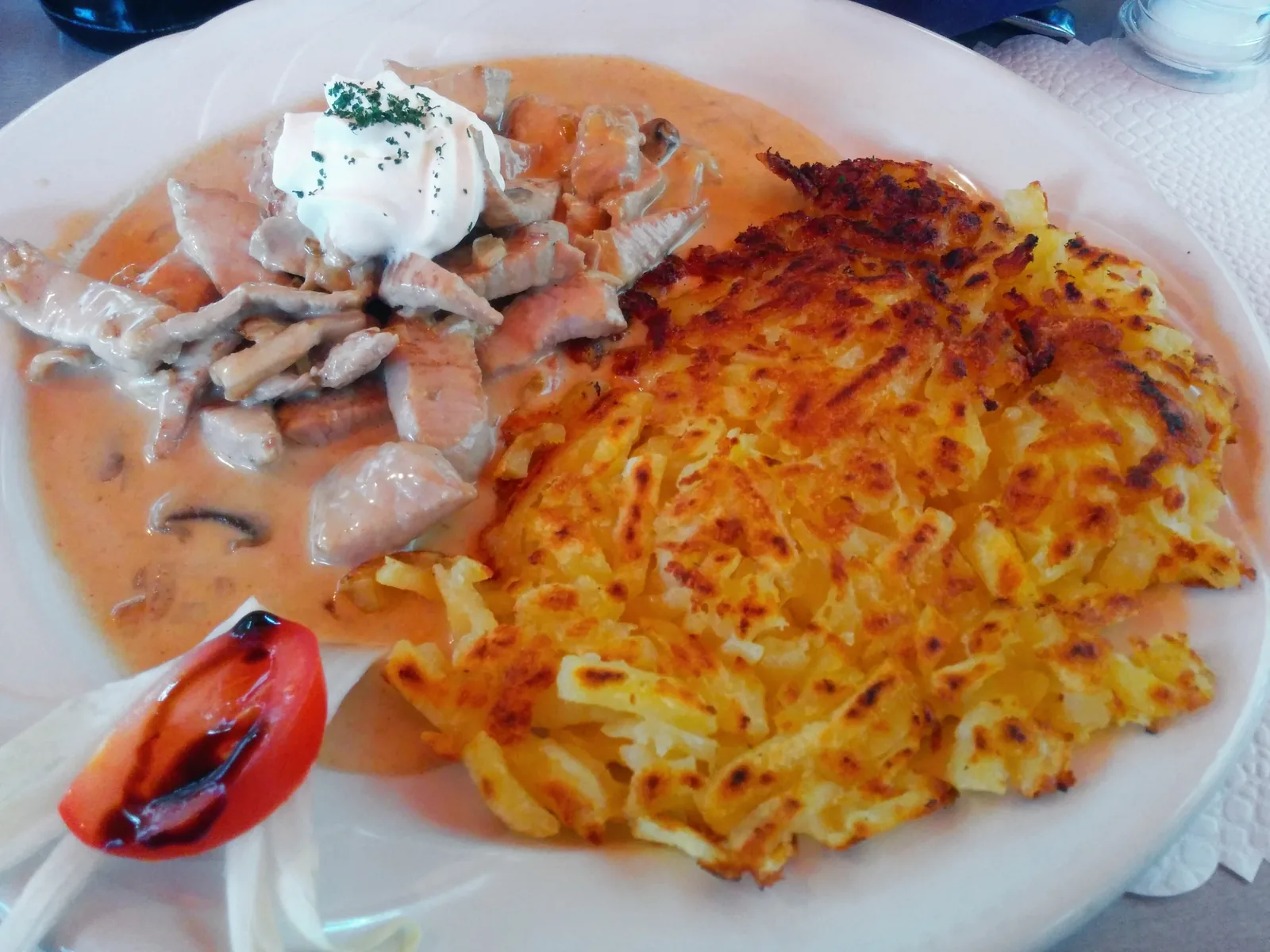
A plate of Zürcher Geschnetzeltes — veal strips in cream sauce with a dollop of cream — beside golden rösti. Switzerland flag Switzerland 40m
Dinner •Zurich Classic

Zürcher Geschnetzeltes

Zürcher Geschnetzeltes is Zurich's signature dish: thin strips of veal quickly seared, then finished in a white-wine and cream sauce with mushrooms and onion. One serving is about 335 g, before the rösti it is traditionally served with.

Rich & Comforting

Tender strips of veal in a white-wine cream sauce with mushrooms — Zurich's classic, with rösti.

Pairs Well With
Serve with golden rösti and a glass of dry Swiss white wine.
High Protein

The Dinner Gazette

Never wonder what’s for dinner again

One email a week with easy dinner ideas from around the world — ingredients, steps and nutrition, tested in our kitchen first.

Delivered every Thursday morning. Unsubscribe anytime.