
Curated recipes from 193 countries  •  New seasonal Mediterranean issue out now

Overview

Tteokbokki

Ddeokbokki, Spicy Stir-Fried Rice Cakes

This tteokbokki recipe simmers chewy cylinder rice cakes in a glossy, sweet-spicy gochujang sauce with fish cakes, onion and a soft-boiled egg, until the sauce thickens enough to coat every piece. One serving is about 384 g.

Tteokbokki began as a royal court dish in the Joseon era, made with soy sauce rather than chilli and served with beef, mushrooms and pine nuts. The red, spicy version everyone knows today started in 1953, when stall owner Ma Bok-rim in Seoul's Sindang-dong began selling rice cakes simmered in gochujang sauce. Her stall drew crowds, the alley filled with copycat stalls, and Sindang-dong became known as Tteokbokki Town — the dish has been Korea's most famous street food ever since.

Pairs well with: Cold barley tea, pickled radish and a soft-boiled egg

Provenance

South Korea flag South Korea

Seoul Street-Food Classic

East & South Asia

Time Dedication

40m

15m prep • 25m cook

Batch Yield

4 Servings

472 kcal per serving

1 serving ≈ 384 g

Technical Skill

Easy

Easy (One Pot)

Meal Timing & Digestive Fit

Breakfast

Not Advised

Lunch

Inappropriate

Dinner

Inappropriate

Snack & Tea

Ideal Light Bite

Occasions: Street-food nights, movie snacks, casual gatherings, quick lunches Cost: Low — about $2–3 per serving at home
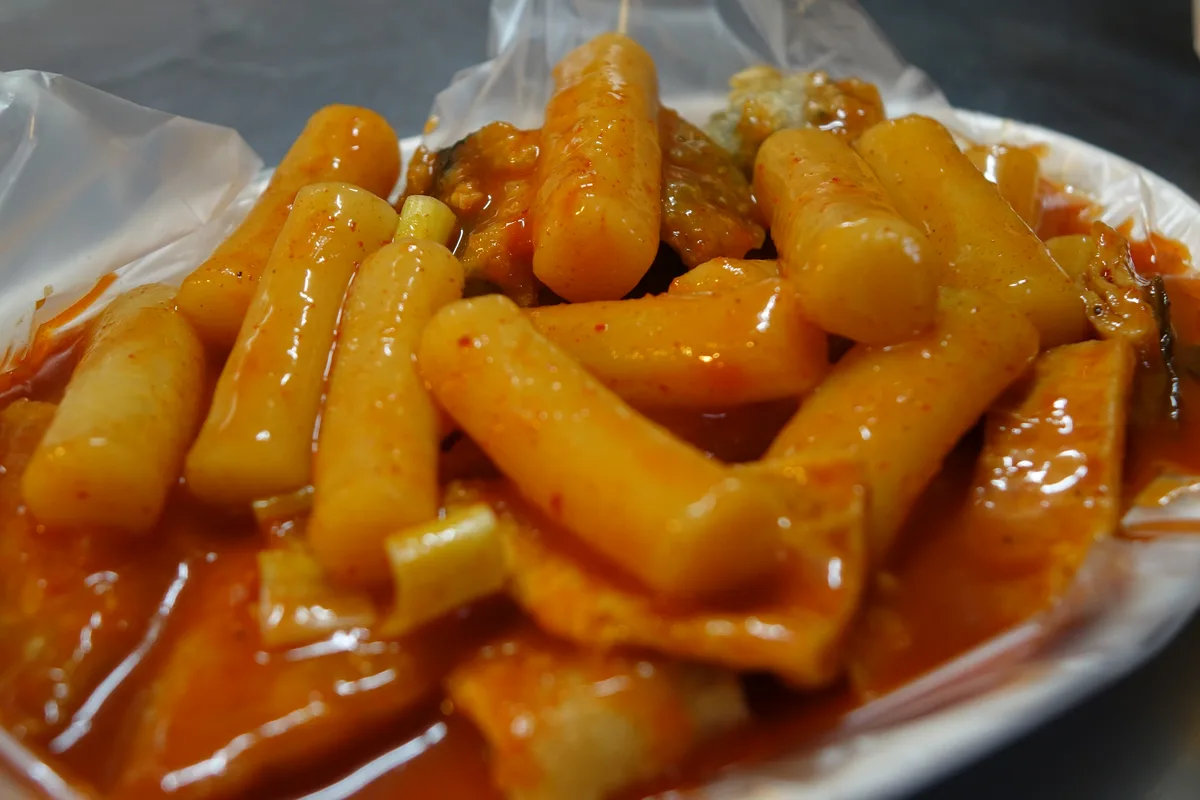
Glossy red tteokbokki — chewy rice cakes coated in gochujang sauce with fish cakes, in a bowl

Seoul Street-Food Classic

Photo: Choe Kwangmo, CC0, via Wikimedia Commons

The Heritage Formulary

Measured Ingredients

Estimated cost: Low — about $2–3 per serving at home (USD)

Real tteokbokki sauce is glossy and coats the rice cakes; if it turns watery, simmer a few minutes longer. Nutrition is estimated from USDA values.

Execution Methodology & Culinary Technique

Step-by-Step Cooking Guide

Active 40m
P

Prep Stage: Stock, Slice and Soften

15 Mins • Knife Work

Put the water, anchovies and kelp in a pot while you work — the stock needs 10 minutes and the rest of the prep takes the same time. Slice the onion and fish cakes, mince the garlic, cut the green onions, and soak the rice cakes in warm water if they came from the fridge. Boil the eggs for 6 1/2 minutes, cool, peel and halve them.

Maestro Tip: Soaking cold rice cakes is not optional — straight-from-the-fridge cakes stay hard in the middle while the sauce overcooks.

  1. 1

    Make the Quick Stock

    10 Mins Simmer, about 95°C (200°F)

    Put the water, anchovies and kelp in a medium pot and bring to a simmer. Cook gently for 10 minutes, then lift out the anchovies and kelp with a slotted spoon and discard them. You should have about 400 ml (1 2/3 cups) of light, savoury stock left.

    Do not let the stock boil hard — a rolling boil makes anchovy stock cloudy and bitter.

    Done when: The stock is clear, lightly golden and smells gently of the sea.

  2. 2

    Stir the Sauce Together

    3 Mins Off the heat

    Whisk the gochujang, sugar, soy sauce and minced garlic into the warm stock until the paste has fully dissolved. Taste it: it should be boldly spicy and sweet at this stage, because the rice cakes will soak up a lot of the seasoning as they cook.

    If the gochujang is stiff from the fridge, whisk it with a ladleful of warm stock first, then pour it back in.

    Done when: The sauce is smooth, deep red and evenly mixed, with no lumps of paste.

  3. 3

    Simmer the Rice Cakes

    15 Mins Medium heat, about 95°C (200°F)

    Slide the drained rice cakes, fish cakes and sliced onion into the sauce. Simmer, stirring often so the cakes do not stick to the bottom, for 12–15 minutes. The sauce will thicken and turn glossy, and the rice cakes will go soft and chewy all the way through.

    Stir from the bottom up every minute or so — rice cakes glue themselves to the pot the moment you look away.

    Done when: The rice cakes are soft and springy when bitten, and the sauce coats the back of a spoon.

  4. 4

    Finish with Green Onions and Sesame

    2 Mins Low heat, about 80°C (175°F)

    Turn the heat to low and stir in the green onions and sesame oil. Cook for 1 more minute, just until the onions wilt slightly and the oil smells nutty. Take the pot off the heat.

    The sesame oil goes in last and off the boil — cooking it hard kills its aroma.

    Done when: The onions are bright green and just softened, and the sauce smells warmly of sesame.

  5. 5

    Serve Hot, with Egg

    2 Mins Serve immediately

    Spoon the tteokbokki into warm bowls, scatter with toasted sesame seeds, and lay a halved egg on top of each serving. Eat at once, while the rice cakes are still soft and the sauce is glossy.

    Tteokbokki firms up fast as it cools — serve it the minute it leaves the pot.

    Done when: The rice cakes are glossy, the sauce clings to every piece, and the egg yolk is just set.

Finishing Touches & Plating

Pile the tteokbokki into warm bowls, top each with half a soft-boiled egg and a pinch of sesame seeds, and eat it while the rice cakes are still soft and the sauce is hot and glossy.

Nutritional Physiology & Benefits

Nutrition

Energy

472

kcal / serving

Protein

17g

Complete AA

Carbs

85g

Complex

Fats

6g

Healthy

Per serving (4 servings · 1 serving ≈ 384 g)
Energy472 kcal
Protein17 g
Carbohydrates85 g
Fat6 g
Fibre2.6 g
Sugar10.5 g
Sodium1119 mg
Per 100g
Energy123 kcal
Protein4.3 g
Carbohydrates22.2 g
Fat1.6 g
Fibre0.7 g
Sugar2.7 g
Sodium291 mg

Nutrition values are estimated — calculated from USDA FoodData Central values for the listed ingredients.

Vitamins & minerals: Provides B vitamins from the rice cakes and eggs, vitamin C from the green onions, and iodine from the anchovy-kelp stock. Nutrition is estimated.

Quick, Filling Energy

Rice cakes give about 85 g of carbohydrate per serving — fast, satisfying fuel that makes this a proper snack rather than a nibble.

Light on Fat

At about 6 g of fat per serving, the dish is filling without being heavy — the richness comes from the sauce, not from oil.

Fermented Flavour

Gochujang is a fermented paste, and the anchovy-kelp stock adds savoury depth without extra fat or cream.

Food Pairings

What to Eat With

To optimize nutrient absorption and elevate the sensory depth, pair with these authentic accompaniments:

Drinks

Cold Barley Tea

Nutty, unsweetened barley tea cools the chilli heat and is the classic drink sold next to tteokbokki stalls.

Vegetables

Pickled Radish

Crisp, sweet-sour pickled radish cuts through the rich gochujang sauce and resets your palate between bites.

Sides

Kimbap Rolls

Mild kimbap rolls are the traditional partner at Korean snack bars — their plain rice and vegetables balance the spicy sauce.

Full Menus

A Bunsik Snack Spread

Serve tteokbokki with fried dumplings and fish-cake skewers, as Korean snack bars do — the shared, saucy centre of the table.

Complete menu

Serve tteokbokki as the centre of a Korean snack spread with kimbap rolls and pickled radish, and cold barley tea to drink.

Digestive Guardrails

What NOT to Combine

To prevent digestive distress, sluggishness, or palate clash, avoid pairing the dish with these elements:

Leaving It to Go Cold

Rice cakes harden quickly as they cool and the sauce stiffens into a paste. Reheat gently with a splash of water, stirring, until hot through at 74°C (165°F). This is general food information, not medical advice.

Very Salty Side Dishes

The sauce already carries a lot of salt from the gochujang, soy sauce and fish cakes, so salty pickles or soy-dipped sides can push the meal far saltier than intended. This is general food information, not medical advice.

General information only, not medical advice — consult a doctor for personal dietary decisions.

Who Should Eat It

Who Should Eat

  • General adultsA classic Korean snack — spicy, chewy and filling, best eaten hot from the pot.
  • ChildrenVery spicy as written; make a mild version for children with half the gochujang and a little more sugar, and cut the rice cakes into smaller pieces.
  • ElderlySoft and easy to chew once simmered through; serve warm rather than piping hot, and watch the salt.
  • Pregnant womenFine when served hot and freshly made; the eggs should be fully set if you prefer, and keep the spice level comfortable.
  • Breastfeeding womenA filling, energy-rich snack; the chilli heat is a matter of taste and poses no usual concern.
  • AthletesGood quick fuel — about 85 g of carbohydrate per serving, plus an egg for protein; eat it after training, not before.
  • Weight gainEasy to enrich: take a larger portion and add an extra egg.
  • Weight lossAt 472 kcal a serving it is a substantial snack — enjoy one serving and skip the extra sweet drinks.

Health Conditions — Adjust or Avoid

Conditions

  • DiabetesRice cakes are the main carb source — about 85 g per serving. Keep to one serving and ask your clinician about portion size.
  • High blood pressureThe sauce carries about 1,119 mg of sodium per serving. Use low-sodium soy sauce and go light on salty sides; ask your clinician about your sodium target.
  • Kidney diseaseThis dish is high in sodium and carbohydrate, so it may not suit a restricted diet. Ask your clinician before making it a regular meal.
  • GoutFish cakes and anchovy stock are moderately high in purines. Enjoy occasionally in a small portion, and ask your clinician if flare-ups are frequent.
  • Stomach issuesChilli paste and fermented sauce can bother reflux or a sensitive stomach; use less gochujang and serve the dish warm rather than very hot. Ask your clinician if symptoms persist.
  • Cardiovascular diseaseLow in fat, but the salt is high — keep portions moderate and favour fresh sides. Ask your clinician about fitting it into your eating plan.
  • Fatty liverA low-fat dish that fits a balanced diet in a normal portion; avoid adding extra sugar to the sauce. Ask your clinician for personal guidance.
  • Food allergiesContains fish (fish cakes, anchovy), egg, sesame, soy and wheat (gochujang usually contains wheat). Check the gochujang label — gluten-free versions exist.
  • Special therapeutic dietsNot suitable for vegetarian or vegan diets as written; a vegan version can use vegetable stock, omit the fish cakes and egg, and use a vegan gochujang. Ask your clinician or dietitian about your specific plan.

If you have a medical condition, consult your doctor before changing your diet.

Storage & Use

Storage & Use

How to store
Cool quickly and store in a sealed container, with the sauce covering the rice cakes so they do not dry out.
In the fridge
2 days at 4°C (40°F) or below.
In the freezer
Not recommended — the rice cakes turn hard and crumbly on thawing.
How to reheat
Warm gently in a pan with a splash of water, stirring, until hot through at 74°C (165°F).
Freezing recommended
No — the rice cakes do not survive freezing; refrigerate and eat within 2 days.
Signs it has spoiled
Sour smell, slimy sauce, or rice cakes that stay hard even after reheating.

More recipes to explore

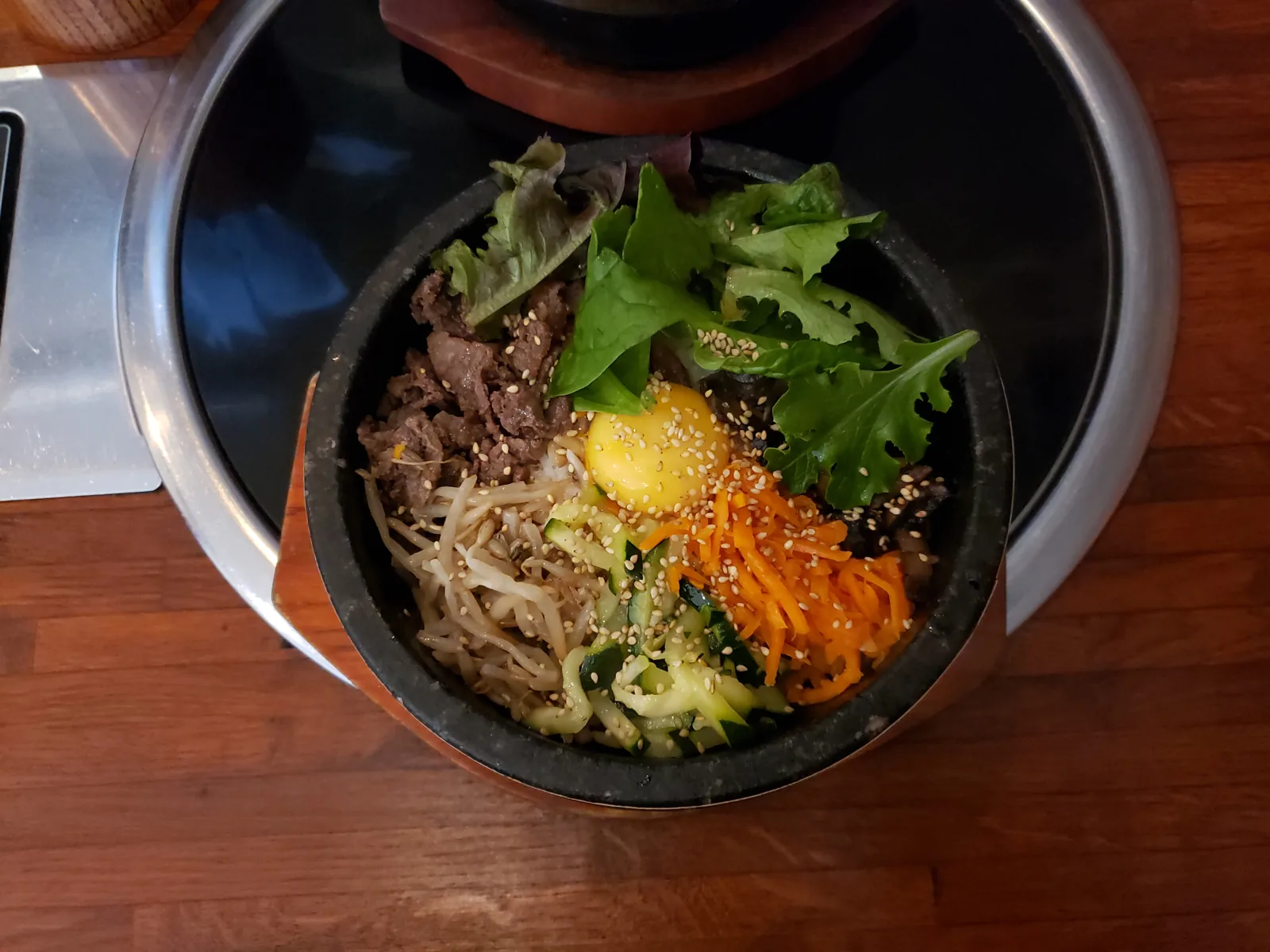
Dolsot bibimbap in a hot black stone bowl — bulgogi beef, egg yolk, carrots, zucchini, bean sprouts and sesame seeds over rice South Korea flag South Korea 1h 5m
Dinner •Korean Heritage

Bibimbap

This bibimbap recipe builds Korea's most famous rice bowl the dolsot way: hot rice in a sizzling stone pot, ringed with five separately seasoned namul vegetables, bulgogi beef and a fried egg, with gochujang to stir through at the table. The stone bowl crisps the bottom layer of rice into golden nurungji while you eat. One serving is about 510 g.

Colourful & Satisfying

Warm rice, five seasoned vegetables, bulgogi beef and a fried egg, mixed at the table with gochujang.

Pairs Well With
Kimchi, kongnamul-guk (bean sprout soup) & barley tea
Korean fried chicken pieces coated in a glossy red yangnyeom glaze South Korea flag South Korea 45m
Dinner •Korean Heritage

Korean Fried Chicken

This Korean fried chicken recipe is the real thing: boneless chicken in a thin potato-starch batter, fried twice — once to cook it through, once at higher heat to drive out moisture and shatter the crust — then tossed in a glossy yangnyeom glaze of gochujang, honey and garlic. The double fry is what keeps the skin crisp under the sauce. One serving is about 250 g.

Crispy & Bold

Double-fried chicken in a thin potato-starch crust, tossed in a sticky sweet-spicy yangnyeom glaze.

Pairs Well With
Pickled radish (chikin-mu), cold beer & steamed rice
High Protein • Quick Prep (<30m)
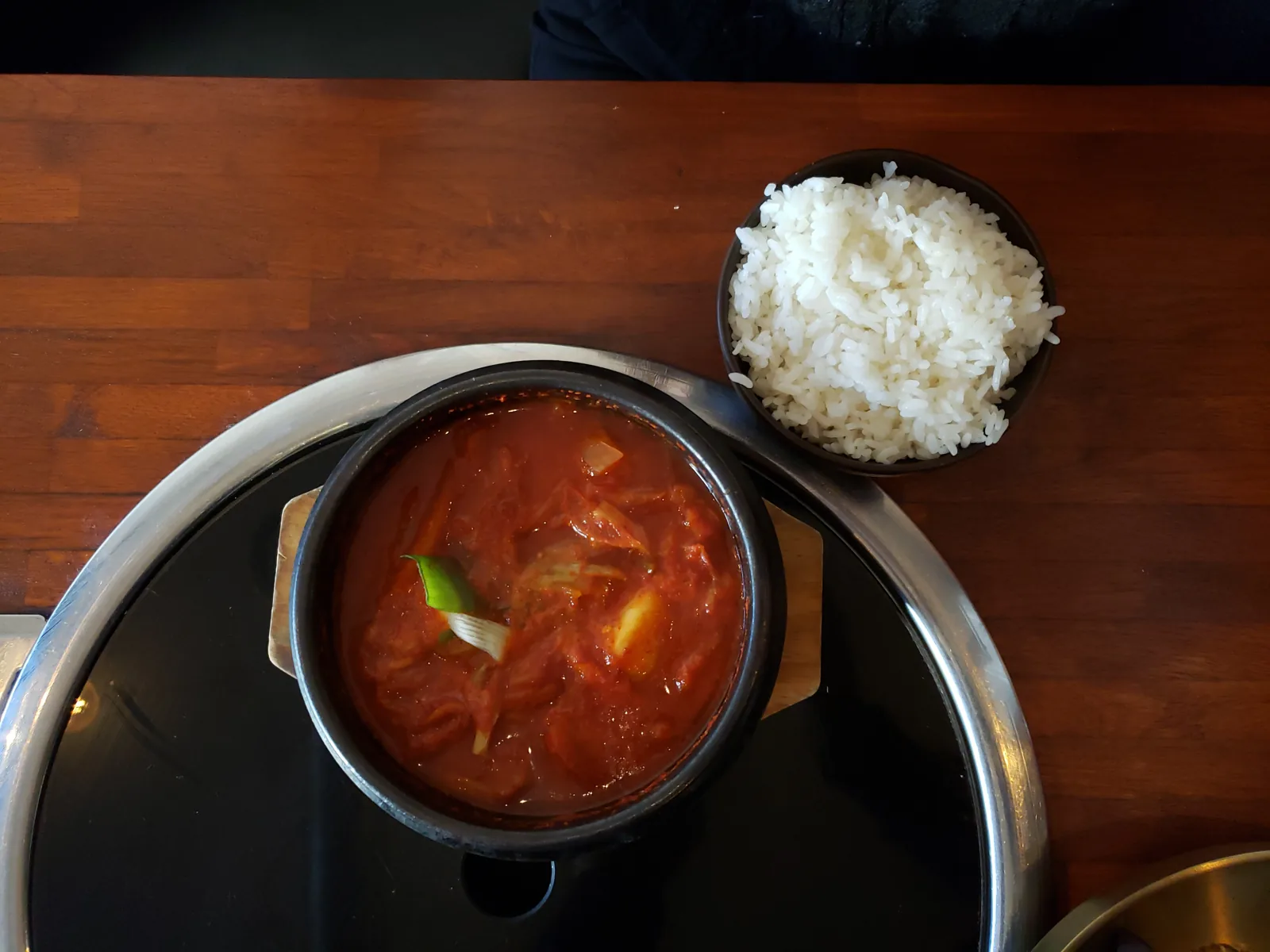
Kimchi jjigae — a red kimchi stew with tofu and spring onions in a black stone pot, served with a bowl of rice South Korea flag South Korea 45m
Dinner •Korean Heritage

Kimchi Jjigae

This kimchi jjigae recipe is the Korean comfort stew: aged, well-fermented kimchi fried with pork belly, then simmered in its own brine with tofu until the broth turns brick-red and rich. It is a stew, not the kimchi itself — the North Korean white kimchi published earlier is the pickled cabbage, while this is what you cook with it. One serving is about 425 g.

Comfort & Warmth

Aged kimchi and pork belly simmered in kimchi brine with tofu — sour, spicy and deeply savoury.

Pairs Well With
Steamed rice, fried egg & banchan
Soups & Broths • Fermented / Gut Health
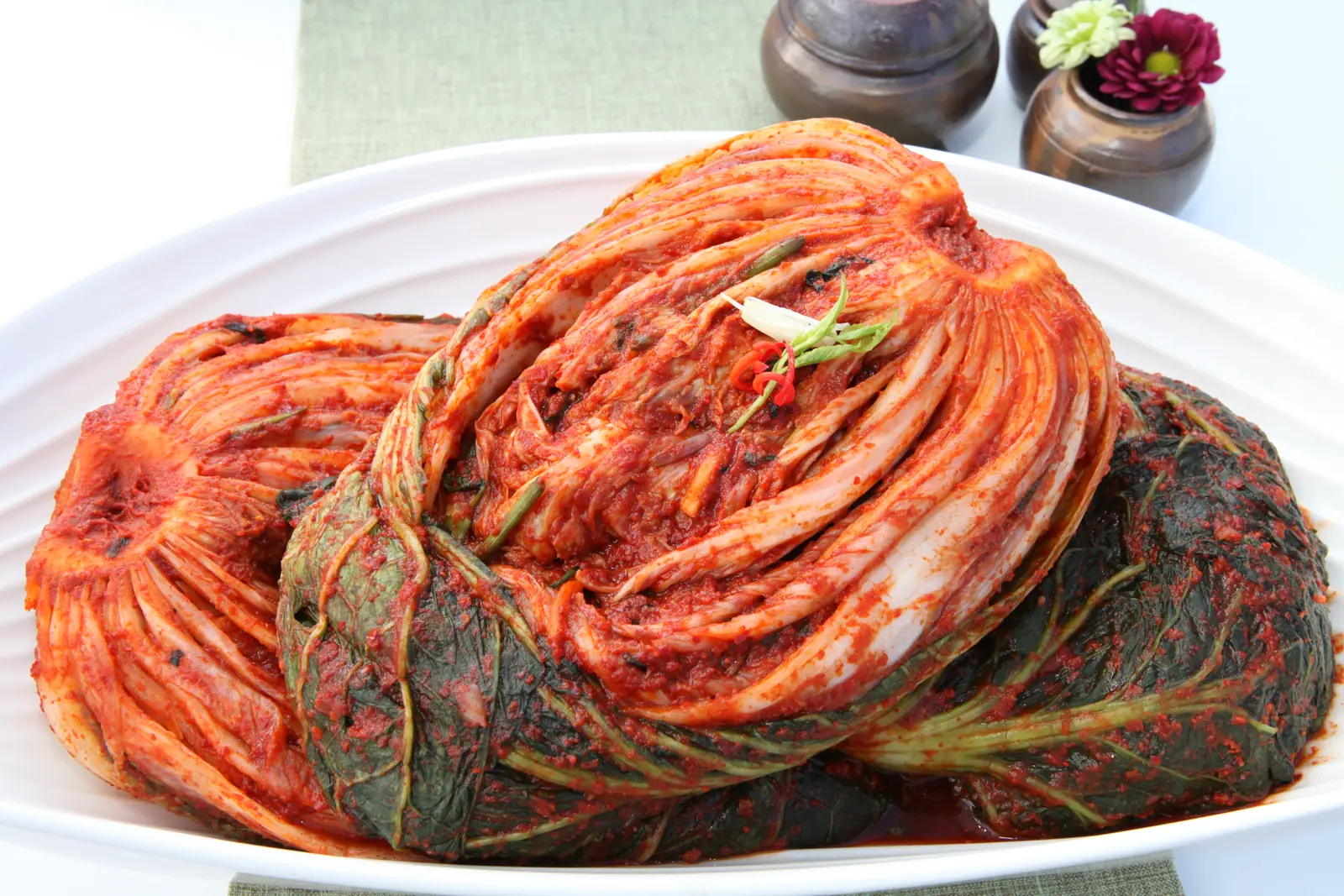
Whole heads of baechu kimchi coated in red gochugaru paste on a white platter South Korea flag South Korea 2h 35m
Dinner •Korean Kimjang Heritage

Baechu Kimchi

This kimchi recipe turns one head of napa cabbage into classic baechu kimchi: salted leaves packed with a bright red gochugaru paste, then left to ferment until tangy and fizzy. It is the spicy southern-style kimchi most people picture when they hear the word kimchi, and it keeps for weeks in the fridge. One serving is about 165 g.

Fermented & Fiery

Crisp, spicy, sour napa cabbage kimchi — Korea's everyday banchan, fermented at home in a jar.

Pairs Well With
Serve a small bowl with steamed rice, grilled meat or a fried egg.
Fermented / Gut Health

The Dinner Gazette

Never wonder what’s for dinner again

One email a week with easy dinner ideas from around the world — ingredients, steps and nutrition, tested in our kitchen first.

Delivered every Thursday morning. Unsubscribe anytime.