Curated recipes from 193 countries  •  New seasonal Mediterranean issue out now

Overview

Turkmen Pakhlava

Turkmen Baklava

This Turkmen pakhlava recipe layers paper-thin filo pastry with cinnamon-spiced walnuts, bakes it golden in butter, and soaks it in a lemon-honey syrup until every diamond glistens. It is the sweet Turkmen families set out with green tea at festive gatherings. One serving is about 121 g.

Pakhlava is the Central Asian name for baklava, the layered nut pastry shared across West and Central Asia. In Turkmenistan it is a classic of the festive table: thin layers of pastry filled with nuts and soaked in sweet syrup, set out with green tea at celebrations and family gatherings, including the Navruz spring holiday. The Turkmen version keeps the filling simple — walnuts, sugar and a little cardamom — and lets the crisp pastry and honey syrup do the talking.

Pairs well with: Hot green tea and fresh fruit

Provenance

Turkmenistan flag Turkmenistan

Turkmen Heritage

East & South Asia

Time Dedication

1h 20m

40m prep • 40m cook

Batch Yield

12 Servings

513 kcal per serving

1 serving ≈ 121 g

Technical Skill

Intermediate

Intermediate (Layered Pastry)

Meal Timing & Digestive Fit

Breakfast

Not Advised

Lunch

Inappropriate

Dinner

Inappropriate

Snack & Tea

Ideal Light Bite

Occasions: Navruz and festive gatherings, afternoon tea, celebrations, gifts for guests Cost: Low — about $1 per serving at home
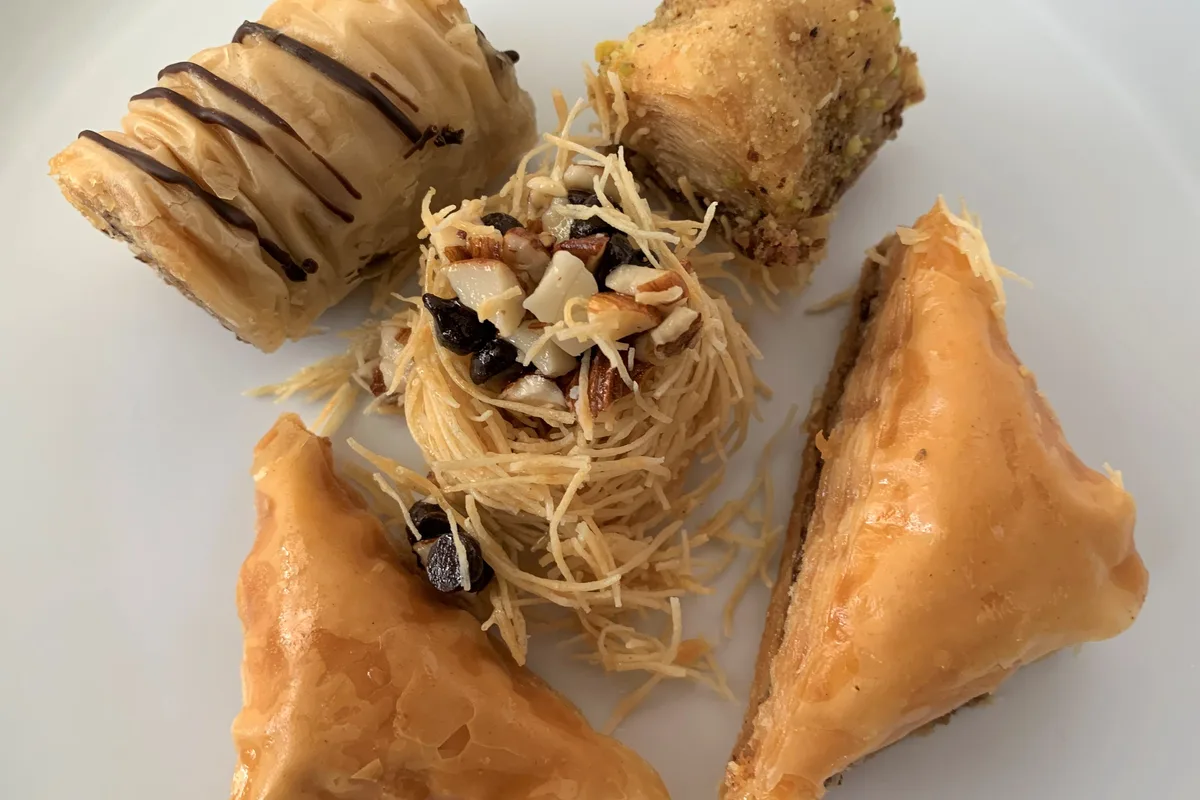
Assorted golden baklava pieces, including triangles and rolls, arranged on a white plate

Turkmen Heritage

Photo: Chitrapa, CC BY-SA 4.0, via Wikimedia Commons

The Heritage Formulary

Measured Ingredients

Estimated cost: Low — about $1 per serving at home (USD)

A good pakhlava shatters lightly at the top, stays crisp at the edges, and is soaked through without turning soggy.

Execution Methodology & Culinary Technique

Step-by-Step Cooking Guide

Active 1h 20m
P

Prep Stage: Syrup, Filling & Sheets

40 Mins • Syrup + Layering

First make the syrup so it can cool completely while you build the pastry: simmer the sugar, water, honey and lemon juice, then set it aside. Mix the chopped walnuts with the filling sugar, cinnamon and cardamom. Melt the butter, thaw the filo, and have a 23 x 33 cm (9 x 13 inch) baking pan, a pastry brush and a sharp knife ready.

Maestro Tip: Cold syrup on hot pastry is the golden rule — it keeps the top layers crisp while the inside soaks up the sweetness.

  1. 1

    Make the Syrup and Let It Cool

    10 Mins Simmer, ~100°C (212°F)

    Put 200 g of the sugar, the water, honey and lemon juice in a small saucepan. Stir over medium heat until the sugar dissolves, then simmer gently for 8 minutes without stirring. Take it off the heat and leave it to cool completely while you build the pastry.

    Do not stir once it boils, or the syrup may turn cloudy; a clear syrup pours evenly.

    Done when: The syrup coats the back of a spoon in a thin, clear layer and is fully cool to the touch.

  2. 2

    Mix the Walnut Filling

    10 Mins Room temperature, ~20°C (68°F)

    Combine the chopped walnuts with the remaining 100 g of sugar, the cinnamon and the cardamom in a bowl. Toss until the sugar and spice are evenly spread through the nuts.

    Taste a pinch: it should be nutty first, sweet second, with a warm whisper of cinnamon.

    Done when: The filling looks evenly speckled with spice and holds together loosely when squeezed.

  3. 3

    Layer the Base

    10 Mins Room temperature, ~20°C (68°F)

    Heat the oven to 180°C (350°F). Brush the pan with melted butter. Lay down 8 filo sheets one at a time, brushing each lightly with butter and trimming any overhang. Keep the unused sheets under a damp tea towel so they do not dry out and crack.

    Brush gently and sparingly — pooled butter makes the base soggy instead of crisp.

    Done when: Eight glossy, buttered sheets lie flat in the pan with no dry patches.

  4. 4

    Add the Filling and Finish Layering

    15 Mins Oven preheating, 180°C (350°F)

    Scatter half the walnut filling evenly over the base, then layer 6 more buttered filo sheets. Add the rest of the filling, then finish with the remaining 8 sheets, buttering each one. Brush the top with the beaten egg yolk. With a sharp knife, cut the whole slab into diamonds, pressing the knife all the way to the bottom of the pan.

    Cut before baking — trying to cut crisp baked filo shatters it. Wipe the knife between cuts for clean edges.

    Done when: The slab is cut into neat diamonds and the top shines with egg yolk.

  5. 5

    Bake Until Deep Golden

    35–40 Mins 180°C (350°F)

    Bake in the centre of the oven for 35 to 40 minutes until the top is deep golden brown and the edges pull slightly away from the pan. If the top browns too fast, cover it loosely with foil for the last 10 minutes.

    Do not open the oven in the first 20 minutes — the layers need steady heat to puff and crisp.

    Done when: Deep golden, crisp to the tap, and the cut lines have opened slightly.

  6. 6

    Soak in Syrup and Rest

    5 Mins + 4 Hours Rest Pastry hot from the oven; syrup at room temperature, ~20°C (68°F)

    As soon as the pan comes out of the oven, pour the cooled syrup slowly and evenly over the hot pastry, letting it run into every cut. Leave the pan undisturbed for at least 4 hours, or overnight, so the syrup soaks through. Lift out the diamonds to serve.

    Resist cutting into it early — the rest is when the layers turn from merely sweet to properly soaked and glossy.

    Done when: The diamonds lift out cleanly, glistening and moist inside, with crisp tops.

Finishing Touches & Plating

Serve the diamonds at room temperature on a small plate with hot green tea. A few extra chopped walnuts scattered over the plate make it look as festive as it tastes.

Nutritional Physiology & Benefits

Nutrition

Energy

513

kcal / serving

Protein

7g

Complete AA

Carbs

54g

Complex

Fats

32g

Healthy

Per serving (12 servings · 1 serving ≈ 121 g)
Energy513 kcal
Protein7 g
Carbohydrates54 g
Fat32 g
Fibre2.7 g
Sugar29.8 g
Sodium108 mg
Per 100g
Energy425 kcal
Protein5.6 g
Carbohydrates44.3 g
Fat26.8 g
Fibre2.2 g
Sugar24.6 g
Sodium90 mg

Nutrition values are estimated — calculated from USDA FoodData Central values for the listed ingredients.

Vitamins & minerals: Vitamin E, magnesium, manganese and copper (walnuts), B vitamins (egg yolk and filo pastry).

Quick Energy for Celebrations

Walnuts, honey and pastry deliver fast, satisfying energy in a small piece — which is why this sweet is served in modest diamonds rather than large slices.

Walnuts Bring Healthy Fats

Walnuts are rich in unsaturated fats, including plant omega-3 (ALA), plus vitamin E and magnesium.

A Little Goes a Long Way

One small piece with unsweetened tea satisfies a sweet craving without the need for a large dessert portion.

Food Pairings

What to Eat With

To optimize nutrient absorption and elevate the sensory depth, pair with these authentic accompaniments:

Drinks

Hot Green Tea

The classic Turkmen partner: unsweetened green tea cuts through the syrupy richness and refreshes the palate between bites.

Sides

Fresh Grapes or Melon

Cool, juicy fruit balances the sticky sweetness and adds freshness to a rich festive plate.

Chopped Pistachios on Top

A sprinkle of green pistachios adds colour, a second nutty note, and a little crunch against the soft soaked layers.

Full Menus

After a Light Meal

Pakhlava follows a light meal best — a small sweet finish after soup or grilled meat, when its richness feels like a treat rather than a burden.

Complete menu

Serve two diamonds of pakhlava per person after a light meal of soup or grilled meat, with a pot of hot green tea and a bowl of fresh grapes or melon on the table.

Digestive Guardrails

What NOT to Combine

To prevent digestive distress, sluggishness, or palate clash, avoid pairing the dish with these elements:

Sugary Drinks Alongside

Pakhlava is already very sweet, so pairing it with sweetened soda or juice stacks sugar on sugar. Unsweetened tea or water is the kinder match. This is general information, not medical advice.

Eating It Warm from the Oven

Cutting in before the syrup has soaked leaves the pastry either dry or flooded, and the hot syrup can burn the mouth. Let it rest the full 4 hours. This is general information, not medical advice.

General information only, not medical advice — consult a doctor for personal dietary decisions.

Who Should Eat It

Who Should Eat

  • General adultsA festive treat to enjoy in small pieces — one or two diamonds with tea is plenty.
  • ChildrenSuitable as an occasional treat for children over 3; keep to one small piece because of the sugar and nuts, and watch for nut allergy.
  • ElderlyFine in small portions; the pastry is soft once soaked, but the sugar is high, so keep the piece small.
  • Pregnant womenGenerally fine in a small portion; the ingredients are all cooked, but the sugar content is high.
  • Breastfeeding womenGenerally fine in a small portion; walnuts add useful fats, but keep the sugar in mind.
  • AthletesUseful as a quick energy-dense snack after hard training, in moderation.
  • Weight gainA good choice — energy-dense and easy to eat, with walnuts adding healthy fats.
  • Weight lossBest kept to one small piece with unsweetened tea; it is very calorie-dense for its size.

Health Conditions — Adjust or Avoid

Conditions

  • DiabetesThis is a very high-sugar dessert, so keep to a small piece or skip it, and check your blood sugar afterwards; ask your clinician about portion size.
  • High blood pressureSodium is modest, but the sugar load is high; one small piece occasionally is the sensible limit, and ask your clinician if unsure.
  • Kidney diseaseWalnuts are relatively high in potassium and phosphorus, so portions should be small; ask your clinician about portion size.
  • GoutNuts are moderate in purines and the sugar load is high; eat only occasionally and in a small portion, and ask your clinician if unsure.
  • Stomach issuesThe rich, buttery syrup can feel heavy on a sensitive stomach; eat a small piece slowly with tea, and skip it during a flare-up.
  • Cardiovascular diseaseButter and sugar make this a treat food rather than an everyday one; walnuts help, but keep portions small and occasional, and ask your clinician if unsure.
  • Fatty liverHigh in sugar and fat, so keep it rare and small; ask your clinician about portion size.
  • Food allergiesContains wheat (gluten), tree nuts (walnuts), egg and milk (butter). Do not serve to anyone with a walnut or wheat allergy; check for nut-free alternatives with your clinician.
  • Special therapeutic dietsIf you follow a prescribed low-sugar, low-fat or nut-free diet, this dish does not fit; ask your clinician before eating it.

If you have a medical condition, consult your doctor before changing your diet.

Storage & Use

Storage & Use

How to store
Cool completely, then store in an airtight container at room temperature or in the fridge.
In the fridge
Up to 5 days in the fridge; bring to room temperature before serving.
In the freezer
Up to 1 month, wrapped tightly; thaw overnight in the fridge.
How to reheat
Warm briefly in a low oven at 150°C (300°F) for 5 minutes if you like it warm; do not microwave, as it turns soggy.
Freezing recommended
Not really recommended — freezing softens the crisp layers; it keeps best at room temperature for a few days.
Signs it has spoiled
Sour or stale smell, mould, or a slimy, wet texture.

More recipes to explore

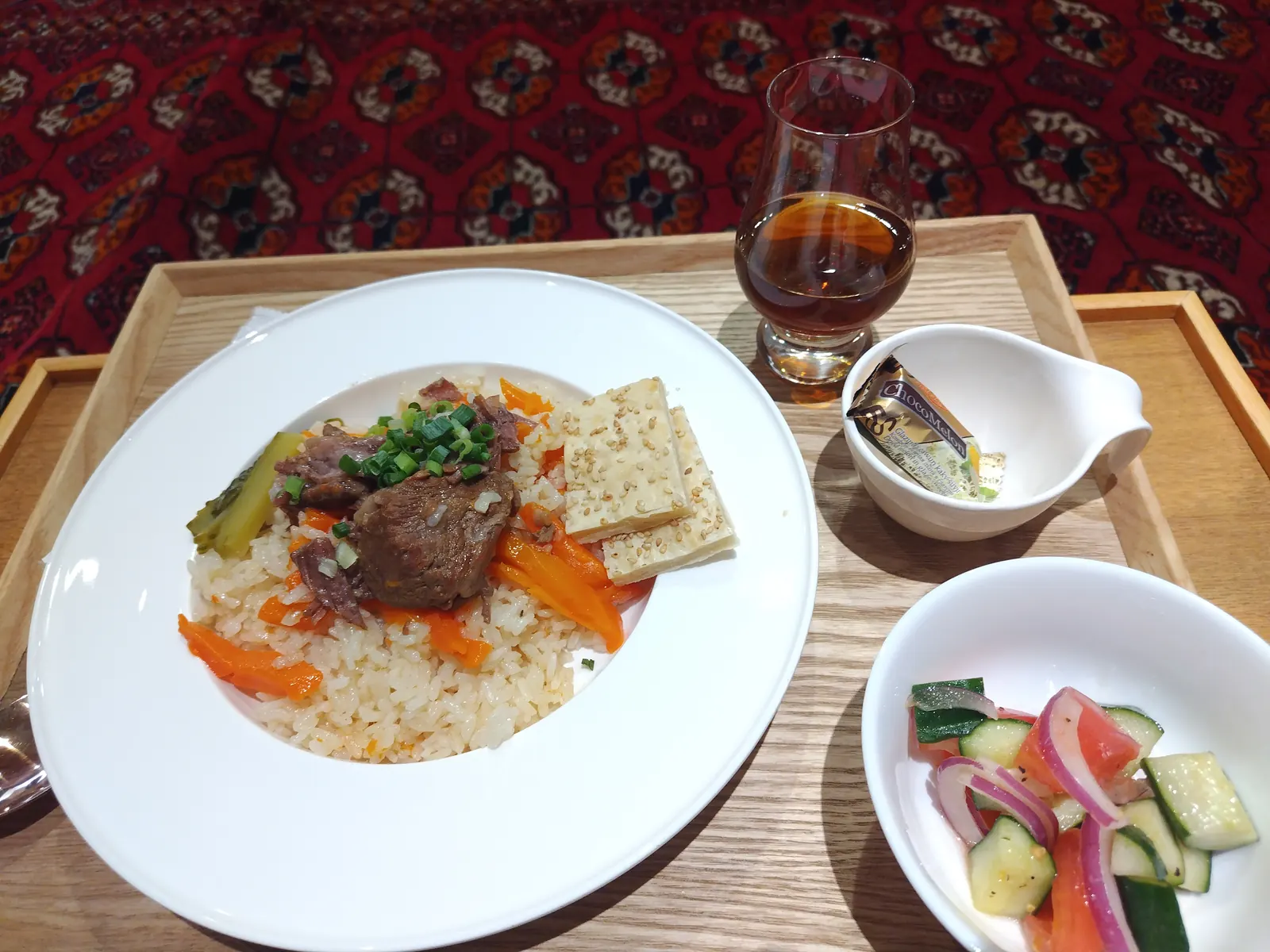
Turkmen plov — a mound of long-grain rice with orange carrot sticks and tender lamb on a white plate, with a tomato-cucumber salad beside it Turkmenistan flag Turkmenistan 2h 10m
Dinner •Turkmen Heritage

Turkmen Plov

This turkmen plov recipe is Turkmenistan's festive one-pot pilaf: long-grain rice steamed over a rich base of browned lamb, thick-cut orange carrots, onions and a whole head of garlic, seasoned lightly with cumin and coriander. Unlike Uzbek plov, which uses devzira rice and yellow carrots, and unlike Azerbaijani plov, where the rice is cooked separately with saffron, the Turkmen version cooks everything in a single pot and is mixed before serving. One serving is about 390 g.

Celebration Rice

Long-grain rice steamed over browned lamb, thick-cut carrots and onions in one pot — Turkmenistan's festive pilaf, served mixed from a big warmed plate.

Pairs Well With
Tomato-onion salad, fresh herbs & hot black tea
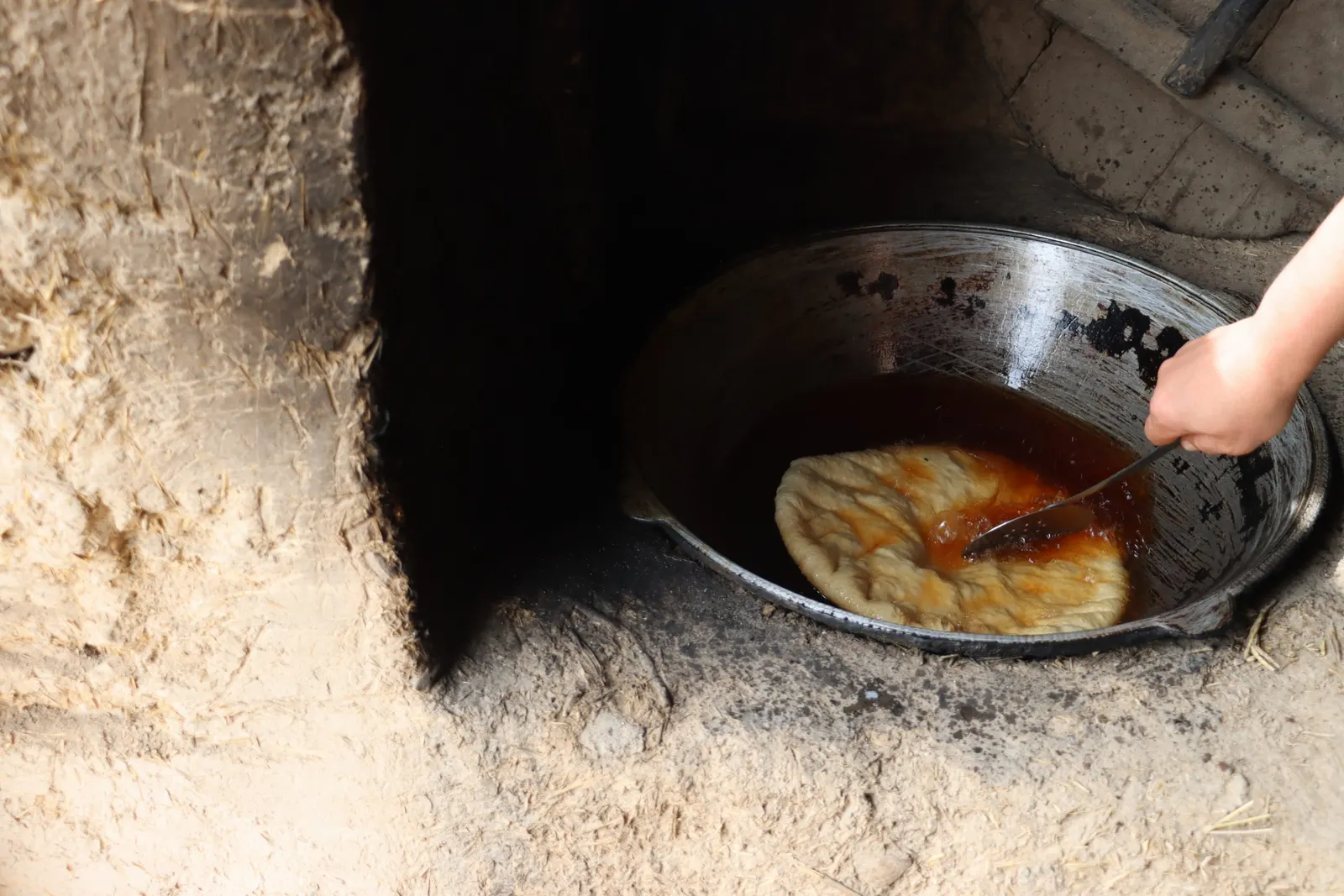
A round chalpak flatbread frying in golden oil in a kazan over a clay oven Turkmenistan flag Turkmenistan 55m
Snack & Tea •Turkmen Heritage

Turkmen Celpek

This turkmen celpek recipe makes a paper-thin, large, crisp flatbread from a plain dough of flour, milk, water and salt, rolled almost see-through and fried in hot oil for only seconds on each side until pale gold and blistered. It is not a thick, soft, topped flatbread like Hungarian langos, and it is not a small, puffy disc like Uruguayan torta fritas: celpek is wide, flat, crisp and plain, and it is eaten warm, torn by hand, with tea. One serving is about 90 g.

Tea-Time Flatbread

A paper-thin, crisp flatbread fried in hot oil in seconds, made to tear and share with hot tea.

Pairs Well With
Hot green tea, honey & butter
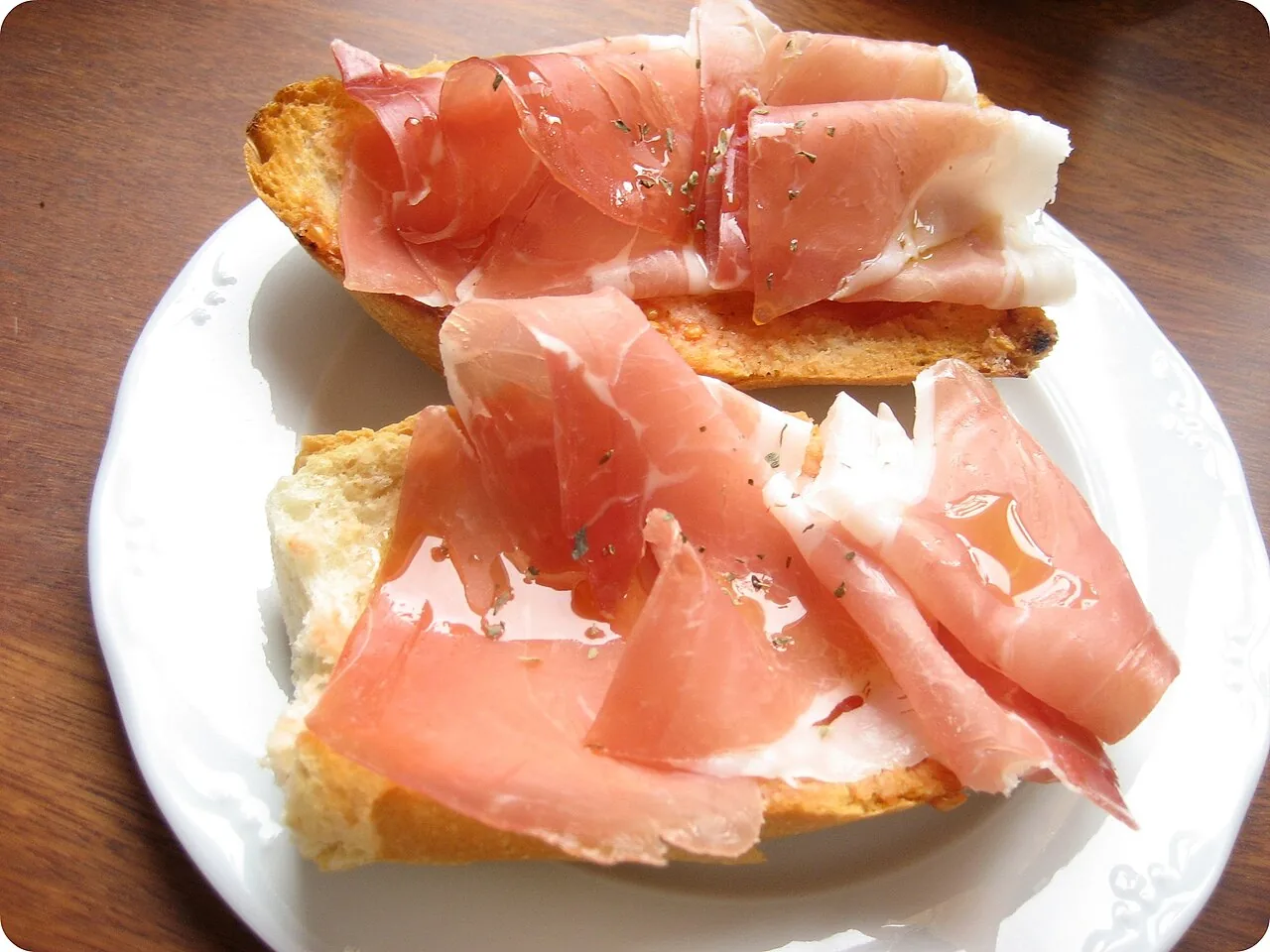
Pan con tomate with jamón ibérico on toasted bread Spain flag Spain 15m
Snack & Tea •Catalan Aperitivo

Pan con Tomate & Jamón Ibérico

Country bread rubbed with ripe Ramallet tomato, drizzled with cold-pressed Arbequina olive oil and topped with jamón ibérico.

Vascular Health

Toasted tomato bread with jamón ibérico, olive oil and olives.

Pairs Well With
Castelvetrano Olives & Sparkling Mineral Water
Quick Prep (<30m)
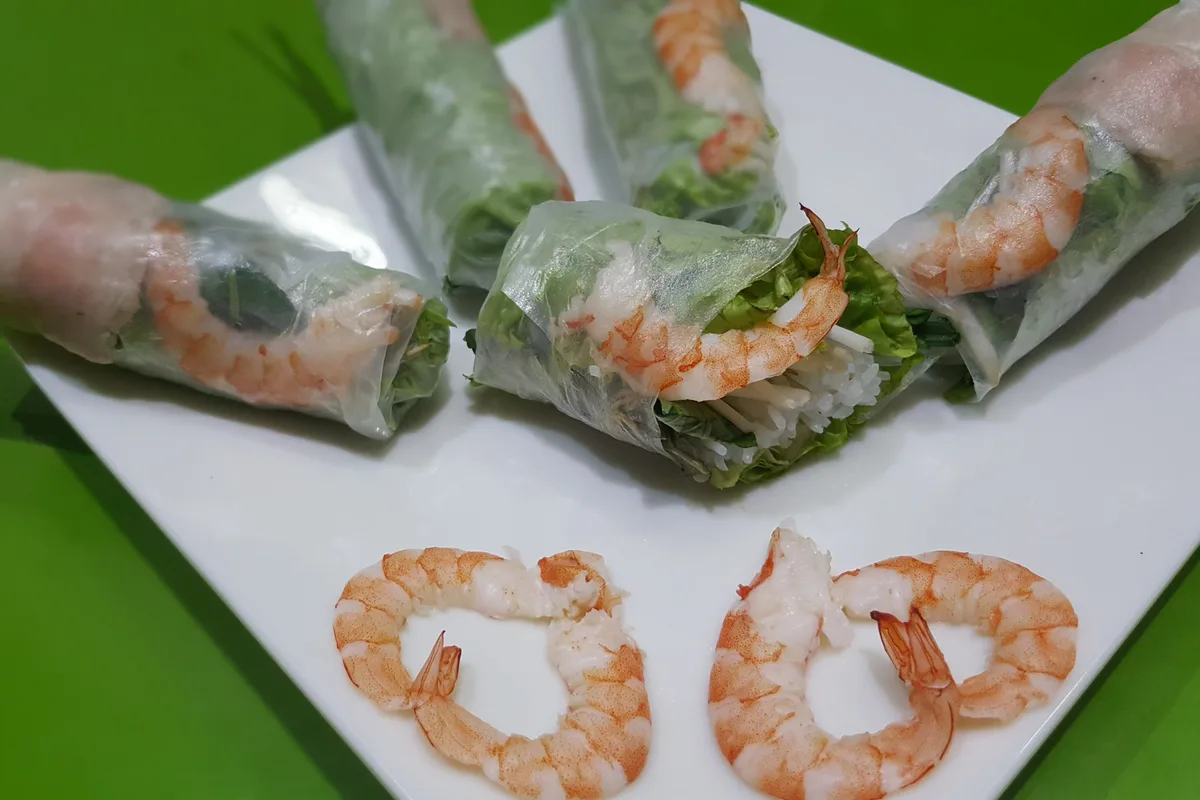
Gỏi cuốn — Vietnamese fresh spring rolls with prawn and pork Vietnam flag Vietnam 1h 5m
Snack & Tea •Saigon Refresh

Gỏi Cuốn Tôm Thịt

Fresh rice paper rolls filled with poached prawns, tender pork, rice vermicelli, lettuce, herbs and carrot, served with a peanut dipping sauce.

Light Digestion

Nothing is fried, so the rolls stay light and fresh — a cool, herb-filled snack for hot days.

Pairs Well With
Artisanal Peanut Dip & Fresh Lotus Root Water
High Protein

The Dinner Gazette

Never wonder what’s for dinner again

One email a week with easy dinner ideas from around the world — ingredients, steps and nutrition, tested in our kitchen first.

Delivered every Thursday morning. Unsubscribe anytime.