Curated recipes from 193 countries  •  New seasonal Mediterranean issue out now

Overview

Turrón de Doña Pepa

Turron de Dona Pepa, Peruvian Anise Nougat, Turrón de Doña Pepa Limeño

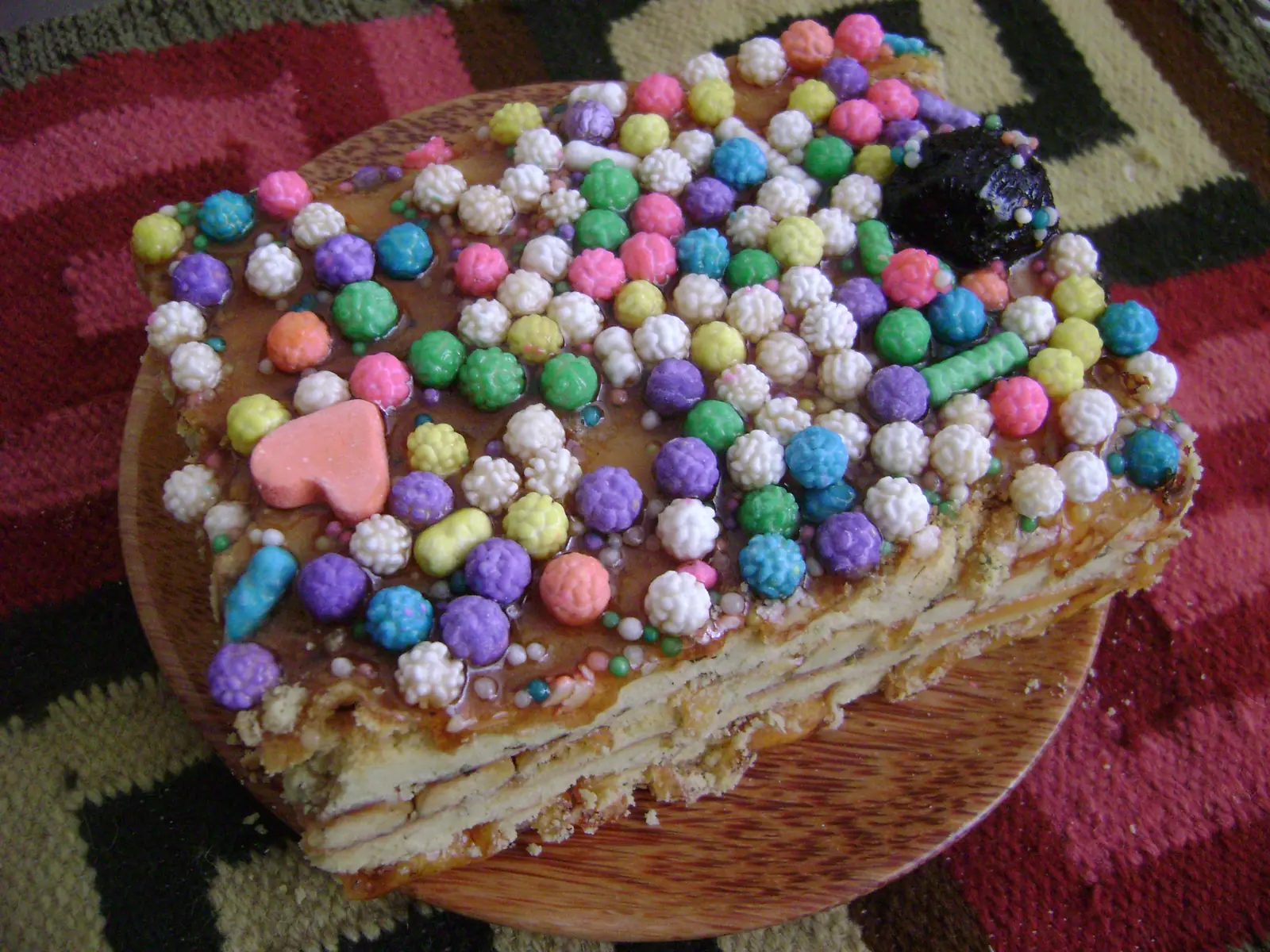
This turron de dona pepa recipe bakes anise sticks from a butter dough bound with egg yolks, then layers them with a dark, spiced chancaca syrup and a shower of colourful sprinkles. It is nothing like Spanish almond turron: this one is soft, crumbly and syrupy, with anise in every bite. One serving is about 88 g, one square.

Turrón de Doña Pepa is Lima's October sweet, made for the procession of the Señor de los Milagros. The story told in Lima is that Doña Josefa Marmanillo, a formerly enslaved woman cured of paralysis, created the sweet in thanks after the 1687 earthquake, and her turron became the food of the purple-robed procession. Whatever the tale, the sweet is documented as a Lima tradition of the 19th century, sold by street vendors all through October — and it is not Spanish turron at all: no almonds, no honey slab, but anise sticks and chancaca syrup.

Pairs well with: Coffee, hot chocolate or a glass of cold milk.

Provenance

Peru flag Peru

Lima October Classic

Latin America & Caribbean

Time Dedication

1h 25m

45m prep • 40m cook

Batch Yield

12 Servings

348 kcal per serving

1 serving ≈ 88 g

Technical Skill

Intermediate

Moderate (Layered Bake)

Meal Timing & Digestive Fit

Breakfast

Not Advised

Lunch

Inappropriate

Dinner

Inappropriate

Snack & Tea

Ideal Light Bite

Occasions: October, Señor de los Milagros procession, Peruvian festivals, family gatherings, festive sweet plates Cost: Low — about $1–2 per square at home
A slice of turron de dona pepa with layers of anise sticks, dark syrup and colourful sprinkles on a wooden plate

Lima October Classic

Photo: Dtarazona, CC BY-SA 4.0, via Wikimedia Commons

The Heritage Formulary

Measured Ingredients

Estimated cost: Low — about $1–2 per square at home (USD)

A good turrón de Doña Pepa shows clear layers on the cut face, tastes of anise and dark cane sugar, and is moist from the syrup, never dry.

Execution Methodology & Culinary Technique

Step-by-Step Cooking Guide

Active 1h 25m
P

Prep Stage: Dough, Sticks and Syrup Pan

45 Mins • Mixing & Shaping

Cream the butter with the sugar, beat in the three egg yolks one at a time, then mix in the flour, baking powder, salt, toasted sesame and crushed anise with just enough cold water to make a soft dough. Roll the dough into pencil-thick sticks, cut them to the length of your tin, and have the panela grated and the syrup pan ready — the sticks bake fast and the syrup needs to be hot when they come out.

Maestro Tip: The yolks are the binder here, not a glaze: without them the sticks crumble when you cut the finished turron.

  1. 1

    Make the Dough

    15 Mins No heat

    Cream the 100 g of butter with the 60 g of sugar until pale. Beat in the 3 egg yolks one at a time, then fold in the sifted flour, baking powder and salt, the toasted sesame and the crushed anise. Add the 80 ml of cold water a little at a time until a soft, smooth dough forms.

    Stop as soon as the dough comes together — overworking it makes tough sticks.

    Done when: Soft, smooth dough that holds together without cracking.

  2. 2

    Shape the Sticks

    15 Mins No heat

    Roll the dough into pencil-thick ropes, about 1 cm wide, and cut them into sticks the length of your baking tin. Lay them side by side on a lined tray, leaving a small gap between each one.

    Keep the sticks the same thickness or they will bake unevenly.

    Done when: Even, pencil-thick sticks lying in neat rows.

  3. 3

    Bake the Sticks

    25 Mins 180°C (350°F)

    Bake at 180°C (350°F) for 20-25 minutes, until the sticks are firm and lightly golden at the edges. Leave them in the tray for 5 minutes, then move to a rack.

    They should be firm, not soft — soft sticks fall apart in the syrup.

    Done when: Firm, lightly golden sticks that snap cleanly when bent.

  4. 4

    Cook the Chancaca Syrup

    15 Mins Medium heat, to 110°C (230°F)

    Put the grated panela, the 100 g of sugar, the 200 ml of water, the orange peel, cinnamon stick and cloves in a pan. Cook on medium heat, stirring until the panela melts, then boil until the syrup reaches 110°C (230°F) and coats a spoon.

    Do not let it go past 115°C (239°F) or it will set hard instead of soaking in.

    Done when: A dark, glossy syrup that falls from the spoon in a slow ribbon.

  5. 5

    Layer and Syrup

    10 Mins Warm syrup, about 60°C (140°F)

    Lay a layer of sticks in the tin, spoon over a third of the hot syrup, then repeat twice more so you have three layers. Press down very gently and spoon the last of the syrup over the top.

    Work while the syrup is hot — cold syrup will not soak into the sticks.

    Done when: Three even layers with syrup glistening between them.

  6. 6

    Top, Set and Cut

    5 Mins + 2 Hours Setting Room temperature, about 20°C (68°F)

    Scatter the sprinkles over the top while the syrup is still wet and set the halved figs on top. Leave at room temperature for at least 2 hours, or overnight, then cut into 12 squares with a sharp knife.

    A hot, dry knife cuts cleaner — dip it in hot water and dry it between cuts.

    Done when: Firm enough to cut into clean squares, with visible layers on the cut faces.

Finishing Touches & Plating

Serve the squares at room temperature with coffee — the turron is best on the second day, once the syrup has soaked right through the sticks.

Nutritional Physiology & Benefits

Nutrition

Energy

348

kcal / serving

Protein

5g

Complete AA

Carbs

66g

Complex

Fats

10g

Healthy

Per serving (12 servings · 1 serving ≈ 88 g)
Energy348 kcal
Protein5 g
Carbohydrates66 g
Fat10 g
Fibre1.3 g
Sugar37.0 g
Sodium139 mg
Per 100g
Energy396 kcal
Protein5.4 g
Carbohydrates74.8 g
Fat10.9 g
Fibre1.5 g
Sugar42 g
Sodium158 mg

Nutrition values are estimated — calculated from USDA FoodData Central values for the listed ingredients.

Vitamins & minerals: Sesame seeds add calcium, iron and magnesium; egg yolks bring vitamin D and choline, and anise adds small amounts of iron and manganese.

Anise Does the Flavouring

Anise seeds give the whole sweet its liquorice warmth with no artificial flavouring — the spice is the point of the dish.

A Little Goes a Long Way

At about 348 kcal per 88 g square, one piece is a proper festive portion — the traditional way it is eaten in October.

Sesame and Egg Yolk

Sesame seeds and egg yolks bring calcium, iron and vitamin D to a sweet that is mostly about celebration.

Food Pairings

What to Eat With

To optimize nutrient absorption and elevate the sensory depth, pair with these authentic accompaniments:

Drinks

Coffee

Strong black coffee balances the dark chancaca syrup and makes one square feel like a proper finish to a meal.

Hot Chocolate

Thick Peruvian hot chocolate with a square of turron is the classic October pairing in Lima.

Cold Milk

A glass of cold milk softens the syrup's sweetness and suits children at a family gathering.

Sides

A Festival Sweet Plate

Serve turron beside picarones and mazamorra morada — the three sweets of the Señor de los Milagros festival.

Complete menu

Serve the turron on a festival sweet plate with picarones and mazamorra morada, with coffee or hot chocolate — the anise sticks are the centrepiece of Lima's October table.

Digestive Guardrails

What NOT to Combine

To prevent digestive distress, sluggishness, or palate clash, avoid pairing the dish with these elements:

Cutting It Before It Sets

Warm turron falls apart — the syrup needs at least 2 hours to soak in and set, or the squares will crumble when you cut them. This is general cooking guidance, not medical advice.

Storing It in the Fridge

The fridge dries the sticks out and dulls the syrup; keep the turron covered at room temperature instead. This is general guidance, not medical advice.

General information only, not medical advice — consult a doctor for personal dietary decisions.

Who Should Eat It

Who Should Eat

  • General adultsA festive sweet for most adults; one 88 g square at about 348 kcal is the right portion, and the sugar is high, so enjoy it as a treat.
  • ChildrenChildren love the colourful sprinkles, but one small square is plenty — the sugar is high and anise is a strong flavour for young children.
  • ElderlySoft and easy to chew once the syrup has soaked in; break it into small pieces and keep the portion small.
  • Pregnant womenGenerally fine in a small portion; the yolks are fully baked and the anise is a normal culinary spice, but the sugar is high, so keep to one square.
  • Breastfeeding womenFine in a small portion; the sesame brings calcium, but the sugar is high, so one square is enough.
  • AthletesA dense, portable source of energy before or after training — good as a snack, not a meal.
  • Weight gainEnergy-dense at about 348 kcal per square, with butter, sugar and syrup — a useful extra when you need calories.
  • Weight lossA treat to enjoy occasionally: about 348 kcal and 37 g of sugar per square, so keep to one square and balance the rest of the day.

Health Conditions — Adjust or Avoid

Conditions

  • DiabetesAbout 65.8 g of carbohydrate and 37 g of sugar per square, so keep to one small square and eat it after a meal. Ask your clinician about portion size.
  • High blood pressureSodium is about 139 mg per square, but the sugar is high; one small square fits most days. Ask your clinician about a suitable portion.
  • Kidney diseaseRich in sugar from panela and syrup, so keep the portion to one square and occasional. Ask your clinician about portion size.
  • GoutSesame and sugar are both best kept occasional here, so this is a festive treat rather than a daily snack. Ask your clinician about frequency.
  • Stomach issuesThe anise and syrup can feel heavy on an empty stomach, so eat a small piece after a meal. Ask your clinician if you are unsure.
  • Cardiovascular diseaseHigh in sugar and fat, so enjoy it as an occasional festive treat and balance it with unsweetened drinks. Ask your clinician about frequency.
  • Fatty liverA rich, sugary sweet that is best kept to October rather than eaten daily. Ask your clinician about a suitable portion.
  • Food allergiesContains egg yolk, sesame and gluten (wheat flour). It is not nut-free in the kitchen sense — check your sprinkles, which may contain traces of nuts. Ask your clinician if any of these affect you.
  • Special therapeutic dietsIf you follow a prescribed low-sugar or low-fat diet, this turron does not fit as written; a sugar-free version changes the texture. Check with your clinician.

If you have a medical condition, consult your doctor before changing your diet.

Storage & Use

Storage & Use

How to store
Keep covered in an airtight container at room temperature.
In the fridge
Not recommended — the fridge dries the sticks out.
In the freezer
Up to 1 month, wrapped tightly; thaw at room temperature in the wrapper.
How to reheat
Do not reheat; serve at room temperature.
Freezing recommended
Yes — it freezes well and keeps its layers after thawing.
Signs it has spoiled
Dry, crumbly sticks, syrup that has gone grainy, or a sour smell from the dough.

More recipes to explore

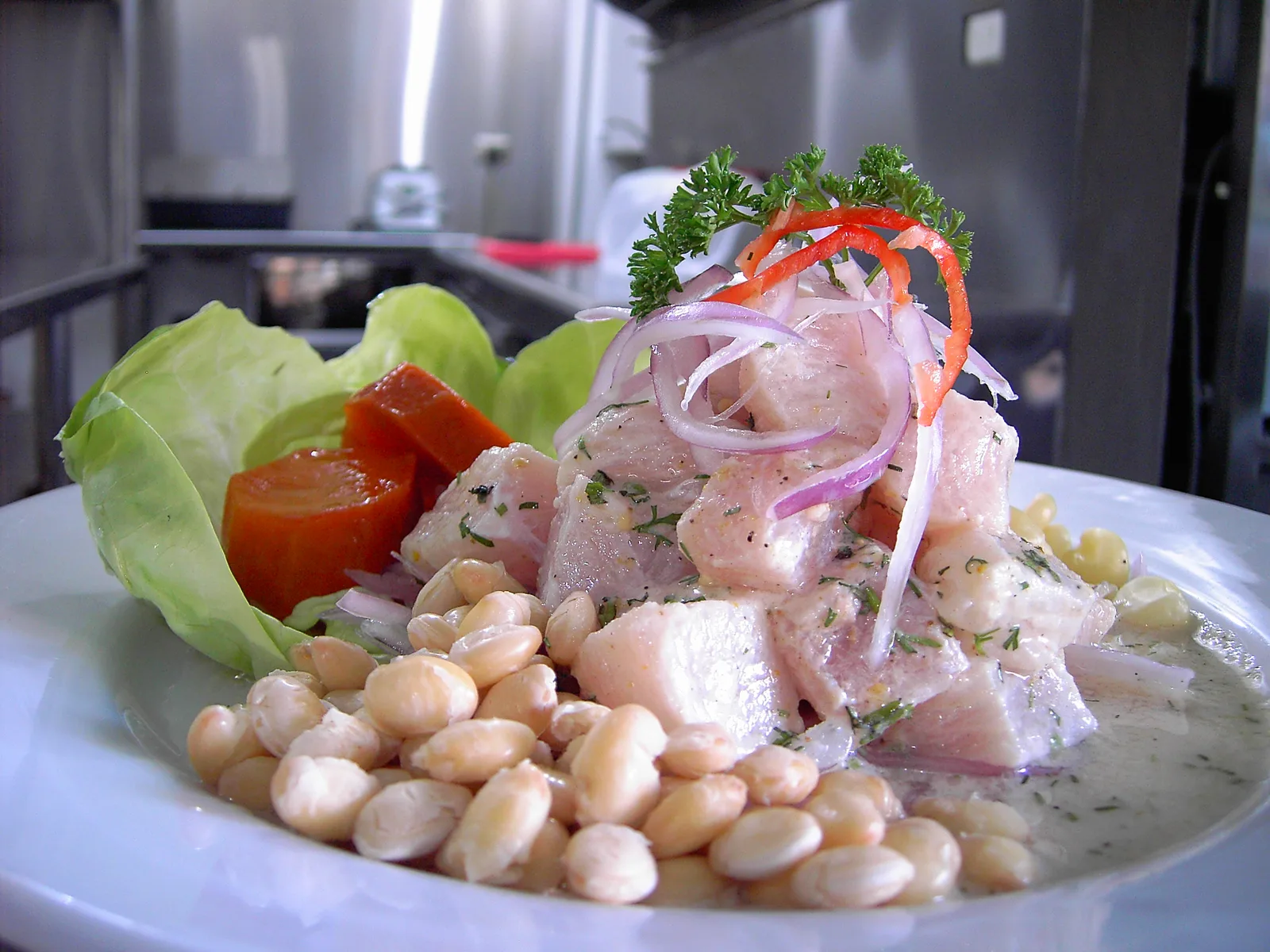
A plate of cebiche de corvina with lime-cured white fish cubes, red onion, ají strips, lettuce, sweet potato and choclo corn Peru flag Peru 35m
Lunch •Coastal Peru

Peruvian Ceviche

Peruvian ceviche is the national dish of Peru: cubes of very fresh sea bass cured in lime juice with red onion, ají limo and cilantro, with the milky, spicy marinade it leaves behind — leche de tigre — spooned over the top. It arrives with boiled sweet potato and big-kernel choclo corn, the sweet and starchy balance to all that citrus and heat. One serving is about 371 g.

Light & Fresh

Fresh sea bass cured in lime juice with red onion, ají limo and leche de tigre, served with sweet potato and choclo.

Pairs Well With
Boiled sweet potato, choclo corn and cancha
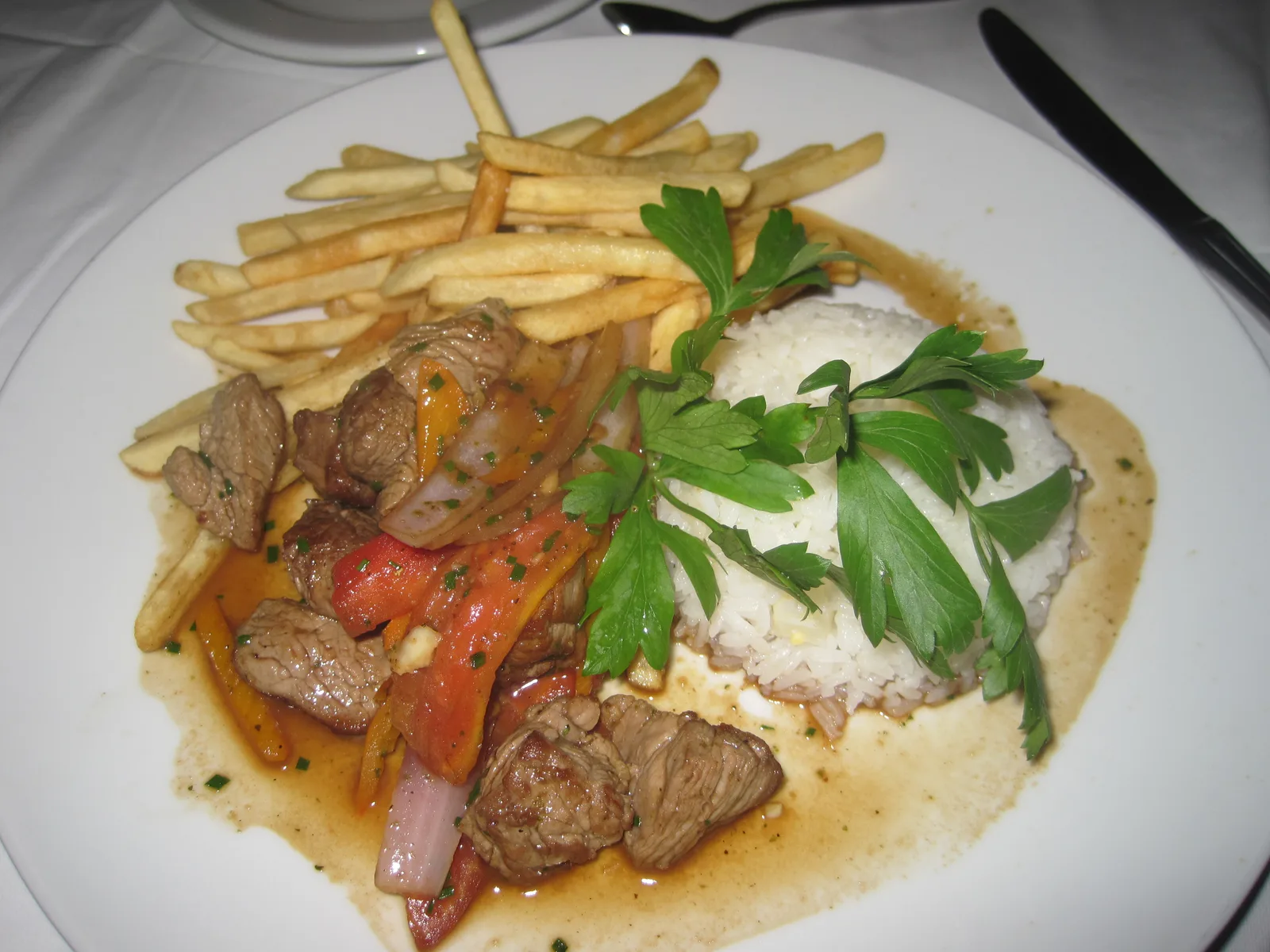
A plate of lomo saltado with seared beef strips, tomato and onion, French fries and a mound of white rice Peru flag Peru 40m
Dinner •Lima Heritage

Lomo Saltado

Lomo saltado is Peru's beloved Chifa stir-fry: strips of sirloin seared at screaming heat in a wok, tossed with red onion, tomato, soy sauce and red wine vinegar, then folded with crisp French fries and served beside white rice. It is the meeting of Cantonese wok cooking and Peruvian ingredients on one plate — smoky, salty, tangy and completely moreish. One serving is about 579 g.

Comfort & Energy

Sirloin seared at high heat with onion, tomato, soy and vinegar, tossed with fries and served with rice.

Pairs Well With
French fries, white rice and salsa criolla
Quick Prep (<30m)
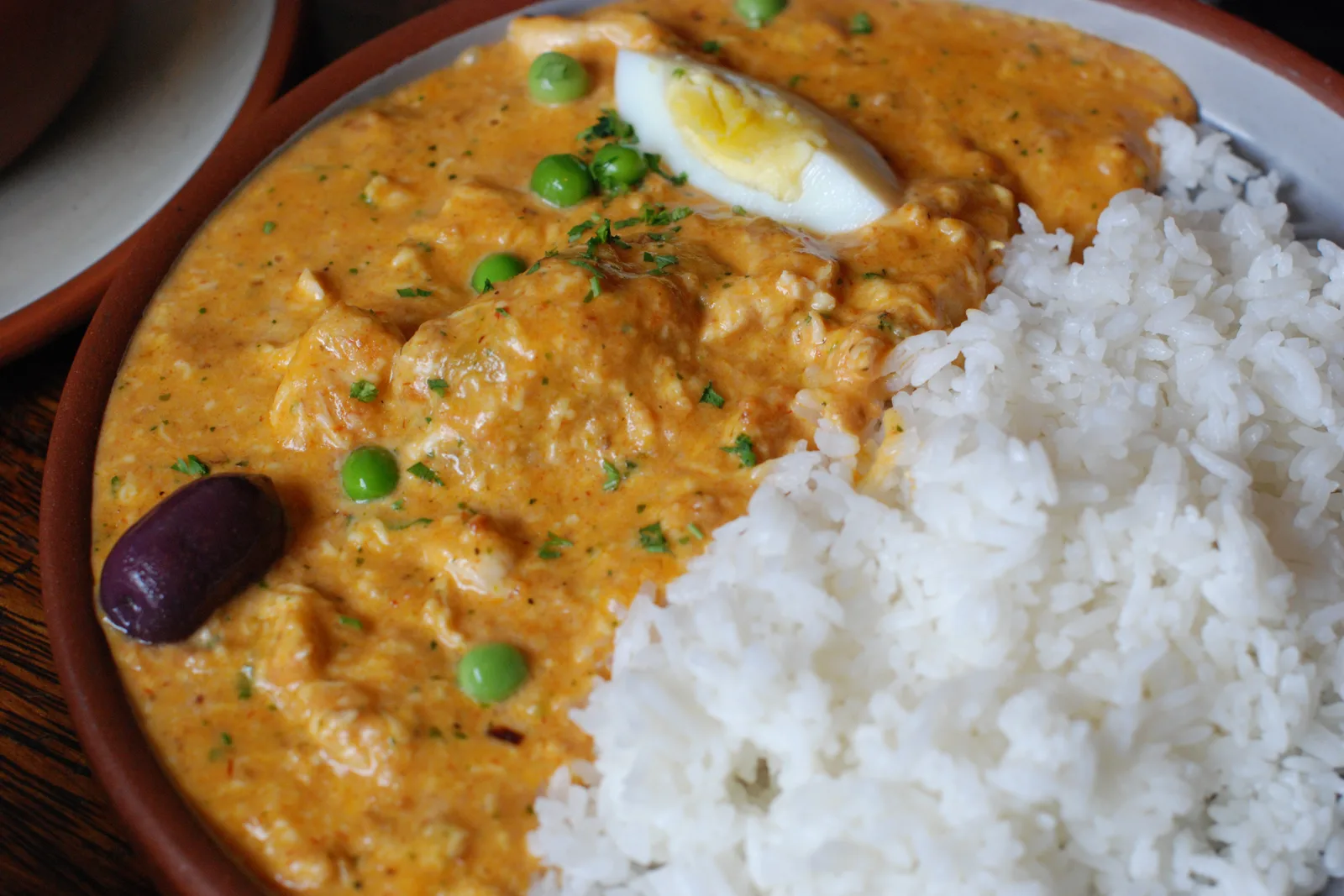
A bowl of ají de gallina with creamy golden chicken sauce, white rice, a boiled egg, peas and a black olive Peru flag Peru 1h
Dinner •Lima Heritage

Ají de Gallina

Ají de gallina is Lima's great comfort stew: poached chicken shredded into a velvety golden sauce of ají amarillo, bread soaked in evaporated milk, ground walnuts and Parmesan, served over white rice with a boiled egg, black olives and boiled potato. It is creamy, nutty, gently spicy and deeply filling — the dish Peruvians ask for when they come home. One serving is about 574 g.

Comfort & Warmth

Poached chicken in a creamy ají amarillo sauce thickened with bread, evaporated milk, walnuts and Parmesan.

Pairs Well With
White rice, boiled potato, boiled egg and black olives
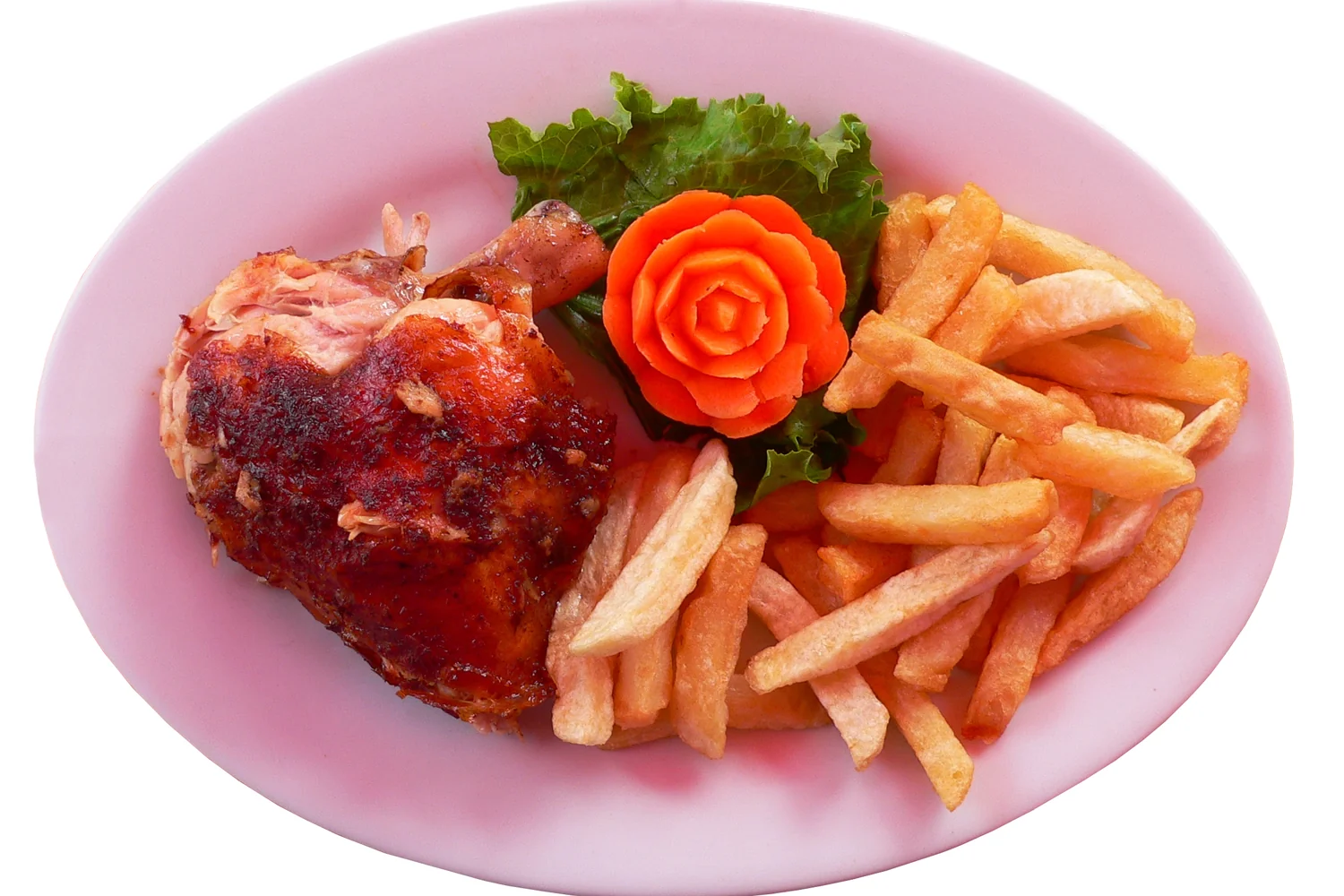
A glossy roasted chicken leg quarter with golden fries, lettuce and a carved carrot rose on a pink plate Peru flag Peru 1h 40m
Dinner •Lima Polleria Heritage

Pollo a la Brasa

This pollo a la brasa recipe marinates a whole chicken overnight in soy sauce, beer, lime, garlic, cumin and paprika, then roasts it slowly until the skin turns dark and crisp and the meat stays juicy. It is served the way every polleria in Lima serves it: a quarter chicken with thick-cut fries, a fresh salad and the two essential sauces, green aji verde and yellow aji amarillo. One serving is about 514 g.

High-Protein & Satisfying

Charcoal-roasted chicken with dark, crisp skin and juicy meat, served the polleria way with thick fries, salad and two aji sauces.

Pairs Well With
Aji verde, fries & salad
High Protein

The Dinner Gazette

Never wonder what’s for dinner again

One email a week with easy dinner ideas from around the world — ingredients, steps and nutrition, tested in our kitchen first.

Delivered every Thursday morning. Unsubscribe anytime.