Curated recipes from 193 countries  •  New seasonal Mediterranean issue out now

Overview

Tuvaluan Baked Fish

Baked Reef Fish

This tuvaluan baked fish recipe wraps a whole red snapper in foil with lemon slices and lemon juice, then bakes it until the flesh steams tender and flakes cleanly off the bone. There is no coconut milk, no marinade and no grill — just lemon, salt, pepper and a little olive oil, the way fish is cooked for lunch in Funafuti, Tuvalu. It is served with plain steamed rice. One serving is about 375 g.

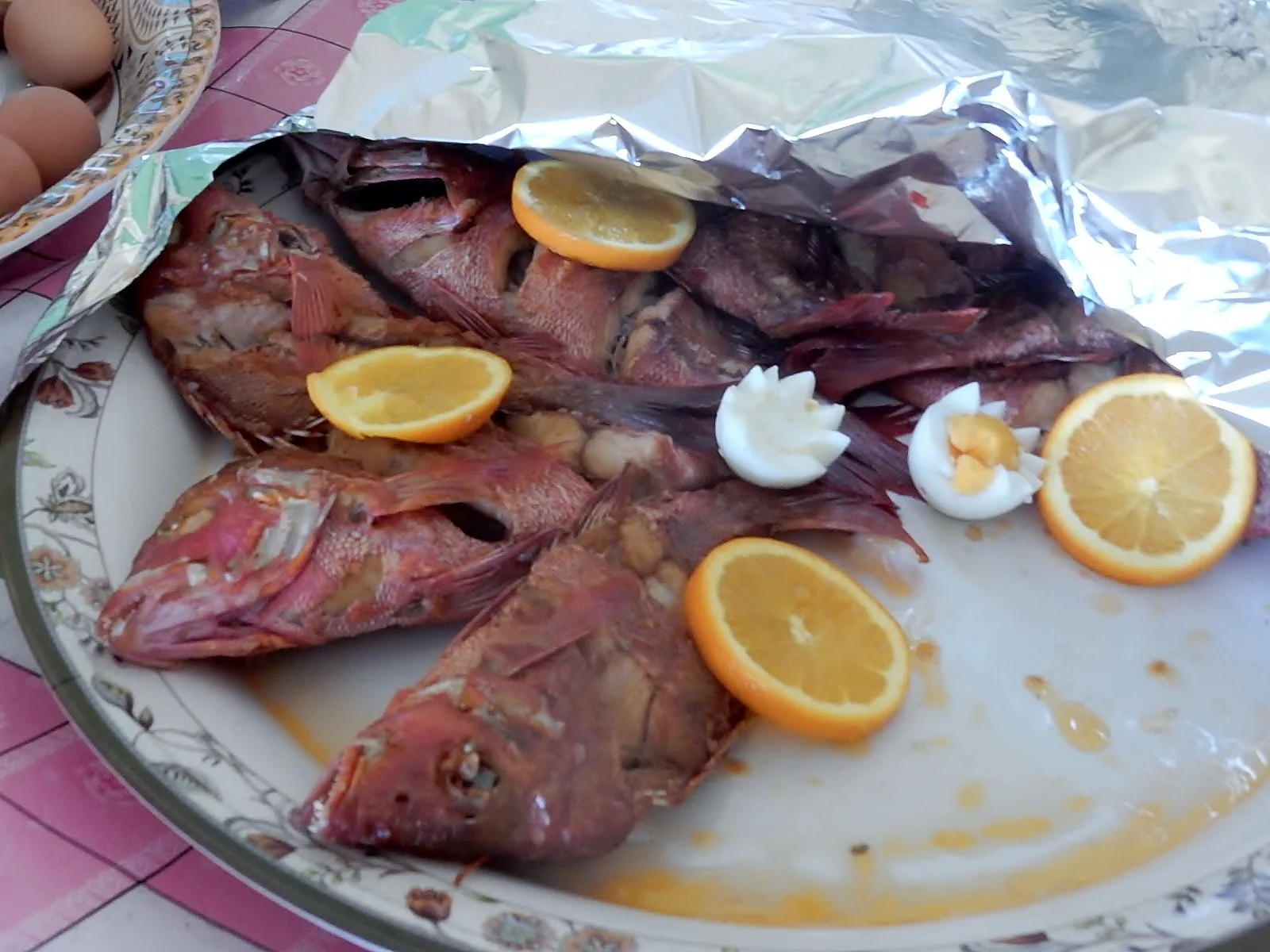
Fish from the lagoon and the open ocean is the heart of Tuvaluan cooking, and the cuisine of Tuvalu is based on the staple of coconut and the many species of fish found in the ocean and lagoons of the atolls. The day's catch is often cooked simply — baked in foil with lemon — and eaten with rice, which now forms an important part of the Tuvaluan diet alongside pulaka, the swamp taro grown in pits below the water table. The photograph for this recipe shows exactly that lunch: whole cooked reef fish with citrus slices on a platter in Funafuti, Tuvalu.

Pairs well with: Steamed rice, lemon wedges, and chilled coconut water

Provenance

Tuvalu flag Tuvalu

Funafuti Lunch

Oceania & Pacific

Time Dedication

45m

15m prep • 30m cook

Batch Yield

4 Servings

446 kcal per serving

1 serving ≈ 375 g

Technical Skill

Easy

Easy (Foil Parcel)

Meal Timing & Digestive Fit

Breakfast

Not Advised

Lunch

Hearty Midday Main

Dinner

Ideal Hearty Main

Snack & Tea

Inappropriate

Occasions: Family lunches, weeknight dinners, seaside gatherings, warm evenings Cost: Moderate — about $4–5 per serving at home
Whole baked reef fish with lemon slices, Funafuti, Tuvalu

Funafuti Lunch

Photo: Michael Coghlan, CC BY-SA 2.0, via Wikimedia Commons

The Heritage Formulary

Measured Ingredients

Estimated cost: Moderate — about $4–5 per serving at home (USD)

A good foil-baked fish is judged by its steam: the parcel puffs, the flesh flakes cleanly off the bone, and the lemon stays bright, never bitter.

Execution Methodology & Culinary Technique

Step-by-Step Cooking Guide

Active 45m
P

Prep Stage: Rice On, Fish in Foil

15 Mins • Foil Parcel

Get the rice on first so it steams while you work on the fish. Rinse the snapper, pat it very dry and score it, then season it inside and out with salt, pepper and lemon juice. Lay the foil on a tray, oil it, make a bed of lemon slices, set the fish on top with more lemon in the cavity and over the skin, drizzle with the oil and seal the parcel loosely so steam has room to build.

Maestro Tip: Pat the fish very dry before seasoning — a wet fish dilutes the lemon juice and steams pale instead of taking on flavour.

  1. 1

    Start the Rice

    15 Mins Simmer, ~100°C (212°F)

    Put the rinsed rice in a saucepan with the 480 ml of water and 1 g of the salt. Bring to a boil, stir once, cover tightly, turn the heat to its lowest setting and cook for 15 minutes without lifting the lid. Take off the heat and leave covered for 5 minutes, then fluff with a fork.

    Do not lift the lid while the rice cooks — the trapped steam is what finishes it.

    Done when: The rice is tender, separate and steaming, with no water left in the pot.

  2. 2

    Prepare the Fish

    10 Mins Room temperature, ~20°C (68°F)

    While the rice cooks, preheat the oven to 200°C (400°F). Rinse the snapper inside and out and pat it very dry. Cut 3 shallow diagonal slashes, about 1 cm deep, on each side so the heat and the lemon reach the thickest flesh. Rub the remaining 3 g of salt and the pepper all over the fish and inside the cavity, then pour the lemon juice over it.

    Score just through the skin into the flesh — too deep and the fish falls apart when you lift it from the parcel.

    Done when: The scores are open, the fish is evenly seasoned, and the flesh smells fresh and lemony.

  3. 3

    Wrap the Foil Parcel

    5 Mins Room temperature, ~20°C (68°F)

    Lay the foil sheet on a baking tray and brush the centre with a little of the olive oil. Arrange half the lemon slices in a single layer, set the fish on top, tuck the remaining slices inside the cavity and over the skin, and drizzle with the rest of the oil. Bring the long edges of the foil up over the fish and fold them together twice, then fold the short ends in, leaving a little air inside the parcel so the steam can circulate.

    Leave air in the parcel — a foil parcel pressed flat against the fish steams it soggy instead of letting the hot air circulate.

    Done when: The parcel is sealed all round with a loose dome of foil above the fish, not pressed tight against it.

  4. 4

    Bake the Fish

    25 Mins Oven, 200°C (400°F)

    Put the tray in the preheated oven and bake for 22–25 minutes. The parcel will puff up as the steam builds. The fish is done when the flesh at the thickest part flakes easily with a fork and a thermometer there reads 63°C (145°F).

    Do not open the parcel to check early — every opening lets the steam out and adds minutes to the cooking time.

    Done when: The flesh is opaque white, flakes cleanly off the bone, and a thermometer at the thickest part reads 63°C (145°F).

  5. 5

    Rest and Serve

    5 Mins Resting off the heat, ~60°C (140°F)

    Take the tray out and rest the parcel for 3 minutes. Open the foil carefully, pulling it away from your face so the steam escapes safely. Lift the fish onto a platter, spoon any lemony juices from the parcel over it, and serve with the steamed rice and extra lemon slices at the table.

    Serve the fish whole — part of the pleasure is picking the sweet flesh from the bones at the table.

    Done when: The fish is hot through, the lemon slices are softened and fragrant, and the rice is steaming.

Finishing Touches & Plating

Open the parcel at the table so the lemon steam escapes in front of everyone, spoon the juices over the fish, and serve the whole fish with the steamed rice and lemon slices alongside.

Nutritional Physiology & Benefits

Nutrition

Energy

446

kcal / serving

Protein

39g

Complete AA

Carbs

53g

Complex

Fats

7g

Healthy

Per serving (4 servings · 1 serving ≈ 375 g)
Energy446 kcal
Protein39 g
Carbohydrates53 g
Fat7 g
Fibre1.2 g
Sugar0.8 g
Sodium495 mg
Per 100g
Energy119 kcal
Protein10.4 g
Carbohydrates14.1 g
Fat2 g
Fibre0.3 g
Sugar0.2 g
Sodium132 mg

Nutrition values are estimated — calculated from USDA FoodData Central values for the listed ingredients.

Vitamins & minerals: Vitamin D and B12 and selenium (snapper), vitamin C (lemon), iodine (snapper). Nutrition values are estimated.

Lean Protein, Generously

A whole reef fish gives about 39 g of lean protein per serving with very little fat of its own, so the meal is filling without feeling heavy.

Vitamin D, B12 and Selenium

Snapper is one of the few foods that naturally provides vitamin D, and it also brings vitamin B12 and selenium — nutrients that support normal bone health and the immune system.

Light, Lemon-Bright and Low in Fat

Baking in foil steams the fish in its own juices with just a drizzle of oil, so the finished plate stays low in fat — about 7 g per serving — while the lemon keeps it bright and fresh.

Food Pairings

What to Eat With

To optimize nutrient absorption and elevate the sensory depth, pair with these authentic accompaniments:

Sides

Steamed Rice

Rice now forms an important part of the Tuvaluan diet and is the everyday accompaniment to fish — its plain, mild grains soak up the lemony juices from the parcel and turn a single fish into a full dinner.

Vegetables

Sliced Cucumber

Cool, crisp cucumber adds crunch and freshness next to the soft, steaming fish, and its mild flavour lets the lemon stay the star of the plate.

Drinks

Chilled Coconut Water

Coconut water is the natural drink of the atolls — cold, lightly sweet and refreshing against the hot fish and sharp lemon, with no sugar added.

More Pairings

Lemon Wedges at the Table

Extra lemon wedges let each person squeeze more brightness over their own portion, so the fish can be seasoned to taste without drowning it in sauce.

Complete menu

Serve the whole foil-baked fish with steamed rice, sliced cucumber and lemon wedges at the table, with a jug of chilled coconut water alongside.

Digestive Guardrails

What NOT to Combine

To prevent digestive distress, sluggishness, or palate clash, avoid pairing the dish with these elements:

A Heavy Coconut-Cream Sauce on Top

This dish is defined by lemon, not coconut — a rich coconut-cream sauce would cover the bright lemon flavour and add a lot of saturated fat to a naturally light fish. Keep the topping to lemon and the parcel juices. This is general guidance, not medical advice.

Baking the Fish Unwrapped at High Heat

Without the foil parcel the fish dries out quickly in a hot oven and the lemon burns bitter on the skin. The sealed parcel is what keeps the flesh moist — if the foil tears, rewrap it before baking. This is general guidance, not medical advice.

General information only, not medical advice — consult a doctor for personal dietary decisions.

Who Should Eat It

Who Should Eat

  • General adultsA complete, light dinner — lean fish, rice and lemon, with nothing heavy on the plate.
  • ChildrenSuitable from age 3+; serve the flesh only, carefully checked for small bones, and keep the lemon mild for younger children.
  • ElderlyVery suitable — the flesh is soft and easy to eat, but take care with the fine bones of a whole fish.
  • Pregnant womenGenerally suitable; make sure the fish is cooked through to 63°C (145°F) and eat it freshly cooked and hot. Reef fish from the open ocean is usually low in mercury, but keep portions moderate.
  • Breastfeeding womenGenerally suitable; the protein and vitamin D support recovery — eat it freshly cooked and hot.
  • AthletesA strong post-training meal: about 39 g protein per serving with rice for glycogen.
  • Weight gainA good choice — take a generous helping of fish and a second spoonful of rice.
  • Weight lossKeep the portion modest — half the fish with a small mound of rice — and fill the rest of the plate with sliced cucumber.

Health Conditions — Adjust or Avoid

Conditions

  • DiabetesRice is the main source of carbs — keep it to about one cup (150 g cooked) per serving and ask your clinician about portion size.
  • High blood pressureSodium is moderate (about 495 mg per serving) — season lightly and let the lemon do the work. Ask your clinician about a suitable portion.
  • Kidney diseaseLimit the portion of rice and fish; ask your clinician about portion size.
  • GoutEat occasionally and in moderate portions — fish is generally moderate in purines, but large servings still add up. Ask your clinician.
  • Stomach issuesThe steamed fish and rice are usually gentle, but a lot of lemon juice can irritate a sensitive stomach — use the juice sparingly and eat the fish with the rice. Ask your clinician if unsure.
  • Cardiovascular diseaseFoil-baked fish is naturally low in saturated fat, and the olive oil adds mostly unsaturated fat — a reasonable choice in a sensible portion. Ask your clinician.
  • Fatty liverA reasonable choice — lean fish with rice and vegetables; keep the rice portion modest and skip a second helping. Ask your clinician.
  • Food allergiesContains fish. Naturally gluten-free and dairy-free, and contains no coconut, egg or nuts. Fish allergy is the key risk — do not serve to anyone with a fish allergy.
  • Special therapeutic dietsIf you follow a prescribed low-sodium diet, use less salt and skip the salt in the rice water, and check with your clinician.

If you have a medical condition, consult your doctor before changing your diet.

Storage & Use

Storage & Use

How to store
Cool quickly and store in an airtight container; keep the rice separate from the fish if possible.
In the fridge
1–2 days.
In the freezer
Up to 2 months for the fish; the rice freezes separately for up to 3 months.
How to reheat
Reheat gently in a covered pan or oven until steaming, and make sure it reaches 74°C (165°F) throughout.
Freezing recommended
Only if needed — foil-baked fish is best eaten fresh from the parcel; freezing softens the flesh.
Signs it has spoiled
Sour or ammonia smell, slimy flesh, or a dull, grey colour on the fish.

More recipes to explore

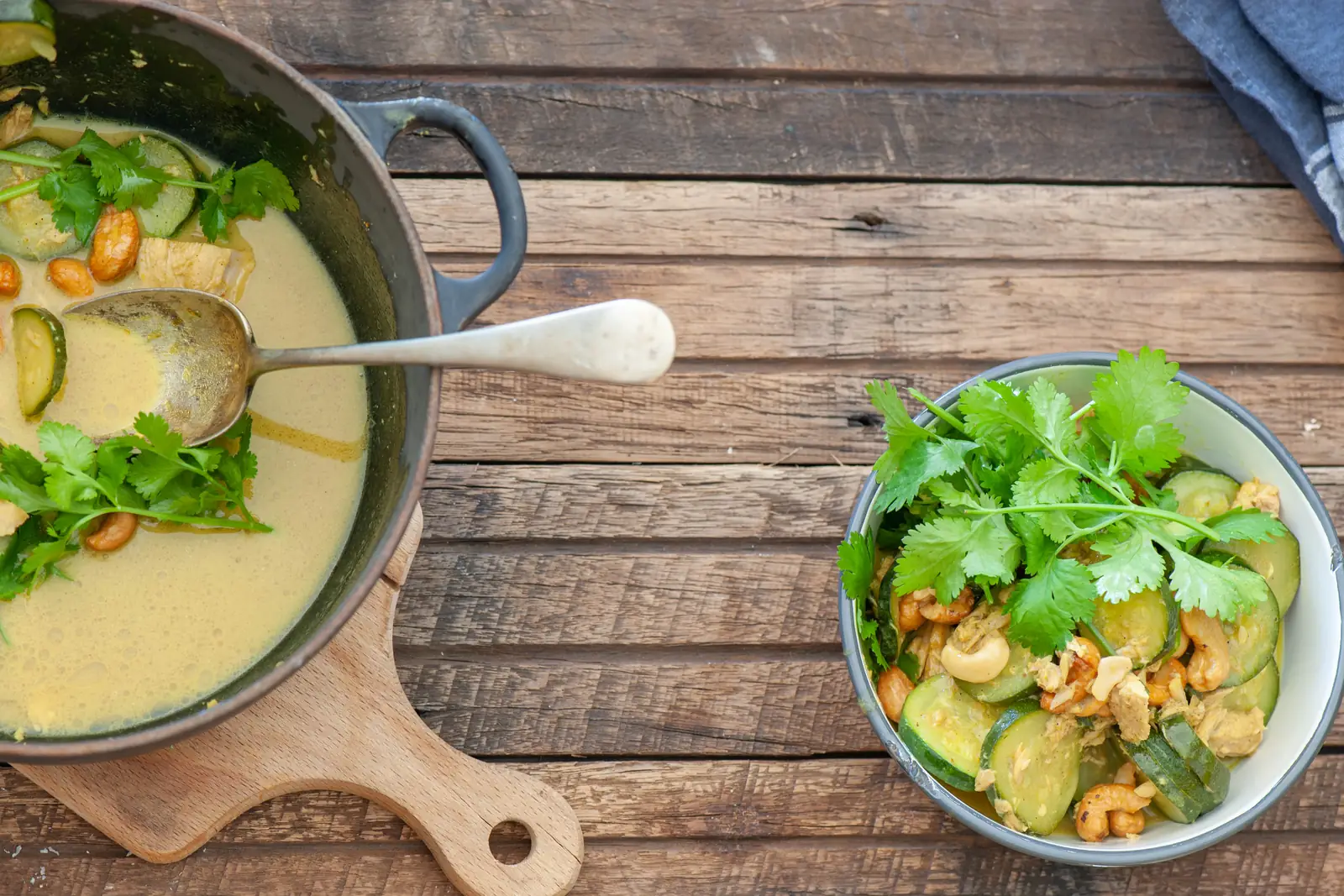
A pot and a bowl of creamy tuna curry with sliced green vegetables, cashews and fresh coriander on a wooden table Tuvalu flag Tuvalu 40m
Dinner •Tuvalu Island Classic

Tuvaluan Tuna Curry

Tuvaluan tuna curry is the small Pacific nation's everyday fish curry: chunks of fresh tuna simmered in coconut milk with curry powder, onion, garlic, ginger and red chilli, seasoned with soy sauce and finished with cucumber and spring onion cooked in the sauce. What sets it apart from the Maldives' mas riha is its build — a single spoonful of imported curry powder and a splash of soy sauce instead of a ground spice paste with curry leaves and pandan — and the cucumber simmered right in the curry. One serving is about 350 g.

Rich & Comforting

Fresh tuna simmered in a creamy coconut curry with curry powder, soy sauce and cucumber — a simple, warming island dinner.

Pairs Well With
Steamed rice or coconut rice, with boiled taro on the side.
High Protein
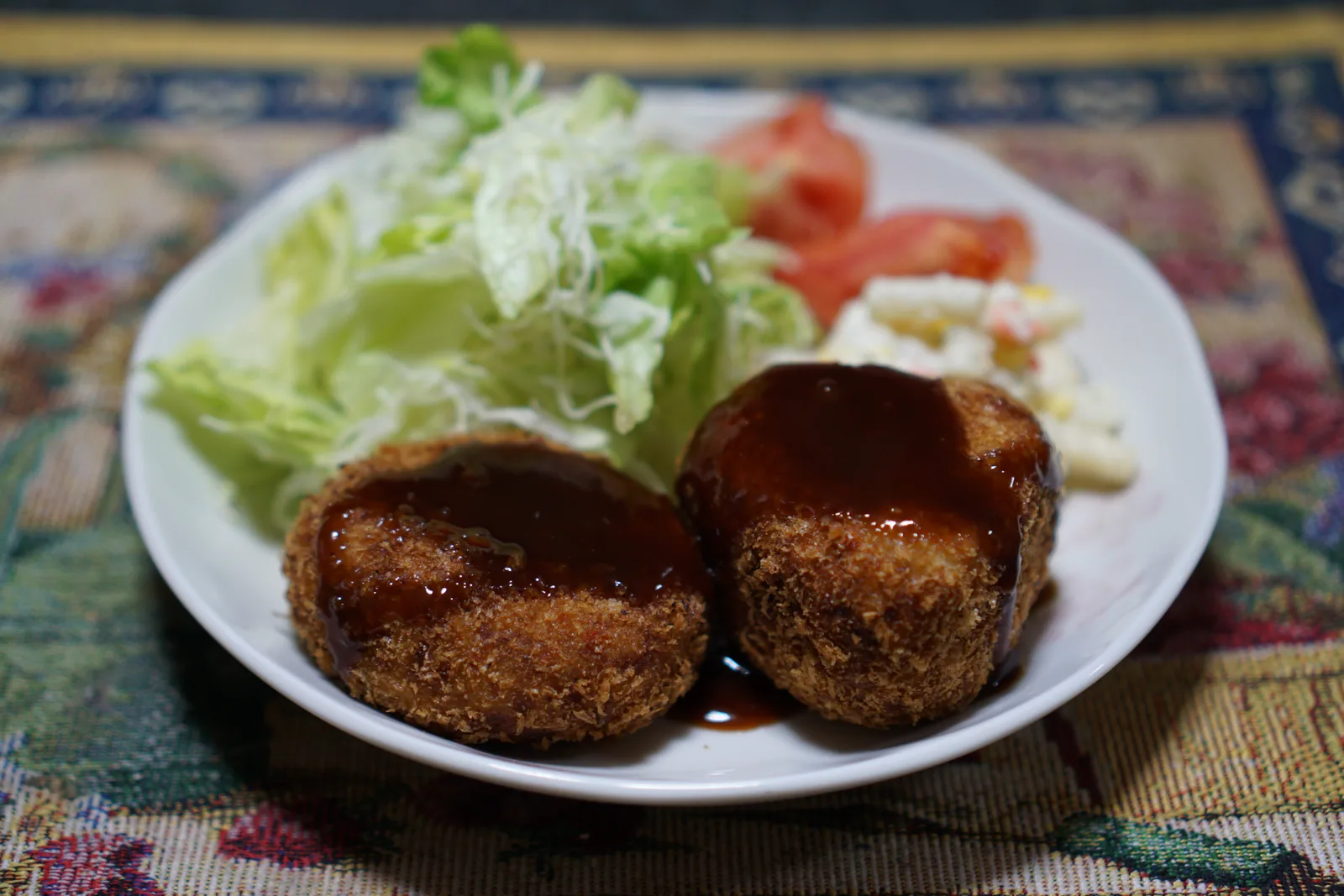
Two golden breadcrumb-coated fried croquettes with shredded cabbage salad on a white plate Tuvalu flag Tuvalu 45m
Snack & Tea •Tuvalu Island Snack

Tuvaluan Tuna Taro Patties

This tuna taro patties recipe comes from Tuvalu, where mashed cooked taro is mixed with drained tuna, grated ginger, green onion and lemon juice, bound with egg, coated in breadcrumbs and pan-fried until crisp and golden. The patties are soft and savoury inside with a crunchy crust, and the Pacific Community's cookbook serves them with a salad. One serving is about 212 g — three patties.

Crisp & Satisfying

Mashed taro and tuna, seasoned with ginger and lemon, breadcrumb-coated and pan-fried golden — a crisp Tuvaluan snack.

Pairs Well With
A crisp cabbage and tomato salad with lemon wedges, or sauteed greens.
High Protein
Bœuf bourguignon — French beef braised in red wine France flag France 4h
Dinner •Burgundy Terroir

Bœuf Bourguignon

Beef braised gently in red wine until the connective tissue melts into a velvet, gelatin-rich sauce — the classic Burgundy Sunday dinner.

Cellular Repair

Beef braised in red wine until spoon-tender, with mushrooms and pearl onions.

Pairs Well With
Parsnip Purée & Steamed French Haricots Verts
High Protein
Vietnamese braised pork belly with golden eggs in caramel sauce Vietnam flag Vietnam 1h 45m
Dinner •One Pot

Vietnamese Braised Pork and Eggs

Pork belly slowly braised in coconut water and caramel until meltingly tender, with golden eggs that soak up the sweet-savoury sauce — the Vietnamese family dish that tastes better the next day.

Comfort & Sustained Energy

Slow-braised pork belly and eggs in coconut water and caramel.

Pairs Well With
Steamed rice & pickled mustard greens
High Protein

The Dinner Gazette

Never wonder what’s for dinner again

One email a week with easy dinner ideas from around the world — ingredients, steps and nutrition, tested in our kitchen first.

Delivered every Thursday morning. Unsubscribe anytime.