Curated recipes from 193 countries  •  New seasonal Mediterranean issue out now

Overview

Vanuatu Kava

Malok; Malogu; Kava Grog

Vanuatu kava is a milky, earthy drink made by kneading dried noble kava root in cold water and straining it through cloth, then serving it in coconut shells at the nakamal, the village meeting house, after sunset. It is a ceremonial and social drink, not an everyday thirst-quencher, and it is traditionally drunk in one draught, in company, in the quiet of the evening. One serving is about 250 g.

Kava was domesticated in northern Vanuatu around 3,000 years ago, and from there it spread across the Pacific, carried by voyagers to Fiji, Samoa, Tonga and Hawaii. In Vanuatu the drink belongs to the nakamal, the village meeting house, where people gather after sunset to share shells, settle matters and talk quietly into the night. Vanuatu law now protects the tradition: only noble kava cultivars such as Borogu and Melomelo may be exported or sold for drinking, and the leaves, stems and non-noble varieties are kept out of the drink.

Pairs well with: Washemout fruit, coconut water and a light meal afterwards

Provenance

Vanuatu flag Vanuatu

Vanuatu Heritage

Oceania & Pacific

Time Dedication

30m

20m prep • 10m cook

Batch Yield

4 Servings

30 kcal per serving

1 serving ≈ 250 g

Technical Skill

Intermediate

Easy (Knead & Strain)

Meal Timing & Digestive Fit

Breakfast

Not Advised

Lunch

Inappropriate

Dinner

Inappropriate

Snack & Tea

Ideal Light Bite

Occasions: Evenings at the nakamal, village gatherings, welcoming guests, quiet nights with friends Cost: Low - about $2 per serving at home
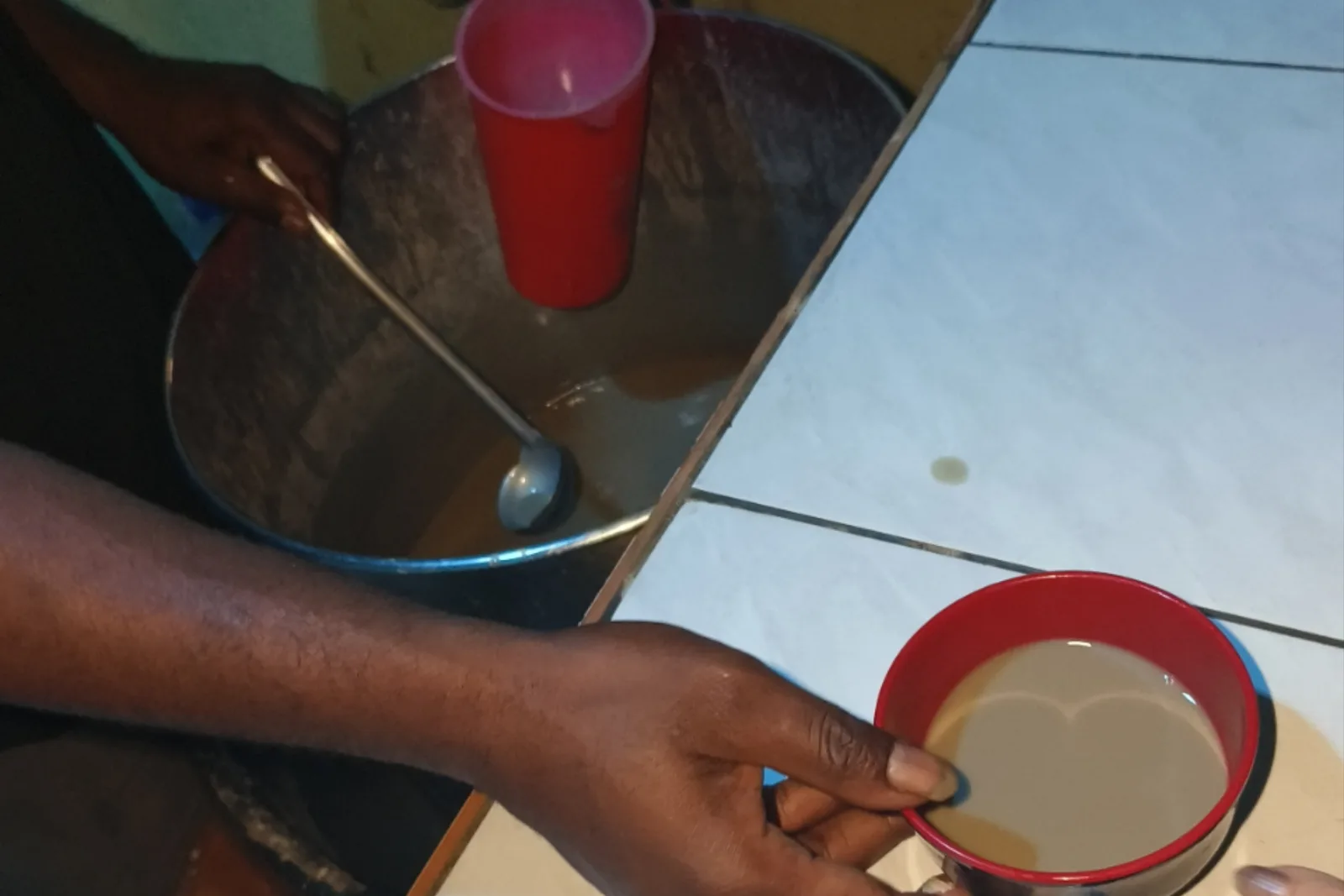
A hand passing a red bowl of milky grey-brown kava at a Vanuatu nakamal at night, with a large communal bowl and ladle behind it

Vanuatu Heritage

Photo: Sheminghui.WU, CC BY-SA 4.0, via Wikimedia Commons

The Heritage Formulary

Measured Ingredients

Estimated cost: Low - about $2 per serving at home (USD)

Good kava is judged by its colour - a milky grey-brown - and a smooth, earthy taste with no grit; a well-strained shell leaves no sediment at the bottom.

Execution Methodology & Culinary Technique

Step-by-Step Cooking Guide

Active 30m
P

Prep Stage: Measure, Soak & Set Out the Shells

20 Mins • Measure & Soak

Measure 120 g of dried noble kava root powder into a large bowl and pour over 1 litre of cold clean water. Stir once, then leave the powder to soak for 10 minutes so it softens and releases its flavour. Set a clean cloth strainer or muslin bag, a second large bowl and four coconut shells or small bowls on the table before you start kneading.

Maestro Tip: Soaking matters - dry powder kneaded straight away stays gritty and gives a weaker, cloudier drink.

  1. 1

    Measure the Root and the Water

    5 Mins No heat, about 20°C (68°F)

    Weigh 120 g of dried noble kava root powder into a large bowl and add 1 litre of cold clean drinking water. Stir with a spoon until the powder is evenly wet and there are no dry pockets floating on top.

    Weigh the powder rather than guessing by spoonfuls - the strength of the drink depends on the root-to-water ratio.

    Done when: All the powder is wet and evenly mixed, with no dry clumps.

  2. 2

    Let the Powder Soak

    10 Mins No heat, about 20°C (68°F)

    Leave the bowl to stand for 10 minutes. The powder softens as it soaks, which makes the kneading easier and helps the flavour and the active compounds pass into the water.

    Do not skip the soak - it is what keeps the finished drink smooth instead of gritty.

    Done when: The powder has darkened and softened, and the water looks cloudy.

  3. 3

    Knead and Strain Through Cloth

    10 Mins No heat, about 20°C (68°F)

    Pour the soaked mixture into a clean cloth strainer or muslin bag held over a second large bowl. Gather the cloth, twist it closed, and knead and squeeze it firmly with both hands for about 10 minutes, working the bundle over and over so the liquid is pressed out and the fibre stays in the cloth. Open the cloth once, stir the damp pulp, re-twist and squeeze again until only a pale, almost dry pulp is left. Discard the pulp.

    Knead with your palms, not just your fingers, and squeeze in several rounds - a single quick press leaves most of the drink in the cloth.

    Done when: The strained liquid is milky grey-brown and smooth, with no grit; the pulp left in the cloth feels almost dry.

  4. 4

    Stir, Serve in Shells and Drink Slowly

    5 Mins No heat, about 20°C (68°F)

    Stir the strained kava well, then ladle about 250 ml into each coconut shell or small bowl and serve at once. In Vanuatu each shell is drunk in one draught, in company, and the evening is spent sitting quietly together - the drink is the occasion, not a race. Start with one shell and wait at least 30 minutes before deciding whether to have another; never drink kava and drive.

    Serve it fresh - kava separates and turns bitter if it sits, so stir the bowl again before every shell.

    Done when: Each shell holds a smooth, milky grey-brown drink with no sediment at the bottom.

Finishing Touches & Plating

Drink the kava fresh, in one shell at a time, and follow each shell with a bite of fruit or a sip of coconut water - the washemout - to clear the earthy taste. Keep the evening quiet and unhurried, the way it is kept in a Vanuatu nakamal.

Nutritional Physiology & Benefits

Nutrition

Energy

30

kcal / serving

Protein

1g

Complete AA

Carbs

6g

Complex

Fats

0g

Healthy

Per serving (4 servings · 1 serving ≈ 250 g)
Energy30 kcal
Protein1 g
Carbohydrates6 g
Fat0 g
Fibre1.5 g
Sugar0.4 g
Sodium10 mg
Per 100g
Energy12 kcal
Protein0.3 g
Carbohydrates2.2 g
Fat0.2 g
Fibre0.6 g
Sugar0.2 g
Sodium4 mg

Nutrition values are estimated — calculated from USDA FoodData Central values for the listed ingredients.

Vitamins & minerals: Trace potassium and magnesium from the root; the drink is mostly water and is not a significant source of vitamins or minerals.

Very Light, No Sugar or Alcohol

A traditional shell holds only about 30 kcal, with no sugar, no alcohol and no caffeine - the drink is water and root, nothing else.

A Slow, Shared Evening Ritual

Kava is traditionally shared in the evening as a way to unwind together; the drink is part of a slow, social ritual rather than something drunk alone in a hurry.

Two Ingredients, Nothing Added

Made from just two ingredients - noble kava root and water - the drink is naturally plant-based, gluten-free and dairy-free, with no additives when prepared the traditional way.

Food Pairings

What to Eat With

To optimize nutrient absorption and elevate the sensory depth, pair with these authentic accompaniments:

Sides

Washemout Fruit

A bite of ripe pineapple, banana or pawpaw after each shell - the washemout - clears the earthy, slightly bitter taste and freshens the mouth.

Drinks

Cold Coconut Water

Cold coconut water keeps you hydrated through the evening and its mild sweetness is a gentle contrast to the earthy kava.

Full Menus

A Light Meal Afterwards

In Vanuatu kava is drunk before eating, so a light meal afterwards - laplap, grilled fish or boiled yam with island cabbage - lands well and steadies the stomach.

Complete menu

Serve the kava in coconut shells at sunset with washemout fruit and cold coconut water on the table, then follow with a light meal of laplap or grilled fish with boiled yam.

Digestive Guardrails

What NOT to Combine

To prevent digestive distress, sluggishness, or palate clash, avoid pairing the dish with these elements:

Alcohol, Before or After

Never drink kava with alcohol, and do not drink it on a day you have been drinking. Both act on the liver and both cause drowsiness, and combining them increases the risk of liver harm and of accidents. This is general information, not medical advice.

Driving or Machinery Afterwards

Kava causes drowsiness, slower reactions and numbness around the mouth, so do not drive, swim, climb or operate machinery after drinking it, and do not drink it before any task that needs full alertness. This is general information, not medical advice.

Sedative Medicines and Kava Extracts

Do not combine kava with sedative or sleep medicines, anxiety medicines or strong painkillers, and do not use kava extracts, capsules or concentrated products as a substitute for the traditional water-based drink - concentrated products carry a different risk profile. Talk to your doctor first if you take any regular medicine. This is general information, not medical advice.

General information only, not medical advice — consult a doctor for personal dietary decisions.

Who Should Eat It

Who Should Eat

  • General adultsSuitable for healthy adults in moderation - one shell, then wait at least 30 minutes before deciding on another, and never drink and drive.
  • ChildrenNot suitable - kava is an adult ceremonial drink with psychoactive effects, and children should never be given it.
  • ElderlyTake extra care - the drowsiness and slower reactions raise the risk of falls, and older adults more often take medicines that can interact with kava. Ask your doctor first.
  • Pregnant womenAvoid kava in pregnancy - there is not enough safety evidence, and the drink's active compounds cross into the mother's system. Ask your doctor if you have any questions.
  • Breastfeeding womenAvoid kava while breastfeeding - the active compounds may pass into breast milk, and safety has not been established. Ask your doctor if you have any questions.
  • AthletesNo training benefit - kava causes drowsiness and slower reactions, so never drink it before training, competition or driving home afterwards.
  • Weight gainNot helpful for gaining weight - a shell has only about 30 kcal, so it adds almost no energy to the day.
  • Weight lossVery low in calories, but kava is not a weight-loss aid and must never be used as a meal replacement or an appetite suppressant.

Health Conditions — Adjust or Avoid

Conditions

  • DiabetesUnsweetened kava is low in sugar and has only about 5.5 g of carbohydrate per shell, but check your blood sugar as usual and ask your clinician whether it fits your routine.
  • High blood pressureKava contains no caffeine or alcohol, but its sedative effects can add to blood pressure medicines and cause dizziness. Ask your clinician before drinking it.
  • Kidney diseaseThe drink carries a small amount of potassium from the root; keep to one shell and ask your clinician whether it fits your diet.
  • GoutNo strong link between traditional kava and gout flares is established, but dehydration and medicines matter - ask your clinician before drinking it if you have frequent flares.
  • Stomach issuesKava's earthy taste can cause nausea, especially on an empty stomach; stop drinking if you feel unwell and ask your clinician if symptoms persist.
  • Cardiovascular diseaseKava causes drowsiness and may interact with heart medicines; do not drink it without asking your clinician first.
  • Fatty liverAvoid kava if you have liver disease - cases of liver injury have been linked to kava products, and the risk is highest for people whose liver is already affected. Ask your clinician before drinking it.
  • Food allergiesTrue kava root allergy is uncommon, but only buy powder from a trusted supplier, as cheap or adulterated powder may contain other plant parts or contaminants. Check the label if you have any plant allergy.
  • Special therapeutic dietsIf you follow a prescribed diet or take regular medicines - especially for sleep, anxiety, pain or the liver - ask your clinician before drinking kava.

If you have a medical condition, consult your doctor before changing your diet.

Storage & Use

Storage & Use

How to store
Make kava fresh and drink it the same evening. Keep any leftover strained kava in a sealed container in the fridge and stir well before serving.
In the fridge
Up to 24 hours in a sealed container, stirred well before drinking; the flavour turns more bitter with time.
In the freezer
Not recommended - freezing changes the texture and flavour of the strained drink.
How to reheat
Do not heat kava - it is a cold drink, and heating is not part of the tradition. Drink it cold or discard it.
Freezing recommended
No - kava is made fresh and drunk the same evening.
Signs it has spoiled
Sour or off smell, sharp sour taste, or a slimy surface - discard if any appear.

More recipes to explore

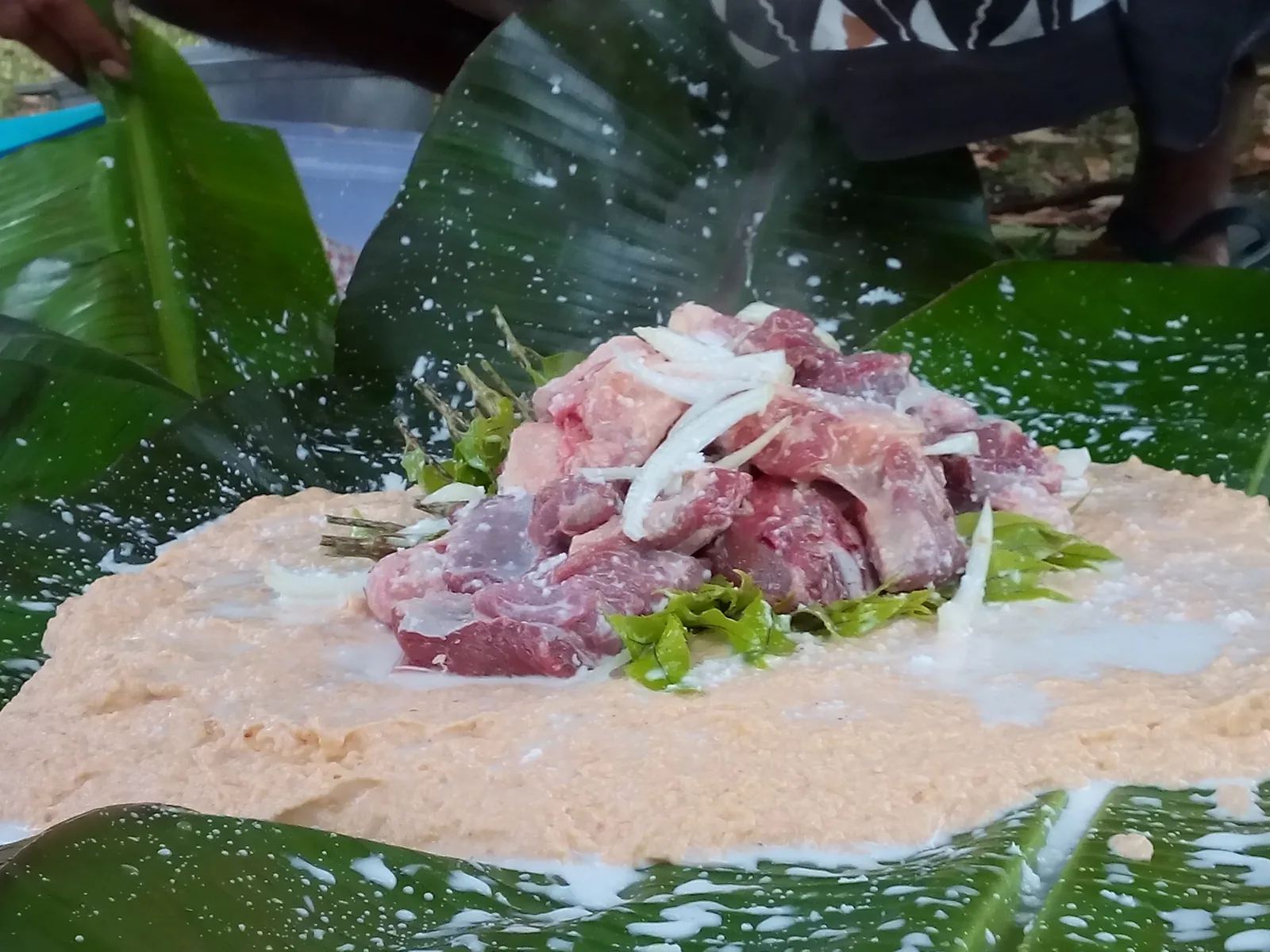
Laplap sosor being assembled on banana leaves — grated root vegetable paste topped with raw pork pieces, onion and greens, with coconut milk poured over Vanuatu flag Vanuatu 2h 10m
Dinner •Vanuatu Heritage

Vanuatu Laplap

Laplap is Vanuatu's national dish: yam and taro are grated into a thick paste, mixed with coconut milk, spread over banana leaves, layered with pork, onion and island cabbage, then folded into a parcel and baked until the roots set into a dense, moist cake. One serving is about 400 g.

Comfort & Warmth

Grated yam and taro mixed with coconut milk, layered with pork and island cabbage, then wrapped in banana leaves and baked until firm and fragrant.

Pairs Well With
Simboro parcels, fresh island salad and coconut water
High Protein
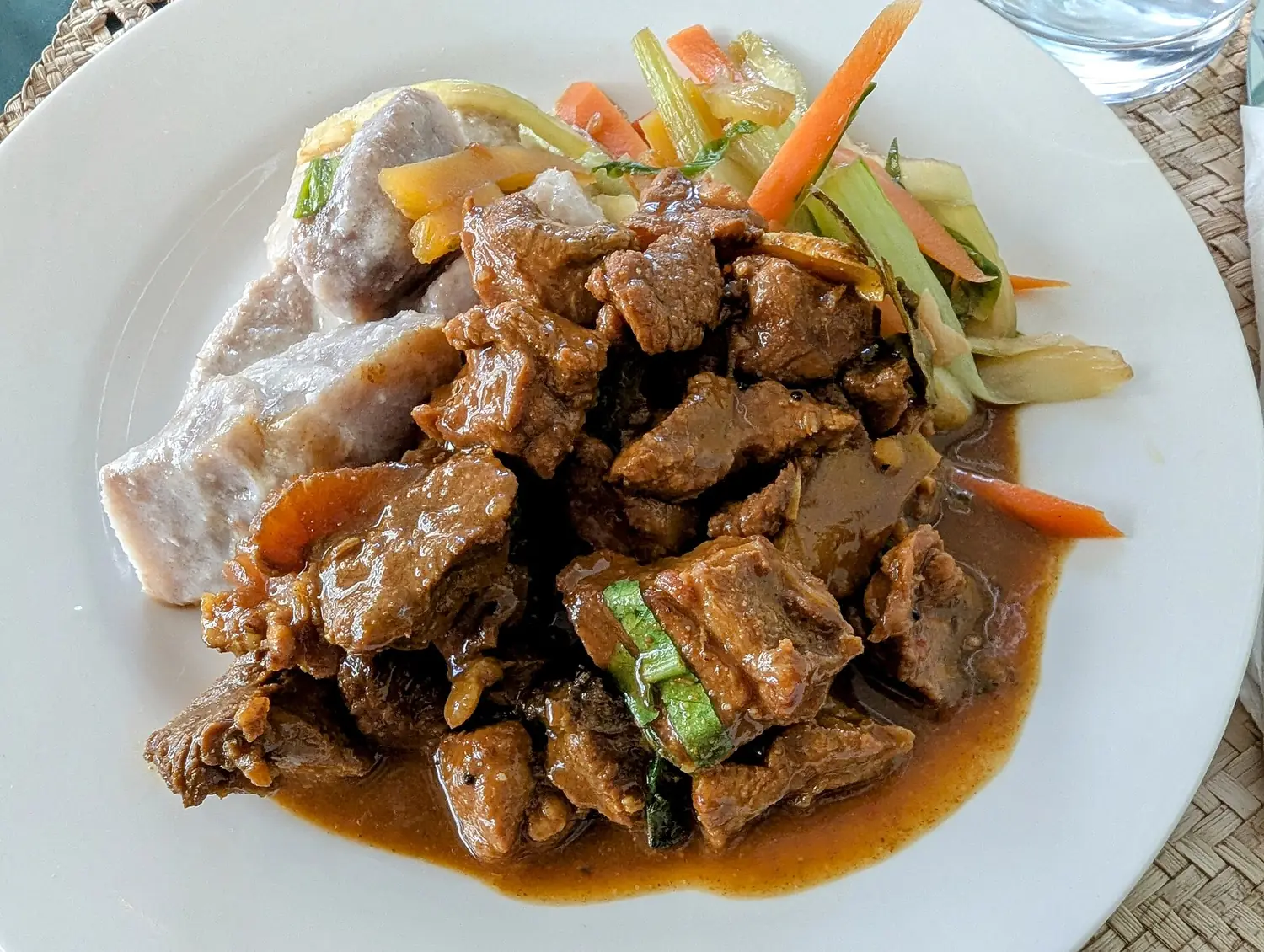
A plate of Vanuatu beef curry: brown-sauced beef chunks with pale boiled taro pieces and carrot and cabbage island vegetables Vanuatu flag Vanuatu 1h 35m
Dinner •Vanuatu Heritage

Vanuatu Beef Curry with Boiled Taro

This Vanuatu beef curry recipe simmers grass-fed beef chunks in a warm, brown coconut-milk curry sauce until they turn spoon-tender, while taro boils gently in coconut milk in a second pot until soft and creamy. The two meet on the plate with carrots and island cabbage, so every bite has rich curry, mild starchy taro and fresh vegetables together. One serving is about 540 g.

Hearty & Comforting

Tender beef simmered in a brown coconut curry sauce, served with taro boiled in coconut milk and island vegetables.

Pairs Well With
Steamed rice, fresh island salad and cold coconut water
High Protein
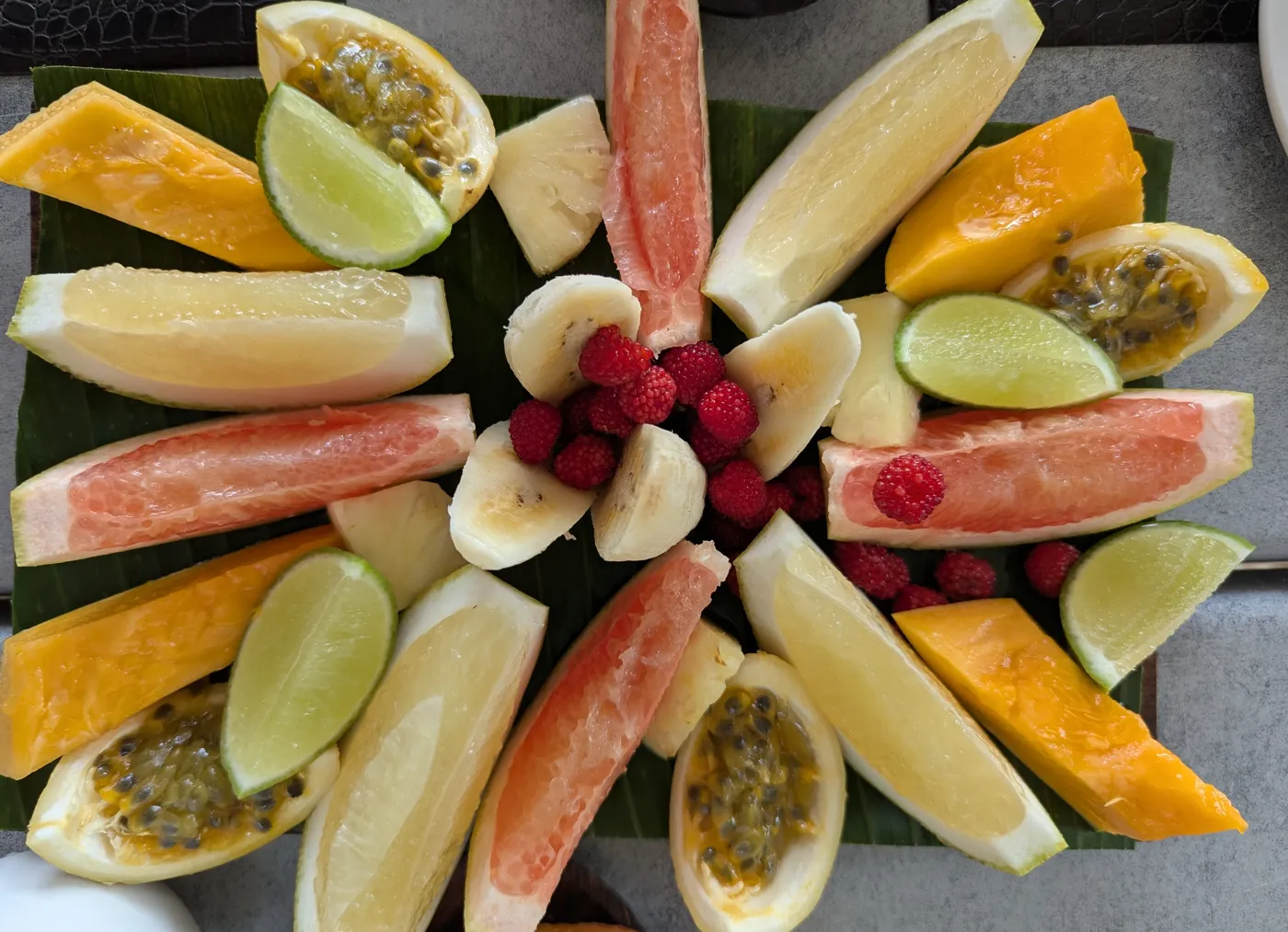
Tropical fruit platter on a banana leaf — yellow and pink pomelo wedges, banana slices, papaya spears, passion fruit halves, pineapple chunks, red Vanuatu raspberries and lime wedges Vanuatu flag Vanuatu 20m
Snack & Tea •Vanuatu Heritage

Vanuatu Tropical Fruit Platter

This Vanuatu fruit platter recipe is the simplest way to serve the islands' best fruit: slices of yellow and pink pomelo, banana, papaya, passion fruit, pineapple and Vanuatu raspberries, laid out unmixed on a fresh banana leaf with lime wedges to squeeze over. Nothing is cooked and nothing is dressed, so every fruit keeps its own colour, scent and bite. One serving is about 375 g.

Light & Refreshing

Raw tropical fruit, cut fresh and arranged on a banana leaf, with no cooking, no dressing and nothing added but a squeeze of lime.

Pairs Well With
Cold coconut water and lime wedges
Quick Prep (<30m)
Pan con tomate with jamón ibérico on toasted bread Spain flag Spain 15m
Snack & Tea •Catalan Aperitivo

Pan con Tomate & Jamón Ibérico

Country bread rubbed with ripe Ramallet tomato, drizzled with cold-pressed Arbequina olive oil and topped with jamón ibérico.

Vascular Health

Toasted tomato bread with jamón ibérico, olive oil and olives.

Pairs Well With
Castelvetrano Olives & Sparkling Mineral Water
Quick Prep (<30m)

The Dinner Gazette

Never wonder what’s for dinner again

One email a week with easy dinner ideas from around the world — ingredients, steps and nutrition, tested in our kitchen first.

Delivered every Thursday morning. Unsubscribe anytime.