
Curated recipes from 193 countries  •  New seasonal Mediterranean issue out now

Overview

Virado a Paulista

Virado à Paulista, São Paulo Platter

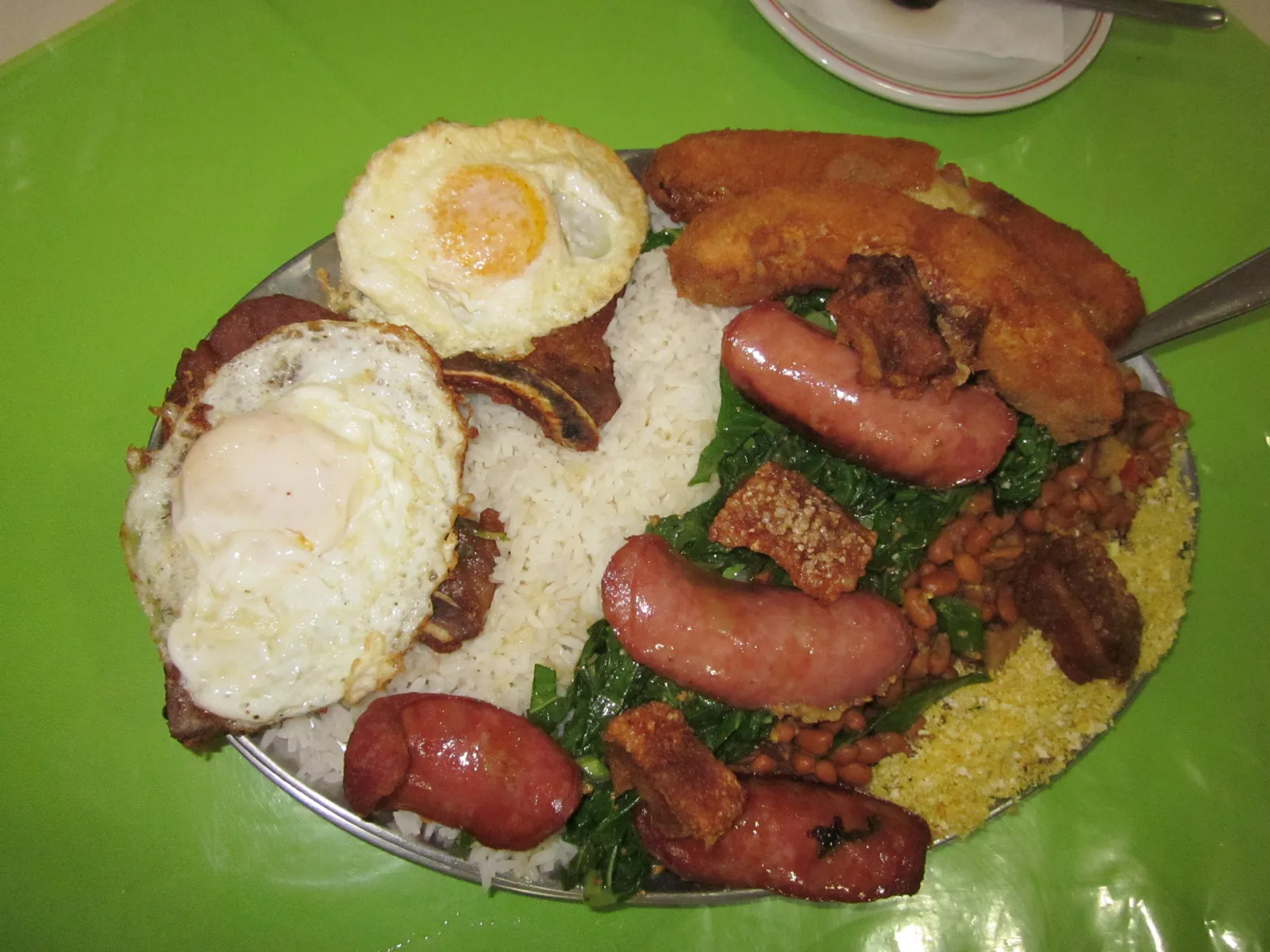
Virado a paulista is São Paulo's great Monday platter: a mound of tutu — beans mashed with toasted cassava flour — beside white rice, a fried pork chop, sausage, a fried egg, garlicky kale and a breaded fried banana. Salty, sweet, crisp and soft, all on one plate. One serving is about 650 g.

Virado a paulista comes from the state of São Paulo, where it dates back to the time of the earliest Portuguese settlers and the bandeirantes expeditions. It became the traditional Monday meal — a way to use the weekend's leftover beans and pork — and the São Paulo version is known for using whole beans in its tutu, where the Minas Gerais version mashes them smooth.

Pairs well with: Caipirinha, orange slices & farofa

Provenance

Brazil flag Brazil

São Paulo Classic

Latin America & Caribbean

Time Dedication

1h 20m

30m prep • 50m cook

Batch Yield

4 Servings

1226 kcal per serving

1 serving ≈ 650 g

Technical Skill

Intermediate

Intermediate (Many Parts)

Meal Timing & Digestive Fit

Breakfast

Not Advised

Lunch

Hearty Midday Main

Dinner

Ideal Hearty Main

Snack & Tea

Inappropriate

Occasions: Monday lunch, family weekends, festive gatherings, hearty dinners Cost: Medium — about $5–6 per serving at home
A platter of virado a paulista with fried eggs, pork, sausages, rice, kale, beans and fried banana

São Paulo Classic

Photo: edsonaoki, CC BY-SA 3.0, via Wikimedia Commons

The Heritage Formulary

Measured Ingredients

Estimated cost: Medium — about $5–6 per serving at home (USD)

A good virado is judged by the tutu: it should hold a soft mound on the plate, moist and savoury, never dry or gluey.

Execution Methodology & Culinary Technique

Step-by-Step Cooking Guide

Active 1h 20m
P

Prep Stage: Beans, Kale & Banana

30 Mins • Knife Work

Cook the beans first if they are not ready: they need to be soft, with 120 ml of cooking liquid kept back. Strip the 150 g kale leaves, roll them and cut into thin ribbons. Halve the 300 g bananas lengthwise and bread them. Season the 500 g pork chops. A virado has six parts cooking at once, so everything must be ready before the pans get hot.

Maestro Tip: Lay the six parts out in small bowls in plating order — tutu, rice, pork, sausage, egg, kale, banana — and the assembly takes a minute.

  1. 1

    Make the Tutu

    15 Mins Medium heat, about 160°C (320°F)

    Fry the 80 g diced bacon in a pan until it renders its fat, about 4 minutes. Add the 100 g onion and 10 g of the garlic and cook 3 minutes, then add the 400 g beans with their 120 ml cooking liquid. Stir in the 120 g cassava flour a spoonful at a time, stirring hard, until the mixture thickens into a soft mound that holds its shape. Season lightly — the bacon is already salty.

    Add the flour slowly; dumping it in makes lumps that never come out.

    Done when: The tutu holds a soft mound on the spoon and tastes smoky and savoury.

  2. 2

    Fry the Pork & Sausage

    15 Mins Medium-high heat, about 180°C (355°F)

    Heat 15 ml of the oil in a large pan and fry the 500 g pork chops 4–5 minutes a side until golden and cooked through — pork chops are done at 63°C (145°F), then rest 3 minutes. In the same pan, fry the 300 g linguiça until browned and cooked through, at least 71°C (160°F) inside, about 8 minutes. Slice the sausage thickly.

    Do not crowd the pan, or the chops steam instead of browning.

    Done when: The chops are golden outside and juicy inside; the sausage is browned and firm.

  3. 3

    Fry the Eggs & Banana

    10 Mins Medium heat, about 160°C (320°F)

    Fry the 4 eggs sunny-side up in 5 ml oil, about 3 minutes, until the whites are fully set. In the same pan, fry the breaded banana halves in 15 ml oil for 2 minutes a side until golden and crisp. Fully firm yolks are the safest choice; if you keep the yolks soft, use very fresh eggs.

    Fry the eggs last so they reach the plate hot with runny yolks intact.

    Done when: The egg whites are set, the yolks are glossy, and the banana is golden and crisp.

  4. 4

    Sauté the Kale & Plate

    5 Mins High heat, about 200°C (390°F)

    Toss the 150 g kale ribbons with the remaining 5 g garlic in a hot pan with the last 5 ml of oil for 2 minutes until wilted and bright green. To plate, mound the tutu and the 600 g rice side by side, lay the pork chop, sausage, fried egg and banana around them, and scatter the kale over the top.

    Kale needs barely 2 minutes — any longer and it turns dull and bitter.

    Done when: The plate shows every part: golden pork, red sausage, yellow banana, green kale, white rice and the tutu mound.

Finishing Touches & Plating

Serve at once, while the pork and eggs are still hot, with orange slices on the side — the fresh acidity is the traditional counterpoint to the rich plate. Each person mixes their own bites as they eat.

Nutritional Physiology & Benefits

Nutrition

Energy

1226

kcal / serving

Protein

68g

Complete AA

Carbs

122g

Complex

Fats

52g

Healthy

Per serving (4 servings · 1 serving ≈ 650 g)
Energy1226 kcal
Protein68 g
Carbohydrates122 g
Fat52 g
Fibre14.1 g
Sugar11.0 g
Sodium1543 mg
Per 100g
Energy189 kcal
Protein10.5 g
Carbohydrates18.7 g
Fat8 g
Fibre2.2 g
Sugar1.7 g
Sodium237 mg

Nutrition values are estimated — calculated from USDA FoodData Central values for the listed ingredients.

Vitamins & minerals: Black beans bring iron, folate and magnesium; kale adds vitamin K, vitamin C and calcium, and eggs supply B12 and vitamin D. All nutrition values are estimated.

Serious Staying Power

With about 68 g of protein and 14 g of fibre per serving, this is a meal that keeps you full for hours — it was built for a day of hard work.

Beans & Kale Do the Heavy Lifting

Black beans bring iron, folate and magnesium, and the kale adds vitamin K, vitamin C and calcium — the two healthiest parts of a very rich plate.

A Balanced Plate, Brazilian Style

For all its richness, the plate covers every base: beans, rice, meat, egg, greens and fruit, each doing a different job.

Food Pairings

What to Eat With

To optimize nutrient absorption and elevate the sensory depth, pair with these authentic accompaniments:

Sides

Orange Slices

Fresh orange is the traditional accompaniment — its acidity cuts the fat of the pork and sausage and refreshes the palate between rich bites.

Farofa

Toasted cassava flour with bacon, served on the side, adds crunch — it is the same flour as the tutu, used a second way.

Drinks

Caipirinha

Brazil's lime-and-cachaça cocktail is the classic pairing: the lime's sharpness stands up to the sausage and bacon.

Iced Guaraná

The sweet, lightly caffeinated Brazilian soft drink is the everyday table drink with a virado, and its sweetness suits the fried banana.

Complete menu

Serve the virado as the whole meal, with orange slices and a caipirinha on the side; finish with fresh fruit — nothing heavier is needed after it.

Digestive Guardrails

What NOT to Combine

To prevent digestive distress, sluggishness, or palate clash, avoid pairing the dish with these elements:

Eating It All at Once, Cold

A virado is a big, rich plate. Eat it hot, in one sitting, and do not graze on leftovers that have sat out — cool, re-served pork and eggs are a food-safety risk. This is general food-safety information, not medical advice.

A Second Rich Main Alongside

At about 1,226 kcal a serving, the virado is already a full meal. Adding another fried main on top makes the meal far heavier than most people need. This is general nutrition information, not medical advice.

General information only, not medical advice — consult a doctor for personal dietary decisions.

Who Should Eat It

Who Should Eat

  • General adultsA very large, rich meal — one full plate is a whole dinner.
  • ChildrenChildren enjoy the banana, egg and rice; give younger children a smaller plate with less sausage and pork.
  • ElderlyA lot of food in one sitting; a half-portion with extra kale and orange suits better, and the pork should be cut small.
  • Pregnant womenThe sausage, bacon and tutu make this a salty, rich meal; a small portion only, and check with your clinician if unsure.
  • Breastfeeding womenVery rich and salty; an occasional small portion is the sensible limit — check with your clinician if unsure.
  • AthletesA strong choice after a long training day: about 68 g of protein with plenty of carbohydrate for glycogen.
  • Weight gainA good choice — a full plate with extra rice and tutu adds plenty of calories.
  • Weight lossA very energy-dense meal; take a half-portion, favour the kale, beans and rice, and go easy on the sausage and pork.

Health Conditions — Adjust or Avoid

Conditions

  • DiabetesRice, tutu, banana and breadcrumbs add up to about 122 g of carbohydrate per serving; keep the portion small and ask your clinician.
  • High blood pressureVery salty — most sodium comes from the sausage, bacon and added salt. Use unsalted beans, less bacon, and ask your clinician.
  • Kidney diseaseBeans, sausage and pork are all high in potassium and protein; keep portions small and ask your clinician before making this regular.
  • GoutPork, sausage, bacon and beans are all high in purines; eat occasionally and in a smaller portion, and ask your clinician if unsure.
  • Stomach issuesA heavy, fatty plate can sit badly on a sensitive stomach; eat slowly, keep the banana and kale generous, and the pork modest.
  • Cardiovascular diseaseVery high in saturated fat and sodium from the sausage, bacon and pork; a small occasional portion is the sensible limit — ask your clinician.
  • Fatty liverA very rich, fatty meal; keep the portion modest, favour the beans, kale and rice, and ask your clinician if unsure.
  • Food allergiesContains egg and wheat (breadcrumbs). The sausage may contain soy or milk — check the label; the dish is nut-free as written.
  • Special therapeutic dietsIf you follow a prescribed low-sodium or low-saturated-fat diet, this is a difficult fit; a small portion with less sausage and bacon is the most you should take, and check with your clinician.

If you have a medical condition, consult your doctor before changing your diet.

Storage & Use

Storage & Use

How to store
Cool quickly and store each part in its own airtight container; keep the banana separate.
In the fridge
Pork and sausage 3 days; tutu and rice 3 days; kale 2 days; fried egg and banana best eaten fresh.
In the freezer
Tutu and rice 2 months; pork 2 months; do not freeze the egg, banana or kale.
How to reheat
Reheat pork, sausage, tutu and rice to 74°C (165°F); fry a fresh egg and banana rather than reheating them.
Freezing recommended
Partly — tutu, rice and pork freeze well; the rest does not.
Signs it has spoiled
Sour smell from the tutu or rice, slimy pork or sausage, or kale that has gone limp and dark.

More recipes to explore

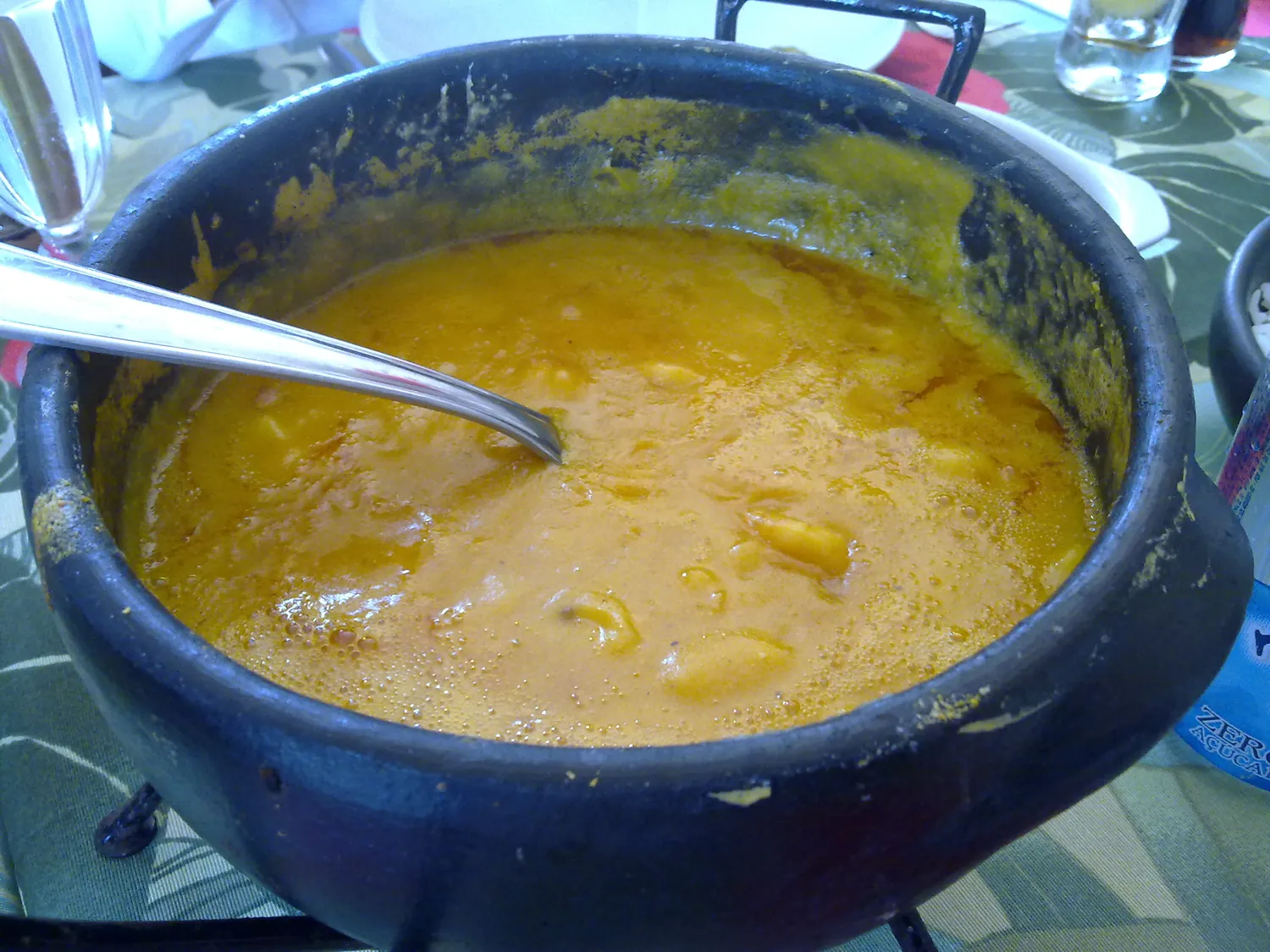
A black clay pot of golden-orange bobó de camarão, a thick cassava cream with shrimp, with a serving spoon Brazil flag Brazil 1h 5m
Dinner •Bahian Cassava Cream

Bobó de Camarão

This bobo de camarao recipe is Bahia's creamy shrimp dish: fresh shrimp folded into a thick purée of boiled cassava blended with coconut milk, coloured golden-orange with dendê oil and finished with lime and cilantro. Unlike a stew, the cassava is blended smooth, so the whole dish eats like a rich, spoonable cream. One serving is about 470 g.

Rich & Comforting

Shrimp folded into a thick, smooth cassava cream made with coconut milk and red palm oil, served hot with rice.

Pairs Well With
Steamed white rice, farofa and a crisp green salad
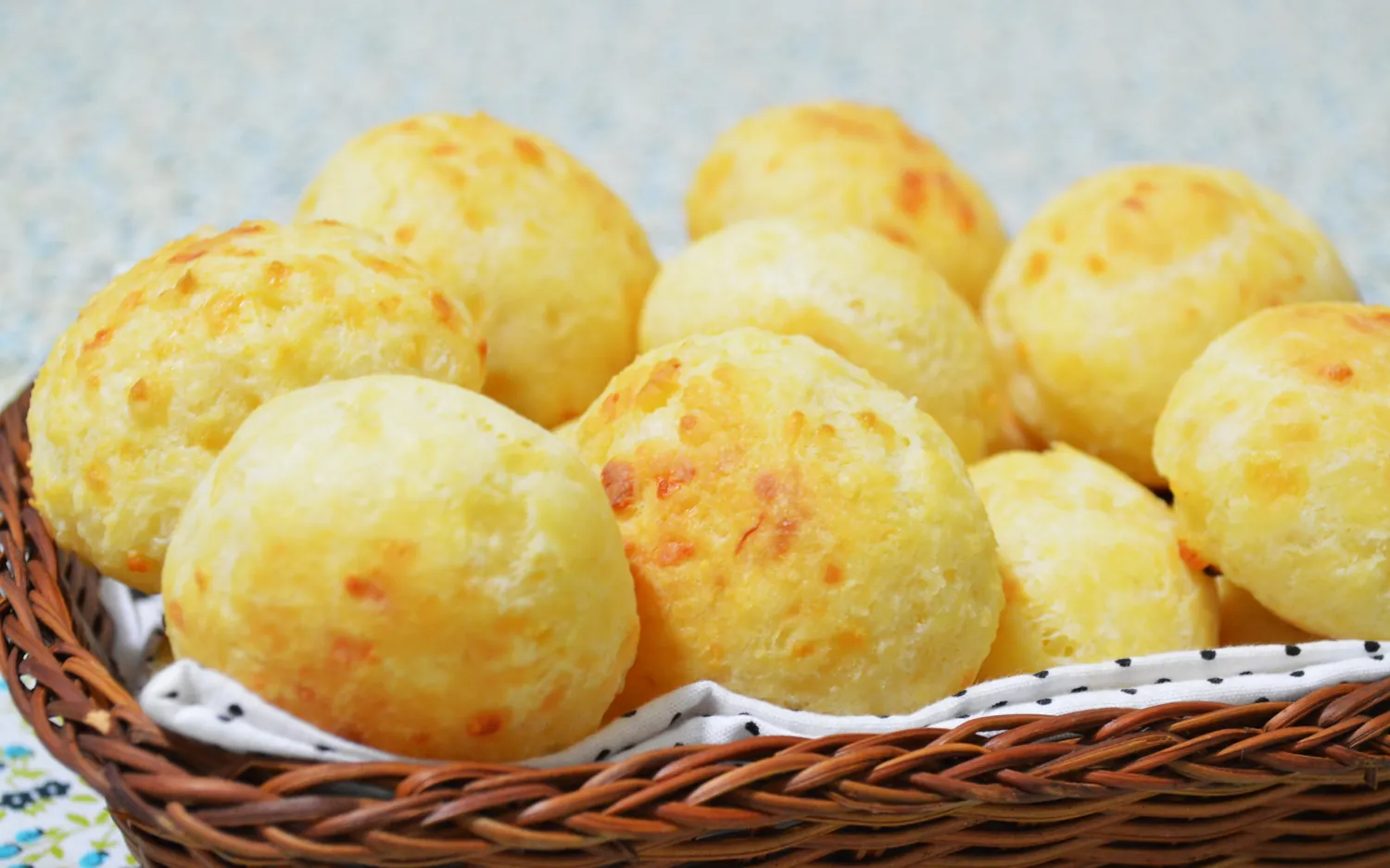
A basket of golden, round pão de queijo, Brazilian cheese bread rolls Brazil flag Brazil 45m
Snack & Tea •Minas Gerais Cheese Bread

Pão de Queijo

This pao de queijo recipe makes Brazil's famous cheese bread: small, golden rolls with a crisp shell and a soft, stretchy, chewy centre, made from tapioca starch, milk, oil, eggs and cheese. There is no wheat flour and no yeast — the rolls puff up on steam in a hot oven. One serving is 4 rolls, about 134 g.

Warm & Chewy Snack

Golden tapioca cheese rolls with a crisp shell and a soft, stretchy centre, baked in under half an hour.

Pairs Well With
Black coffee, fresh fruit, or a light soup
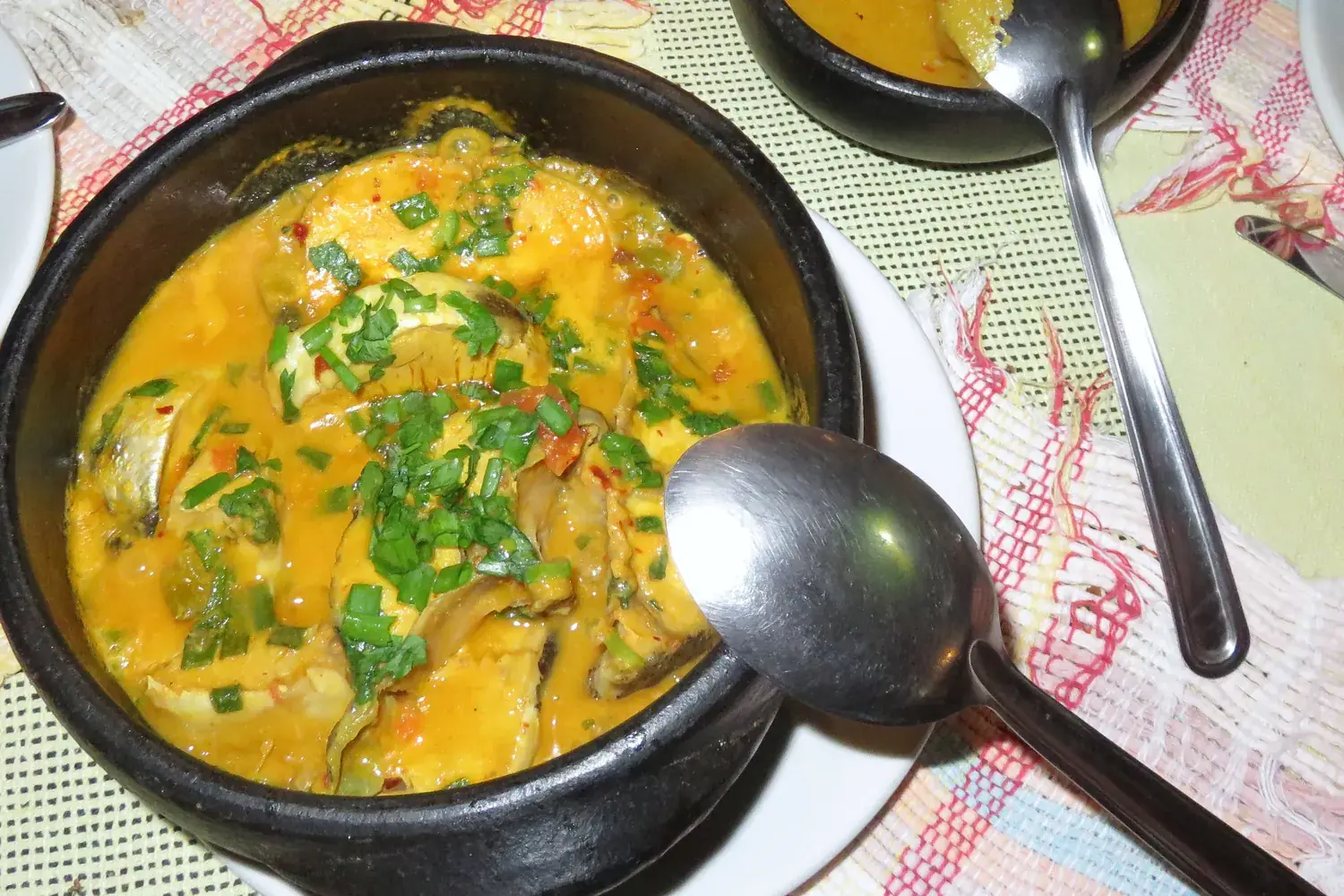
A black clay pot of moqueca baiana, fish chunks in a golden-orange coconut sauce with fresh herbs, beside rice and pirão Brazil flag Brazil 55m
Dinner •Bahian Fish Stew

Moqueca Baiana

This moqueca baiana recipe is Bahia's famous fish stew: thick fillets of white fish layered with onion, peppers and tomato, then simmered gently in coconut milk with dendê oil until the sauce turns golden-orange. The fish stays in whole, flaky pieces in a fragrant broth — a stew, not a purée. One serving is about 450 g.

Coastal & Aromatic

Firm white fish simmered in coconut milk and red palm oil with peppers and tomato, served hot in its clay pot.

Pairs Well With
Steamed white rice, pirão and farofa
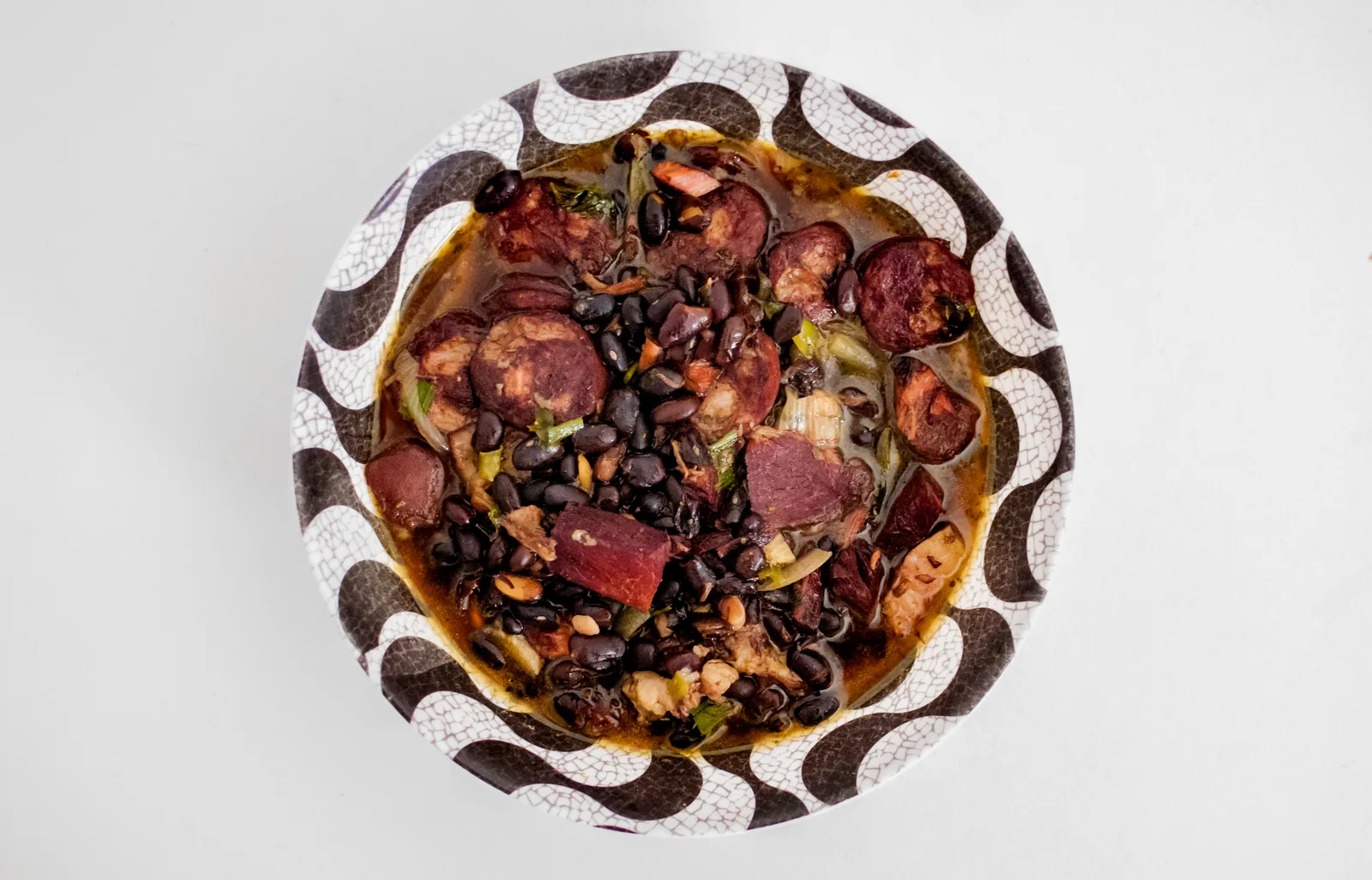
A bowl of Brazilian feijoada — black beans with rounds of sausage and pieces of pork Brazil flag Brazil 3h 30m
Dinner •Brazilian National Dish

Brazilian Feijoada

This Brazilian feijoada recipe is the real Saturday lunch: black beans simmered for hours with pork shoulder, smoky linguiça, bacon and beef until the broth turns thick and dark, then served with white rice, garlicky collard greens, orange slices and farofa. It is a slow, generous pot built for sharing. One serving is about 450 g.

Rich & Hearty

Brazil's national dish — black beans slow-cooked with pork, sausage and beef, served with rice, greens and orange.

Pairs Well With
Serve with white rice, sautéed collard greens, orange slices and farofa.

The Dinner Gazette

Never wonder what’s for dinner again

One email a week with easy dinner ideas from around the world — ingredients, steps and nutrition, tested in our kitchen first.

Delivered every Thursday morning. Unsubscribe anytime.