Curated recipes from 193 countries  •  New seasonal Mediterranean issue out now

Overview

Ximxim de Galinha

Xinxim de Galinha — Bahian Chicken Stew

This ximxim de galinha recipe simmers chicken thighs in a rich sauce of ground peanuts and cashews, coconut milk and dendê oil, with dried shrimp, ginger and chillies — a golden Bahian stew from Brazil's Afro-Brazilian northeast. One serving is about 505 g.

Ximxim de galinha comes from Bahia, the northeastern Brazilian state where African, Portuguese and indigenous cooking met and fused. Its name comes from a West African word for stew, and the dish itself is the Brazilian cousin of West African groundnut stews — but it is its own dish: chicken, not just groundnuts, with cashews, coconut milk and dendê oil, and dried shrimp for depth. In Bahia it is a celebratory dish, served at festivals and family gatherings, and it is also one of the ritual dishes of Candomblé, dedicated to the orixá Oxum.

Pairs well with: White rice, sautéed greens and farofa

Provenance

Brazil flag Brazil

Bahian Afro-Brazilian Classic

Latin America & Caribbean

Time Dedication

1h 10m

25m prep • 45m cook

Batch Yield

4 Servings

782 kcal per serving

1 serving ≈ 505 g

Technical Skill

Intermediate

Medium (Nut Sauce)

Meal Timing & Digestive Fit

Breakfast

Not Advised

Lunch

Hearty Midday Main

Dinner

Ideal Hearty Main

Snack & Tea

Inappropriate

Occasions: Festive dinners, family gatherings, Brazilian-themed meals Cost: Medium — about $5–6 per serving at home
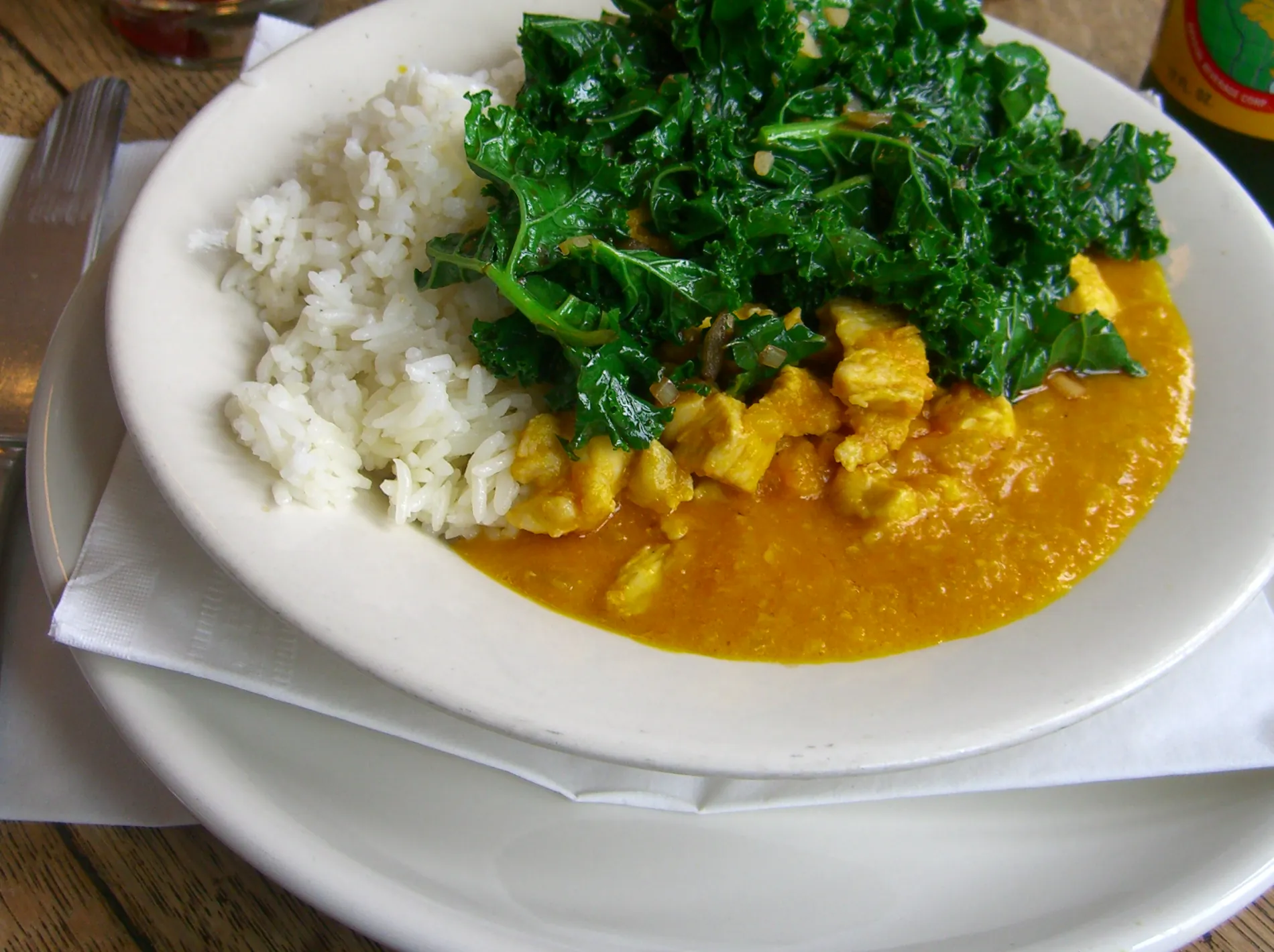
A plate of ximxim de galinha, chicken pieces in a golden peanut sauce with white rice and sautéed greens

Bahian Afro-Brazilian Classic

Photo: herval, CC BY 2.0, via Wikimedia Commons

The Heritage Formulary

Measured Ingredients

Estimated cost: Medium — about $5–6 per serving at home (USD)

True ximxim de galinha is a chicken stew in a coarse peanut and cashew sauce with dendê oil and coconut milk — never a smooth peanut-butter soup, and never boiled hard.

Execution Methodology & Culinary Technique

Step-by-Step Cooking Guide

Active 1h 10m
P

Prep Stage: Grind the Nut Sauce and Cut the Chicken

25 Mins • Grind, Chop & Measure

Grind the peanuts, cashews and dried shrimp with the chillies, ginger and a splash of the water into a coarse, thick paste. Cut the chicken into large chunks, chop the onion, garlic and tomatoes, shake the coconut milk, squeeze the lime and chop the coriander.

Maestro Tip: Grind the nuts coarse, not smooth — a little texture in the sauce is the Bahian way, and a perfectly smooth paste turns the stew into peanut butter soup.

  1. 1

    Blend the Nut Paste

    10 Mins Room temperature, about 20°C (68°F) — no heat

    Put the peanuts, cashews, dried shrimp, chillies and ginger in a blender with about 100 ml of the water and blend to a coarse, thick paste, stopping to scrape down the sides. It should look like rough peanut butter, not a smooth cream.

    Add the water a splash at a time — too much water and the paste will not thicken the sauce properly.

    Done when: The paste is thick, coarse and fragrant, holding its shape on a spoon.

  2. 2

    Brown the Chicken in Dendê

    10 Mins Medium-high heat, about 190°C (375°F)

    Heat the dendê oil in a large, heavy pot over medium-high heat until it shimmers orange. Season the chicken with half the salt and brown it in two batches for about 4 minutes each, turning until golden on all sides. Lift out and set aside.

    Do not crowd the pot — the chicken will steam grey instead of browning, and the browned edges are where the flavour lives.

    Done when: The chicken is golden on the outside and still pink inside, and the oil is deep orange.

  3. 3

    Build the Sauce

    5 Mins Medium heat, about 160°C (320°F)

    In the same pot, soften the onion for 3 minutes, add the garlic and cook for 1 minute, then stir in the tomatoes and cook for 2 minutes until they soften. Add the nut paste and the remaining 50 ml of water and stir for 1 minute until the paste loosens and darkens slightly.

    Keep stirring once the nut paste goes in — it catches on the bottom of the pot fast.

    Done when: The sauce is thick, orange and fragrant, with the nut paste fully mixed in.

  4. 4

    Simmer the Stew

    30 Mins Low simmer, about 95°C (200°F)

    Pour in the coconut milk, return the chicken to the pot with any juices, and add the rest of the salt. Bring gently to a simmer, cover, and cook on the lowest heat for about 30 minutes until the chicken is completely tender and reaches at least 74°C (165°F) in the thickest piece, and the sauce has thickened to coat a spoon.

    Never let the stew boil hard — boiling splits the coconut milk and turns the sauce grainy.

    Done when: The chicken is fall-apart tender, the sauce is thick and glossy, and it coats the back of a spoon.

  5. 5

    Finish with Lime and Coriander

    5 Mins Off the heat — serve hot, about 60°C (140°F)

    Take the pot off the heat, stir in the lime juice, taste and adjust the salt, then scatter over the chopped coriander. Serve at once over white rice.

    The lime goes in last — cooked lime juice turns bitter, but fresh lime at the end lifts the whole stew.

    Done when: The stew is golden-orange and glossy, smelling of nuts, coconut and lime, with green coriander on top.

Finishing Touches & Plating

Stir in the lime juice off the heat, scatter with coriander, and serve ximxim de galinha at once over white rice — the sauce should be thick enough to coat the chicken, not runny.

Nutritional Physiology & Benefits

Nutrition

Energy

782

kcal / serving

Protein

55g

Complete AA

Carbs

20g

Complex

Fats

56g

Healthy

Per serving (4 servings · 1 serving ≈ 505 g)
Energy782 kcal
Protein55 g
Carbohydrates20 g
Fat56 g
Fibre3.9 g
Sugar7.3 g
Sodium869 mg
Per 100g
Energy155 kcal
Protein10.9 g
Carbohydrates3.9 g
Fat11.1 g
Fibre0.8 g
Sugar1.4 g
Sodium172 mg

Nutrition values are estimated — calculated from USDA FoodData Central values for the listed ingredients.

Vitamins & minerals: Vitamin B6 and niacin (chicken), vitamin E (peanuts and cashews), potassium (coconut milk), iron (dried shrimp). Nutrition is estimated.

Seriously Filling

At about 782 kcal and 55.3 g of protein a serving, this is a substantial meal — one serving with rice is a full dinner.

Nuts, Not Cream

The richness comes from peanuts, cashews and coconut milk rather than dairy cream, with vitamin E and healthy fats from the nuts.

High in Protein and B Vitamins

Chicken thighs give plenty of protein, vitamin B6 and niacin, which support normal energy as part of a varied diet.

Food Pairings

What to Eat With

To optimize nutrient absorption and elevate the sensory depth, pair with these authentic accompaniments:

Sides

White Rice

Plain rice is the essential partner — it soaks up the thick nut sauce and balances the richness of the stew.

Farofa

Toasted cassava flour adds crunch and soaks up the sauce — the classic Bahian accompaniment that turns the plate into a feast.

Vegetables

Sautéed Greens

Garlicky sautéed kale or collard greens add a bitter, fresh contrast to the rich sauce, exactly as Bahian tables serve it.

Drinks

Guaraná Soda or Cold Beer

A cold, sweet guaraná soda or a light lager cuts through the richness and chilli, the way Bahian restaurants serve it.

Complete menu

Serve ximxim de galinha over white rice with sautéed greens and farofa, with a cold guaraná soda alongside.

Digestive Guardrails

What NOT to Combine

To prevent digestive distress, sluggishness, or palate clash, avoid pairing the dish with these elements:

Boiling the Coconut Sauce Hard

A hard boil splits coconut milk into oil and grainy curds, ruining the smooth sauce. Keep the stew at a gentle simmer. This is general information, not medical advice.

Serving It to Someone with a Nut Allergy

This dish is built on peanuts and cashews — it is not safe for anyone with a peanut or tree-nut allergy, and the nuts cannot simply be left out, as they are the sauce. This is general information, not medical advice.

General information only, not medical advice — consult a doctor for personal dietary decisions.

Who Should Eat It

Who Should Eat

  • General adultsA rich, substantial main — one serving with rice is a full dinner.
  • ChildrenToo rich and spicy for young children; older children can try a small portion with the chillies left out.
  • ElderlyTender chicken in a soft sauce is easy to eat, but the stew is rich — serve a modest portion with rice and greens.
  • Pregnant womenGenerally suitable when the chicken is fully cooked through; the dish is rich, so eat a modest portion.
  • Breastfeeding womenA calorie- and protein-rich meal that fits a hungry day; balance it with greens and rice.
  • AthletesExcellent post-training protein at about 55.3 g a serving, with carbs from the rice for recovery.
  • Weight gainAt about 782 kcal a serving, this is a genuinely helpful calorie-dense main.
  • Weight lossVery rich and high in fat — keep to a small portion with plenty of rice and greens, and save it for an occasional meal.

Health Conditions — Adjust or Avoid

Conditions

  • DiabetesLow in carbs at about 19.5 g a serving, but the rice alongside adds carbs — keep the rice portion modest. Ask your clinician.
  • High blood pressureAt about 869 mg of sodium a serving, keep the portion modest. Ask your clinician.
  • Kidney diseaseChicken and nuts are moderate in purines; keep portions modest and ask your clinician if you have kidney concerns.
  • GoutA rich, spicy stew can be a trigger — eat a small portion and ask your clinician if you are unsure.
  • Stomach issuesThe chillies, fat and acidity can irritate sensitive stomachs — eat a small portion slowly. Ask your clinician about your triggers.
  • Cardiovascular diseaseHigh in saturated fat from the palm oil and coconut milk, so this is an occasional dish, not an everyday one. Ask your clinician.
  • Fatty liverRich in fat and calories — enjoy occasionally and in a modest portion. Ask your clinician.
  • Food allergiesContains peanut, tree nuts (cashew), crustacean (dried shrimp) and coconut. Free from gluten, egg and milk.
  • Special therapeutic dietsNot suitable for nut-allergy, low-fat or low-calorie therapeutic diets as written; ask your clinician or dietitian before adapting it.

If you have a medical condition, consult your doctor before changing your diet.

Storage & Use

Storage & Use

How to store
Cool quickly and store in an airtight container in the fridge; keep the rice separate.
In the fridge
3 days, chilled.
In the freezer
2 months; the sauce may separate slightly — stir well when reheating.
How to reheat
Reheat gently in a covered pot over low heat to 74°C (165°F), stirring often; do not boil.
Freezing recommended
Yes — it freezes well.
Signs it has spoiled
Sour smell from the coconut milk, grey or slimy chicken, or a rancid smell from the nuts.

More recipes to explore

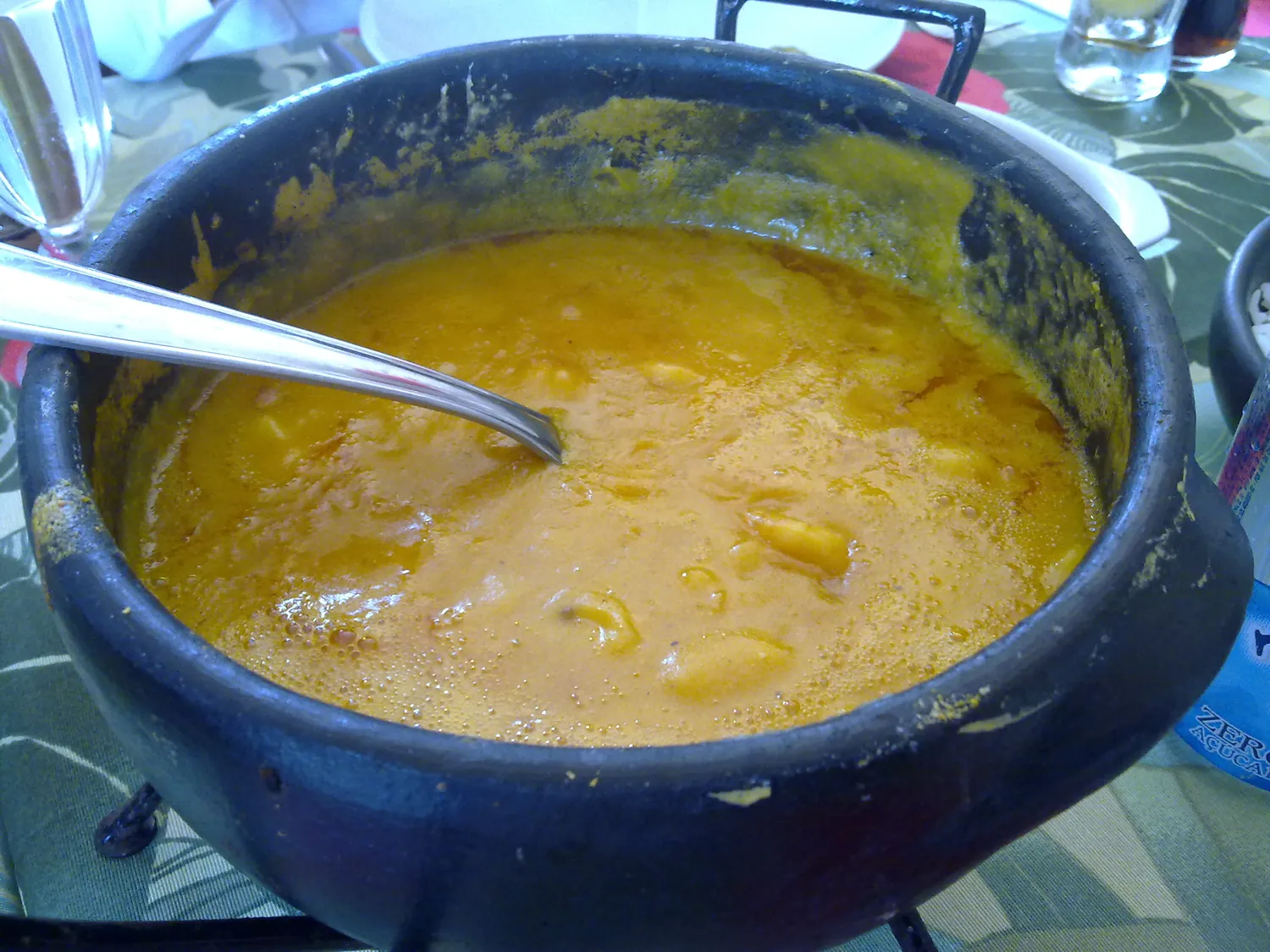
A black clay pot of golden-orange bobó de camarão, a thick cassava cream with shrimp, with a serving spoon Brazil flag Brazil 1h 5m
Dinner •Bahian Cassava Cream

Bobó de Camarão

This bobo de camarao recipe is Bahia's creamy shrimp dish: fresh shrimp folded into a thick purée of boiled cassava blended with coconut milk, coloured golden-orange with dendê oil and finished with lime and cilantro. Unlike a stew, the cassava is blended smooth, so the whole dish eats like a rich, spoonable cream. One serving is about 470 g.

Rich & Comforting

Shrimp folded into a thick, smooth cassava cream made with coconut milk and red palm oil, served hot with rice.

Pairs Well With
Steamed white rice, farofa and a crisp green salad
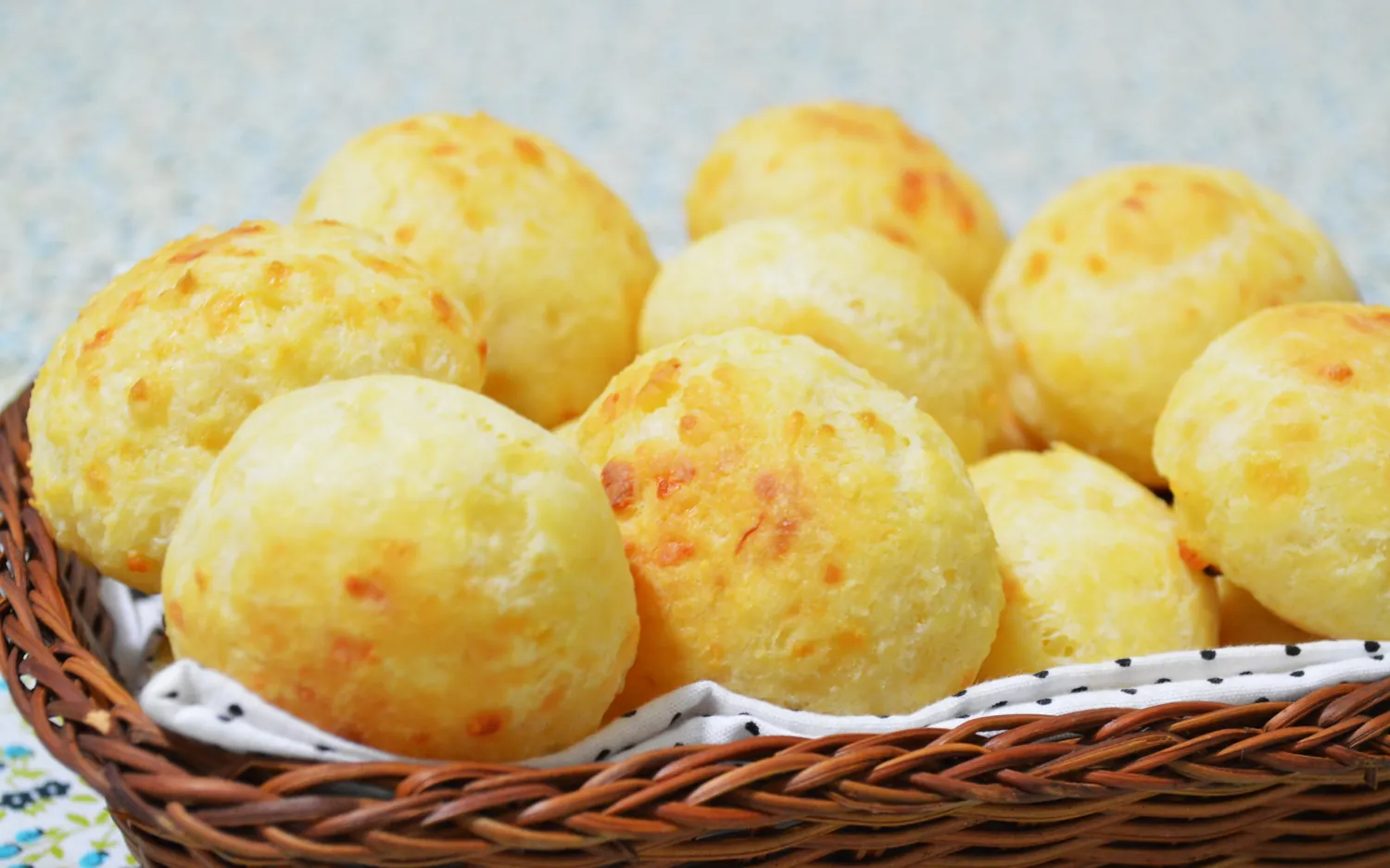
A basket of golden, round pão de queijo, Brazilian cheese bread rolls Brazil flag Brazil 45m
Snack & Tea •Minas Gerais Cheese Bread

Pão de Queijo

This pao de queijo recipe makes Brazil's famous cheese bread: small, golden rolls with a crisp shell and a soft, stretchy, chewy centre, made from tapioca starch, milk, oil, eggs and cheese. There is no wheat flour and no yeast — the rolls puff up on steam in a hot oven. One serving is 4 rolls, about 134 g.

Warm & Chewy Snack

Golden tapioca cheese rolls with a crisp shell and a soft, stretchy centre, baked in under half an hour.

Pairs Well With
Black coffee, fresh fruit, or a light soup
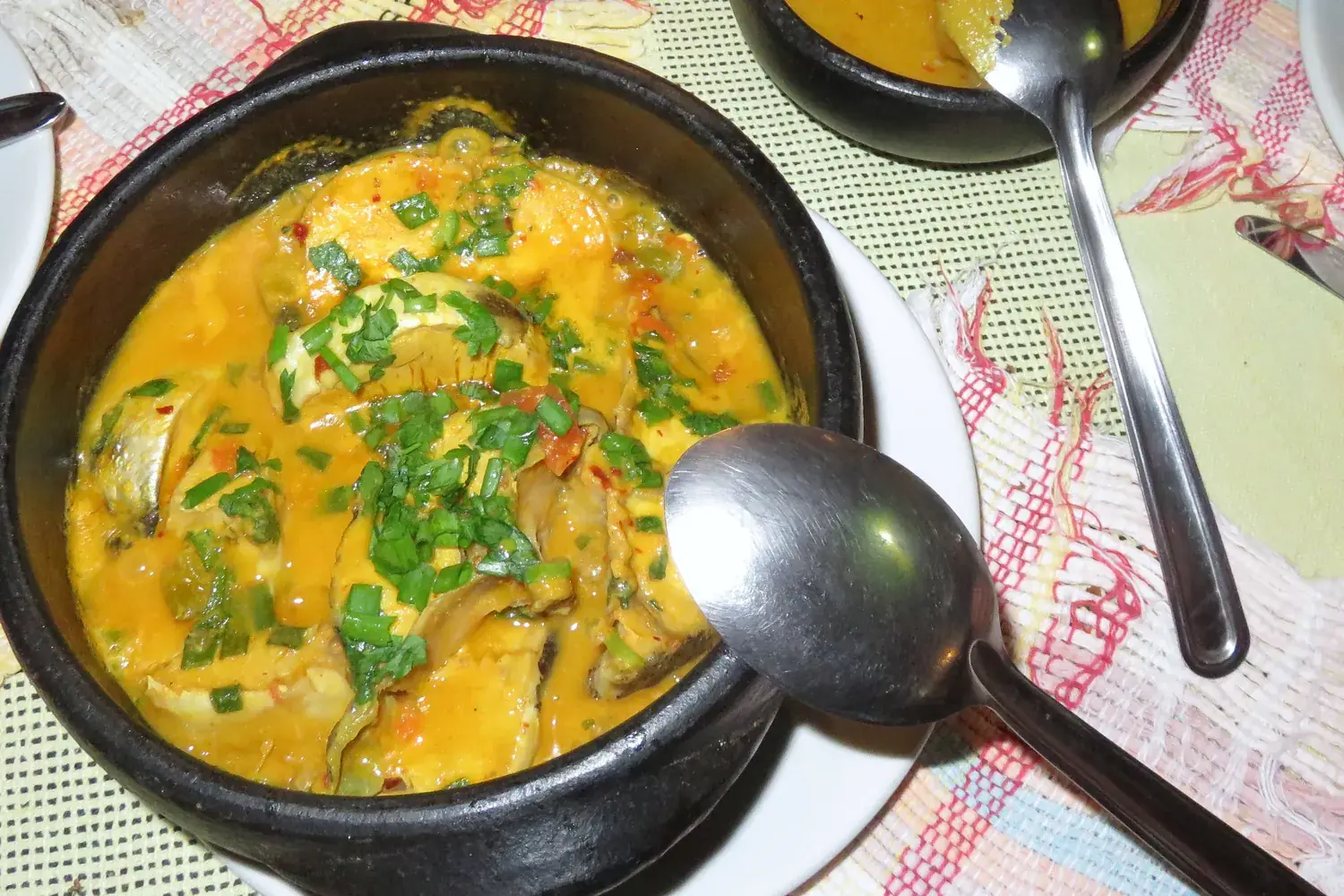
A black clay pot of moqueca baiana, fish chunks in a golden-orange coconut sauce with fresh herbs, beside rice and pirão Brazil flag Brazil 55m
Dinner •Bahian Fish Stew

Moqueca Baiana

This moqueca baiana recipe is Bahia's famous fish stew: thick fillets of white fish layered with onion, peppers and tomato, then simmered gently in coconut milk with dendê oil until the sauce turns golden-orange. The fish stays in whole, flaky pieces in a fragrant broth — a stew, not a purée. One serving is about 450 g.

Coastal & Aromatic

Firm white fish simmered in coconut milk and red palm oil with peppers and tomato, served hot in its clay pot.

Pairs Well With
Steamed white rice, pirão and farofa
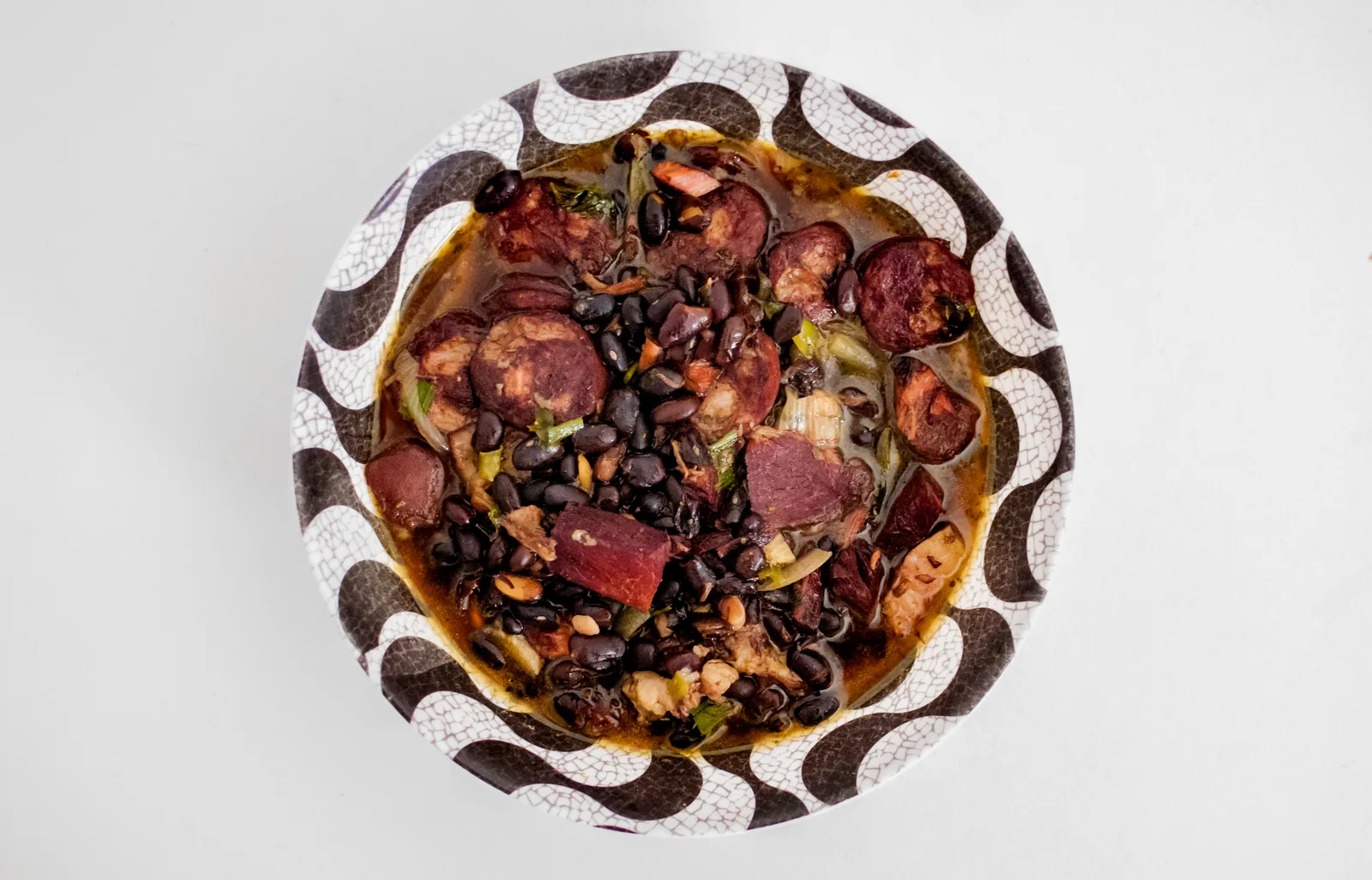
A bowl of Brazilian feijoada — black beans with rounds of sausage and pieces of pork Brazil flag Brazil 3h 30m
Dinner •Brazilian National Dish

Brazilian Feijoada

This Brazilian feijoada recipe is the real Saturday lunch: black beans simmered for hours with pork shoulder, smoky linguiça, bacon and beef until the broth turns thick and dark, then served with white rice, garlicky collard greens, orange slices and farofa. It is a slow, generous pot built for sharing. One serving is about 450 g.

Rich & Hearty

Brazil's national dish — black beans slow-cooked with pork, sausage and beef, served with rice, greens and orange.

Pairs Well With
Serve with white rice, sautéed collard greens, orange slices and farofa.

The Dinner Gazette

Never wonder what’s for dinner again

One email a week with easy dinner ideas from around the world — ingredients, steps and nutrition, tested in our kitchen first.

Delivered every Thursday morning. Unsubscribe anytime.